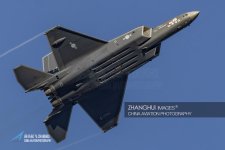
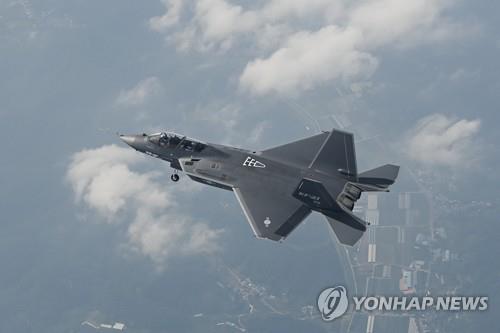
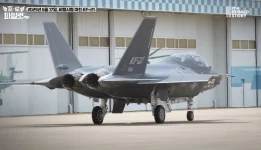
IFX Indonesian Fighter Experiment (KF21/IFX program)

I use Chat GPT now to translate, it is much better than previous translation I put on previous page, so every thing can be clearer

I have erased the previous post with broken translation

------------------------------
South Korea and Indonesia Finalize New Cost-Sharing Agreement for KF-21 Fighter Jet Project

2025.06.13. AM 9:33

1750930336016.jpeg
South Korea and Indonesia have finalized Indonesia’s share of the cost for the jointly developed Korean fighter jet KF-21 (known as IF-X in Indonesia) at 600 billion won, a reduction of 1 trillion won from the previous amount of 1.6 trillion won. Data Photo. [Herald DB]


The project, which had faced difficulties due to Indonesia’s request to lower its contribution amid financial troubles and a data leak incident involving Indonesian technicians dispatched to Korea Aerospace Industries (KAI), is now moving towards resolution.


The Defense Acquisition Program Administration (DAPA) announced on the 13th that the two countries had signed a revised basic agreement for joint development reflecting these changes.

Noh Ji-man, the head of the Korean Fighter Project at DAPA, and the Director General of Reserve Forces at the Indonesian Ministry of Defense, signed the agreement adjusting Indonesia’s share based on the decision made by the Defense Project Promotion Committee last August. The Indonesian Ministry of Defense has begun administrative procedures to pay its remaining share for the KF-21 joint development.

Originally, Indonesia was to contribute 1.6 trillion won, or 20% of the total project cost of 8.1 trillion won. However, due to financial difficulties, Indonesia delayed payments and had only paid 400 billion won so far. In April last year, Indonesia proposed to pay only a total of 600 billion won.

Considering the importance of successfully completing the KF-21 project, the relationship between the two countries, and the fact that Indonesia is essentially the first overseas customer for South Korea’s “K-Defense Industry,” which is now attracting global attention, South Korea decided to accept Indonesia’s proposal for a reduced contribution.

However, the process of revising the agreement was delayed as Indonesia objected to the investigation into five of its technicians dispatched to KAI for leaking documents. In September last year, Indonesia sent an official letter to DAPA stating that negotiations on the revision could only proceed after the charges against its technicians were resolved.
1750931113175.jpeg
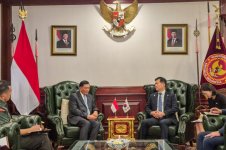
The photo shows Defense Acquisition Program Administration (DAPA) Commissioner Seok Jong-gun and Indonesian Defense Minister Syafrie Samsoedin in a meeting. [Provided by DAPA]


Recently, a decision was made to suspend the indictment of the Indonesian technicians, considering that the leaked USB data did not contain sensitive secrets. As a result, the joint development project has regained momentum.

Indonesia is expected to pay the remaining 200 billion won in two installments of 100 billion won each per year. However, the specific scope of technology transfer as a result of the reduced contribution will be subject to further negotiations between the two countries after the completion of the KF-21 system development.

In addition, the two countries discussed the mass production of Indonesia’s IF-X. KAI and Indonesia’s state-owned company PTDI agreed to concretize, expand, and strengthen their strategic cooperation covering everything from production to marketing for the practical implementation of IF-X mass production, including establishing and maintaining production and final assembly facilities, as well as maintenance, repair, and overhaul (MRO).

During his meeting with Teddy Rizali Hadi, the Deputy Chief of Staff of the Indonesian Air Force, Commissioner Seok also explained the current status and excellence of the KF-21’s development and reached a consensus that introducing the IF-X in the future would contribute to strengthening Indonesia’s air power.

Commissioner Seok stated, “Through this visit to the Indonesia Defense Expo, we confirmed that bilateral defense cooperation, which had been somewhat strained due to recent issues with Indonesian technicians, is now back on track. Going forward, we will do our best to further strengthen defense industry cooperation with Indonesia in various areas, including submarines, firepower, and air defense systems, and to expand this cooperation to the entire Southeast Asian region.”


First Public Look at KAI’s ‘Second Hangar’ – KF-21 Prototype Maintenance

2025-06-25 16:03

1750937445902.jpeg
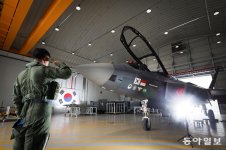
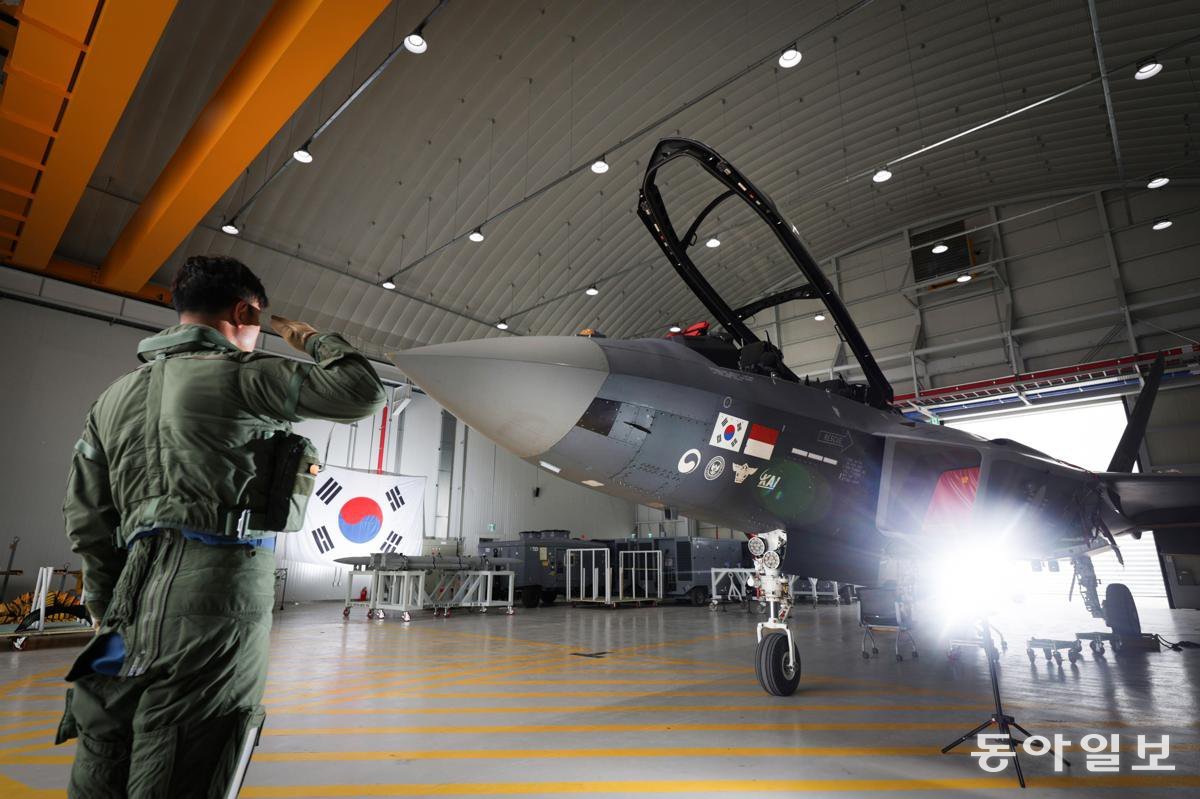
On the 20th, at Korea Aerospace Industries (KAI)’s second hangar in Sacheon, Gyeongnam Province, KAI fixed-wing development test pilot Park Ji-won salutes the sixth and final prototype of the domestically produced supersonic fighter jet, the ‘KF-21 Boramae,’ wishing for a safe flight.


In 1950, South Korea operated only a handful of outdated aircraft provided by foreign countries, but 75 years later, the nation has grown to the point of joining the ranks of countries developing supersonic fighter jets with the KF-21.

It took many years of hardship and adversity to develop a state-of-the-art fighter jet that will defend South Korea’s airspace, but overcoming these difficulties, the KF-21 is now set to be deployed in 2026.

1750937508766.jpeg
Sacheon = Reporter Park Hyung-gi [email protected] “This newly built Second Hangar is being unveiled for the first time.”


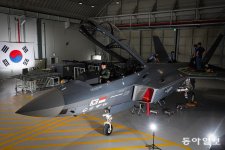
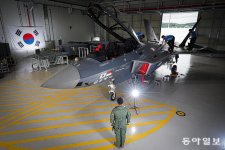
On the endlessly stretching runway of Korea Aerospace Industries (KAI) in Sacheon, Gyeongnam Province, the pure white hangar, spotless and new, stood out. Upon entering, the sixth and final prototype of the domestically produced supersonic fighter jet, the KF-21 ‘Boramae,’ was revealed.

The tail fin of the sixth prototype, standing tall in the center of the hangar, was clearly marked with the dark gray aircraft number ‘KF-21 006.’ Sunlight streaming faintly through the slightly open door illuminated the graceful curves of the aircraft, lighting up the hangar.

Inside the hangar, maintenance work on the sixth prototype was in full swing. In the vast hangar, spanning dozens of meters, various maintenance tools such as generators were neatly arranged around the aircraft.

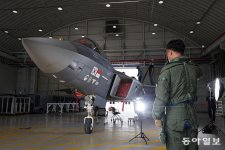
Despite the presence of the press, the technicians remained focused on inspecting their assigned sections. They moved smoothly and efficiently over the massive aircraft, which is 16.9 meters long and 4.6 meters high. Since even the smallest mistake could not be tolerated for a successful test flight, the maintenance crew, together with the test pilot, meticulously checked the aircraft.


1750937545743.jpeg
On the 20th, maintenance work is being carried out on the sixth prototype of the KF-21 at Korea Aerospace Industries (KAI)’s second hangar in Sacheon, Gyeongnam Province. Sacheon = Reporter Park Hyung-gi [email protected]


The sixth prototype unveiled on this day is one of only two tandem-seat aircraft among the total of six prototypes. A tandem-seat aircraft has a cockpit divided into front and rear seats, allowing two people to board, and is mainly used for training missions to educate and train pilots.

The sixth prototype is called ‘Boramae Six One,’ with its callsign derived from the KF-21’s project name ‘Boramae’ and the number ‘6-1’ indicating the sixth unit.

In addition to training missions, this aircraft also conducts a variety of test flights, such as verifying flight stability and testing the performance of avionics equipment, including the AESA (Active Electronically Scanned Array) radar.

In March of this year, KAI completed the construction of an additional Second Hangar complex covering an area of 10,000 pyeong (approximately 33,000 square meters). The newly built complex serves as a full-fledged maintenance base and includes six hangars capable of accommodating two KF-21 aircraft at the same time, as well as taxiways, maintenance buildings, and office facilities.

The KF-21 development project, known as the largest defense project in Korean history, is now nearing completion after more than a decade of work. The first mass-produced KF-21 is scheduled for a test flight in the first half of 2026 and will be delivered to the Air Force for operational deployment starting in the second half of the year.


1750937632591.jpeg
On the 20th, at Korea Aerospace Industries (KAI)’s second hangar in Sacheon, Gyeongnam Province, Park Ji-won, a test pilot from KAI’s Fixed-Wing Development Division, observes the maintenance process of the sixth prototype. Sacheon = Reporter Park Hyung-gi [email protected]


Hanwha Aerospace inks 623.2 bln-won deal to supply engines for KF-21 fighter jets​


1751084908716.jpeg

16:18 June 26, 2025

SEOUL, June 26 (Yonhap) -- Hanwha Aerospace Co. said Thursday it has signed a 623.2 billion-won (US$459.3 million) follow-up contract with the state defense procurement agency to supply engines for South Korea's next-generation KF-21 fighter jets.


The agreement with the Defense Acquisition Program Administration (DAPA) builds on a previous engine supply deal worth 556.2 billion won signed a year ago, bringing the total contract value to 1.18 trillion won.


With the latest contract, Hanwha Aerospace will deliver 80 units of F414 engines for the first mass-produced batch of KF-21 jets by December 2028. The deal also includes logistics support, such as maintenance parts, technical manuals and on-site technical assistance.


Hanwha Aerospace has long been involved in the South Korean military's aviation projects, having produced more than 10,000 engines for South Korea's fighter jets, including the KF-5, KF-16 and F-15K, since 1979.


To bolster its high-tech engine business, the company has invested 40 billion won to build a smart factory dedicated to jet engine production.


"With our advanced aviation engine technology, we will ensure timely delivery of KF-21 engines and continue to contribute to the development of next-generation propulsion systems for national defense," the company said in a statement.


South Korea launched the KF-21 development program in 2015 with the aim of acquiring a homegrown supersonic fighter jet to replace its aging fleet of F-4 and F-5 jets

Deployment of the KF-21 is scheduled to begin by 2028.

1751084510681.jpeg
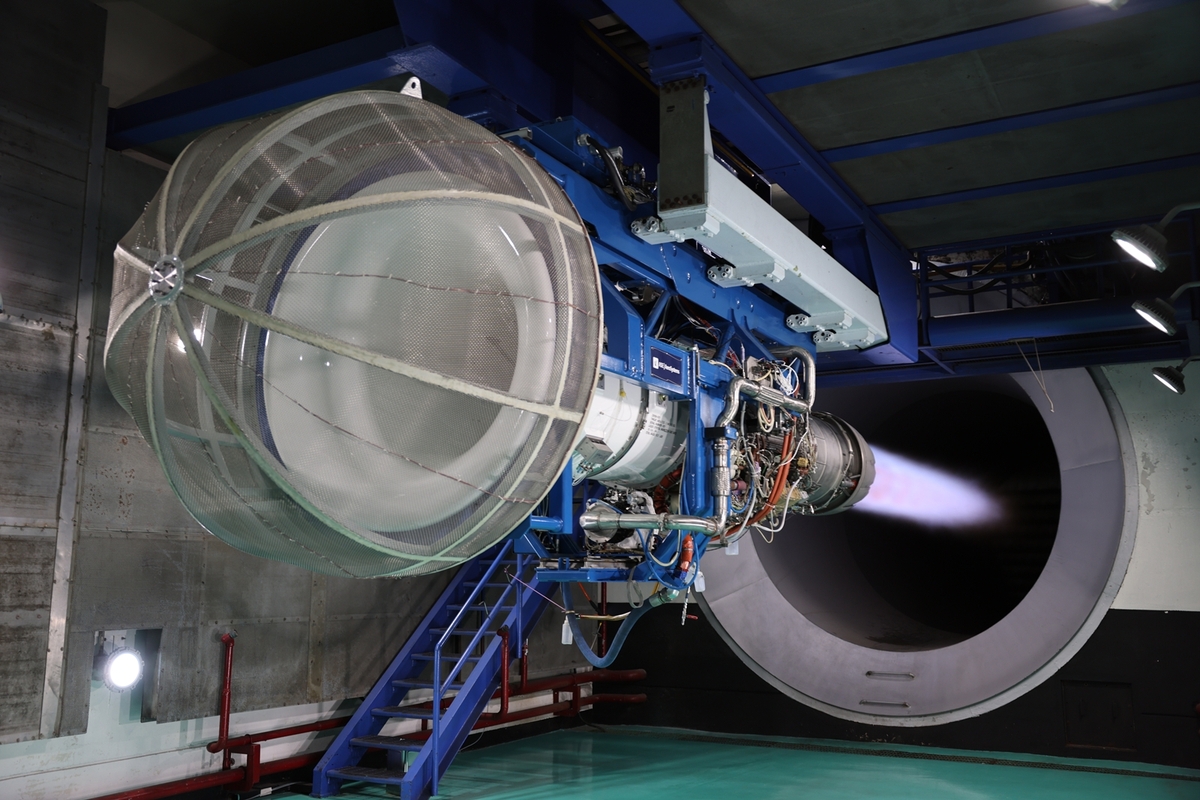
An F414 engine for the KF-21 fighter jet undergoes a test at Hanwha Aerospace Co.'s operation in Changwon, some 300 kilometers south of Seoul, in this photo provided by the company. (PHOTO NOT FOR SALE) (Yonhap)


Korea Aerospace signs second KF-21 production deal worth 2.39 tln won​


1751085161515.jpeg

16:34 June 26, 2025

SEOUL, June 26 (Yonhap) -- Korea Aerospace Industries Co. (KAI), South Korea's sole aircraft manufacturer, said Thursday it has signed a second contract with the state defense procurement agency to produce KF-21 fighter jets, valued at 2.39 trillion won (US$1.76 billion).


The deal with the Defense Acquisition Program Administration (DAPA) covers the production of 20 KF-21 units, along with follow-up logistics support, including technical manuals and training, KAI said in a press release.


The latest agreement is part of DAPA's program, approved in early 2024, to deliver a total of 40 KF-21 fighter jets to the Air Force by 2028.


KAI signed a 1.96 trillion-won deal with DAPA to produce the first batch of 20 KF-21s in June 2024.


The first batch of the KF-21 fighter jets are scheduled to be delivered to the Air Force starting in the second half of 2026, according to the release.


South Korea launched the KF-21 development program jointly with Indonesia in 2015 to develop a homegrown supersonic fighter to replace its aging fleet of F-4 and F-5 jets.


DAPA has been conducting a series of performance tests on six KF-21 prototypes since the first prototype made its maiden flight in July 2022.


is there any latest information regarding the Indonesian test pilot who is piloting the kf21?
 
is there any latest information regarding the Indonesian test pilot who is piloting the kf21?

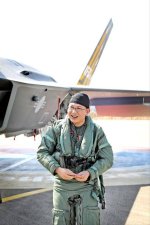
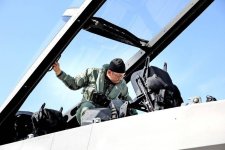
Yup the latest information of course Letnan Colonel Ferrel has been able now to fly KF21 from front seat as the restriction not to let him and other Indonesian test pilot ( 2 Indonesian test pilot sent there) to fly the plane from front seat is put due to both Indonesia and Korea still has some issues to solve. So the amandement signed about a week ago look like will become the turn around of the co development project inshaAllah

1751104609247.jpeg

Previously he and other Indonesian test pilot are only allowed to fly from back seat

For the program, Indonesia has prepared 6 test pilots, 5 from Air Force that has completed Aerospace engineering degree from ITB, and one engineer from Indonesian Aerospace that undergone fighter Academy from Indonesian Air Force. They also needs to complete test pilot academy for fighter in England.


1751104726022.jpeg
1751104740682.png
1751368315988.jpeg
 
A Symbol of Independence and Strategic Defense Cooperation between Indonesia and South Korea: Indonesian Air Force Test Pilot Flies KF-21 Prototype

Thursday, July 3, 2025

1751544613021.jpeg
1751544648930.jpeg

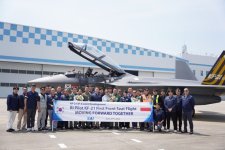
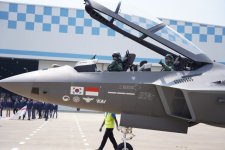
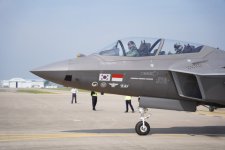
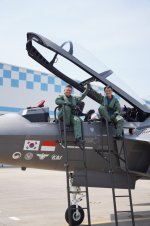
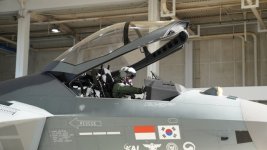
Sacheon – A historic milestone was achieved in the defense cooperation between Indonesia and South Korea through the successful maiden flight by an Indonesian Air Force (TNI AU) test pilot, Colonel (Pilot) Ferrel Rigonald, who occupied the front seat during the test flight of the KF-21 Boramae fighter jet prototype. The flight took place on Friday, June 27, 2025, from Sacheon Air Base, South Korea.


In this mission, Colonel Ferrel was accompanied by a test pilot from Korea Aerospace Industries (KAI), Koh Hwi Seok, who occupied the back seat. They took off at 9:45 a.m. local time and performed a series of test maneuvers at an altitude of 20,000 feet for approximately one hour. The flight went smoothly and successfully, marking Indonesia’s direct contribution to the testing and development process of the 4.5-generation fighter jet.

1751544672547.jpeg
1751544684612.jpeg

The participation of an Indonesian Air Force pilot in the flight test phase not only reflects the transfer of technology and the enhancement of Indonesia’s defense human resources, but also serves as a strong symbol of the strategic partnership between Indonesia and South Korea in the KF-21/IF-X fighter jet development program.


This moment underscores the shared commitment of both countries to continue their collaboration in developing high technology in the defense sector, in line with Indonesia’s vision of building independence in its national defense industry. Indonesia’s active participation in the KF-21 program also strengthens the country’s position as a key partner in the development of future defense platforms.


The Indonesian Ministry of Defense welcomes this achievement as part of concrete steps in modernizing defense equipment and strengthening national defense capabilities based on innovation and international cooperation.

(Bureau of Defense Information, Secretariat General of the Ministry of Defense)

 
The Ministry of Defense reaffirms its commitment to modernizing military equipment and strengthening the independence of the national defense industry through strategic contributions to the KF-21 Boramae fighter jet development program.

To view this content we will need your consent to set third party cookies.
For more detailed information, see our cookies page.
 

Korea and Indonesia resume KF-21 joint development discussions after six-year hiatus​


Korea and Indonesia rekindle collaboration on advanced military aircraft project after long delay

By
Kim Ji-hwan
Published 2025.07.04. 15:43

To view this content we will need your consent to set third party cookies.
For more detailed information, see our cookies page.


A defense official from the Ministry of National Defense of Indonesia, a co-developer of the KF-21 project, visited Korea on the 4th to discuss the IF-X (the Indonesian name for the KF-21) project. This marks the first visit by Indonesian defense officials to Korea in six years since issues regarding unpaid contributions arose in 2018. Although the possibility of a breakup was mentioned due to concerns over technology leaks by Indonesian researchers and reduced development contributions, the atmosphere seems to have changed with the resumption of project discussions.

According to the defense industry, officials from relevant departments of the Ministry of National Defense of Indonesia, including the Director of the Technology Cooperation Bureau, conducted a project management review (PMR) meeting with officials of Korea Aerospace Industries (KAI) and the KF-21 project team from the Defense Acquisition Program Administration (DAPA) over two days starting from the 2nd at KAI's headquarters. PMR is a regular meeting procedure among practitioners during the joint development process. It is reported that Indonesia and DAPA discussed plans for IF-X production and the schedule for contribution payments.

1751692573451.png

This meeting was held as a follow-up to the signing of a revised basic agreement on the joint development of the KF-21 by DAPA Administrator Seok Jong-geon during the Defense Exhibition in Indonesia, Jakarta, on the 13th of last month. This agreement specifies the payment of contributions by Indonesia and the scope of cooperation between the two countries. KAI hopes to reach a conclusion on the follow-up consultations by next year.

The two countries signed a joint development contract for the KF-X (now KF-21) project to develop a next-generation fighter jet in 2015. Indonesia is set to invest 1.7338 trillion won, which is 20% of the total project cost (8.8 trillion won), by 2028, and is expected to produce 48 units locally after receiving one prototype and technology transfer. The dispatch of Indonesian technicians began in the second half of 2016. KAI is leading the development while Indonesian technicians are participating in a limited manner.

Last January, an Indonesian technician dispatched to KAI attempted to leak internal materials and was caught, leading to KAI solely handling the development. The KF-21 is currently in the flight test phase and is poised for mass production. The IF-X project is Indonesia's export business for the KF-21. The core goal is to upgrade the KF-21 to meet Indonesia's desired performance standards. Once the flight tests of the KF-21 are completed and the aircraft is operational, KAI and Indonesia are expected to begin the upgrade work.

Indonesia's recent visit to Korea is seen as a demonstration of its commitment to the joint development of the KF-21. There had been concerns that the joint project with Indonesia might be halted due to issues such as contribution payments. In particular, reports emerged that Indonesia decided to purchase 48 Turkish fighter jets known as KAAN, leading to speculation in the industry that Indonesia might have given up on the joint development. An industry insider noted, "Indonesia's visit to Korea signifies that they have sat down at the negotiating table."

The industry believes that Indonesia has not confirmed the purchase of Turkish fighter jets. The development speed of the Kaan fighter is reportedly slower than that of the KF-21. Earlier, Indonesia signed a memorandum of understanding with France for the purchase of Rafale maritime fighter jets in 2023, but the purchase did not materialize.

An Indonesian Air Force pilot boarded the KF-21 prototype cockpit at Sacheon Airbase in Gyeongnam on the 27th of last month. The KF-21 prototype, which the Indonesian officials boarded, took off around 9:45 a.m., climbed to an altitude of about 20,000 feet (approximately 6096 m), and flew for about an hour. This was the first time an Indonesian pilot sat in the front seat during the flight.


The KF-21, which successfully tested its first test flight in July 2022, has flown 1,400 times until last year. An additional flight will take place by June next year when the development is completed.


To view this content we will need your consent to set third party cookies.
For more detailed information, see our cookies page.
 
"On-site at the First Mass-Produced KF-21… 'Fast Delivery and Detailed Process'"


Herald economy2025.07.08 17:31
Last modified2025.07.09 07:37


"Speeding up mass production with two production lines
Reducing production time with FASS"


To view this content we will need your consent to set third party cookies.
For more detailed information, see our cookies page.

[Exclusive] “20 units of KF-21 first-time volume, 80% of parts processing completed” KF-21 mass production site visit, and proceeded quickly until final delivery with dual lines! Defense Industry Day Special 1st Edition


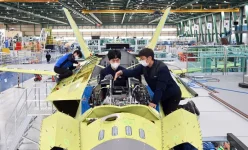
On the morning of the 17th of last month, the final assembly of the first Korean supersonic fighter jet KF-21 was underway at the fixed wing production plant of the Korean Aerospace Industries (KAI) in Sichuan, Gyeongsangnam-do.

The fixed-wing production plant is only 180m long and has a wider (2000m2) space than three football fields. The cleanly arranged fighter jet production line on the white floor had the appearance of a green fighter without painting.

Because the assembly process is different in each fair area, the shape of the fighter is also different. Only the front part of the fighter plane was assembled, the fuselage and wings were assembled, and the aircraft was almost finished.

In order to meet the KF-21 delivery time, field engineers on each line stuck to the fighter jets deployed in their own fair zone to continue the plumbing.

Park Jung-wook, head of the KF-21 mass production business management team, said, “We have to deliver KF-21 aircraft in line with the electric power of the air force, so we can’t meet the schedule by building only one production line, and we will deploy fighter jets at the same time in the future, and we will proceed with mass production quickly.”

KAI focused on the organic connection between each process. We comply with the working date of each step of the process, and we also manage the transition time in batches, and we are proceeding with mass production quickly. He added that it has increased the rate of delivery compliance through this.

In pursuit of a fast delivery, KAI emphasized that it did not miss the detailed process and stability.

The KAI uses the fuselage automatic coupling system (FASS) developed by the company to assemble the fuselage of the fighter jet. The FASS uses a laser to determine the exact position of the fuselage and fine-tune the position by moving the hydraulic column. With this equipment, you can do precise work and significantly reduce the production time.

The KF-21 will begin delivery of the first mass production unit in the second half of 2026 and will be electrified by the Korean Air Force.

1752030316131.webp
Article image "The first mass production unit of the Korean fighter jet KF-21, currently being assembled at Korea Aerospace Industries (KAI) in Sacheon, Gyeongnam. [Provided by KAI]"


The first phase of the KF-21 mass production entered mass production in July last year, and entered the final assembly stage through parts processing, the production of important components, and the assembly of the front, middle and rear fuselage.

The final assembly is to complete the aircraft's appearance before the flight acceptance test, equip various equipment such as electronic equipment and engines, and test whether the aircraft function is normal.

Once the functional test is complete, a flight test will be launched.

Right next to the fixed wing was a hangar containing a KF-21 prototype. Each prototype is put into actual flight before mass production of the aircraft to test various missions. It is responsible for collecting various flight data such as air resistance, external environment, etc.

In particular, this year, we are testing Mittier missiles and AIM-2000.

The KAI chief pilot said, “We have successfully conducted launch tests such as the Mittier missile and AIM-2000, and we have obtained effective data.”

KAI said that it has completed about 70% of the prototype flight tests, and the remaining schedule will be successfully carried out and will contribute to the production of mass production machines.

 
Alhamdulillah

Successful in testing all weapons for Block 1


1. WVR : AIM 2000 (Europe) > Launched both from pylon in the wings and semi-recessed missile station in its belly

2. BVR : Meteor (Europe) > Launched from semi-recessed/semi-conformal missile station in its belly

3. Guns : 20mm M61A2 Vulcan Gatling gun (SNT Dynamic from Korea get the production license)

4. HMCS is active and integrated

To view this content we will need your consent to set third party cookies.
For more detailed information, see our cookies page.
 

UK lobbies South Korea to switch to Rolls-Royce for new fighter jets programme​


Britain seeks closer ties with Asian nation’s booming arms sector to help rebuild its own defence industrial base

View attachment 131307

Christian Davies in Seoul and Sylvia Pfeifer in Paris

Published
Jun 23 2025


UK officials are lobbying for Rolls-Royce to replace US rival GE Aerospace as the main engine partner on South Korea’s fighter jet programme, as Britain seeks closer ties with the Asian nation’s booming arms sector to help rebuild its own defence industrial base.

South Korean defence group Hanwha Aerospace produces current-generation engines on the KF-21 fighter jet under licence from GE. But US export restrictions over national security concerns have frustrated Seoul’s ambitions to sell the jet to potential buyers such as the United Arab Emirates and Indonesia.

As an alternative, South Korea has been looking to develop its own engines, with Hanwha and local rival Doosan Enerbility pitching for a role in the next generation of the KF-21, which is due to enter production in the mid-2030s.

But with some defence experts expressing scepticism about their capabilities within the timeframe, UK officials have been pressing the case for co-production with a foreign partner as an intermediary step, according to several people familiar with the discussions.

“Rolls-Royce’s involvement would de-risk the project and accelerate the timeline,” said a British official. “This is not about simply selling engines to South Korea. It is about developing a new engine together and seeing that relationship through to the end of the engine’s life.”

Rolls-Royce declined to comment, but one person familiar with the situation said the company, which is hoping to work with India on its indigenous jet engine programme, had made no secret of its interest in opportunities to help other countries develop their own combat capabilities.

UK officials acknowledged their campaign on behalf of Rolls-Royce was part of a wider effort to forge closer defence procurement ties with South Korea, one of the world’s top 10 arms exporters.But analysts said the efforts could be complicated by Seoul’s decades-long security alliance with the US. Hanwha was pushing for shipbuilding contracts with the US Navy, as well as engine maintenance and repair contracts for US fighter jets based in Asia, said a person close to the company.

Seoul sees defence procurement as a way to meet Washington’s demands to reduce South Korea’s $55bn trade surplus with the US. GE is also interested in continuing its involvement in the KF-21 programme, according to a person familiar with the company’s thinking.

Rolls-Royce supplies gas turbine engines for South Korean naval frigates, while the KF-21’s ejector seat is produced by Uxbridge-based Martin-Baker and its missile system was supplied by MBDA, a European consortium jointly owned by BAE Systems, Airbus and Leonardo.

Hanwha has talked to British officials about partnering with BAE to build munitions factories in the UK, according to people familiar with the discussions, as European countries seek to boost their weapons production capacity following Russia’s full-scale invasion of Ukraine and signs of wavering US commitment to the continent’s defence.

The UK Strategic Defence Review this month recommended the creation of an “always on” munitions production capacity that could be “scaled up at speed if needed”.

BAE this month announced a partnership with Hanwha Systems, the South Korean conglomerate’s radar and software subsidiary, to co-develop an advanced satellite system for intelligence gathering, surveillance and reconnaissance. Hanwha already supplies BAE with “modular charge systems” for its Nato-standard 155mm artillery rounds.

A UK defence ministry spokesperson said: “The Republic of Korea is an important industrial partner and we continue to scope future collaboration opportunities together.

”GE declined to comment on its future involvement in the programme, but a spokesperson said: “GE Aerospace is proud to be a trusted partner in Korea for more than 60 years. We remain committed to supporting Korea’s defence industry and contributing to future programmes with proven expertise and a strong track record.

”South Korea’s defence procurement agency said: “No decision has been made yet on whether we will co-develop the engines with foreign engine makers or with which foreign company to partner with.

”BAE and Hanwha declined to comment.

Additional reporting by Song Jung-a in Seoul and Charles Clover in London

Too strong ties between SK and USA for such a big change.
 

South Korea’s next-gen jet marks progress in testing​


Gu Min Chul

1752587218437.webp

South Korea’s KF-21 Boramae program took another major step toward operational readiness as its sixth prototype aircraft completed a series of high-stakes test flights, including air-to-air gunnery and weapons separation trials, program officials confirmed this week.


The advanced 4.5-generation fighter, developed by Korea Aerospace Industries (KAI), is on track to conclude its Block 1 development phase by early next year, with Block 2 enhancements set to follow immediately.

To view this content we will need your consent to set third party cookies.
For more detailed information, see our cookies page.


Speaking after the latest test campaign, KAI’s chief test pilot, Cha Myung-soo, described the intense pace of trials designed to refine the aircraft’s flight control systems and ensure combat readiness.

“Today’s sortie focused on compensating for potential attitude changes when the onboard gun is fired,” Cha said. “We verified that the flight control system can stabilize the aircraft effectively, even during rapid-fire conditions.”

The KF-21 prototype No. 6 has been central to testing advanced electronic warfare systems, while other airframes in the six-aircraft fleet have been designated for distinct mission profiles, including high angle-of-attack recovery and radar integration.


“This is a highly modular test program. Each prototype specializes in validating different capabilities to accelerate overall development,” Cha explained.


KAI confirmed that the program has already logged more than 1,300 sorties—roughly 70% of Block 1’s planned flight tests. Recent milestones include successful air-to-air missile firings of the Meteor and AIM-2000, even under supersonic conditions and external fuel tank configurations.


“From initial glide tests to complex combat scenarios, the KF-21 has demonstrated steady progress,” a KAI program engineer noted. “This puts us on schedule for the Republic of Korea Air Force’s operational evaluation early next year.”


Beyond Block 1, Block 2 upgrades will introduce precision air-to-ground capabilities, further cementing the KF-21’s role as South Korea’s next frontline fighter. Future variants are also expected to incorporate fully internal weapons bays for enhanced stealth.


The Boramae, meaning “young hawk” in Korean, is designed to replace aging F-4 and F-5 fighters in South Korea’s inventory, while serving as a potential export platform for allied nations.


Cha emphasized safety as a top priority during testing. “Every sortie is conducted with meticulous preparation and redundancy because the success of this program carries national importance,” he said.


With Block 1 deliveries on the horizon and Block 2 development in sight, South Korea’s ambitious fighter jet program is positioning itself as a cornerstone of the nation’s defense modernization efforts.


Users who are viewing this thread

Pakistan Defence Latest

Country Watch Latest

Back
Top