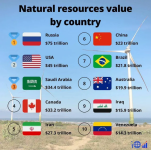
That's not how it works, brother. Imagine the idea of disregarding oil revenue while lamenting Saudi Arabia's massive, record-setting trade deficit. That would be wrong, too.
The trade deficit and current account figures are distinct from one another. The key focus is the current account, which essentially represents total income minus total expenditures. It's not acceptable to simply disregard income generated from services, trade, and tourism. Türkiye still needs to address its current account deficit; however, there have been significant improvements over the past few years, particularly from a macroeconomic perspective.
Improvements were largely driven by the net energy balance and core trade items

think.ing.com
Current account swings to a record surplus in August as tourism inflows surge, foreign investors return

www.turkiyetoday.com
The current account deficit is projected to be approximately 1.5% of our GDP by the end of this year. This is entirely manageable. A trade deficit is not necessarily a negative aspect. When a country's businesses invest in machinery and equipment, and the government is allocating funds towards infrastructure and modernization, a trade deficit often arises naturally; however, these investments are likely to generate greater returns in the long run. Additionally, Türkiye's current account was at -9% in 2011, but since then, the trend has been improving.
Don't view every criticism as a personal attack on the Saudi people. I've met numerous Saudis who are far more intelligent than I could ever be. BTW, it's not the citizens of Saudi Arabia who are hindering progress, but rather the House of Saud and certain groups within the Saudi society. You say that changes have occurred and that the nation will advance positively. I truly hope you're correct and that the Kingdom doesn't interfere with its people doing their best.
My talk of a Turkish trade deficit and currency fluctuations in regard to the Lira were only mentioned because they are the only negative elements of the Turkish economy that I could think of. That and debt (which by itself is not a bad thing per se). It was more praise than anything else.
Turkey is the most economically advanced (diversified) Muslim-majority nation as well. Turkey has taken enormous strides. My father, as I have written a few times on the old PDF, was living in Besiktas for 2-3 years during his early childhood (he learned Turkish as well, later forgot most of it) and mingled with other children of diplomats and locals, back in the 1960's and he has often talked about the massive development from back then compared to today. He also travelled across much of Turkey (my grandfather loved to travel in each country he was stationed in, same thing in Indonesia) from Izmir to Trabzon to Adana and Hatay.
I view Turkey in a positive light (always did that) and never made a secret out of it. A personal element is also ancestral ties to Anatolia on my father's side a few generations back. Like many Hijazis. Long shared history too. From an purely objective perspective there is no animosity between KSA and Turkey and a economically strong Turkey, as I wrote already, is a very good thing for KSA and the wider Arab world in particular those Arab countries that are geographically close to Turkey.
KSA and the Arab world can learn a lot from Turkey's political and social reforms (from the time of Ataturk and more recently under Erdogan) and in particularly economic reforms which would be implemented in many Arab states (In theory) as well.
It is more about the outdated and quite frankly ignorant rhetoric of reducing it all to oil. Which quite frankly, as I wrote, has been as much of a blessing as a curse and historically speaking, Arabs in the oil era, have been weaker than throughout most of recorded history. No comparison really.
Anyway, your initial points, as I wrote, I would have largely agreed with if this was 10-15 years ago but the changes that KSA has undergone, socially and economically cannot be underestimated and every data confirms this from a larger economy, healthy growth rates, economic diversification, massive increase of sovereign wealth funds, most importantly women participation reaching European levels (who would have thought that?), unemployment lowest ever in history
https://www.peninsulacs.com/post/saudi-unemployment-hits-historic-low , many retarded laws that were harming KSA (self-inflicted) on every front, economic growth included, largely removed etc. If MbS continues this way and reaches many of the stated goals (does not necessarily need to happen by 2030, by all accounts most goals will not be reached fully by 2030, like most construction projects across the world as well or most large goals for that matter), he will be remembered as a historic figure for KSA. Despite his past blunders or future ones. No leader is perfect after all. Even more so a guy that just turned 40 in a region that is otherwise ruled (often) by dinosaurs.
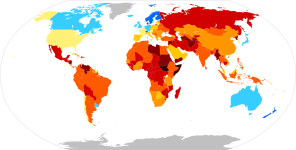
I agree that there is a challenge in regards to system of governance and the House of Saud play a role here but MbS has also done many needed reforms on this front. Basically cutting the family down to size and fighting/combatting corruption to a great extend. As with any leaders and leadership (same case with Erdogan) there remains nepotism and a lot of money is probably going "missing" and what not (what you could expect) but KSA is not some isolated island and part of the region, a region that has been struggling with wasta, corruption and what not for many decades and that is not going to end completely anytime soon. However KSA is doing quite well on this front even globally.
Take a look at corruption index rankings.

en.wikipedia.org
Problem, if you ask me with KSA, is that the leadership will have to include the people more in the decision making process (already occurring given that most high-ranking government positions, other than the figureheads (governors/emirs and obviously the king/ruler/crown prince), are all ordinary (non-House of Saud) members, even in the military. KSA has a majlis/clan/tribal system that is hard for foreigners to fully grasp. The influence of clans/tribes cannot be underestimated on mots fronts (even governmental) which without a consensus, the entire regime/rule would crash. Also it is an system that has been in place, in parts of KSA (Najd) for almost 300 years and it is a system not brought from abroad or enforced upon KSA by foreigners like many systems in the Muslim world and rulers.
Anyway it is inevitable long-term that there will be a greater power-sharing agreement, possibly modeled after the Jordanian/Moroccan/Kuwaiti models. Problem is though that democracy as we know it is not perfect (far from it) and in a country like KSA, democracy could pose some challenges. Anyway the system for now, while far from perfect, is working and as long as KSA is developing in the right direction (the case nowadays) on most fronts, I would prefer a gradual development towards this, rather than rapid/sudden/forced changes. That rarely ends well.
Anyway everyone will have their various opinions depending on who you ask and which ideology the person will have.
Thank you for the warm words. Personally I am disappointed in the low trade volume (relatively speaking) between KSA and Turkey but it seems that there is growth and in particular strategic ties in terms of military deals. I have heard about KSA/GCC funding for KAAN and other strategic Turkish military projects and if that is the case, I am happy about this development. Much more preferable than buying Western arms.
But in any case, KSA-Turkey ties should have been greater/tighter throughout the ages and whatever distrust or rivalry there existed or exists, it is better left aside and instead focused on more mutually beneficial relationship (economically most importantly in today's world).
A lot of it is probably due to foreign policy elements of Erodagan (that he now seems to have abandoned) related to the MB. As you know, the monarchies are terrified of that movement because the MB has openly stated that they seek their removal. That entire rivalry, is also very moronic if you ask me. Monarchies and MB are by nature both conservative movements (in nature) that rely on tradition, religion (Islam) as legitimacy and they should be able to cooperate just like during the Nasser era where most of them (I am talking about the Egyptian MB, the main branch of the MB today - after all it is an Egyptian political movement) were hosted by KSA. Some had a good element others less so. Sahwa era is a good read. Qutbism another.
Personally I consider them as a pan-Arab political party, although Egyptian in nature, now branched out in many Arab nations. I see no reason to combat any political movements, whether left, right, Islamist etc. In a perfect world they should all have a say/be a part of the political process. Basically your average European/Western system. Problem is that this is not always occurring in our part of the world and many leaders (those that came to power) have used cheap populism and slogans to gain and strengthen their grip on power. Give me an absolute monarchy based upon history (300 years in this case of the House of Saud) over a coup figure or whatever.
I am sure that most Turks would also have preferred the Ottomans to continue in one way or another form, if the alternative was some kind of populist rule and regime changes/military coups every 5 years.
For the very same reason that Erdogan (among many other reasons) have been so long in power and enjoyed so much support in Turkey. My theory at least, given the history of military coups in Turkey. We saw what almost occurred again back in 2016.
**** crap, that was a long post, even for my standards. Sorry, ending it here.


tradingeconomics.com
www.dailysabah.com










:max_bytes(150000):strip_icc()/GettyImages-1323151704-53b2c793e93f4e4988a4002c955f48c0.jpg)

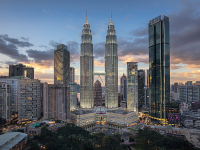
 Türkiye — $1.818 trillion
 Indonesia — $1.480 trillion
 Saudi Arabia — $1.343 trillion
 United Arab Emirates — $661.0 billion
 Malaysia — $547.1 billion
 Bangladesh — $506.4 billion
 Pakistan — $450.1 billion
 Egypt — $442.9 billion
 Kazakhstan — $397.9 billion
 Nigeria — $386.7 billion
 Algeria — $331.9 billion
 Iran — $312.0 billion
 Iraq — $245.2 billion
 Qatar — $203.0 billion
 Morocco — $195.6 billion
 Uzbekistan — $178.2 billion
 Kuwait — $146.9 billion
 Oman — $121.4 billion
 Turkmenistan — $83.1 billion
 Azerbaijan — $78.4 billion
 Jordan — $64.9 billion
 Tunisia — $60.7 billion
 Libya — $52.5 billion
 Bahrain — $48.8 billion
 Sudan — $44.7 billion
 Senegal — $40.5 billion
 Lebanon — $34.5 billion
 Mali — $33.8 billion
 Albania — $33.3 billion
 Burkina Faso — $32.5 billion


