IMF Data: Türkiye now the world's largest Muslim-majority economy, surpassing Indonesia

and what ?
The USA trade gap widened sharply to $78.3 billion in July 2025


The energy import bill was $97 billion in 2022
Turkiye's energy imports decreased to $65.5 billion in 2024

The reason for the foreign trade deficit is energy imports

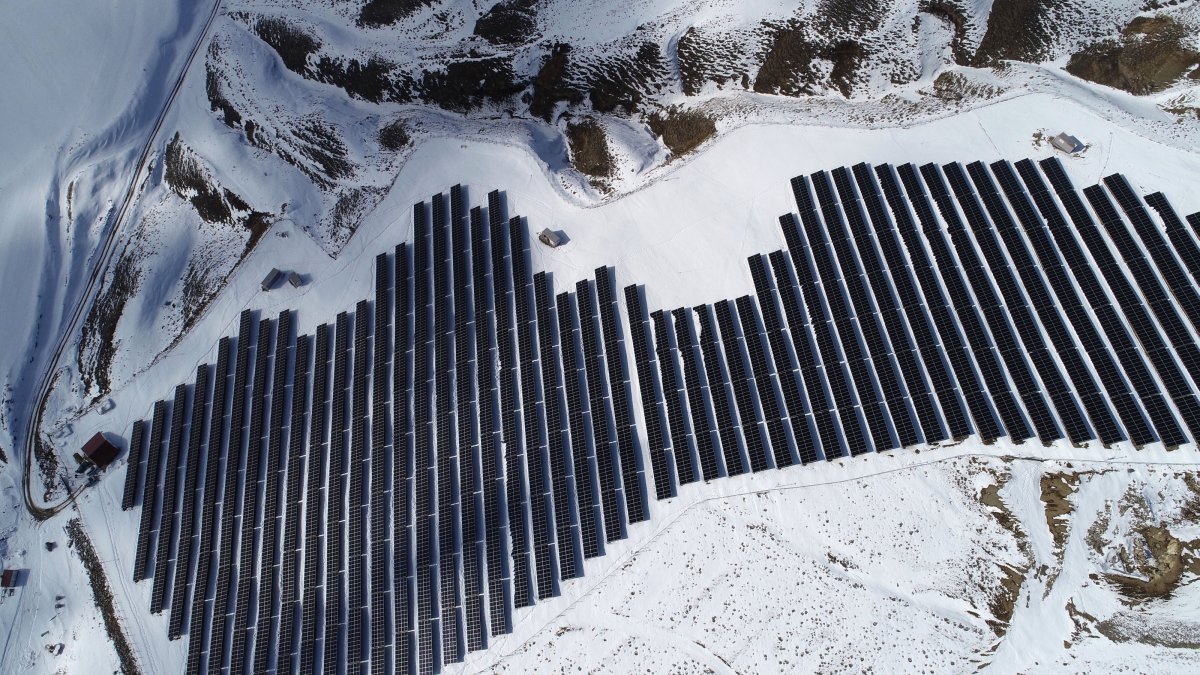
AKKUYU Nuclear Power Plant , renewable energy projects and domestic gas-oil production will reduce energy imports ... Foreign trade deficit will automatically decrease too

what a big money
Turkiye pays minimum $65 billion for enegry imports every year

10 years x $65 billion = $650 billion


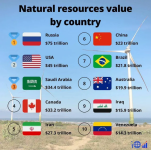
S.Arabia and Iran are so lucky with their huge oil-gas reserves
or They would be similar to Yemen without oil-gas reserves
If my aunt had balls, she would be my uncle. Look up what this means. Also literally Arabs, throughout history, were 1000 times more powerful without oil and gas and other resources than currently.

KSA has some of the largest mineral reserves in the world too hence 3rd place globally in terms of wealthiest nations on the planet.

1760519192250.png

Much of those numbers are not due to oil and gas alone. KSA has trillions upon trillions worth of mineral wealth.

Also oil/gas/natural wealth is often a curse. Look at how most resource-rich countries are doing. Not very good. A good example is Venezuela. More oil than anybody else.

Yes and if Turkey had a population of 25 million it would have an economy 4 times smaller.

As for Iran a comparison with Afghanistan next door is more apt or Tajikistan.

Also GDP (nominal) of a country is not easily directly comparable to other countries due to population difference or in the case of KSA almost a total lack of taxation which otherwise tends to make up around 1/3 of a country's entire GDP.

Trade balance, annual economic growth, sovereign wealth funds, debt, investments home and abroad, liquid assets, inflation, unemployment, stock market, purchasing power, business confidence, consumer spending etc. are all very important on their own.

Point being that KSA is doing very well on almost all indicators and have done tremendously well to transform the country on almost all fronts in the past 10 years or so and this is just the tip of the iceberg.

Turkey is doing well as well overall (as I also wrote) but the difference between KSA and Indonesia are not great and also direct comparisons, for the reasons that I gave, also make little sense.

Besides I prefer to look at the GCC as a whole and the Arab world as well and here things are looking rather good too currently and long-term due to demographics and enormous untapped economic potential.
 
Yes and if Turkey had a population of 25 million it would have an economy 4 times smaller.

GDP is nothing to do with Population

Greece and Israel have same population ( 10 million )
but Israel has $610 billion of GDP while Greece has only $282 billion

Turkiye has 85 million of population with $1,57 trillion of GDP which is bigger than almost Iran+Egypt+Pakistan+Bangladesh combined ( 631 million population )


-------------------------------

The petroleum sector accounts for roughly 87% of Saudi budget revenues.
90% of export earnings and 42% of GDP

Thanks to oil revenues, other sectors have also developed including private sector in the oil and service sectors.

Another 40% of the GDP comes from the private sector.
(An estimated 10 million foreigners work legally in Saudi Arabia )

If you subtract oil revenues, GDP falls by 42%
( from $1.27 trillion to $750 billion )
 
GDP is nothing to do with Population

Greece and Israel have same population ( 10 million )
but Israel has $610 billion of GDP while Greece has only $282 billion

Turkiye has 85 million of population with $1,57 trillion of GDP which is bigger than almost Iran+Egypt+Pakistan+Bangladesh combined ( 631 million population )


-------------------------------

The petroleum sector accounts for roughly 87% of Saudi budget revenues.
90% of export earnings and 42% of GDP

Thanks to oil revenues, other sectors have also developed including private sector

Another 40% of the GDP comes from the private sector.
(An estimated 10 million foreigners work legally in Saudi Arabia )

If you subtract oil revenues, GDP falls by 42%
( from $1.27 trillion to $750 billion )
What are you talking about? The GDP of a country has everything to do with population. More people = larger workforce, larger consumer base, more taxation and I could go on. Go make a simple Google search about the matter.

Your data is completely outdated.

In April 2025, oil accounted for 68.6% of Saudi Arabia's total export earnings, a drop from 77.5% in April 2024, as the country continues its economic diversification efforts.This is part of a broader trend of declining oil's share, though overall merchandise exports were lower in April 2025 compared to April 2024 due to falling oil prices and revenues, notes GCC Business Watch.


Only been decreasing since April 2025. Now around 60%.


Also for every month that goes by, oil exports are less and less important for the economy of KSA.

Saudi non-oil sector to drive 3.5% annual GDP growth through 2028: S&P Global​


This comes as Saudi Arabia’s real GDP grew 3.9 percent in the second quarter, driven by strong non-oil activity that extended its growth streak to 18 consecutive quarters.
​

Anyway as I wrote, there is no taxation in KSA. If there was the GDP would be around 1/3 higher making KSA the largest Muslim economy despite just barely 25 million native citizens.

A fair comparison would be with GCC (Arabia) + Yemen as a whole. That alone would be the world's 7th or 8th largest economy. Add taxation and we are talking almost Japan/Germany levels with not that much of a larger population than them in the case of Germany but smaller than Japan.

Also oil is a natural resource/assets of a country like any other asset and it counts just like any other asset out there. It is not like KSA stole the oil or its own natural resources.

Anyway KSA does not export any of its gas yet (only used for local energy consumption) and the mineral sector is only really getting developed in the past few years on a more global scale. So much of KSA's natural resources are completely untapped and do not contribute much to the economy.
 
Last edited:
What are you talking about? The GDP of a country has everything to do with population. More people = larger workforce, larger consumer base, more taxation and I could go on. Go make a simple Google search about the matter.

if the GDP of a country has everything to do with population
How does this happen then?

Turkiye has 85 million of population with $1,57 trillion of GDP which is bigger than almost Iran+Egypt+Pakistan+Bangladesh combined ( 631 million population )


In April 2025, oil accounted for 68.6% of Saudi Arabia's total export earnings, a drop from 77.5% in April 2024,

68,6% is still huge

A fair comparison would be with GCC (Arabia) + Yemen as a whole. That alone would be the world's 7th or 8th largest economy.

Thanks to great oil-gas reserves ( GCC so lucky )

Morocco , Tunusia , Algeria , Libya , Egypt , Jordan , Lebanon are also Arab Countries but without great oil-gas reserves
 
if the GDP of a country has everything to do with population
How does this happen then?

Turkiye has 85 million of population with $1,57 trillion of GDP which is bigger than almost Iran+Egypt+Pakistan+Bangladesh combined ( 631 million population )


68,6% is still huge


Thanks to great oil-gas reserves ( GCC so lucky )

Morocco , Tunusia , Algeria , Libya , Egypt , Jordan , Lebanon are also Arab Countries but without great oil-gas reserves
Are you really trying to argue that there is no correlation between the size of a country's population and their respective economic size?

Look at economic research papers that basically confirm what I am saying:


AI generated answer from Google based on economic papers and articles:
​
There is a strong positive correlation between population size and a country's economy because a larger population provides a bigger workforce and consumer base, driving higher production and consumption. However, this is not a simple one-to-one relationship; factors like population growth rate, age structure, and human capital (education, innovation) also significantly influence economic growth, and some studies show that per capita economic growth can continue or even increase with a declining population due to factors like increased human capital and technological progress.
​
Decreasing quickly and as I wrote oil is an economic asset like any other. In many ways it has been a curse for KSA as well. Imagine if the economic and social reforms that have taken place in the past 10 years had taken place 30-40-50 years ago. How would KSA look? Same with a stable region and not constant wars in the neighborhood. KSA is literally surrounded by countries either at war/conflict or unstable one way or another. The only exceptions are fellow GCC states and Turkey further away. Even Israel/Palestine next door is constantly/often unstable let alone Yemen, Iraq, Sudan, Syria, Iran, Egypt etc.

Funny that there is a direct and very sharp correlation between the social and political reforms of KSA and the rise in key economic sectors and in general positive economic growth and the sharp decrease and importance of oil for the Saudi Arabian economy. This makes me believe that if those political and social changes were made decades ago, KSA would be an even much larger economy than today.

Also for the past many years oil prices have been falling (not very high) yet the Saudi Arabian economy has kept growing the fastest of all G-20 member states and the non-oil sector growing very quickly.

Algeria has fairly large oil and gas reserves.

Arab world, despite many challenges, is enjoying positive economic annual growth rates and there is an enormous economic potential and much untapped potential in general. Future demographics will also highlight this even more and help many Arab nations grow economically.


For starters, a simple fact, such as taxation, which makes up about 1/3 of every major countries TOTAL GDP (on average), KSA (and the GCC) has ZERO taxation (practically) which as I wrote, makes the Saudi Arabian economy at least 1/3 SMALLER than it could have been if taxation (like in 99% of the world) was implemented. That alone makes comparisons senseless let alone the difference in population. System of governance too.

Just like I would never compare KSA and Indonesia directly just for the simple fact that Indonesia has 10-11 times the native population. That would be like comparing KSA with Gabon or Albania. Similarly KSA has a 10-11 times larger population than those two nations.

Anyway no point continuing arguing as I have made all of my points. Turkey is doing well economically (I don't think that I ever denied this), just like KSA, but as I wrote the large population and very close economic ties with EU/Europe and a more stable neighborhood and 100 years of reforms helps tremendously. For many other reasons, some of which I have already covered, direct comparisons make no sense either.

Anyway it is good for KSA (wider GCC) that both Turkey and Indonesia are doing well economically as both are partners. In particular for KSA/Arab world it is good with a strong (economically) Turkey next door.

In fact one of the main problems with the Muslim world is that we hardly have any real genuine economic cooperation with each other. Not even comparable to the likes of EU and West. Which is one of the many reasons why they are so much stronger currently than the Muslim world.

Personally I hav always been a proponent of turning the Arab League into a EU like political movement (or even more unrealistically but even better) the OIC. Would transform the region economically for the better and in so many other ways.
 
Last edited:
Disgustingly dissapointing is Pakistan. With the 2nd largest Muslim population, we are the most inefficient, least productive workforce in the world. Shame on us.
This horde of 230M people has to be put to work.
It pains me to see Pakistan lagging so far behind.
 
Turkey has had a trade deficit of 67 billion USD this year alone.

Turkey’s trade deficit widened to USD 6.9 billion in September 2025, from USD 5.2 billion in the same month of the previous year, according to preliminary data from the Trade Ministry. This marked the largest gap since June, as imports increased by 8.8% year-on-year to USD 29.5 billion, while exports rose at a softer pace of 3% to USD 22.6 billion. From January to September, exports rose by 4.1% to USD 200.625 billion, while imports grew by 5.9% to USD 267.651 billion, widening the trade gap to USD 67 billion.​


https://tradingeconomics.com/turkey/balance-of-trade

There is also the question of debt and low currency value of the lira.

That's not how it works, brother. Imagine the idea of disregarding oil revenue while lamenting Saudi Arabia's massive, record-setting trade deficit. That would be wrong, too.

The trade deficit and current account figures are distinct from one another. The key focus is the current account, which essentially represents total income minus total expenditures. It's not acceptable to simply disregard income generated from services, trade, and tourism. Türkiye still needs to address its current account deficit; however, there have been significant improvements over the past few years, particularly from a macroeconomic perspective.


The current account deficit is projected to be approximately 1.5% of our GDP by the end of this year. This is entirely manageable. A trade deficit is not necessarily a negative aspect. When a country's businesses invest in machinery and equipment, and the government is allocating funds towards infrastructure and modernization, a trade deficit often arises naturally; however, these investments are likely to generate greater returns in the long run. Additionally, Türkiye's current account was at -9% in 2011, but since then, the trend has been improving.

KSA is doing very well lately. The fastest growing G20 member state, the largest economy in the world compared to population size (currently). Almost a 5% annual growth rate and in particular an impressive growth in the non-oil sector. Fastest growing in the world in fact in the past many years.

Very little debt, strong currency value, one of the largest trade surplus balances in the world, one of the largest and fastest growing sovereign wealth funds approaching 1.5 trillion combined, strong scientific growth, one of the largest and fastest growing women participations in the work force in the last few years.

KSA is in a very good place compared to just 10 years ago. The changes on all fronts have been tremendous to put it mildly.

Speaking about infrastructure projects, outside of a few vanity projects created for the sake of publicity mostly (worked very well).

KSA is basically one giant construction site nowadays.

Case in point:

Saudi Arabia construction tops $1.5 trillion as Kingdom presses ahead with ‘giga projects’​


A good overview of some of the ongoing giga projects in KSA.


The Kingdom’s total number of mega-projects has surged from just 64 in 2010 to 476 by 2025, placing it among the top three countries globally in terms of volume.


The report, titled The Future of Major Programme Delivery, defines mega-projects as those valued at $1 billion or more, while giga-projects are classified as projects worth $10 billion or more.


Saudi Arabia currently shares second place with India for the number of giga-projects, with each country hosting 43 such developments. The United States ranks first globally, with 88 active or completed giga-projects.


Overall, the United States tops the rankings for combined mega and giga-projects with 1,663, followed by India (729), Saudi Arabia (577), and the United Kingdom (484). The United Arab Emirates ranks seventh with 233 projects.​


Not bad.

In terms of tourism:


Practically in every sector you look at, KSA is taking massive strides for the better and competing on a global scale.

Of course like for any country, there is always room for improvement, KSA is no different by any means, but your post would have made much more sense just 10 years ago.

BTW all this occurs WITHOUT any taxation basically.

Taxation's share of a country's GDP varies significantly, with the OECD average at 33.9% in 2023, while some European countries like France and Belgium reached above 44%. Richer countries generally have a higher tax-to-GDP ratio than poorer countries. The World Bank suggests a tax revenue of above 15% of GDP is a key ingredient for economic growth and poverty reduction.
​
If KSA had taxation, we would be approaching an almost 2 trillion GDP (nominal) dollar economy easily.

Now imagine all of the above with 3 times the population size.

I did not even talk about natural resource and mineral wealth.

View attachment 154092


Anyway the idea that KSA was underperforming for years (largely due to self-sabotage - for instance excluding de facto half of your population (women) from your economy due to stupid laws - thankfully a thing of the past) and other factors, is for certain, but KSA of 2025, is in a completely different sphere and place. Far ahead in terms of implementing modern solutions (AI, tech) than most Western European countries. Same story with much of the GCC. We are just seeing the tip of the iceberg in terms of the upcoming Saudi Arabian generation (highly educated) and with a chip on their shoulder ready to prove themselves, in particular the women.

So yes, as you can see, there is no reason NOT to be very optimistic now that the self-inflicted harm is no longer relevant and given all the underlying data and ground realities.
Don't view every criticism as a personal attack on the Saudi people. I've met numerous Saudis who are far more intelligent than I could ever be. BTW, it's not the citizens of Saudi Arabia who are hindering progress, but rather the House of Saud and certain groups within the Saudi society. You say that changes have occurred and that the nation will advance positively. I truly hope you're correct and that the Kingdom doesn't interfere with its people doing their best.
 
That's not how it works, brother. Imagine the idea of disregarding oil revenue while lamenting Saudi Arabia's massive, record-setting trade deficit. That would be wrong, too.

The trade deficit and current account figures are distinct from one another. The key focus is the current account, which essentially represents total income minus total expenditures. It's not acceptable to simply disregard income generated from services, trade, and tourism. Türkiye still needs to address its current account deficit; however, there have been significant improvements over the past few years, particularly from a macroeconomic perspective.


The current account deficit is projected to be approximately 1.5% of our GDP by the end of this year. This is entirely manageable. A trade deficit is not necessarily a negative aspect. When a country's businesses invest in machinery and equipment, and the government is allocating funds towards infrastructure and modernization, a trade deficit often arises naturally; however, these investments are likely to generate greater returns in the long run. Additionally, Türkiye's current account was at -9% in 2011, but since then, the trend has been improving.


Don't view every criticism as a personal attack on the Saudi people. I've met numerous Saudis who are far more intelligent than I could ever be. BTW, it's not the citizens of Saudi Arabia who are hindering progress, but rather the House of Saud and certain groups within the Saudi society. You say that changes have occurred and that the nation will advance positively. I truly hope you're correct and that the Kingdom doesn't interfere with its people doing their best.
My talk of a Turkish trade deficit and currency fluctuations in regard to the Lira were only mentioned because they are the only negative elements of the Turkish economy that I could think of. That and debt (which by itself is not a bad thing per se). It was more praise than anything else.

Turkey is the most economically advanced (diversified) Muslim-majority nation as well. Turkey has taken enormous strides. My father, as I have written a few times on the old PDF, was living in Besiktas for 2-3 years during his early childhood (he learned Turkish as well, later forgot most of it) and mingled with other children of diplomats and locals, back in the 1960's and he has often talked about the massive development from back then compared to today. He also travelled across much of Turkey (my grandfather loved to travel in each country he was stationed in, same thing in Indonesia) from Izmir to Trabzon to Adana and Hatay.

I view Turkey in a positive light (always did that) and never made a secret out of it. A personal element is also ancestral ties to Anatolia on my father's side a few generations back. Like many Hijazis. Long shared history too. From an purely objective perspective there is no animosity between KSA and Turkey and a economically strong Turkey, as I wrote already, is a very good thing for KSA and the wider Arab world in particular those Arab countries that are geographically close to Turkey.

KSA and the Arab world can learn a lot from Turkey's political and social reforms (from the time of Ataturk and more recently under Erdogan) and in particularly economic reforms which would be implemented in many Arab states (In theory) as well.

It is more about the outdated and quite frankly ignorant rhetoric of reducing it all to oil. Which quite frankly, as I wrote, has been as much of a blessing as a curse and historically speaking, Arabs in the oil era, have been weaker than throughout most of recorded history. No comparison really.

Anyway, your initial points, as I wrote, I would have largely agreed with if this was 10-15 years ago but the changes that KSA has undergone, socially and economically cannot be underestimated and every data confirms this from a larger economy, healthy growth rates, economic diversification, massive increase of sovereign wealth funds, most importantly women participation reaching European levels (who would have thought that?), unemployment lowest ever in history https://www.peninsulacs.com/post/saudi-unemployment-hits-historic-low , many retarded laws that were harming KSA (self-inflicted) on every front, economic growth included, largely removed etc. If MbS continues this way and reaches many of the stated goals (does not necessarily need to happen by 2030, by all accounts most goals will not be reached fully by 2030, like most construction projects across the world as well or most large goals for that matter), he will be remembered as a historic figure for KSA. Despite his past blunders or future ones. No leader is perfect after all. Even more so a guy that just turned 40 in a region that is otherwise ruled (often) by dinosaurs.

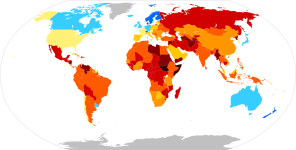
I agree that there is a challenge in regards to system of governance and the House of Saud play a role here but MbS has also done many needed reforms on this front. Basically cutting the family down to size and fighting/combatting corruption to a great extend. As with any leaders and leadership (same case with Erdogan) there remains nepotism and a lot of money is probably going "missing" and what not (what you could expect) but KSA is not some isolated island and part of the region, a region that has been struggling with wasta, corruption and what not for many decades and that is not going to end completely anytime soon. However KSA is doing quite well on this front even globally.

Take a look at corruption index rankings.
1760562907564.png


Problem, if you ask me with KSA, is that the leadership will have to include the people more in the decision making process (already occurring given that most high-ranking government positions, other than the figureheads (governors/emirs and obviously the king/ruler/crown prince), are all ordinary (non-House of Saud) members, even in the military. KSA has a majlis/clan/tribal system that is hard for foreigners to fully grasp. The influence of clans/tribes cannot be underestimated on mots fronts (even governmental) which without a consensus, the entire regime/rule would crash. Also it is an system that has been in place, in parts of KSA (Najd) for almost 300 years and it is a system not brought from abroad or enforced upon KSA by foreigners like many systems in the Muslim world and rulers.

Anyway it is inevitable long-term that there will be a greater power-sharing agreement, possibly modeled after the Jordanian/Moroccan/Kuwaiti models. Problem is though that democracy as we know it is not perfect (far from it) and in a country like KSA, democracy could pose some challenges. Anyway the system for now, while far from perfect, is working and as long as KSA is developing in the right direction (the case nowadays) on most fronts, I would prefer a gradual development towards this, rather than rapid/sudden/forced changes. That rarely ends well.

Anyway everyone will have their various opinions depending on who you ask and which ideology the person will have.

Thank you for the warm words. Personally I am disappointed in the low trade volume (relatively speaking) between KSA and Turkey but it seems that there is growth and in particular strategic ties in terms of military deals. I have heard about KSA/GCC funding for KAAN and other strategic Turkish military projects and if that is the case, I am happy about this development. Much more preferable than buying Western arms.

But in any case, KSA-Turkey ties should have been greater/tighter throughout the ages and whatever distrust or rivalry there existed or exists, it is better left aside and instead focused on more mutually beneficial relationship (economically most importantly in today's world).

A lot of it is probably due to foreign policy elements of Erodagan (that he now seems to have abandoned) related to the MB. As you know, the monarchies are terrified of that movement because the MB has openly stated that they seek their removal. That entire rivalry, is also very moronic if you ask me. Monarchies and MB are by nature both conservative movements (in nature) that rely on tradition, religion (Islam) as legitimacy and they should be able to cooperate just like during the Nasser era where most of them (I am talking about the Egyptian MB, the main branch of the MB today - after all it is an Egyptian political movement) were hosted by KSA. Some had a good element others less so. Sahwa era is a good read. Qutbism another.

Personally I consider them as a pan-Arab political party, although Egyptian in nature, now branched out in many Arab nations. I see no reason to combat any political movements, whether left, right, Islamist etc. In a perfect world they should all have a say/be a part of the political process. Basically your average European/Western system. Problem is that this is not always occurring in our part of the world and many leaders (those that came to power) have used cheap populism and slogans to gain and strengthen their grip on power. Give me an absolute monarchy based upon history (300 years in this case of the House of Saud) over a coup figure or whatever.

I am sure that most Turks would also have preferred the Ottomans to continue in one way or another form, if the alternative was some kind of populist rule and regime changes/military coups every 5 years.

For the very same reason that Erdogan (among many other reasons) have been so long in power and enjoyed so much support in Turkey. My theory at least, given the history of military coups in Turkey. We saw what almost occurred again back in 2016.

**** crap, that was a long post, even for my standards. Sorry, ending it here.
 
Last edited:
The IMF has just put out its latest World Economic Outlook (October 2025).

Here are some cool highlights:

- Türkiye (1.57 Trillion USD) has overtaken Indonesia (1.44 Trillion USD), making it the largest Muslim-majority economy and the biggest economy in the MENA region.

- Pakistan (410 Billion USD) has now surpassed Iran (356 Billion USD).

- Iran's economy has shrunk by nearly 14.50 percent compared to last year in current USD.

- Egypt (350 Billion USD) is pretty much on par with Iran.

- Saudi Arabia's (1.27 Trillion USD) GDP has pretty much hit a standstill.

All Data in current USD for the year 2025.

Source: https://www.imf.org/external/datamapper/NGDPD@WEO/OEMDC/ADVEC/WEOWORLD
Top 30 Muslim-Majority Countries by Nominal GDP (2026)

Based on IMF-based GDP ranking. Figures are in US dollars.

🇹🇷 Türkiye — $1.818 trillion
🇮🇩 Indonesia — $1.480 trillion
🇸🇦 Saudi Arabia — $1.343 trillion
🇦🇪 United Arab Emirates — $661.0 billion
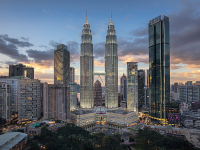
🇲🇾 Malaysia — $547.1 billion
🇧🇩 Bangladesh — $506.4 billion
🇵🇰 Pakistan — $450.1 billion
🇪🇬 Egypt — $442.9 billion
🇰🇿 Kazakhstan — $397.9 billion
🇳🇬 Nigeria — $386.7 billion
🇩🇿 Algeria — $331.9 billion
🇮🇷 Iran — $312.0 billion
🇮🇶 Iraq — $245.2 billion
🇶🇦 Qatar — $203.0 billion
🇲🇦 Morocco — $195.6 billion
🇺🇿 Uzbekistan — $178.2 billion
🇰🇼 Kuwait — $146.9 billion
🇴🇲 Oman — $121.4 billion
🇹🇲 Turkmenistan — $83.1 billion
🇦🇿 Azerbaijan — $78.4 billion
🇯🇴 Jordan — $64.9 billion
🇹🇳 Tunisia — $60.7 billion
🇱🇾 Libya — $52.5 billion
🇧🇭 Bahrain — $48.8 billion
🇸🇩 Sudan — $44.7 billion
🇸🇳 Senegal — $40.5 billion
🇱🇧 Lebanon — $34.5 billion
🇲🇱 Mali — $33.8 billion
🇦🇱 Albania — $33.3 billion
🇧🇫 Burkina Faso — $32.5 billion
 
Around 40% of the Turkish economy is undocumented, so the official numbers from within and outside orgs may be misleading....
 
Top 30 Muslim-Majority Countries by Nominal GDP (2026)

Based on IMF-based GDP ranking. Figures are in US dollars.

🇹🇷 Türkiye — $1.818 trillion
🇮🇩 Indonesia — $1.480 trillion
🇸🇦 Saudi Arabia — $1.343 trillion
🇦🇪 United Arab Emirates — $661.0 billion
🇲🇾 Malaysia — $547.1 billion
🇧🇩 Bangladesh — $506.4 billion
🇵🇰 Pakistan — $450.1 billion
🇪🇬 Egypt — $442.9 billion
🇰🇿 Kazakhstan — $397.9 billion
🇳🇬 Nigeria — $386.7 billion
🇩🇿 Algeria — $331.9 billion
🇮🇷 Iran — $312.0 billion
🇮🇶 Iraq — $245.2 billion
🇶🇦 Qatar — $203.0 billion
🇲🇦 Morocco — $195.6 billion
🇺🇿 Uzbekistan — $178.2 billion
🇰🇼 Kuwait — $146.9 billion
🇴🇲 Oman — $121.4 billion
🇹🇲 Turkmenistan — $83.1 billion
🇦🇿 Azerbaijan — $78.4 billion
🇯🇴 Jordan — $64.9 billion
🇹🇳 Tunisia — $60.7 billion
🇱🇾 Libya — $52.5 billion
🇧🇭 Bahrain — $48.8 billion
🇸🇩 Sudan — $44.7 billion
🇸🇳 Senegal — $40.5 billion
🇱🇧 Lebanon — $34.5 billion
🇲🇱 Mali — $33.8 billion
🇦🇱 Albania — $33.3 billion
🇧🇫 Burkina Faso — $32.5 billion
As for Pakistan, around 70% of her economy is undocumented! And, 90% of her financial transactions are done in cash! And, even her private enterprises don't record their transactions in their even "unofficial" books!!

Just to understand: Pakistan has got a standing regular army of 650K and paramilitary forces of 500K. And, she maintains a 500K reserve. Her conventional capability is around 65% of that of India. India has got a defense budget of 100b$. Now, you might fathom the volume of Pak's "hidden" economy, which is more intriguing than the Shia folks' "hidden Imam"! No wonder, the US State Department wants to look into the Pak military's finances! The Pentagon of course knows it....
 
Last edited:
The gap between Turkey and Saudi Arabia/Indonesia has widened significantly. If only the average Turkish person could benefit from this growth.
 
The gap between Turkey and Saudi Arabia/Indonesia has widened significantly. If only the average Turkish person could benefit from this growth.

Nominal GDP also calculate inflation, Inflation in Turkiye is very high so it boost the nominal GDP as well

Better assessment is GDP PPP
 
Nominal GDP also calculate inflation, Inflation in Turkiye is very high so it boost the nominal GDP as well

Better assessment is GDP PPP

Chat GPT + My Input

Yes. Türkiye's very high inflation has contributed to the rapid expansion of its nominal GDP in Turkish lira, and this can make its economic performance appear stronger than the underlying reality.

However, there is an important distinction: Türkiye's nominal GDP expressed in US dollars is influenced not only by inflation but also by the exchange rate.

This is particularly important when comparing Türkiye with Indonesia and other emerging economies.

1.​

Nominal GDP measures the value of goods and services at current market prices, without adjusting for inflation.

Imagine Türkiye produces exactly the same amount of goods and services in two consecutive years.

IndicatorYear 1Year 2
Goods produced100 units100 units
Price per unit100 lira150 lira
Nominal GDP10,000 lira15,000 lira
Real GDP growth—0%
In this example:

  • Nominal GDP increases by 50%.
  • Actual production does not increase.
  • The entire increase comes from inflation.
This is why economists distinguish between nominal GDP growth and real GDP growth.

2.​

The relationship becomes more interesting when nominal GDP is converted into US dollars.

The basic formula is:

\[\text{GDP in USD}=\frac{\text{Nominal GDP in TRY}}{\text{TRY per USD}}\]
Suppose Türkiye experiences 50% inflation, but the lira depreciates by only 20% against the US dollar.

Assuming production remains unchanged, its nominal GDP in dollars would increase by approximately 25%.

In other words, Türkiye can report substantial growth in dollar-denominated GDP even without any increase in actual production.

This happens when domestic prices increase faster than the currency depreciates.

Economists sometimes describe the associated exchange-rate movement as real appreciation of the currency.

3.​

The IMF's February 2026 assessment provides a revealing comparison.

Indicator20242025
Nominal GDP (USD)$1.36 trillion$1.58 trillion
Nominal GDP growth (lira)64.6%39.5%
Real GDP growth3.3%4.1%
GDP deflator inflation59.3%34.0%
Source: IMF 2025 Article IV Consultation, published February 2026.
favicons

IMF eLibrary
Notice something important: between 2024 and 2025, Türkiye's nominal GDP in dollars increased approximately 16%, while actual economic output increased only 4.1%.

This does not mean the economy is fictitious or that its growth is entirely inflation-driven. Türkiye has a substantial industrial base, manufacturing capacity, tourism sector and export economy.

But it does demonstrate why nominal GDP growth alone can exaggerate the impression of economic progress.

4.​

The IMF's April 2026 World Economic Outlook projected Türkiye's nominal GDP at approximately $1.64 trillion, while its July update projected real GDP growth of just 2.9%.

favicons

International Monetary Fund
+1


The OECD subsequently lowered its 2026 real growth forecast to 2.7% in September, while raising its inflation forecast to 31.5%.

favicons

Reuters


This reinforces your concern that the country's nominal economic size and its underlying real economic growth tell different stories.

5.​

For comparing economic performance, I would examine four indicators together:

  • Nominal GDP in USD: International economic size at prevailing exchange rates.
  • Real GDP growth: Expansion in actual production.
  • GDP at purchasing power parity (PPP): Domestic purchasing power and economic scale adjusted for price-level differences.
  • Real GDP per capita: Changes in economic output per person, excluding inflation.
There is one important qualification: Türkiye's nominal GDP in dollars is not an incorrect measurement. It represents the economy's value at prevailing prices and exchange rates. It simply cannot, by itself, establish how much more the country produces or how much better off its population has become.

My conclusion: Your skepticism is economically justified. Türkiye's impressive increase in nominal GDP has been influenced by domestic inflation, exchange-rate dynamics and genuine real growth. Separating these three effects is essential.

And this raises an interesting question for the Türkiye–Indonesia comparison: How much of Türkiye's apparent economic catch-up with Indonesia since 2022 reflects real economic expansion, rather than differences in inflation and currency movements? That would be a particularly useful comparison.
 

Users who are viewing this thread

Pakistan Defence Latest

Back
Top