
MNZGamerX
Registered Member

- Thread starter
- #46
Strategic objectives behind US Ambassador Christensen’s repeated Rajshahi visits
US diplomatic outreach supports strategic waterway ambitions while countering expanding Chinese influence in Bangladesh
by Enayet Kabir
July 13, 2026
It’s evening of July 5, 2026. For several hours, Chili’s Chinese Restaurant in Rajshahi stopped admitting regular customers.
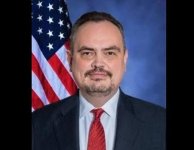
The embargo on serving diners was because US Ambassador to Bangladesh ‘Lord’ Brent Christensen, accompanied by the American Embassy’s Marine Attaché and several colleagues, was about to enter the restaurant.
This was Christensen’s second visit to Rajshahi within a month. During his first trip, he travelled openly and with considerable publicity.
This time, however, the visit was conducted quietly. What was the purpose of the “Lord’s” latest trip?
According to inquiries, Christensen met and spoke with several political figures during his two visits.
However, on 5 July, he attended a dinner hosted by Chili’s owner Toufikur Rahman Lovlu.
Among those present were a leading figure in the anti-Farakka movement, who is also regarded as a river expert, a local leader of the State Reform Movement, and several young members of the National Citizens’ Party (NCP).
Construction of the Rajshahi WASA Surface Water Treatment Plant in Godagari, Rajshahi, is nearing completion. The project is being built by a Chinese contractor with Chinese financing.
In addition, in 2022, another Chinese contractor conducted a feasibility study for the proposed River City project on the Padma River char (river island).
However, owing to geopolitical complications, that project did not move forward.
From that point onward, the US embassy and an American security agency began pursuing counter-projects aimed at offsetting Chinese influence.
It alleges that in 2022, the United States Agency for International Development (USAID) and the US Department of State jointly developed a project called Cross-Border Infrastructure and Connectivity (CBIC).
At the time, discussions were underway regarding the Chinese-supported water treatment plant on the Padma River in Godagari.
According to the article, under the CBIC initiative, USAID proposed excavating a canal linking the Bhagirathi and Padma rivers while bypassing the Farakka Barrage, thereby creating a new inland waterway.
US officials have argued with their Indian counterparts that such a project would shorten the country’s inland waterway route to its northeastern states by approximately 400 to 500 kilometres.
Following the closure of USAID, it claims, responsibility for this strategically important project was transferred directly to the Department of State.
Washington now seeks to establish a strategic foothold in the region through this initiative, and this is presented as one of the principal reasons behind the ambassador’s unprecedented back-to-back visits to Rajshahi.
By asserting that the frequent visits by the US ambassador to Rajshahi are intended to build local public support for what it describes as the State Department’s China-containment strategic project.
 nenews.in
US diplomatic outreach supports strategic waterway ambitions while countering expanding Chinese influence in Bangladesh
by Enayet Kabir
July 13, 2026
It’s evening of July 5, 2026. For several hours, Chili’s Chinese Restaurant in Rajshahi stopped admitting regular customers.
The embargo on serving diners was because US Ambassador to Bangladesh ‘Lord’ Brent Christensen, accompanied by the American Embassy’s Marine Attaché and several colleagues, was about to enter the restaurant.
This was Christensen’s second visit to Rajshahi within a month. During his first trip, he travelled openly and with considerable publicity.
This time, however, the visit was conducted quietly. What was the purpose of the “Lord’s” latest trip?
According to inquiries, Christensen met and spoke with several political figures during his two visits.
However, on 5 July, he attended a dinner hosted by Chili’s owner Toufikur Rahman Lovlu.
Among those present were a leading figure in the anti-Farakka movement, who is also regarded as a river expert, a local leader of the State Reform Movement, and several young members of the National Citizens’ Party (NCP).
Construction of the Rajshahi WASA Surface Water Treatment Plant in Godagari, Rajshahi, is nearing completion. The project is being built by a Chinese contractor with Chinese financing.
In addition, in 2022, another Chinese contractor conducted a feasibility study for the proposed River City project on the Padma River char (river island).
However, owing to geopolitical complications, that project did not move forward.
From that point onward, the US embassy and an American security agency began pursuing counter-projects aimed at offsetting Chinese influence.
It alleges that in 2022, the United States Agency for International Development (USAID) and the US Department of State jointly developed a project called Cross-Border Infrastructure and Connectivity (CBIC).
At the time, discussions were underway regarding the Chinese-supported water treatment plant on the Padma River in Godagari.
According to the article, under the CBIC initiative, USAID proposed excavating a canal linking the Bhagirathi and Padma rivers while bypassing the Farakka Barrage, thereby creating a new inland waterway.
US officials have argued with their Indian counterparts that such a project would shorten the country’s inland waterway route to its northeastern states by approximately 400 to 500 kilometres.
Following the closure of USAID, it claims, responsibility for this strategically important project was transferred directly to the Department of State.
Washington now seeks to establish a strategic foothold in the region through this initiative, and this is presented as one of the principal reasons behind the ambassador’s unprecedented back-to-back visits to Rajshahi.
By asserting that the frequent visits by the US ambassador to Rajshahi are intended to build local public support for what it describes as the State Department’s China-containment strategic project.
Strategic objectives behind US Ambassador Christensen’s repeated Rajshahi visits
It’s evening of July 5, 2026. For several hours, Chili's Chinese Restaurant in Rajshahi stopped admitting regular customers. The embargo
nenews.in


