Indian Missiles and Guided Munitions

None of them are simple.

MIRV requires a lot of work and even then it is vulnerable to mid course interception. Decoys gets burned up in atmosphere making them useless in endo atmosphere interception. Drones are not even worth mentioning here. And no, drones do not carry nukes. Ballistic missiles can.
Nope MIRVs are not easy to shoot down in Midcourse, the PBV manuvers and dispenses warheads in space at Mach 20+, good luck with intercepting that, the angle of attack for RVs is quite steeper which makes it even worse odds for endo atmospheric defenses. With steeper angle of attack and terminal correction system (Basically MARV) on the RV endo atmospheric defenses become useless
 
I wonder how effective this would be, as the US patriot system and THAD both try to kill incommming missiles mid flight. We saw in Ukraine, Israel and Iraq that the these system were unable to stop Mutiple war heads traveling at supersonic speeds.

The famous video of the latest Russian system against the Ukrainian weapons plant where the clouds changed color and over 9 warheads all reached thiertargets is proof of how hard it is to defend against such a system. Western analysts were shaking in their boots as these 5000 km ranged weapons could effectively shut down all NATO air bases in Europe.

Since MRBM fly lower and a different trajectory, I wonder how effective would this system be in the Pakistan - India conflict in a non nuclear scenarios against Indian airbases.


kV
Patriot and/or THAAD system(s) have successfully intercepted multiple projectiles in different encounters but such coverage is limited on PDF. I posted just one tweet showing that in the Iran - Israel war thread some trolls turned on me. Nevertheless, in fairness, Russia (and Iran) have spent many years producing a large number of ballistic missiles for conventional strikes and both could send volley after volley at a target. Ukrainian Patriot interceptor stockpile is very low because Trump did not replenish it. Patriot and/or THAAD system(s) are also deployed in different regions around the world and not concentrated in a single battlefield to counter Russian or Iranian strikes. Their interceptors are also in high demand and orders will take years to meet due to their sophisticated technical requirements. Therefore, it depends on how a war is fought.
 

Shock to China-Pakistan: India Now Owns Latest Israeli Air Lora & Ice Breaker Missile Technology​

India has unlocked full technology transfer for two cutting-edge Israeli missiles — marking a leap in self-reliant defence manufacturing
Indian Masterminds Bureau
Air Lora Ice Breaker Tech Transfer Deal


Indian Masterminds Stories


New Delhi: India’s defence landscape has just taken a dramatic turn. The Ministry of Defence (MoD) has successfully secured full technology transfer from Israel for two state-of-the-art missile systems: the Air Lora missile (a quasi-ballistic missile) and the Ice Breaker missile (a smart cruise missile).

ADVERTISEMENT

This development opens the door for Indian industry to build these weapons indigenously under the “Atmanirbhar Bharat” drive.

Background of the Air Lora Ice Breaker Tech Transfer Deal​

India’s defence imports have long included high-tech weapons. But the shift now is from “import” to “in-country manufacture”.

A secret Indian delegation visited Israel to lay the groundwork for manufacturing of Air Lora and Ice Breaker on Indian soil.

By securing design know-how, system architecture, seeker integration and full manufacturing rights, India moves closer to becoming a weapon-exporter, not just a buyer.

Read Also: HAL and Russia’s UAC Join Hands to Manufacture SJ-100 Passenger Aircraft in India under ‘Aatmanirbhar Bharat’

The move is timely because tensions at India’s borders — both with China and Pakistan — have underlined the need for advanced, long-range, precision weapons.

ADVERTISEMENT

What’s the Air Lora Ice Breaker Tech Transfer Deal?​

The agreement gives India “complete transfer of missile technology” for both missile types — meaning Indian firms can build them from scratch.

The two key Indian firms mentioned: Bharat Electronics Limited (BEL) and Hindustan Aeronautics Limited (HAL). BEL will handle seekers, electronics, guidance; HAL will integrate systems, manufacture at scale.

This move aligns with India’s broader defence self-reliance strategy and may position India to export these missiles to friendly nations in future.

About the Missiles​

Air Lora​

  • Range: Over 400 km, allowing long-range strike capability.
  • Payload: Approx. 570 kg high-explosive warhead.
  • Precision: Circular Error Probable (CEP) under 10 metres — very accurate.
  • Terrain and trajectory: Quasi-ballistic path, manoeuvres at high altitude, can redirect in-flight targets — harder to intercept.

Ice Breaker​

  • Role: Smart cruise missile developed by Rafael Advanced Defence Systems (Israel) with AI-enabled target recognition.
  • Range: Over 300 km. Weight: Around 400 kg — lighter, can be deployed from smaller aircraft.
  • Features: Adaptive flight path, stealth design, works in GPS-denied / jamming-heavy zones.

Importance of Air Lora Ice Breaker Tech Transfer Deal for India​

Border pressures: China’s layered air-defence systems along the LAC, Pakistan’s GPS jamming during “Operation Sindoor” in May 2025. India needed missiles that can bypass defences and strike deep.

Self-reliance: Rather than just buying, India is now manufacturing. This means jobs, tech expertise, exports, and strategic autonomy.

Strategic deterrence: With long-range strike weapons, India can target high-value enemy infrastructure without exposing its aircraft to heavy defence zones.

ADVERTISEMENT

Challenges & Next Steps​

Export controls: Israel and India still must finalise terms, licences, local supply chains, and export frameworks.

Production ramp-up: BEL & HAL will need to set up full manufacturing lines, train workforce, manage quality control for world-class missile systems.

Integration and trials: Indian services will need to test these missiles, integrate with platforms, and confirm reliability under operational conditions.

Strategic oversight: The decision will likely go through high-level review such as the Cabinet Committee on Security (CCS).

Read Also: Global Eyes on Tejas Mk2: How This Ma
 
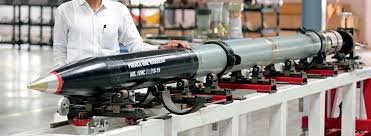
I read somewhere that The UNGUIDED PINAKA costs 25 LACKS PER PIECE....thats not even the guided version.....

pinaka.jpg
 
Last edited:
Two DcPPs has been identified for production and Joint User trial directive issued by Indian Air Force (IAF) for Pralay.
To view this content we will need your consent to set third party cookies.
For more detailed information, see our cookies page.


EO-SAAW small-diameter bomb, can even hit moving targets. Makes it a perfect weapon to be launched from CATS Warrior type drones as re-usable cruise missiles.
To view this content we will need your consent to set third party cookies.
For more detailed information, see our cookies page.


Electromagnetic railgun: The railgun launcher has been upgraded and successfully test fired multiple times. Can't wait to see this firing DRDO ramjet artillery shells :)
To view this content we will need your consent to set third party cookies.
For more detailed information, see our cookies page.


Hypersonic cruise missile: Scramjet engine testing, and project is sanctioned for funding.
To view this content we will need your consent to set third party cookies.
For more detailed information, see our cookies page.


Akash missile trials with Indian-made RF seeker successful
To view this content we will need your consent to set third party cookies.
For more detailed information, see our cookies page.


I read somewhere that The UNGUIDED PINAKA costs 25 LACKS PER PIECE....thats not even the guided version.....

View attachment 159834
Guided Pinaka costs 78 lakh.
 
Damn thats expensive.....but arent your factorise supposedly producing 5000 rockets per year?
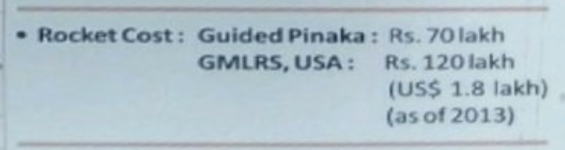
How's that expensive
1763306833862.png


5000 is the 'capacity' with Munitions India Limited of OFB. Solar Industries has additional production capacity, probably equal. Taking total to maybe 7-10,000 per year capacity.
 
How's that expensive
View attachment 159872


5000 is the 'capacity' with Munitions India Limited of OFB. Solar Industries has additional production capacity, probably equal. Taking total to maybe 7-10,000 per year capacity.


Anything made in India should cost far far less than what it costs in America and likely the products are not of the same quality. So pinaka is expensive if it is "locally" made.
 
How's that expensive
View attachment 159872


5000 is the 'capacity' with Munitions India Limited of OFB. Solar Industries has additional production capacity, probably equal. Taking total to maybe 7-10,000 per year capacity.
IM TAKING ABOUT A SINGLE ROCKET......DOES THAT COSTS 70 LAKHS FOR ONE SINGLE PIECE?....IF ITS TRUE THEN IT IS EXPENSIVE
 
IM TAKING ABOUT A SINGLE ROCKET......DOES THAT COSTS 70 LAKHS FOR ONE SINGLE PIECE?....IF ITS TRUE THEN IT IS EXPENSIVE


It is! In comparison US GMLRS is about 168K USD (for local consumption and not export which is quite expensive). No way anything made in India should cost so much unless it is filled with "imported" goods.
 
IM TAKING ABOUT A SINGLE ROCKET......DOES THAT COSTS 70 LAKHS FOR ONE SINGLE PIECE?....IF ITS TRUE THEN IT IS EXPENSIVE
But it's accurate enough too. With a CEP of 1-3 metres. This is probably because it has only been started to be produced now. Maybe has better EW/GPS denial features. Or maybe it's the export cost. Or maybe it's because it has only now been started to be produced and costs will decline with more production. 🤷🏻‍♂️
To view this content we will need your consent to set third party cookies.
For more detailed information, see our cookies page.
 
I read somewhere that The UNGUIDED PINAKA costs 25 LACKS PER PIECE....thats not even the guided version.....

View attachment 159834
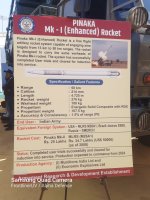
1763314432242.jpeg
That's the cost of Enhanced Version which used a more expensive but higher Isp solid fuel


Anything made in India should cost far far less than what it costs in America and likely the products are not of the same quality. So pinaka is expensive if it is "locally" made.
You do realise the this is a rocket we are talking about and not a garment factory in the slums of Karachi.
Lower PCI doesn't affect weapons cost nearly as much as you think it does.

Also Indian Guided Pinaka costs half as much as GMLRS despite the price of GMLRS being more than a decade old, in 2025 GMLRS costs even higher

Do you think Ammonium perchlorate costs 50% less in India than China/US just because of India's lower PCI.
Yes Defence Products will be affected by PCI but not more than 25%, they are more affected by how industrialized a country is
 
Last edited:

Users who are viewing this thread

Pakistan Defence Latest

Back
Top