Indian Politics and Internal News

:coffee:

To view this content we will need your consent to set third party cookies.
For more detailed information, see our cookies page.

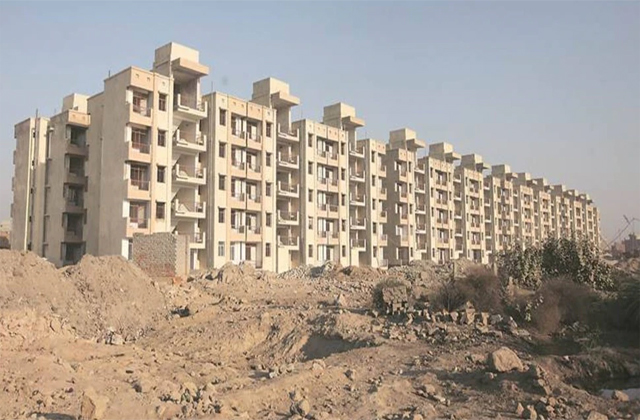
Housing Society near Ghatkesar Telangana​


.
=>

2021_4image_17_44_364962829noida[1].jpg

 
bro, as per in post#21, its the only 31% Middle Class of India who drive Manfacturing & Service sector of India.
more than 60% population of India is based on agriculture and they might having Per Capita income compared to agriculture countries like Nepal.....

I would say, India is "self sufficient" for Its wide range of industries with countries like Russia. India-Russia-Iran dont have to trade with US-NATO :)
.

Buddy, I don't know how to say this to you

Most INDIANS ARE IDIOTS

if any country in the world had a open door immigration policy towards India, they would make their country into a Indian slum with street shitting and communal violence and the rest of it

This is more to do with the selective immigration process

If you carefully select the most educated or competent of a country with over 1.4 billion people and bring many of them over on specific educational or work visa with waiting jobs then the outcome is not a result of that countries people but more because you only selected a tiny competent and educated, motivated minority and left the rest of the 1.4 billion street shitters at home

here we find GDP on PPP per capita of India at $11,112 as compared to Agriculture countries like Nepal at $5,348 and Myanmar at $5,206 . :coffee:


here we find Middle Class of India is estimated at nearing 31% , as below in the article ☕

hence i would say, 31% Middle class of India would be having income more than $20,000+ on PPP while remaining more than 60% population of India, mostly based on agriculture, would be having per capita income close to Agriculture countries like Nepal and Myanmar, listed at $5,348 and $5,206 respectively ...... ☕

while its also true that GDP of developing countries have a large share of 'undocumented' part of GDP also. the ratio of GDP we dont document to measure true picture of Per Capita Income as in case of developing countries ☕
 
Last edited:
Buddy, I don't know how to say this to you

Most INDIANS ARE IDIOTS

if any country in the world had a open door immigration policy towards India, they would make their country into a Indian slum with street shitting and communal violence and the rest of it

This is more to do with the selective immigration process

If you carefully select the most educated or competent of a country with over 1.4 billion people and bring many of them over on specific educational or work visa with waiting jobs then the outcome is not a result of that countries people but more because you only selected a tiny competent and educated, motivated minority and left the rest of the 1.4 billion street shitters at home
Obviously "Indian Immigrants" are related to tech fields like software and medical...many through the H1B program. I'm in financial software and there are many H1B workers and we are all paid in the $200,000+ range so seeing a figure of $150,000 is not surprising. Actually it has only been in the last 10 years that Indian workers have been paid well. Previously they all worked through agencies which took a big cut of their pay.


good day sir. how you people see my last post#70?

here we see the 31% Middle Class of India having Per Capita Income at 20,000+ on PPP, close to developed countries.
while the remaining 69% population, mostly based on Agriculture, having per capita income close to Agriculture countries like Nepal-Myanmar etc, post#70....

here, its worth saying that people of India-Nepal-Myanmar based on Agriculture have more peaceful life that those who are based on Manufacturing & Serivces. how would you see this difference :coffee:
 
1733707325551.png

ICCR Scholarship for 2022-23 - Mauritius​

Important Information about ICCR Scholarship for 2022-23

Mauritius


ICCR has announced 100 Scholarship slots globally under the “ICCR Scholarship for Indian Culture” for pursuing study of Indian Culture such as dance, music, theatre, performing art, sculpture, Indian languages, Indian cuisine, etc. for the academic year 2022-23. :coffee:

Applicants must be above the age of 18 years.

Interested students may apply online though ICCR’s A2A scholarship portal www.a2ascholarships.iccr.gov.in. ext-link-icon

THE LAST DATE FOR RECEIVING THE APPLICATIONS THROUGH A2A PORTAL IS 30 APRIL 2022.

Applicants may opt 5 Universities/Institutes in order of their preference. The admission, as far as possible, shall be given as per applicant’s preference. However, there may be a scenario when students do not get admission in their preferred Universities/Institutes due to limited number of seats on offer. Students should therefore be prepared to receive admission from any of their five preferences. ☕

To ascertain English proficiency of the applicants, 500-word essay in English has been introduced.

The Applicants are advised to visit respective University/institute website regularly for courses offered, eligibly criteria and general information about the University/institute before applying for admission.

Detailed guidelines on the process for applying for ICCR scholarship are available on the A2A portal www.a2ascholarships.iccr.gov.in.

It is compulsory for all the selected ICCR scholarship Candidates to procure Medical Insurance policy with minimum sum assured for Indian Rupees Five Lakhs (USD 6800) per annum before travel to India or immediately after reaching India.

For further information, students may contact the Embassy via email at [email protected].

 
.
Foreign Reserve of India is estimated as below: :coffee:

List of countries by foreign-exchange reserves - Wikipedia


en.wikipedia.org
en.wikipedia.org
 
Congress SOROS Links now becoming a hot topic

To view this content we will need your consent to set third party cookies.
For more detailed information, see our cookies page.
 
What a fantastic commitment to creed and country. Shame Pakistan doesn't have any parallels to the Tata group. Our pride is Bahria Town and the Askari group of companies.

i consider Pakistan-Bangladesh-Afghan-Nepal-Burma-Sri Lanka, the SAARC as part of Indian Subcontinent.
I would say, the Indian industries belong to all the SAARC members :)

i would recon cross border activities among the SAARC nations similar to at least ASEAN region. the SAARC would have people to people movement at least similar to ASEAN :coffee:

 
Interesting Facts about India

India never invaded any country in her last 100000 years of history.

When many cultures were only nomadic forest dwellers over 5000 years ago, Indians established Harappan culture in Sindhu Valley (Indus Valley Civilization)

The name 'India' is derived from the River Indus, the valleys around which were the home of the early settlers. The Aryan worshippers referred to the river Indus as the Sindhu.


The Persian invaders converted it into Hindu. The name 'Hindustan' combines Sindhu and Hindu and thus refers to the land of the Hindus.

Chess was invented in India.

Algebra, Trigonometry and Calculus are studies, which originated in India.

The 'Place Value System' and the 'Decimal System' were developed in India in 100 B.C.

The World's First Granite Temple is the Brihadeswara Temple at Tanjavur, Tamil Nadu. The shikhara of the temple is made from a single 80-tonne piece of granite. This magnificent temple was built in just five years, (between 1004 AD and 1009 AD) during the reign of Rajaraja Chola.


India is the largest democracy in the world, the 7th largest Country in the world, and one of the most ancient civilizations.

The game of Snakes & Ladders was created by the 13th century poet saint Gyandev. It was originally called 'Mokshapat'. The ladders in the game represented virtues and the snakes indicated vices. The game was played with cowrie shells and dices. In time, the game underwent several modifications, but its meaning remained the same, i.e. good deeds take people to heaven and evil to a cycle of re-births.

The world's highest cricket ground is in Chail, Himachal Pradesh. Built in 1893 after leveling a hilltop, this cricket pitch is 2444 meters above sea level.

The world's first university was established in Takshila in 700 BC. More than 10,500 students from all over the world studied more than 60 subjects. The University of Nalanda built in the 4th century was one of the greatest achievements of ancient India in the field of education.

Ayurveda is the earliest school of medicine known to mankind. The Father of Medicine, Charaka, consolidated Ayurveda 2500 years ago.

India was one of the richest countries till the time of British rule in the early 17th Century. Christopher Columbus, attracted by India's wealth, had come looking for a sea route to India when he discovered America by mistake.

The Art of Navigation & Navigating was born in the river Sindh over 6000 years ago. The very word Navigation is derived from the Sanskrit word 'NAVGATIH'.
The word navy is also derived from the Sanskrit word 'Nou'.

Bhaskaracharya rightly calculated the time taken by the earth to orbit the Sun hundreds of years before the astronomer Smart. According to his calculation, the time taken by the Earth to orbit the Sun was 365.258756484 days.

The value of "pi" was first calculated by the Indian Mathematician Budhayana, and he explained the concept of what is known as the Pythagorean Theorem. He discovered this in the 6th century, long before the European mathematicians.

Algebra, Trigonometry and Calculus also originated in India.Quadratic Equations were used by Sridharacharya in the 11th century.
The largest numbers the Greeks and the Romans used were 106 whereas Hindus used numbers as big as 10*53 (i.e. 10 to the power of 53) with specific names as early as 5000 B.C.during the Vedic period.Even today, the largest used number is Terra: 10*12(10 to the power of 12).

Until 1896, India was the only source of diamonds in the world
(Source: Gemological Institute of America).

The Baily Bridge is the highest bridge in the world. It is located in the Ladakh valley between the Dras and Suru rivers in the Himalayan mountains. It was built by the Indian Army in August 1982.

Sushruta is regarded as the Father of Surgery. Over2600 years ago Sushrata & his team conducted complicated surgeries like cataract, artificial limbs, cesareans, fractures, urinary stones, plastic surgery and brain surgeries.

Usage of anaesthesia was well known in ancient Indian medicine. Detailed knowledge of anatomy, embryology, digestion, metabolism,physiology, etiology, genetics and immunity is also found in many ancient Indian texts.


India exports software to 90 countries.

The four religions born in India - Hinduism, Buddhism, Jainism, and Sikhism, are followed by 25% of the world's population.

Jainism and Buddhism were founded in India in 600 B.C. and 500 B.C. respectively.

Islam is India's and the world's second largest religion.

There are 300,000 active mosques in India, more than in any other country, including the Muslim world.

The oldest European church and synagogue in India are in the city of Cochin. They were built in 1503 and 1568 respectively.

Jews and Christians have lived continuously in India since 200 B.C. and 52 A.D. respectively

The largest religious building in the world is Angkor Wat, a Hindu Temple in Cambodia built at the end of the 11th century.

The Vishnu Temple in the city of Tirupathi built in the 10th century, is the world's largest religious pilgrimage destination. Larger than either Rome or Mecca, an average of 30,000 visitors donate $6 million (US) to the temple everyday.


Sikhism originated in the Holy city of Amritsar in Punjab. Famous for housing the Golden Temple, the city was founded in 1577.
Varanasi, also known as Benaras, was called "the Ancient City" when Lord Buddha visited it in 500 B.C., and is the oldest, continuously inhabited city in the world today.

India provides safety for more than 300,000 refugees originally from Sri Lanka, Tibet, Bhutan, Afghanistan and Bangladesh, who escaped to flee religious and political persecution.

His Holiness, the Dalai Lama, the exiled spiritual leader of Tibetan Buddhists, runs his government in exile from Dharmashala in northern India.

Martial Arts were first created in India, and later spread to Asia by Buddhist missionaries.

Yoga has its origins in India and has existed for over 5,000 years.

Interesting Facts about India - My India, My Pride - Know India: National Portal of India

The value of "pi" was first calculated by the Indian Mathematician Budhayana, and he explained the concept of what is known as the Pythagorean Theorem. He discovered this in the 6th century, long before the European mathematicians. :coffee:

The value of "pi" was first calculated by the Indian Mathematician Budhayana, and he explained the concept of what is known as the Pythagorean Theorem. He discovered this in the 6th century, long before the European mathematicians.
Ref :- Aryabhatiya-Ganita pada, 10
VALUE OF "pi" GIVEN BY ARYABHATA In 476 A.D itself was so accurate …

It is remarkable that Aryabhata I is the first Indian mathematician to have given the value of "pi" which is correct to four decimal places. Even then, he mentions that this value of "pi" is approximate ( asanna ).

Aryabhata I has given a fairly accurate value of ∏ (correct to four decimal places). Why does he still say that this value of ∏ is approximate (asanna)?

The great Kerala astronomer Nilakantha Somayaji (1500 A.D.) provides a very rational explanation for Aryabhata’s conjecture that ∏is irrational. This achievement of Aryabhata as early as the fifth century is commendable in the light of the fact that it was only thirteen centuries later, in 1761 Lambert proved that ∏ is irrational. (i.e. cannot be expressed as a ratio of two numbers). Again, it was as recently as in 1882 that Lindemann of Germany established the further fact that ∏ is transcendental. Be Proud to be an Indian....!

To view this content we will need your consent to set third party cookies.
For more detailed information, see our cookies page.


.
=>

Pi (π)​

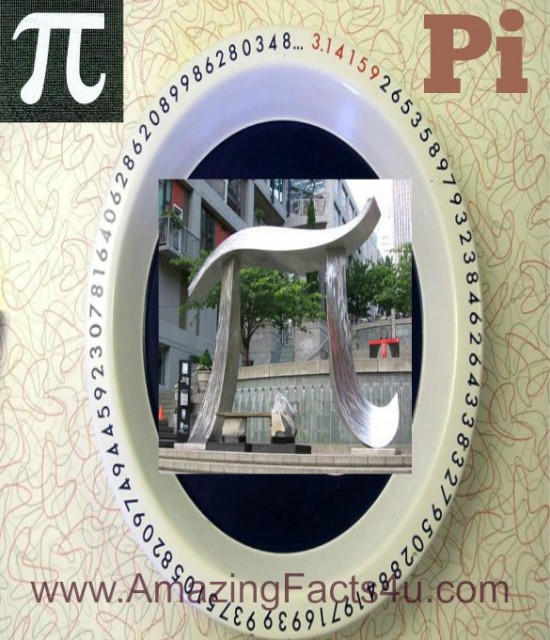
50 Amazing Facts About Pi (π) | Amazing Facts 4U​

  1. Pi (π) is the most recognized mathematical constant in the world. It is the most important and intriguing number in all of mathematics. ☕
  2. The number Pi (π) is the ratio of the circumference to the diameter of a circle. It can’t be expressed as a fraction, being an irrational number.
  3. Amazingly when written as a decimal it never repeats and never ends and the sequence is random.
  4. Pi is also referred to as the “circular constant,” “Archimedes’ constant,” or “Ludolph’s number.”
  5. Pi has been studied by the human race for almost 4,000 years.
  6. By 2000 B.C., Babylonians established the constant circle ratio as 3 1/8 or 3.125. The ancient Egyptians arrived at a slightly different value of 3 1/7 or 3.143.
  7. One of the earliest known records of pi was written by an Egyptian named Ahmes ( 1650 B.C.) on what is now known as the Rhind Papyrus. He was off by less than 1%. It was the first attempt to calculate pi by building a square inside the circle.
  8. Ancient mathematicians tried to compute pi by inscribing polygons with more and more sides that would more closely approach the area of a circle. Archimedes used a 96 sided polygon. Chinese mathematician Liu Hui inscribed a 3,072-sided polygon to calculate pi to 3.14159. Tsu Ch’ung and his son inscribed polygons with as many as 24,576 sides to calculate pi. ☕
  9. The closest fractions to the approximate value of Pi in increasing accuracy are 22/7, 355/113 & 104348/33215. The last fraction is accurate to 0.00000001056%.
  10. Ancient Egyptians knew the value of Pi. The vertical height of the Great Pyramid of Giza times 3.14 equals the perimeter of the base.
  11. Plato (427-348 B.C.) supposedly obtained for his day a fairly accurate value for pi: √2 + √3 = 3.146
  12. Pi was also rigorously calculated by one of the greatest mathematicians of the ancient world, Archimedes of Syracuse (287-212 B.C.) who met his death due to his fascination with Pi. He was too engrossed in his work to notice that Roman soldiers had taken the Greek city of Syracuse. When a Roman soldier approached him, he yelled in Greek “Do not touch my circles!”. The Roman soldier simply cut off his head.
  13. The amazing fact is that the value of “pi” was first calculated by the Indian Mathematician Budhayana, and he explained the concept of what is known as the Pythagorean Theorem. He discovered this in the 6th century, which was long before the European mathematicians.
  14. Sir Isaac Newton calculated pi to at least 16 decimal places.
  15. Ludolph van Ceulen (1540-1610) spent most of his life calculating the first 36 digits of pi (which were named the Ludolphine Number). These numbers were engraved on his now lost tombstone.
  16. Austrian astronomer Christoph Greenberger arrived at 38 digits in 1630 which remains the most accurate approximation manually achieved using polygonal algorithms.
  17. In 1706 William Jones (1675-1749) first gave the Greek letter (π), its current mathematical definition. Incidentally, Pi is the 16th letter in the Greek alphabet.
  18. The amazing fact is that mathematician William Shanks spent 15 years calculating the value of pi to 707 places but unfortunately he made a mistake on the 528th digit writing a 5 instead of a 4. This discovery was made 60 years after his death. This mistake made the next 179 digits wrong!
  19. Amazingly the mirror image of 3.14 is “PIE.”
  20. Pi day is celebrated on March 14 at the Exploratorium in San Francisco (March 14 is 3/14) at 1:59 PST which is 3.14159.
  21. Pi Day is also Albert Einstein’s birthday. He was born on March 14, 1879, in Ulm Wurttemberg, Germany.
  22. Amazingly Pi occurs in hundreds of equations in many sciences including those describing the DNA double helix, a rainbow, ripples spreading from were a raindrop fell into the water, general relativity, geometry problems, waves, etc.☕
  23. An amazing way to remember the value of Pi (3.1415926) by counting letters in the words of the sentence ” May I have a large container of coffee ?”.
  24. Another sentence to remember Pi, “How I wish I could calculate Pi ?” (3.141592).
  25. College mnemonics: “How I like a drink, alcoholic of course, After the heavy lectures involving quantum mechanics!” 14 decimals of pi are represented in this quote: 3.14159265358979.
  26. In 1961, fellow mathematicians Daniel Shanks and John Wrench became famous for breaking the 100,000th decimal of on an IBM 7090 at the IBM Data Processing Center in New York. They used an equation found by Stormer in 1896.
  27. It is amazing to note that the first decimal place of Pi is a 1 and also that the one-millionth decimal place of Pi is also a 1!
  28. The amazing fact is that the 763-768 Digits of pi are 999999. This is known as the Feynman Point.
  29. The most amazing fact to be noticed is that in the first 7,000 digits, the sequence 333 is found 3 times, the sequence 555 is found 5 times & the sequence 666 is found 6 times!
  30. Amazingly if you take the 3rd, 6th, and 9th digits, they are, respectively, 1, 2, and 3. It is even more interesting to note that if you take the 100th, 200th, and 300th digits, they are respectively, 9, 6, and 3.
  31. Amazingly the sum of the first 20 decimal places, 3.14159265358979323846 (not including the 3) totals 100.
  32. The first 144 digits of pi add up to 666 and 144 = (6+6) x (6+6).
  33. The sum of the first 358 decimals of Pi adds up exactly to 1,600. It is amazing to note that 3 + 5 + 8 = 16!
  34. Since there are 360 degrees in a circle and pi is intimately connected with the circle, it is most amazing to discover that the number 360 is at the 359th digit position of pi.
  35. The first zero appears at the 32nd decimal place i.e. 3.14159265358979323846264338327950
  36. There are no occurrences of the sequence 123456 in the first million digits of pi.
  37. Amazingly the sequence 12345678 occurs at position 186557266. This string occurs only once in the first 200 million digits of Pi.
  38. Amazingly the sequence 0123456789 first appears beginning at the 17,387,594,880th decimal place.
  39. The sequence 314159 reappears at the 176,451st decimal place of Pi. In fact, this sequence actually appears further seven times within the string of the first 10 million decimals of Pi. Extending further the sequence 31415926 appears at the 50,366,472nd decimal place of Pi.
  40. The following number was found to be prime by Robert Baillie and Marvin Wunderlich at the University of Illinois in 1979. The amazing fact is that the numbers, apparently, are all in the proper order to spell out the first 37 decimals of Pi. Number is 31,415,926,535,897,932,384,626,433,832,795,028,841. It is read as 31-undecillion, 415-decillion, 926-nonillion, 535-octillion, 897-septillion, 932-sextillion, 384-quintillion, 626-quadrillion, 433-trillion, 832-billion, 795-million, 28 thousand, 841.
  41. The amazing fact is that there is a book giving the calculation of pi to two million places running to 800 pages.
  42. If the circumference of the earth were calculated using π rounded to only the ninth decimal place, an error of no more than one-quarter of an inch in 25,000 miles would result.
  43. You need to know only 20 decimal places to calculate the circumference of the Earth to a millimeter.
  44. The amazing fact is you need only 39 decimal places of Pi to estimate the circumference of the universe within the radius of one proton!
  45. Pi has been calculated up to 12.1 Trillion Digits by Alexander J. Yee & Shigeru Kondo on December 28, 2013, using the Chudnovsky formula. It took 94 days for the computer. They had previously calculated Pi up to 10 Trillion digits 2 years back which had taken them 371 days.
  46. Akira Haraguchi, a 60-year-old retired Japanese engineer set the current world record (100,000 digits) in 16 hours on October 3, 2006, in Kisarazu, east of Tokyo. His previous world record (83,431), was performed on July 1, 2005. His mnemonic system assigns symbols to numbers allowing for the memorization of Pi as a collection of stories.
  47. π is the symbol Sandra Bullock clicks on to gain access to unauthorized databases on the Web in the movie “The Net.”
  48. Amazingly a mysterious 2008 crop circle in Britain shows a coded image representing the first 10 digits of pi.
  49. The amazing fact is that a few authors have used the digits of π to establish a new form of constrained writing, where the word lengths are required to represent the digits of π in sequence. The Cadaeic Cadenza contains the first 3835 digits of π in this manner and the full-length book Not a Wake contains 10,000 words, each representing one digit of π.
  50. The amazing fact is that there is a website titled “The Pi-Search Page” at http://www.angio.net/pi/piquery.html which searches & finds any sequence of digits in Pi up to 200 million places. You may check whether your birth date figures in the list.
 
.
India invented the Number system. Zero was invented by Aryabhatta.* ☕

=>

The Discovery of Zero- India’s Mathematical Marvel​


India’s contribution to the field of Mathematics is far from ‘Nil.’

And yet, all Indians can say with a sense of pride, that it is ‘Zero!’

The discovery of Zero can be traced as far back as the 5th century, when an Indian Mathematician known as Aryabhata used the number in the Decimal System. Needless to say, this is an achievement that Indian citizens have always celebrated with a sense of pride. ☕

The discovery of the number Zero, is widely touted as the greatest of Aryabhata’s achievements. It is for that very reason, that we will take a closer look at this number over the course of this blog post.

Ready to know more about Aryabhata’s mystical ‘Zero’? Read on, to find out all the ‘somethings’ behind this seemingly innocent ‘nothing’ of a number!


=>

What is the Origin of Zero in India?​

Zero is a symbol for the concept of nothing or having nothing. Now a day’s zero both as a numeric symbol and a concept help us to do calculus, in solving complicated equations and is the basis of computer. This article deals with the invention of Zero in India, how and when it took place.


The discovery of Zero is the greatest abstraction of the human mind. It is not wrong to say that the concept or the invention of zero was revolutionary in mathematics. Zero is a symbol for the concept of nothingness or having nothing. It gives rise the ability for a common person to be able to do mathematics isn’t. Before it, mathematicians struggled to perform the simplest arithmetic calculations. Now a day’s zero both as a numeric symbol and a concept help us to do calculus, in solving complicated equations and is the basis of a computer. ☕

But the question arises from where zero number first appears?

Zero was fully developed in India around fifth century AD or first time about zero is talked in India only. In mathematics it is really vibrant in the Indian subcontinent. First place to see the ideally zero beginning to be born is from Bakhshali manuscript dating back to the third or fourth century. It is said that a farmer in 1881 dug up the text from a field in the Bakhshali village near Peshawar today is Pakistan. It is quite a complicated document because it is not just a one piece of document, but it consists of many pieces written over a pace quite a century back. With the help of radiocarbon dating technique, which is a method for measuring the content of carbon isotopes in organic material to determine its age shows that the Bakhshali manuscript consists of several texts. The oldest part dated to AD 224-383, next is to AD 680-779 and another is to AD 885-993. This manuscript has 70 leaves of birch bark and contains hundreds of zeros in the form of dots.


Users who are viewing this thread

Country Watch Latest

Back
Top