Indonesia and Geopolitics

Status
Not open for further replies.
Trends in Geopolitical
Relations

KEY FINDINGS

• Global economic stagnation, increasing debt, and the weaponisation of economic interdependence via trade wars are
key factors shaping the economic landscape of geopolitics in the
21st century.

• Geopolitical fragmentation is rising, with levels now exceeding those seen during the Cold War. The rise in fragmentation has been especially noticeable since 2008, after it had been steadily decreasing since the end of the Cold War.

• Global trade has plateaued at around 60 per cent of global GDP over the past decade, following rapid growth after 1990.

• Global military spending hit a record $2.7 trillion in 2024, a nine
per cent increase from the previous year, driven largely by conflicts like the war in Ukraine.

• Competition for influence is intensifying in regions like Africa, South Asia, and South America. In the Sahel, instability and scarce resources are drawing in rival powers and fuelling a complex struggle for control.

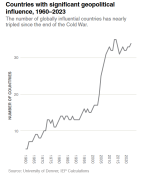
The number of globally influential countries has nearly tripled
since the Cold War, rising from 13 to 34 by 2023, with nations like Türkiye, the UAE, Vietnam, South Africa, Brazil and Indonesia expanding their influence.

COMPETITION FOR INFLUENCE


The final area in which increasing geopolitical fragmentation can be seen is in increasing competition for influence, particularly among ‘middle power’ countries seeking to extend their influence in lower and middle income countries (LMICs).

In the evolving international order, middle powers are emerging as increasingly significant actors.

While the definition of a ‘middle power’ is debated, it generally refers to states occupying an intermediate position in the global power hierarchy, possessing resources and influence below those of great powers but significantly above smaller states.

This status is often assessed based on factors like GDP, population size, and military strength, but also on their foreign policy behaviour.


Middle powers frequently favour multilateralism, diplomacy, and coalition-building, often carving out specific roles in ‘niche diplomacy’, focusing on areas like peacekeeping, arms control, or human rights.

In the current climate of US-China rivalry, these middle powers employ a variety of strategies to protect their interests, maintain autonomy, and exert influence.

Some engage in 'balancing', explicitly aligning with one great power to counter another, as seen in Australia's strengthened security ties with the United States through alliances like AUKUS to counter China's influence. Others pursue 'hedging', maintaining workable relations with both competing powers to maximise flexibility and economic benefits while seeking security assurances, a strategy historically employed by nations like Indonesia.

The rise in the importance of middle power countries can be seen by looking at the data on Foreign Bilateral Influence Capacity (FBIC), which measures the amount of economic, diplomatic, and military influence one country has over another.

Figure 2.11 charts the number of countries that account for over ten per cent of foreign influence in five or more countries. This number has increased significantly over the past sixty years, rising from five countries in 1960 to 34 in 2023. The steepest increase in the number of countries with significant influence began in 2005.
1750850618260.png


To view this content we will need your consent to set third party cookies.
For more detailed information, see our cookies page.
 
Britain Defense Minister visited Jakarta and meet Indonesian Defense Minister, Syafrie Syamsoedin

To view this content we will need your consent to set third party cookies.
For more detailed information, see our cookies page.
 

Australia should stop pretending to be a military hegemon​


Connor O’Brien


With its defence spending akin to a rounding error in comparison
to China and the US, Australia must find other ways to exert power.


1751019403928.jpeg

Published 27 Jun 2025


The trilateral security partnership AUKUS continues to dominate Australian national security debates, and for good reason given the $368 billion price tag. Yet a more fundamental question remains largely neglected. Is direct military spending really the medium-to-long-term determinant of regional security in Asia, or even security in general? On face value, the answer seems obvious. When statically comparing like-for-like countries, of course military spending matters. That being said, the quality of this spending matters even more, which should give Australia pause given its persistent defence procurement issues.

Yet China’s almost inconceivably rapid economic rise tells a different story. Reported Chinese defence spending as a proportion of GDP has actually decreased over time, despite massive increases in defence capability. In this context, China’s 2001 accession to the World Trade Organization (WTO) is by far the most important recent development shaping the balance of power in Asia, helping to supercharge Chinese economic growth. As Paul Kennedy emphasises in his canonical The Rise and Fall of the Great Powers, economic performance is a vital determinant of long-run geopolitical might in alleviating the classical trade-off between guns and butter.

Australia is particularly well placed to shape the medium- and long-term economic determinants of the regional distribution of power.

Absent a sudden ten-fold increase in its population, it will not be Australia but rather its Asian neighbours that potentially replicate China’s meteoric rise. By some estimates, India and Indonesia are projected to become the second and fourth largest economies in the world respectively by 2050.

Australia is contrastingly far too small to shape the regional balance of power via military means, and its defence investments will remain a rounding error in comparison to the sheer size of the Chinese and US military-industrial complexes. This is the inconvenient truth ignored by many pro-AUKUS commentators. In fact, to my knowledge, no AUKUS supporter has claimed that the pact will decisively shape Australia’s regional security.

At best, they see AUKUS as one piece of a broader coalitional puzzle. This is perhaps why US Undersecretary for Defence Policy Elbridge Colby, the most eloquent advocate for an Indo-Pacific “strategy of denial”, has questioned AUKUS’ benefits for the United States, especially absent ironclad Australian commitments to joining a future regional conflict. For the Trump administration, reinvigorating the US’ submarine building capacity is simply a far more pressing and consequential imperative.

That Australia cannot guarantee regional security via military means should not provoke a feeling of helplessness. It can evidently defend its territory and people for a relatively low cost.

Australia is also particularly well placed to shape the medium- and long-term economic determinants of the regional distribution of power. Australia has a highly capable albeit underfunded diplomatic service, outsized expertise in economic and trade issues, and a long history of multilateral economic dealmaking.

While the Australian government has importantly embraced a “whole-of-nation” approach to national security, the international dimension of this strategy remains peripheral, particularly with respect to global economic governance.


Despite Australia not being able to guarantee regional security via military means, it can evidently defend its territory and people for a relatively low cost (Christopher Szumlanski/defence.gov.au)

Despite Australia not being able to guarantee regional security via military means, it can evidently defend its territory and people for a relatively low cost (Christopher Szumlanski/defence.gov.au)


Moreover, the global economic order is in a profound state of flux, thanks to Trump’s “Liberation Day” tariffs, exploding sovereign debt levels, and severe aid cuts. This state of disorder presents a fundamental challenge to the developmental prospects of numerous Asian states, most prominently India, Indonesia, and Vietnam. It is here, rather than on defence alone, that Australia should concentrate its national security strategising.

In this context, Australia should strive to alleviate global constraints on economic development, seeking to realise Foreign Minister Penny Wong’s appealing vision for a region in which “no country dominates, and no country is dominated”. Such a vision requires the emergence of multiple economic powers in Asia, especially amidst ambiguity surrounding the US’ long-term commitment to the region.

Given its size, Australia is always going to be most influential when acting diplomatically rather than militarily.

Australia should aim to work with Indonesia, India, Vietnam, and other Global South states – especially in the Pacific – to shape global institutions and rules surrounding aid, climate finance, debt, and trade such that they are maximally conducive to rapid economic development, even at the expense of its established Western allies.

Specifically, Australia should look to negotiate new trade rules that restrict great power tariff competition while constitutionalising increased development policy space for green industrialisation. This would acknowledge that WTO rules, while largely benefiting Australia, have had uneven effects on the developmental prospects of many Asian states. Australia should also actively lobby for widespread sovereign debt cancellation, which would significantly increase the fiscal space of developing countries across Asia. Finally, Australia should become a global climate finance leader by promoting measures such as global solidarity levies on aviation and maritime emissions, which could form the cornerstone of its bid to co-host COP31.

Such an approach would further help Australia to build ever closer diplomatic relationships in the region – an essential precondition for increasing its security. Critically, it reflects a humility about Australia’s capacity to shape regional and global affairs. Given its size, Australia is always going to be most influential when acting diplomatically rather than militarily.

From this vantage point, AUKUS not only risks undermining Australia’s direct defence and its diplomacy and development agendas. It also ignores the realities of Australian power and statecraft. As the Trump administration conducts its review of AUKUS, Australia should start questioning the near-totalising place of defence spending in the national security debate.


--------------

Connor O’Brien is a PhD student at the University of Cambridge, specialising in international political economy.


Malaysian PM, Anwar Ibrahim, visited Indonesia since Yesterday. So far the relationship between Indonesia and other ASEAN members are pretty good. Notable thing to mention is the ability for Indonesia and Vietnam to resolve its border dispute in South China Sea peacefully. Indonesia has also resolved dispute with Singapore and Philippine peacefully. During Soeharto and Mahathir period, both nation also has been able to solve some dispute related to two small islands.

Analysis from international politics analyst (Indonesian language). The coming from Anwar Ibrahim according to her related to ASEAN issue like Myanmar conflict and Thailand - Cambodia border dispute

To view this content we will need your consent to set third party cookies.
For more detailed information, see our cookies page.


To view this content we will need your consent to set third party cookies.
For more detailed information, see our cookies page.


To view this content we will need your consent to set third party cookies.
For more detailed information, see our cookies page.
 

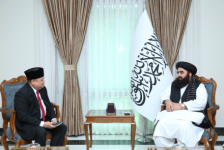
Afghanistan, Indonesia Seek to Expand Bilateral Relations​

By Bibi Amina Hakimi, TOLOnews' Reporter

06 JUNE 2025

1751200637874.png
The acting foreign minister, Amir Khan Muttaqi, said the Islamic Emirate is eager to expand its relations with Indonesia in various fields.


While Afghanistan is still striving to strengthen its diplomatic standing globally, Indonesia — the world's most populous Muslim country — is among the few nations that have shown a green light to engage with Kabul.


During a meeting with Indonesia’s new chargé d’affaires, acting Foreign Minister Amir Khan Muttaqi said that the Islamic Emirate is ready to expand its political, economic, cultural, and educational ties with Indonesia.


Regarding the meeting, the Foreign Ministry's public relations officer, Zia Ahmad Takal, said: "The acting foreign minister wished the new ambassador success in his mission and said that Indonesia is one of the important countries in the Islamic world, and the Islamic Emirate of Afghanistan seeks to establish positive and broad relations with Indonesia in various fields."


The Indonesian chargé d’affaires in Kabul also stated that his mission would focus on strengthening bilateral relations — a mission that, according to him, could enhance soft diplomacy between the two Islamic nations.


Ties with Indonesia — a key member of the Organization of Islamic Cooperation (OIC) and the G20 — are considered a significant achievement for Kabul, as the caretaker struggles to recieve recognition globally.

Political analyst Abdul Sadiq Hamidzoy told TOLOnews: "Indonesia has significant political and demographic weight on the global stage, and Afghanistan’s relations with this country will have a positive impact on its diplomatic system."


Another political analyst, Najiburrahman Shamal, said: "Indonesia is one of the major and important countries in the Islamic world and plays a key role in the Organization of Islamic Cooperation (OIC) and Southeast Asian organizations. During a meeting with acting Foreign Minister Amir Khan Muttaqi, the Indonesian envoy expressed a desire to expand relations with Afghanistan."


Although obstacles and challenges remain in Afghanistan’s diplomatic path, steps such as this meeting are seen as a window of hope for Afghanistan’s gradual reintegration into the international community.


Saudi Arabia visit, from here President will go to Brazil for BRICS meeting, and then go to several European nations like England for state visit (bilateral meeting)

To view this content we will need your consent to set third party cookies.
For more detailed information, see our cookies page.
 

Indonesia to Send 10,000 Tons of Rice Aid to Palestine, Set Up Joint Investment Zone​


Antara

July 7, 2025 | 2:25 pm

1752032225970.webp
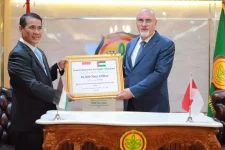
Agricultural Minister Andi Amran Sulaiman meets his Palestinian counterpart Rezq Basheer-Salimia in Jakarta on July 7, 2025. (Photo Courtesy of Agricultural Ministry)


Jakarta. Indonesia announced Monday that it would send 10,000 tons of rice to Palestine while also dedicating parts of its agricultural land to grow the food crop.


Agriculture Minister Andi Amran Sulaiman symbolically handed over the aid to his Palestinian counterpart, Rezq Basheer-Salimia, in Jakarta. Shortly after the bilateral talks, Andi Amran said that the freshly announced aid reflected Indonesia’s solidarity with Palestinians.


“We hope that Palestine can soon have its independence. Indonesia supports Palestine’s food supply,” Amran was quoted as saying in a press statement.


It is up to the Palestinian Embassy in Indonesia to decide when the rice will make its way to Palestine, according to Amran.

The government has floated a plan to set up a joint agricultural investment zone spanning between 10,000 and 15,000 hectares across Indonesia. Virtually all the food crops grown in this so-called “Palestine-Indonesia Solidarity Investment Zone" -- which will lie in South Sumatra -- will go to Palestine.


News agency Antara reported that the zone could reach up to 20,000 hectares with Kalimantan included. This agricultural project will have an annual production capacity of 200,000 tons of rice. It will also produce other key horticultural commodities such as tomatoes, cucumber, and garlic.


The partnership will also include technology and resource collaboration, thus enabling Jakarta to receive knowledge transfer in the fields of irrigation and horticultural development.


Both countries also inked a memorandum of understanding (MoU) regarding an agricultural partnership that will also touch on capacity building in the seed industry, biotechnology, agribusiness, and food reserves, among others.

 
To view this content we will need your consent to set third party cookies.
For more detailed information, see our cookies page.


To view this content we will need your consent to set third party cookies.
For more detailed information, see our cookies page.
 

Jakarta-Riyadh Convergence: Prabowo’s Saudi Outreach and the Pursuit of Foreign Investment​


The growing synergy between Jakarta and Riyadh reflects not only economic alignment but also a stronger convergence in navigating the evolving global order.


By Nadeem Ahmed Moonakal

July 10, 2025

1752129264457.jpeg

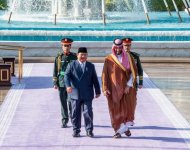
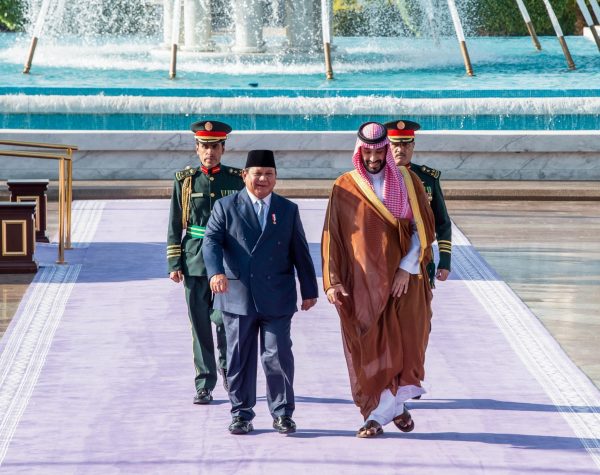
Last week, Indonesian President Prabowo Subianto visited Jeddah, marking his first official visit to Saudi Arabia since taking office in October 2024. The visit comes against the backdrop of Prabowo’s attempts to increase foreign investments, especially from the Gulf states, as part of a broader strategy to boost economic growth in Indonesia.


During the recent visit, Prabowo met Saudi Crown Prince Mohammed bin Salman and discussed mechanisms to strengthen bilateral ties and bolster cooperation across key sectors. The bilateral trade between both countries has grown steadily in recent years, and Indonesia remains one of the largest trading partners of Saudi Arabia in Southeast Asia. Moreover, the overall trade between the Gulf Cooperation Council (GCC) and ASEAN has also grown in recent years, reaching $123 billion, constituting about 8 percent of the GCC’s total trade. Saudi Arabia’s trade dynamics with ASEAN are dominated by energy and petrochemicals, and Riyadh intends to increase the potential for cooperation and investments in non-oil sectors in which Indonesia features prominently.

Indonesia’s economy has maintained steady growth in recent years under the former President Joko Widodo. Jokowi’s tenure was characterized by an infrastructure push and an ambitious vision of economic transformation aimed at turning Indonesia into a regional manufacturing and investment hub. Prabowo rallied support during his campaign and came to power promising economic growth, reducing unemployment and poverty rates, and increasing public welfare initiatives.


While Prabowo seeks to continue Indonesia’s development trajectory, his policies mark a shift toward expansive social spending and a more populist approach, which has been criticized by the opposition and has raised concerns, especially regarding his ambitious $28 billion Free Nutritious Meal Program. Reports indicate that investors are anxious about the current economic trends as the Jakarta Composite Index dropped by over 10 percent since Prabowo took office, while the rupiah has weakened by 7 percent against the U.S. dollar. However, Prabowo remains confident about his target of achieving 8 percent growth by 2029, for which foreign investments into the country will be critical.

During Prabowo’s recent visit, Indonesia and Saudi Arabia signed deals worth around $27 billion, focusing on clean energy, petrochemicals, and mineral resources. Both countries also established a Supreme Coordination Council — an important step toward identifying new areas of collaboration and advancing efforts to enhance and diversify bilateral cooperation, particularly through joint initiatives in trade, energy, infrastructure, and strategic investments. Saudi Arabia’s ACWA Power signed preliminary agreements with Indonesia’s new sovereign wealth fund, Danantara Indonesia, and state energy firm Pertamina to explore renewable energy projects worth up to $10 billion. Indonesia and the Gulf Cooperation Council (GCC) had earlier officially launched free trade agreement (FTA) negotiations, with the first round scheduled for September 2025. This is a part of the wider trend between ASEAN and GCC countries to strengthen their economic ties. During the 2nd ASEAN-GCC Summit in Kuala Lumpur in May 2025, a joint declaration was adopted to deepen ties across transport, food security, and sustainable development. For Jakarta, this offers an avenue not only to expand market access but also to position itself as the bridge between Southeast Asia and the Gulf.


Converging interests in energy, technology, AI, halal food business, and Islamic finance further anchor this cooperation. For Saudi Arabia, expanding investments in Southeast Asia, particularly in Indonesia, aligns with its Vision 2030 objective of diversifying away from traditional Western markets and expanding its economic and political footprint in Asia. Indonesia, as the largest economy and most populous nation in ASEAN, also holds substantial geopolitical weight, making it an increasingly valuable partner for Riyadh.


Both countries also hold significant influence in the Islamic world — Indonesia as the largest Muslim-majority nation, and Saudi Arabia as the custodian of Islam’s holiest sites. Indonesia sends the highest number of Hajj pilgrims annually, making the logistics, healthcare, and spiritual preparation a massive effort that demands strong bilateral coordination, especially amid recent challenges, such as the abrupt visa suspension and coordination lapses that left many pilgrims stranded.

Moreover, both countries share aligned perspectives on key regional and global issues, and during the recent visit, both leaders emphasized their mutual concern for the Palestinian cause, echoing ASEAN’s recent statement in support of Palestinian self-determination and a two-state solution.


In the current circumstances, Indonesia faces external risks in maintaining economic growth momentum, especially with U.S. President Donald Trump’s transactional approach toward the region and trade matters. The Trump administration threatened steep “reciprocal” tariffs, and Indonesia filed a second proposal to the U.S. to avert the possibility of a hefty tariff. Nevertheless, on July 7, the Trump administration sent a letter stating that tariffs for Indonesia would be raised to 32 percent as of August 1.

As part of its efforts to reduce the trade surplus with the U.S. and ease bilateral tensions, Indonesia is planning to ramp up imports of American crude and LPG, aimed at both narrowing the trade gap and diversifying its energy basket. This shift could gradually lessen Indonesia’s dependence on Middle Eastern imports.


Amid growing concerns over tariffs and their impact on domestic markets, Jakarta must strengthen ties with other major powers that offer long-term investment potential and align with its strategic interests. In this context, Gulf powers have become increasingly relevant as they have, in recent years, increasingly looked at Asian markets for strategic investments, seeking to position themselves within this broader landscape of diversified economic partnerships. Indonesia is deepening its cooperation with Gulf countries beyond traditional energy ties, pivoting toward non-oil sectors that align with both nations’ national development agendas and domestic reform priorities.


Both Saudi Arabia and Indonesia have carefully calibrated their foreign policies to avoid provoking the U.S. while insulating themselves from the unpredictability of the Trump administration, all while maintaining a balanced approach toward other major powers. This delicate balancing act, particularly in the context of evolving ASEAN-GCC-China trilateral dynamics, reflects Jakarta’s broader objective: to safeguard its economic future from great power volatility while asserting itself more confidently in the growing space for middle-power diplomacy. The growing synergy between Jakarta and Riyadh reflects not only economic alignment but also a stronger convergence in navigating the evolving global order, including shared positions on key issues in the Islamic world.


Guest Author​

Nadeem Ahmed Moonakal​

Dr. Nadeem Ahmed Moonakal is a research scholar at Rasanah: International Institute for Iranian Studies, Riyadh. He writes on the security and political developments in the Middle East and South Asia and his research focuses on the emerging geopolitics of the Middle East.


To view this content we will need your consent to set third party cookies.
For more detailed information, see our cookies page.
 
1752491374385.png
To view this content we will need your consent to set third party cookies.
For more detailed information, see our cookies page.


To view this content we will need your consent to set third party cookies.
For more detailed information, see our cookies page.


To view this content we will need your consent to set third party cookies.
For more detailed information, see our cookies page.


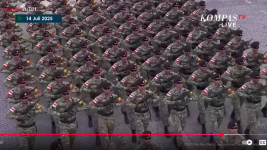
France Bastille Day: Indonesia opens military parade as the guest of honour • FRANCE 24 English​


To view this content we will need your consent to set third party cookies.
For more detailed information, see our cookies page.


---------

Full

To view this content we will need your consent to set third party cookies.
For more detailed information, see our cookies page.
 
Last edited:

EU Grants Indonesia Multi-Entry Schengen Visa as Landmark Trade Deal Nears Completion​


July 13, 2025 | 10:34 pm

1752549432754.webp
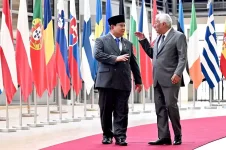
President Prabowo Subianto chats with European Council President Antonio Costa in Brussels, Belgium, Sunday, July 13, 2025. (Photo courtesy of the Presidential Secretariat)


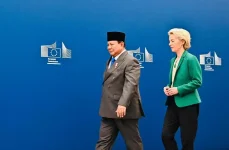
Brussels. The European Union has granted multi-entry visa privileges to Indonesian nationals visiting the region for a second time, European Commission President Ursula von der Leyen announced during a meeting with President Prabowo Subianto in Brussels on Sunday.


The announcement comes as Indonesia and the EU finalize the long-negotiated Comprehensive Economic Partnership Agreement (CEPA), which will eliminate tariffs on most Indonesian imports into the bloc. She said a decade of negotiations on the Comprehensive Economic Partnership Agreement has been finally concluded for imminent ratification.


“I’m pleased to announce that the European Commission has adopted a decision on a visa cascade. It means that from now on, Indonesian nationals visiting the European Union for a second time will be eligible for a multi-entry Schengen visa,” she told Prabowo during a joint press conference, which was streamed live by the Presidential Secretariat’s YouTube channel.

1752549488690.webp
President Prabowo Subianto walks alongside European Commission President Ursula von der Leyen at the European Union headquarters in Brussels, Belgium, Sunday, July 13, 2025. (Photo courtesy of the Presidential Secretariat)


The multi-entry Schengen visa allows holders to travel freely across 29 European countries that are part of the Schengen Area, without undergoing border checks between those countries. The visa is typically issued for tourism, business, family visits, or study purposes.

Depending on the applicant's travel history and eligibility, a multi-entry visa can be valid from one to five years, permitting stays of up to 90 days within any 180-day period. This facility is particularly valuable for frequent travelers, as it reduces the need for repeated visa applications and enhances mobility for business, education, and cultural exchange.


Read More:​

EU Chief: Indonesia-EU Trade Deal Sends Strong Signal on Predictable Partnerships


For Indonesian nationals, this development is expected to facilitate not only tourism but also greater economic and academic engagement with Europe.


Von der Leyen said the visa facility would make it easier for Indonesians to visit, invest, study, and build connections with Europe.


During the joint press conference, she also highlighted shared values between Indonesia and the EU.


“We're both vibrant and diverse democracies. As a matter of fact, we found out that Indonesia's national motto is unity in diversity and one of our core sentences in the EU is united in diversity. So, we share common values and ambitions,” she said.


“For example, we are both committed to a clean energy transition that leaves no one behind. And I'm so glad that our just energy transition partnership is a success.”

 
To view this content we will need your consent to set third party cookies.
For more detailed information, see our cookies page.

GLOBAL DIPLOMACY | BRICS SUMMIT​


To view this content we will need your consent to set third party cookies.
For more detailed information, see our cookies page.


--------------------


To view this content we will need your consent to set third party cookies.
For more detailed information, see our cookies page.


Minister of Defense met with France Defense Minister in Paris, France


To view this content we will need your consent to set third party cookies.
For more detailed information, see our cookies page.


Minister of Defense met with Egypt Defense Minister in Cairo, Egypt
 
Defense Minister go to Pakistan

To view this content we will need your consent to set third party cookies.
For more detailed information, see our cookies page.
 
Update

------------

Anwar Ibrahim visited Indonesia and met with Prabowo yesterday at 29 July 2025 in Jakarta

To view this content we will need your consent to set third party cookies.
For more detailed information, see our cookies page.


---------------

Earlier, our Defense Minister, Syafrie Syamsoedin, met with Turkish Defense Minister in Ankara, Turkiye

To view this content we will need your consent to set third party cookies.
For more detailed information, see our cookies page.


And also with Turkiye Secretary of Defense (look like the one responsible with defense industry)

To view this content we will need your consent to set third party cookies.
For more detailed information, see our cookies page.
 
Status
Not open for further replies.

Users who are viewing this thread

Back
Top