Navigation
Install the app
How to install the app on iOS
Follow along with the video below to see how to install our site as a web app on your home screen.
Note: This feature may not be available in some browsers.
More options
Style variation
You are using an out of date browser. It may not display this or other websites correctly.
You should upgrade or use an alternative browser.
You should upgrade or use an alternative browser.
Indonesia HSR Train Prototype Development
- Thread starter Indos
- Start date
More options
Who Replied?

Indos
INT'L MOD
- Thread starter
- #17
Local private sector company is also contributing for Indonesia railway system
------------------
PT Alam Virtual Semesta (AVS) is revolutionizing professional training for Indonesia’s iconic Jakarta-Bandung High-Speed Train (KCJB) and JABODEBEK LRT systems. With cutting-edge simulator technology, AVS Simulator is ensuring safe, efficient, and comprehensive training for railway personnel.
Watch how our innovative simulators enhance training and technical skills for safer transportation in Indonesia.
------------------
SIMULATOR FOR PROFESSIONAL TRAINING OF JAKARTA-BANDUNG HIGH-SPEED TRAIN AND THE JABODEBEK LRT
PT Alam Virtual Semesta (AVS) is revolutionizing professional training for Indonesia’s iconic Jakarta-Bandung High-Speed Train (KCJB) and JABODEBEK LRT systems. With cutting-edge simulator technology, AVS Simulator is ensuring safe, efficient, and comprehensive training for railway personnel.
Watch how our innovative simulators enhance training and technical skills for safer transportation in Indonesia.
Indos
INT'L MOD
- Thread starter
- #18
Greater Jakarta LRT (Jabodebek LRT)
42 kilometer for phase 1 is a show case of Indonesian ability to make complete rapid rail way system
1. Construction Builder : PT Adhi Karya (Indonesian SOE)
2. Signaling System and other electronic component : PT LEN Industry (Indonesia SOE)
3. Driver Less System (PT LEN Industry and Siemen Indonesia)
4. Operation Control System : PT LEN Industry
5. Train : PT INKA (Indonesian SOE)
6 Operator : PT KAI (Indonesian SOE)
7. Training Simulator : PT AVS (Indonesian private sector)
----------------
KAI Serves Over 13 Million Jabodebek LRT Users in First Half of 2025, Up 50 Percent
07/07/2025,
JAKARTA, KOMPAS.com – PT Kereta Api Indonesia (Persero) reported that 13,040,403 people used the Jabodebek LRT from January to June 2025. This figure represents an increase of about 50 percent compared to the same period last year, which saw 8,685,648 users.
Executive Vice President of LRT Jabodebek, Mochamad Purnomosidi, stated that this surge reflects the public’s growing trust in the LRT service.
“During the first half of 2025, KAI operated 58,778 Jabodebek LRT trips, with an on-time performance rate of 99.46 percent. This shows KAI’s commitment to maintaining consistency and reliability in service for the community,” said Purnomosidi in a press release on Monday (7/7/2025).
The average number of daily users was 93,474 on weekdays and 39,608 on weekends. These figures indicate that the LRT has become a mainstay not only for daily mobility but also for weekend transportation.
Purnomosidi added that the increase in passengers was also supported by the addition of two new trainsets since March, which led to an increase in the number of daily trips from 348 to 366 on weekdays.
The three stations with the highest number of users during the first half of 2025 were:
“We see this increase as the result of a combination of consistently maintained service quality and growing public awareness to switch to public transportation. KAI will continue to provide Jabodebek LRT services that are increasingly adaptive, comfortable, and tailored to users’ needs,” explained Purnomosidi.
/data/photo/2025/02/04/67a20098aaedf.jpg)
 money.kompas.com
42 kilometer for phase 1 is a show case of Indonesian ability to make complete rapid rail way system
1. Construction Builder : PT Adhi Karya (Indonesian SOE)
2. Signaling System and other electronic component : PT LEN Industry (Indonesia SOE)
3. Driver Less System (PT LEN Industry and Siemen Indonesia)
4. Operation Control System : PT LEN Industry
5. Train : PT INKA (Indonesian SOE)
6 Operator : PT KAI (Indonesian SOE)
7. Training Simulator : PT AVS (Indonesian private sector)
----------------
KAI Serves Over 13 Million Jabodebek LRT Users in First Half of 2025, Up 50 Percent
07/07/2025,
JAKARTA, KOMPAS.com – PT Kereta Api Indonesia (Persero) reported that 13,040,403 people used the Jabodebek LRT from January to June 2025. This figure represents an increase of about 50 percent compared to the same period last year, which saw 8,685,648 users.
Executive Vice President of LRT Jabodebek, Mochamad Purnomosidi, stated that this surge reflects the public’s growing trust in the LRT service.
“During the first half of 2025, KAI operated 58,778 Jabodebek LRT trips, with an on-time performance rate of 99.46 percent. This shows KAI’s commitment to maintaining consistency and reliability in service for the community,” said Purnomosidi in a press release on Monday (7/7/2025).
The average number of daily users was 93,474 on weekdays and 39,608 on weekends. These figures indicate that the LRT has become a mainstay not only for daily mobility but also for weekend transportation.
Purnomosidi added that the increase in passengers was also supported by the addition of two new trainsets since March, which led to an increase in the number of daily trips from 348 to 366 on weekdays.
The three stations with the highest number of users during the first half of 2025 were:
- Dukuh Atas BNI Station: 1,994,163 tap-in users and 1,805,717 tap-out users
- Harjamukti Station: 1,513,886 tap-in users and 1,535,547 tap-out users
- Kuningan Station: 1,184,282 tap-in users and 1,150,324 tap-out users
“We see this increase as the result of a combination of consistently maintained service quality and growing public awareness to switch to public transportation. KAI will continue to provide Jabodebek LRT services that are increasingly adaptive, comfortable, and tailored to users’ needs,” explained Purnomosidi.
KAI Layani Lebih dari 13 Juta Pengguna LRT Jabodebek Selama Semester I 2025, Naik 50 Persen
PT Kereta Api Indonesia (Persero) mencatat 13.040.403 orang menggunakan LRT Jabodebek selama Januari hingga Juni 2025.
money.kompas.com
Indos
INT'L MOD
- Thread starter
- #20
Business-Class Trains on Java Island Officially Retired
Wiji Nur Hayat, CNBC Indonesia
16 July 2025 13:02
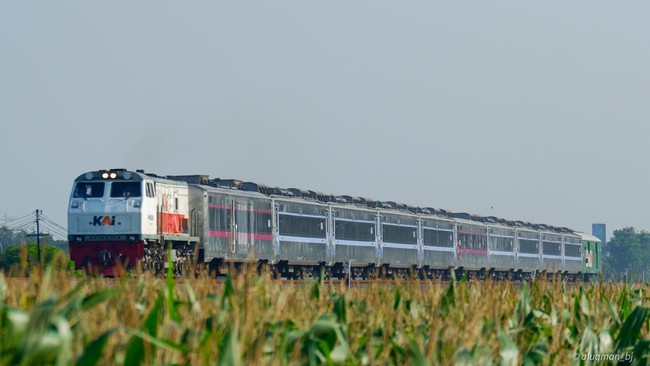
PT INKA New Generation Train
Jakarta, CNBC Indonesia – PT Kereta Api Indonesia (KAI) has officially discontinued business-class train service across Java Island. The last two trains offering this class—KA Gumarang (Surabaya Pasarturi–Pasarsenen route) and KA Tegal Bahari (Pasarsenen–Tegal route)—have now been upgraded to the New Generation Stainless Steel series.
Previously, both trains operated with mixed Executive and Business Class carriages. Now, they feature a more modern and comfortable blend of Executive and Economy Class.
This transformation reflects KAI’s ongoing modernization efforts and aims to provide safe, reliable, and high-quality public transportation. It's also part of KAI’s commitment to the national industry and boosting the local content level (TKDN) in rail infrastructure.
Investments & Expansion Plans
- KAI has invested Rp 14.87 trillion in rail upgrades.
- Of this, Rp 5.5 trillion is allocated for purchasing 612 New Generation SS cars from PT INKA, scheduled between 2023–2026.
Passenger & Cargo Growth Forecast (2025–2029)
- Long-distance passenger growth: 10.6% annually
- Local passenger growth: 9.9% annually
- Freight volume increase: up to 15%
New Features
- Corrosion-resistant stainless steel bodies
- Ergonomic seats with more legroom and individual footrests
- Passenger Information Display System (PIDS) showing real-time trip data
- Automatic electric doors with sound dampening for a quieter cabin
Farewell to Business Class
- Business-class carriages had 64 upright seats in a 2-2 layout.
- Seats faced forward and could be adjusted to face each other.
- In KAI Access app, business-class seats were marked with code BIS.
“Thank you and goodbye to business class trains in Java. After more than four decades of faithfully accompanying your travels, starting today, July 15, 2025, business-class trains in Java officially retire,” KAI wrote on social media.
Kereta Api Kelas Bisnis di Pulau Jawa Resmi Dihapus
KAI resmi menghentikan layanan kelas bisnis di Pulau Jawa. Kini, KA Gumarang dan Tegal Bahari hadir dengan rangkaian New Generation yang modern.
 www.cnbcindonesia.com
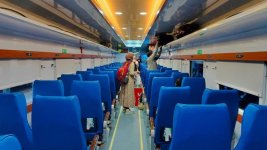
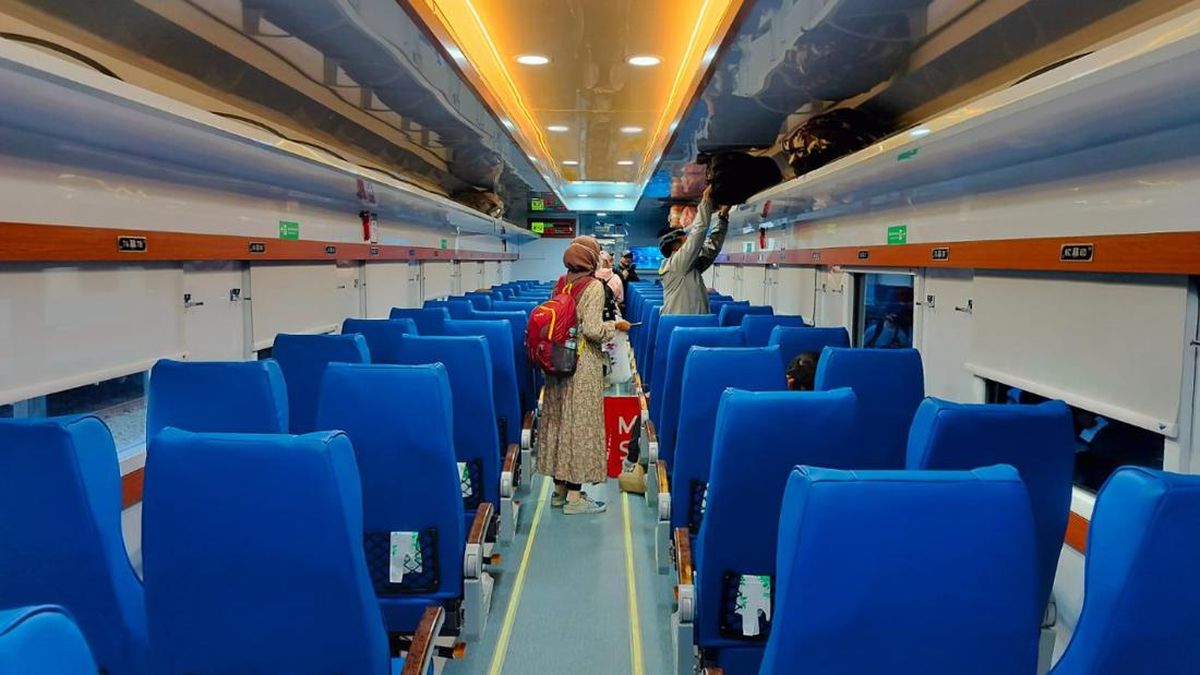
PT KAI will operate a new generation stainless steel economy train in KA Progo Pasar Senen - Lempuyangan (pp) starting Tuesday (15/10) tomorrow. (Archill photo archive).
PT Kereta Api Indonesia (Persero) will operate a new generation stainless steel economy train in KA Progo Pasar Senen - Lempuyangan (pp) starting Tuesday (15/10) tomorrow.
KAI Public Relations VP Anne Purba said this train is an upgrade to the current economy class fleet. The train will replace the economy train type of chair facing into a new generation economy train with a capacity of 72 seats.
"This Progo train is a new Stainlees Steel New Generation procurement economic train from INKA," she said in a statement issued in Jakarta on Saturday (12/10).
She said the new generation economy train seat is quite comfortable because it is a captain seat. This seating is said to be; it will certainly increase comfort for KA customers when traveling with long travel time.
This convenience is improved because the new generation economy train has ergonomic seat design facilities equipped with tilting features recliningand can be adjusted to the rate of KA or face (revolving).
"Increased service in this economy class is a manifestation of KAI's commitment in listening to the needs and input of customers, to be able to continue to improve service and customer experience. So it remains relevant and adaptive to the development of the times and customer profiles," Anne said.
In addition to comfortable seating, she claims the interior of a new generation economy train is modified to resemble an executive train.
KAI Progo Generasi Baru Melaju Mulai Besok, Ini Keistimewaan-Harganya
PT KAI akan mengoperasikan kereta ekonomi stainless steel new generation pada KA Progo relasi Pasar Senen -Lempuyangan (pp) mulai Selasa (15/10) besok.
 www.cnnindonesia.com
Indos
INT'L MOD
- Thread starter
- #21
The need until 2030, based on government planning
Greater Jakarta LRT
------------------
With such a large amount of money, Arif explained that there are many targets to be achieved. These include adding up to 10,524 kilometers of railway tracks, achieving a passenger mode share target of 7-9%, a freight mode share target of 11-13%, as well as the development of additional railway lines in Sumatra and Sulawesi.
The Ministry of Transportation also targets an increase in passenger train facilities with the addition of up to 2,839 locomotives and 34,178 passenger carriages. Meanwhile, for freight train facilities, the target is to add 2,475 locomotives and 28,384 freight carriages.

RI Butuh Rp 853 T Bikin 10.524 Km Jalur Kereta hingga 2030
Jalur kereta api Indonesia akan diperpanjang hingga 10.524 km pada 2030. Kemenhub butuh Rp 853 triliun untuk mendanai rencana ini dengan skema kreatif.
 finance.detik.com
Indos
INT'L MOD
- Thread starter
- #24
KAI Commuter and INKA Begin Operation of New Domestically Produced EMUs on Bogor Line
By WandiJakarta, Wednesday, December 17, 2025 | 01:27 GMT
Editor: Untung S
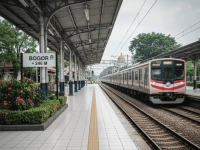
Photo caption:
KAI Commuter officially began operating two new Electric Multiple Unit (EMU) train sets produced by PT Industri Kereta Api (Persero), or INKA, for the Jabodetabek Commuter Line service starting Tuesday, December 16, 2025.
(Photo: KAI Public Relations)
Jakarta, InfoPublik — KAI Commuter has officially begun operating two new Electric Multiple Unit (EMU) train sets produced by PT Industri Kereta Api (Persero), or INKA, for the Jabodetabek Commuter Line service starting Tuesday, December 16, 2025. The two EMU sets, bearing serial number CLI-225, are deployed on the Bogor Commuter Line after receiving safety and operational feasibility certification from the Directorate General of Railways (DJKA) under Indonesia’s Ministry of Transportation.
President Director of KAI Commuter, Mochamad Purnomosidi, said the launch follows the successful completion of all testing and certification procedures in line with applicable regulations.
“Starting Tuesday, December 16, 2025, KAI Commuter has commenced regular operations of the new CLI-225 EMU units produced by PT INKA on the Bogor line,” Purnomosidi said in a press release received by InfoPublik on Tuesday.
In the initial phase, the two EMU sets are operating on Train Set (TS) Loop 20 and TS Loop 22, serving the Depok/Bogor–Manggarai/Jakarta Kota route. A total of eight daily trips will be handled using the new EMU units.
Purnomosidi explained that the deployment addresses growing demand for more reliable and efficient Jabodetabek Commuter Line services, while also replacing older EMU units that have entered their conservation phase.
“Overall, KAI Commuter currently manages 100 EMU train sets with a total of 1,064 railcars, serving 1,063 trips per day across all lines,” he said.
The CLI-225 series follows the earlier CLI-125 fleet. CLI stands for Commuter Line Indonesia, while the numbers 1 and 2 indicate the EMU generation, and the number 25 refers to the year of manufacture, 2025.
PT INKA (Persero) welcomed the continued collaboration with KAI Commuter in deploying domestically manufactured rolling stock, describing it as a strategic step toward improving urban public transportation quality.
Corporate Secretary General Manager of PT INKA, Bambang Sutrisno, said the entire EMU production process was carried out domestically by Indonesian engineers.
“Design, engineering, and testing were conducted by national engineers using INKA’s production facilities in Madiun and Banyuwangi. All stages adhere to applicable safety and operational feasibility standards,” he said.
He added that the partnership between INKA and KAI Commuter is expected to continue as urban mobility needs grow and as both parties strengthen their commitment to sustainable public transportation services.
Director General of Railways Allan Tandiono reaffirmed DJKA’s commitment to ensuring the safety and operational readiness of all railway rolling stock in Indonesia, including domestically produced EMUs.
“All CLI-225 EMU units have undergone comprehensive testing, ranging from static tests to dynamic tests covering distances of more than 4,000 kilometers, in accordance with Minister of Transportation Regulation No. PM 49 of 2023,” Allan said.
He noted that the launch of locally manufactured EMUs represents a shared national achievement, demonstrating Indonesia’s railway industry capability to meet international safety and operational standards.
“The certification issued by DJKA guarantees that these units are safe, comfortable, reliable, and fit for operation in serving the public,” he emphasized.
During the early stages of operation, KAI Commuter will be supported by a dedicated team from PT INKA to ensure smooth daily service. Vice President of Corporate Secretary at KAI Commuter, Karina Amanda, expressed hope that the new EMUs would further enhance passenger comfort.
“We urge all passengers to help maintain onboard facilities and refrain from acts of vandalism,” she said.
KAI Commuter also expressed appreciation to the Government of Indonesia, PT KAI, PT INKA, and all stakeholders for their support in the procurement and operation of the new EMU fleet.

InfoPublik - KAI Commuter dan INKA Operasikan Dua Rangkaian KRL Baru Buatan Dalam Negeri di Lintas Bogor
KAI Commuter mulai mengoperasikan dua rangkaian KRL baru produksi PT INKA (Persero) pada Lintas Bogor untuk meningkatkan kapasitas dan kualitas layanan Commuter Line Jabodetabek sekaligus memperkuat kemandirian industri perkeretaapian nasional.
 infopublik.id
Indos
INT'L MOD
- Thread starter
- #26
KAI Operates 391 New Generation Railcars as Modernization Investment Reaches $344 Million
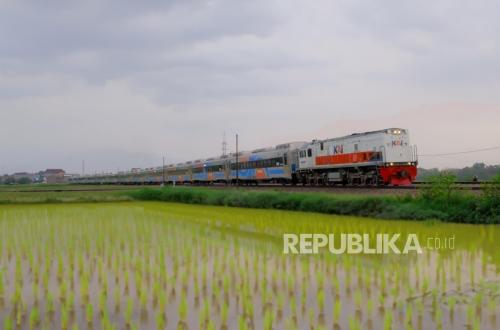
JAKARTA — PT Kereta Api Indonesia (KAI) has deployed 391 Stainless Steel New Generation passenger railcars as part of a nationwide fleet modernization program scheduled for completion in 2027.
The procurement program carries a total investment value of Rp5.505 trillion (approximately USD 344 million).
According to KAI Vice President of Corporate Communication Anne Purba, a total of 39 trainsets, equivalent to 391 railcars, manufactured by PT INKA, have been delivered and are currently operating on various long-distance passenger routes across Indonesia.
The modernization initiative began in 2023 and includes the acquisition of 612 Stainless Steel New Generation railcars, with completion targeted for 2027.“The procurement of 612 New Generation railcars represents a long-term investment by KAI to gradually modernize its passenger fleet. Every trainset that enters service offers improved comfort standards and forms part of our continuous service development efforts,” Anne said.
The procurement consists of:
- 297 Executive Class coaches
- 199 Economy Class coaches
- 57 Dining cars
- 57 Power-generator cars
- 2 Baggage cars
The new-generation railcars feature a number of upgraded amenities, including ergonomic seating, seats reclining up to 135 degrees, increased legroom, foldable tables, power outlets and USB charging ports at every seat, and automatic sliding doors.
Certain services also include additional passenger amenities such as:
- Passenger Information Display Systems (PIDS)
- Toilets equipped with foot washers
- Prayer rooms
- Baby-changing facilities
- Blankets on selected overnight services
The Stainless Steel New Generation fleet is now operating on numerous long-distance services across executive, mixed executive-economy, and economy-class routes.“Throughout the delivery and operation process, we have received valuable input from passengers and operational staff. These suggestions are continuously incorporated into improvements for subsequent trainsets,” she said.
Executive-class services using the new trains include:
- Argo Dwipangga
- Argo Lawu
- Argo Anggrek
- Argo Semeru
- Bima
- Taksaka
- Gajayana
- Parahyangan
- Lodaya
- Mataram
- Bogowonto
- Batavia
- Gumarang
- Jayabaya
- Bangunkarta
- Singasari
- Jaka Tingkir
- Progo
- Majapahit
According to the company, the modernization program will gradually raise service standards across Indonesia’s railway network while increasing passenger comfort and supporting long-term growth in rail transportation demand.
Source: Republika, PT Kereta Api Indonesia (KAI)
KAI Operasikan 391 Kereta New Generation, Investasi Modernisasi Capai Rp5,5 Triliun |Republika Online
Program pengadaan 612 kereta New Generation merupakan investasi jangka panjang KAI
 ekonomi.republika.co.id
Indos
INT'L MOD
- Thread starter
- #27
KAI to Become Holding Company, INKA to Operate as Subholding Under Planned Merger
JAKARTA — The planned integration of PT Industri Kereta Api (INKA) and PT Kereta Api Indonesia (KAI) is moving forward, with the merger expected to be completed in 2026.
KAI President Director Bobby Rasyidin said the consolidation is being carried out under the direction of Danantara Indonesia, which is pursuing a broader effort to streamline Indonesia's state-owned enterprise (SOE) sector to improve efficiency and effectiveness.
Under the proposed structure, KAI will serve as the holding company, while INKA will become a subholding focused on railway manufacturing and related industrial activities."This is a directive from Danantara. The target is to complete it this year," Bobby said following a meeting with Commission VI of the House of Representatives (DPR).
The proposal has received support from members of the DPR. Commission VI member Rizal Bawazier said an acquisition agreement is expected to be signed in November 2026."KAI will be the holding company, and INKA will become the subholding," Bobby explained.
According to Rizal, the integration could strengthen domestic railway manufacturing by increasing cooperation between KAI and INKA while reducing reliance on imported rolling stock and railway equipment.
He noted that Indonesia still imports a significant number of railcars and railway components from countries such as Japan and China, despite having a national manufacturer capable of producing many of those products.
Rizal argued that a closer integration between KAI and INKA would allow Indonesia to maximize the use of domestic industrial capacity while strengthening the national rail supply chain.
He also suggested that the two companies should support each other's development priorities, with KAI helping strengthen INKA's industrial capabilities whenever appropriate.
The planned merger reflects a broader restructuring strategy being pursued by Danantara, which aims to consolidate state-owned enterprises into larger and more integrated business groups capable of improving efficiency, enhancing competitiveness, and strengthening domestic industrial ecosystems.
If completed as planned, the transaction would create a vertically integrated rail group in which KAI manages railway operations and services while INKA serves as the manufacturing arm responsible for producing rolling stock and supporting railway technology development.
Source: Detik Finance

KAI Bakal Jadi Holding, INKA Subholding
Merger PT Industri Kereta Api (Persero) atau INKA dengan PT Kereta Api Indonesia (Persero) atau KAI menemui titik terang.
 finance.detik.com
Users who are viewing this thread
Total: 1 (members: 0, guests: 1)


