Indonesia Leads EM Rally as Carry Appeal, Growth Lure Investors

The Golden Year for Emerging Markets: Others Celebrate, While Foreign Investors Leave Indonesia Behind


By Gelson Kurniawan

03 November 2025 07:45

To view this content we will need your consent to set third party cookies.
For more detailed information, see our cookies page.

[4K] UP at Thamrin Nine | Jakarta Epic View !​


Jakarta, CNBC Indonesia – The year 2025 has turned into a golden period for investors in emerging markets. The global benchmark, the MSCI Emerging Markets Index, recorded a historic rally — posting gains every month throughout the year.


This rare phenomenon, last seen over three decades ago in 1993, signals a massive return of global investor confidence toward developing economies.


However, amid the global celebration in emerging market assets, Indonesia faces a puzzling paradox: foreign investors are exiting the domestic stock market even as the Jakarta Composite Index (IHSG) hits record highs.


As of October 31, 2025, foreign investors booked a net sell of Rp 43.19 trillion (~USD 2.7 billion). For comparison, by October 24, 2024, they had logged a net buy of Rp 44.48 trillion.


Perfect Macro Conditions Fuel MSCI EM’s Historic Rally​


The rally in the MSCI EM Index this year was driven by a near-perfect alignment of macroeconomic factors, led by a policy shift from the U.S. Federal Reserve.


After a long period of monetary tightening, the Fed finally pivoted, cutting its benchmark interest rate at the end of October to the 3.75%–4.00% range. The move immediately weakened the U.S. dollar, a classic catalyst that prompts investors to move funds from safe-haven U.S. assets to higher-yielding emerging markets.


This created a “Goldilocks scenario,” where the U.S. economy cools without falling into recession — offering stability for risk assets worldwide.


Analysts at Goldman Sachs noted that emerging market equities had strengthened for nine consecutive months through October, supported by robust corporate earnings prospects and attractive valuations.


Combined with easing trade tensions and optimism around artificial intelligence (AI), risk appetite surged — turning emerging market stocks into the new favorite among global investors.


The Indonesian Paradox: IHSG Rises Amid Massive Foreign Sell-Off​


While the MSCI EM Index enjoyed its global rally, Indonesia’s capital market experienced an anomaly.


Strangely, the foreign exodus did not drag the market down. On the contrary, the Jakarta Composite Index (IHSG) remained resilient. Although the IHSG slipped 0.25% or 20.19 points to 8,163.88 on Friday (Oct 31, 2025), it had still broken multiple records throughout the year — even surpassing the 8,200 level.


Market capitalization also stayed huge, reaching Rp 14,857 trillion (USD 930 billion) by the end of October.


So why are foreigners selling while the IHSG stays strong?
The answer lies not in Indonesia’s economic fundamentals but in technical factors — specifically MSCI’s plan to revise its methodology for calculating free-float shares for Indonesian stocks.


The uncertainty surrounding this change sparked concerns that the weight of major Indonesian stocks in global indices could decline, prompting passive foreign funds to sell preemptively ahead of portfolio rebalancing.


Meanwhile, the IHSG’s strength came from domestic investors. The massive rise in local participation — now exceeding 19 million investors — has created a formidable defense wall. Strong buying power from local retail and institutional investors has absorbed foreign sell-offs, making them the new driving force behind the market’s resilience.


Implications: Indonesia’s Capital Market Comes of Age​


This phenomenon demonstrates that Indonesia’s capital market has matured. Dependence on volatile foreign “hot money” has decreased significantly.


Domestic investors now dominate share ownership in the country. After years of financial education programs led by the Indonesia Stock Exchange (IDX), young Indonesians have embraced investing, transforming the investor landscape.


Ultimately, 2025 marks a coming-of-age moment for Indonesia’s capital market. Amid the strongest emerging-market rally in three decades, Indonesia has proven its resilience and newfound independence, powered by the strength of its own investors — now the true kings in their home market.
 
Foreign Investors Return: US$ 782 Million of Capital Flows Back into Indonesia's Stock Market


By Teti Purwanti
CNBC Indonesia
05 November 2025 11:08


To view this content we will need your consent to set third party cookies.
For more detailed information, see our cookies page.


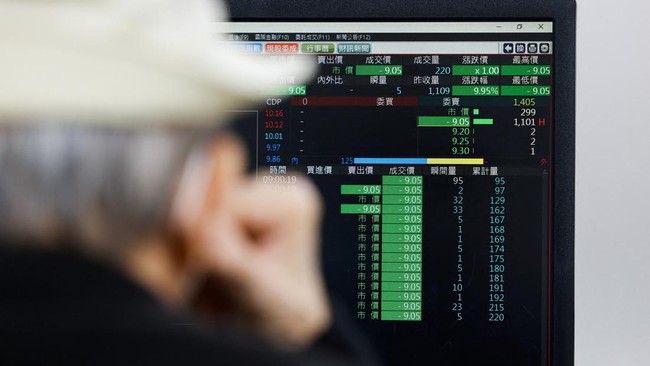
Jakarta, CNBC Indonesia — Macquarie observes that Indonesia’s stock market is beginning to show signs of a reversal. In its research report, Macquarie noted that foreign investors returned as net buyers in October with a total inflow of US$ 782 million, reversing the net sell position of US$ 234 million recorded in September. With this development, the year-to-date capital outflow has narrowed to around US$ 2.5 billion.


Macquarie equity analyst Ari Tjahja views this momentum as an important potential turning point for the domestic market after a period of global liquidity pressure.


“Companies with strong fundamentals have begun to perform well again, especially consumer stocks, which are seeing a positive spotlight,”
Ari wrote in the report, quoted Wednesday (Nov 5, 2025).

The industrial sector also recorded strong inflows from both foreign and domestic investors, signaling strengthening confidence in manufacturing and export prospects. In contrast, the financial sector continued to experience outflows, while domestic investors showed increased interest in tobacco stocks.


On the macroeconomic front, Ari emphasized the importance of accelerating government fiscal spending to maintain growth momentum in Q4 2025.


“Aggressive fiscal support remains crucial to accelerate economic growth, particularly amid moderating external demand,” he stated.

From a corporate performance perspective, only 34% of companies under Macquarie’s coverage reported results below expectations in Q3 2025. Market sentiment has also been supported by share buyback plans from major companies such as BBCA, ASII, and UNTR, which investors interpret as a signal of confidence in long-term business prospects.


Additionally, Ari highlighted that Danantara’s capital deployment into public markets will be the next key catalyst.


“The market will closely monitor Danantara’s capital allocation strategy, as it may serve as a new liquidity anchor for domestic assets,” he wrote.

With capital flows turning positive, consumer sector performance improving, and expected government fiscal support, Macquarie believes Indonesia’s stock market has the potential to end the year on a positive note, although global risks must still be monitored.


IDX Closes Up 57 Points to 8,394, Hitting All-Time High on Friday​


Ria Fortuna Wijaya, Associated Press

November 7, 2025 | 4:29 pm


To view this content we will need your consent to set third party cookies.
For more detailed information, see our cookies page.


Jakarta. Indonesia’s benchmark stock index climbed to a new all-time high on Friday, lifted by strong domestic sentiment despite declines across major Asian bourses.


Jakarta Composite Index (JCI) rose 57 points, or 0.69 percent, to close at 8,394, marking a new record high. The index moved in the green throughout the session within a range of 8,332–8,398.


Market data showed a trading volume of 26.1 billion shares, with a turnover of Rp 15.66 trillion ($938.18 million) and more than 2 million transactions. There were 288 gainers, 319 losers, and 202 unchanged stocks.


Across the region, shares retreated after Wall Street ended lower overnight, weighed down by losses in major technology names. Japan’s Nikkei 225 fell 1.1 percent to 50,276.37, while Hong Kong’s Hang Seng slipped 1 percent to 26,209.16. The Shanghai Composite dropped 0.3 percent to 3,997.56, South Korea’s Kospi lost 1.8 percent to 3,953.76, and Taiwan’s Taiex declined 0.9 percent.


China reported that its exports contracted 1.1 percent in October, with shipments to the United States plunging 25 percent from a year earlier. Economists, however, expect a rebound following last week’s agreement between US President Donald Trump and Chinese President Xi Jinping to ease trade tensions.


On Wall Street, the S&P 500 dropped 1.1 percent to 6,720.32, the Dow Jones Industrial Average fell 0.8 percent to 46,912.30, and the Nasdaq tumbled 1.9 percent to 23,053.99. Heavyweights like Nvidia (-3.7 percent), Microsoft (-2 percent), and Amazon (-2.9 percent) dragged the indices lower.


Meanwhile, Tesla shares fluctuated after CEO Elon Musk won a shareholder vote granting him a potential $1 trillion stock award if performance targets are met over the next decade. The stock, already up 80 percent in the past year, closed at $445.91 after rebounding in after-hours trading.


Market analysts noted that US corporate earnings remained a key focus amid a government shutdown that has delayed key economic data, including employment and inflation figures.


Back in Indonesia, top gainers for the day included Puri Sentul Permai (KDTN) up 26.58 percent, Radana Bhaskara Finance (HDFA) up 26.14 percent, Chemstar Indonesia (CHEM) up 26.04 percent, and Gowa Makassar Tourism Development (GMTD) rising 25 percent.


On the losers’ list, Terang Dunia Indonesia Internusa (UNTD) fell 14.16 percent, Dafam Property Indonesia (DFAM) lost 12.09 percent, Integra Indocabinet (WOOD) dropped 11.29 percent, and Golden Eagle Energy (SMMT) shed 10 percent.


Last edited:

Indonesia Adds 4.28 Million New Market Investors This Year​


Herman

November 8, 2025 | 2:39 pm

To view this content we will need your consent to set third party cookies.
For more detailed information, see our cookies page.


Jakarta. Indonesia’s stock exchange recorded a sharp jump in capital market investors, with the total number of registered single investor identifications (SID) reaching 19,154,487 as of the end of October 2025, data from the Indonesia Stock Exchange, or IDX, showed.


New investor registrations in 2025 reached 4,282,848 SID, soaring 58.4 percent, from the additional 2,703,578 new investors recorded in 2024.


Equity investors accounted for 8,083,076 SID, with 1,701,632 new stock investors added this year — a 51.2 percent jump from 2024, when 1,125,873 new stock investors were recorded.

IDX president director Iman Rachman said the acceleration of investor growth reflects greater awareness of investment opportunities, particularly among younger Indonesians.

“This trend shows stronger public awareness of investing, especially among the younger generation,” Iman said in an official statement, on Saturday.


Between March and October 2025, the IDX held 101 Road to Capital Market Summit & Expo (CMSE) events across various regions, drawing more than 185,000 participants and resulting in 184,000 new investor accounts.


By the end of October 2025, the IDX, through its nationwide network of representative offices, had organized 14,993 educational programs attended by more than 14.3 million participants. Of these, 319,177 participants opened securities accounts following the education sessions.

 
To view this content we will need your consent to set third party cookies.
For more detailed information, see our cookies page.


IHSG Breaks New Record, Touches 8,400

At the opening of trading on Monday, November 10, 2025, the Indonesia Composite Index (IHSG) strengthened, successfully breaking through the level of 8,443.


This positive performance in the stock market was accompanied by an appreciation of the Rupiah, which strengthened by 0.12% to Rp 16,660 per US dollar.


Watch the complete coverage on Breaking News, CNBC Indonesia (Monday, 10/10/2025).
 

Bank Indonesia Records Budget Surplus of Rp 77.9 Trillion (≈ USD 4.67 Billion) as of September 2025


By Robertus Andrianto, CNBC Indonesia
12 November 2025 12:11


To view this content we will need your consent to set third party cookies.
For more detailed information, see our cookies page.

Senayan, South Jakarta


Jakarta, CNBC Indonesia – Governor of Bank Indonesia (BI) Perry Warjiyo announced that the 2025 Bank Indonesia Annual Budget (ATBI) recorded a budget surplus of Rp 77.9 trillion (≈ USD 4.67 billion) as of September 2025. Perry presented this to Commission XI of the House of Representatives (DPR RI) on Wednesday (12/11/2025).


According to BI’s projection, Perry stated that the central bank’s total budget surplus for 2025 is expected to reach Rp 68.7 trillion (≈ USD 4.11 billion) by the end of the year.


“As of September 2025, the budget surplus reached Rp 77.9 trillion (≈ USD 4.67 billion). By the end of 2025, the projected ATBI surplus is Rp 68.7 trillion (≈ USD 4.11 billion),” Perry said.

The surplus is driven by projected revenues of Rp 234.38 trillion (≈ USD 14.04 billion), while expenditures are lower at Rp 165.7 trillion (≈ USD 9.92 billion) by year-end. Meanwhile, BI’s policy budget is projected to record a surplus of Rp 35.2 trillion (≈ USD 2.11 billion) by December 2025.


“In the policy budget, projected revenue is Rp 176.24 trillion (≈ USD 10.55 billion) and expenditures Rp 140.95 trillion (≈ USD 8.44 billion), resulting in a surplus of Rp 35.2 trillion (≈ USD 2.11 billion),” he explained.

Additionally, the operational budget also recorded a surplus of Rp 33.3 trillion (≈ USD 1.99 billion), with revenues of Rp 58 trillion (≈ USD 3.47 billion) and expenditures of Rp 24.7 trillion (≈ USD 1.48 billion).


Perry added that Bank Indonesia’s capital adequacy ratio is expected to remain above 10% by the end of 2025.


Record-Breaking Year Lifts IDX Market Cap Close to 70 percent of GDP Target​


Eva Fitriani, Ghafur Fadillah

November 17, 2025 | 11:50 am


To view this content we will need your consent to set third party cookies.
For more detailed information, see our cookies page.


Ubud, Bali. Indonesia’s capital market has seen a sharp rise in recent months, reflected in rapid growth in the number of investors, daily trading value, the benchmark stock index, and especially market capitalization. With market cap now at Rp 15,316 trillion ($915 billion) -- equal to 69.18 percent of GDP -- regulators believe the national target of 70 percent of GDP by 2027 may be achieved much sooner.


“Under the National Medium-Term Development Plan 2029, the target was 68 percent of GDP. Thankfully, we have already reached 69.18 percent. In our own roadmap for 2022–2027, we set a target of 70 percent of GDP. We are very close -- hopefully we will reach 70 percent before the end of the year,” said Inarno Djajadi, Chief Executive for Capital Market, Derivatives, and Carbon Exchange Supervision at the Financial Services Authority (OJK), speaking in Ubud over the weekend.


Largest Market Cap in Southeast Asia
Deputy Commissioner for Capital Market Investment Management Supervision Eddy Manindo Harahap noted that Indonesia’s market capitalization -- $915 billion -- is now the largest in Southeast Asia, surpassing Singapore ($563 billion), Thailand ($500 billion), Malaysia ($462 billion), Vietnam ($343 billion), and the Philippines ($222 billion). However, Indonesia still ranks fifth in the region in terms of market cap-to-GDP ratio, behind Malaysia, Singapore, Thailand, and Vietnam.

“Indonesia’s financial market has made strong progress, but still has significant room to grow compared with other Asian markets,” Eddy said.


According to OJK’s Capital Market Roadmap 2023–2027, the medium-term targets include:


- market cap above Rp 15,000 trillion or 70 percent of GDP
- average daily trading value Rp 25 trillion
- managed funds Rp 1,000 trillion
- 1,100 listed companies
- more than 20 million investors


Record-Breaking Year for IDX
Indonesia Stock Exchange (IDX) data as of 14 November shows:


- market cap Rp 15,316 trillion
- benchmark index up 18.23 percent year to date to 8,370
- 955 listed companies
- 19.32 million investors, up 29.91 percent year on year
- average daily trading value Rp 16.6 trillion
- managed funds Rp 986.23 trillion


“These are the pillars of Indonesia’s capital-market development. Some targets have been met, some are very close, and a few remain challenging,” Eddy said. “In terms of market cap-to-GDP, we have strong potential, and we must make the most of it.”


Read More:​

Indonesia Sees Resurgence of Foreign Buying as Year-End Sentiment Improves


IDX President Director Iman Rachman said the stock market has posted 13 new all-time-high records so far in 2025 -- including 10 record-breaking days during October and November alone.


Daily stock trading value has already exceeded the IDX’s 2025 internal target of Rp 13.25 trillion, supported by 228,000 active daily investors.


Iman noted that foreign investors have also returned to the market after months of capital outflows, recording nearly Rp 13 trillion in net buying over the past month.


“Foreign investors still record year-to-date net sell Rp 41.8 trillion, but what is interesting is that in the past month they booked almost Rp 13 trillion in net buy. So there is a positive shift in foreign sentiment,” he said.


According to IDX, there are 23,417 foreign investors in the Indonesian stock market today, with total assets reaching Rp 3,864 trillion ($231 billion).


IMF Staff Completes 2025 Article IV Mission to Indonesia​

November 15, 2025

  • Indonesia remains a global bright spot, with strong economic growth amid a challenging external environment, and inflation expected to remain comfortably in the target range.
  • A well-calibrated policy mix can support the economy; protecting Indonesia’s hard-earned credibility and policy space remains crucial in a world of heightened external uncertainties.
  • Bold structural reforms, including building on Indonesia’s significant efforts to foster trade agreements, would boost the business climate, private sector-led growth and productivity, enabling a job-rich and sustainable path to realizing Indonesia’s high-income potential.
Washington, DC: An International Monetary Fund (IMF) team led by Ms. Maria Gonzalez conducted discussions on the Indonesian economy for the 2025 Article IV Consultation over November 3-12, 2025. At the end of the mission, Ms. Gonzalez issued the following statement:

“The Indonesian economy has shown resilience amid adverse shocks. Growth is expected to remain steady at 5.0 percent in 2025 and 5.1 percent in 2026, despite a challenging external environment, reflecting support from fiscal and monetary policies. Headline inflation is well anchored and projected to converge towards the midpoint of the target range. The current account deficit would remain well contained in 2025-26, with comfortable reserves.

“Risks are tilted to the downside. Escalating trade tensions, prolonged uncertainty, and global financial market volatility remain key external risks. On the domestic side, large policy shifts, if not implemented with sufficiently robust guardrails, could build up vulnerabilities. Upside risks include bolder structural reforms, including faster-than-anticipated push on the trade front, and positive spillovers from stronger growth among trading partners.

“Staff expect the fiscal deficit to widen to around 2.8 percent of GDP in 2025, and around 2.9 percent next year based on more conservative growth and revenue projections than those envisaged in the 2026 budget of 2.7 percent of GDP. Carefully managing budget execution to secure the authorities’ budget target would provide needed fiscal support to the economy while preserving fiscal space to be deployed if downside risks materialize. Keeping fiscal risks well-contained will require continued careful fiscal management as well as strong safeguards and rigorous oversight of quasi-fiscal operations. Stronger revenue mobilization, with a focus on high-quality spending and spending efficiency would further enhance fiscal policy effectiveness to support growth.

“The shift to monetary policy easing, with the realignment of BI’s various instruments in a supportive direction, is appropriate. The 150 bps rate cuts and liquidity-enhancing measures should gradually strengthen credit growth; credit demand would be boosted by efforts to support confidence and policy predictability. Going forward, there may be room for some further policy rate cuts. The extent and pace of such cuts should continue to be data-dependent, consider the lagged effects of BI’s actions already taken, and account for the supportive fiscal impulse and the need to preserve space against external shocks. Continuing exchange rate flexibility will help to absorb shocks. Under the IMF’s Integrated Policy Framework, foreign exchange intervention could be part of the policy response given Indonesia’s relatively shallow foreign exchange markets, in case of risk-off shocks that trigger excessive tightening of financial conditions. Such interventions would need to balance the need to preserve buffers in a shock-prone world. A preliminary assessment of Indonesia’s external position in 2025 finds it is broadly in line with the level implied by medium-term fundamentals and desirable policies.

“The financial system is broadly resilient. Amid a negative credit gap, a near-term accommodative macroprudential stance is appropriate. Looking forward, gradually starting a shift towards a neutral stance as credit growth builds pace would safeguard against potential macro-financial risks. As the government seeks to mobilize the financial sector for its growth agenda, ensuring appropriate guardrails will help maintain the sector’s resilience.

“Indonesia remains firm in its “Golden Vision” of becoming a high-income country by 2045. To achieve it, authorities have targeted higher growth through a supportive macro policy mix, and expanding state-led initiatives, including the downstreaming and self-sufficiency agendas.

Raising long-term growth durably and inclusively will require ambitious horizontal structural reforms—including on infrastructure, deregulation, reducing trade barriers, and further enhancing global integration—boosting the supply side of the economy and helping generate strong MSMEs, higher FDI and a dynamic private sector. Closing physical, human capital (education and skills) and institutional (governance and anti-corruption) gaps will also be critical to increase long-term growth and lift productivity.

Staff analysis show that significantly deepening trade integration efforts with major partners—with a focus on reducing non-tariff barriers with complementary structural reforms to boost productivities across sectors, could be an important driver in Indonesia’s goal to reach high-income status. Recent proactive effort to engage with a broad range of trading partners to leverage global markets through a reduction of tariffs and non-tariff barriers as well as FDI facilitation have successfully delivered on the recent announcement of important agreements (Canada, EU-CEPA), while a potential deal with the US is well advanced. While full details and implementation of these agreements are pending, these efforts constitute an important step towards delivering growth and productivity gains.

“The IMF team met with officials in the government, Bank Indonesia, Financial Services Authority (OJK), other public agencies and representatives of the private sector and civil society. The team would like to thank the authorities and other interlocutors for the transparent and constructive discussions, as well as for excellent logistical support.”

https://www.imf.org/en/news/article...a-imf-staff-completes-2025-article-iv-mission
 

All-Time High Close for JCI as Wall Street Momentum, MSCI Flows Spill Over​


Ria Fortuna Wijaya, Associated Press

November 24, 2025 | 4:14 pm

To view this content we will need your consent to set third party cookies.
For more detailed information, see our cookies page.


Jakarta. Jakarta Composite Index (JCI) rallied to a fresh all-time high on Monday as investors cheered a wave of positive cues from overseas markets and steady foreign inflows at home.


The benchmark index closed at 8,570, jumping 156 points or 1.85 percent, marking its strongest level this November.


The market traded within the 8,429–8,570 range, with 49.42 billion shares changing hands. Turnover reached Rp 41.50 trillion ($2.49 billion) across more than 2.54 million transactions. Market breadth leaned positive, with 343 gainers, 297 decliners, and 172 unchanged.

Pilarmas Investindo Sekuritas mentioned Asian equities tracked Wall Street’s advance after New York Fed President John Williams signaled a potential third rate cut this year, citing a weakening US labor market.

“This suggests short-term rate cuts remain on the table as labor-market risks now outweigh high inflation,” Pilarmas wrote in a Monday note.


CME FedWatch now places the odds of a 25-basis-point cut in December at around 69 percent, up from 44 percent a week earlier.


Domestically, Pilarmas highlighted continued foreign appetite. Bank Indonesia recorded Rp 2.29 trillion in foreign inflows across stocks and government bonds from Nov. 17–20. Pilarmas added that today’s MSCI index rebalancing also supported momentum, though it could trigger a “sell-on-news” wave as traders look to lock in profits.


Across Asia, markets were mostly higher.


Hong Kong’s Hang Seng climbed 1.8 percent to 25,667, boosted by Alibaba’s 5.1 percent jump ahead of its earnings release. Shanghai was flat at 3,834, while South Korea’s Kospi slipped 0.2 percent to 3,846.06 after heavy selling in automakers. Japan’s markets were closed for a holiday.


In the US, all major indexes ended Friday in the green, with the S&P 500 up 1 percent, Dow up 1.1 percent, and Nasdaq 0.9 percent higher. The upcoming Thanksgiving break, followed by Black Friday and Cyber Monday, puts retail spending in focus, which analysts say will be crucial in a “data-scarce” environment following the six-week US government shutdown.


Back on the IDX, top gainers included Era Media Sejahtera (DOOH) and Bundamedik (BMHS), soaring 34.57 percent and 34.52 percent respectively. Diagnos Laboratorium Utama (DGNS) rose 34.48 percent, while Paragon Karya Perkasa (PKPK) climbed 25 percent.


Among the biggest decliners, Puri Global Sukses (PURI) dropped 14.86 percent, Koka Indonesia (KOKA) slid 12.50 percent, and Hassana Boga Sejahtera (NAYZ) and Agung Menjangan Mas (AMMS) lost 10 percent and 9.81 percent respectively.


Tech Rally, Tariff Relief Boost JCI, Asian Markets​


Associated Press, Ria Fortuna Wijaya

December 2, 2025 | 4:12 pm


To view this content we will need your consent to set third party cookies.
For more detailed information, see our cookies page.


Jakarta. Jakarta Composite Index closed stronger on Tuesday, mirroring gains across most Asian markets as investors leaned further into expectations of a US Federal Reserve rate cut next week. The benchmark finished at 8,617, rising 68.25 points or 0.80 percent, after moving within a tight 8,564–8,625 band.


Trading activity remained solid with 42.53 billion shares exchanged, turnover reaching Rp 21.50 trillion ($1.29 billion), and transactions topping 2.7 million. Market breadth was positive, with 369 stocks advancing, 278 declining, and 159 ending flat.


Pilarmas Investindo Sekuritas said the rebound in risk appetite followed weak US manufacturing data, which showed the sector contracting for a ninth straight month in November. The downbeat figures reinforced expectations that the Fed could pivot to easing sooner rather than later.


Pilarmas added that investors are also positioning for potential stimulus from Beijing after China’s November manufacturing numbers undershot expectations. “Those results may push Beijing to roll out new economic support ahead of next week’s annual Central Economic Work Conference,” the brokerage wrote.


Foreign Inflows, Global News Support Market Rebound​


Ria Fortuna Wijaya, Associated Press

December 8, 2025 | 4:42 pm

To view this content we will need your consent to set third party cookies.
For more detailed information, see our cookies page.


Jakarta. Jakarta Composite Index (JCI) closed stronger on Monday, rising 77.93 points or 0.90 percent to 8,710 as investors rode year-end momentum and renewed optimism over global rate cuts.


The benchmark moved between 8,642 and 8,720 throughout the session. Total volume reached 57.32 billion shares, with turnover at Rp 27.33 trillion ($1.64 billion) across more than 2.9 million transactions. Gainers outpaced decliners 385 to 265, while 153 counters were unchanged.


Pilarmas Investindo Sekuritas said the advance was supported by expectations of a Santa Claus rally and optimism following Bank Indonesia’s recent rate cut. The brokerage highlighted foreign capital inflow of Rp 14.08 trillion into domestic financial markets in the first week of December, adding another layer of support.


JCI Caps Volatile Session Higher, Still Among World’s Top Gainers in 2025​


Ria Fortuna Wijaya, Associated Press

December 30, 2025 | 4:16 pm

To view this content we will need your consent to set third party cookies.
For more detailed information, see our cookies page.


Despite year-end volatility, Indonesia’s stock market capped the year as one of the world’s strongest performers, with the Jakarta Composite Index up 18.01% year to date, outpacing most major global benchmarks.

Year-to-date performance comparison:

  • Indonesia (JCI): +18.01%
  • Thailand: +17.80%
  • Philippines: +14.65%
  • United Kingdom: +8.33%
  • India: +7.53%
  • Australia: +4.51%
  • United States (Dow Jones): +4.25%
  • South Korea (Kospi): +2.89%
  • Hong Kong (Hang Seng): +1.06%

Several major indices ended the year below their previous year-end levels:

  • Malaysia (FTSE): –1.68%
  • Singapore (Straits Times Index): –1.89%
  • Japan (Nikkei 225): –14.60%
  • China (Shanghai Composite): –15.89%

In the region, Japan’s Nikkei slipped 0.37% to 50,339, though it remains up nearly 25% for the year. Hong Kong’s Hang Seng index climbed 0.86% to 25,854, while China’s Shanghai Composite was virtually unchanged at 3,965. South Korea’s Kospi edged down 0.15% to 4,214.


Wall Street ended lower on Monday amid thin year-end trading. The S&P 500 fell 0.3%, though it remains up more than 17% for the year and is on track for its eighth consecutive monthly gain. The Dow Jones Industrial Average dropped 0.5%, while the Nasdaq Composite also slipped 0.5%.


With just two trading days left before the year-end, many large investors have already closed their positions, keeping market volumes light. Most global markets will be closed on Thursday for New Year’s Day, with some also shutting on Wednesday and Friday.


Indonesia Meets Rp 1,905 Trillion Investment Target for 2025​


Bambang Ismoyo

December 30, 2025 | 9:34 pm

1767246390820.png
This undated photo shows the Galang Batang Special Economic Zone in Bintan Regency, Riau Islands. (Photo courtesy of Indonesia SEZ)


Jakarta. Indonesia has met its national investment target for 2025, with total realized investment expected to reach Rp 1,905 trillion ($113.9 billion), Investment Minister Rosan Roeslani said on Tuesday.


In a social media post, Rosan said the achievement provides a critical foundation for job creation, business expansion, and sustainable grassroots economic growth.


“As we approach the end of 2025, we are grateful that the national investment target of Rp 1,905 trillion has been achieved, God willing,” Rosan wrote.


He said the outcome reflected the collective efforts of multiple stakeholders, as well as strategic initiatives by the Ministry of Investment to foster a conducive investment climate, strengthen investor confidence, and ensure that incoming capital delivers tangible benefits to the public.

Looking ahead, Rosan acknowledged that challenges will intensify as the government sets more ambitious targets.


“The 2026 investment target will increase to Rp 2,175 trillion, requiring us to continue adapting, strengthen human resources, and work faster and more effectively,” he said.


Rosan added that the ministry remains committed to rolling out progressive policies, ensuring professional and efficient services, and prioritizing the creation of high-quality employment opportunities as Indonesia seeks to sustain investment-driven growth.


Fresh Year, Fresh Risk: Indonesia Stock Market Surges 1.17% in First Close of 2026​


Ria Fortuna Wijaya, Associated Press

January 2, 2026 | 4:46 pm


To view this content we will need your consent to set third party cookies.
For more detailed information, see our cookies page.


Jakarta. Indonesia’s stock market closed its first trading session of 2026 on a strong note, with the Jakarta Composite Index (JCI) jumping 101 points, or 1.17%, to finish at 8,748 on Friday, reflecting renewed risk appetite after the New Year holiday.


The benchmark index moved within a range of 8,664 to 8,748 during the session. Total trading volume reached 51.15 billion shares, with turnover amounting to Rp 22.27 trillion ($1.33 billion). Transaction frequency exceeded 3.1 million trades. Market breadth was positive, with 479 stocks advancing, 200 declining, and 131 ending flat.


Pilarmas Investindo Sekuritas said the upbeat close marked a solid start to the 2026 trading year, as the market reopened following the New Year break.


The positive tone was reinforced by government signals on macro policy alignment. Finance Minister Purbaya Yudhi Sadewa said stronger coordination between the government and Bank Indonesia has helped bolster equity market sentiment, arguing that tighter policy synchronization should support faster economic growth than last year. “Our policies are now in sync with Bank Indonesia, so the economy should grow faster. Market participants should be ready for that,” Purbaya said.

From the domestic front, S&P Global reported that Indonesia’s Manufacturing Purchasing Managers’ Index (PMI) stood at 51.2 in December 2025, easing from 53.3 in the previous month. Despite the slowdown, the index remained in expansionary territory, signaling continued growth in manufacturing activity.


Pilarmas noted that the data suggest manufacturing activity in December stayed consistently in expansion, supported by stronger new order demand that helped sustain production growth toward the end of 2025.


Jakarta Market Defies Global Jitters, Closes at Another All-Time High​


Ria Fortuna Wijaya, Associated Press

January 7, 2026 | 4:55 pm

To view this content we will need your consent to set third party cookies.
For more detailed information, see our cookies page.


Jakarta. Jakarta Composite Index (JCI) closed higher on Wednesday, adding 11.2 points or 0.13% to finish at 8,944.8, marking another fresh all-time high.


Trading value on the bourse reached Rp 36.8 trillion ($2.20 billion). Market breadth was slightly negative, with 367 stocks advancing, 375 declining, and 216 unchanged. Total volume stood at 68.5 million shares, changing hands in 4.5 million transactions.


Among the day’s top gainers, Optima Prima Metal Sinergi (OPMS) jumped 34.67%, followed by Asri Karya Lestari (ASLI), which surged 25%. Maharaksa Biru Energi (OASA) climbed 24.85%, while Bank Sinarmas (BSIM) rose 24.78%.


On the losing side, Victoria Care Indonesia (VICI) slid 14.93%, Electronic City Indonesia (ECII) dropped 14.84%, and Soho Global Health (SOHO) fell 13.62%. Equity Development Investment (GSMF) also retreated, down 13.16%.

Pilarmas Investindo Sekuritas said the JCI’s continued advance to a new record was driven mainly by foreign buying, even as broader Asian markets traded mixed amid expectations of monetary easing by the US Federal Reserve this year.

Across Asia, sentiment remained cautious. Japan’s Nikkei 225 fell 1.1% to 51,961.98, a day after hitting a record, pressured by rising geopolitical tensions and China’s move to ban exports to Japan of goods that could be used for military purposes. Relations between the two countries have deteriorated following comments by Japan’s prime minister on potential involvement should China take action against Taiwan, after Beijing staged military drills around the island last week.


Elsewhere, South Korea’s Kospi gained 0.6% to 4,551, while Hong Kong’s Hang Seng declined 0.9% to 26,458. Shanghai Composite edged up less than 0.1% to 4,085.


Global equities also traded mixed as investors shifted focus to interest-rate expectations and rising geopolitical risks, including developments in Venezuela. “Global uncertainty continues to deepen,” Tan Boon Heng of Mizuho Bank in Singapore said, referring to the reported capture of Venezuelan President Nicolás Maduro by US forces over the weekend.


Analysts noted that the rally driven by technology stocks may be losing momentum. “Tech appetite is weaker in Asia,” Swissquote senior analyst Ipek Ozkardeskaya said, adding that the sector is showing signs of fatigue, supporting rotation trades amid persistent geopolitical headlines.


Overnight on Wall Street, the S&P 500 rose 0.6% to another record, while the Dow Jones Industrial Average gained 1% and the Nasdaq Composite added 0.6%. Investors are now awaiting key US labor market data due later this week.


Users who are viewing this thread

Pakistan Defence Latest

Back
Top