Indonesia Leads EM Rally as Carry Appeal, Growth Lure Investors

Indonesia Q1 Investment Seen at Rp 497 Trillion (30 billion USD), Up 7% YoY​


Arnoldus Kristianus
April 13, 2026 | 6:10 pm
1776133566499.png
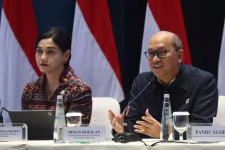
Investment Minister Rosan Roeslani, right, speaks during a meeting with market participants and regulators, accompanied by Financial Services Authority (OJK)'s head Friderica Widyasari Dewi in Jakarta on Sunday, Feb. 1, 2026. (B-Universe Photo/David Gita Roza)


Jakarta. Indonesia’s investment realization in the first quarter of 2026 is projected to reach Rp 497 trillion (around $29 billion), marking a 7% year-on-year increase, as downstream industries continue to anchor growth.


Downstream industrialization is expected to contribute Rp 150.1 trillion, accounting for 30.2% of the national investment target, underscoring its central role in the government’s industrial strategy.


Investment Minister Rosan Roeslani said performance in the early months of the year remains on track despite global economic pressures. In addition to capital inflows, the investment is estimated to generate 627,000 jobs, up 5.5% from the same period last year.

“In the first quarter, progress is in line with the targets we have set and planned,” Rosan said during a working meeting with parliament on Monday.

He stressed that Indonesia continues to stand out as an attractive investment destination, supported by its “free and active” foreign policy stance. Amid heightened geopolitical tensions—particularly in the Middle East—Indonesia is increasingly viewed by global investors as a stable alternative market.


“This situation presents opportunities. With rising tensions, especially in the Middle East, investors from those regions are engaging more intensively with us,” he said.


Investment Commitments Strengthen Outlook
Investor confidence has been further reinforced by overseas visits by Prabowo Subianto to key partner countries. From engagements in Japan and South Korea, Indonesia secured investment commitments totaling $33.8 billion, equivalent to Rp 574 trillion.


Commitments from South Korea reached $10.2 billion (Rp 173 trillion), primarily through business-to-business memorandums of understanding, while Japan accounted for a larger share at $23.6 billion (around Rp 401 trillion).

Read More:​

Special Economic Zones Attract 77% More Investment Than Other Regions

Rosan said these high-level engagements have helped reassure investors about Indonesia’s economic direction and its ability to navigate geopolitical risks.


“They give confidence that, at the highest level, the President understands both geopolitical dynamics and Indonesia’s economic landscape, as well as the steps taken to ensure investment continues to grow,” he said.


The government has reiterated its commitment to reducing uncertainty in order to sustain a conducive investment climate. Key priorities include regulatory reforms across all levels to provide greater legal certainty and stronger incentives for both foreign and domestic investors.


“What we are trying to reduce is uncertainty. We continue improving policies at every level, and this has had a positive impact on investment,” Rosan added.


IDX Records Rp 52.44 T in Bonds, Market Activity Surges and JCI Jumps 6.14%​


Muhammad Ghafur Fadillah
April 13, 2026 | 5:51 pm

To view this content we will need your consent to set third party cookies.
For more detailed information, see our cookies page.


Jakarta. Indonesia Stock Exchange (IDX) recorded robust corporate fundraising activity in 2026, with 48 bond and sukuk issuances from 32 issuers totaling Rp 52.44 trillion ($3.05 billion), underscoring sustained appetite for capital market financing despite global uncertainties.

IDX data shows a total of 688 listed bond and sukuk issuances outstanding, valued at Rp 564.69 trillion and $149.41 million, issued by 134 companies.

Government securities, or Surat Berharga Negara (SBN), listed on the exchange reached 190 series, with a nominal value of Rp 6,745.18 trillion and $352.10 million. Meanwhile, asset-backed securities (EBA) stood at seven issuances worth Rp 3.57 trillion.


On April 8, 2026, IDX listed the Continuing Bond II Bank Mandiri Taspen Phase II Year 2026, valued at Rp 1.5 trillion and issued by Bank Mandiri Taspen. The bond received an idAAA rating from Indonesia’s credit rating agency (PEFINDO), with Bank Rakyat Indonesia acting as trustee.


Equity market performance also strengthened during the week of April 6–10, 2026. Average daily trading volume rose 24.81% to 32.28 billion shares, from 25.87 billion shares in the previous week. Average daily transaction value climbed 17.26% to Rp 17.32 trillion, compared to Rp 14.77 trillion, while transaction frequency increased 15.05% to 2.05 million trades from 1.78 million.

In line with the uptick in activity, IDX’s market capitalization grew 7.18% to Rp 13,189 trillion, up from Rp 12,305 trillion a week earlier.

The Jakarta Composite Index (JCI) advanced 6.14% over the week, closing at 7,458.496 from 7,026.782 previously.


Indonesia’s Q1 Foreign Investment Hits $14.5 Billion, Singapore and China at the Top​


April 24, 2026


To view this content we will need your consent to set third party cookies.
For more detailed information, see our cookies page.

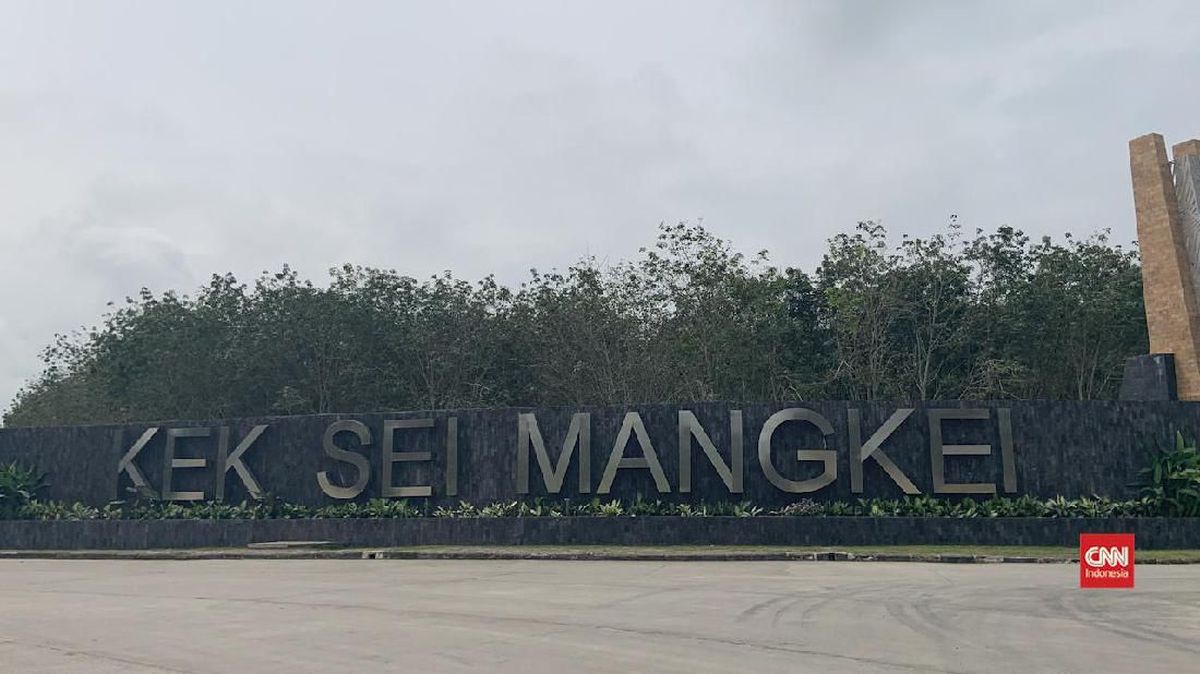
Newly Industrial Zone in Batang, Central Java


Jakarta.
Foreign direct investment inflows into Indonesia totaled Rp 250 trillion (approx. $14.5 billion) in the first quarter of 2026, with government data showing that the top three sources remained unchanged.

Investment Minister Rosan Roeslani told a press briefing on Thursday that Indonesia was almost a quarter of the way through its annual target of around Rp 2 quadrillion (around $116 billion). The archipelagic country had amassed Rp 498.8 trillion ($28.8 billion) in combined investments from domestic and foreign investors in January-March. About 50.1% of that money came from foreign investors, mainly those based in Singapore.

“Over the past 10 years, Singapore has always been the largest contributor to our FDI. In Q1, inflows from Singapore totaled more or less $4.6 billion, followed by Hong Kong at $2.7 billion and mainland China at $2.2 billion,” Rosan said.

However, the mainland China-Hong Kong group would total $4.9 billion in combined investments, thereby dethroning Singapore as Indonesia’s top international investor. The US is the fourth-largest FDI source at $1.3 billion, followed by Japan ($1 billion).

West Java was the most popular destination for foreign investors, amassing $3.1 billion in the first 3 months of 2026. Followed by Jakarta ($1.9 billion) and Central Sulawesi ($1.8 billion), the data showed.

Q1 investments from domestic investors totaled Rp 248.8 trillion, up 6% year-on-year.


Indonesia the Second Most Resilient Country to Global Energy Shocks, Report Says​


  • 24 Apr 2026
  • Voice of Indonesia
To view this content we will need your consent to set third party cookies.
For more detailed information, see our cookies page.


RRI.CO.ID, New York City – A report by U.S. based on firm J.P. Morgan Asset Management ranks Indonesia as the second most resilient country to global energy shocks. The Indonesian government has affirmed this as evidence that its current energy resilience policies are working.

The report, titled “Eye on the Market”, released on Tuesday, April 21, 2026, is based on an analysis of 52 countries representing around 82% of global energy consumption. The calculation is based on the total domestic production of gas, coal, nuclear power, and renewable energy, forming the percentage of energy used nationally.

Indonesia’s domestic energy production meets 77% of its national energy needs. This places Indonesia just slightly below South Africa at 79%, and above China and the United States at 76% and 70%, respectively.

Indonesia's energy resilience is primarily supported by the significant contribution of domestic coal production, which meets approximately 48% of national final energy consumption, domestic natural gas 22%, and renewable energy 7%. In the report, J.P. Morgan explicitly groups Indonesia, along with China, India, the Philippines, South Africa, and Vietnam, as a group of countries that have benefited substantially from domestic coal production during this period.

Indonesia is also considered to have very low direct exposure to the global energy distribution channels currently under the spotlight. Oil and gas imports through the Strait of Hormuz account for only about 1% of total national primary energy consumption, far below East Asian countries such as South Korea (33%), Thailand (27%), and Singapore (26%).

Responding to the report, Coordinating Minister for Economic Affairs, Airlangga Hartarto, said this recognition reflects collective efforts to maintain national energy resilience. He said it is not merely an appreciation of the current situation, but rather a validation of the government's long-term policy choices in maintaining a balance between domestic energy sources use and accelerating the energy transition.

"Amidst global energy price volatility, this position provides more controlled fiscal space for the 2026 State Budget and helps protect public purchasing power and the continuity of business activities," Airlangga said in a statement on Thursday, 24 April 2026.

Furthermore, Coordinating Minister Airlangga emphasized that the achievement "does not make Indonesia complacent" about the ongoing risks. The government continues to strengthen several policy directions. This includes optimizing domestic oil and gas production, strengthening non-tax revenues, developing new and renewable energy, expanding the use of electric vehicles, and diversifying energy supply sources and logistics channels.

"Going forward, the Coordinating Ministry for Economic Affairs will continue to coordinate energy and fiscal policies in an integrated manner to maintain this resilience momentum and ensure that its benefits are directly felt by the public and businesses," Airlangga said.


Indonesia Beats Expectations with 5.61% Growth in Q1​


Jayanty Nada Shofa
May 5, 2026 | 12:00 pm

1777965400461.png
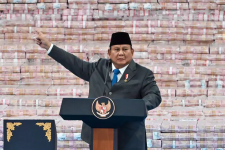
President Prabowo Subianto stands in front of huge piles of the administrative fines related to forestry sector violations in Jakarta on April 10, 2026. (Antara Photo/Fakhri Hermansyah)


Jakarta. Indonesia’s economy accelerated by 5.61% year-on-year (yoy) in Q1 2026 amid Iran war uncertainties, the statistics bureau revealed Tuesday, topping expectations.

 
March Trade Surplus Hits $3.32 B on Strong Non-Oil Exports


Ria Fortuna Wijaya
May 4, 2026 | 3:05 pm

Jakarta. Indonesia’s trade surplus widened sharply to $3.32 billion in March 2026, driven by a strong non-oil and gas balance, data from the Central Statistics Agency (BPS) showed on Monday.

Exports reached $22.53 billion in March, while imports stood at $19.21 billion, resulting in a significantly higher surplus compared to $1.27 billion in February.

“Indonesia’s trade balance recorded a $3.32 billion surplus in March 2026. The country has now maintained a trade surplus for 71 consecutive months since May 2020,” said BPS Deputy for Distribution and Services Statistics Ateng Hartono during a press briefing.


JCI Gains 0.22% on Stable Inflation, Trade Surplus Support​


Ria Fortuna Wijaya, Associated Press
May 4, 2026 | 4:15 pm

Jakarta. Jakarta Composite Index (JCI) extended its gains, closing up 15 points, or 0.22%, at 6,957 on Monday, supported by easing geopolitical tensions and steady domestic macroeconomic data

Domestically, the firm noted that gains in the JCI were supported by macroeconomic data releases. The Central Statistics Agency (BPS) reported April 2026 inflation at 0.13% month-to-month and 2.42% year-on-year, remaining within a stable range.


Jakarta Economy Grows 5.59% as Inflation Holds at 2.32%​


Endang Mulyani
May 6, 2026 | 8:57 pm


To view this content we will need your consent to set third party cookies.
For more detailed information, see our cookies page.


Jakarta. Jakarta recorded economic growth of 5.59% in the first quarter of 2026, broadly in line with the national rate, while inflation remained contained at 2.32%, officials said on Wednesday.

Governor Pramono Anung said the figures point to stable economic conditions in the capital, supported by solid consumption and investment.

“For Jakarta, economic growth stands at around 5.59%, which is roughly in line with the national figure. The encouraging news is that inflation remains low at 2.32%,” he said at City Hall.

Data from the city’s Economic Bureau showed that monthly inflation in April was mainly driven by air transportation, followed by rice, as well as fried chicken, cooking oil and gasoline.

On an annual basis, inflation was primarily attributed to higher prices of gold jewelry, broiler chicken, air transportation, rice and cooking oil.

Pramono said Jakarta’s economic resilience is underpinned by two main growth drivers — household consumption and investment — which continue to support activity despite external uncertainties.

Separately, Bank Indonesia said Jakarta remains the country’s largest economic hub, contributing about 16.67% to the national economy.

“In the first quarter of 2026, Jakarta’s economy continued to grow strongly at 5.59% year-on-year, in line with national growth of 5.61%,” said Iwan Setiawan, head of Bank Indonesia’s Jakarta Representative Office.

To keep inflation in check, the Jakarta Regional Inflation Control Team has rolled out measures focused on maintaining price affordability, ensuring supply availability, improving distribution and strengthening communication.

These include promotional programs for key food commodities and a memorandum of understanding between state-owned food distributor Food Station Tjipinang Jaya and the Pariaman Agriculture, Food and Fisheries Agency to secure rice supply, alongside capacity-building initiatives.


Indonesia’s Creative Economy Attracts Rp 61.3 Trillion in Q1 Investment​


Akmalal Hamdhi
June 2, 2026

1780534362920.png
The 2026 Jakarta Muslim Fashion Week ends on a high note in Balai Kartini, Jakarta, on Nov. 9, 2025. (Photo Courtesy of Trade Ministry)


Jakarta. Indonesia’s creative economy sector attracted Rp 61.3 trillion ($3.4 billion) in investment during the first quarter of 2026, a 42% increase from Rp 43.3 trillion in the same period a year earlier, according to Creative Economy Minister Teuku Riefky Harsya.


Speaking during a parliamentary hearing in Jakarta on Tuesday, Riefky said the first-quarter figure already represented 47% of the ministry’s full-year investment target for 2026.


“This achievement shows that the creative economy sector has strong appeal for investors, particularly foreign investors,” Riefky said, noting that overseas capital accounted for 71% of total investment in the sector.


Investment remained concentrated in applications, culinary businesses, fashion, crafts, and advertising.


By country of origin, the largest sources of investment were the United States, Singapore, Hong Kong, the United Kingdom, and China.


According to Riefky, the dominance of investment in application-based businesses reflects strong investor interest in Indonesia’s expanding technology and digital economy sectors.

According to Riefky, the dominance of investment in application-based businesses reflects strong investor interest in Indonesia’s expanding technology and digital economy sectors.


Read More:​

Creative Economy Employs 27.4 Million Indonesians, BPS Reports


The creative economy generated $7.4 billion in exports during the first quarter, equivalent to about 27% of this year’s export target.


Riefky said the performance exceeded the national average pace of export realization, which currently stands at around 21% of annual targets.


In March 2026, creative economy exports accounted for 11.8% of Indonesia’s total non-energy exports.


The United States remained the largest destination for Indonesian creative economy exports, followed by Thailand and Japan. These markets are key buyers of Indonesian fashion, craft, and culinary products.


Fashion products contributed the largest share of creative economy exports, accounting for 56.8% of the total, Riefky said.


He noted that the sector’s positive momentum had already become evident last year.


In 2025, investment in Indonesia’s creative economy reached Rp 183 trillion ($10.3 billion), exceeding the government’s target by 34%.


Creative economy exports totaled $31.9 billion in 2025, equivalent to about 120% of the annual target, while the sector employed approximately 27.4 million people.


For 2026, the Creative Economy Ministry has set targets of Rp 146.5 trillion in investment, $27.8 billion in exports, employment for 26.6 million people, and 5.6% growth in the creative economy gross domestic product, Riefky said.

Read More:​

Creative Economy Adds $90 Billion to Indonesia’s GDP as Investment and Exports Surge


Users who are viewing this thread

Pakistan Defence Latest

Back
Top