Navigation
Install the app
How to install the app on iOS
Follow along with the video below to see how to install our site as a web app on your home screen.
Note: This feature may not be available in some browsers.
More options
Style variation
You are using an out of date browser. It may not display this or other websites correctly.
You should upgrade or use an alternative browser.
You should upgrade or use an alternative browser.
Indonesia Leads EM Rally as Carry Appeal, Growth Lure Investors
- Thread starter Indos
- Start date
- Status
- Not open for further replies.
More options
Who Replied?
SoulSpokesman
Trusted Member


Indos
INT'L MOD
- Thread starter
- #78
JCI Returns to 7,000 Level as Trump Declares ‘Total Reset’ With China
Herman, Faisal Maliki Baskoro
May 15, 2025 | 10:38 am
4–5 minutes
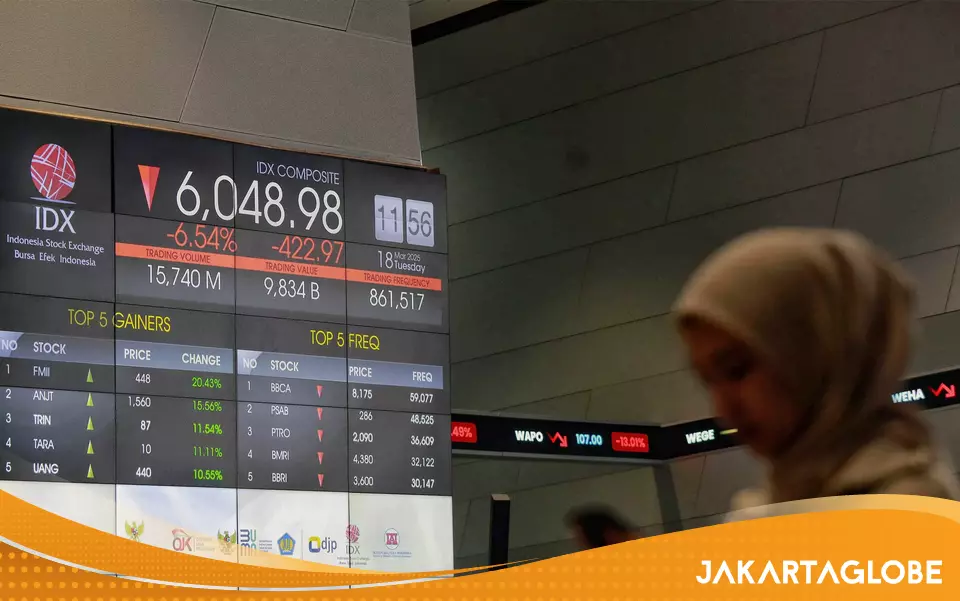
Market data is displayed on the floor of the Indonesia Stock Exchange in Jakarta, Tuesday, March 18, 2025. (B-Universe Photo/Joanito De Saojoao)
Jakarta. Indonesia’s benchmark Jakarta Composite Index (JCI) rallied past the 7,000 mark for the first time in over three months on Thursday, buoyed by optimism surrounding a temporary easing in US–China trade tensions. The benchmark rose 1 percent to 7,050.5 as of 9:37 a.m. local time, after a 2.15 percent surge the day prior.
This is the first time the index has crossed the psychological level since Feb. 5, a sign that investor sentiment is rebounding after weeks of volatility driven by heightened geopolitical and trade risks.
The latest rally was fueled by a 90-day suspension of tariffs between the US. and China, announced following high-level talks in Genevaon Monday The move eased fears of a global recession and sparked recovery across emerging markets.
“We see the 7,000 mark to be a positive psychological resistance level that is quite challenging to break. If the JCI fails to sustain momentum, we may see a pullback to lower support levels,” NH Korindo Sekuritas Indonesia wrote in a Thursday note.
US–China Reset Eases Market Anxiety
Helmy Kristanto, analyst at BRI Danareksa Sekuritas, described the development as a “total reset” in US–China relations. “The trade war de-escalation, marked by a 90-day suspension, has eased recession concerns and provided relief to global markets,” Kristanto said. “Trump's declaration of a ‘total reset’ signals a willingness to cooperate and a complete reversal from his earlier stance.”
Helmy also highlighted comments from US Treasury Secretary Scott Bessent, who said that “neither side wants to decouple,” offering further reassurance that the two largest economies are aiming to reduce tensions.
Under the temporary truce, China will reduce tariffs on US goods from 125 percent to 10 percent, while the US will lower tariffs on Chinese imports from 145 percent to 30 percent.
Still, Helmy warned that the historical precedent suggests caution. “A similar truce in 2018 paused tariffs but ultimately failed, resulting in the 2020 Phase One deal. While markets have responded positively, the path forward remains uncertain.”
From Rout to Recovery
The JCI had tumbled 3.82 percent over the April 8–11 trading window, falling to 6,262.23, its sharpest weekly loss in years, after US President Donald Trump abruptly hiked tariffs on several trading partners, including Indonesia. The resulting selloff wiped out Rp 431 trillion ($25.6 billion) in market value and prompted a significant pullback by foreign investors.
Banking and mining stocks, particularly vulnerable to international trade dynamics, were hit hardest during the downturn.
US equities posted modest gains Wednesday. The S&P 500 inched up 0.1 percent to 5,892.58, while the Nasdaq Composite rose 0.72 percent to 19,146.81. The Dow Jones Industrial Average fell 0.21 percent to 42,051.06.
Indonesia, one of the countries targeted in Washington’s tariff offensive, has dispatched a high-level delegation to the US led by Chief Economic Affairs Minister Airlangga Hartarto, on April 2. The team is pushing for tariff exemptions within a 60-day negotiation window. In exchange, Indonesia is offering to increase imports of US goods --including liquefied petroleum gas, gasoline, soybeans, and capital goods-- and to ease domestic content rules on electronics.
JCI Returns to 7,000 Level as Trump Declares ‘Total Reset’ With China
Jakarta stocks rally past 7,000 for first time since Feb. as US–China tariff truce lifts markets and Trump signals shift in trade stance
jakartaglobe.id
Indos
INT'L MOD
- Thread starter
- #79
RI Converts Debt $ 3.3 Billion to Rupiah, Largest in History
Anisa Indraini - detikFinance
Wednesday, May 21, 2025 10:01 WIB
Asian Development Bank (ADB) and the Ministry of Finance (Kemenkeu) RI managed to convert 27 government loans with a total of US $ 3.3 billion or Rp 54.07 trillion (exchange rate of Rp 16,386) from the United States dollar (US) and the Japanese yen to the rupiah. This became the first large-scale local currency conversion an ADB and paved the way for similar transactions in the future.
ADB Vice President for Finance and Risk Management, Roberta Casali said the move is in line with ADB's strategy to support the development of local currency markets in the Asia and Pacific region.
"By optimizing currency management, we help our member countries achieve more sustainable and resilient economic growth," Casali said in a written statement on Wednesday (21/05/2025).
With debt conversion, Deputy Finance Minister Thomas Djiwandono said Indonesia could lower financing and minimize financial uncertainty. This in turn can give greater fiscal space to meet other urgent needs.
“Providing greater fiscal space to meet other urgent needs,” Thomas said.
ADB continues to explore local currency financing opportunities throughout the region. Through the issuance of local currency bonds and the development of derivatives markets, it has significantly advanced local currency financing in Asia and the Pacific.
The overall portfolio of ADB's local currency reached more than US$5 billion as of April 30, 2025. That loan covers a third of more than a total private sector loan and is expected to exceed 50% in the coming years.
Founded in 1966, the ADB consists of 69 countries, 50 of which are from the Asia and Pacific regions. Working with its members and partners to address complex challenges together, ADB leverages innovative financial tools and strategic partnerships.
RI Konversi Utang US$ 3,3 Miliar ke Rupiah, Terbesar dalam Sejarah
ADB dan Kemenkeu RI berhasil konversi 27 pinjaman senilai US$ 3,3 miliar ke rupiah.
 finance.detik.com
Indos
INT'L MOD
- Thread starter
- #80
Indonesia leads Asia shares ahead of central bank meeting; FX muted
By Rishav Chatterjee / Reuters
20 May 2025, 04:49 pm

(May 20): Indonesian equities hovered around four-month highs on Tuesday to lead gains across Asia as investors prepared for a potential rate cut from the central bank, while most emerging currencies traded in a tight range against a steady US dollar.
Jakarta’s benchmark index rose as much as 0.9% before trimming gains, eyeing a sixth straight session of advances.
Bank Indonesia is widely expected to resume its easing cycle in a policy meeting on Wednesday, emboldened by the rupiah’s recent strength that has given it room to focus on supporting growth.
The central bank is likely to "opportunistically" deliver a 25-basis-point cut, according to Barclays analysts, bringing its benchmark rate to 5.50%.
The rupiah firmed 0.3% on the day, extending a rebound of more than 3% from record lows in early April.
Most equity markets in Asia were firmer as investors put Moody's downgrade of US credit ratings in the rearview mirror after Treasury Secretary Scott Bessent dismissed the decision via television interviews.
Stocks in Singapore, Thailand and China posted moderate gains.
Equities in the Philippines underperformed, slipping for a fifth consecutive day, pressured by a string of negative headlines, including a widening balance of payments (BOP) deficit that hit US$2.6 billion (RM11.1 billion) in April — up sharply from US$639 million a year earlier.
The central bank attributed the ballooning gap to higher debt servicing using foreign reserves.
Investors in Philippine stocks have been concerned by higher local fuel pump prices, some recent political noises, softer local vehicle sales and a widening BOP deficit data, said Michael L Ricafort, chief economist at Rizal Commercial Bank Corp.
In currency markets, the Taiwan dollar, the Singapore dollar, and the Indian rupee were little changed while the Thai baht weakened modestly against a US dollar that traded sideways on Tuesday.
The greenback stabilised after a week-long decline, as investors weighed the Federal Reserve’s cautious tone on the economy following a broad market sell-off.
The South Korean won underperformed amid rising political tensions following the reversal of an opposition leader’s acquittal and the finance minister’s resignation.
Seoul’s benchmark traded lower as sentiment soured.
Meanwhile, the Chinese yuan inched lower after the People's Bank of China cut its benchmark lending rates for the first time since October, reinforcing policymakers’ efforts to stimulate growth amid persistent trade headwinds with the US
Malaysia's ringgit edged higher after April exports surged 16.4% year-on-year, driven by robust demand for electronics, according to the trade ministry.

Indonesia leads Asia shares ahead of central bank meeting; FX muted
Indonesian equities hovered around four-month highs on Tuesday to lead gains across Asia as investors prepared for a potential rate cut from the central bank, while most emerging currencies traded in a tight range against a steady US dollar.
 theedgemalaysia.com
Indos
INT'L MOD
- Thread starter
- #81
Reuters Published about an hour ago
May 21, 2025
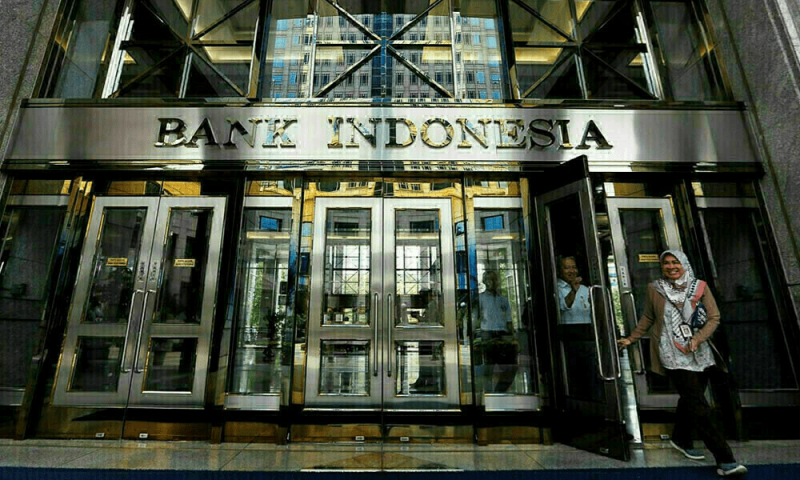
JAKARTA: Indonesia’s central bank cut its key interest rate on Wednesday, as expected by the market, resuming its monetary easing after holding policy steady at its previous three meetings.
Bank Indonesia lowered the benchmark 7-day reverse repurchase rate, known as the BI Rate, by 25 basis points to 5.50%, as expected by 20 of 32 economists polled by Reuters.
Indonesia central bank conducts currency intervention whenever necessary, official says
The rest had predicted BI would stand pat.
The central bank also cut its overnight deposit facility and lending facility rates by the same amount to 4.75% and 6.25%, respectively.
Indonesia central bank cuts rates, as expected
JAKARTA: Indonesia’s central bank cut its key interest rate on Wednesday, as expected by the market, resuming its...
www.brecorder.com
Indos
INT'L MOD
- Thread starter
- #82
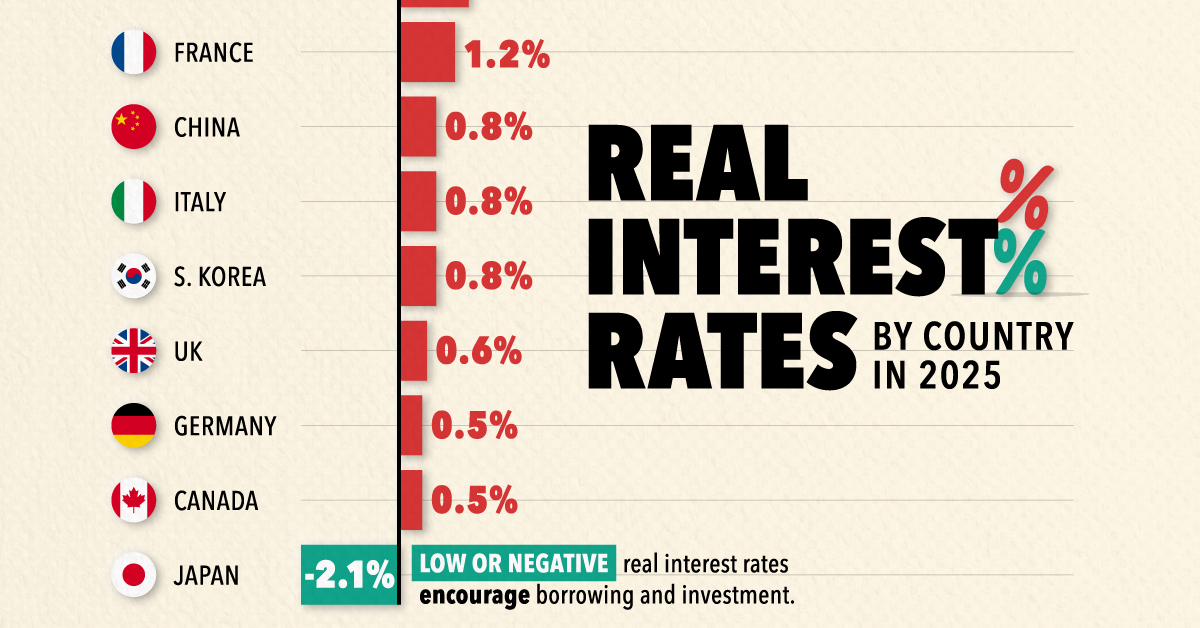
Charted: Real Interest Rates by Country in 2025
Published on May 6, 2025
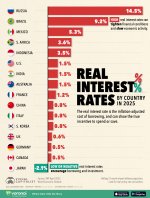
Interest rates are a hot topic in 2025, with major economies navigating inflationary pressures and the loosening end of their monetary policy cycles.
Real interest rates, calculated by subtracting inflation from nominal policy rates, can show the true incentive to spend or save.
When real interest rates are low, businesses borrow more and consumers spend more, boosting economic activity. By contrast, high real rates incentivize saving and tighten financial conditions.
This infographic uses data from the IMF’s World Economic Outlook for April 2025 to highlight the current state of real interest rates across major economies.
%%title%% %%page%%
This infographic shows real interest rates for 16 major economies in 2025, highlighting the current state of monetary policies.
 www.visualcapitalist.com
Indos
INT'L MOD
- Thread starter
- #83
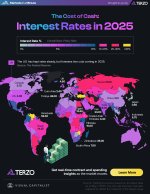
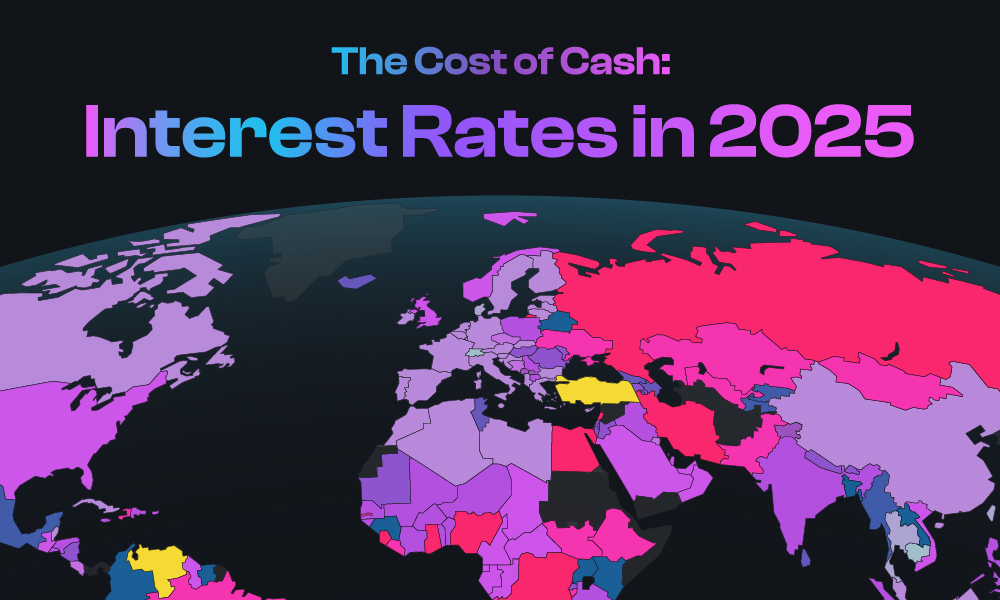
Mapped: Interest Rates by Country in 2025
Published on May 8, 2025
Mapped: Interest Rates by Country in 2025
Key Takeaways
- The U.S. has kept the interest rate steady, but foresees two cuts coming in 2025.
- Venezuela has the highest interest rate of 59.4% as the country continues to battle high inflation.
- Switzerland and Fiji have the lowest interest rates of 0.25%.
Mapped: Interest Rates by Country in 2025
The U.S. has kept their target rate the same at 4.25-4.50%. What do interest rates look like in other countries amid economic uncertainty?
www.visualcapitalist.com
Indos
INT'L MOD
- Thread starter
- #84
Indonesia set for more rate cuts on growth view: Analysts
Thursday, 22 May 2025
JAKARTA: An improving market sentiment will pave the way for Indonesia’s central bank to better balance its pro-growth stance with ensuring stability in the financial markets, according to analysts.
Bank Indonesia will not hesitate to stabilise the rupiah through intervention amid economic uncertainty, Governor Perry Warjiyo (pic) said after reducing the BI-Rate by 25 basis points on Wednesday. The central bank also lowered its 2025 gross domestic product growth forecast to a range of 4.6% to 5.4%.
There’s room for the central bank to further ease policy as the rupiah regains footing amid a weaker dollar, cooling trade tensions and waning fiscal concerns. Foreign flows are also returning to local stocks and bonds.
"BI could cut the policy rate by another 75 basis points this year as the rupiah stabilises,” though a potential delay in Federal Reserve fund rate cut may slow Indonesia’s pace of easing, Goldman Sachs Group Inc analysts Rina Jio and Danny Suwanapruti wrote in a note. - Bloomberg
Indos
INT'L MOD
- Thread starter
- #85
Indonesia reaches key milestones in OECD accession process
Press release
3 June 2025
On the occasion of the 2025 OECD Ministerial Council Meeting, Indonesia's Coordinating Minister for Economic Affairs, Mr. Airlangga Hartarto, submitted Indonesia’s Initial Memorandum to OECD Secretary-General Mathias Cormann, marking a significant step forward towards accession to the OECD.
The Initial Memorandum is a preliminary self-assessment of the alignment of Indonesia’s legislation, policies and practices with OECD standards and best practices. It marks the beginning of the comprehensive technical phase of the OECD accession process.
Indonesia also submitted its formal request to join the OECD Anti-Bribery Convention, one of the OECD’s flagship standards that creates the legal foundation for countries to fight foreign bribery. Joining and effectively implementing the OECD Anti-Bribery Convention is an integral part of the OECD accession process.
“Indonesia is a significant global player and provides important leadership across its region and beyond. By taking these important steps today, Indonesia has sent a strong message to the international community of its commitment to align with and help shape international standards and best practices,” OECD Secretary-General Mathias Cormann said. “OECD accession is a positive transformational process, supporting Indonesia’s ambition to become an advanced economy by 2045. For the OECD, Indonesia brings important perspectives to the table helping to further strengthen our Organisation’s global relevance and impact.”
In line with Indonesia’s Accession Roadmap, adopted by the 38 Member countries of the OECD one year ago, an in-depth technical dialogue will now begin with 25 expert committees covering a wide range of policy issues including anti-corruption and integrity efforts, education, health, effective protection of the environment as well as open trade and investment.
The OECD accession process serves as a powerful catalyst to drive further necessary reforms through Indonesia’s review and alignment of its legislation, policy and practices with OECD standards and best practices.
Indonesia has been a Key Partner of the OECD since 2007 and, in 2014, Indonesia served as an inaugural co-chair of the OECD’s Southeast Asia Regional Programme.
The OECD Council took the decision to open accession discussions with Indonesia on 20 February 2024, making it the OECD’s first accession candidate country from Southeast Asia.
For further information, journalists may contact Yumiko Sugaya in the OECD Media Office (tel: +33 1 45 24 97 00).
Working with over 100 countries, the OECD is a global policy forum that promotes policies to preserve individual liberty and improve the economic and social well-being of people around the world.

Indonesia reaches key milestones in OECD accession process
On the occasion of the 2025 OECD Ministerial Council Meeting, Indonesia's Coordinating Minister for Economic Affairs, Mr. Airlangga Hartarto, submitted Indonesia’s Initial Memorandum to OECD Secretary General Mathias Cormann, marking a significant step forward towards accession to the OECD.
 www.oecd.org
Indos
INT'L MOD
- Thread starter
- #86
JCI Inch Higher as Trump Slaps New Tariffs, Investors Bet on Talks
Rama Sukarta, Associated Press
July 8, 2025 | 4:51 pm
Jakarta. Asian stocks advanced Tuesday even as US President Donald Trump unleashed a sweeping new round of import tariffs on major trading partners, including Japan, South Korea, and Indonesia, with investors betting that an extended negotiating window could avert a deeper trade shock.
Trump on Monday imposed a 25 percent tariff on goods imported from Japan and South Korea while setting new import taxes on a dozen other nations, effective Aug. 1. The tariffs will hit imports from Myanmar and Laos at 40 percent, Cambodia and Thailand at 36 percent, Serbia and Bangladesh at 35 percent, Indonesia at 32 percent, South Africa and Bosnia and Herzegovina at 30 percent, and Kazakhstan, Malaysia, and Tunisia at 25 percent.
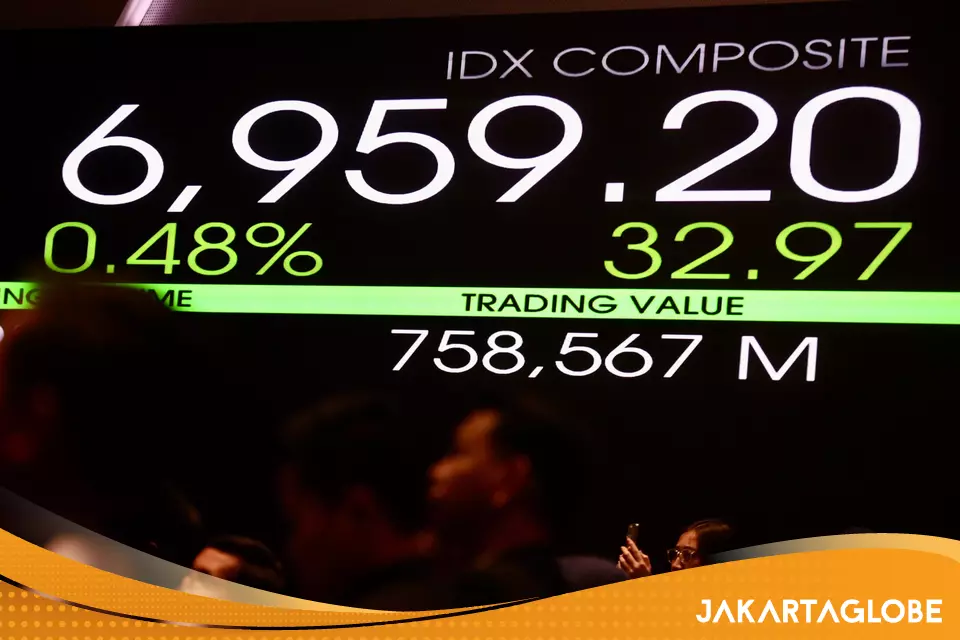
Indonesia’s benchmark Jakarta Composite Index (JCI) rose 0.05 percent to close at 6,904.02, rebounding from early weakness as local sentiment found support from IPO activity and resilient consumer confidence data despite heightened global trade tensions. The index traded between 6,885.28 and 6,916.83 during the session, with 308 decliners outpacing 276 gainers, while 209 stocks were unchanged.
Japan’s Nikkei 225 gained 0.3 percent, South Korea’s Kospi surged 1.8 percent, and Hong Kong’s Hang Seng rose 0.7 percent, shrugging off overnight losses on Wall Street triggered by the tariff escalation and a fresh political rift between Trump and Tesla’s Elon Musk. China’s Shanghai Composite added 0.7 percent, while Australia’s ASX 200 slipped 0.1 percent.
The White House said the tariffs aimed to protect domestic industries from foreign competition, particularly in textiles, electronics, and footwear, while signaling openness to roll back the duties if trading partners, including Indonesia, agreed to build production facilities in the United States.
“Markets treated today’s fresh round of ‘maybe talks, maybe not’ as more background noise than breaking news,” said Stephen Innes, managing partner at SPI Asset Management. “Investors have seen this cycle before: tariff threats, rising rhetoric, followed by a pivot to negotiations.”
Pilarmas Investindo Sekuritas, in its research note, said the extension of the tariff deadline from July 9 to Aug. 1 provided “hope for negotiators to strike a deal,” helping ease near-term anxieties in the region. The brokerage also cited optimism from the IPO activity of eight new Indonesian issuers, providing a cushion for local equities despite the external headwinds.
Indonesia’s June consumer confidence index rose to 117.8 from 117.5, Bank Indonesia data showed, signaling steady domestic consumption amid rising global uncertainties.
Permata Bank’s Chief Economist Josua Pardede said Indonesia’s manufacturing sectors, including electronics, garments, and furniture, could face immediate pressure, potentially trimming 0.3 percent to 0.5 percent off Indonesia’s GDP growth, previously projected at 5.1% for the year.
“Indonesia will need to anticipate export slowdowns and potential investor wait-and-see attitudes, which could unavoidably lead to domestic economic moderation,” Josua said.
On Wall Street, the S&P 500 fell 0.8 percent on Monday, while the Dow Jones and Nasdaq each dropped 0.9 percent as investors weighed the risk of a prolonged global trade war against resilient US economic data.
JCI Inch Higher as Trump Slaps New Tariffs, Investors Bet on Talks
Asian markets rose despite Trump’s new tariffs on Japan, Indonesia, and others, with investors betting on extended trade negotiations.
Indos
INT'L MOD
- Thread starter
- #87
Rupiah Back Strengthened After the Certainty of Tariffs, the Dollar Dropped to Rp16.200
Elvan Widyatama, CNBC Indonesia
08 July 2025 15:06
Jakarta, CNBC Indonesia -
The rupiah exchange rate closed stronger against the US dollar. Citing Refinitiv, the rupiah-to-US dollar exchange rate on Tuesday’s (July 8, 2025) trading closed at IDR 16,200 per USD, up 0.15%.
This aligns with the US Dollar Index (DXY), which weakened by 0.27% to 97.21 as of 3:00 PM WIB.
Rupiah to USD = Rupiah seen getting strengthen since end of May
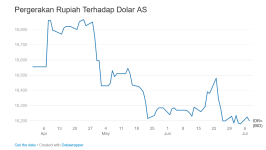
The rupiah movement today is quite volatile, at the time of the opening of the trade, the rupiah had dropped to the position of Rp16,265 / US$ or a correction of 0.25%, after which the rupiah began to move up until finally closed strengthened.
Today's market is overshadowed by the latest news on U.S. trade tariffs just announced by U.S. President Donald Trump.
Trump sent a letter to several countries including Indonesia on the latest tariff setting. Surprisingly, Indonesia is subject to a tariff of 32% which will be effective from August 1, 2025.
This means that the Indonesian government’s efforts during the 90-day negotiations with Trump representatives became meaningless. In total there are 14 countries sent letters about this latest tariff.
Concerns over the continued impact of unilateral trade policies and the potential slowdown of the global economy make market participants tend to be waiting and seeing, especially in addressing currency movements and bond yields.
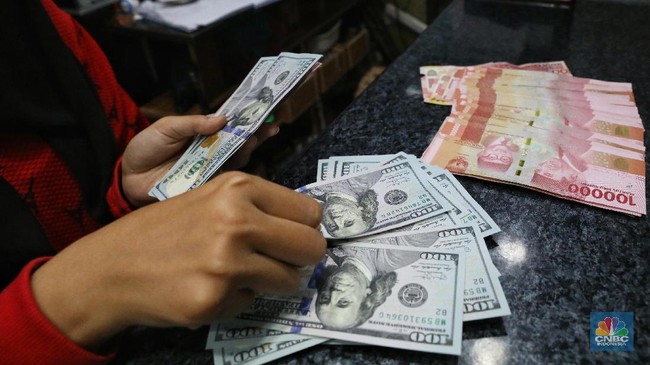
Rupiah Balik Menguat Usai Kepastian Tarif, Dolar Turun ke Rp16.200
Rupiah menguat 0,15% terhadap dolar AS, ditutup di Rp16.200/US$. Pergerakan volatile dipengaruhi tarif dagang baru dari AS yang dikenakan pada Indonesia.
 www.cnbcindonesia.com
Indos
INT'L MOD
- Thread starter
- #88
BI Cuts Rates for Second Time This Year, Signals Room for More Easing
Arnoldus Kristianus
July 16, 2025 | 3:21 pm
Jakarta. Bank Indonesia (BI) has cut its benchmark interest rate by 25 basis points to 5.25 percent in a move to support sustainable economic growth while maintaining rupiah stability amid global uncertainty.
The central bank also lowered the Deposit Facility rate to 4.5 percent and the Lending Facility rate to 6 percent following its board of governors meeting on July 15-16.
“This decision aligns with our low and controlled inflation outlook within the 2.5 percent target for 2025-2026 and efforts to maintain rupiah stability while boosting economic growth,” BI Governor Perry Warjiyo said during a virtual press conference on Wednesday.
Perry said there is further room to lower rates to support the economy if needed, while closely monitoring global and domestic developments.
The move marks the second rate cut this year, following a reduction from 5.75 percent to 5.5 percent in May after BI had kept rates steady for four months.
Indonesia’s economy is projected to grow between 4.6 and 5.4 percent in the second half of 2025, supported by stronger domestic demand and steady export performance following a tariff deal with the United States. The country recorded 4.87 percent growth in the first quarter of 2025.
On Tuesday, US President Donald Trump announced plans to slash the previously threatened 32 percent tariffs on Indonesian goods to 19 percent. In exchange, Indonesia agreed to provide tariff-free access for US goods and committed to purchasing $15 billion worth of American energy products, $4.5 billion in agricultural goods, and 50 Boeing aircraft, including Boeing 777 wide-body jets.
Trimegah Sekuritas Chief Economist Fakhrul Fulvian said BI’s rate cut was timely as domestic inflation remains under control and the global focus shifts toward supporting growth amid slowing US and European economies.
“Other regional economies like India and Malaysia have already lowered rates. It’s time for Indonesia to do the same, shifting focus to growth while maintaining rupiah stability,” Fakhrul said.
Read More:
Indonesia-US Trade Deal Marks New Era of Mutual Benefit, Prabowo SaysHe projected the rupiah could strengthen to Rp 15,500 by year-end, supported by improved economic expectations driven by both monetary and fiscal policy momentum.
Globally, BI expects growth to remain weak at around 3 percent in 2025, citing the impact of US reciprocal tariffs on major and emerging economies. The US, Europe, and Japan are seeing slower growth despite fiscal stimulus and monetary easing, while China’s recovery remains fragile amid export diversification efforts. India, however, is expected to maintain solid growth driven by domestic demand.
Easing US inflation pressures have strengthened expectations for future Federal Reserve rate cuts, while rising risks in the US economy have driven capital flows toward Europe, emerging markets, and safe-haven assets such as gold, contributing to a weaker dollar.
“Stronger vigilance and coordinated policy responses are needed to mitigate global market uncertainty while ensuring domestic stability and supporting economic growth,” Perry said.

BI Cuts Rates for Second Time This Year, Signals Room for More Easing
Bank Indonesia cuts rates to 5.25% to support growth while keeping rupiah stable, marking its second cut this year as inflation stays low.
jakartaglobe.id
Indos
INT'L MOD
- Thread starter
- #89
Rupiah Strengthens Because Of The Fed Official Dovish Statement
18 July 2025
TEMPO.CO, Jakarta - Currency analyst Doo Financial Futures Lukman Leong said the exchange rate or rupiah exchange rate has the potential to strengthen as the dovish statement from the Federal Reserve (Fed) official." Today's rupiah could potentially strengthen against the U.S. dollar weakened by a 'dovisch' statement from 'The Fed Waller' official who wants immediate rate cuts or this month," he told ANTARA in Jakarta on Friday, July 18, 2025.
According to Christopher Waller, the U.S. tariff policy will not be fully borne by consumers and labor data is considered to be weakening forward. Therefore, Waller confirms the potential for pruning Interest rates It is twice that each amounted to 25 basis points (bps) until the end of the year.
The U.S. dollar rate strengthened Thursday night, July 17, after the U.S. jobless claims data was stronger than expected, which was 221 thousand of expectations of 235 thousand, as well as retail sales of 0.6 percent from the alleged 0.1 percent. "However, the 'dovish Waller' attitude turned to the U.S. dollar," Lukman said.
Based on these factors, the rupiah exchange rate is predicted to range from Rp 16,250 - Rp16,400 per US dollar.
The rupiah exchange rate at the opening of trading Friday morning in Jakarta strengthened by 34 points or 0.20 percent to Rp 16,307 per US dollar from the previous Rp 16,341 per US dollar.
Indos
INT'L MOD
- Thread starter
- #90
Historic Record! JCI Strengthens for 10 Consecutive Days
Susi Setiawati, CNBC Indonesia
July 19 2025 08:00

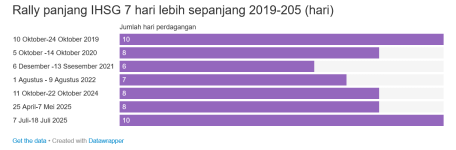
Jakarta, CNBC Indonesia - Indonesia's stock exchange scored an outstanding performance by strengthening 10 consecutive trading days. The increase in the Combined Stock Price Index (JCI) that occurred during these 10 days is the first since October 2019 or five years ago.
In 2019, JCI had recorded a 10-day increase in a row on October 11-24, 2019. This is now repeated on July 7-18, 2025.

Recorded throughout July 2025, JCI has recorded an increase of up to 5.55%. Since the beginning of July, it has been recorded only 4 red days, but was able to record 10 green days.
In the span of October 2019 to Friday, the JCI had experienced a rally-rally sharpened. However, the long rally lasted only eight days:
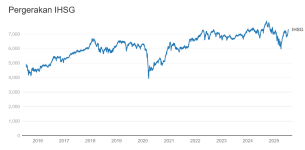
The rise of JCI is not without reason. IPO stocks that were compact in July, were able to become a booster for the increase in JCI, especially two jumbo IPO stocks that were able to control most of the market cap of daily transactions of JCI.
The rise of JCI is also getting faster after the good news that came from Bank Indonesia (BI).
BI lowered the benchmark interest rate or BI Rate by 25 basis points (bps) to 5.25% at the Board of Governors Meeting (RDG) which lasted July 15-16, 2025. The deposit facility rate also fell 25 bps to 4.5% and the lending facility rate was 25 bps to 6%.
The reduction in interest rates is in line with the lower inflation forecasts of 2025 and 2026 in the target of 2.5% plus minus 1%, the maintenance of the rupiah exchange rate, and the need to encourage economic growth.
However, in the future Bank Indonesia will continue to look at the interest rate cut space to encourage economic growth while maintaining the stability of the rupiah exchange rate and the inflation target in accordance with the dynamics that occur in the global and domestic economies.
In addition, five policy incentives disbursed by the government in the June-July 2025 period also became the attraction of investors because it could encourage the level of purchasing power of the community that can benefit some sectors.
Where the five incentives issued by the government in the form of transportation discounts (Rp 940 billion), discount toll tariff (Rp 650 billion), sales of social assistance and food assistance (Rp 11.93 trillion), wage subsidy assistance (BSU) (Rp 10.72 trillion), and the extension of JKK dues discount (Rp 200 billion).
In addition, the financial release season of the first semester 2025 will also be a booster for the movement of JCI for the July to August trip. Even if the Fed will cut interest rates and BI again cut interest rates, then the JCI has the potential to be bullish to the level of Rp7,500.

Rekor Bersejarah! IHSG Menguat 10 Hari Beruntun
ihsg catat rekor kenaikan 10 hari beruntun
 www.cnbcindonesia.com
- Status
- Not open for further replies.
Users who are viewing this thread
Total: 1 (members: 0, guests: 1)
Pakistan Defence Latest
-
 Federal cabinet gives nod to imposition of emergency in KP; summary sent to president (20 Viewers)
- Latest: Starlord
-

-


Country Watch Latest
-
-

-
 Turkey, Pakistan, Qatar, and Indonesia forge ‘Badr’ Pact to Jointly Produce Weapons (5 Viewers)
- Latest: K2RULEZ
-
-