Indonesia Has IDR 1,693 Trillion in Institutional Funds in Case of Foreign Selling
JAKARTA, CNBC Indonesia – Renewed foreign selling has once again tested the resilience of Indonesia's stock market. However, the country has a substantial base of domestic institutional investors with combined investment funds, cash, and assets under management (AUM) totaling approximately
IDR 1,693 trillion (around
US$104 billion).
These institutional resources are held by
BPJS Ketenagakerjaan, the
Hajj Financial Management Agency (BPKH),
Taspen,
Asabri,
Danantara Investment Management (DIM), the
Indonesia Investment Authority (INA), and four state-owned asset management companies.

Chairman of the House of Representatives' Commission XI,
Mukhamad Misbakhun, previously said that the sizeable funds managed by domestic institutions could be optimized to help replace foreign capital leaving Indonesia's financial markets.
BPJS Ketenagakerjaan manages close to
IDR 1,000 trillion in assets, while BPKH oversees nearly
IDR 200 trillion.
"Indonesia has significant domestic financial strength that reflects the resilience of our economic fundamentals. We have BPJS Ketenagakerjaan, BPKH, and other pension funds. When foreign investors exit, coordinated action during periods of profit-taking could potentially replace foreign capital," Misbakhun said during the CNBC Indonesia Investment Forum on July 15, 2026.
His remarks are supported by BPJS Ketenagakerjaan's latest audited 2025 financial statements. According to the report, BPJS Ketenagakerjaan and its Social Security Funds held
IDR 897.85 trillion in investment assets out of total assets of
IDR 921.30 trillion.
The investment portfolio consists of
IDR 884.06 trillion managed under the Social Security Funds and
IDR 13.79 trillion managed directly by BPJS Ketenagakerjaan.
Meanwhile, the four state-owned asset management companies collectively manage
IDR 132.72 trillion in assets under management, comprising:
- BRI Manajemen Investasi: IDR 50.91 trillion
- Mandiri Manajemen Investasi: IDR 45.08 trillion
- BNI Asset Management: IDR 28.87 trillion
- PNM Investment Management: IDR 7.86 trillion
A potential consolidation of these four firms could increase operational scale, transaction capacity, and investment efficiency. However, these assets represent client funds held through mutual funds and discretionary investment mandates, meaning their investment decisions must continue to comply with fund prospectuses, investment mandates, and fiduciary responsibilities.
Danantara Plans to Allocate 50% of Its Portfolio to Public Markets
In addition to social security and pension funds,
Danantara Investment Management (DIM) held approximately
IDR 123.03 trillion in cash and cash equivalents as of April 2026, providing substantial capacity to finance future investments.

Danantara Chief Investment Officer
Pandu Patria Sjahrir previously stated that approximately
50% of the institution's investment portfolio will be allocated to
public market investments as part of its strategic asset allocation. The allocation will cover both
government and corporate bonds as well as
listed equities.
Danantara has also expressed its readiness to act as a liquidity provider in Indonesia's capital market, with funding expected to come partly from accumulated dividends generated by state-owned enterprises.
However, the institution has not disclosed how the planned allocation will be divided between bonds and equities, nor how much capital, if any, will be specifically dedicated to supporting stock market liquidity.
Strengthening Domestic Institutional Investors
The role of domestic institutional investors drew significant attention on
June 9, 2026, when Deputy Speaker of the House of Representatives
Sufmi Dasco Ahmad convened a meeting involving Danantara, BPJS Ketenagakerjaan, Taspen, INA, and executives from Indonesia's state-owned banking group (Himbara) to discuss market conditions and the potential repurchase of fundamentally strong Indonesian equities.
On the same day, the
Jakarta Composite Index (JCI) surged
7.57% to
5,746.65, highlighting the strong positive market sentiment generated by coordinated domestic institutional support. However, no official figures have been released regarding the actual amount of funds deployed during the rally.
The government has also announced plans to gradually increase pension and insurance fund allocations to Indonesia's capital market from an average of around
8% to
20%, with the initial focus expected to be on
large-cap, highly liquid companies included in the LQ45 Index.
Nevertheless, the policy does not require institutions to automatically invest 20% of their assets in equities. The Financial Services Authority (
OJK) noted that existing regulations already provide substantial investment flexibility. Under
OJK Regulation No. 26 of 2025, insurance companies may invest up to
10% of their assets in a single listed company and up to
40% of their total portfolio in equities.
The combined
IDR 1,693.28 trillion does not represent immediately deployable cash. Institutions such as BPJS Ketenagakerjaan, BPKH, Taspen, and Asabri must maintain sufficient liquidity to meet their obligations, while INA's assets include capital from investment partners and the state-owned asset managers oversee client funds.
Even so, gradual increases in domestic institutional investment allocations could help strengthen local demand during periods of foreign capital outflows. Indonesia possesses a substantial institutional investor base that can support market stability, provided investments remain transparent, commercially driven, and focused on fundamentally strong companies.
Tekanan jual investor asing menguji pasar saham Indonesia, namun institusi domestik memiliki dana investasi Rp1.693 triliun untuk menopang pasar.

www.cnbcindonesia.com
-----------
JCI Posts Strongest Weekly Gain in Months on Debt Confidence
Faisal Maliki Baskoro
July 18, 2026 | 11:25 am
Jakarta. Indonesian stocks posted their strongest weekly gain in months, with the benchmark Jakarta Composite Index (JCI) climbing 4.24% in the week ended July 17 as investors welcomed Bank Indonesia's assessment that the country's external debt remains healthy despite mounting geopolitical tensions in the Middle East.
The JCI closed at 6,175.535, up from 5,924.360 a week earlier, while the Indonesia Stock Exchange's (IDX) market capitalization rose 3.95% to Rp 10,749 trillion ($599 billion) from Rp 10,340 trillion.
Trading activity also strengthened significantly during the week. Average daily transaction value surged 36.25% to Rp 13.99 trillion from Rp 10.27 trillion the previous week. Average daily trading volume increased 27.75% to 26.17 billion shares, while the average number of daily transactions jumped 24.6% to 2.33 million, reflecting stronger investor participation.
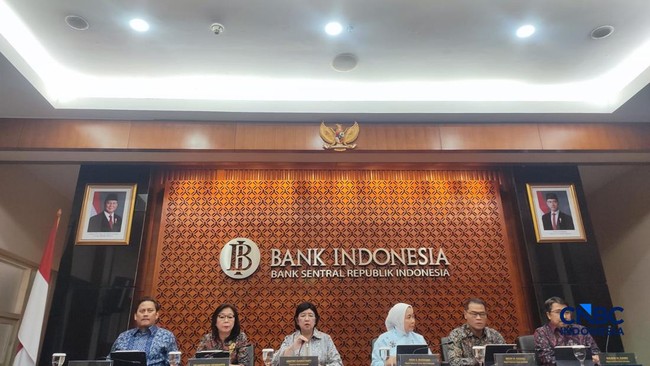
Investor sentiment was supported by Bank Indonesia's latest assessment that the country's external debt remains manageable. The central bank said Indonesia's debt-to-GDP ratio stood at 30.6%, with 84.6% of external borrowings consisting of long-term debt, helping contain refinancing risks. Bank Indonesia also pledged to continue coordinating with the government to ensure external borrowing remains productive and sustainable amid global economic uncertainty.
Brokerage Pilarmas Investindo Sekuritas said the data suggested the government continues to rely on external financing to support the state budget and development while maintaining prudent debt growth.
"Indonesia's external debt continues to grow at a measured pace, while its structure remains healthy as it is dominated by long-term borrowings and the debt-to-GDP ratio remains relatively low, keeping refinancing risks manageable," the brokerage said in a research note.
Pilarmas cautioned that a weaker rupiah and persistently high global interest rates could raise debt servicing costs going forward. However, it said the current pace of external debt growth is unlikely to threaten Indonesia's economic stability as long as the funds are directed toward productive sectors and fiscal discipline is maintained.
Foreign investors returned as net buyers on Friday, purchasing a net Rp 638.05 billion worth of Indonesian equities. Despite the daily inflow, overseas investors have remained net sellers this year, recording cumulative net sales of Rp 75.71 trillion since the start of 2026.
Indonesia's benchmark index climbed 4.24% this week as healthy external debt data lifted sentiment despite global uncertainties.

jakartaglobe.id




 www.cnbcindonesia.com









:strip_icc():format(jpeg)/kly-media-production/medias/3158511/original/062768200_1592723504-2.jpg)