Navigation
Install the app
How to install the app on iOS
Follow along with the video below to see how to install our site as a web app on your home screen.
Note: This feature may not be available in some browsers.
More options
Style variation
You are using an out of date browser. It may not display this or other websites correctly.
You should upgrade or use an alternative browser.
You should upgrade or use an alternative browser.
Indonesia Leads EM Rally as Carry Appeal, Growth Lure Investors
- Thread starter Indos
- Start date
- Status
- Not open for further replies.
More options
Who Replied?

Indos
INT'L MOD
- Thread starter
- #107
Rupiah Opens Stronger at 16,258 per US Dollar Today, August 25, 2025
Grahanusa Mediatama
~2 minutes

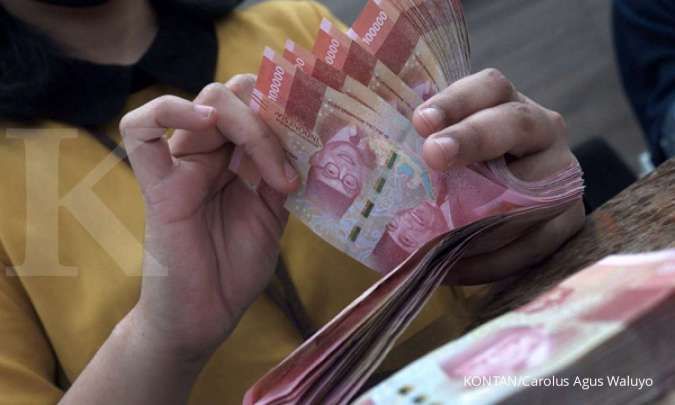
Illustration. Rupiah in the spot market opened stronger by 0.57% at Rp 16,258 per US dollar, making it one of the strongest performing currencies in Asia.
Reporter: Anna Suci Perwitasari | Editor: Anna Suci Perwitasari
KONTAN.CO.ID - JAKARTA. The rupiah exchange rate in the spot market strengthened at the start of trading today. On Monday (August 25, 2025), the rupiah opened at Rp 16,258 per US dollar.
This means the rupiah strengthened 0.57% compared to the closing on Friday (August 22, 2025), which was at Rp 16,351 per US dollar.
As of 09:00 WIB, currency movements in Asia were mixed. The Malaysian ringgit became the strongest performing currency in Asia, surging 0.58%.
Next was the Philippine peso, which jumped 0.53%, followed by the Taiwan dollar, which rose 0.39%. The Hong Kong dollar also edged up by 0.05%.
Read Also: The Fed Opens Room for Rate Cuts, What’s the Rupiah Outlook, Monday (August 25)?
Meanwhile, the Chinese yuan showed a slight strengthening of 0.02% against the greenback.
On the other hand, the Japanese yen recorded the sharpest drop in Asia, plunging 0.31%.
This was followed by the South Korean won, which fell 0.3%, and the Singapore dollar, which weakened 0.16%. The Thai baht also declined by 0.11%.
 investasi.kontan.co.id
Grahanusa Mediatama
~2 minutes
Illustration. Rupiah in the spot market opened stronger by 0.57% at Rp 16,258 per US dollar, making it one of the strongest performing currencies in Asia.
Reporter: Anna Suci Perwitasari | Editor: Anna Suci Perwitasari
KONTAN.CO.ID - JAKARTA. The rupiah exchange rate in the spot market strengthened at the start of trading today. On Monday (August 25, 2025), the rupiah opened at Rp 16,258 per US dollar.
This means the rupiah strengthened 0.57% compared to the closing on Friday (August 22, 2025), which was at Rp 16,351 per US dollar.
As of 09:00 WIB, currency movements in Asia were mixed. The Malaysian ringgit became the strongest performing currency in Asia, surging 0.58%.
Next was the Philippine peso, which jumped 0.53%, followed by the Taiwan dollar, which rose 0.39%. The Hong Kong dollar also edged up by 0.05%.
Read Also: The Fed Opens Room for Rate Cuts, What’s the Rupiah Outlook, Monday (August 25)?
Meanwhile, the Chinese yuan showed a slight strengthening of 0.02% against the greenback.
On the other hand, the Japanese yen recorded the sharpest drop in Asia, plunging 0.31%.
This was followed by the South Korean won, which fell 0.3%, and the Singapore dollar, which weakened 0.16%. The Thai baht also declined by 0.11%.
Rupiah Dibuka Menguat ke 16.258 Per Dolar AS pada Hari Ini 25 Agustus 2025
Rupiah di pasar spot dibuka menguat 0,57% ke Rp 16.258 per dolar AS dan jadi salah satu mata uang dengan penguatan terbesar di Asia
investasi.kontan.co.id
Indos
INT'L MOD
- Thread starter
- #108
Good News from Jerome Powell, IHSG Rises 1.02%
By fsd, CNBC Indonesia
25 August 2025 12:35
Jakarta, CNBC Indonesia – The Indonesian stock market was buoyant today, with the benchmark index climbing as much as one percent from the opening of trade.
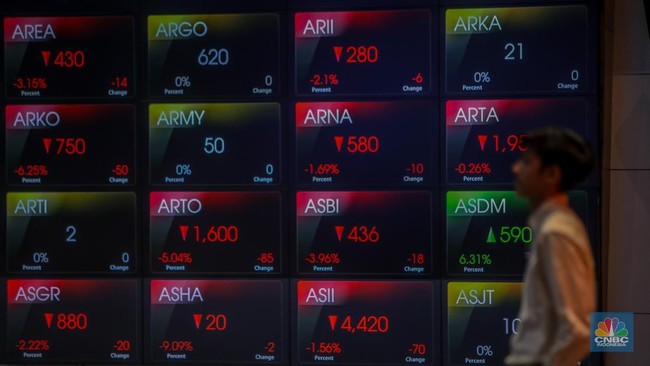
According to Refinitiv data, the Jakarta Composite Index (IHSG) strengthened by 1.02% to 7,938.83 at the close of the first trading session today (August 25, 2025). The IHSG is now edging closer to its all-time closing high of 7,943 and the psychological level of 8,000.
All trading sectors were in the green, with the biggest gains recorded in non-primary consumer goods, property, and utilities.
Shares of Bank Rakyat Indonesia (BBRI), which rose 2.93% to Rp 4,220 per share, became the main driver of the IHSG, contributing 20 index points.
Other stocks that also supported the index today included EMTK, BMRI, TLKM, and BREN.
On the other hand, shares of DCII weighed down the index’s performance.
The rally of Indonesia’s main stock index was driven by signals from US Federal Reserve Chairman Jerome Powell, who hinted at a potential interest rate cut. As is well known, the Fed’s policy strongly influences global financial markets, including Indonesia.
Powell signaled that the Fed may soon cut interest rates, though he gave no clear indication of the timing.
For Indonesia, this signal is welcome news. A Fed rate cut could prompt capital inflows from the US, strengthening both the IHSG and the rupiah.
A Fed rate cut would also reduce global uncertainty, enabling the world economy to grow faster, and would give Bank Indonesia more room to ease rates further.
In addition, the IHSG’s rise was also supported by the rupiah’s strengthening against the US dollar.
According to Refinitiv, in today’s trade, Monday (August 25, 2025), the rupiah opened 0.64% stronger at Rp 16,230 per US dollar, following dovish signals from Powell’s speech at the Jackson Hole Symposium on Friday (August 22, 2025).
Dapat Kabar Baik dari Jerome Powell, IHSG Menguat 1,02%
Pasar saham RI menguat 1,02% hari ini, mendekati level tertinggi. Sektor konsumer dan properti memimpin penguatan, didorong sinyal pemangkasan suku bunga AS.
 www.cnbcindonesia.com
Indos
INT'L MOD
- Thread starter
- #109
JPMorgan Says Indonesian Market Remains Attractive Despite Unrest
Akmalal Hamdhi
September 5, 2025 | 9:46 pm
Jakarta. JPMorgan Indonesia said the country’s financial markets remain attractive to foreign investors despite recent protests, underscoring confidence in the government’s ability to maintain stability and respond to public demands.
Gioshia Ralie, CEO and Senior Country Officer of JPMorgan Indonesia, said demonstrations in Jakarta and other cities have not significantly dented investor sentiment. “Investors are more mature now and understand what is happening both in Indonesia and in the region. Protests do occur, but so far they remain orderly,” Gioshia told reporters at a media briefing in Jakarta on Thursday.
He said that the government’s quick response had helped ease tensions and reassure investors from the United States, the United Kingdom, Hong Kong, and Canada, who have been closely watching the situation. While violent incidents could trigger negative sentiment, he suggested that investor confidence tends to improve when public demands are acknowledged and addressed promptly.

JPMorgan Says Indonesian Market Remains Attractive Despite Unrest
JPMorgan says Indonesia remains resilient despite $1B foreign outflows in early September as protests test government stability.
jakartaglobe.id
Indos
INT'L MOD
- Thread starter
- #110
More Chinese companies looking to manufacture in Indonesia: OCBC
Their investments account for 121.6 trillion rupiah in 2024, making China the third-largest foreign direct investor in the South-east Asian countryTan Nai Lun
Published Thu, Sep 4, 2025
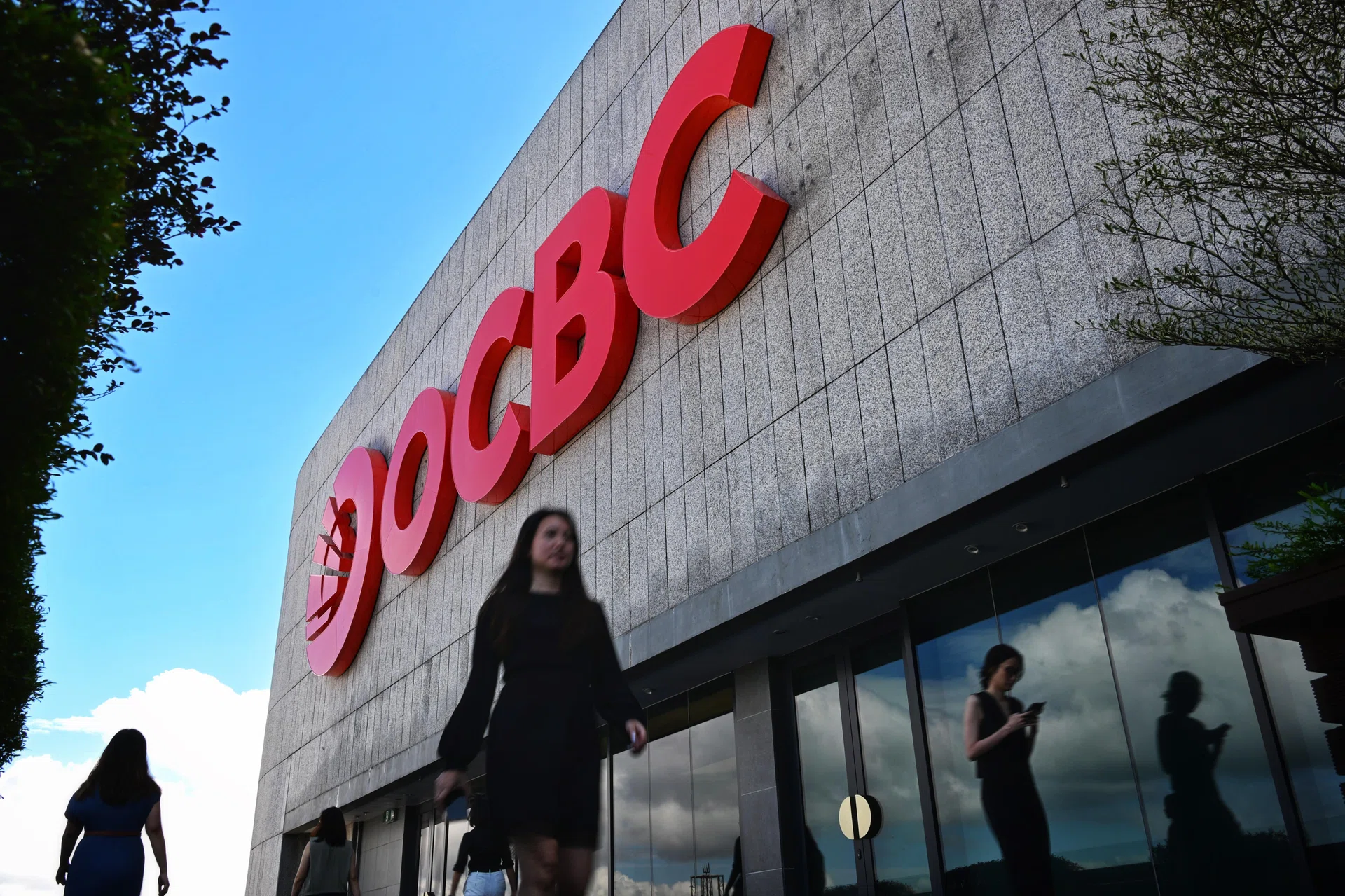
In Indonesia, OCBC's domestic business is still its largest income contributor, but the bank expects bigger contributions from its China business going forward. PHOTO: BT FILE
[JAKARTA] Chinese companies are increasingly looking to set up their manufacturing operations in Indonesia, instead of just exporting and distributing their products in the South-east Asian nation.
While Indonesia has remained attractive for its stable domestic economy, local policy shifts and the need to diversify supply chains are driving Chinese investments into the country, said Martin Widjaja, wholesale banking director at OCBC Indonesia.
Widjaja was speaking on the sidelines of the bank’s One Connect Forum held in Jakarta from Aug 26 to 27. The forum – currently in its third iteration – is where the bank brings its Chinese customers to Indonesia to meet potential partners and discuss expansion plans.
“Three years ago, it was simply a business matchmaking forum where China’s producers would find a local buyer or a local distributor. In the third year, the mood has shifted to such that they want to set up a local operation here,” Widjaja said.
He noted that this is in part due to policy shifts.
As part of its development plans for 2025 to 2029, Indonesia is targeting 8 per cent economic growth, where investments – both foreign and domestic – would be a key contributor.
To achieve these targets, it highlighted several strategic priorities, which include a focus on new renewable energy, semiconductor, digital economy and healthcare sectors, as well as downstreaming and export-oriented manufacturing industries.
For 2024, the country recorded a total investment realisation value of 1,714.2 trillion rupiah (S$133.2 billion), up 20.8 per cent year on year.
In particular, Chinese investments accounted for 121.6 trillion rupiah in 2024, making it the third-largest foreign direct investor in Indonesia, behind Singapore and Hong Kong.
More Chinese companies looking to manufacture in Indonesia: OCBC
[JAKARTA] Chinese companies are increasingly looking to set up their manufacturing operations in Indonesia, instead of just exporting and distributing their products in the South-east Asian nation. Read more at The Business Times.
Indos
INT'L MOD
- Thread starter
- #111
Forbes Global CEO Conference Returns To Jakarta In October
ByForbes Press Releases,Forbes Staff.
Aug 19, 2025, 10:39pm EDT
Prabowo Subianto, President of the Republic of Indonesia, leads a distinguished speaker line-up for the 23rd Forbes Global CEO Conference
ST Regist, Conference location.
JAKARTA (August 20, 2025) – Forbes Media today announced that the Forbes Global CEO Conference will be held in Jakarta, Indonesia, this October 14-15, 2025. Now in its 23rd year, the Forbes Global CEO Conference will bring together some 400 leading CEOs, thought leaders, entrepreneurs and investors.
Under the theme “The World Pivots,” the conference will examine the global economy’s next chapter—an era of extraordinary geopolitical and technological turbulence. For business leaders and investors, faster innovation and bold power plays will be at a premium as the world pivots to a new challenging era.
William Adamopoulos, CEO/Asia, Forbes Media, said: “We are delighted to bring the Forbes Global CEO Conference back to Jakarta, where the conference was last held in 2016. As the largest economy in Southeast Asia, Indonesia will serve as an ideal location to convene the Forbes community of business owners and CEOs as they pivot to take on challenges brought about by a new era.”
A highlight of the conference is a one-on-one dialogue between Prabowo Subianto, President of the Republic of Indonesia, and Steve Forbes, Chairman and Editor-in-Chief of Forbes Media.
To date, some 40 speakers have confirmed their participation at the conference. Speakers will gather from around the world to share insights on topics such as the global economy, innovation, AI and investment opportunities, healthcare, real estate and energy. Panels will also discuss best strategies for leadership, entrepreneurship, family business, philanthropy and sustainability.
Speakers who have confirmed their attendance include Tadashi Yanai, Chairman, President and CEO of Fast Retailing; Rosan Perkasa Roeslani, Minister of Investment and Downstream Industry, Chairman of Indonesia Investment Coordinating Board (BKPM) and CEO of Danantara Indonesia; Chartsiri Sophonpanich, President of Bangkok Bank; Anthony Capuano, President and CEO of Marriott International; Jane Sun, CEO of Trip.com Group; Benedict Oramah, President and Chairman of African Export-Import Bank; Koh Boon Hwee, Chairman of Altara Ventures and Chairman of Singapore Exchange Group; Tony Fernandes, CEO of Capital A; Pandu Patria Sjahrir, Chief Investment Officer of Danantara Indonesia; Ho Kwon Ping, Founder and Executive Chairman of Banyan Tree Holdings; Sri Prakash Lohia, Founder and Chairman of Indorama Corporation; Joseph E. Aoun, President of Northeastern University; Anderson Tanoto, Managing Director at RGE; Irfan Razack, Chairman and MD of Prestige Group; Shinta W. Kamdani, Chairman of APINDO and CEO of Sintesa Group; Mohammed Dewji, President of MeTL Group; Anindya N Bakrie, Chairman of Indonesia Chamber of Commerce and Industry (Kadin) and CEO of Bakrie & Brothers; Thammasak Sethaudom, President and CEO of Siam Cement Group; Otto Toto Sugiri, President Director of DCI Indonesia and Leo KoGuan, Founder and Chairman of SHI International Corp.
Other speakers include Mark Dalio, Founder and Co-CEO of OceanX; Kuok Meng Wei, CEO and Managing Director of K2 Strategic; Rose Damen, Managing Director at Damen Yachting and Third generation Damen Shipyards Group family shareholder; Lee Yeow Chor, Group Managing Director and CEO of IOI Corporation; Daniel Ives, Managing Director and Global Head of Technology Research at Wedbush; Zhang Ya-Qin, Chair Professor and Dean of Tsinghua University; William E. Heinecke, Founder and Chairman of Minor International; George Raymond Zage III, Founder and CEO of Tiga Investments;Jing Hong, Founding Partner at Gaocheng Capital; Jixun Foo, Senior Managing Partner at Granite Asia; Michael T. Smith, Chief Executive of Hongkong Land; Binod K. Chaudhary, Chairman of Chaudhary Group and CG Corp Global; Caroline Link, Co-Chairman of B.GRIMM Pharma, President of B.Grimm Joint Venture and Board Member at B.Grimm Power; V Shankar, CEO and Cofounder of Gateway Partners; Antoine Blondeau, Cofounder and Managing Partner of Alpha Intelligence Capital; Aengus Tran, Cofounder and CEO of Harrison.ai; Mike Blue, President and CEO of HistoSonics; Magnus Grimeland, Founder and CEO of Antler and Edward Tirtanata, Cofounder and Group CEO of Kopi Kenangan.
The Forbes Global CEO Conference is supported by RGE and Permata Bank as Principal Sponsors; Amazon Web Services and International Container Terminal Services, Inc as Corporate Sponsors; Indorama Corp Group, Marriott Bonvoy and Edelman as Supporting Sponsors.
For more information on the conference, please visit: www.forbesglobalceoconference.com
About Forbes
Forbes is an iconic global media brand that has symbolized success for over a century. Fueled by journalism that informs and inspires, Forbes spotlights the doers and doings shaping industries, achieving success and making an impact on the world. Forbes connects and convenes the most influential communities ranging from billionaires, business leaders and rising entrepreneurs to creators and innovators. The Forbes brand reaches more than 140 million people monthly worldwide through its trusted journalism, signature ForbesLive events and 49 licensed local editions in 81 countries.

Forbes Global CEO Conference Returns To Jakarta In October
Prabowo Subianto, President of the Republic of Indonesia, leads a distinguished speaker line-up for the 23rd Forbes Global CEO Conference
 www.forbes.com
Indos
INT'L MOD
- Thread starter
- #112
The Future of Chinese Investment in Indonesia
September 5, 2025
Posted by ASEAN Briefing
Written by Celia Annetta
Jakarta
Indonesia closed 2024 with investment realization of 1,714.2 trillion rupiah (US$95.2 billion), up 20.8 percent year on year, with 900.2 trillion rupiah (US$50.0 billion) from foreign direct investment. In the first quarter of 2025, total investment reached 465.2 trillion rupiah (US$25.8 billion) and FDI reached 230.4 trillion rupiah (US$12.8 billion), with Singapore, Hong Kong, China, Malaysia, and Japan the top sources.
These flows continue to concentrate in metals processing, power, industrial parks, logistics, and transport, which are the sectors most aligned with Indonesia’s downstreaming agenda and therefore the places where incumbency is strongest, and time-to-scale is shortest.
The next wave of opportunities for Chinese investors in Indonesia
Nickel, EV Supply chains, and the industrial-park playbook
Indonesia now dominates global refined nickel supply, providing about 65 percent in 2024, with Chinese companies controlling roughly three-quarters of domestic refining capacity. That level of incumbency sets technology standards, shapes ESG practices, and determines pricing power in the EV battery chain. The most visible examples are Morowali (IMIP) and Weda Bay (IWIP) industrial parks, which integrate smelters, captive power, chemicals, logistics, and housing to compress time-to-market.
These estates deliver cost advantages but face heightened scrutiny after safety incidents and environmental controversies.
For Chinese investors, the opportunity lies in maintaining leadership in nickel refining while moving downstream into precursors, cathodes, and recycling, where compliance with traceability requirements will determine access to US and EU markets.
Digital economy and data infrastructure
Indonesia’s digital economy reached US$90 billion in 2024 and could rise to US$200–360 billion by 2030. Digital payments are exploding, with Rp262 trillion in QRIS transactions recorded in Q1 2025 alone.
Jakarta’s data-center load hit 659 MW in 2025, and Batam is emerging as a regional hub as Singapore caps new capacity.
Chinese firms can capture this growth by developing AI-ready campuses, investing in edge computing, and integrating EPC, financing, and cloud services to dominate the compute backbone of Southeast Asia.
Healthcare and life sciences
Indonesia’s BPJS program covers 278.1 million people, nearly the entire population, with healthcare spending still only 3.7 percent of GDP. Nearly 3,000 hospitals and 10,000 primary health centers form the base of the system, but facilities are stretched. Chinese investors have a pathway into hospital PPPs, diagnostics, and pharmaceutical manufacturing inside SEZs. Growth in clinical-trial ecosystems also allows biotech partnerships to use Indonesia as a regional testbed.
Renewable energy and power transition
With 42.6 GW of renewables and 10.3 GW of storage mandated in the RUPTL, Indonesia is the region’s largest green-energy frontier. Opportunities for Chinese firms include utility-scale solar with integrated storage, geothermal drilling, and transmission partnerships with PLN. Meeting TKDN thresholds and embedding ESG early are not optional—they determine whether projects clear bankability tests.
Infrastructure and smart cities
The Jakarta–Bandung high-speed rail cost US$7.3 billion and now anchors plans to extend service to Surabaya. In Nusantara, Chinese firms submitted 36 letters of interest by May 2025, with nearly Rp70 trillion already invested. Opportunities go beyond roads and rails. Chinese companies can lead in smart utilities, green construction, logistics hubs, and digital command centers, shaping Nusantara into Southeast Asia’s first purpose-built smart city.
Looking toward 2030
Indonesia is entering a phase where downstream industry, infrastructure, and digital systems will define its position in Southeast Asia. For Chinese investors, the most durable opportunities are likely to be in three areas: industrial parks that anchor heavy industry, the build-out of renewable energy and digital infrastructure, and the gradual expansion of healthcare and urban services. Each of these sectors is being shaped now through licensing reforms, fiscal incentives, and public–private partnerships.
The pace of regulatory change is equally important. Indonesia’s Positive Investment List has reshaped ownership rules, while the risk-based licensing system is altering project timelines. Local-content requirements in power and infrastructure are being updated, and the new VAT rate of 12 percent is already in effect. These changes mean that regulatory awareness and careful structuring will influence outcomes as much as capital or technology.
By 2030, much of the investment landscape will already be consolidated. Investors who engage early with these evolving frameworks will be better placed to secure stable positions in a market that is locking in its long-term projects and concessions.
About Us
ASEAN Briefing is one of five regional publications under the Asia Briefing brand. It is supported by Dezan Shira & Associates, a pan-Asia, multi-disciplinary professional services firm that assists foreign investors throughout Asia, including through offices in Jakarta, Indonesia; Singapore; Hanoi, Ho Chi Minh City, and Da Nang in Vietnam; besides our practices in China, Hong Kong SAR, India, Italy, Germany, and USA. We also have partner firms in Malaysia, Bangladesh, the Philippines, Thailand, and Australia.
Please contact us at [email protected] or visit our website at www.dezshira.com and for a complimentary subscription to ASEAN Briefing’s content products, please click here.

The Future of Chinese Investment in Indonesia
Chinese investors face major opportunities in Indonesia’s EVs, renewables, digital economy, healthcare, and infrastructure by 2030.
Indos
INT'L MOD
- Thread starter
- #113
Rupiah Leads Asian Currencies Against the US Dollar Amid Fed Rate Cut Expectations
Elvan Widyatama, CNBC Indonesia
08 September 2025 10:02
Jakarta, CNBC Indonesia – Most Asian currencies came under pressure against the US dollar in early trading on Monday (September 8, 2025).
According to Refinitiv data, as of 09:10 a.m. WIB, the rupiah was the strongest performing currency in Asia against the US dollar, while the Japanese yen was the most heavily pressured.
The rupiah appreciated 0.24% to Rp16,370 per US dollar, leading gains in the region. Today’s strengthening of the rupiah is largely a continuation of last Friday, when domestic financial markets were closed for the observance of the Prophet Muhammad’s birthday.
The Malaysian ringgit and Indian rupee also posted modest gains, rising 0.09% to MYR 4.216 per US dollar and 0.01% to INR 88.163 per US dollar, respectively.
On the other side, the Japanese yen weakened the most among Asian currencies, falling 0.43% to JPY 148.02 per US dollar. The depreciation followed the resignation of Prime Minister Shigeru Ishiba announced today, Monday (September 8, 2025).
The Philippine peso also declined by 0.25% to PHP 56.779 per US dollar, while the Korean won slipped 0.13% to KRW 1,388.1 per US dollar.
The movement of Asian currencies was influenced by the dynamics of the US dollar index (DXY), which edged higher this morning after a sharp correction late last week. The index’s recovery was supported primarily by the weaker yen, though the US dollar remains under pressure following another round of disappointing US labor market data.
The August Nonfarm Payrolls (NFP) report showed a sharp slowdown in US job growth, while the unemployment rate climbed to 4.3% — the highest level in nearly four years. This has increased market expectations that the Federal Reserve (the Fed) will implement aggressive rate cuts at its upcoming meeting.
According to the CME FedWatch Tool, the probability of a 50-basis-point rate cut jumped to 8% from zero the previous week, while most market participants still expect a 25-basis-point cut this month.
Economists at Barclays noted that the risk of labor market weakness is becoming more evident, giving the Fed more room to ease policy. Barclays now projects the Fed will cut rates by 25 basis points in September, followed by another 25-basis-point cut in October, and one more in December. In total, three rate cuts are expected this year in response to the weakening US labor market.
Pressure on the Fed has intensified after US Treasury Secretary Scott Bessent last Friday called for a review of the central bank’s independence, including its authority to set interest rates.
President Donald Trump is also reportedly considering three potential candidates to replace Jerome Powell as Fed Chair, after repeatedly criticizing Powell this year for refusing to lower interest rates in line with the administration’s preferences.
(CNBC Indonesia Research)
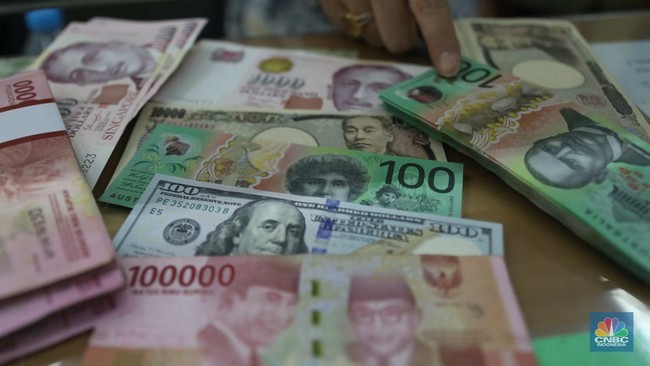
Minggir! Rupiah Semakin Merajalela, Paling Berani Lawan Dolar di Asia
Mata uang garuda memimpin penguatan di Asia dengan apresiasi sebesar 0,24% di posisi Rp16.370/US$
www.cnbcindonesia.com
Indos
INT'L MOD
- Thread starter
- #115
JCI Jumps 1.16% at Open as Global Markets Ride Inflation Relief
Ria Fortuna Wijaya, Associated Press
September 11, 2025 | 8:51 am

Jakarta. The Jakarta Composite Index (JCI) opened strong at 7,779 on Thursday, climbing 93 points or 1.16 percent in early trade. The benchmark index traded in the range of 7,774 to 7,787 during the opening session.
According to RTI data, around 727.87 million shares changed hands in the first minutes of trading, with a transaction value of Rp 741.75 billion across 56,611 deals. A total of 296 stocks gained, 94 declined, and 202 remained flat.
Five stocks stood out as top gainers in the early session, with Voksel Electric (VOKS) soaring 22 percent. Mandom Indonesia (TCID) jumped 16.94 percent, while Sampoerna Agro (SGRO) advanced 13.36 percent. Cakra Buana Resources Energy (CBRE) rose 9.88 percent, and Mandiri Herindo Adiperkasa (MAHA) gained 8.72 percent.
On Wall Street, stocks extended their rally on Wednesday after a positive US inflation report and upbeat forecasts from Oracle tied to artificial intelligence. The S&P 500 gained 0.3 percent, setting a fresh record high for the second consecutive day. The Nasdaq Composite edged up by less than 0.1 percent, while the Dow Jones Industrial Average slipped 220 points or 0.5 percent.
Investors welcomed data showing US wholesale inflation unexpectedly eased in August, raising hopes that the Federal Reserve could proceed with an interest rate cut next week despite lingering price pressures from President Donald Trump’s tariffs. “Wednesday’s update essentially rolled out the red carpet for a Fed rate cut next week,” said Chris Larkin, managing director, trading and investing, at E-Trade from Morgan Stanley.
Asian markets were mixed in morning trade. Japan’s Nikkei advanced 0.94 percent to 44,254, Shanghai added 0.23 percent to 3,820, while Hong Kong’s Hang Seng fell 0.80 percent to 25,990 and Australia’s ASX200 slid 0.40 percent to 8,795.

JCI Jumps 1.16% at Open as Global Markets Ride Inflation Relief
Early trade sees JCI climb 93 points as investors cheer easing US inflation.
Indos
INT'L MOD
- Thread starter
- #116
Market optimism started Yesterday, showing confidence with new Finance Minister. It is after the fall previously with previous announcement of former Finance Minister, Sri Mulyani, being replaced with Purbaya as new Finance Minister.
Sri Mulyani, 63 years old, is reportedly already asked for retirement two times from Prabowo administration.
Now Alhamdulillah without Sri Mulyani, former World Bank Managing Director, market is still confident on Indonesia economy.
Ria Fortuna Wijaya
September 10, 2025 | 3:50 pm

 jakartaglobe.id
Sri Mulyani, 63 years old, is reportedly already asked for retirement two times from Prabowo administration.
Now Alhamdulillah without Sri Mulyani, former World Bank Managing Director, market is still confident on Indonesia economy.
JCI Rebounds 0.92% as Investors Regain Confidence After Cabinet Shake-Up
Ria Fortuna Wijaya
September 10, 2025 | 3:50 pm
JCI Rebounds 0.92% as Investors Regain Confidence After Cabinet Shake-Up
Jakarta stocks rebound 0.92% to 7,699, led by financials and blue chips, as investors respond to cabinet reshuffle and attractive valuations
Indos
INT'L MOD
- Thread starter
- #117
Bond and Stock Markets Surge on ‘Purbaya Effect’
By Muhammad Julian Fadli
4–6 minutes
Newly build Karian Dam, intended to add Jakarta pipe water supply
Medium-term bonds also rallied, with the 5-year tenor yield falling 6 basis points (bps) to 5.709%, followed by the 7-year tenor down 7.7 bps to 6.135%, and the 8-year tenor dropping 3.8 bps to 6.339%.
Longer tenors saw similar declines: the 10-year, 15-year, and 20-year yields fell -3.4 bps, -1.6 bps, and -0.2 bps respectively to 6.388%, 6.822%, and 6.908%. Even further out, the 30-year and 40-year yields slipped -1.3 bps and -1.2 bps, landing at 6.929% and 6.922%.
The market appeared to gain confidence after Finance Minister Purbaya Yudhi Sadewa confirmed plans to move Rp 200 trillion of state funds currently held at Bank Indonesia (BI) into state-owned banks (Himbara). The plan has already received approval from President Prabowo Subianto.
Even though banks are prohibited from channeling the funds into government bonds (SBN) or Bank Indonesia Rupiah Securities (SRBI), the liquidity injection still provides positive sentiment for IndoGBs and supports the steepening of the yield curve.
Analysts at Phintraco Sekuritas noted that of the Rp 425 trillion in state funds at BI, about Rp 200 trillion will soon be placed in the banking system as deposits, adding liquidity and boosting credit growth.
This injection of confidence was seen as fresh ammunition for Himbara banks to increase purchases of government securities (SUN) and to support government programs financed through the state budget, as well as fund state-owned enterprises (SOEs) via corporate bond issuance.
Josua Pardede, Chief Economist at Bank Permata, assessed that the government’s plan could strengthen bank liquidity quickly by expanding base money.
According to Purbaya, the funds can later be used by banks to finance various programs that are expected to benefit economic growth at the community level.
It wasn’t just paper assets that soared today. Gold prices also broke records, both globally and domestically.
Gold bullion produced by PT Aneka Tambang Tbk (Antam) hit a record Rp 2,095,000 per gram, the highest price in history. The buyback price also set a record at Rp 1,942,000 per gram.
The positive trend in Antam’s gold reflects global market dynamics. On Wednesday, spot gold closed at US$ 3,640.7 per troy ounce, up 0.37% and marking a historic high.
In the past week alone, global gold prices jumped 2.28% point-to-point. Over the past month, they surged 8.9%.
(fad/aji)

 www.bloombergtechnoz.com
By Muhammad Julian Fadli
4–6 minutes
11 September 2025 15:34
Newly build Karian Dam, intended to add Jakarta pipe water supply
Medium-term bonds also rallied, with the 5-year tenor yield falling 6 basis points (bps) to 5.709%, followed by the 7-year tenor down 7.7 bps to 6.135%, and the 8-year tenor dropping 3.8 bps to 6.339%.
Longer tenors saw similar declines: the 10-year, 15-year, and 20-year yields fell -3.4 bps, -1.6 bps, and -0.2 bps respectively to 6.388%, 6.822%, and 6.908%. Even further out, the 30-year and 40-year yields slipped -1.3 bps and -1.2 bps, landing at 6.929% and 6.922%.
The market appeared to gain confidence after Finance Minister Purbaya Yudhi Sadewa confirmed plans to move Rp 200 trillion of state funds currently held at Bank Indonesia (BI) into state-owned banks (Himbara). The plan has already received approval from President Prabowo Subianto.
“The short-term push in interbank liquidity comes from a large portion of government cash shifting from Bank Indonesia to the banking system,” wrote Winson Phoon, Head of Fixed Income Research at Maybank Singapore, citing Bloomberg.
Even though banks are prohibited from channeling the funds into government bonds (SBN) or Bank Indonesia Rupiah Securities (SRBI), the liquidity injection still provides positive sentiment for IndoGBs and supports the steepening of the yield curve.
Rp 200 Trillion Liquidity Boost
Analysts at Phintraco Sekuritas noted that of the Rp 425 trillion in state funds at BI, about Rp 200 trillion will soon be placed in the banking system as deposits, adding liquidity and boosting credit growth.
“This is expected to stimulate economic activity and drive growth,” Phintraco stated.
This injection of confidence was seen as fresh ammunition for Himbara banks to increase purchases of government securities (SUN) and to support government programs financed through the state budget, as well as fund state-owned enterprises (SOEs) via corporate bond issuance.
“For the bond market, this relaxation provides additional firepower for Himbara banks,” said Lionel Priyadi, Fixed Income and Macro Strategist at PT Mega Capital Indonesia, Thursday.
Josua Pardede, Chief Economist at Bank Permata, assessed that the government’s plan could strengthen bank liquidity quickly by expanding base money.
“This means transmission to third-party fund demand (DPK) and lending capacity could improve, especially since BI has cut its policy rate since late 2024 and supported liquidity through various instruments,” Josua told Bloomberg Technoz.
According to Purbaya, the funds can later be used by banks to finance various programs that are expected to benefit economic growth at the community level.
“The money will circulate in the system, so it can grow and the economy can move again,” Purbaya said separately.
“The economy will come alive. On the fiscal side, I will also ensure that government spending, especially projects that are moving slowly, will be executed better.”
Gold Prices Hit New Record
It wasn’t just paper assets that soared today. Gold prices also broke records, both globally and domestically.
Gold bullion produced by PT Aneka Tambang Tbk (Antam) hit a record Rp 2,095,000 per gram, the highest price in history. The buyback price also set a record at Rp 1,942,000 per gram.
The positive trend in Antam’s gold reflects global market dynamics. On Wednesday, spot gold closed at US$ 3,640.7 per troy ounce, up 0.37% and marking a historic high.
In the past week alone, global gold prices jumped 2.28% point-to-point. Over the past month, they surged 8.9%.
(fad/aji)
Pasar Obligasi dan Saham Berpesta Tersengat Purbaya Effect - Market
Euforia pasar obligasi dan saham Indonesia pasca pernyataan Menteri Keuangan Purbaya terhadap rencana suntikan Rp200 triliun ke Bank Himbara menggema.
Indos
INT'L MOD
- Thread starter
- #118
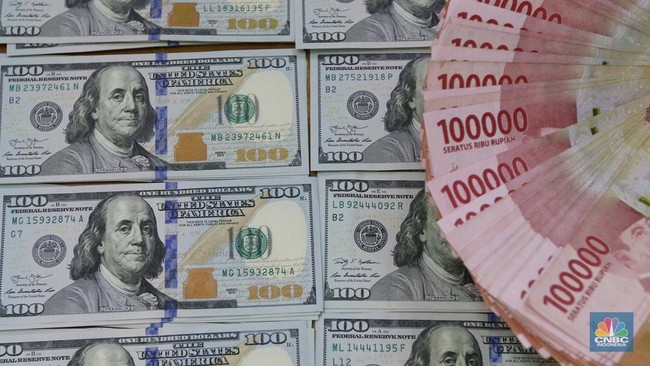
This Is Why the Rupiah Is Strong, Beating the Dollar Without Mercy!
By Elvan Widyatama, CNBC Indonesia
12 September 2025 11:55
Jakarta, CNBC Indonesia – The rupiah has continued to strengthen against the US dollar over the past three days. The appreciation is driven by several factors, particularly the weakening of the US dollar index.
According to Refinitiv data, as of Friday (September 12, 2025) at 10:00 WIB, the rupiah gained 0.43%, trading at Rp 16,385 per US$.
The rupiah began strengthening on Wednesday (September 10, 2025), two days after the cabinet reshuffle on September 8. Initially, the rupiah had come under pressure following the announcement of the reshuffle, which was made late Monday (September 8, 2025).
Since the announcement came after trading hours, the impact was only felt the next day, Tuesday (September 9, 2025), when the rupiah slid close to the psychological level of Rp 16,500 per US$, closing down 1.04% at Rp 16,470 per US$.
The rupiah’s rebound has been supported externally by a weaker US dollar index, following the release of the latest US economic data.
The US Bureau of Labor Statistics (BLS) reported that the Consumer Price Index (CPI) rose 0.4% month-on-month in August, higher than the 0.2% increase in July.
On a yearly basis, inflation reached 2.9%. However, market attention shifted more to the surge in jobless claims, which jumped by 27,000 to 263,000—the highest level in four years.
This raised expectations that the Federal Reserve (The Fed) will focus more on employment than inflation.
The anticipation of Fed rate cuts has further boosted positive sentiment toward the rupiah.
Ahmad Mikail Zaini, economist at Sucor Sekuritas, said the rupiah still has room to strengthen through year-end, supported by expectations of aggressive rate cuts by the Fed.
Beyond external factors, domestic sentiment has also improved after the appointment of Finance Minister Purbaya Yudhi Sadewa.
Fakhrul Fulvian, Chief Economist at Trimegah Sekuritas Indonesia, said Purbaya brings new optimism to the market.
Fakhrul argued that for years Indonesia’s economy has been constrained by a stability-first paradigm rather than growth. Now, he said, the government needs to pursue reflationary policies, with large-scale spending in productive sectors to revive purchasing power and create jobs.
He added that the success of government spending on fast-track programs—such as MBG, Koperasi Merah Putih, and public housing projects—will be key. Incentives for hiring in labor-intensive sectors are also vital to strengthening household purchasing power.
Fakhrul drew comparisons to US reflation policies in the 1930s and Japan’s Abenomics, both of which boosted growth through demand-side stimulus. For Indonesia, close coordination between the Finance Ministry, Bank Indonesia, and the government will be essential to make reflation effective.
CNBC Indonesia Research
 www.cnbcindonesia.com
By Elvan Widyatama, CNBC Indonesia
12 September 2025 11:55
Jakarta, CNBC Indonesia – The rupiah has continued to strengthen against the US dollar over the past three days. The appreciation is driven by several factors, particularly the weakening of the US dollar index.
According to Refinitiv data, as of Friday (September 12, 2025) at 10:00 WIB, the rupiah gained 0.43%, trading at Rp 16,385 per US$.
The rupiah began strengthening on Wednesday (September 10, 2025), two days after the cabinet reshuffle on September 8. Initially, the rupiah had come under pressure following the announcement of the reshuffle, which was made late Monday (September 8, 2025).
Since the announcement came after trading hours, the impact was only felt the next day, Tuesday (September 9, 2025), when the rupiah slid close to the psychological level of Rp 16,500 per US$, closing down 1.04% at Rp 16,470 per US$.
Dollar Weakness as External Driver
The rupiah’s rebound has been supported externally by a weaker US dollar index, following the release of the latest US economic data.
The US Bureau of Labor Statistics (BLS) reported that the Consumer Price Index (CPI) rose 0.4% month-on-month in August, higher than the 0.2% increase in July.
On a yearly basis, inflation reached 2.9%. However, market attention shifted more to the surge in jobless claims, which jumped by 27,000 to 263,000—the highest level in four years.
This raised expectations that the Federal Reserve (The Fed) will focus more on employment than inflation.
“For the first time in a long while, the CPI release was overshadowed by unemployment data. The jump in jobless claims signals that the Fed will keep its focus on the employment mandate,” explained Josh Jamner, Senior Investment Strategy Analyst at ClearBridge Investments.
The anticipation of Fed rate cuts has further boosted positive sentiment toward the rupiah.
Ahmad Mikail Zaini, economist at Sucor Sekuritas, said the rupiah still has room to strengthen through year-end, supported by expectations of aggressive rate cuts by the Fed.
“The rupiah could continue appreciating until year-end, as the Fed is expected to cut rates aggressively,” Mikail said.
Market Calms After Finance Minister Change
Beyond external factors, domestic sentiment has also improved after the appointment of Finance Minister Purbaya Yudhi Sadewa.
Fakhrul Fulvian, Chief Economist at Trimegah Sekuritas Indonesia, said Purbaya brings new optimism to the market.
“Purbaya is the ‘Minister of Reflation.’ His policy of boosting banking liquidity is the right step,” he stated.
Fakhrul argued that for years Indonesia’s economy has been constrained by a stability-first paradigm rather than growth. Now, he said, the government needs to pursue reflationary policies, with large-scale spending in productive sectors to revive purchasing power and create jobs.
“The main mission of Minister Purbaya is to reflate the economy. Reflation means the government coordinates to increase aggregate demand through fiscal stimulus so that the economy grows at its proper potential,” Fakhrul stressed.
He added that the success of government spending on fast-track programs—such as MBG, Koperasi Merah Putih, and public housing projects—will be key. Incentives for hiring in labor-intensive sectors are also vital to strengthening household purchasing power.
Fakhrul drew comparisons to US reflation policies in the 1930s and Japan’s Abenomics, both of which boosted growth through demand-side stimulus. For Indonesia, close coordination between the Finance Ministry, Bank Indonesia, and the government will be essential to make reflation effective.
“Reflation for the people is key. When citizens feel stronger purchasing power, then tax revenues, the economy, and financial stability will follow,” Fakhrul concluded.
CNBC Indonesia Research
Ini Alasan Mengapa Rupiah Perkasa, Libas Dolar Gak Ada Ampun!
Nilai tukar rupiah terus menguat terhadap dolar Amerika Serikat (AS) dalam tiga hari terakhir.
www.cnbcindonesia.com
Indos
INT'L MOD
- Thread starter
- #119
Chinese investors eyeing Indonesia to avoid US tariffs, tap local market
By Reuters
August 14, 2025. 10:02 AM GMT+7
Updated August 14, 2025
- Summary
- Companies
- WU.S. import tariff on Indonesian goods 19% vs 30% for China products
- Indonesia's massive consumer market also attractive
- Southeast Asia's biggest economy grew 5.12% in Q2, beating expectations
Subang Smart Metropolitian, West Java
JAKARTA, Aug 14 (Reuters) - Gao Xiaoyu, the founder of an industrial land consulting firm in Jakarta, has been inundated with calls from Chinese companies eager to expand or set up operations in Indonesia as they try to shield themselves from the United States' hefty import tariffs.
The 19% U.S. tariff rate for goods from Indonesia is the same as for Malaysia, Philippines and Thailand, and just below Vietnam's 20%. China's rates currently exceed 30%.
But Indonesia, Southeast Asia's biggest economy and the world's fourth most populous country, has an edge over its neighbours - the potential of its vast consumer market.
"We are quite busy these days. We have meetings from morning till night," said Gao, who set up her company PT Yard Zeal Indonesia in 2021 with four employees and now has more than 40.
"The industrial parks are also very busy."
Indonesia's economy expanded at a better-than-expected 5.12% in the second quarter, the fastest pace in two years, government data showed last week.
"If you can establish a strong business presence in Indonesia, you've essentially captured half of the Southeast Asian market," said Zhang Chao, a Chinese manufacturer who sells motorcycle headlights in Indonesia, the world's third biggest market for motorbikes.
Vietnam and Thailand were among the major beneficiaries of the first wave of Chinese companies' overseas diversification, but amid the latest trade turmoil with the United States, other near neighbours are benefiting.
"There has always been a synergy ... with Chinese corporates having the confidence to set up shop with ease in Indonesia," said Mira Arifin, the Indonesia country head at Bank of America. "Indonesia has a huge talent pool with a dynamic young demographic that encourages foreign investors to rapidly build scale in the country."
Indonesian President Prabowo Subianto has championed China ties, visiting Beijing in November where he held talks with President Xi Jinping and welcoming the Chinese Premier Li Qiang to Jakarta in May.
Investment from China and Hong Kong into Indonesia was up 6.5% year-on-year to $8.2 billion in the first six months of 2025. Total FDI grew 2.58% over the same period to 432.6 trillion rupiah ($26.56 billion), and the government has said it expects more investments in the second half of the year.
Batang Industrial Complex, Central Java
MASSIVE CONSUMER MARKET
To be sure, challenges persist across Indonesia, including regulatory hurdles, bureaucratic red tape, ownership restrictions, deficient infrastructure and the lack of a complete industrial supply chain that made China the "workshop of the world" for decades.Some foreign investors have also raised concerns about the populist Prabowo's fiscal prudence, as he pushes ahead with his campaign promises, including a flagship programme to deliver free meals to schoolchildren and pregnant women.
After falling in March to its lowest level against the U.S. dollar since June 1998, the rupiah has steadied. It is currently trading about 1% below its level at the end of last year.
BYD factory construction in Subang, West Java
At the sprawling, more than 2,700 hectare (6,672 acres) Subang Smartpolitan industrial park in West Java, executives said it had been inundated with enquiries from Chinese investors.
"Our phone, email and WeChat were immediately busy with new customers, agents wanting to introduce clients," once the U.S.-Indonesia trade deal was announced last month, said Abednego Purnomo, vice-president for sales, marketing and tenant relations of Suryacipta Swadaya, Subang Smartpolitan's operator.
"Coincidentally, all of them were from China."
Companies ranging from toy makers and textile firms to electric vehicle makers are scouring for facilities, particularly in West Java, the most populous province in Indonesia, which is home to the Patimban deep sea port.
Patimban Port Access Road Development, West Java
Chinese demand has pushed up prices of industrial real estate and warehouses by 15% to 25% year-on-year in the first quarter of 2025, the fastest rise in 20 years, according to Gao, from the land consulting firm.
Rivan Munansa, the head of industrial and logistics services at the Indonesian arm of global property consultant Colliers International said that there was an urgency among Chinese firms to move and the company was getting inquiries for industrial land "almost every day" in the run-up to the tariff agreement.
"Most of them (Chinese companies) are looking for immediate opportunities. So, they want land and a temporary building that can be used immediately, it's like a crash programme,” Rivan said.
Zhang said he signed up for a new four-floor office building in Jakarta in May at an annual rent of 100,000 yuan ($13,936), up 43% from last year, underscoring the pent-up demand.
"The 19% level is lower than my expectation. I thought it would be 30%," Zhang said, referring to Indonesia's tariff deal and adding that net profit margins in China could be as little as 3%.
"In Indonesia, it's relatively easy to achieve net profit margins of 20% to 30%."
And then there's the growing pool of consumers with household spending making up more than half of Indonesia's GDP. The gauge accelerated slightly to 4.97% year-on-year in the second quarter, helped by several public holidays.
"Indonesia has always stood out for a different reason. Beyond supply chain diversification, Indonesia offers what few others in the regions can: a massive domestic market," said Marco Foster, ASEAN director at Dezan Shira & Associates, an investment consultancy.
($1 = 7.1756 Chinese yuan renminbi)
($1 = 16,285 rupiah)
Indos
INT'L MOD
- Thread starter
- #120
Industrial Land Business Booming in Greater Jakarta (Jabodetabek) – Here’s Why
By Ilham Fikriansyah
~3 minutes
Sabtu, 13 Sep 2025 15:44 WIB
One of Industrial zones in greater Jakarta area
Jakarta –
Sales of industrial land in Greater Jakarta (Jabodetabek) posted strong growth in the first half of 2025. According to Knight Frank Indonesia, cumulative industrial land sales reached 63.8%.
The total supply of industrial land in Jabodetabek during H1 2025 stood at 15,850 hectares, with total absorption reaching 125.8 hectares. Growth in industry along the Eastern Corridor was one of the main drivers of the increase in sales.
Syarifah Syaukat, Senior Research Advisor at Knight Frank Indonesia, said industrial land absorption showed a positive trend, accounting for nearly half of total land take-up in H1 2025. This was largely thanks to automotive manufacturers building electric vehicle (EV) assembly plants in Jabodetabek.
“Electric vehicles were the top occupier of industrial land, with around 30% of total absorption in the first half of 2025,” Syarifah said during an online press conference, Jakarta Property Highlights H1 2025, yesterday.
According to Syarifah, investors see Asia as a highly attractive region for EV manufacturing, thanks to abundant natural resources and strong EV sales in the automotive market. Indonesia’s EV sector is also projected to account for 58% of the global share in the future.
Beyond EV factories, strong demand also came from the data center and textile industries. Although data centers continued to take up land, absorption in early 2025 slowed compared to the past three years.
Rising Prices in Key Areas
The surge in industrial land sales has pushed up land prices. In Tangerang and Karawang, prices increased at the start of 2025, while service charges for industrial land remained relatively stable. On average, however, industrial land in Jabodetabek is still priced at around Rp 2–3 million per square meter.
Syarifah predicted that several areas around Jakarta will release new industrial land as additional supply in the coming years. Moreover, industrial hubs are no longer concentrated only in the Eastern Corridor but are also expanding westward.
“In the last five years, we’ve observed that the Cilegon and Serang sub-markets, which are part of the Western Corridor, have often matched the absorption levels in the Eastern Corridor, particularly in Bekasi and Karawang,” she added.

Bisnis Lahan Industri Laris Manis di Jabodetabek, Ini Penyebabnya
Penjualan lahan industri di Jabodetabek laris manis di 2025. Meski ada penurunan dari tahun lalu, tapi angkanya tetap tinggi. Ternyata ini sebabnya.
 www.detik.com
- Status
- Not open for further replies.
Users who are viewing this thread
Total: 3 (members: 0, guests: 3)
Pakistan Defence Latest
-
 US drone maker Powerus signs Pakistan Army MOU, gets initial order (23 Viewers)
- Latest: Asfandyar Bhittani
-

-
-

-
Country Watch Latest


Latest Posts
-

-
Türkiye - Azerbaijan | Strategic Partnership, Regional Alliance, Military Cooperation - News & Updates (23 Viewers)
- Latest: hyperman
-
-
-
