After Palm Oil and Nickel, Indonesia Discovers a New Pillar in Gold
Heru Andriyanto,
Ria Fortuna Wijaya
January 2, 2026 | 8:02 am
Jakarta. After building its global commodity clout on palm oil, coal, and nickel, Indonesia is now making a deliberate push to elevate gold as a new pillar of its economy, anchored by the launch of the country’s first bullion banks and a fully integrated domestic gold-processing capability.
The initiative comes at a moment of unusually strong momentum: global gold prices are repeatedly hitting record highs, while Indonesia has, for the first time, achieved the ability to produce fine gold domestically — from raw ore to bullion — following technological advances at Freeport Indonesia’s smelting facilities.
“With the presence of gold banks, Indonesia can build an integrated gold ecosystem from upstream to downstream, where management, storage, financing and trading of gold are conducted entirely within the country,” said Damar Latri Setiawan, president director of state pawnshop firm Pegadaian.
Pegadaian and Bank Syariah Indonesia (BSI) have been designated by the government as the country’s two official bullion service providers. Damar said the development would reduce Indonesia’s reliance on imports of fine gold, a long-standing anomaly for a country with large gold reserves.
Before being designated a bullion bank, Pegadaian’s gold business focused mainly on retail investment. Its gold assets under management have since risen sharply, reaching 132.3 tons as of the end of November 2025, he told the Jakarta Globe.
Pegadaian now offers gold deposits, gold-backed working capital loans, physical gold trading and custodial services for retail and corporate clients. Bullion services at BSI, by contrast, are focused more on religious-related uses, including gold savings products for hajj and umrah expenses.
A Perfect Moment
Domestic gold prices rose sharply in 2025, with gold bars from state-owned miner Aneka Tambang climbing by around Rp 1 million ($60) per gram over the year. Prices rose from Rp 1.52 million per gram on Jan. 2, 2025 to Rp 2.50 million by Dec. 31.
Weeks before the bullion banks were formally launched, Freeport Indonesia delivered its first domestically produced fine gold bars — 125 kilograms — to Antam, marking a milestone for Indonesia’s downstream mining ambitions.
“Freeport Indonesia has processed approximately 12.56 tons of anode slime at its subsidiary, PT Smelting, producing 189 kilograms of gold bars. This includes 125 kilograms of fine gold with 99.99 percent purity,” Freeport Indonesia chief executive Tony Wenas said at the time. Freeport and Antam have also signed a five-year sale and purchase agreement covering 30 tons of gold valued at $12.5 billion.
Read More:
Gold Prices Rise in Indonesia and Worldwide as China Expands Bullion Reserves
Government estimates show Indonesia’s gold ore production has risen from about 100 tons per year to 160 tons. President Prabowo Subianto said at the launch of the bullion banks in February 2025 that bullion services could add Rp 245 trillion ($14.7 billion) to gross domestic product and create 1.8 million jobs.
“We have only just realized that we are a wealthy country,” Prabowo said.
Limited Short-Term Growth Impact
Economists say the introduction of bullion banking is unlikely to deliver an immediate boost to real economic activity.
“In theory, bullion banks are more closely linked to financial deepening than to directly driving real economic growth,” said Wisnu Nugroho, an economist at Gadjah Mada University (UGM).
Indonesia produced around 100 metric tons of gold in 2024, well below major producers such as China, Australia and Canada. However, its gold reserves stood at about 3,600 metric tons as of January 2025, exceeding those of Canada and China and surpassing reported US holdings, based on US Geological Survey data.
“Countries with large gold reserves are strong not simply because of gold, but because they have diversified economies and strong financial institutions,” Wisnu said.
The gap between relatively modest production and large reserves underscores gold’s role in Indonesia as a strategic financial asset rather than an industrial input, he added, though reserves can provide a buffer for currency stability.
Read More:
Antam Buys 30 Tons of Freeport Gold for $12.5 Billion
Fellow UGM economist Diny Ghuzini said bullion banking would need deeper links to the real economy to drive growth.
“To drive economic growth, there must be channels that connect the real sector with the financial sector,” she said, citing trading, refining, logistics, leasing and precious-metals financing as potential sources of jobs and income growth.
Damar, the Pegadaian CEO, however, remains confident that bullion services will have a significant long-term impact, citing experiences in India, Turkey, Malaysia, Singapore, and Thailand.
“The presence of bullion services places Indonesia in line with international best practices in building an integrated gold ecosystem from upstream to downstream, while strengthening the country’s position in the global gold value chain,” he said.
Antam gold prices rose from Rp 1.52 million per gram on Jan. 2, 2025 to Rp 2.50 million by Dec. 31.

jakartaglobe.id





/data/photo/2024/10/20/67149c8e2fffc.jpeg)













 PalmCo manages over 600,000 hectares of palm oil plantations, making it a major player in Indonesia’s palm oil sector.
 The company’s transformation is seen as real execution, not merely planning or slogans.
 Danantara Asset Management views PalmCo’s modernization as critical to food security, energy independence, and economic sovereignty.
 PalmCo operates an integrated upstream-to-downstream value chain, including renewable energy utilization from waste.
 The smallholder replanting program has distributed 2.56 million superior seedlings to 8,900+ farmers since 2021.
 The initiative targets the structural productivity gap between smallholder and corporate plantations.
 PalmCo adopts modern agricultural technology, such as irrigation automation, drone spraying, and biological pollination systems.
:strip_icc():format(jpeg)/kly-media-production/medias/3645574/original/045170800_1637942332-IMG_20201117_174756.jpg)

 The company achieved rapid expansion within its first year of operations.
 Agrinas Palma recorded Rp 4.3 trillion in revenue and Rp 1.6 trillion in net profit.
 It has contributed Rp 530 billion to the state treasury and placed Rp 1 trillion in bank deposits.
 The B40 biodiesel production target (1.5 million kiloliters) remains a long-term goal, still under research and feasibility studies.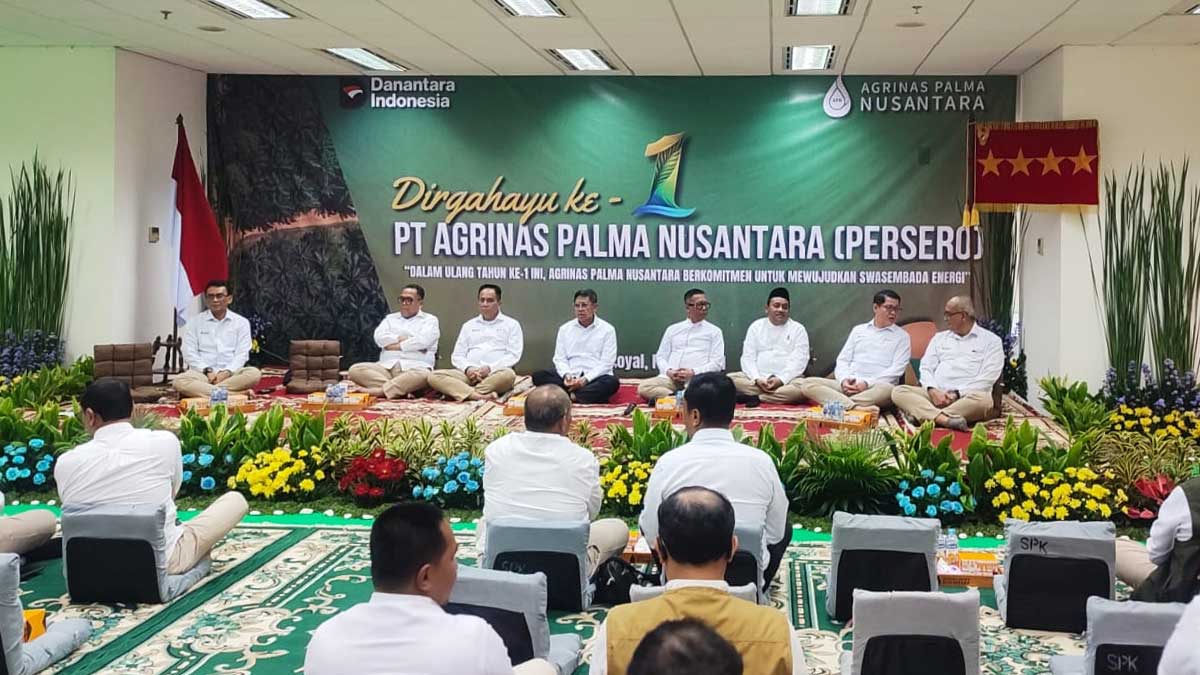

 Danantara targets the full consolidation of over 100 SOE-owned hotels by 2026.
 All SOE hotel operators are now coordinated under Hotel Indonesia Natour (HIN) within InJourney.
 Post-consolidation, Danantara plans to explore joint ventures with strategic partners.
 Danantara has established Perminas, a new SOE to manage idle mining assets, separate from MIND ID.
 President Prabowo positioned Danantara as a US$1 trillion sovereign wealth fund at WEF Davos.
:strip_icc():format(jpeg)/kly-media-production/medias/5310081/original/076121800_1754654848-DSC08392.JPG)
 All SOE shipping companies (Pelni, ASDP, PIS) must build new vessels at PT PAL.
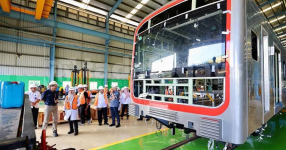
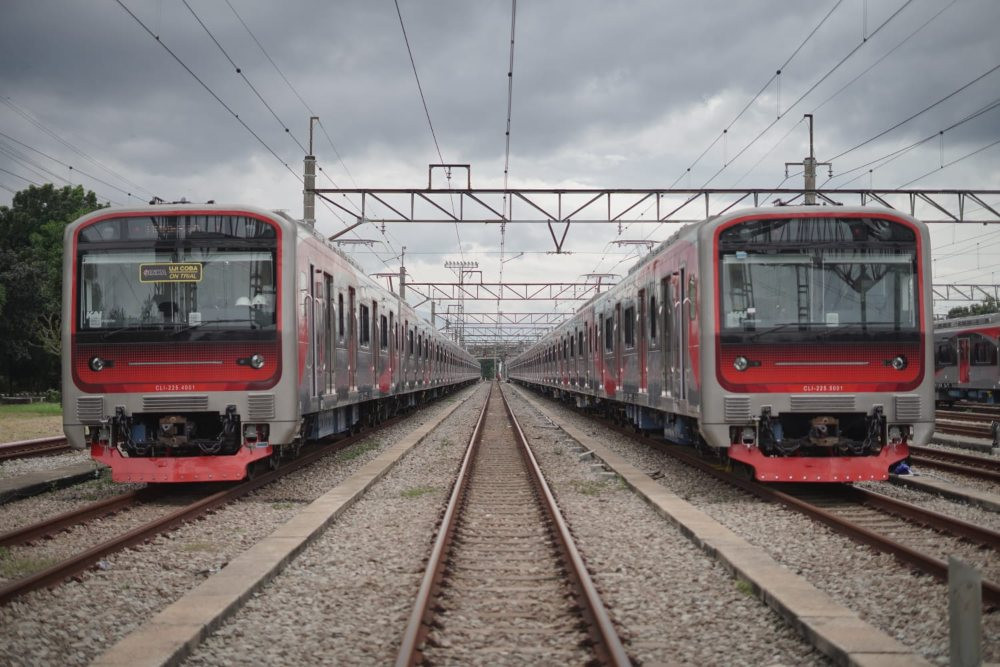
 INKA is prioritized for national railway procurement, including 30 new KRL trainsets.
 The policy provides off-taker certainty, critical for sustaining heavy industries.
 INKA’s transformation and facility upgrades are embedded in its 2026 RKAP.
 The directive supports industrial self-reliance and long-term manufacturing capacity building.
 Delivery of 30 KRL trainsets is targeted within one year, not earlier than H2 2026.