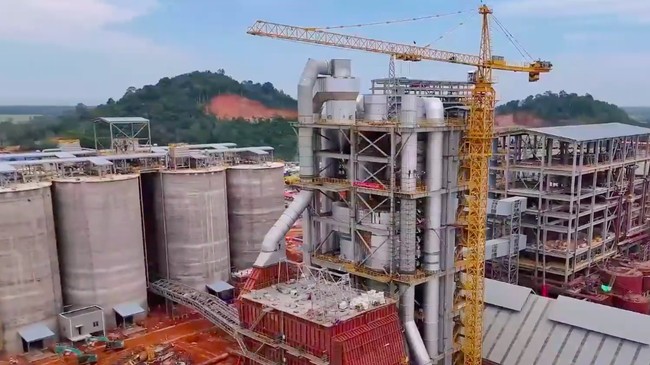
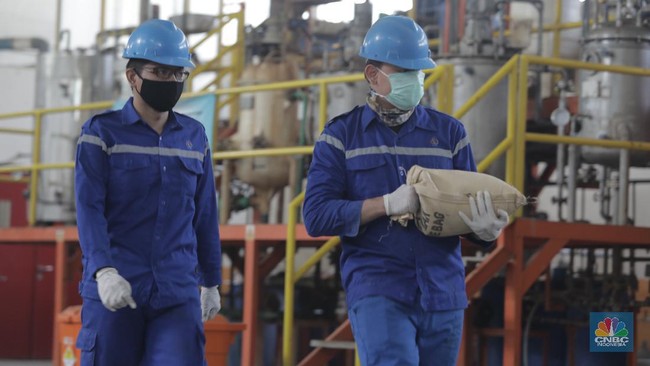
Indonesia state owned enterprise super-holding will be started with asset at 1 trillion USD (2024)

PalmCo Shifts Focus to Downstream Products to Drive Economic Growth​


Wednesday, March 25, 2026 | 21:01 WIB


1774673000055.png
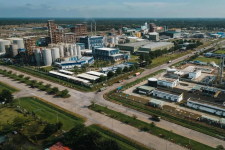
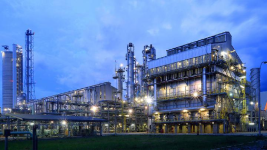
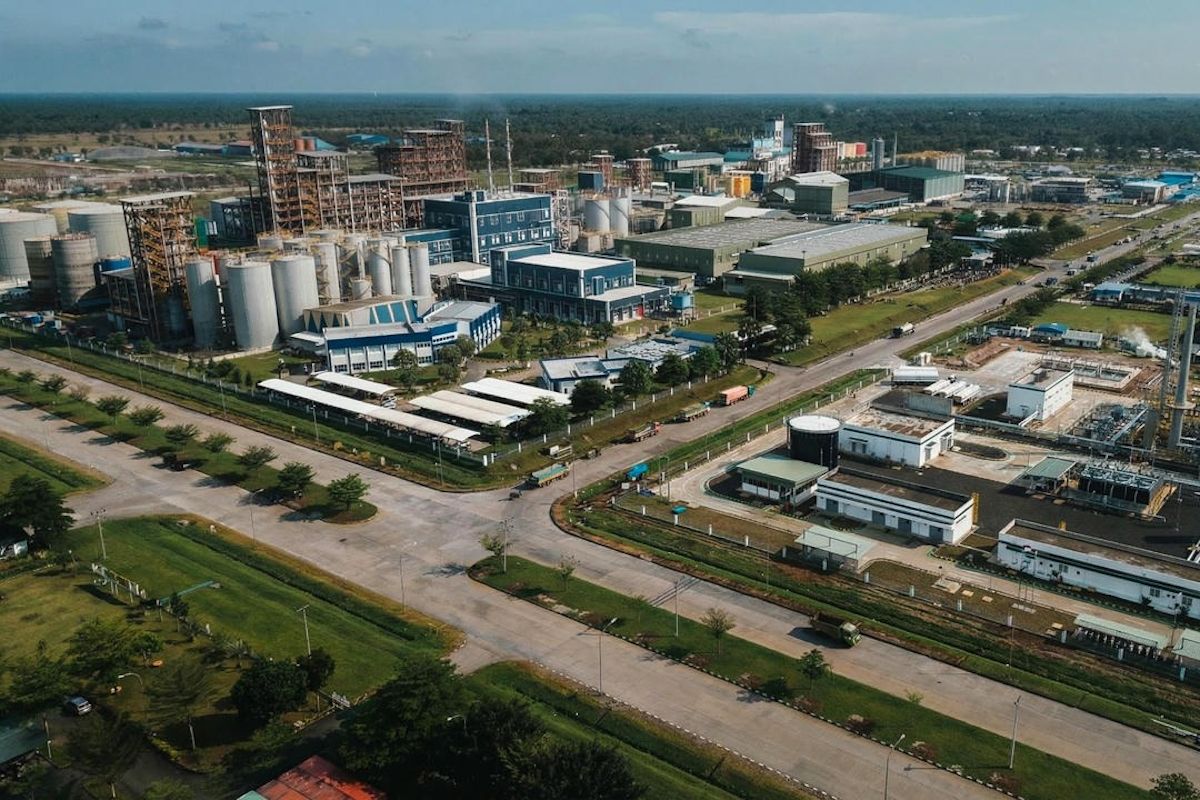
Documentation — Industrial palm oil processing facility owned by PT Perkebunan Nusantara (PTPN). ANTARA/HO-PTPN PalmCo


Jakarta (ANTARA) — PT Perkebunan Nusantara (PTPN) IV PalmCo, a subholding of PTPN III (Persero), is shifting its business focus from merely producing and exporting crude palm oil (CPO) to developing higher value-added downstream products in order to drive economic growth.

President Director of PTPN IV PalmCo, Jatmiko K. Santosa, stated that the company is now focusing on downstream product development, including processing fresh fruit bunches (FFB) into advanced products such as Bio Propylene Glycol (BioPG), which can significantly increase economic value.

“The value added from downstreaming can increase up to dozens of times. This is our main driving force,” Jatmiko said in a statement in Jakarta on Wednesday.

Integrated Processing Facility Plan​

He added that the company is preparing to begin the construction (groundbreaking) of an integrated palm oil processing facility in the Sei Mangkei Special Economic Zone (SEZ), North Sumatra.

The plan is part of the company’s strategic direction aligned with the national downstreaming policy, including guidance from the Daya Anagata Nusantara Investment Management Agency (Danantara).

“This program is part of a broader downstreaming ecosystem, not only in the palm oil sector but also across sectors as directed by Danantara,” he said.
However, the timing of the groundbreaking still depends on shareholder approval and is expected to take place shortly after the Eid (Lebaran) period.


Development Phases and Facilities​

In the initial phase, PalmCo will build several key facilities, targeted to operate gradually starting in late 2028, including:

  • Margarine and shortening plant with a capacity of around 40,000 tons per year
  • Cocoa Butter Equivalent (CBE) and Cocoa Butter Substitute (CBS) plant with a capacity of around 34,000 tons per year
Additionally, PalmCo will develop further downstream processing facilities to strengthen Indonesia’s position in the global palm-based product supply chain.

A biodiesel plant with a capacity of approximately 450,000 tons per year is also planned as part of future development, particularly to support national energy security.


Economic Impact and Job Creation​

The palm oil downstreaming project is expected to generate broad economic impacts, including employment.

During construction through full operation, PalmCo estimates that approximately 2,900 jobs will be created.

“This is not just an industrial project, but also an effort to drive regional economic activity and create more equitable growth,” Jatmiko said.
In addition to direct employment, the industrial area is expected to create multiplier effects for other sectors, such as:

  • Logistics
  • Small and medium enterprises (SMEs)

Supporting Smallholder Farmers​

On the upstream side, the presence of downstream facilities is expected to provide market certainty for smallholder palm oil farmers.

PalmCo projects that by 2030, the facility will be able to absorb up to:

  • 2.7 million tons of fresh fruit bunches (FFB) per year
  • Equivalent to around 567,000 tons of CPO
“Through downstreaming, we want to ensure that farmers’ production is absorbed sustainably. This is important to maintain the stability of the national palm oil ecosystem,” he stated.

Toward Higher Value Industry​

PalmCo is optimistic that, with integration from upstream to downstream and strong policy support, this project will become a key milestone in transforming Indonesia’s palm oil industry toward higher value-added products.


InJourney Airports Records Over 4 Million Passengers During Eid Travel Period​


Antara
March 23, 2026 | 3:48 pm


To view this content we will need your consent to set third party cookies.
For more detailed information, see our cookies page.

Soekarno Hatta Airport Terminal 3, International Flight.


Jakarta. Indonesia’s airport operator InJourney Airports handled 4.41 million passengers across 37 airports during the 2026 Eid travel period, reflecting steady growth in holiday mobility.


President Director Mohammad R. Pahlevi said the figure was recorded between March 13 and March 21, marking a 3.7% increase from 4.25 million passengers in the same period last year.


“Cumulatively, passenger traffic reached 4.41 million, up 3.7% from 4.25 million in the same period last year,” he said in a statement in Jakarta on Sunday.

The peak of outbound travel occurred on March 18, when passenger numbers reached 568,964. On Eid day, March 21, traffic stood at 397,670.

Aircraft movements also increased during the period, rising 6% to 33,099 flights from 31,240 a year earlier.

To view this content we will need your consent to set third party cookies.
For more detailed information, see our cookies page.

Soekarno Hatta Terminal 1 B, Domestic Flight


Read More:​

ASDP Ferry Says Eid Travel Passengers Hit 2.6 Million, Up 5%

The smooth flow of travel was supported by solid operational planning and close coordination among airport stakeholders. Slot time optimization for takeoffs and landings also helped accommodate high travel demand during the peak holiday period.


“This optimization was supported by the strong realization of additional flights,” Pahlevi said.


During the period, InJourney Airports received requests for around 2,500 extra flights, of which approximately 2,000 were realized.


Pahlevi said the realization rate was relatively high, as airlines typically fulfill only around 60–70% of additional flight requests, indicating strong demand and effective coordination among stakeholders.


Soekarno-Hatta International Airport, I Gusti Ngurah Rai International Airport, Juanda International Airport, Sultan Hasanuddin International Airport, and Kualanamu International Airport ranked among the busiest during the homecoming period.


Based on flight plan data on Friday, total aircraft movements at Soekarno-Hatta reached 1,033 flights, consisting of 520 departures and 513 arrivals.


Indonesia Plans $14 Billion in New Downstream Industrial Projects​


Celvin Moniaga Sipahutar
March 26, 2026 | 3:25 am

To view this content we will need your consent to set third party cookies.
For more detailed information, see our cookies page.

Alumina project of state owned mining company, PT ANTAM, in Kalimantan


Bogor. The Indonesian government is preparing to launch additional downstream industrial projects worth Rp 239 trillion ($14 billion) in the near term, Energy and Mineral Resources Minister Bahlil Lahadalia said on Wednesday evening.


The announcement followed a meeting with President Prabowo Subianto and several cabinet ministers at the president’s private residence in Bogor, West Java.


“We are adding 13 downstream projects with a total investment of around Rp 239 trillion,” Bahlil told reporters, declining to provide further details pending final government approval.

The new pipeline builds on an earlier batch of 20 downstream industrialization projects, primarily in energy, mining, and agriculture, overseen by sovereign wealth fund Danantara. Some of those projects have already broken ground, while others are scheduled to begin next month, Bahlil said. Total investment for the initial batch is estimated at $26 billion.


Projects that have entered the construction phase include an aluminum smelter in Mempawah, an aviation biofuel facility in Cilacap, and a bioethanol plant in Banyuwangi.


Through these initiatives, President Prabowo aims to strengthen Indonesia’s energy and food self-sufficiency while boosting export value by adding downstream processing to the country’s natural resource commodities.


Boosting Coal Downstreaming, PTBA to Develop DME and Synthetic Gas Projects​


31 March 2026


1775010056657.png


Jakarta, CNBC Indonesia — PT Bukit Asam Tbk (PTBA) reaffirmed its commitment to advancing coal downstreaming as part of its transformation into a world-class energy company.

PTBA President Director Arsal Ismail stated that by 2030, the company aims to begin initiating the commercialization of coal downstreaming to strengthen national energy security.

PTBA will focus on three main sectors:

  • Coal downstreaming
  • Strengthening coal infrastructure and logistics
  • Development of power generation businesses, both coal-fired power plants (PLTU) and renewable energy (EBT)
“These three development directions reflect our commitment to supporting the government’s Asta Cita for national energy independence,” Arsal said during a hearing with Commission VI of the Indonesian House of Representatives (DPR RI), Tuesday (March 31, 2026).

DME Project to Reduce LPG Imports​

He further explained that one of the key strategic projects being developed is the conversion of coal into dimethyl ether (DME).

This project aims to reduce Indonesia’s dependence on LPG imports.

Under this project, PTBA plans to process approximately:

  • 6.9 million tons of low-calorie coal per year
    → to produce
  • Around 1 million tons of DME annually
“In this scheme, PTBA will act as the plant operator as well as the coal supplier, while Pertamina will serve as the offtaker for the DME we produce,” he said.

Synthetic Gas (SNG) Development​

In addition to DME, PTBA is also developing a coal-to-synthetic natural gas (SNG) project as an alternative gas supply, particularly for:

  • South Sumatra
  • Western Java
For this project, PTBA will utilize approximately:

  • 9 million tons of low-calorie coal per year
with a production capacity of:

  • 240 BBTUD of syngas
As part of the development scheme, PTBA will establish a joint venture with PT Perusahaan Gas Negara Tbk (PGN), which will act as the 100% offtaker of the SNG produced.

“We have signed a head of agreement between PTBA and PGN for the coal-to-synthetic natural gas project, which will be followed by a joint feasibility study with consultants,” he explained.


Inalum Has a Rp14 Trillion Downstream Project in West Kalimantan, Here’s the Progress​


31 March 2026


1775010363176.png

Jakarta, CNBC Indonesia — PT Indonesia Asahan Aluminium (Inalum) has revealed the latest progress of the Smelter Grade Alumina Refinery (SGAR) Phase 2 project in Mempawah, West Kalimantan. The project is an expansion of SGAR Phase 1, which has already been developed earlier.

Inalum President Director Melati Sarnita stated that the company is currently completing several crucial stages before entering the construction phase. At present, the project is in the stage of finalizing the bankable feasibility study and the final investment decision (FID) process.

“We are targeting the FID this year, and will proceed with the EPC process and complete construction by the end of 2028, with operations expected to begin in early 2029 alongside the second smelter,” Melati said during a hearing with Commission VI of the Indonesian House of Representatives (DPR RI), Tuesday (March 31, 2026).

Linked to Second Aluminum Smelter​

Melati explained that the development of SGAR Phase 2 is highly dependent on the realization of the second aluminum smelter project in Mempawah, as all alumina produced will be used to supply that facility.

“Our need to build SGAR Phase 2 is purely to supply alumina for our second smelter project in Mempawah,” she added.

Investment and Collaboration​

As previously reported, the Daya Anagata Nusantara Investment Management Agency (Danantara) officially initiated the project with a groundbreaking ceremony on February 6, 2026.

The project, with an investment value of US$882 million (approximately Rp14.8 trillion), is being developed through collaboration among state-owned enterprises and subsidiaries under MIND ID, including:

  • PT Inalum
  • PT Aneka Tambang Tbk (ANTM)
  • PT Bukit Asam Tbk (PTBA)

Production Capacity​

Operated through PT Borneo Alumina Indonesia (BAI), the project will produce:

  • 1 million tons of alumina per year
Combined with SGAR Phase 1, total alumina production in Mempawah is expected to reach:

  • 2 million tons per year


Indonesian state aluminum firm calls for moratorium on new refineries due to oversupply risk​


Reuters | March 31, 2026

1775022724280.png
Image courtesy of PT Inalum


Indonesian state aluminum company PT Inalum on Tuesday called for the government to impose a moratorium on new alumina and aluminum plants due to fears of oversupply and pressure on the country’s bauxite reserves.
blank.gif


Resource-rich Indonesia is keen to promote the development of domestic metal industries, and has banned exports of raw minerals to boost investment in domestic plants.

Rapid investment in nickel smelters has made it the biggest exporter of nickel products, and analysts have said investors are now looking to the aluminum sector.


Inalum is concerned that the aluminum sector will experience similar issues to those faced by the nickel sector after its quick growth, such as oversupply that impacted global prices and environmental problems, chief executive Melati Sarnita told members of parliament.

Inalum, citing market data, estimated that once all the alumina projects in the pipeline start operations, Indonesia will have 29.8 million tons of alumina production capacity from around 9 million tons currently.


Primary aluminum production capacity is also estimated to increase to 14.9 million tons, from 1.13 million tons now, once all the projects are completed, Melati said, and that would boost demand for the raw material bauxite to up to 94 million tons a year, from up to 36 million tons required by the existing refineries.

“These capacity expansions will put pressure on Indonesia’s bauxite reserves because the demand intensity could potentially shorten the lifetime of the proven bauxite reserves to 10 years,” Melati said.


“As a national aluminum player, when we build a smelter we hope the bauxite reserves availability will last through the lifetime of our smelter, which is 30 years,” she added.


Global demand for aluminum is currently uncertain and an aggressive expansion from Indonesia could put pressure on global prices, she said.


(By Fransiska Nangoy; Editing by John Mair)
 

Get Ready: Indonesia Will Soon Have a Rare Earth Mineral Processing Plant​


1775203704946.png

Verda Nano Setiawan
01 April 2026


Jakarta, CNBC Indonesia — PT Timah (Persero) Tbk (TINS) is preparing to build a rare earth mineral processing plant, with groundbreaking scheduled to begin on May 20, 2026. This project is part of a directive from Indonesian President Prabowo Subianto.

President Director of Timah, Restu Widiyantoro, explained that this marks a new milestone for the company, considering that rare earth mineral processing has never been carried out before.

“And this is the main challenge because the government, through the President, has already instructed us—even as soon as May 20—to conduct the groundbreaking for the rare earth mineral plant project,” said Restu during a hearing with Commission VI of the Indonesian House of Representatives, quoted Wednesday (April 1, 2026).

Strong Push from the Government​

He added that President Prabowo has given direct instructions to accelerate the realization of the project, with a focus on rapid monetization.

At the latest, within two years after construction begins, the plant is expected to already produce economically valuable outputs.

“The groundbreaking will take place on May 20, and the President has instructed that monetization must occur within the fastest or at most two years. This means it should already generate revenue for the state,” he said.

A New Sector for PT Timah​

Restu acknowledged that managing rare earth minerals is relatively new for the company. However, he expressed optimism that Timah can develop this sector by leveraging its decades of experience in managing tin commodities.

“What is needed is confidence to be ready and bold in managing it, because the value is indeed extraordinary,” he said.

High Value-Added Potential​

According to him, the economic value of by-products from tin mining could increase many times over if processed into high-value products.

These include applications for:

  • Power generation
  • Solar energy
  • Electric vehicle raw materials

Strategic Partnership​

He also highlighted that Timah is no longer operating alone. The company now has a partner, Perminas, which was recently established by the government.

“This is a challenge for us at PT Timah. Fortunately, we now have a partner. Previously we worked alone for decades, but now Perminas has been formed by the government in recent months and has begun working with us to execute government programs,” he concluded.


Pupuk Indonesia to Build Two Methanol Plants to Support B50 Program​


Selasa, 7 April 2026 16:42 WIB

1775610714769.png

TEMPO.CO, Jakarta - Indonesia-owned fertilizer company Pupuk Indonesia is planning to build two methanol facilities to support the government's biodiesel program, or B50, said president director Rahmad Pribadi.

"We will build one in Lhokseumawe and another in Bontang," Rahmad said during a meeting with the House of Representatives' Commission IV at the parliamentary complex in Senayan, Jakarta, on Tuesday, April 7, 2026.

According to Rahmad, the methanol facilities will focus on converting crude palm oil or CPO into biofuel, as Indonesia currently relies heavily on imports, which take up around 1.5 million tons.

Without the facilities, methanol import volumes could bloat up to 5.2 million tons, Rahmad said.

For now, according to Rahmad, feasibility studies for the facilities have been completed, with an MoU for the Lhokseumawe plant in Aceh inked between Pupuk Indonesia and the energy firm Mubadala.

Meanwhile, the process is underway for the facility in Bontang, East Kalimantan.

Rahmad said the two locations are chosen for their gas resources necessary for production. Pupuk Indonesia, he said, has established industrial areas in both regions to fast-track the construction.

Rahmad mentioned that Pupuk Indonesia is still calculating the capital expenditure for the development, but the requirements have been agreed upon. The construction is expected to take up around 40 months.

Rahmad said the construction of the methanol facilities was mandated by the Ministry of Agriculture, with the approval from the sovereign wealth fund Danantara.

For now, according to Rahmad, feasibility studies for the facilities have been completed, with an MoU for the Lhokseumawe plant in Aceh inked between Pupuk Indonesia and the energy firm Mubadala.

Meanwhile, the process is underway for the facility in Bontang, East Kalimantan.

Rahmad said the two locations are chosen for their gas resources necessary for production. Pupuk Indonesia, he said, has established industrial areas in both regions to fast-track the construction.


1776488387778.png

1776488348370.png

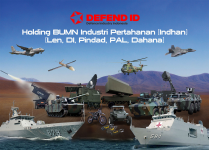
Defense ID Program Overview (Translated to English)


To view this content we will need your consent to set third party cookies.
For more detailed information, see our cookies page.

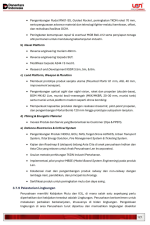
Missile & Aerospace Development

  • Development of RN01-SS Missile (Guided Rocket), including increasing local content (TKDN) for 70 mm rockets.
  • Mastery of advanced materials and fighter aircraft technology through partnerships, offsets, and revitalization of OC91 facilities.
  • Enhancement of repair & overhaul capabilities (MRO) for Bell-412 MGB, along with preparation of permanent expert personnel to support industrial sustainability.

b) Naval Platform

  • Reverse engineering of 40 mm naval gun systems.
  • Reverse engineering of SUT torpedoes.
  • Modification of A244/S torpedoes (mod 0).
  • Research and Development of KSSR vessels (3.5 m, 5 m, and 8 m).

c) Land Platform, Weapons & Munitions

  • Development of main weapon system prototypes, including:
    • Mounted Mortar (81 mm)
    • AGL (40 mm)
    • Firearm improvements
  • Development of:
    • Optical sights and night vision systems
    • Rockets and propellants (double-base)
    • MK-82 Live Bomb (BOM MK-82)
    • Small to medium caliber ammunition (MKK/MKBR, 20–30 mm, tank ammunition)
    • Ammunition for modern platforms such as drone bombing systems
  • Strengthening production capacity through:
    • Establishment of a brass mill
    • Development of a propellant pilot plant
    • Development of 120 mm mortar bombs up to advanced prototype subsystems

d) Mining & Energetic Material

  • Innovation of products and services oriented toward customer needs (Operations & PPSTI).

e) Defence Electronics & Critical Systems

  • Development of products including:
    • NDDU (Naval Data Distribution Unit)
    • GCU (Generator Control Unit)
    • NVG (Night Vision Goggles)
    • AUTACS Target Drone
    • Urban Transport Systems
    • Total Energy Solutions
    • Fire Management Systems
    • Ticketing Systems
  • Development of roadmaps for 8 priority sectors (Asta Cita) within defense subsidiaries and Len Incorporated.
  • Proposal of calculation methods for TKDN (local content) in the defense industry.
  • Implementation of MBSE (Model-Based Systems Engineering) pilot projects in Len products.
  • Collaboration in railway and non-railway R&D with research institutions, educational institutions, and technology principals.
  • Product certification programs to improve quality and competitiveness.

3.7.9 Environmental Sustainability

The company implements Quality and K3L (Health, Safety, and Environment) policies, with environmental sustainability as a key focus.

  • The company is committed to continuous environmental improvement.
  • Environmental management within operational areas is monitored and maintained to ensure surrounding environmental sustainability.

 
1776488637713.png

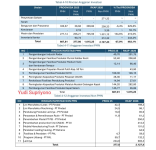
Table 4-10: Investment Budget Breakdown (IDR Billion)

DescriptionForecast 2025 (PMN)Forecast 2025 (Non-PMN)RKAP 2026 (PMN)RKAP 2026 (Non-PMN)% vs Forecast (PMN)% vs Forecast (Non-PMN)
Equity Injection---271.32~~
Land----~~
Buildings & Infrastructure330.6728.68309.66209.33-6.4%629.8%
Vehicles-2.16-3.35~55.1%
Machinery & Equipment277.14256.21705.591,331.12154.6%419.5%
Office Inventory-90.74-312.32~244.2%
Total607.81377.801,015.252,127.4367.0%463.1%

Table 4-11: PMN Investment Budget Details (IDR Billion)

NoPMN Investment DetailsForecast 2025RKAP 2026
1Radar Industry Development40.70201.75
2Small-Caliber Ammunition Production Facility Development52.40208.60
3Medium Tank & Combat Vehicle Production Facility Development12.1466.40
4Red & White Propellant Development (50 Ton Capacity)-43.90
5N219 Production Facility Construction169.30146.15
6CN235 Aircraft Production Capacity Increase28.3611.17
7Supporting Production Facility Revitalization14.9427.61
8Shipyard Acquisition for Production Capacity Increase144.20282.80
9Submarine Production Facility Construction145.7726.86
Total607.811,015.25

Table 4-12: Non-PMN Investment Budget Details (IDR Billion)

NoNon-PMN Investment DetailsForecast 2025RKAP 2026
1Barrel Manufacturing Line – PT Pindad42.3169.3
2Machining Manufacturing Line – PT Pindad24.598.1
3Other Production Support – PT Pindad10.085.9
4Routine Maintenance & Repair – PT Pindad11.861.2
5Capital Injection to PT PEL – PT Pindad-250.0
6CN235 Production Line Expansion – PT DI-412.5
7Mobile Manufacturing Truck – PT Dahana-101.0
8Loading & Hauling Equipment – PT Dahana-64.9
9Facilities & Equipment – PT PAL4.759.0
10R&D Program – PT PAL59.7132.2
11Others224.8693.3
Total377.82,127.4

🔍 Strategic Insight (important for you)​


1. Where the money is going​

  • Massive jump in Non-PMN investment → from 377.8 → 2,127.4 (≈ 5.6x increase)
  • Strong focus on:
    • Machinery & equipment (core industrial capability)
    • Production lines (CN235, ammunition, shipyard, submarine)

 
1776675454487.png

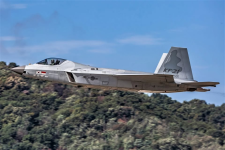
There is KF21 program inside Danantara program, but we dont see production facility investment toward the program this year.

The explanation is likely because KF21/IFX program is part of Defense Ministry program so the cost of the program, including facility investment is handled directly by Defense Ministry like happening in previous production facility. Cost share of the program is also always paid by Defense Ministry yearly budget

The production site is also inside Indonesian Air Force land but later transfered to Indonesian Aerospace- why it is close ? Because Indonesian Aerospace previously was Indonesian Air Force asset and lies within Indonesian Air Force land asset.

So KF21 program will likely enlarge Indonesian Aerospace land asset (some years ago the transfered land of IFX production facilities to Indonesian Aerospace is already started) and as well as its production facility (Investment under Minister of Defense that later is likely transfered as well to Indonesian Aerospace).
 

MIND ID Develops EV Battery Ecosystem in Karawang to Advance Mineral Downstreaming​


Sigit Sudadi
April 18, 2026

To view this content we will need your consent to set third party cookies.
For more detailed information, see our cookies page.


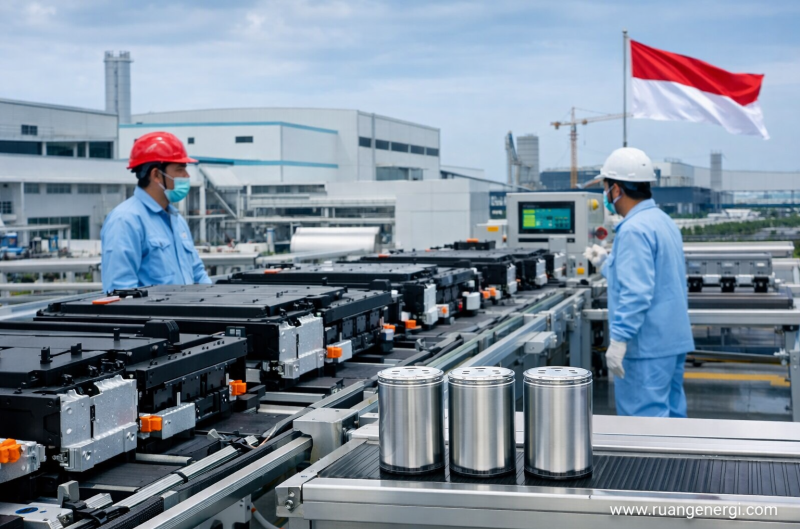
JAKARTA — Indonesia’s state-owned mining holding MIND ID is advancing efforts to increase the value of national mineral resources through the development of an electric vehicle (EV) battery ecosystem in Karawang.

This initiative aims to:

  • Strengthen the industrial sector’s contribution to economic growth
  • Optimize strategic mineral resources such as:
    • Nickel
    • Cobalt
    • Manganese
    • Copper

🔋 Battery Production Facility​

The battery plant is operated by:

  • PT Contemporary Amperex Technology Indonesia Battery
A joint venture between:

  • Indonesia Battery Corporation (IBC) — part of MIND ID
  • Global consortium:
    • Contemporary Amperex Technology Co. Limited (CATL)
    • Brunp
    • Lygend (via CBL International Development Pte Ltd)

⚡ Production Capacity​

The facility will produce:

  • EV battery cells
  • Battery packs
  • Battery Energy Storage Systems (BESS)
Initial capacity:

6.9 GWh per year
Planned expansion:

Up to ~15 GWh per year in the next phase

🏛️ Government Oversight​

A working visit by Commission XII of the Indonesian House of Representatives (DPR RI) was conducted to:

  • Assess readiness of the national battery industry
  • Support the energy transition agenda
Team leader Putri Zulkifli Hasan stated:

The transition toward clean energy and a low-carbon economy is a national strategic priority

🔗 Downstream Integration Strategy​

The government is promoting:

A fully integrated supply chain from upstream mining to downstream battery manufacturing
This aligns with Indonesia’s mineral downstreaming policy (hilirisasi).


To view this content we will need your consent to set third party cookies.
For more detailed information, see our cookies page.


🚀 Commercial Timeline​

According to IBC President Director Aditya Farhan Arif:

  • The Karawang facility is targeted to begin:

    Commercial operations in early Q3 2026

🔬 Battery Technology​

The plant will produce lithium-ion batteries using two main chemistries:

  • NMC (Nickel Manganese Cobalt)
  • LFP (Lithium Iron Phosphate)

📊 Market Dynamics​

  • LFP batteries → Already dominant in Indonesia
  • NMC batteries → Still in early development domestically
Global comparison:

  • NMC usage globally → ~40%
  • NMC usage in Indonesia → ~4%
According to GAIKINDO:

  • Indonesia’s EV market is still largely dominated by LFP batteries

🌍 Strategic Direction​

IBC aims to:

  • Strengthen the domestic EV ecosystem
  • Promote nickel-based battery adoption (NMC)
  • Increase Indonesia’s competitiveness in the global EV supply chain

🔎 Strategic Insight​

This article signals:

  • Acceleration of Indonesia’s EV industrialization strategy
  • Integration of mining → manufacturing value chain
  • Strategic partnership with global battery leaders (CATL)

🧠 Clean analytical sentence​

The development of a 6.9–15 GWh EV battery facility in Karawang highlights Indonesia’s push to integrate its mineral resources into the global electric vehicle supply chain.

⚠️ Clarifications​

  • 6.9 GWh → Initial annual capacity
  • 15 GWh → Future expanded capacity


KAI Nears Final Plan to Add 30 New Commuter Trainsets in Greater Jakarta​


CNN Indonesia Team
21 Apr 2026

To view this content we will need your consent to set third party cookies.
For more detailed information, see our cookies page.


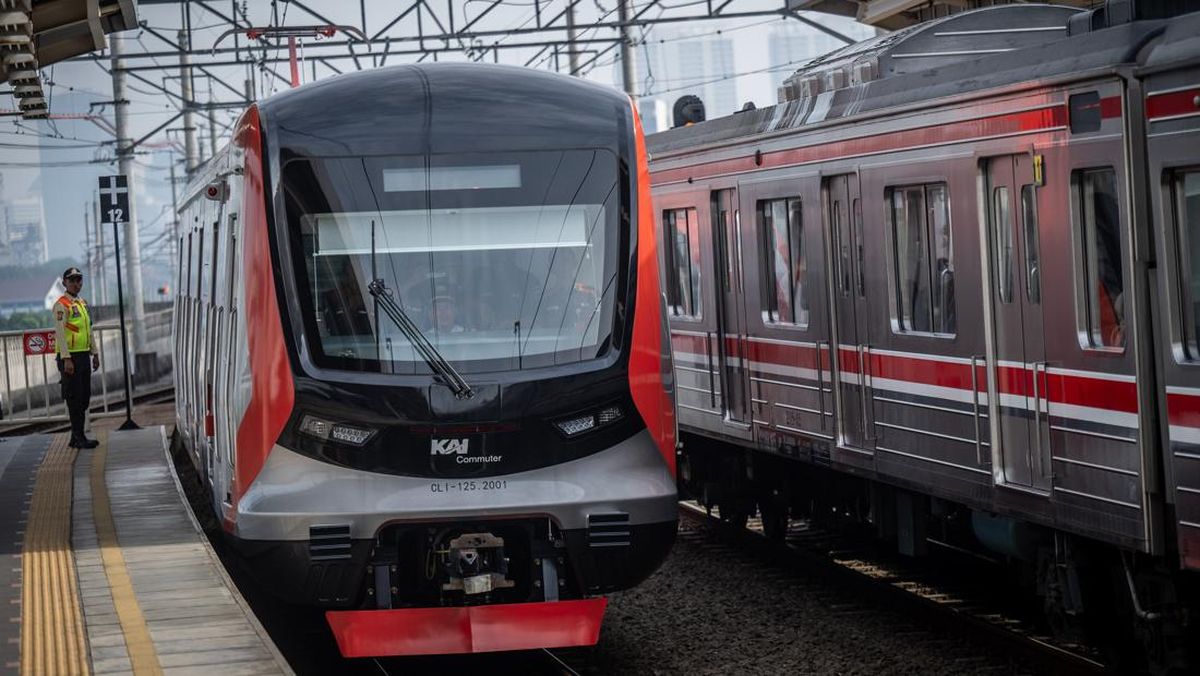
JAKARTAKAI Commuter, a subsidiary of PT Kereta Api Indonesia (KAI), is nearing the final stage of its plan to add 30 new commuter trainsets (KRL) in the Greater Jakarta (Jabodetabek) area.

Vice President Corporate Secretary Karina Amanda said the study is almost complete, and both KAI and the government are preparing for implementation to meet rising passenger demand.

The new trainsets will be operated on routes capable of handling 12-car formations, although final route decisions still depend on infrastructure readiness.


To view this content we will need your consent to set third party cookies.
For more detailed information, see our cookies page.

KAI Commuter line station in Jakarta


To view this content we will need your consent to set third party cookies.
For more detailed information, see our cookies page.

KAI Commuter line station in Cikarang, West Java


KAI Commuter is currently focusing on the procurement of 16 trainsets produced by PT INKA. So far, 8 trainsets have been delivered, with 6 already in operation, one undergoing certification testing in Depok, and one still in delivery. The remaining units are expected to be gradually operational throughout 2026.

KAI President Director Bobby Rasyidin targets the procurement of the additional 30 trainsets to be completed within the year, with priority given to domestically produced trains.

The expansion is supported by government funding of up to Rp5 trillion (≈ $312.5 million USD), slightly above the initially proposed Rp4.8 trillion (≈ $300 million USD).

President Prabowo Subianto approved the higher allocation, emphasizing the importance of improving public transportation capacity and service quality for the wider population.

The addition of new trainsets is expected to increase passenger capacity, improve commuter comfort, and expand rail service coverage across Greater Jakarta.


PT Dahana Marks Historic Global Expansion with First Export of 18,000 Tons of Ammonium Nitrate to Australia​


To view this content we will need your consent to set third party cookies.
For more detailed information, see our cookies page.


PT Dahana has achieved a major milestone in its global expansion by successfully exporting its first shipment of 18,000 tons of ammonium nitrate (AN) to Australia via Tursina Port in Bontang.

This achievement is not just about volume—it demonstrates that Indonesia’s strategic industrial products meet the strict international standards, particularly in the highly competitive global mining sector.

The company expressed appreciation for the strong support from:

  • The Ministry of Defense of Indonesia
  • Pupuk Kaltim
  • The Bontang City Government
This collaboration highlights the strength of national synergy and reinforces Indonesia’s position in the global supply chain.


🧠 Clean analytical sentence​

This export signals growing international recognition of Indonesia’s industrial capabilities, particularly in supplying critical materials for the global mining industry.


Prabowo Launches 13 Downstream Projects Worth $7.6 Billion, Spanning Energy to Steel​


29 April 2026,


To view this content we will need your consent to set third party cookies.
For more detailed information, see our cookies page.

Danantara leaders during the superholding launched in 2025


JAKARTA — Indonesia has officially launched 13 downstream (hilirisasi) projects with a total investment of:

Rp116 trillion (≈ $7.6 billion USD)
The projects were inaugurated through a simultaneous groundbreaking ceremony in Cilacap, Central Java, led by President Prabowo Subianto.

These projects cover multiple strategic sectors, including:

  • Energy
  • Steel
  • Mining
  • Agriculture

CEO of Danantara Indonesia, Rosan Roeslani, stated that this marks the second phase of the national downstreaming program, following the earlier launch of six projects in February 2026.

He emphasized that downstreaming is a key driver of:

  • Industrial value creation
  • Manufacturing growth
  • Job creation
The projects are expected to generate around 600,000 jobs

🔧 Key Project Highlights​

Several major projects include:

  • Gasoline refinery upgrades (Dumai & Cilacap)
    → Capacity: 62 MBSD, targeted operation by Q4 2030
    → Expected to reduce gasoline imports by 2 million KL/year
  • Fuel storage terminals (East Kalimantan, Papua, NTT)
    → Additional capacity: 153,000 KL
    → Operation starting 2027–2028
  • Coal-to-DME plant (South Sumatra)
    → Capacity: 1.4 million tons/year
    → Aimed at reducing LPG imports (currently ~80% of demand)
  • Nickel-based stainless steel facility (Morowali)
    → Capacity: 1.2 million tons/year
  • Carbon steel slab production (Cilegon)
    → Capacity: 1.5 million tons/year

🌱 Resource Downstreaming Projects​

Additional projects focus on natural resource processing:

  • Buton asphalt ecosystem (Karawang)
    → Target increase: 5,000 tons (2025) → 300,000 tons (2030)
  • Copper & gold downstream processing (Gresik)
    → Includes precious metal and brass manufacturing
  • Palm oil downstreaming (Sei Mangkei)
    → Oleofood & biodiesel production
  • Nutmeg processing (Maluku)
    → Oleoresin production
  • Integrated coconut processing (Maluku)
    → Producing MCT oil, coconut flour, and activated carbon

🧠 Clean analytical sentence​

The $7.25 billion downstream investment signals Indonesia’s strategy to move up the value chain by converting raw natural resources into higher-value industrial products.


Users who are viewing this thread

Pakistan Defence Latest

Latest Posts

Back
Top