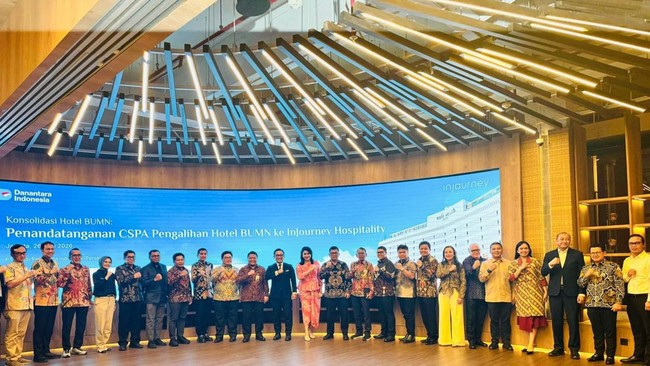
Indonesia state owned enterprise super-holding will be started with asset at 1 trillion USD (2024)

Indonesia Breaks Ground on Integrated Copper, Gold Downstream Project in E. Java​


Anis Firmansah
April 29, 2026


To view this content we will need your consent to set third party cookies.
For more detailed information, see our cookies page.

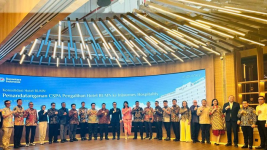
Groundbreaking ceremony for the integrated copper and gold downstream project at the JIIPE Special Economic Zone in Gresik, East Java, on April 29, 2026. State-owned mining holding MIND ID launched the project at the Java Integrated Industrial and Ports Estate (JIIPE). (Beritasatu/Anis Firmansah)


Gresik, East Java. Indonesia has begun construction of an integrated copper and gold downstream project in East Java, as Southeast Asia's largest economy pushes to process more of its mineral resources domestically and strengthen strategic industries.

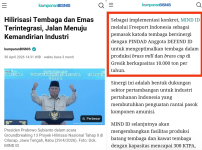
State-owned mining holding MIND ID on Wednesday launched the project at the Java Integrated Industrial and Ports Estate (JIIPE) special economic zone in Gresik. The development is part of a broader rollout of 13 downstream projects under the government’s second-phase industrialization program.

The facility will process copper concentrate from gold miner Freeport Indonesia into higher-value products, including copper cathodes, precious metals, and components used in ammunition and defense systems.

To view this content we will need your consent to set third party cookies.
For more detailed information, see our cookies page.

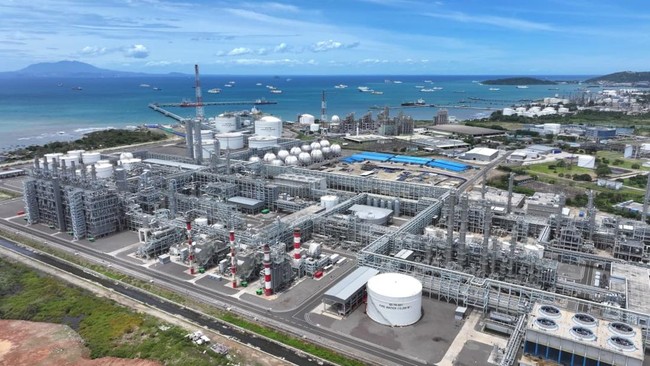
Freeport Indonesia Gresik smelter

Under the plan, copper cathodes produced at Freeport’s Gresik smelter will be further processed into brass mill products and brass cups by state-owned defense manufacturer Pindad, part of the DEFEND ID holding. The facility is designed to produce up to 10,000 tons annually.

Meanwhile, anode slime generated from the smelting process will be refined by state-owned gold miner Aneka Tambang, or Antam, into gold bullion. The precious metals refinery is projected to produce up to 30 tons of gold per year, equivalent to around 5 million retail units.

To view this content we will need your consent to set third party cookies.
For more detailed information, see our cookies page.

AMMAN’s Precious Metal Refinery​


Tedy Badrujaman, director of downstream strategy and mineral ecosystem at MIND ID, said the project reflects Indonesia’s broader ambition to move up the value chain.

“This is a milestone that underscores Indonesia’s commitment to becoming a sovereign industrial nation,” Tedy said. “Downstream industry is not just about exporting raw materials but about creating high-value products domestically.”

The initiative is expected to strengthen the country’s industrial base from upstream processing to finished products, particularly in strategic sectors such as defense manufacturing.

The project is also seen as a major job creator. MIND ID estimates the copper downstream segment could employ up to 7,000 workers, while the gold refining facility is expected to add around 500 jobs.

Local authorities have voiced support for the development, citing its potential to boost regional economic growth and attract further investment.

East Java Vice Governor Emil Dardak said the JIIPE special economic zone is being positioned as a competitive industrial hub capable of drawing global players.

“We want JIIPE to have strong advantages, supported by infrastructure and a complete industrial ecosystem,” Emil said. “The presence of Freeport’s smelter has already created important raw materials like cathodes and anodes, which in turn attract downstream industries such as Pindad and Antam.”

The groundbreaking ceremony in Gresik was part of a nationwide launch led virtually by President Prabowo Subianto from Central Java.

Indonesia has made downstream industrialization a cornerstone of its economic policy, particularly in the mining sector, where export restrictions on raw materials have encouraged investment in smelting and processing facilities. By integrating copper and gold processing within a single industrial zone, the government aims to maximize value creation, reduce reliance on raw exports, and build a more resilient manufacturing base tied to its natural resources.


Building 2 New Gasoline Refineries, Indonesia’s Fuel Production Could Increase by 2 Million KL​


Firda Dwi Muliawati
30 April 2026


To view this content we will need your consent to set third party cookies.
For more detailed information, see our cookies page.


Jakarta, CNBC Indonesia
— Indonesian President Prabowo Subianto, together with the Daya Anagata Nusantara Investment Management Agency, or Danantara, officially launched the groundbreaking of 13 National Downstreaming Projects Phase II. Two of these projects are gasoline refinery facilities.

President Prabowo emphasized that downstreaming is a fundamental step in transforming Indonesia’s economic structure toward a high-value-added industrial economy that is more resilient to global dynamics.

“It has been mentioned earlier that the first phase of downstreaming consists of 13 projects in 13 locations, and this year we will also add six more downstreaming projects. We will continue to add more. There may be phases 4, 5, 6, God willing, this year as well,” Prabowo said during the inauguration in Cilacap, Central Java, quoted on Thursday, April 30, 2026.

Prabowo stressed that the downstreaming of Indonesia’s natural resources is the only path for the country to become more prosperous. Therefore, the government will continue to develop downstreaming projects across the country.

“Downstreaming is the only path for us to become more prosperous,” Prabowo said.

One of the projects inaugurated by Prabowo is a gasoline refinery project managed by PT Pertamina (Persero), located respectively in Dumai, Riau, and Cilacap, Central Java.

The gasoline refinery capacity expansion will be carried out at the existing RU II Dumai and RU IV Cilacap facilities. The total capacity will reach 62 MBSD and is targeted to come onstream in the fourth quarter of 2030.

“This project will substitute gasoline imports of up to 2 million KL per year, or 9.47% of the national supply-demand gap. It will support the fulfillment of Pertamax Series demand from domestic production and reduce imports of by-products, including propylene and LPG,” Danantara wrote in a statement quoted on Thursday, April 30, 2026.

The project is considered to contribute to strengthening national energy security while maintaining energy price stability, which ultimately supports people’s purchasing power and economic activity.

In addition to refineries, the program covers the energy, metals and minerals, construction materials, and agroindustry sectors. The program aims to reduce import dependency, strengthen the national industrial supply chain, increase the added value of domestic resources, and create broader employment opportunities and economic activity for the public.

“Downstreaming is a strategic instrument to encourage the creation of added value within the country through the processing and industrialization of natural resources,” Danantara added.

In addition to increasing added value, downstreaming is also seen as playing a role in strengthening economic independence by reducing dependence on global supply chains, which under certain conditions may face dynamics and uncertainty, including geopolitical factors.

Through the strengthening of domestic supply chains, downstreaming also helps ensure the more reliable availability of national needs, while encouraging the transformation of the economic structure toward a high-value-added industrial base.

Below is the list of the 13 Phase II Downstreaming Projects and their project owners:


Projects 1–2​

Development of Gasoline Refinery Facilities​

State-Owned Enterprise Holding: PT Pertamina (Persero)
Locations: Dumai, Riau; Cilacap, Central Java

  • Expansion of gasoline refinery capacity at the existing RU II Dumai and RU IV Cilacap facilities, with a total capacity of 62 MBSD, targeted to come onstream in Q4 2030.
  • This project will substitute gasoline imports of up to 2 million KL per year, or 9.47% of the national supply-demand gap. It will support the fulfillment of Pertamax Series demand from domestic production and reduce imports of by-products, including propylene and LPG.
  • This project contributes to strengthening national energy security while maintaining energy price stability, which ultimately supports people’s purchasing power and economic activity.

Projects 3–4–5​

Development of Fuel Operational Tanks​

State-Owned Enterprise Holding: PT Pertamina (Persero)
Locations: Palaran, East Kalimantan; Biak, Papua; Maumere, East Nusa Tenggara

  • Development of three fuel terminals in Palaran with 37,000 KL, Biak with 46,000 KL, and Maumere with 70,000 KL, providing a total additional capacity of 153,000 KL and increasing national storage capacity by 3.1%.
  • The project will be carried out by Pertamina Patra Niaga and is targeted to come onstream gradually in 2027 for Maumere and in 2028 for Palaran and Biak.
  • This project strengthens the reliability of energy distribution, particularly in eastern Indonesia, thereby encouraging more equal development and reducing price gaps between regions.

Project 6​

Coal-to-DME Processing Facility​

State-Owned Enterprise Holding: PT Pertamina (Persero), PT Mineral Industri Indonesia (Persero)
Location: Tanjung Enim, South Sumatra

  • Development of a DME production facility with a capacity of 1.4 million tons per year in Tanjung Enim, with PTBA acting as the operator and Pertamina Patra Niaga as the offtaker.
  • This project will substitute LPG imports, which currently supply 80% of national demand.
  • In addition to providing foreign exchange efficiency, this project strengthens domestic energy security and creates new job opportunities in the development of downstream energy-based industries.

Project 7​

Development of Stainless Steel Manufacturing Facilities from Nickel​

State-Owned Enterprise Holding/Partner: PT Krakatau Steel (Persero) Tbk. / Tsingshan Group
Location: Indonesia Morowali Industrial Park, Central Sulawesi

  • Development of stainless steel slab production facilities with a capacity of 1.2 million tons per year, based on local nickel through modern smelting and refining processes.
  • This initiative increases the added value of domestic minerals while encouraging industrial job creation and sustainable economic growth in industrial zones.

Project 8​

Development of Carbon Steel Slab Production Facilities from Local Iron Ore​

State-Owned Enterprise Holding/Partner: PT Krakatau Steel (Persero) Tbk. / Xin Hai Group
Location: Cilegon, Banten

  • Development of steel slab production facilities with a capacity of 1.5 million tons per year through production process improvement and modernization of existing facilities to achieve operational efficiency.
As part of the basic industry, this project strengthens the foundation of national industrialization and supports infrastructure development efficiency as well as the competitiveness of domestic industries.


Project 9​

Buton Asphalt Ecosystem and Production Facilities​

State-Owned Enterprise Holding: PT Wijaya Karya (Persero) Tbk., PT Jasa Marga (Persero) Tbk.
Location: Karawang, West Java

  • Buton Asphalt development is directed at increasing utilization from 5,000 tons in 2025 to 300,000 tons in 2030.
  • This project encourages the optimization of local resources while increasing economic activity in producing regions and opening job opportunities in the construction and materials sector.

Project 10​

Copper and Gold Downstreaming​

State-Owned Enterprise Holding: PT Mineral Industri Indonesia (Persero), PT Len Industri (Persero)
Location: Gresik, East Java

  • Development of Brass Mill and Brass Cup facilities, as well as precious metal manufacturing based on anode slime.
  • This project strengthens national strategic industries and opens high-value-added job opportunities in the metal manufacturing sector.

Project 11​

Palm Oil Processing into Oleofood and Biodiesel​

State-Owned Enterprise Holding: PT Perkebunan Nusantara III (Persero)
Location: Sei Mangkei, North Sumatra

  • Development of a palm oil downstreaming cluster through oleofood and biodiesel facilities.
  • This project increases the added value of palm oil commodities while supporting the improvement of farmers’ welfare and strengthening national energy security.

Project 12​

Nutmeg Processing Facility into Oleoresin​

State-Owned Enterprise Holding: PT Perkebunan Nusantara III (Persero)
Location: Central Maluku, Maluku

  • Development of a facility to process nutmeg into oleoresin.
  • This project strengthens the regional economy based on leading commodities and increases farmers’ income through higher-value-added products.

Project 13​

Integrated Coconut Facility​

State-Owned Enterprise Holding: PT Perkebunan Nusantara III (Persero)
Location: Central Maluku, Maluku

  • Development of an integrated coconut processing facility producing MCT, coconut flour, and activated carbon.
  • This project encourages product diversification based on coconut while increasing farmers’ income and expanding access to high-value export markets.
(pgr/pgr)
 
From Yudi Supriono post (aerospace and defense industry writer)

After years of importing the main raw materials in ammunition production (brass mill and brass cup), Indonesia will finally be able to independently produce these raw materials.

Slowly but surely we are becoming more independent.
Better late than never.

1777694270594.png

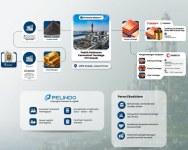
An illustration from PT Antam showing the production of essential raw materials at PT Freeport Indonesia's Copper Concentrate Smelter in Gresik.

One of the products is a copper cathode, which will be further processed at the Brass Mill & Brass Cup Production Line Facility with a capacity of 10,000 tons per year.

1777693941180.png
 

PTDI President Commissioner Reviews Development of Elang Hitam UAV and Production Facilities​

1777696308746.png
Elang Hitam/Black Eagle MALE UCAV


11 March 2025

Bandung, March 11
— PTDI President Commissioner, Air Chief Marshal Mohammad Tonny Harjono, who also serves as Chief of Staff of the Indonesian Air Force (KASAU), together with Deputy Head of BRIN, Vice Admiral (Ret.) Amarulla Octavian, and Head of the KKIP Implementation Team, Lieutenant General (Ret.) Yoedhi Swastanto, conducted a working visit to PT Dirgantara Indonesia (PTDI).

The delegation was received directly at the Final Assembly Line (FAL) Hangar by PTDI President Director Gita Amperiawan, along with the Board of Directors, PTDI Deputy President Commissioner Air Vice Marshal (Ret.) Bonar H. Hutagaol, and PTDI Commissioners Yusron Ihza and Oki Yanuar.

The visit began with a demonstration and presentation on the development progress of the Elang Hitam Medium Altitude Long Endurance (MALE) UAV, which is planned to undergo a flight test in the near future in Kertajati, Majalengka Regency. A presentation was also given on the progress of the Wulung UAV, which is planned to undergo a flight test in Batujajar, Padalarang.

“I am speaking here as PTDI President Commissioner, and also as KASAU. I will support and remain committed to making the Elang Hitam program successful. In addition, just yesterday I also spoke with the Minister of Defense and received direction from the President regarding what our next defense posture will look like. The Minister of Defense even wants to provide CN235 aircraft to each branch of the Army, Navy, and Air Force — 20 aircraft — adjusted to PTDI’s production capability,” said Air Chief Marshal Mohammad Tonny Harjono, President Commissioner of PTDI.

To view this content we will need your consent to set third party cookies.
For more detailed information, see our cookies page.


After the presentation and discussion, the delegation had the opportunity to directly inspect PTDI’s production facilities, starting from the CN235-NC212 FAL Hangar, KFX/IFX Hangar, Aircraft Services (ACS) Hangar, Helicopter Hangar, N219 Hangar, and Detail Part Manufacturing (DPM) Hangar.

Following the working visit, the Board of Directors and Commissioners continued their agenda by holding a Board of Directors and Commissioners Meeting in the GPM Plenary Meeting Room on the 9th floor. The meeting discussed the company’s business development and performance evaluation as part of efforts to improve PTDI’s competitiveness in the national and international aerospace industry.

 
To view this content we will need your consent to set third party cookies.
For more detailed information, see our cookies page.


GMF Company Profile 2025: Beyond Maintenance, Toward Customer Satisfaction​


GMF CEO said recently GMF will expand to Kertajati for its Defense line including Rafale MRO facilities (He said Dassault MRO line). He also said about expansion to Middle East (4 months ago), with current situation there better not come there and focus on Kertajati expansion.

To view this content we will need your consent to set third party cookies.
For more detailed information, see our cookies page.


Vast areas around Kertajati Airport that belongs to Danantara (under Perhutani). Indonesian Aerospace also has big plan in Kertajati and based on latest news has already been given land there.

To view this content we will need your consent to set third party cookies.
For more detailed information, see our cookies page.


Kertajati road access. The airport location is near Indonesian Aerospace head quarter and main production complex as both located in the same province, West Java.

To view this content we will need your consent to set third party cookies.
For more detailed information, see our cookies page.
 

PTDI and Dassault Aviation Inaugurate Design Office to Support the Rafale Program​


PT Dirgantara Indonesia
February 28, 2025


To view this content we will need your consent to set third party cookies.
For more detailed information, see our cookies page.


Bandung, February 28
— PT Dirgantara Indonesia (PTDI) and Dassault Aviation inaugurated the Dassault Aviation–PTDI Design Office on the 4th floor of PTDI’s Directorate of Technology Building in Bandung.

The inauguration was attended by the Director General of Defense Potential at Indonesia’s Ministry of Defense, Major General Piek Budyakto; CEO of PT Dassault Aviation Indonesia, Jerome Puech; PTDI Director of Commerce, Technology & Development, Moh Arif Faisal; PTDI Director of Production, Dena Hendriana; as well as management representatives from PTDI and Dassault Aviation.

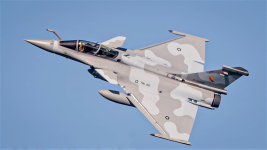
The Design Office facility marks an important milestone in the implementation of the Rafale fighter aircraft procurement and industrialization program in Indonesia. This follows the Indonesian Ministry of Defense’s contract for the procurement of 42 Rafale aircraft, which was signed in stages in September 2022, August 2023, and January 2024.

As part of the Offset and Transfer of Technology (ToT) cooperation, Dassault Aviation is supporting PTDI in the development of Computer Based Training (CBT) for Rafale systems, as well as strengthening competencies in project management, industrialization, and weapon system integration in accordance with Dassault Aviation standards.

1777702570863.png

There are two main areas within the Design Office facility:

First, the CBT facility, which uses interactive diagrams and real-time 3D graphics to provide in-depth training on Rafale aircraft systems, helping improve technical understanding among crews and technicians.

Second, the Weapon Integration Laboratory, which is designed to improve PTDI’s capability in integrating weapon systems into fighter aircraft.

Through this cooperation, PTDI will also acquire Electronic Warfare (EW) technology, which is one of the essential aspects of the global defense industry’s development. This system enables fighter aircraft such as the Rafale to detect, disrupt, and neutralize electronic threats from adversaries, thereby improving survivability and effectiveness in modern combat.

With the acquisition of EW technology at PTDI, Indonesia’s national capability in developing and integrating electronic warfare technology is expected to advance further, supporting the independence of Indonesia’s defense industry in facing global challenges.

Beyond the Offset obligations, PTDI will also be involved in an Engineering Work Package (EWP), which includes the development of Maintenance, Repair & Overhaul (MRO) facilities at PTDI. This will enable fighter aircraft maintenance and repair to be carried out domestically.

PTDI will also participate in a Production Work Package (PWP) to deepen its capability in the production of composite-based components.

PTDI Director of Commerce, Technology & Development, Moh. Arif Faisal, stated:

“We hope that the collaboration between PTDI and Dassault Aviation will not only fulfill the Offset and ToT obligations, but also develop through business-to-business schemes in the fields of engineering and production. This is clear evidence of Dassault Aviation’s commitment to supporting the growth of Indonesia’s aerospace and defense industry.”
In addition to contributing to the Rafale program, Dassault Aviation will also support PTDI in the process of obtaining European Aviation Safety Agency (EASA) certification for the N219 aircraft. This certification is a strategic step for PTDI to expand the N219 market globally, particularly in Europe and in countries that refer to EASA standards.

With its extensive experience in the civil and military aviation industry, Dassault Aviation will assist PTDI in areas such as compliance engineering, safety assessment, flight test preparation, and strengthening aircraft certification capabilities.

This support further confirms Dassault Aviation’s commitment to the development of Indonesia’s national aerospace industry, not only in the defense sector but also in the civil aviation sector.


Danantara Plans 2028 IPO for Clean Energy Arm Denera​


Muhammad Ghafur Fadillah
May 11, 2026 | 10:32 pm


To view this content we will need your consent to set third party cookies.
For more detailed information, see our cookies page.


Jakarta. Sovereign wealth fund Danantara Indonesia is weighing a potential initial public offering for its clean energy unit Daya Energi Bersih Nusantara (Denera) as early as 2028, banking on a multibillion-dollar waste-to-energy rollout to generate stable cash flow and attract investors.

Denera is being developed into one of the world’s largest waste-to-energy operators through the consolidation of 33 waste-processing power projects across Indonesia.

“We want to finish all 33 projects. If we can complete them, God willing, by the end of 2028 we can take this public,” Danantara Chief Investment Officer Pandu Sjahrir said Monday at the Indonesia Stock Exchange in Jakarta.

Pandu said the projects are expected to begin generating cash flow in 2028, creating the conditions for a stock market listing.

“I think this could become a strong catalyst if we eventually list on the Indonesia Stock Exchange,” he said. “The target is 2028 because by then cash flow will have started to form.”

Danantara estimates the combined value of the projects could reach nearly $5 billion, or around Rp 87 trillion.

The sovereign wealth fund established Denera on April 1, 2026, as a holding company for waste-to-energy projects managed by Danantara Investment Management. The move follows Presidential Regulation No. 109/2025, which provides the legal framework for converting waste into renewable energy using environmentally friendly technology.

Indonesia plans to build waste-to-energy facilities across 33 cities to address mounting waste problems and rising energy demand in urban areas. The government sees the program as central to its push for cleaner, more resilient and sustainable cities.

Danantara said the nationwide rollout could generate a tenfold multiplier effect for the economy while creating around 3,500 direct and indirect jobs. Construction on the first batch of projects is scheduled to begin in the third quarter of this year, with the overall rollout targeted for completion by the fourth quarter of 2027.

Chinese companies are emerging as dominant players in the initiative. Danantara recently selected Zhejiang Weiming Environment Protection as the operating partner for the Bogor Raya waste-to-energy project, after appointing the same company for a similar facility in Denpasar last week.

The fund has shortlisted 24 foreign investors to participate in tenders for the first batch of projects, though the first three awards have all gone to Chinese firms.

Under Danantara’s structure, all project developers and operators involved in the waste-to-energy program will fall under Denera’s control. The centralized model is designed to improve efficiency, accelerate technology transfer and increase participation from both domestic and international investors.


New 80-Km Toll Road Planned in Sumatra, Project Estimated at $1.63 Billion​


Ilyas Fadilah

To view this content we will need your consent to set third party cookies.
For more detailed information, see our cookies page.

Hutama Karya Infrastructure


JAKARTA — The Indonesian government plans to build a new toll road in South Sumatra to improve connectivity to Tanjung Carat Port. The project is estimated to require investment of around:

Rp26 trillion (≈ $1.63 billion USD)
Deputy Minister of Investment and Downstreaming/Deputy Head of BKPM Todotua Pasaribu said the project is expected to strengthen logistics connectivity in South Sumatra. Construction of both the toll road and Tanjung Carat Port is targeted to begin this year.

He explained that the new toll road will connect to the existing Trans-Sumatra Toll Road backbone. From the Betung toll gate, a new toll road stretching approximately 80 kilometers will be developed toward Tanjung Carat Port.

In addition, the existing Palembang–Prabumulih toll road will be extended by around 37 kilometers to Muara Enim.

Todotua said the development is intended to improve access to areas with strong natural resource potential.

“The total investment for the toll road development itself is approximately Rp26 trillion (≈ $1.63 billion USD),” he said during a press conference following the signing of an MoU on integrated toll road development toward Tanjung Carat Port on May 13, 2026.
According to Todotua, the toll road and port projects will use a Public-Private Partnership (PPP/KPBU) scheme.

Indonesia’s Ministry of Public Works will support land acquisition, while state-owned construction company Hutama Karya will oversee toll road construction.

Funding support is also expected from Danantara Indonesia, with the government seeking to consolidate financing support from state-owned banks.

Todotua said the project is expected to create significant economic benefits for South Sumatra and nearby regions such as Jambi. The new toll road and port are projected to improve distribution volumes for key commodities including:

  • Coal
  • Coffee
  • Rubber
  • Palm oil
State-owned mining company PT Bukit Asam Tbk is expected to become one of the major users of the infrastructure.

According to Todotua, commodity distribution growth has long been constrained by logistical bottlenecks. The new toll road and port are expected to reduce logistics costs and improve the competitiveness of South Sumatra’s commodities.

Under the project structure, Hutama Karya will lead toll road development, while Pelindo is being prepared as the operator of Tanjung Carat Port.


Danantara Explains Why PT DSI Will Become Indonesia’s Sole Natural Resources Export Gateway​


Sabrina Mulia Rhamadanty

20 May 2026​


To view this content we will need your consent to set third party cookies.
For more detailed information, see our cookies page.


JAKARTADanantara Indonesia has explained the rationale behind the creation of PT Danantara Sumberdaya Indonesia (DSI), which is intended to become the country’s central export manager for strategic natural resource commodities.

According to Danantara Managing Director for Stakeholder Management Rohan Hafas, one of the main reasons for establishing DSI is the government’s concern over widespread under-invoicing practices in Indonesia’s commodity export sector.

Under-invoicing is an illegal practice in which exporters or importers report transaction values below their actual market value, typically to reduce tax liabilities, export duties, or other obligations.

“As the President highlighted earlier, Indonesia experienced Rp15,400 trillion (approximately $962.5 billion USD) in under-invoicing over a 34-year period,” Rohan said at Wisma Danantara in Jakarta on May 20, 2026.
According to Rohan, President Prabowo Subianto stated that Indonesia lost potential state revenue between 1991 and 2024 because export values were frequently reported below their true market prices.

“The state did not receive the taxes it should have collected. Only about 20% was received, while 80% was effectively lost,” he said.
Danantara believes that DSI can help eliminate such practices by ensuring export transactions are conducted transparently and that export-related revenues remain within Indonesia’s financial system.

Rohan also highlighted another concern: transactions conducted between affiliated companies.

According to the government, some exporters sell commodities to related entities abroad at artificially low prices, after which profits are retained overseas rather than repatriated to Indonesia.

“What is even more damaging is when the overseas buyer is affiliated with the seller, and the profits are effectively parked abroad,” Rohan said.
To address these issues, DSI is expected to act as a centralized commodity trader, seller, and price-monitoring institution for key Indonesian export commodities, including:

  • Coal
  • Crude Palm Oil (CPO)
  • Ferroalloys
Previously, Danantara Chief Executive Officer Rosan Roeslani said the establishment of DSI follows a directive from President Prabowo to improve transparency and accountability in Indonesia’s natural resource commodity trade.

“We have established PT Danantara Sumber Daya Indonesia. The primary objective is to strengthen transaction transparency,” Rosan said during a press conference on Indonesia’s 2027 Macroeconomic Framework and Fiscal Policy Guidelines.
The government believes that export value manipulation has affected several strategic commodities for many years, reducing tax revenues, royalty payments, and foreign exchange earnings.

Under the new framework, DSI will oversee:

  • Export shipment volumes
  • Export pricing
  • Commodity delivery mechanisms to international markets
The first phase of implementation is scheduled to begin in June 2026.

During this initial phase, exporters will be required to report all natural resource commodity export transactions comprehensively to DSI. The government will then evaluate whether export prices are consistent with international market benchmarks and fair market values.

Officials expect the system to improve efficiency, increase transparency, and strengthen oversight of Indonesia’s commodity export sector.

Source: Bloomberg Technoz
 

Danantara to Become Sole Buyer of Strategic Export Commodities Starting in 2027​


Lisa Monica, Dhika Priambodo
21 Mei 2026


To view this content we will need your consent to set third party cookies.
For more detailed information, see our cookies page.

Danantara CEO, CIO, and COO during the launch in 2025


JAKARTADanantara Indonesia plans to transform PT Danantara Sumber Daya Indonesia (DSI) into the sole buyer of selected strategic export commodities beginning in January 2027, as part of a broader effort to improve export governance, increase foreign exchange earnings, and eliminate under-invoicing practices.

According to Danantara Chief Executive Officer Rosan Roeslani, DSI was established to address revenue losses caused by under-invoicing, a practice in which exporters report transaction values below actual market prices.

Such practices reduce tax collections and often allow export proceeds to remain overseas rather than entering Indonesia’s domestic financial system.

“This is aligned with OECD principles, where we want to uphold governance, transparency, and accountability so that there is no longer any potential for illicit financial flows,” Rosan said during a press conference at the Indonesian Parliament complex on May 20, 2026.

Two-Phase Implementation​

Rosan explained that DSI will operate in two stages.

Phase One: June–December 2026​

Beginning June 1, 2026, DSI will function primarily as:

  • An invoice verification authority
  • An intermediary between Indonesian exporters and international buyers
  • A monitoring platform for commodity transactions
During this period, exporters will continue selling directly to overseas customers, while DSI oversees pricing transparency and reporting compliance.

Phase Two: Starting January 2027​

Beginning in January 2027, DSI is expected to become the direct purchaser and exporter of selected strategic commodities.

Under this model, Indonesian producers would sell their commodities to DSI, which would then handle international sales.

“What we are trying to do is reduce it as much as possible—zero under-invoicing, zero transfer pricing,” Rosan said.

Strategic Commodities Targeted​

Danantara Chief Investment Officer Pandu Patria Sjahrir stated that the initiative was mandated directly by President Prabowo Subianto to strengthen Indonesia’s export governance system.

Initially, DSI will focus on three major export commodities:

  • Coal
  • Crude Palm Oil (CPO)
  • Ferroalloys
The company is also expected to improve management of export proceeds, which the government believes have not fully benefited Indonesia’s economy because significant funds remain overseas.

According to Pandu, DSI will serve as a centralized platform for export data consolidation, trade governance, and commodity transaction monitoring.

“This is one platform with multiple benefits. What we want is that if the world benefits, Indonesia should benefit even more,” he said.

Industry Concerns​

Not everyone is convinced the transition will be straightforward.

One mining industry executive, speaking separately, raised two major concerns.

Working Capital Requirements​

Indonesia exports approximately 555 million tons of coal annually, with an estimated market value of around US$31 billion per year.

A sole buyer would need substantial working capital to pay producers while awaiting payment from overseas customers.

“That financing gap alone could amount to tens of billions of dollars. Danantara is a newly established institution and does not yet have a proven operational treasury track record at this scale,” the executive said.

Commodity Blending Capability​

The executive also noted that Indonesian coal varies significantly in calorific value and quality.

Major buyers in China, India, and Japan often require customized specifications, making coal blending a critical part of the export process.

“Coal blending is not simply mixing products together. It requires physical infrastructure, technical expertise, and long-term terminal contracts. This is not a capability that can be built in six months.”
The executive added that any entity controlling exports of coal, CPO, ferroalloys, and other strategic commodities would effectively oversee commodity flows worth tens of billions of dollars annually.

“This represents an extraordinarily large concentration of economic power.”

Strategic Significance​

If implemented as planned, DSI would become one of the most influential state-owned trading entities in Indonesia, overseeing a substantial portion of the country's natural resource exports.

Supporters argue the system could improve transparency, reduce tax leakage, strengthen foreign exchange inflows, and enhance oversight of strategic commodity trade. Critics, however, question whether the operational, financial, and logistical requirements can be met within the proposed timeline.

Source: Investor Daily (DK)
 

Semen Indonesia Group Cuts Subsidiaries from 40 to 12 in Major Restructuring Drive​


Romys Binekasri

21 May 2026


To view this content we will need your consent to set third party cookies.
For more detailed information, see our cookies page.


JAKARTASemen Indonesia Group (SIG) is undertaking a major corporate restructuring program that will reduce the number of its business entities from 40 subsidiaries to just 12 core entities.

The streamlining initiative is being overseen by Indonesia’s Badan Pengaturan BUMN as part of a broader state-owned enterprise transformation agenda aimed at improving efficiency, strengthening competitiveness, and sharpening focus on strategic business lines.

According to Dony Oskaria, who also serves within the state-owned enterprise restructuring framework under Danantara Indonesia, the restructuring program has now entered its execution phase in the second quarter of 2026.

The consolidation is intended to improve operational efficiency, simplify corporate structures, and strengthen SIG’s competitiveness amid economic challenges and global industry dynamics.

“State-owned enterprise transformation must be directed toward creating more efficient business structures, focusing on core businesses, and generating greater added value for the country and society,” Dony said in a statement released on May 21, 2026.

Strategic Consolidation Measures​

As part of the transformation process, SIG is implementing several strategic initiatives, including:

  • Merging distribution and building materials entities
  • Consolidating logistics operations
  • Integrating industrial estate businesses into the Danantara ecosystem
  • Divesting and liquidating non-strategic entities
The company aims to create a leaner and more effective organizational structure capable of supporting faster and more measurable business decision-making.

Beyond operational efficiency, SIG stated that the restructuring process is being conducted under prudent corporate governance principles.

The company is coordinating with independent advisors and public accounting firms while carrying out due diligence processes to ensure transparency and accountability throughout the transformation.

The restructuring reflects broader efforts by the Indonesian government to modernize state-owned enterprises and improve their financial and operational performance.

For SIG, the transformation is expected to strengthen the company’s ability to respond to future challenges in Indonesia’s construction and infrastructure sectors while enhancing its contribution to national development.

Source: CNBC Indonesia (mkh/mkh)
 

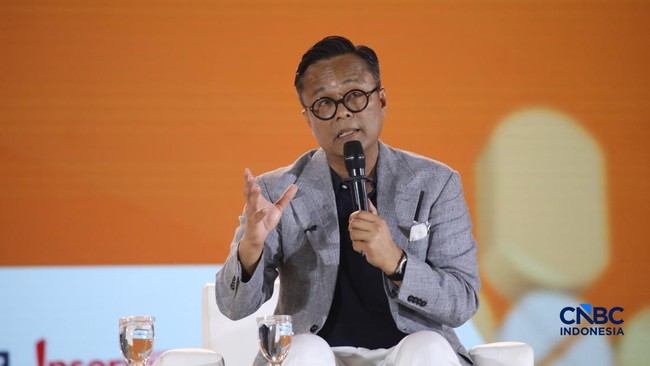
Dony Oskaria: State-Owned Enterprises Can Now Support One Another Instead of Operating Independently​


Mae & Chandra

To view this content we will need your consent to set third party cookies.
For more detailed information, see our cookies page.

Danantara CEO, CIO, and COO during the launch in 2025


YOGYAKARTADony Oskaria says Indonesia's state-owned enterprises (SOEs) are entering a new era of integration under Danantara Indonesia, allowing companies to support one another rather than operating independently.

Speaking at the Jogja Financial Festival in Yogyakarta on May 23, 2026, Dony explained that prior to the establishment of Danantara, SOEs largely operated on a standalone basis, making it difficult for stronger companies to assist those facing financial or operational challenges.

He noted that many Indonesians mistakenly assume the Ministry of State-Owned Enterprises directly owns SOEs.

“In reality, the Ministry of State-Owned Enterprises is not the owner of these companies. It only exercises management authority over them,” Dony said.
According to Dony, the fragmented structure often left troubled SOEs without an effective mechanism for support, restructuring, or recovery.

He cited PT INTI, Jakarta Lloyd, and Krakatau Steel as examples of companies that have experienced significant business pressures in recent years.

To address these challenges, the government established Danantara as a sovereign wealth fund built around the consolidation of state-owned enterprises.

Unlike many sovereign wealth funds that primarily manage financial assets, Danantara integrates major SOEs under a broader holding structure designed to improve coordination, strengthen governance, facilitate restructuring, and optimize capital allocation.

“Now Bank Mandiri, BRI, Krakatau Steel, Garuda, Pertamina, and PLN are effectively part of one holding structure. This makes it much easier for us to carry out corporate rehabilitation and restructuring efforts,” Dony said.
The integrated model is expected to strengthen asset management, improve efficiency, and enhance the long-term health of Indonesia’s state-owned sector.

Dony also rejected the perception that SOEs are a burden on the state, arguing that they make substantial contributions to government revenue through taxes and dividends.

According to him, state-owned enterprises contribute nearly one-third of Indonesia’s state budget revenues through tax payments and dividend distributions.

In the first quarter of 2026 alone, SOEs reportedly paid approximately Rp215 trillion (about $13.4 billion USD) in taxes.

Dony added that total SOE net profit is estimated to reach:

  • Rp335 trillion (approximately $20.9 billion USD) in 2025
  • Rp360 trillion (approximately $22.5 billion USD) in 2026
He also expressed hope that combined SOE net profit could eventually rise to Rp450 trillion (approximately $28.1 billion USD).

According to Dony, these figures demonstrate that state-owned enterprises remain a major contributor to Indonesia’s economy and fiscal revenues.

He emphasized that a more integrated SOE ecosystem under Danantara is expected not only to strengthen the financial performance of state-owned companies but also to accelerate economic growth, attract investment, and create new employment opportunities for Indonesia’s younger generation.

Source: CNBC Indonesia (Mae & Chandra)


DEFEND ID Reports Strong 2025 Performance and Reinforces Strategic Technology Development Agenda​


1780288927701.png

BANDUNG — Indonesia’s state-owned defense holding company DEFEND ID held its 2025 Annual General Meeting of Shareholders (AGM) on May 26, 2026, reaffirming its commitment to strengthening Indonesia’s defense industrial base and advancing mastery of strategic future technologies.

The AGM was attended by representatives from the State-Owned Enterprises Supervisory Agency (BP BUMN), PT Danantara Asset Management, the Board of Commissioners, Board of Directors, and other stakeholders as part of the company’s commitment to transparent and accountable corporate governance.

As Indonesia’s defense industry holding company, DEFEND ID integrates capabilities across land, naval, air, ammunition, and defense electronics sectors to support the development of an independent national defense industry.

To view this content we will need your consent to set third party cookies.
For more detailed information, see our cookies page.


Strong Contract and Financial Performance​

During 2025, DEFEND ID recorded total contracts worth Rp113.85 trillion (approximately $7.12 billion USD).

The figure consisted of:

  • Rp94.78 trillion ($5.92 billion USD) in carry-over contracts
  • Rp19.07 trillion ($1.19 billion USD) in new contracts
According to the company, the results reflect both the continuity of major national strategic projects and continued confidence from customers and partners in DEFEND ID's capabilities.

From an operational perspective, DEFEND ID generated:

  • Revenue of Rp20.71 trillion (approximately $1.29 billion USD)
  • Consolidated net profit of Rp913.05 billion (approximately $57.1 million USD)
Net profit increased by 430.1% compared with Rp172.24 billion ($10.8 million USD) recorded in 2024.

The company attributed the improvement to stronger operational efficiency, improved business performance, and more effective management of strategic projects across its subsidiaries.

1780289043916.png

Assets and Equity Continue to Grow​

DEFEND ID's balance sheet also strengthened during 2025.

Total assets reached:

  • Rp66.05 trillion (approximately $4.13 billion USD)
representing growth of 18.3% year-on-year.

Meanwhile, total equity increased to:

  • Rp15.23 trillion (approximately $952 million USD)
up 8.2% from the previous year.

The company said the increase reflects a stronger financial structure and enhanced business capacity.

In addition, DEFEND ID maintained a BBB+ corporate health rating, indicating a healthy business condition and positive long-term growth prospects.

To view this content we will need your consent to set third party cookies.
For more detailed information, see our cookies page.


More Than 11,000 Employees Supporting Defense Manufacturing​

DEFEND ID currently employs 11,022 personnel, with more than 60% working in production and engineering functions.

The workforce composition highlights the group's emphasis on manufacturing capability and technological expertise as key pillars of Indonesia's defense industrial development.

Focus on Future Strategic Technologies​

During the meeting, PT Len Industri, the parent company of DEFEND ID, reaffirmed its commitment to developing future strategic technologies through its "Asta Cita Len Industri" technology roadmap.

The program focuses on several priority areas:

  • Artificial Intelligence (AI)
  • Semiconductors
  • Command and Control Systems
  • Radar and Electronic Warfare Systems
  • Cybersecurity
  • Satellite Technology
  • Electro-Optical and Sensor Technologies
  • Autonomous Systems
President Director of PT Len Industri and DEFEND ID, Joga Dharma Setiawan, said the company's 2025 achievements provide a strong foundation for strengthening Indonesia's strategic technology capabilities.

“The positive performance achieved in 2025 is the result of business transformation, stronger defense industry ecosystem synergies, and the commitment of all employees to advancing national technological independence. Through Asta Cita Len Industri, we continue strengthening our mastery of future technologies to enhance national industrial competitiveness and support national resilience,” Joga said.

Strengthening National Defense Industrial Independence​

Through the 2025 AGM, DEFEND ID reiterated its commitment to:

  • Strengthening Indonesia's defense industrial independence
  • Delivering sustainable business growth
  • Enhancing corporate governance
  • Accelerating mastery of strategic technologies
  • Building a modern, self-reliant, and globally competitive defense industry
The results underscore DEFEND ID's growing role not only as Indonesia's primary defense manufacturing group but also as a key vehicle for developing advanced technologies considered critical to the country's long-term security and industrial competitiveness.

Source: DEFEND ID, Annual General Meeting 2025
 
Defense Industry 2025 Financial Report

1. PT Pindad net profit increase 102 % in 2025
2. Indonesian Aerospace/PTDI net profit increases at 346 %
3. PT PAL net profit increases at 108 %
4. PT Dahana net profit increases at 1.6 %

To view this content we will need your consent to set third party cookies.
For more detailed information, see our cookies page.

To view this content we will need your consent to set third party cookies.
For more detailed information, see our cookies page.


Users who are viewing this thread

Pakistan Defence Latest

Back
Top