If not because of war of revolution, Indonesia is very likely not united and separated between many Sultanates (Kingdomship like Malaysia/Brunei) - as Indonesian Islands are actually controlled by Dutch with cooperation of many Sultanates - if it is handed peacefully like happening in many countries
The only Sultanate that still has power in Indonesia is only in Jogjakarta, and it still has power in Jogjakarta because it is the only Sultanate that sided with Revolution during War of Independence
Jogjakarta Province in Central Java is ruled by Sultanate. No local election there, Governor is picked within and by the Sultan families
=======================
Kings from Outside Java in the Java War
By Petrik Matanasi |
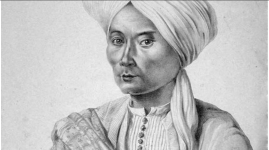 Prince Diponegoro
During the Dutch colonial period, making peace or cooperating with the rulers of the Dutch East Indies was not uncommon among local nobles or community leaders who chose not to oppose the colonial government. This cooperation took many forms, including becoming military allies in times of war. One notable example was the
Java War (1825–1830), when the
Dutch military sought reinforcements to confront
Prince Diponegoro.
When the Java War broke out, the rulers of the
four Mataram courts in
Surakarta and
Yogyakarta could not openly side with Diponegoro. The Dutch demanded that they provide troops to fight Diponegoro’s followers, and these requests had to be obeyed. The
Pakualaman Legion from Yogyakarta and the
Mangkunegaran Legion from Surakarta became part of the auxiliary troops (
Hulptroepen) from Java — meaning, tragically, they fought against fellow Javanese.
When Dutch forces under
Captain Roeps attacked Diponegoro’s followers led by
Djojo-Mongolo (Joyo Menggolo) in the hills east of Yogyakarta, the Dutch army included the
Mangkunegaran Legion and the
Sumenep Regiment.
“Unarmed except for his kris, the brave Javanese sergeant Soerio-Dento climbed the giant tree by its roots, and others followed his example enthusiastically, though many tried in vain and fell down the steep slope,” wrote A.G. van Poelje in Nederlanders in Indië.
The
Sumenep Regiment was an auxiliary force from
Madura, forming part of the
Madura Corps.
Beyond Java and Madura, there were also auxiliary troops from
North Sulawesi and
North Maluku. From
Minahasa, the
Resident of Manado, Daniel Francois Willem Pietermaat, persuaded tribal leaders to form the
Tulungan Troops.
“They departed by sea for Java on March 29, 1829,” wrote Jessy Wenas in Sejarah dan Kebudayaan Minahasa (History and Culture of Minahasa).
The
Tulungan Troops were commanded by
Herman Dotulong, who held the rank of
major, with several captains from major districts in Minahasa serving under him. One of them was
Captain Benjamin Thomas Sigar, a prominent figure whose grave in
Langowan was later visited by
Prabowo Subianto before he became President of Indonesia.
The
Tulungan Troops enjoyed great prestige. According to
Het Nieuws van den Dag voor Nederlandsch-Indië (September 6, 1939),
Diponegoro reportedly wished to surrender only to the Tulungan Troops. However, what actually happened was that Diponegoro was
captured during a visit to
General de Kock in
Magelang.
From
Gorontalo, which at that time was still part of the
Manado Residency under Pietermaat, more auxiliary troops were sent. In the 19th century, local leaders in
North Sulawesi and
Maluku were generally persuaded to ally with the Dutch without direct conflict, leading these regions to be regarded as loyal partners of the colonial administration.
“The people of Gorontalo and Manado are very loyal to the Dutch. Among the nations of the Indonesian archipelago, they are far from the most uncivilized; they are open in nature and generally known for their fighting spirit,” wrote Hendrik Merkus de Kock and August Wilhelm Philip Weitzel in De Oorlog op Java van 1825 tot 1830.
The
Gorontalo troops were led by
Hassan Monwarfa, the eldest son of the
King of Gorontalo.
From
Southeast Sulawesi, the
Dutch also received support from the Sultan of Buton, who sent his brother,
Raja Hadji Suleiman, holding the rank of
major, along with
700 men.
“(The Sultan of Buton) sent his brother, Raja Hadji Suleiman, ranked major, leading 700 of his people,” wrote de Kock and Weitzel.
They were transported by ship to
Semarang, arriving on
August 1, 1828, before being sent to the battlefield.
“The Butonese are dark brown-skinned, small in stature, and fierce-looking; they are said to be ambitious and, when insulted, bloodthirsty. They were sent to Bagelen, where, armed with spears, axes, or rifles, they performed excellently as light infantry,” noted de Kock and Weitzel.
The
Sultan of Tidore also sent
285 troops, most of whom were
Alfur (Alifuru) warriors from Maluku. They landed in
Semarang on
August 9, 1828, armed with
bows, arrows, spears, swords, shields, and rifles. Many of them were known as skilled marksmen and fought bravely in close combat.
Tidore’s rival, the
Sultan of Ternate, likewise dispatched
502 troops under
Koelabath,
Ahkim Senghadji, and
Adipati Agung Ternate Sabtoe (ranked major). They arrived in
Semarang on
June 24, 1828, and also included Alfur warriors.
“They were strong and muscular men who wore no clothing except a bark loincloth and a cloth on their heads. They were assigned to the 2nd column under Captain Ten Have and stood out particularly as light infantry. Though fierce in appearance, they were kind-hearted, easily adapted to military discipline, and proved themselves in battle,” recorded de Kock and Weitzel.
These
auxiliary troops, who fought alongside
Dutch forces under General de Kock, were
paid by the colonial government. Their pay varied by rank and the number of men they commanded.
According to de Kock and Weitzel:
- The Major of Buton received 500 guilders, while the Ternate and Tidore commanders were paid 300 guilders.
- Captains commanding around 100 men, whether from Buton or Ternate–Tidore, earned 115 guilders.
- Lieutenants leading 20–40 men received 20–40 guilders.
- Assistant lieutenants earned 8 guilders.
- Ordinary riflemen received 5–6 guilders, while spear bearers earned only 2 guilders.


/data/photo/2024/11/06/672b66902d1c8.jpg)