Indonesian Democracy and Islamic Ethics

Status
Not open for further replies.

Fourteen Indonesian Economic Ministers Resign Simultaneously


MFakhriansyah, CNBC Indonesia
31 January 2026 16:15


1769862804999.png


Key Points / Important Takeaways
  • 📉 On May 20, 1998, 14 Indonesian ministers—mostly from the economic sector—resigned simultaneously.
  • đŸ’„ The resignations occurred amid the Asian financial crisis, marked by currency collapse, inflation, and banking instability.
  • đŸ›ïž The decision followed a critical meeting at Bappenas, led by Ginandjar Kartasasmita.
  • ⚠ Ministers concluded that Indonesia risked total economic and political collapse without a viable exit strategy.
  • ✋ Only one minister dissented from the collective assessment.
  • đŸ§Ÿ The ministers stated that forming a new cabinet would not solve the crisis.
  • 🔔 The resignations signaled the collapse of elite economic support for President Soeharto.
  • 📚 Historical accounts confirm Soeharto was caught off guard and attempted damage control.
  • 🏁 On May 21, 1998, Soeharto resigned, ending his 32-year rule.

JAKARTA – The resignation of state officials within a short period is not new in Indonesia. History records a moment when resignations involved not just one or two officials, but occurred simultaneously, involving 14 ministers, most of whom were from the economic sector.

The event took place on May 20, 1998, amid the Asian financial crisis that devastated Indonesia’s economic foundations. The rupiah collapsed, inflation surged, the banking sector faltered, and public trust in the government was nearly exhausted. On that day, the Coordinating Minister for Economic, Financial, and Industrial Affairs, Ginandjar Kartasasmita, led a meeting of economic ministers at the Bappenas Building in Jakarta.

This was no routine meeting. In his book Managing Indonesia's Transformation (2013), Ginandjar recalled that the discussion was a continuation of intense conversations that had begun earlier that morning with fellow ministers, journalists, and business figures. All focused on the same conclusion: Indonesia was heading toward an economic and political abyss with no clear roadmap out.

At the Bappenas forum, Ginandjar laid out the national economic conditions candidly. His conclusion was firm: if left unchecked, Indonesia risked collapse. Nearly all ministers present agreed. Only one expressed objection—then Minister of Agrarian Affairs and Head of the National Land Agency (BPN), Ary Mardjono.

From this collective realization, a historic decision was made. Ginandjar announced his intention to resign from Cabinet Pembangunan VII, which had been inaugurated by President Soeharto just four days earlier. His decision did not stand alone. One by one, other ministers declared the same stance.

That day, 14 ministers agreed to step down:
Akbar Tandjung, A.M. Hendropriyono, Giri Suseno Hadihardjono, Haryanto Dhanutirto, Ginandjar Kartasasmita, Kuntoro Mangkusubroto, Justika Baharsjah, Rachmadil Bambang Sumadhijo, Rahardi Ramelan, Subiakto Tjarawerdaya, Sanyoto Sastrowardoyo, Sumahadi, Theo L. Sambuaga, and Tanri Abeng.

In a joint statement, they asserted that forming a new cabinet would not resolve the root causes of the crisis. The declaration dealt a severe blow to Soeharto—not only administratively, but symbolically—signaling that the economic elite had lost confidence in his leadership.

Historian Robert Edward Elson, in Soeharto: A Political Biography, noted that Soeharto was shocked and deeply shaken. The ministers’ move fell outside the power scenario he had prepared. At the time, Soeharto still planned to announce a Reform Cabinet on May 21, 1998, in an attempt to salvage legitimacy.

Efforts were made to halt the wave of resignations. Vice President B. J. Habibie, in his book Detik-detik yang Menentukan, revealed that he had personally asked the ministers to remain. However, the decision was final.

Having lost the support of key ministers and political elites, Soeharto ultimately chose to end his rule. On May 21, 1998, one day after the mass resignation, he formally resigned as President of the Republic of Indonesia.


Prabowo’s Approval Nears 80%, Surpassing Jokowi and SBY: Survey​


Antara
February 8, 2026 | 5:53 pm


To view this content we will need your consent to set third party cookies.
For more detailed information, see our cookies page.

Prabowo, Jokowi, and SBY are walking together, three of them are now support current administration


Jakarta. Public satisfaction with President Prabowo Subianto has climbed to nearly 80%, surpassing approval levels recorded by his two predecessors, Joko "Jokowi" Widodo and Susilo Bambang Yudhoyono (SBY), according to a new national survey released on Sunday.


The poll, conducted by Indikator Politik Indonesia between Jan. 15 and 21, 2026, surveyed 1,220 respondents and found Prabowo’s approval rating at 79.9%.


“Overall, the figure is not significantly different from President Prabowo’s approval rating between January 2025 and January 2026,” said IPI founder and lead researcher Burhanuddin Muhtadi during a press briefing in Jakarta.

Among respondents, 13% said they were very satisfied with Prabowo’s performance, while 66.9% said they were satisfied. Meanwhile, 17.1% reported being less satisfied, and 2.2% said they were not satisfied at all. Only 0.8% declined to answer or said they did not know.

Burhanuddin described the approval level as high for a president early in his term, noting that it exceeded satisfaction ratings recorded for SBY in 2004 and Jokowi in 2014.


“President Prabowo’s approval is higher because he is not relying solely on his own electoral base, but also on support inherited from President Jokowi,” Burhanuddin said. During the 2024 presidential election, Jokowi openly backed Prabowo by allowing his son, Gibran Rakabuming Raka, to run as Prabowo’s vice-presidential candidate.


The strongest support for Prabowo was reported among Generation Z voters — those born between 1997 and 2012 — with around 71% of respondents in this age group backing the president. Satisfaction levels among Gen Z have remained consistent, Burhanuddin added.

Respondents cited several key reasons for their approval, including anti-corruption efforts (17.5%), expanded social assistance for low-income households (15.6%), positive assessments of government programs (11%), and visible early results from policy implementation (10.5%).


The survey was conducted through face-to-face interviews, with a 95% confidence level and a margin of error of ±2.9%.

 
The biggest opponent for Prabowo in 2029 Presidential Election is Anies Baswedan. We should see whether Prabowo will continue or replaced by him in 2029.

Anies Baswedan was second after Prabowo in 2024 Presidential Election.

To view this content we will need your consent to set third party cookies.
For more detailed information, see our cookies page.
 
Indonesia has seized five million hectares of palm oil plantations, task force says

By Bernadette Christina / Reuters


To view this content we will need your consent to set third party cookies.
For more detailed information, see our cookies page.

Karian Dam, Banten, Java Island


JAKARTA (March 2): Indonesia has seized five million hectares of palm oil plantations and industrial forest concessions that have been accused of legal violations, with more than 100 companies fined, a spokesperson with the country's forestry task force said on Monday.

Last year, the forestry task force, which comprises the military, the police and state prosecutors, took over 4.1 million hectares said to be operating illegally in forest areas, targeting major palm oil companies and smallholder farmers alike.

The task force has so far collected 7.39 trillion rupiah (US$438.45 million or RM1.7 billion) from 51 palm oil companies, task force spokesperson Barita Simanjuntak told a press conference.

Another 20 companies have already agreed to pay a total 2.78 trillion rupiah in fines, while 34 others have filed objections. The financial penalties imposed on other firms were still being calculated.

Some of the firms are contesting the fines because they say authorities have overestimated the amount of land involved, while others simply don't have the means to pay, said Simanjuntak.

Others claim that their permits are in order, but they have been found to overlap with other concessions, he said.Indonesian government agencies have often issued different permits for the same plot of land.

"Of course we will make checks," Simanjuntak said.

Attorney General Sanitiar Burhanuddin said in December the government could collect US$6.5 billion in fines from palm oil companies implicated in last year's seizure.

The government has handed over 1.7 million hectares of the seized plantations to state firm Agrinas Palma Nusantara, he added, while more than 770,000 hectares have been transferred to the environment and forestry ministries.

Uploaded by Magessan Varatharaja


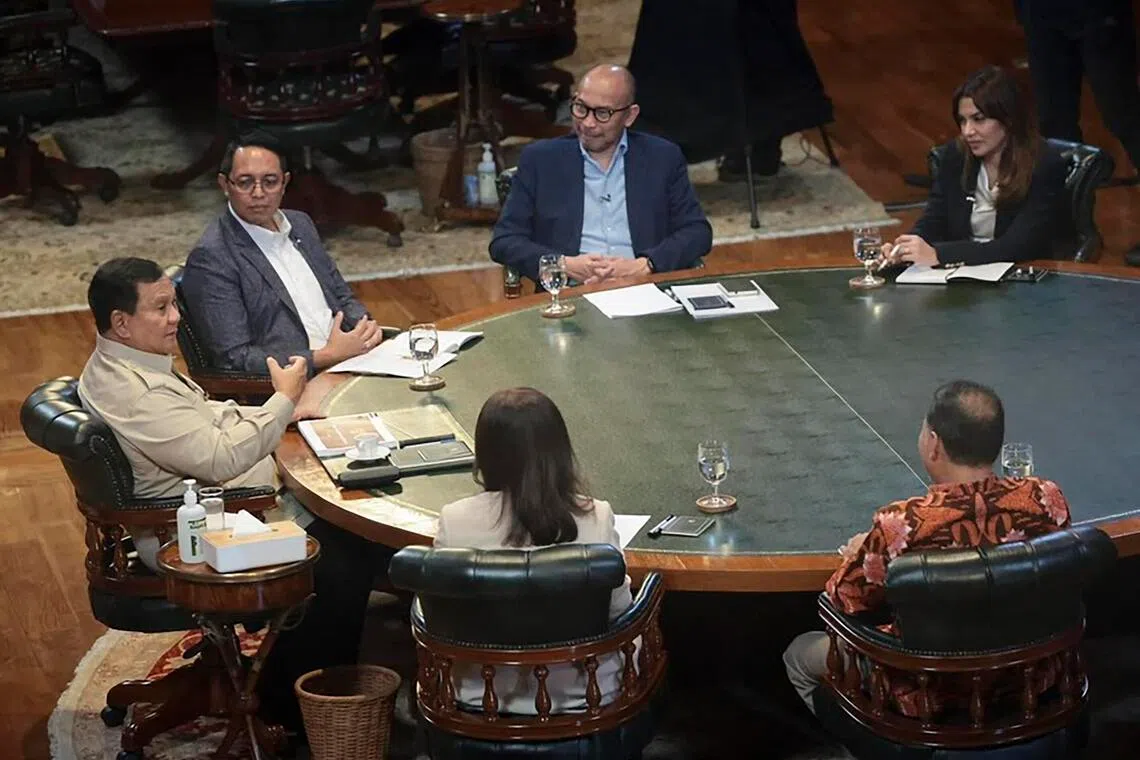
Testing ideas, absorbing criticism: Prabowo defends policy decisions in 6-hour roundtable discussion​


1774456460399.png
Indonesian President Prabowo (left) holds a discussion on March 17 on his policy agenda with experts and senior journalists in his private residence in Hambalang, West Java. PHOTO: PRESIDENREPUBLIKINDONESIA/INSTAGRAM

  • President Prabowo defended his Free Nutritious Meal programme (MBG), costing 335 trillion rupiah, citing the need to combat stunting and malnutrition in children.
  • He clarified Indonesia's participation in Mr Donald Trump's Board of Peace, stating it allows influence for a two-state solution but Indonesia retains the right to withdraw.
  • The roundtable has drawn praise from observers who welcome the rare openness of the discussions.
Published Mar 25, 2026, 05:21 PM

JAKARTA – In a rare roundtable discussion that stretched for hours, Indonesian President Prabowo Subianto took the opportunity to directly defend his signature free-meal programme and the country’s participation in US President Donald Trump’s Board of Peace (BOP), taking an approach that analysts said is unprecedented for his administration.

The six guests – including prominent economists, a political analyst, a popular YouTube podcast host and senior journalists – were invited to freely question and criticise the administration’s broader policy agenda.

Setting the tone at the start of the session, the 74-year-old President said: “Go ahead, ask me anything.”

The marathon discussion lasted over six hours, and a complete recording was released on YouTube on March 19 and 20, offering a glimpse into the administration’s line of thinking.

The discussion covered a sweeping range of pressing topics, including the massive budget allocations for the Free Nutritious Meal (MBG) programme, Indonesia’s controversial decision to join the BOP, and the overarching strategies to boost its economic growth to 8 per cent before Mr Prabowo’s term ends in 2029.

To view this content we will need your consent to set third party cookies.
For more detailed information, see our cookies page.


Free meals and BOP​

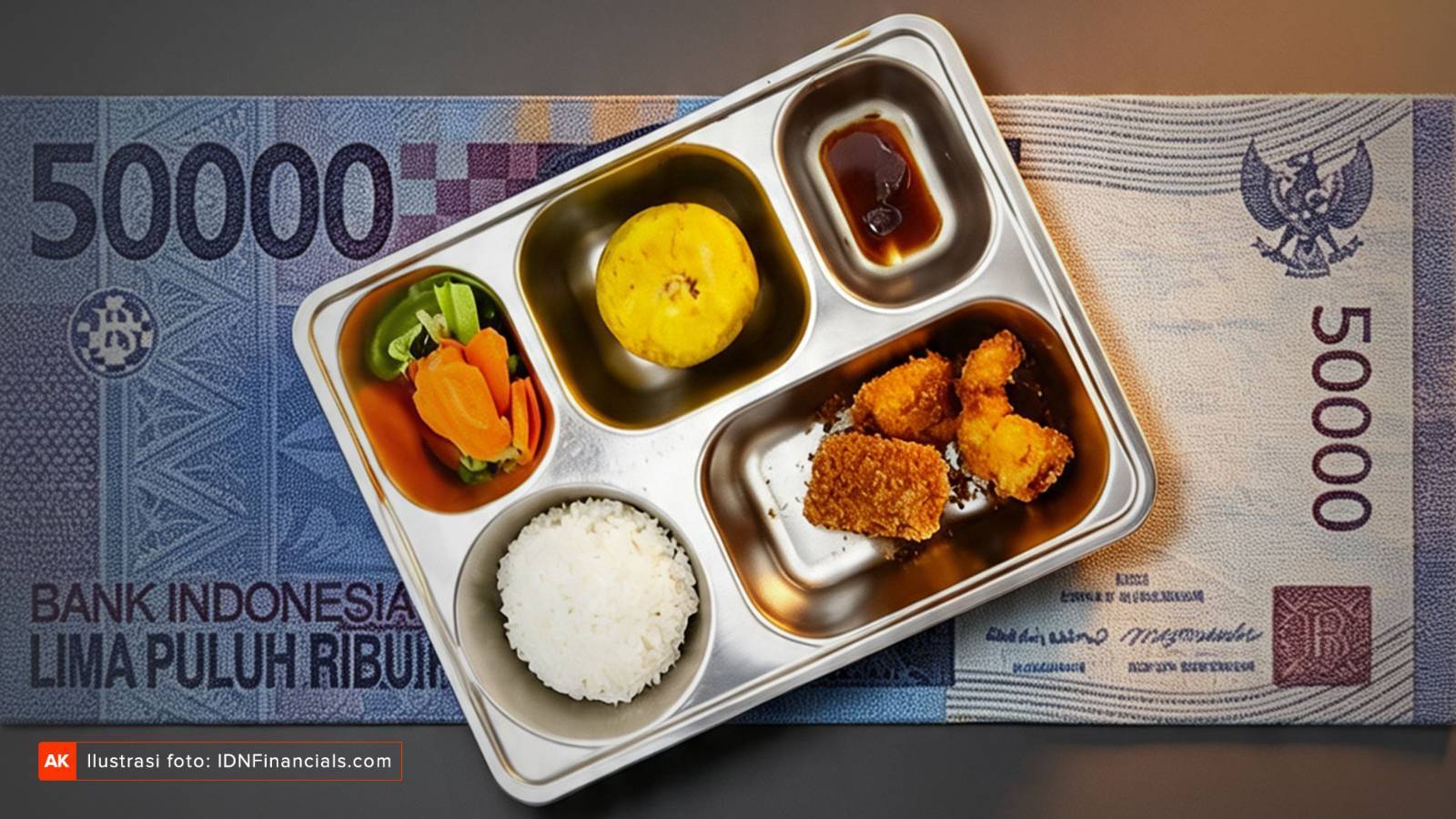
Among the most heavily scrutinised subjects was whether the government would review or scale back its MBG programme, especially since the energy crisis sparked by the Middle East conflict is expected to add pressures to state coffers. The MBG programme is set to feed 83 million people at a cost of 335 trillion rupiah (S$25.3 billion) in 2026.

“As much as I can, I will defend MBG,” Mr Prabowo said in response. “Look at the children who have stunting in those rural areas. I witnessed it myself during my campaign trails; an 11-year-old kid can have the weight of a four-year-old. I am quite sure with the MBG, we are doing the right thing.”

Critics also raised concerns about MBG kitchens being run by third-party private entrepreneurs. They pointed out instances of corners being cut that severely degraded the quality of the food delivered to children, as well as hygiene problems that have occasionally resulted in food poisoning.

Acknowledging the flaws, Mr Prabowo said the government has already shut down more than 1,000 substandard kitchens out of 25,000, and will strictly monitor operators to ensure they comply with standard operating procedures.

Pivoting to international affairs, Mr Prabowo clarified that Indonesia retains the right to withdraw from the BOP if it ultimately fails to bring tangible benefits to the Palestinian people or Indonesia.

He stressed that joining the BOP is a calculated, strategic move that aligns with the broader, eventual goal of establishing a two-state solution.

“If we are in the BOP, we can exert influence and help the Palestinian people. If we are outside it, we cannot struggle for them. We eventually made a final decision to join,” Mr Prabowo said.

“We want to guard the civilians from any possible attack from anywhere,” he added, outlining Indonesia’s intention to contribute up to 8,000 troops to Gaza to help maintain regional peace.

To view this content we will need your consent to set third party cookies.
For more detailed information, see our cookies page.


Addressing economic growth plans​

On the administration’s lofty economic goals, former finance minister Chatib Basri expressed doubts that Indonesia can grow at 8 per cent by 2029, from a trend rate of about 5 per cent.

To reach this goal, Mr Prabowo is planning to boost economic growth through the MBG programme, which would create jobs and require local sourcing, and the building of millions of homes for low-income households.

However, Dr Chatib, an economist, argued that Indonesia suffers from a stubbornly high incremental capital output ratio. In other words, a higher level of investment is needed to produce a unit of economic growth in Indonesia, underscoring the lack of highly developed human capital and systemic bottlenecks.

Addressing this criticism, Mr Prabowo said the government has increased its focus on education to build the required human capital. He pointed to consistent improvements in physical infrastructure, noting that the government is actively distributing digital interactive flat panels to 289,000 schools across Indonesia, many of which are in remote areas.

“The interest to learn mathematics has jumped among students in remote schools because of this,” Mr Prabowo noted. He added that the government completed the renovation of 17,000 school buildings in 2025 and plans to significantly scale that up to 70,000 in 2026.
 
One extraordinary things about Indonesian politics is the divide between elites are not deep, this is why in Indonesia making the new government with strong parliamentary support is not as difficult as in other countries.

This for example, Prabowo son, Didit, is able to have good relationship with the opposition elite family (Megawati Soekarno putri family) and also strengthen closeness with other elite families (SBY family-former President, and GusDur family - former President with strong NU / Nahdatul Ulama heritage)

To view this content we will need your consent to set third party cookies.
For more detailed information, see our cookies page.


Didit with Anies Baswedan and his families during Idul Fitri Praying. Anies is in second position in 2024 Presidential election and still the most threat to Prabowo for upcoming 2029 Presidential election.

To view this content we will need your consent to set third party cookies.
For more detailed information, see our cookies page.
 

Indonesia passes law to protect millions of domestic workers​

New law secures domestic workers’ rest, insurance, and training rights while banning wage deductions

Published Tue, Apr 21, 2026 · 05:16 PM

1777039243278.png
For decades, Indonesia’s five million domestic workers have served as the invisible backbone of the economy. PHOTO: REUTERS


[JAKARTA] Indonesian lawmakers passed a long-awaited Bill to protect the country’s millions of domestic workers, concluding years of parliamentary debate over labour rights in South-east Asia’s largest economy.

The legislation secures rights to rest days, health insurance, pensions, and professional training for domestic workers, while banning wage deductions by placement agencies.

Bob Hasan, chairman of parliament’s legislation body, said in Jakarta on Tuesday (Apr 21) that regulators now have one year to draft detailed implementation policies.

For decades, Indonesia’s five million domestic workers, primarily women, have served as the invisible backbone of the economy, enabling the middle and upper classes to pursue careers and business ventures.

Despite their vital role, they have remained excluded from formal labour protections, leaving them vulnerable to exploitation, assault, and modern slavery. Many currently work below minimum wage without annual leave or standard days off. BLOOMBERG


Indonesia Caps Ride-Hailing Commissions at 8% to Protect Drivers​


Celvin Moniaga Sipahutar
May 1, 2026 | 12:23 pm

1777695222376.png
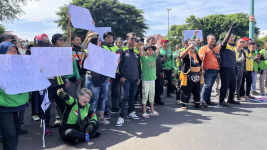
Hundreds of online motorcycle taxi drivers from various platforms under the Banyumas Raya community stage a protest at Purwokerto town square, Central Java, on Tuesday, May 20, 2025. (Beritasatu.com/Dian Aprilia)


Jakarta. President Prabowo Subianto on Friday announced a regulation capping the share of driver earnings that ride-hailing companies can deduct, in a move aimed at improving welfare in the country’s fast-growing gig economy.

The presidential regulation No. 27/2026 on the protection of online transportation workers limits platform commissions to a maximum of 8%, significantly below previous practices that could reach up to 20% or more.

“Ride-hailing drivers work hard and risk their safety every day. It is unfair if deductions reach 20%. Even 10% is too high -- I want it below that,” Prabowo said during a May Day event at the National Monument Square in Jakarta.

Beyond regulating revenue-sharing, the decree also mandates expanded social protections for drivers, including workplace accident insurance and enrollment in the national healthcare system administered by BPJS Kesehatan.

Indonesia is estimated to have more than 4 million ride-hailing drivers, both motorcycle and car-based, with roughly a quarter operating in the Greater Jakarta area.

The policy builds on earlier measures introduced last year, when the government required ride-hailing operators to provide Idul Fitri holiday bonuses to their driver-partners, signaling a broader push to formalize protections in the platform-based transport sector.


To view this content we will need your consent to set third party cookies.
For more detailed information, see our cookies page.
 

The Story of a US President Worried About Indonesia’s Economy and What He Asked Jakarta to Do​

MFakhriansyah
1779090629199.png


JAKARTA — The sharp depreciation of the Indonesian rupiah against the US dollar once raised concerns at the highest level of the United States government.

Former US President Bill Clinton reportedly expressed his concern directly to Indonesian President Soeharto during a phone call in February 1998, at the height of the Asian financial crisis.

At the time, Indonesia was facing severe economic turmoil. According to historian Jan Luiten van Zanden in The Economic History of Indonesia 1800–2010 (2012), the rupiah collapsed from around Rp2,000 per US dollar to roughly Rp10,000–12,000 per dollar following the spread of the 1997 Asian financial crisis, which began with the collapse of Thailand’s baht.

The crisis caused major disruption in Indonesia’s banking sector and triggered sharp increases in basic commodity prices.

Details of the conversation between Clinton and Soeharto only became public after declassified US presidential documents were released in 2018.

In the conversation, Clinton said he had been closely monitoring developments in Indonesia and was deeply concerned about the country’s financial condition.

“Since we spoke a few weeks ago, I have been following developments in Indonesia very closely. I wanted to stay in touch and call now because I am concerned about the financial situation there,” Clinton said.
Clinton also raised concerns about Indonesia’s consideration of implementing a currency board system, a policy that would have pegged the rupiah to the US dollar at a fixed exchange rate.

According to Clinton, the policy could worsen the crisis. He said the issue had been discussed with the IMF and G7 countries, and they believed the currency board could trigger market panic and rapidly drain Indonesia’s foreign exchange reserves.

“This could spark panic that would severely deplete Indonesia’s foreign exchange reserves and make it harder for the IMF and the international community to provide support,” Clinton said.
For that reason, Clinton urged Indonesia to continue implementing the IMF-backed economic recovery program.

According to economist Boediono in Indonesia’s Economy Through History (2016), Indonesia had signed an IMF rescue package in late October 1997 and later received an additional:

$43 billion USD economic assistance package on January 15, 1998.
In response, Soeharto explained that Indonesia had already implemented many IMF demands, including:

  • State budget revisions
  • Banking reforms and mergers
  • Trade liberalization measures
However, he said economic conditions continued to deteriorate.

“Many companies stopped operating, causing layoffs, unemployment, and unrest. The government has also repeatedly intervened and used $10 billion USD from foreign exchange reserves to support the rupiah,” Soeharto said.
As a result, the Indonesian government briefly considered implementing the currency board system as an alternative solution, although the plan was eventually abandoned.

“Thank you for your commitment. We must make decisions quickly because the people demand that their president do something to improve the situation and save the country,” Soeharto said.
In the end, Indonesia continued with the IMF program and did not adopt the currency board system. However, the crisis continued to deepen and eventually evolved into a political crisis that led to Soeharto’s resignation on May 21, 1998.

Years later, IMF policies during the crisis came under criticism from some economists who argued that the fiscal and monetary tightening measures worsened Indonesia’s economic contraction.

Jan Luiten van Zanden wrote that implementing tighter fiscal and monetary policies while the economy was already contracting “was clearly a mistake.”

“The IMF’s demands for tighter fiscal and monetary policies, while the budget was already relatively balanced and the economy was already contracting, were clearly a mistake,” wrote Jan Luiten van Zanden in The Economic History of Indonesia 1800–2010 (2012).


Indonesia’s New Export Watchdog Could Recover Billions Lost to Under-Invoicing​


Indah Handayani
May 21, 2026 | 7:58 pm

1779513286476.png


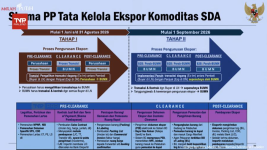
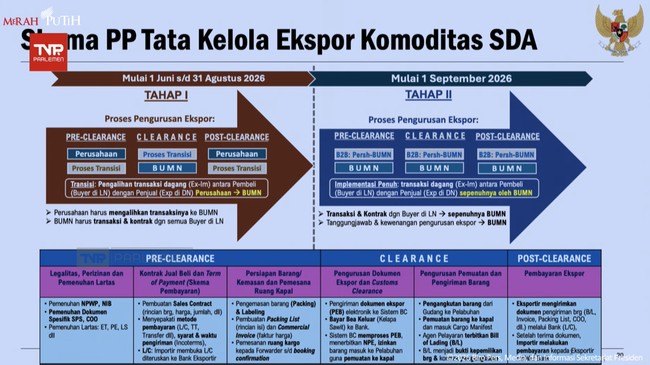
Jakarta. Indonesia’s planned export oversight body Danantara Sumberdaya Indonesia (DSI) could help curb chronic under-invoicing in coal and palm oil exports, potentially recovering billions of dollars in lost state revenue, according to economists and policy researchers.


Research group NEXT Indonesia Center estimated that Indonesia has lost around $40 billion (Rp 708 trillion) annually over the past decade from under-invoicing across export commodities. Under-invoicing refers to the practice of reporting export values below actual market prices, allowing exporters to reduce tax and royalty obligations while keeping foreign exchange earnings offshore.


Executive Director Christiantoko said trade misinvoicing was not merely an administrative issue but a major threat to state finances and economic resilience. “This practice directly affects lost tax potential, reduces export foreign exchange inflows, and weakens national control over trade flows,” Christiantoko said on Wednesday.

NEXT Indonesia Center’s simulation study on crude palm oil, coal, and lignite exports found that improving export reporting accuracy for the three commodities alone could lift export growth by 0.62% and add around 0.15% to Indonesia’s GDP growth.

The group also argued that tighter export governance could help address longstanding issues surrounding export proceeds held offshore, including in regional financial hubs such as Singapore.

“With a more integrated export governance system, letters of credit from buyers could be directed straight to export management entities in Indonesia, allowing US dollar inflows to enter the domestic financial system directly,” Christiantoko said.

Andalas University economist Syafrudin Karimi said the formation of DSI could become a strategic instrument to strengthen export governance and tighten supervision over commodity trade transactions that have long been vulnerable to price manipulation.


“For years, major commodity exports such as coal and palm oil have been prone to under-invoicing due to weak oversight,” Syafrudin said on Wednesday. “Establishing a state entity under [sovereign wealth fund] Danantara Indonesia’s supervision could strengthen national economic sovereignty. However, the government must still build a system that is transparent, accountable, and aligned with the public interest.”


Syafrudin said the practice has significantly affected state revenues, export foreign exchange inflows, and the accuracy of Indonesia’s trade data. He added that DSI could improve oversight by integrating cross-sector data covering customs, taxation, banking, ports, and export contracts.


“If this entity opens up data, protects producer prices, monitors export proceeds, and limits rent-seeking intermediaries, then the policy could become an instrument of economic sovereignty,” he said.


Still, he warned the government to ensure transparent pricing mechanisms, public audits, producer protection, and independent supervision to prevent the agency from evolving into a new monopoly.


Chief Executive Officer of Danantara Indonesia Rosan Perkasa Roeslani said DSI would function as a monitoring platform overseeing export volumes, pricing, and shipment mechanisms to improve transparency and accountability.


Prabowo-Gibran Approval Holds Above 70% Despite Economic Concerns: Survey​


Faisal Maliki Baskoro
June 4, 2026 | 4:46 pm

1780579378202.png
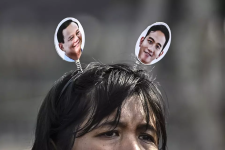
A supporter wears a Prabowo-Gibran headband in front of the Merdeka Palace in Jakarta on Oct. 20, 2024. Many people wait for Prabowo's arrival at the palace. (Antara Photo/Aprillio Akbar)


Jakarta. Public approval of President Prabowo Subianto's administration remains strong despite mounting concerns over the economy and rising living costs, according to a national survey released by pollster Poltracking Indonesia on Thursday.

"Public satisfaction with the Prabowo Subianto–Gibran Rakabuming Raka administration remains relatively high, as its approval rating is still above 70%," Poltracking Indonesia's lead researcher, Masduri Amrawi, said on Thursday.

The survey found that 72.2% of respondents were satisfied with the performance of the Prabowo-Gibran Rakabuming Raka administration, while 74.2% said they trusted the government.

The poll, conducted between May 11 and May 17, surveyed 1,220 respondents across all 38 provinces using face-to-face interviews. It has a margin of error of plus or minus 2.9 percentage points at a 95% confidence level.

According to Poltracking, the three main factors driving public satisfaction were well-targeted government assistance programs, cited by 14% of respondents, followed closely by the government's flagship Free Nutritious Meals (MBG) program at 13.8% and perceptions of Prabowo's firm leadership style at 10.6%.

The survey showed the highest satisfaction ratings in the healthcare sector, where 75.4% of respondents expressed approval. Defense and security followed at 74.5%, while education received a 72.5% approval rating. Satisfaction was lower for political stability and governance at 69.1% and for law enforcement and anti-corruption efforts at 64.5%.

"Economic management emerged as the administration's weakest area, with only 59.2% of respondents expressing satisfaction," Masduri said.

Support for the government remained relatively consistent across Indonesia's major regions, including Sumatra, Java, Kalimantan, Sulawesi, Bali-Nusa Tenggara, and eastern Indonesia, as well as across all major demographic groups, from Generation Z to Baby Boomers.

The survey also highlighted the popularity of the government's flagship social programs. The Free Nutritious Meals initiative was identified as the program delivering the greatest benefits, cited by 27.6% of respondents, followed by the Indonesia Health Card (11.1%), the Indonesia Smart Card education program (10.1%), free healthcare services (8.5%), and wage subsidy (8.3%).

Awareness of the Free Nutritious Meals program was exceptionally high, with 92.1% of respondents saying they knew about it. Among those familiar with the initiative, 55.6% said they were satisfied with its implementation, while 41.2% expressed dissatisfaction.

Despite the government's strong overall ratings, economic pressures continue to dominate public concerns. More than one-third of respondents, or 37.5%, identified rising food prices as the country's most pressing issue. Difficulty finding jobs ranked second at 9.2%, followed by the high cost of healthcare at 7.8%.

"The survey also found broad public support for tighter regulation of social media use among minors, with 77.4% backing restrictions on children under the age of 16," Masduri said.

Meanwhile, respondents said the recent increase in non-subsidized fuel prices had primarily affected household budgets through higher food prices, cited by 53.8% of those surveyed. Higher transportation costs and declining purchasing power were the next most commonly reported impacts.

Among state institutions, the Indonesian Military (TNI) recorded the highest approval rating at 78.9%, followed by the presidency at 70.7% and the Election Supervisory Agency (Bawaslu) at 70.1%.

The House of Representatives (DPR) ranked lowest, with an approval rating of 57.3%. Public satisfaction with the legislature's core functions — including government oversight, lawmaking, budget formulation, and representing public aspirations — remained below 60%.


Status
Not open for further replies.

Users who are viewing this thread

Pakistan Defence Latest

Back
Top