Navigation
Install the app
How to install the app on iOS
Follow along with the video below to see how to install our site as a web app on your home screen.
Note: This feature may not be available in some browsers.
More options
Style variation
You are using an out of date browser. It may not display this or other websites correctly.
You should upgrade or use an alternative browser.
You should upgrade or use an alternative browser.
Indonesian EV Battery Development
- Thread starter Indos
- Start date
More options
Who Replied?

Indos
INT'L MOD
- Thread starter
- #64
Bahlil Reveals CATL Investment Plan in Battery Project Rp 97 Trillion (6 billion USD)
Verda Nano Setiawan, CNBC Indonesia
23 May 2025 14:32
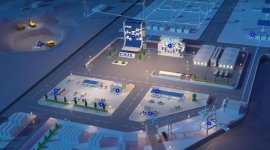
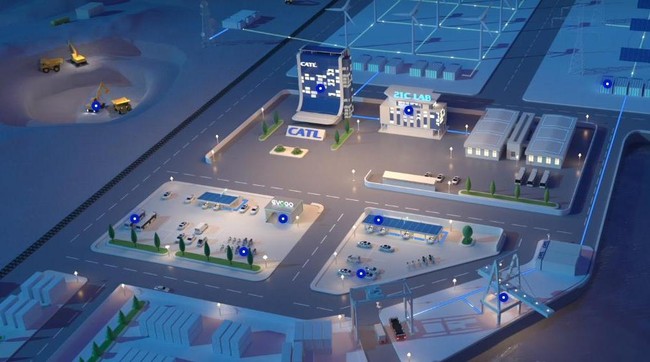
Jakarta, CNBC Indonesia - Minister of Energy and Mineral Resources (ESDM) Bahlil Lahadalia revealed that the company from China is Contemporary Amperex Technology Co. Limited (CATL) will spend its investment of US $ 6 billion or around Rp 97.87 trillion (assuming the exchange rate of Rp 16,313 per US). In particular, in working on the electric vehicle battery ecosystem project in Indonesia.
According to Bahlil, the project will include a supply chain ranging from nickel mines, nickel processing and smelter (smelter) facilities with High Pressure Acid Leaching (HPAL), precursor factories, cathodes, battery cells, to recycling facilities (Recycling) battery.
For the upstream sector, the Indonesian side through PT Aneka Tambang Tbk (Antam) will hold a share of 51%, the rest owned by CATL.
"This is the world's first battery ecosystem, from upstream, from mines, HPAL, nickel, precursors, cathodes, cell batteries, to recycling. It's never been in the world. It's the first time. CATL is an investment of 6 billion dollars in total, "said Bahlil was met at the ESDM Ministry Building, Jakarta, Friday (23/05/2025).
While in the intermediate and downstream sectors, through joint venture schemes or Joint Ventures (JV) 2, 3, and 4, SOEs will have a share of "only" 30%, the rest is owned by CATL.
Bahlil also said, later Danantara will enter the battery ecosystem project with this CATL.
"Since it has been taken over, SOEs have now changed everything, the assets are under the Danantara, automatically entered there. Yes, if he wants to invest, his equity he has to chip in. That means," Bahlil said.
Previously, BPI CEO Danantara Rosan Roeslani said, the portion of Danantara in this project is to help in terms if there are funding constraints.
"Since there is Dan Antara this, our funding is helpful because we see the work of this project is very good in terms of return, work, as well as the impact of the economy," he said.
As is known, there are two mega-projects in the development of an electric vehicle battery ecosystem. Namely the Titan project whose consortium was filled by PT Indonesia Battery Corporation (IBC) as the parent company, PT Aneka Tambang (Antam), PT Pertamina, and PT PLN, and Huayou who replaced LG.
In addition, there is also a consortium with CATL through its subsidiary Ningbo Contemporary Burnp Legend Co. Ltd. called the Dragon project. Both projects focus on the chain of making electric batteries in Indonesia from upstream to downstream.
CATL recalculates investment
As is known, initially the value of CATL investment in Indonesia was worth US $ 1.2 billion, to develop the production of cell batteries with a capacity of 15 Giga Watt Hour (GWH).
However, in the middle of the road, based on the ODI (Overseas Direct Investment) Approval, his investment is currently only half or about 6.9 GWH or US $ 417 million.
Deputy Promotion of the Ministry of Investment and Downstream Nurul Ichwan revealed that CATL is evaluating the project in order to invest in Indonesia. The calculation of the value of the investment is known based on the dynamics that occur, where the demand for electric cars continues to grow.
"Then it will make a lot of sense to try to analyze again the global capacity that can then CAT contributes to what is the size of. So that once he analyzes, oh this has not reached that large capacity, so it is given the capacity below that. Well because the previous one at a certain level was lowered to half, this is what will then have to be recalculated, "he explained found in his office, Jakarta, Wednesday (23/4/2025).
Nurul Ichwan continued, that the phase of recalculating CATL investment in Indonesia covers up to the calculation of the payback period of the project to be built. "Well the information, this count is promising as well, so it's more likely that this project will still take place," he added.
Although it is not certain what the calculation is, Nurul said the process of investing in giant electric vehicles from China in Indonesia will continue.
"So it's worth understanding that the tone remains positive. The one yesterday became a concern is because it was for example 1 million to 500 thousand, this example number is not the actual number, there must be adjustments. Just so adapted, it's normal so far to the public, well like this. No, mediocre, just adjust to the production capacity," he said.
As previously known, Indonesia Battery Corporation (IBC) is opening that the investment disbursed by Contemporary Amperex Technology Co Ltd (CATL) in the new cell battery project in Indonesia is half the promised investment value of US $ 1.2 billion.
“But from the ODI (Overseas Direct Investment) Approval, which we have obtained from them is currently only half. So about 6.9 GWH or US $ 417 million, "said IBC President Director, Toto Nugroho in the RDP with Commission XII of the House of Representatives, Monday (17/2/2025).
Therefore, it is continuing communication to negotiate to find solutions related to the difference in the amount of investment from the CATL.
"There is one thing we need to report that long stop date, so the term our deal must be completed on February 28, which is very close. And this we need a lot of documents that they must complete, so that we get certainty about the investment, "explained Toto.
The IBC also requested that there be certainty of an off-pay agreement from CATL. In which, CATL should also submit a draft of the Bankable Feasibility Study on January 21, 2025.
"Well, but back some information related to the details of the document is still very much needed. So broadly speaking that's what we can say for that cell battery itself. Recycle later we will discuss sir, but because this process can only be done in the year 2028, "he said.
Bahlil Beberkan Rencana Investasi CATL di Proyek Baterai Rp 97 Triliun
Perusahaan China CATL bakal menggelontorkan investasinya sebesar US$ 6 miliar atau sekitar Rp 97,87 triliun.
 www.cnbcindonesia.com


Indos
INT'L MOD
- Thread starter
- #67
Prabowo to Inaugurate EV RI Battery Ecosystem Project This Week
Firda Dwi Muliawati, CNBC Indonesia
23 June 2025 11:20
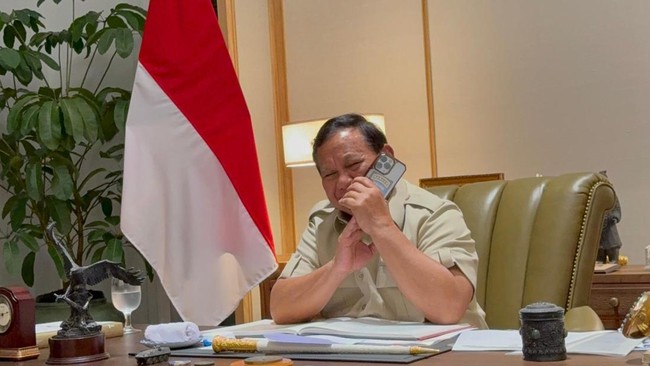
Jakarta, CNBC Indonesia - President of the Republic of Indonesia Prabowo Subianto is rumored to be inaugurating the electric battery ecosystem (EV) project this week. This project is a collaboration between PT Aneka Tambang (Antam) and a company from China, namely Contemporary Amperex Technology Co Limited (CATL) in East Halmahera, North Maluku.
Later, this project will be inaugurated through the laying of the first stone (groundbreaking) of the processing and refining facility of nickel PT Feni Haltim (FHT). FHT itself is partly owned by Antam.
Based on information received by CNBC Indonesia, Prabowo will be accompanied by the Minister of Energy and Mineral Resources (ESDM) Bahlil Lahadalia in inaugurated the construction of the EV battery ecosystem project.
Previously, Bahlil had revealed that the groundbreaking process of the project will be carried out in June 2025. Bahlil said the project had an investment value of about US $ 6-7 billion. Meanwhile, this battery project from upstream to downstream is the first in the world.
"We will June tomorrow we make the first groundbreaking investment of 6-7 billion dollars of the world's first car battery ecosystem from upstream to downstream from the mine, HPAL smelter, precursor, cathode, battery cell," Bahlil said at the Human Capital Summit (HCS) 2025, quoted Monday (3/6/2025).
On different occasions, Bahlil also said the project will include a supply chain ranging from nickel mines, nickel processing and refilling facilities (smelter) high pressure fluid leaching (HPAL), precursor factories, cathodes, battery cells, to recycling facilities (recycling) batteries.
For the upstream sector, the Indonesian side through Antam will hold a share of 51%, the rest owned by CATL. While in the intermediate and downstream sectors, through joint venture schemes or Joint Ventures (JV) 2, 3, and 4, SOEs will have a share of "only" 30%, the rest is owned by CATL.
Bahlil also said, later Danantara will enter the battery ecosystem project with this CATL. "Since it has been taken over, SOEs have now changed everything, the assets are under the Danantara, automatically entered there. Yes, if he wants to invest, his equity is that he has to chip in. That means," Bahlil said.
Previously, BPI CEO Danantara Rosan Roeslani said, the portion of Danantara in this project is to help in terms if there are funding constraints. "Since there is Danantara, our funding is helpful because we see the work of this project is very good in terms of return, work, as well as the impact of the economy," he said.
As is known, there are two mega-projects in the development of an electric vehicle battery ecosystem. Namely the Titan project whose consortium was filled by PT Indonesia Battery Corporation (IBC) as the parent company, PT Aneka Tambang (Antam), PT Pertamina, and PT PLN, and Huayou who replaced LG.
In addition, there is also a consortium with CATL through its subsidiary Ningbo Contemporary Burnp Legend Co. Ltd. called the Dragon project. Both projects focus on the chain of making electric batteries in Indonesia from upstream to downstream.
Prabowo Bakal Resmikan Proyek Ekosistem Baterai EV RI Pekan Ini
Presiden RI Prabowo Subianto dijadwalkan meresmikan proyek ekosistem baterai EV RI pada pekan ini
www.cnbcindonesia.com
Indos
INT'L MOD
- Thread starter
- #68
Indonesia Begins Construction of $5.9 Billion Mega EV Battery Hub With China’s CATL Consortium
June 29, 2025 | 10:49 pm
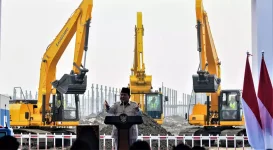
President Prabowo Subianto delivers a speech during the launch of an integrated EV battery production facility in Karawang, West Java, Sunday, June 29, 2025. (Antara Photo/Muhammad Adimaja)
Jakarta. The Indonesian government officially launched construction on a $5.9 billion integrated electric vehicle (EV) battery manufacturing project in Karawang, West Java, on Sunday, marking a major step toward its ambition to become Southeast Asia’s EV hub.
The battery plant in Karawang will be integrated with five supporting facilities and upstream operations in East Halmahera, North Maluku, aligning with the government’s strategy to build a fully integrated EV battery supply chain -- from mining to manufacturing.
The project is a joint venture between Indonesia’s state-owned mining company Aneka Tambang (Antam), the Indonesia Battery Corporation (IBC), and a consortium led by China’s Contemporary Amperex Technology Co. Limited (CATL), along with Brunp Recycling and Lygend Resources.
This flagship industrial initiative was first championed under former President Joko Widodo and is now being carried forward by President Prabowo Subianto, who presided over the groundbreaking ceremony.
“With great pride, I officially launch the construction of this integrated EV battery industry ecosystem, a collaboration between Antam, IBC, and the CBL consortium,” President Prabowo said during the ceremony.
Read More:
China’s Huayou to Join Indonesia EV Battery Project Following LG’s ExitPrabowo was joined by several senior officials, including Energy Minister Bahlil Lahadalia, State-Owned Enterprises Minister Erick Thohir, Industry Minister Agus Gumiwang Kartasasmita, and Housing Minister Maruar Sirait, alongside Cabinet Secretary Teddy Indra Wijaya and regional government leaders. Chinese Ambassador to Indonesia Wang Lutong also attended as a guest of honor.
The Karawang facility is being developed on a 3,000-hectare site and is expected to create up to 8,000 jobs once operational. The project will also drive the development of 18 key infrastructure projects, including a multipurpose port.
The plant is designed with sustainability in mind, combining coal, waste heat recovery, and solar power to reduce its environmental footprint.
The factory’s initial production capacity is targeted at 6.9 gigawatt-hours (GWh) in the first phase, scaling up to 15 GWh in the second phase. Commercial operations are expected to begin by late 2026.
Nickel Mining and Recycling in Halmahera
In parallel, upstream operations are underway in East Halmahera, where Antam and Hong Kong CBL Limited (HK CBL) have established a joint venture called Feni Haltim. This venture will develop a new energy industrial park, featuring a nickel mine and pyrometallurgical smelter with an annual production capacity of 88,000 tons of refined nickel alloy starting in 2027.
Read More:
China’s BTR Launches Lithium Battery Anode Plant in Central JavaAdditionally, the Halmahera site will include facilities for producing nickel-cobalt-manganese (NCM) cathode materials and a battery recycling plant, further enhancing Indonesia’s push toward a circular economy in the EV sector.

Indonesia Begins Construction of $5.9 Billion Mega EV Battery Hub With China’s CATL Consortium
The battery plant in Karawang will be integrated with five supporting facilities and upstream operations in East Halmahera, North Maluku.
jakartaglobe.id
Indos
INT'L MOD
- Thread starter
- #69
Indonesia to produce EV batteries up to 30 GWh from these two giant projects
Tuesday, 01 July 2025 / 14:22 WIB
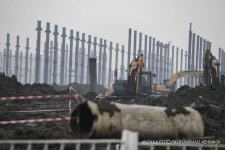
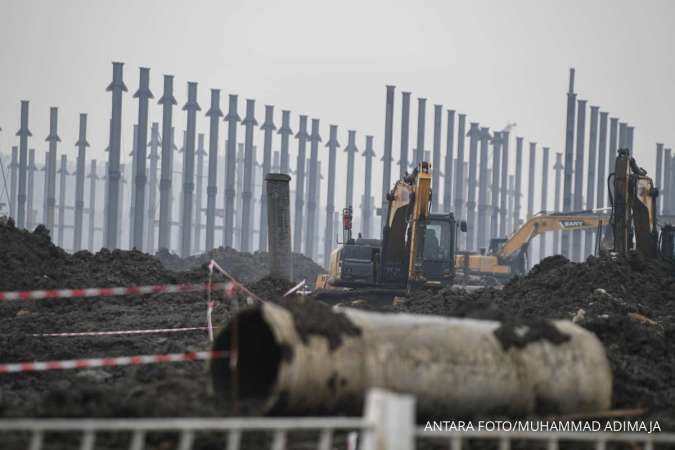
CATL and IBC Battery Factory Construction in Karawang, West Java
KONTAN.CO.ID - KARAWANG. The ambition of Indonesia to become a manufacturer of electric vehicle batteries (electric vehicleEV) in the world will be supported through these two EV battery ecosystem projects.
The first is the EV battery ecosystem project run by PT Aneka Tambang (Antam), Indonesia Battery Corporation (IBC) together with the subsidiary of Contemporary Amperex Technology Co. Limited (CATL) is China Ningbo Contemporary Brunp Lynd Co Ltd (CBL) or other name of the Dragon project.
After inauguration of the first stone or ground breaking on Sunday (29/06), the Antam-IBC-CBL consortium project is targeted to produce a 15-gigawatt-hour battery (GWh) or equivalent to 300,000 electric cars.
President Director of Indonesia Battery Corporation (IBC) Toto Nugroho revealed that he was still waiting for the continuation of another EV battery project, Antam-IBC, with Huayou Holding (Zhejiang Huayou Cobalt).
Also Read: Observe Stocks Of Various Mines (ANTM) After Inauguration Of Electric Vehicle Battery Factory
"Huayou is still the initial process, later there may be official because it is between Antam, IBC and Huayou," Toto said in Karawang, West Java, Sunday (29/6).
Just so you know, the Antam-IBC project with Huayou Holding (Zhejiang Huayou Cobalt) which also has another name as this Titan Project, was also involved LG Energy Solution Ltd (LGES).
However, the South Korean company chose to step down on the grounds of changing the EV ecosystem in the world today.
If these two projects work, Toto says Titan will account for at least the production of a 10-15 GWh battery. So that the total production can reach 30 GWh per year.
"Yes, if for example this is 15 (GWh) there (Dragon project) and 10 (GWh) also (Titan project, Indonesia should be in 3-4 years it is almost (production) close to 30 GWH yes," he explained.
Toto added, if these two projects run then Indonesia will become the largest manufacturer of EV batteries in the southern hemisphere.
"So that's one thing that's positive we get into this industry and we're the leader at least the condition of the Southern Earth we're leaderleader," he added.
As an illustration, the Dragon project has been inaugurated groundbreaking on Sunday (29/06) with the first production target at the end of 2026 and with an investment of US$ 5.9 billion.
Meanwhile, the Titan project has an investment value of up to US $ 9.8 billion or equivalent to Rp 160.8 trillion (assuming rate of Rp16,413 per US).
Similar to the Dragon project, Titan will include an EV battery process from upstream to downstream, namely from the mining process, HPAL smelter, precursor, cathode, battery cell to recycle battery.
Indonesia akan Produksi Baterai EV hingga 30 GWh dari Dua Proyek Raksasa Ini
Ambisi Indonesia menjadi produsen baterai kendaraan listrik dunia akan disokong melalui dua proyek ekosistem baterai EV ini.
 industri.kontan.co.id
Indos
INT'L MOD
- Thread starter
- #70
Australia Hopes To Be Indonesia’s Lithium Supplier Ahead of Trade Pact Review
July 4, 2025 | 3:51 pm
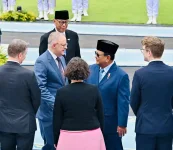
President Prabowo Subianto hosts Australian Prime Minister Anthony Albanese in Jakarta's Merdeka Palace on May 15, 2025. (Photo Courtesy of Presidential Press Bureau)
Jakarta. Australia is hoping that the upcoming review on its trade agreement with Indonesia will make room for critical mineral cooperation, particularly on lithium, according to its diplomat.
Indonesia already has a comprehensive economic partnership agreement (CEPA) with Australia, a deal that not only grants zero tariffs for virtually all products, but also provides greater certainty for investors. The Indonesia-Australia CEPA came into effect in 2020. When Australian Prime Minister Anthony Albanese visited Jakarta in mid-May, the two economies agreed to review the CEPA trade pact next year for improvements.
Australian Ambassador to Indonesia Rod Brazier told reporters Thursday that Canberra would look into enabling greater critical mineral cooperation. This includes the possibility of Australia -- the world’s largest lithium producer -- supplying the silvery-white metal to Indonesia as the Southeast Asian country works on its battery ecosystem.
“We are hoping that the [CEPA] will look more closely at issues like green energy transition and critical minerals. Indonesia needs many of the critical minerals that Australia has. Lithium is a very good example,” Brazier said, commenting on the review.
“We want to do more to be a reliable provider of lithium to Indonesia’s booming battery sector,” Brazier said.
Lithium is a critical component for electric vehicle (EV) batteries, particularly the lithium ferro-phosphate (LFP) ones. A 2025 Geological Survey report showed that Australia mined an estimated 88,000 metric tons of lithium in 2024.
Indonesia does not produce its lithium but is home to the world’s biggest reserves of nickel, another mainstay ingredient in EV battery production. Senior minister Airlangga Hartarto a few months ago revealed that Australia had been supplying lithium of up to 80,000 tons to the Morowali Industrial Park. He also admitted that talks were underway to “include critical mineral cooperation in the Indonesia-Australia CEPA”.
In 2023, Western Australia -- which makes up half of the global lithium production -- alongside the Indonesian Chamber of Commerce and Industry (Kadin) inked a plan of action that could power critical minerals investments.
Indonesia is currently open for foreign investments as the country builds its battery ecosystem to boost its economy. Just a few days ago, Indonesia broke ground on a China-backed EV battery manufacturing project worth $5.9 billion in Karawang. The government aims to make Indonesia Southeast Asia’s EV battery hub.
‘A Fair and Square’ Trade
Indonesia’s Trade Ministry data showed that Jakarta had been running a deficit with Australia over the past years, although the imbalance had narrowed last year.
Indonesia’s deficit declined from nearly $6.1 billion in 2023 to almost $5.5 billion in 2024. Overall trade had reached nearly $15.4 billion last year, the ministry reported. The Central Statistics Agency (BPS) recently revealed that Australia was the third-biggest contributor to Indonesia’s trade deficit, with an imbalance of up to $2.11 billion between January and May.
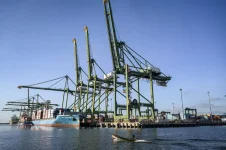
Unloading activities as seen at the New Priok Container Terminal One in Jakarta on July 1, 2025. (Antara Photo/Fauzan)
Amidst the imbalance, Brazier told the press that the Indonesia-Australia CEPA had been “very fair” by setting the tariffs on goods at 0 percent. He also pointed out how the statistics did not include trade in services such as tourism. The embassy reported that bilateral trade in both goods and services had grown from A$17.7 billion ($11.6 billion) in 2019 to A$35.4 billion ($23.2 billion) last year. Indonesia also enjoyed a surplus of A$3.13 billion (around $2 billion) in 2024 as many Australian travelers flocked to Bali.

Australia Hopes To Be Indonesia’s Lithium Supplier Ahead of Trade Pact Review
World's largest lithium producer Australia wants to include critical mineral cooperation in its trade deal with Indonesia.
jakartaglobe.id
Indos
INT'L MOD
- Thread starter
- #71
Gesits Launches Rp 20 Million (1,224 USD) Electric Motorbike With Features Like a Rp 200 Million Car
By Naufal Shafly
Rabu, 16 Juli 2025 | 08:10 WIB
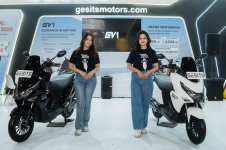
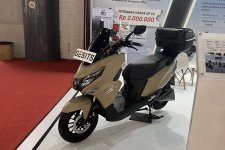
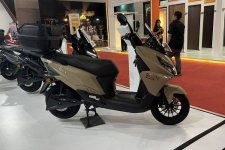
GridOto.com – PT Gesits Motor Nusantara and PT Volta Indonesia Semesta have officially partnered and introduced a new motorcycle called the GV1 Gesits by Volta.
Unveiled at the Jakarta Fair Kemayoran (JFK), the GV1 is expected to freshen up Gesits’ product lineup with a more stylish design and modern features.
Gesits CEO Bernardi Djumiril stated that the company remains committed to delivering quality electric motorcycles with reliable performance at affordable prices.
“We’re continuously driving innovation in the development of two-wheeled electric motorbikes tailored to the needs of Indonesian consumers. This product innovation was born out of our collaboration with Volta,” said Bernardi on Tuesday, November 15, 2025.
He emphasized that the partnership reflects Gesits’ mission to offer better mobility solutions for the public.
He added:
“Innovation can't happen in isolation. Collaboration is the key to accelerating the transition toward sustainable mobility. GV1 is the result of our strategic partnership with Volta.”
Volta Group CEO Okie Octavia Kurniawan echoed the sentiment, noting that the goal of the collaboration is to strengthen both companies’ distribution networks and deliver products featuring the latest technology and innovation.
“We introduced the GV1 at the Jakarta Fair 2025 in response to the growing enthusiasm for locally made electric motorbikes,” he explained.
In terms of specifications, the GV1 is equipped with a 4.2 kW electric motor (equivalent to 5.6 horsepower), claimed to reach a top speed of up to 75 km/h.
For range options, there are two variants: the Standard Range with a single battery, and the Long Range with two batteries.
- The Standard Range is claimed to travel up to 75 km.
- The Long Range can reach up to 150 km.
As for features, the GV1 is packed with modern tech such as Cruise Control, Hill Stop Assist, and Regenerative Braking—features usually found in cars priced above Rp 200 million.
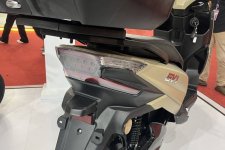
Other practical additions include an Inner Rack and a USB Type-A charger for easily charging smartphones on the go.
Regarding pricing:
- GV1 Standard Range is priced at Rp 23.956 million
- GV1 Long Range costs Rp 29.9 million (on-the-road Jakarta)
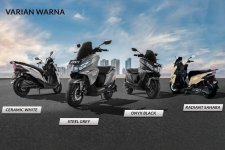
There are four available colors:
- Onyx Black
- Ceramic White
- Steel Grey
- Radiant Sahara
Additionally, every purchase of this electric motorbike, which boasts a 46.5% local content value (TKDN), comes with a battery warranty for 3 years or 70,000 km.
Interested consumers can place orders through official Gesits and Volta dealerships.
:quality(100)/photo/2025/07/15/dit00084jpg-20250715070125.jpg)
Gesits Luncurkan Motor Listrik Rp 20 Jutaan, Punya Fitur Kayak Mobil Rp 200 Jutaan | Gridoto
PT Gesits Motor Nusantara bersama PT Volta Indonesia Semesta resmi bekerja sama dan memperkenalkan motor baru mereka yakni GV1 Gesits by Volta.
 www.gridoto.com
Indos
INT'L MOD
- Thread starter
- #72
Collaboration between PT. Teknologi Militer Indonesia (TMI) and Fincantieri
Indonesia will soon welcome a new national car, the Indigenous Indonesia Car (I2C), scheduled to debut at the 2025 Gaikindo Indonesia International Auto Show (GIIAS).
The I2C is more than just talk. At the country's largest automotive exhibition, I2C will introduce its concept car in the form of a full-size (1:1) model for the first time to the public.
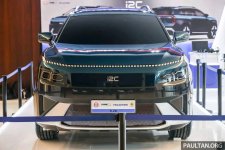
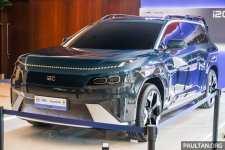

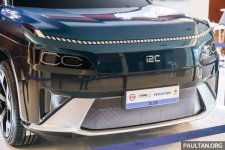
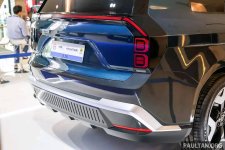
Indonesia will soon welcome a new national car, the Indigenous Indonesia Car (I2C), scheduled to debut at the 2025 Gaikindo Indonesia International Auto Show (GIIAS).
The I2C is more than just talk. At the country's largest automotive exhibition, I2C will introduce its concept car in the form of a full-size (1:1) model for the first time to the public.
Indos
INT'L MOD
- Thread starter
- #75
Indonesia to Source Lithium from Australia as EV Ambitions Accelerate
Bambang Ismoyo
August 5, 2025 | 11:03 pm
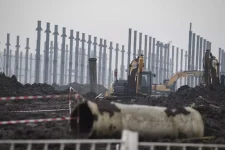
Workers operate excavators at the construction site of an integrated EV battery production facility in Karawang, West Java, Sunday, June 29, 2025. (Antara Photo/Muhammad Adimaja)
Jakarta. Indonesia will begin importing lithium from Australia to support its growing electric vehicle (EV) industry, Energy and Mineral Resources Minister Bahlil Lahadalia announced on Tuesday, as the country intensifies efforts to become a regional EV manufacturing hub.
Speaking at the International Battery Summit in Jakarta, Bahlil said the plan aligns with Indonesia’s roadmap for EV development, first introduced in 2020 under President Joko Widodo’s administration.
“Our vision to build an EV battery ecosystem is part of a broader mineral downstream industrialization strategy that we’ve pursued since 2020,” Bahlil said.
Indonesia is home to abundant reserves of nickel and manganese -- key raw materials for battery production -- but has limited domestic lithium supplies, prompting the government to look abroad. While Indonesia has previously imported lithium from African countries, Bahlil noted that sourcing it from Australia would be more cost-effective due to reduced shipping distances.
Read More:
EV Push Powers Surge in Foreign Investment in Indonesia’s Mineral Sector“The import mechanism will be business-to-business, and the volume will be determined by Indonesian companies,” he added.
The move comes as Indonesia’s EV adoption gathers pace. The country’s EV fleet surged to approximately 207,000 units in 2024, up from 116,000 the previous year. In the first half of 2025 alone, EVs accounted for about 10 percent of all new car sales -- double the 5 percent market share recorded in 2024.
Indonesia aims to produce 9 million electric motorcycles and 600,000 electric cars and buses by 2030. This target is expected to cut fossil fuel consumption by 21.65 million barrels and reduce carbon emissions by 7.9 million tons.

Indonesia to Source Lithium from Australia as EV Ambitions Accelerate
Bahlil noted that sourcing lithium from Australia would be more cost-effective due to reduced shipping distances.
jakartaglobe.id
Users who are viewing this thread
Total: 1 (members: 0, guests: 1)
Pakistan Defence Latest
-
-
KP govt backs out of counterterrorism commitments during talks: Naqvi (4 Viewers)
- Latest: SteppeWolff
-

Country Watch Latest


Latest Posts
-

-
 Elon Musk is on track to become the world's first dollar trillionaire (11 Viewers)
- Latest: Hamartia Antidote
-
-
 Afghans yet to receive ‘genuine justice’ for Western coalition abuses: HRW (11 Viewers)
- Latest: PAKISTANFOREVER
-
