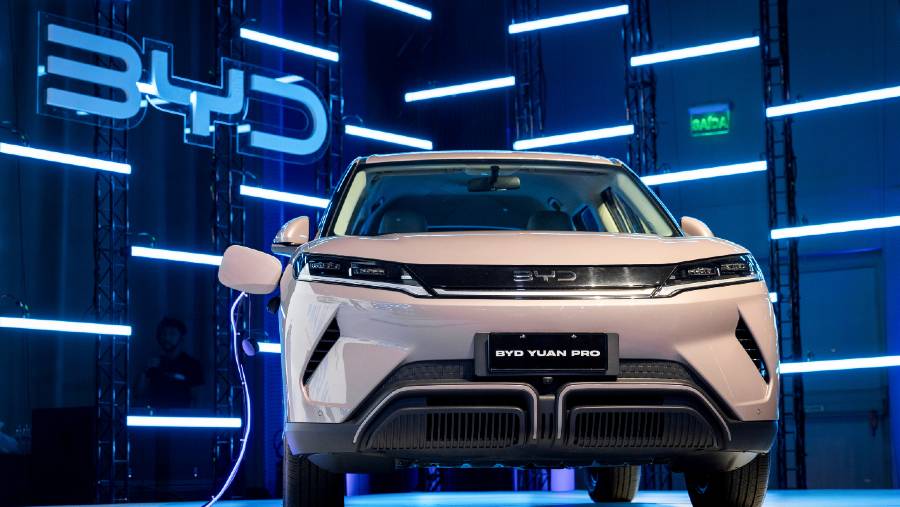
Indonesian EV Battery Development

Another Chinese Investor to Invest in Indonesia’s IDR 131 Trillion Battery Project


Verda Nano Setiawan – CNBC Indonesia
07 August 2025, 09:50


1754639465926.webp


Jakarta, CNBC Indonesia – Minister of Energy and Mineral Resources (ESDM) Bahlil Lahadalia is targeting the completion of the electric vehicle (EV) battery project owned by Zhejiang Huayou Cobalt Co (Huayou) and Indonesia Battery Corporation (IBC) by 2027.


The project has an investment value of around US$8 billion, equivalent to approximately IDR 131.07 trillion (based on an exchange rate of IDR 16,379 per US$). Bahlil stated that the government will provide attractive incentives for EV battery ecosystem projects in Indonesia, including this one.


“Huayou will soon proceed with Antam and IBC. The total investment is around US$8 billion. If all goes as planned, we are targeting completion by the end of 2027,” Bahlil said at Hotel Mulia Jakarta, quoted on Thursday (August 7, 2025).


Huayou is essentially replacing South Korea’s LG Energy Solution (LGES), which withdrew from the consortium with IBC — the parent company of PT Aneka Tambang (Antam), PT Pertamina (Persero), and PT PLN (Persero).


LGES’s exit from the battery supply chain project was a decision made by the government, as LGES failed to fulfill its initial agreed commitments. The company not only withdrew from the project with IBC but also from planned investments in three joint ventures (JVs). One other JV — the fourth — remains operational and continues to progress.


Huayou’s Growing Investment in Indonesia


Minister of Investment and Downstreaming and Head of the Investment Coordinating Board (BKPM), Rosan Roeslani, revealed that Huayou plans to expand its investments in Indonesia, including in the EV battery ecosystem.


The potential additional investment from Huayou in the country could reach as high as US$20 billion, equivalent to IDR 335.56 trillion (based on an exchange rate of IDR 16,759 per US$).


“They conveyed that, according to their estimates, the Huayou group’s potential investment in the future could reach an additional US$20 billion,” Rosan explained at his office in Jakarta on Tuesday (April 29, 2025).


According to Rosan, Huayou has already invested US$8.8 billion in Indonesia so far. In addition, the company is reportedly planning to expand its domestic projects, particularly in the Weda Bay and Morowali industrial areas.


“Now, they also want to independently develop industrial park land, similar to what they have in Morowali and Weda Bay. We want to develop in other locations as well. This new plan will be located in Pomalaa,” Rosan concluded.

 
Indonesia Becomes First ASEAN Country to Locally Produce Toyota BEV


15/08/2025, 19:31 WIB


To view this content we will need your consent to set third party cookies.
For more detailed information, see our cookies page.


Jakarta, Kompas.com – PT Toyota Motor Manufacturing Indonesia (TMMIN) has confirmed that the Toyota bZ4X will be the first fully electric vehicle, or Battery Electric Vehicle (BEV), to be produced locally in Indonesia.


This milestone makes Indonesia the only country in the ASEAN region to manufacture a Toyota BEV under the Completely Knocked Down (CKD) scheme.


TMMIN President Director Nandi Julyanto emphasized that producing the bZ4X in Indonesia is not just about launching a new product, but also part of a broader strategy to strengthen the competitiveness of the domestic automotive industry during the global transition to electrification.


“Indonesia is the only one producing BEVs under the CKD scheme. Thailand does have electric commercial vehicles, but here we are producing the bZ4X,” he said recently.

Nandi explained that the locally produced bZ4X will use a battery module that is also being prepared for the Hilux BEV. He acknowledged, however, that the bZ4X’s price remains relatively high due to limited production volume.


“When the volume is small, research, development, and component costs become more expensive. But we believe that as demand increases, these costs will come down,” he added.

To view this content we will need your consent to set third party cookies.
For more detailed information, see our cookies page.


TMMIN Vice President Director Bob Azam further noted that the choice of the bZ4X as the first BEV to be locally produced was driven by the model’s relatively positive market reception.


This move also aligns with the Indonesian government’s policy to develop downstream industries and establish the country as a future battery producer.


“We see that the model has been fairly well received. Step by step, starting with a more luxurious model first, and later, it will expand into more mass-market models,” Bob said at the 2025 GIIAS exhibition.

He added that the localization of the bZ4X is also intended to strengthen the resilience of Indonesia’s domestic supply chain. Toyota is targeting the process to begin in less than a year.


“Maybe in about six months, depending on readiness,” Bob stated.

With local production of the bZ4X, Toyota reaffirms its commitment to supporting the government’s electrification program while enhancing the regional competitiveness of Indonesia’s automotive industry.


----------------

To view this content we will need your consent to set third party cookies.
For more detailed information, see our cookies page.


BYD Buys Another 80 Hectares of Surya Semesta (SSIA) Land in Subang – Real Sector


Artha Adventy | Bloomberg Technoz, Jakarta


To view this content we will need your consent to set third party cookies.
For more detailed information, see our cookies page.

BYD factory construction in Subang, West Java Indonesia


China’s electric vehicle giant, Build Your Dreams (BYD), will purchase an additional 80 hectares (ha) of land at Subang Smartpolitan, owned by PT Surya Semesta Internusa Tbk. (SSIA). The handover of the land is scheduled for October this year.


SSIA Group Construction Manager, Surya Mardani, said BYD had already purchased 108 ha and 18 ha of land for its factory project, which is expected to start operations in early 2026. Currently, construction is still ongoing on phases 2 and 3 of the Subang Smartpolitan area.


“BYD is dividing its factory construction into three phases. Phases 1 and 2 will be completed early next year. Phase 3 is the additional 80 hectares, with handover in October. Right now we’re still at the cut and fill stage,” Surya said at Subang Smartpolitan, Tuesday (August 19, 2025).

SSIA’s VP of Investor Relations & Sustainability, Erlin Budiman, revealed that the selling price offered for BYD’s additional 80 ha of land is below USD 100 per square meter.


“It’s under USD 100, different from the earlier deal,” he said.

Assuming a land price of USD 100 per square meter, SSIA stands to gain around USD 80 million (~Rp 1.29 trillion at an exchange rate of Rp 16,200 per USD) from the handover of the 80 ha land.

To view this content we will need your consent to set third party cookies.
For more detailed information, see our cookies page.

Model of Subang Smartpolitan. West Java (SSIA Website Documentation)


In line with this plan, SSIA also intends to build a temporary interchange road that will directly connect the toll road to the Subang Smartpolitan area.


This infrastructure is being prepared to support the operations of BYD’s factory, which will be located in the area. The interchange is targeted for completion by the end of this year.


For context, BYD Indonesia previously signed a memorandum of understanding to build a manufacturing facility at Subang Smartpolitan with a production capacity of 150,000 units per year.


The industrial zone is being developed by PT Suryacipta Swadaya (SCS), a subsidiary of SSIA.


In addition to BYD, several other factories are already operating in SSIA’s industrial estate, including PT Sanwa Musen Indonesia (which produces electronic and electrical components), PT Kids Play Indonesia, and PT Xinfung Industry Indonesia, which is scheduled to start operations in 2026.


Danantara, China's GEM Sign Deal for $1.4 Billion HPAL Nickel Facility​


Antara, Grace el Dora

August 28, 2025 | 6:36 am


1756370968230.webp
A nickel processing plant sits in Mapela village on Kabaena Island, Southeast Sulawesi, Indonesia, Saturday, Nov. 16, 2024. (AP Photo/Yusuf Wahil)


Jakarta. Indonesia’s sovereign wealth fund Danantara announced on Wednesday that it has signed a Head of Agreement with Shenzhen-based GEM Limited to jointly develop a High-Pressure Acid Leach (HPAL) smelting facility with an annual capacity of 66,000 tons of nickel. The project carries an estimated value of $1.42 billion.

GEM is a global leader in green metallurgy and circular economy solutions, known for its large-scale recycling of electric vehicle batteries and electronic waste.

Danantara CEO Rosan Roeslani said the partnership marks a significant milestone in the fund’s mission to deliver strategic investments that accelerate Indonesia’s socio-economic transformation. “By working with a global pioneer in green metallurgy, we can advance the government’s priority agenda of sustainable downstream mineral industrialization,” he said.


The project is expected to involve collaboration with Vale Indonesia and additional global partners.

GEM processes more than 10 percent of used EV batteries and e-waste in China each year and employs over 11,000 staff across China, South Africa, South Korea, and Indonesia. In Indonesia, the company has invested heavily in nickel-based new energy materials, high-tech nickel industrial parks, joint research labs with local universities, and scholarship programs producing master’s and doctoral graduates in metallurgy.


It has also invested $30 million in a joint metallurgical research laboratory with the Bandung Institute of Technology (ITB), aiming to strengthen Indonesia’s role as a hub for green metallurgy research and development.


Batang SEZ Attracts Rp 1.5t EV Battery Investment from LBM​


Muawwan Daelami

September 12, 2025 | 11:18 am

To view this content we will need your consent to set third party cookies.
For more detailed information, see our cookies page.

Batang Industrial Complex, Central Java


Jakarta.
PT LBM Energi Baru Indonesia Batang, an affiliate of global battery giant Lopal Tech Company, has committed an initial investment of Rp 1.5 trillion in the Industropolis Batang Special Economic Zone (SEZ). The investment covers 31.72 hectares of industrial land, marking a major step in strengthening Indonesia’s electric vehicle (EV) supply chain.


The company, a subsidiary of LBM New Energy (AP) Pte Ltd., will develop its Batang facilities in three phases, with operations targeted to begin in June 2026. Once completed, the plant is expected to absorb up to 1,000 local workers and produce up to 150,000 tons each of Lithium Iron Phosphate (LFP) and FP annually, fully geared toward export markets.


The signing of the industrial land use agreement was formalized on Thursday by Industropolis Batang SEZ President Director Ngurah Wirawan and LBM Energi Baru Indonesia Batang CEO Washington Feng.


Beyond manufacturing, the Batang site will also host Indonesia’s largest research and development center for LFP, positioning itself as a hub for green battery innovation supporting EVs, e-boats, e-motorcycles, and advanced energy storage systems.

Wirawan said LBM’s entry reaffirms global trust in Batang’s industrial ecosystem. “We are proud that Batang is now part of the global new energy supply chain, while also creating broad opportunities for local and national economic growth,” he said in a statement on Friday


Feng highlighted the SEZ’s strategic location, world-class infrastructure, and supportive investment ecosystem as key reasons for choosing Batang. “From Batang, we will build a production and innovation center that answers global market demand,” he said.


Acting Batang Regency Secretary Sri Purwaningsih added that the investment not only brings technology and capital but also promises inclusive growth for the local community. “The regional government is committed to enhancing human capital, strengthening infrastructure, and fostering cross-sector collaboration to ensure the benefits are widely shared,” she said.


Trade Pact with Canada to Supercharge Indonesia’s EV Dream​


Jayanty Nada Shofa
September 29, 2025 | 4:31 pm


Jakarta. Indonesia’s newly signed trade deal with Canada is expected to supercharge the country's dream of developing an integrated electric vehicle or EV ecosystem, according to a senior government official, as the agreement opens up the possibility of Jakarta importing lithium.

President Prabowo Subianto’s recent world tour ended on a high note as Indonesia secured a comprehensive economic partnership agreement (CEPA) with Canada. The document, which Prabowo claimed to be 9,000 pages long, covers major tariff eliminations. Trade Ministry’s director-general Djatmiko Bris Witjaksono said Monday that the CEPA included a chapter on "critical mineral dialogue”.

“This [dialogue] will become a platform for our countries to expand our cooperation in critical minerals. … This is the first time that we have a critical mineral dialogue under a CEPA framework,” Djatmiko told a forum on the Indonesia-Canada CEPA.


Later that day, Djatmiko revealed to the press that the partnership between the two G20 economies would cover the entire value chain. In other words, it is expected to encompass the creation of the finished goods, although considering that the pact only got signed last week, the dialogue was still at a nascent stage.

“This will create some sort of a ‘powerhouse’ between the two countries. … So the partnership will not only deal with the lowest level of the value chain [of critical minerals], but also the highest. We have already started discussing it,” the Indonesian negotiator said.

Djatmiko did not deny when asked by the Jakarta Globe if the dialogue could lead to Indonesia buying Canadian lithium. Canada is home to one of the world’s largest reserves of lithium, the silvery-white metal essential for making EV batteries. He said: “[Such lithium import] is possible, … and even EV battery production. Anything is possible.”

The partnership would begin with a dialogue first, Djatmiko said, alluding that they were still far from any import deals.

“We will then identify each other’s needs and gaps. … We will pinpoint the projects that are the most feasible. … The CEPA has facilitated [this dialogue]. That’s why businesses must take advantage of this."

According to a 2025 report by the US Geological Survey, Canada holds 1.2 million metric tons in lithium reserves. Indonesia does not have lithium reserves. Like Indonesia, Canada also possesses nickel, although not as much as the Southeast Asian country. Indonesia’s nickel reserves reach 55 million metric tons, much bigger compared to Canada’s 2.2 million metric tons. Work is underway to build an EV ecosystem in mineral-rich Indonesia as the country seeks to capture value out of its abundant natural resources by producing finished goods. Indonesia is also opening its doors for foreign investors. Indonesia also broke ground on a $5.9 billion EV battery manufacturing project in Karawang earlier this year -- a megaproject backed by China’s CATL.

Trade Pact with Canada to Supercharge Indonesia’s EV DreamCanadian Prime Minister Mark Carney and President Prabowo Subianto hold a joint press statement in Ottawa on September 24, 2025. (Photo Courtesy of Presidential Press Bureau)


Ottawa has promised to remove 90.5 percent of its import tax on Indonesian goods under the agreement. In exchange for the zero tariffs, Indonesia will also provide a trade liberalization of up to 85.8 percent for Canadian goods. Trade Minister Budi Santoso said that the agreement could “double the current trade figures” once it enters into force. Official data showed annual bilateral trade topped $3.5 billion in 2024.

“If God is willing, the ratification process will finish by mid-2026,” Budi told reporters.

The ratification process will see both countries' lawmakers turn the agreement into a legally binding instrument.


Indonesia’s EV Adoption Surpasses the US for First Time, New Research Finds​


Heru Andriyanto

December 28, 2025 | 2:17 pm

1767061778970.png
Workers assemble electric vehicles at the VinFast plant in Subang, West Java, Monday, Dec. 15, 2025. (B-Universe Photo/Elan Suherlan)

Jakarta. Indonesia’s electric vehicle penetration has surpassed that of the United States for the first time, marking a major milestone in the country’s clean-energy transition, according to new research by Ember Energy.


Electric vehicles now account for more than 15% of total new car sales in Indonesia this year, the London-based think tank said. The shift places Indonesia ahead of the US and highlights the accelerating pace of EV adoption across Southeast Asia.


The surge has been driven in part by government incentives, including value-added tax reductions for EVs that meet minimum local-content requirements and import permits for manufacturers committing to build production facilities in Indonesia.


Indonesia has also become one of the largest export destinations for Chinese electric vehicles, ranking behind only Mexico, Brazil, and the United Arab Emirates. Ember’s research shows that growth in Chinese EV exports to Indonesia is the second fastest globally.

Read More:​

VinFast Taps Indonesia as Southeast Asia Production Hub with New Subang Plant


The broader ASEAN region is emerging as one of the world’s strongest EV markets. According to Ember, electric vehicles now account for around 40% of new car sales in Singapore and Vietnam, exceeding penetration rates in the UK (33%) and the European Union (26%). In the first three quarters of 2025, Thailand’s EV market share reached 21%, surpassing Denmark.


“These shifts show how quickly the region is moving from a low base to a position of leadership,” Ember said in a report published earlier this month.


Vietnam illustrates the pace of change. In 2021, EV sales there accounted for less than 0.05% of the market. Across emerging ASEAN economies, EV penetration has now surpassed Japan, where electric vehicles represent just 2% of new car sales.

Indonesia’s EV Adoption Surpasses the US for First Time, New Research Finds(Ember Energy)
The research also points to a broader transformation in the global EV landscape. In 2019, only four countries — all in Europe — had EV market shares above 10%. By 2025, that number has risen to 39 countries, including 12 outside Europe.


EV Growth Accelerates in Indonesia
Separate data from PwC Indonesia shows Indonesia’s EV segment grew 49% year on year, with electric vehicles accounting for 18% of new car sales — above the ASEAN average of 17%.

In its Electric Vehicle Readiness report published last month, PwC Indonesia said EV adoption has continued to rise despite an 11% contraction in Indonesia’s overall automotive market in year-to-date Q3 2025.


Read More:​

VinFast Inaugurates Indonesian Plant, Targets 350,000-Unit Capacity

“Amid Indonesia’s automotive market contraction, electrification is moving in the opposite direction,” wrote Lukmanul Arsyad, Industrials and Services Leader at PwC Indonesia. He noted that while ASEAN as a whole posted EV growth of 62%, Indonesia’s adoption rate remains among the strongest in the region.


Among the six largest ASEAN markets — Indonesia, Malaysia, Thailand, the Philippines, Vietnam, and Singapore — Indonesia has the smallest share of potential EV buyers, while the Philippines leads with 84%. However, the Philippines and Malaysia currently have the lowest proportion of EV owners, at just 3% and 4%, respectively.


Indonesia’s EV Adoption Surpasses the US for First Time, New Research FindsThis photo taken on July 28, 2025, shows a view of China Changan Automobile Group\'s digital and intelligent factory for the new energy vehicle AVATR in southwest China\'s Chongqing Municipality. (Xinhua/Chen Cheng)


Nearly all EV owners in Indonesia — 99% — said they are satisfied with their vehicles, up from 93% in PwC’s previous survey. This is the highest satisfaction rate in ASEAN, followed by Malaysia (96%) and the Philippines (93%).


Across the region, EV owners cite improved charging times (50%), lower operating costs (47%), and better battery life (46%) as the main reasons for satisfaction. In Indonesia, however, 33% of EV owners said they are considering switching back to internal combustion engine vehicles, citing higher-than-expected maintenance costs (71%), driving experience not meeting expectations (61%), and concerns over driving range (52%).

Despite these challenges, Lukmanul said overall consumer demand remains strong, “showing Indonesia is ready for EV adoption.”


Read More:​

Nine Global EV Brands Commit to Local Production in Indonesia, Government Says

 
Merdeka Battery to build $1.8b HPAL nickel processing plant


Merdeka Battery Materials has signed an agreement to build a $1.8 billion high-pressure acid leach (HPAL) processing plant at Central Sulawesi's Indonesia Morowali Industrial Park, to start operating by mid-2026

Divya Karyza (The Jakarta Post)Premium
Jakarta
Tue, February 25, 2025

 
Indonesia Targets Integrated EV Battery Plant Operation by Early 2026 Under CATL-Led “Dragon Project”


To view this content we will need your consent to set third party cookies.
For more detailed information, see our cookies page.


Bloomberg Technoz, Jakarta — Minister of Energy and Mineral Resources Bahlil Lahadalia has set a target for the integrated electric vehicle (EV) battery plant developed by a consortium led by Contemporary Amperex Technology Co Ltd (CATL) to begin operations in the first half of 2026.

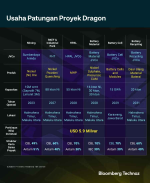
The EV battery assembly project represents the downstream segment of CATL’s cooperation agreement with Indonesia Battery Corporation (IBC), which has recently been referred to as the Dragon Project.

The Chinese battery giant’s investment in the Dragon Project is being carried out through Ningbo Contemporary Brunp Lygend Co Ltd (CBL), a joint venture with Brunp and Lygend. The latter two companies specialize in the production of battery raw materials.

“Specifically for nickel downstreaming, the electric vehicle battery ecosystem that was groundbreaking last year by President Prabowo in Karawang—owned by CATL—is planned to be officially inaugurated in the first half of 2026,” Bahlil said during a press conference at his office on Thursday (January 8, 2026).

The Dragon Project is estimated to require an investment of US$6 billion, or approximately Rp98.58 trillion, based on an exchange rate assumption of Rp16,430 per US dollar.

1768027353194.png
Joint Ventures Under the Dragon Project
(Bloomberg Technoz)


Recently, Indonesia Battery Corporation (IBC) and the CBL consortium have signed a series of joint venture (JV) agreements covering multiple stages of the electric vehicle battery value chain, ranging from upstream mining, midstream processing, to downstream battery cell manufacturing.

On the upstream side, three joint ventures have been established, including PT Sumber Daya Arindo (SDA), which operates nickel mining activities. Antam holds a 51% stake in the company, while the remaining shares are owned by a CBL affiliate, Hongkong CBL Limited (HKCBL).

Another joint venture covers the rotary kiln electric furnace (RKEF) operations and industrial estate development through PT Feni Haltim (PFT), in which Antam holds a 40% ownership stake.

Meanwhile, Antam holds a 30% stake in the joint venture operating the hydrometallurgical high-pressure acid leach (HPAL) processing facility.

Beyond the upstream segment, IBC and CBL have also formed additional joint ventures covering battery raw materials, battery cell assembly, and recycling activities.

In these midstream and downstream cooperation lines, IBC generally holds minority stakes.

IBC owns a 30% stake in both the battery raw material processing project and the battery cell assembly operation. Meanwhile, IBC holds a 40% stake in the battery recycling joint venture.

Previously, IBC Vice President of Commercial and Marketing Bayu Hermawan stated that the development timeline of the Dragon Project has so far remained on track in accordance with the government’s mandate.

To view this content we will need your consent to set third party cookies.
For more detailed information, see our cookies page.

Karawang New Industry City Aerial Tour (June 2023)​


“For the Dragon Project, progress in Karawang has been quite solid,” Bayu said when met on the sidelines of the RE: Invest Indonesia event on Thursday (April 24, 2025).

“Karawang is also not far from our colleagues at LG—the factories are relatively close to each other.”

To view this content we will need your consent to set third party cookies.
For more detailed information, see our cookies page.


Regarding the start of production, Bayu explained that full-scale output would not begin immediately.

“If we talk about when production starts [for the Dragon Project], it will actually be toward the end of 2026, with a gradual ramp-up. It’s not possible to reach 100% capacity right away.”

 
Indonesian homegrown electronic company now enters both EV car and EV bike


To view this content we will need your consent to set third party cookies.
For more detailed information, see our cookies page.

50 YEARS POLYTRON JOURNEY


To view this content we will need your consent to set third party cookies.
For more detailed information, see our cookies page.


To view this content we will need your consent to set third party cookies.
For more detailed information, see our cookies page.


To view this content we will need your consent to set third party cookies.
For more detailed information, see our cookies page.


To view this content we will need your consent to set third party cookies.
For more detailed information, see our cookies page.
 

Electric National Car to Also Have a 5-Passenger Version

1769323382351.png


Key Points / Important Takeaways

  • 🇮🇩 Indonesia’s national electric car (i2C) will not only be a 7-seater SUV, but will also have a 5-seater variant.
  • ⏱️ The 5-seater model is planned for release in the second year after the initial launch.
  • 🎓 Major Indonesian universities (ITB, ITS, UI) are directly involved in design and technology development.
  • 🔋 Battery cell development is being handled by ITS, while UI collaborates internationally on design.
  • 🚗 Automotive experts from Audi, BMW, and Astra are contributing to the project.
  • 🤝 The project emphasizes broad collaboration between industry, academia, and experienced global automotive talent.


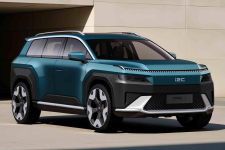
PT Teknologi Militer Indonesia (TMI) has been assigned to develop Indonesia’s national car by forming a special team called Indigenous Indonesian Car (i2C). In addition to a 7-passenger SUV, a 5-passenger version is also planned.

This information was conveyed directly by TMI President Director Harsusanto. He stated that in the second year after the national car’s launch, the company plans to introduce another model.

“In the second or third year, we will make a second model. If not, people will eventually get bored,” said Harsusanto to Kompas.com recently.
“So after the current 7-seater i2C model, in the second year we will release a 5-seater,” he added.

To view this content we will need your consent to set third party cookies.
For more detailed information, see our cookies page.

Astra Otoparts Company Profile​


Harsusanto also explained that in developing this fully Indonesian electric vehicle, TMI is collaborating with many parties, including academics and universities.

“We are involving universities and other institutions—Institut Teknologi Bandung (ITB), Institut Teknologi Sepuluh Nopember (ITS), and Universitas Indonesia (UI). They are involved in design. UI has even collaborated with Italdesign, while ITS has developed battery cells,” he said.
He added that the national car’s development also involves former professionals from major automotive manufacturers such as Audi, BMW, and the Astra Group. All parties are collaborating for Indonesia.


Indonesia Targets H1 2026 Groundbreaking for Titan Battery Project Led by Huayou, EVE​


Antara


January 30, 2026 | 8:41 pm

1769845737547.png
This undated photo taken from the Huayou Indonesia website shows the company's nickel processing facility at the Weda Bay Industrial Park in Halmahera, North Maluku.

Jakarta. Indonesia plans to break ground on a major integrated battery manufacturing project led by China’s Zhejiang Huayou Cobalt and EVE Energy in the first half of 2026, the government said, underscoring its determination to build a domestic electric vehicle (EV) and energy storage supply chain after setbacks to earlier plans.


Energy and Mineral Resources Minister Bahlil Lahadalia said the project would proceed following the signing of a framework agreement between Huayou and EVE Energy and Indonesian partners Aneka Tambang (Antam), Indonesia Battery Corporation (IBC), and Daaz Bara Lestari.


“God willing, we will carry out the groundbreaking this year. In line with President Prabowo Subianto’s direction, we are aiming for the first semester,” Bahlil said on Friday, according to Antara.

The project will be split across multiple locations in line with the battery value chain. Upstream facilities — including nickel smelting, high-pressure acid leaching (HPAL), and the production of precursor and cathode materials — will be located in East Halmahera, North Maluku, close to nickel mining sites. Battery cell manufacturing will be developed separately in West Java.

Read More:​

Indonesia Begins Construction of $5.9 Billion Mega EV Battery Hub With China’s CATL Consortium


Bahlil said the batteries would not be produced solely for electric vehicles. Part of the output is designed for battery energy storage systems to support Indonesia’s planned 100-gigawatt solar power program, a flagship initiative under President Prabowo.


“These batteries will be made in Indonesia, not only for vehicles but also for solar power storage,” Bahlil said. “This is a direct response to the 100-gigawatt solar program, including rural electrification.”


Dragon and Titan Projects
Indonesia’s battery strategy is structured around two large-scale projects designed to cover the entire value chain — from nickel mining and high-pressure acid leaching (HPAL) smelters to precursor and cathode plants, battery cells, and recycling.


The first, known as the Dragon project, is being developed by a consortium led by China’s Contemporary Amperex Technology Co. Ltd. (CATL) in partnership with Antam and IBC. That project centers on a $6 billion EV battery manufacturing plant in Karawang, West Java, where President Prabowo Subianto officiated the groundbreaking in June 2025. The facility is designed to have a capacity of about 15 gigawatt-hours (GWh) and is expected to begin operations by 2028, with commissioning targeted for the first half of 2026.


The second is the $9.8 billion Titan project, now led by Zhejiang Huayou Cobalt and EVE Energy. Titan is a continuation of the earlier Omega project, an integrated battery initiative in Karawang developed by Hyundai LG Industry, a joint venture between Hyundai Motor Group and LG Energy Solution. LG had invested about $1.2 billion in the project, but the Indonesian government later opted not to include the company in the expanded Titan phase, citing slow progress during a multi-year feasibility study. Huayou subsequently stepped in to take over the remaining scope of work, estimated at roughly $8 billion.


Huayou’s investments in Indonesia are more concentrated on the upstream and midstream segments of the battery supply chain. In addition to its partnership with EVE Energy, Huayou operates nickel processing and refining facilities, including HPAL projects in Morowali, Central Sulawesi, through its Indonesian unit, Huayou Nickel Cobalt. The company is also partnering with Antam and IBC under a separate consortium, with a standalone groundbreaking schedule.


Huayou's Karawang project boasts an annual production capacity of 10 gigawatt/hour (GWh) battery cells -- enough to power 150,000 EVs. However, there are plans for a second-phase development to double its production capacity to 20 GWh. The next phase of development is expected to take up $2 billion in investment.


Huayou’s investments in Indonesia are largely concentrated in the upstream and midstream segments of the battery supply chain. In addition to its partnership with EVE Energy, the company operates nickel processing and refining facilities — including high-pressure acid leaching (HPAL) projects in Morowali, Central Sulawesi — through its Indonesian unit, Huayou Nickel Cobalt.


Read More:​

China’s Huayou to Break Ground on Indonesian EV Battery Project before August


The Huayou–EVE project is part of Indonesia’s so-called “Grand Package” battery initiative, initially developed with South Korea’s LG Energy Solution. LG completed the first 10 gigawatt-hours (GWh) of capacity before exiting the project in early 2025. Under the revised plan, Huayou will develop the remaining 20 GWh, bringing total planned capacity to 30 GWh.


Pomalaa Smelter to Operate in Q3, Vale Targets Domestic EV Battery Market​


Azura Yumna Ramadani Purnama
Bloomberg Technoz – Energy

09 March 2026 10:50​


To view this content we will need your consent to set third party cookies.
For more detailed information, see our cookies page.


Bloomberg Technoz, JakartaPT Vale Indonesia Tbk. (INCO) has signaled that it is targeting the domestic electric vehicle (EV) battery market, following the planned operation of its high-pressure acid leach (HPAL) hydrometallurgical smelter in Pomalaa in the third quarter of 2026.

Vale’s Director and Chief Sustainability and Corporate Affairs Officer, Budiawansyah, stated that the company is currently still focused on completing construction of the project, while also exploring potential product offtake opportunities with business partners.

However, he believes the project could become an important component in building Indonesia’s domestic EV battery industry ecosystem.

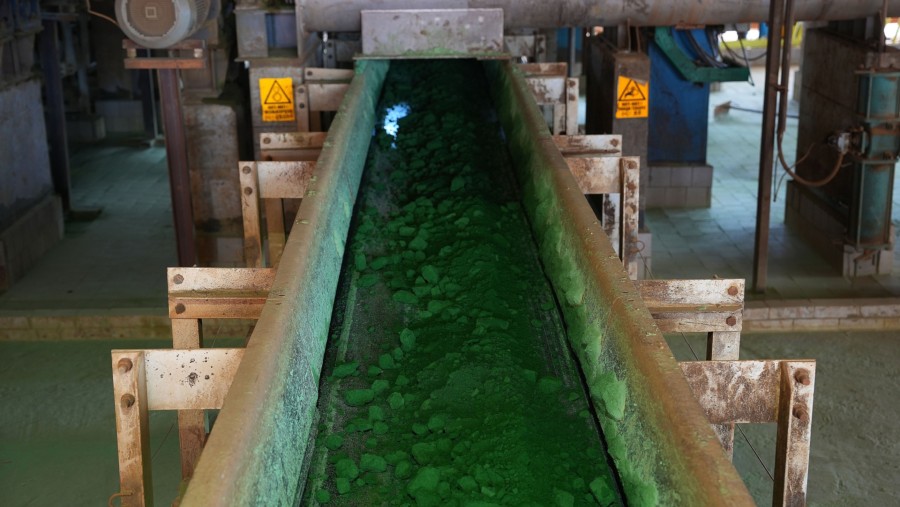
This is particularly relevant because the intermediate product produced, mixed hydroxide precipitate (MHP), is an initial raw material in the EV battery supply chain.

“Regarding offtakers, our focus is on delivering the project, because essentially we are discussing with partners about where this downstream development will go. The government basically wants to see the formation of a domestic [EV battery] industrial ecosystem,” Budiawansyah told reporters, as quoted Monday (March 9, 2026).

“Because we see that the EV supply chain based on MHP (mixed hydroxide precipitate) is still quite long from MHP to the final battery pack. Therefore, we continue to coordinate with the government on how to realize an integrated battery ecosystem in Indonesia,” he emphasized.

Mixed hydroxide precipitate (MHP), a nickel derivative product produced by Harita Nickel. / Bloomberg – Dimas Ardian

Budiawansyah believes that Vale, which also owns nickel mines, will play a role as an anchor industry in developing the EV battery supply chain.

This is because the entire downstream industrial chain cannot operate if upstream ore supply is disrupted.

“Without an anchor industry, downstream development will be difficult. The key question is what core industry will manage the supply chain. That is why the first thing that must be present is the anchor industry,” he said.
Nevertheless, Budiawansyah stated that Vale continues to coordinate with the government regarding the development of the domestic battery ecosystem.

He added that the MHP produced from the Pomalaa project still has a long process ahead if it is to be further processed downstream.

“From what I see in government policy, downstream processing will continue to expand. Especially since MHP production is already available. The technology for producing precursors already exists in Tanjung Weda, so this is a positive signal for forming the ecosystem,” he said.

Pomalaa Project Progress​

As of December 2025, the Indonesia Growth Project (IGP) Pomalaa has attracted attention due to its largest investment value, reaching US$4.5 billion, through collaboration with Ford and Huayou.

Currently:

  • Construction of the HPAL processing plant has reached 50% completion
  • Development of the mining sector has reached 60% completion
The project has reportedly absorbed more than 5,000 workers and is targeted to begin production in August 2026, with a capacity of 120,000 tons of MHP per year.

On February 28, 2026, Vale also sold the first nickel ore from the mine at the project site.

The company targets production of 300,000 tons of limonite per month, or around 9,677 tons per day.


To view this content we will need your consent to set third party cookies.
For more detailed information, see our cookies page.


EV Battery Ecosystem Projects in Indonesia​

Several EV battery ecosystem projects are currently being developed in Indonesia. Some battery factories are even targeted to begin operations in the first half of 2026.

One of them is an EV battery cell factory with a production capacity of 6.9 gigawatt hours (GWh) per year, developed by PT Contemporary Amperex Technology Indonesia Battery (CATIB) in Karawang, West Java.

The plant is scheduled to begin operations in June 2026.

CATIB itself is a joint venture between:

  • Indonesia Battery Corporation (IBC)30% ownership
  • A consortium led by China’s battery giant Contemporary Amperex Technology Co. Ltd (CATL)70% ownership
The factory will produce:

  • Battery cells
  • Battery modules
  • Battery packs
  • Battery Energy Storage Systems (BESS)
The goal is to strengthen Indonesia’s electric vehicle and renewable energy ecosystem.

At the initial stage, production capacity of 6.9 GWh will later be increased to 15 GWh in the second phase.


Dragon and Titan Battery Projects​

The battery factory is part of the Dragon Project, a collaboration between:

  • Indonesia Battery Corporation (IBC)
  • PT Aneka Tambang Tbk (ANTM / Antam)
  • A consortium of CATL and Ningbo Contemporary Brunp Lygend (CBL)
The project has reportedly secured potential battery offtakers.

Meanwhile, IBC and Antam recently signed a framework agreement for the Titan Project with the Huayou consortium at the Ministry of Energy and Mineral Resources (ESDM) in Jakarta on January 30, 2026.

The consortium led by Huayou, called HYD Investment Limited, includes:

  • Huayou
  • EVE Energy Co., Ltd.
  • PT Daaz Bara Lestari Tbk (DAAZ)
The Titan battery ecosystem project has an investment value of US$6 billion, with a targeted battery production capacity of 20 GWh.

The cathode precursor plant from this project will be built in West Java.

Meanwhile, the HPAL hydrometallurgical smelter will be constructed in East Halmahera, North Maluku.

The nickel supply for this smelter will come from Antam’s mining operations.


Indonesia’s nickel at a crossroads in the EV battery race​

As non-nickel EV batteries gain ground globally, the strategy of developing nickel-based batteries is reaching a critical juncture.

Asido Nababan​

The Jakarta Post

1773297780458.png
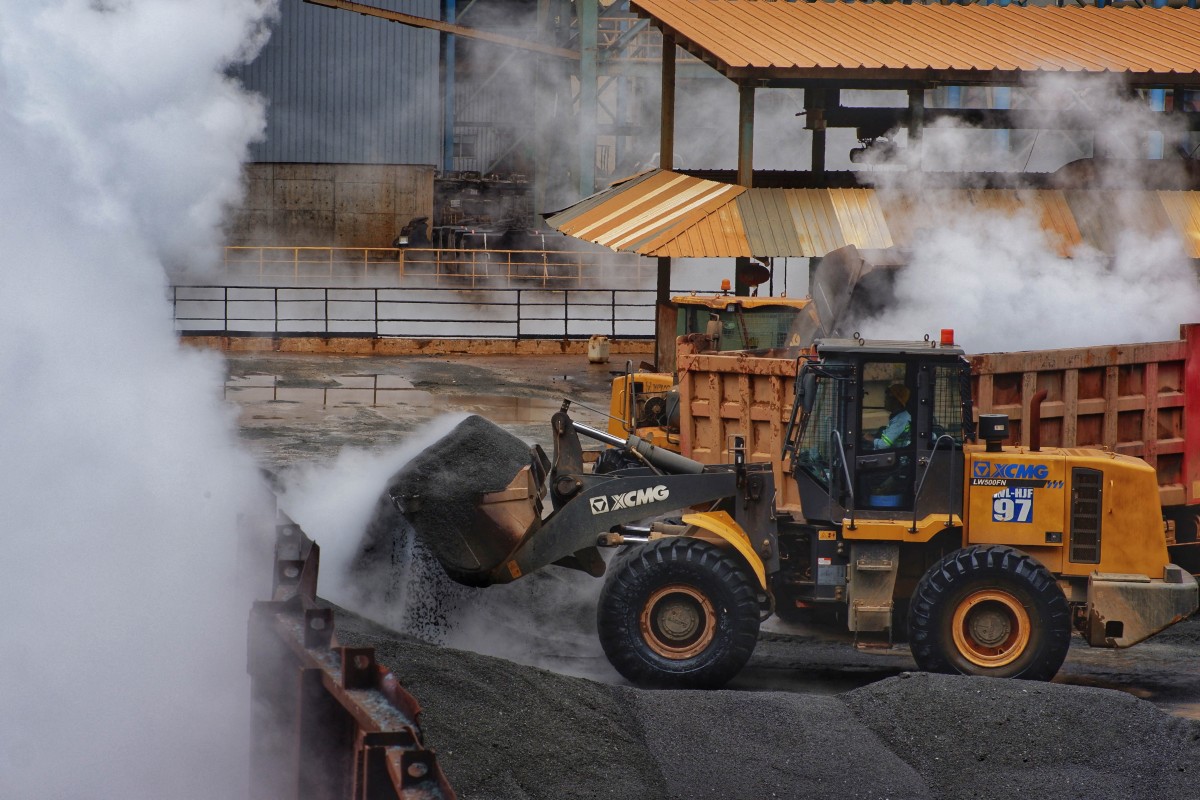
A loader is seen at the processing facilities of Harita Nickel, one of Indonesia's largest nickel producers, on Obi Island, South Halmahera, North Maluku, on September 16, 2025. PHOTO: AFP

March 11, 2026

JAKARTA – Indonesia holds a central position in the global nickel industry. In recent years, the government has tried to maximize the value of this strategic resource through a combination of abundant reserves, export restrictions on unprocessed ore and sustained downstream policy.

After building and maintaining a production chain for stainless steel from upstream to downstream, Indonesia is starting to focus on the development of nickel-based EV batteries. However, given the rapid development of the global battery industry, especially after the rise of non-nickel EV batteries in the global market, the strategy for developing a nickel-based battery is starting to reach a critical point for its future.

Since moving to halt nickel ore exports in 2019, with the ban fully taking effect in 2020, Indonesia has rapidly repositioned itself as a key player in the global nickel-processing industry. What was once largely an exporter of raw ore is now emerging as a major producer of higher-value nickel products.

Driven by a steady inflow of foreign investment, much of it from China, Indonesia has built a more complete nickel supply chain, particularly for saprolite-based ore, allowing domestic processors to turn raw materials into Nickel Pig Iron (NPI), ferronickel, nickel matte and, ultimately, stainless steel and refined nickel.

By 2025, there were 49 Rotary Kiln Electric Furnace (RKEF) nickel smelters operating in Indonesia, processing saprolite nickel ore. This shift marks more than an industrial success story. It reflects Indonesia’s broader ambition to capture more value at home, strengthen its role in global manufacturing and turn its vast mineral wealth into a foundation for long-term economic growth.

After successfully building a saprolite-based nickel ore production chain, Indonesia is seeking to extend its downstream strategy to limonite ore, a key input for the electric vehicle battery industry. Indonesia has, in fact, begun to establish a limonite-based production chain. By 2025, Indonesia has five operating High Pressure Acid Leaching (HPAL) and looking to build more.

However, right now, its capabilities remain concentrated in intermediate products such as Mixed Hydroxide Precipitate (MHP) and nickel sulphate. These are important milestones, but they are not yet the final products of the battery value chain. Additional processing is still needed before they can be transformed into finished battery chemistries such as Nickel Manganese Cobalt (NMC) or Nickel Cobalt Aluminum (NCA), both of which are widely used in EV batteries, particularly in higher-performance vehicle segments.

In that sense, Indonesia has made meaningful progress, but its ambition to become a fully integrated force in the global EV battery industry is still taking shape.

That challenge has become more pronounced as the global battery market shifts. Nickel-based batteries were especially attractive when the EV boom accelerated early in the decade, because automakers were prioritising driving range and performance, particularly companies such as Tesla and European car brands. According to the International Energy Agency (IEA), in 2022, nickel-based batteries still accounted for about 60 percent of the global EV battery market.

But the landscape has changed quickly. LFP batteries, which held less than 10 percent of the electric car market in 2020, have since surged and accounted for half of the global EV battery market in 2025. In the future, Bloomberg also expects the market share of nickel-based batteries to fall to less than 40 percent of the global battery market.

LFP’s rise has been driven by prices that are, on average, more than 40 percent lower than those of nickel-based battery alternatives. China’s ability to mass-produce LFP batteries has been central to this market shift. China dominates LFP production, accounts for nearly 80 percent of global EV battery cell manufacturing and has pushed battery prices sharply lower.

Even in Indonesia’s EV market, more than 90 percent of EV cars sold in 2025 used LFP batteries instead of nickel-based batteries. This is because cars that use nickel-based batteries are more expensive and therefore less relevant to most Indonesian consumers. In addition, as a country with high temperatures, the use of nickel-based batteries may pose additional risks for consumers.

However, the market is not abandoning nickel-based batteries, rather, it is using them more selectively. LFP is gaining ground in lower-cost, mass-market vehicles, while nickel-based batteries are increasingly concentrated in longer-range, premium and performance-oriented segments.

For Indonesia, that means nickel-based batteries still have a future, but they can no longer be treated as the only future of the EV industry. Looking further ahead, emerging technologies such as solid-state batteries could add another layer of competitive pressure, although their near-term commercial role remains limited.

Indonesia should not abandon its EV battery ambitions, because battery-grade nickel processing will remain strategically important in the global energy transition. But the next step in policy should be broader and more flexible.

Rather than focusing too narrowly on battery intermediates alone, such as MHP and nickel sulphate, Indonesia would be better served by expanding its ability to process limonite into higher-purity nickel and other refined nickel products. Refined nickel offers wider industrial uses beyond EVs, including alloys, plating and specialty chemicals, giving Indonesia access to a broader and potentially more resilient market base.

Stainless steel is still by far the largest source of global nickel demand, while batteries remain an important but smaller share, which is precisely why diversification matters.

In practical terms, the government should continue supporting battery projects, but place equal emphasis on upgrading refining capacity, improving processing technology and attracting investment into high-purity nickel products with multiple ends uses. Such a strategy would leave Indonesia less exposed to shifts in battery chemistry while strengthening its position as a producer not only of battery inputs, but also of refined nickel products that remain valuable across a much wider industrial landscape.


Geo Dipa, Lilac Partner on Indonesia’s First Geothermal Lithium Project​


Heru Andriyanto
March 18, 2026 | 11:46 pm

1773940167325.png
Energi Minister Bahlil Lahadalia, third right, attends the signing ceremony of the cooperation agreement in lithium extraction between Geo Dipa Energi and US-based Lilac Solutions in Tokyo, Saturday, March 14, 2026. (Handout)

Tokyo. Indonesia and the United States have recently signed a cooperation agreement to extract lithium from geothermal brine, marking a strategic step to strengthen the global electric vehicle (EV) supply chain.


Energy and Mineral Resources Minister Bahlil Lahadalia witnessed the signing during a visit to Tokyo, where he attended the Indo-Pacific Energy Security Ministerial and Business Forum.


The agreement brings together state-owned geothermal developer Geo Dipa Energi and US-based Lilac Solutions to harness Indonesia’s geothermal resources for lithium extraction.


Earlier this month, Lilac announced support from the US Trade and Development Agency to deploy its technology in Indonesia, aiming to diversify critical mineral supply chains by increasing lithium recovery from geothermal operations. The initiative is expected to establish Indonesia’s first facility to extract lithium from geothermal brine.


“The project will create a trusted source of lithium supply — an essential component in modern technologies — while supporting a vital renewable energy resource in Indonesia,” Lilac said in a statement.

“The project will create a trusted source of lithium supply — an essential component in modern technologies — while supporting a vital renewable energy resource in Indonesia,” Lilac said in a statement.


Read More:​

BNI Agrees to Fund Geo Dipa Energi's 500 MW Geothermal Power Generation


The company plans to deploy its ion-exchange direct lithium recovery technology at the Dieng geothermal field in Central Java, enabling the production of high-grade lithium carbonate through an environmentally responsible process.


Lilac CEO Raef Sully said the partnership highlights the global competitiveness of US technology in critical minerals.


“Indonesia’s geothermal fields hold significant untapped lithium potential, and this project will demonstrate that ion-exchange technology can unlock it responsibly and at scale,” he said.


USTDA’s involvement is also expected to connect Geo Dipa with potential US buyers of the lithium produced. By demonstrating the scalability of the technology, the project aims to attract financing for future expansion and unlock broader opportunities across Indonesia’s geothermal sector and the wider Indo-Pacific region.


Read More:​

Japan-Backed Muara Laboh Geothermal Reaches Financial Close for Expansion

Geo Dipa CEO Yudistian Yunis said the initiative could support Indonesia’s domestic battery industry and other lithium-based applications by unlocking additional value from renewable resources.


“Lithium is naturally present in geothermal brine that is already part of existing operations, allowing us to generate economic benefits for local communities while maintaining strong environmental stewardship,” Yudistian said.


During his visit, Bahlil also held meetings with regional counterparts to deepen energy cooperation. He discussed plans with Singapore’s Manpower Minister Tan See Leng to develop the Riau Islands as a green technology industrial hub.


In addition, Bahlil met Brunei’s Deputy Energy Minister Awang Haji Mohamad Azmi to explore collaboration ranging from oil supply security to renewable energy development.


“Amid global energy supply uncertainties, we must strengthen cooperation that lifts each other up, rather than undermines one another,” Bahlil said in a statement.


Users who are viewing this thread

Country Watch Latest

Latest Posts

Back
Top