Indonesia's Manufacturing Sector

Freeport Targets More Than $7 Billion in Annual State Revenue Contributions​


Antara
July 15, 2026 | 3:19 pm

1784112591713.png
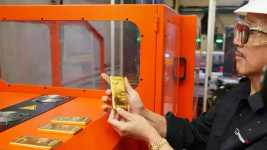
In this undated photo, Freeport Indonesia CEO Tony Wenas holds a gold bar that will be sent to state-owned gold supplier Aneka Tambang (Antam). (Photo courtesy of Freeport Indonesia)


Jakarta. Mining giant Freeport Indonesia expects its annual contribution to the Indonesian government to exceed $7 billion once production at its Papua mining operations returns to full capacity and its copper smelter complex in Gresik, East Java, is operating at full scale, President Director Tony Wenas said on Tuesday.

Tony said the milestone will be driven by the full operation of the company's new copper smelter and precious metals refinery, allowing the entire copper value chain -- from concentrate to refined copper, gold, and silver -- to be processed domestically.

“With the operation of the smelter and precious metals refinery in Gresik, Indonesia can now process the entire copper value chain at home. This marks a major step forward for the country's mineral downstream industry,” Tony said.

The new smelter has the capacity to process 1.7 million metric tons of copper concentrate annually. Together with the expanded PT Smelting facility in Gresik, Freeport's total domestic refining capacity has reached around 3 million metric tons per year.

The adjacent precious metals refinery can process 6,000 metric tons of anode slime annually, producing refined gold, silver, platinum group metals, and other by-products. State-owned miner PT Aneka Tambang (Antam) is expected to purchase all of the refinery's gold output.


Recovery Underway
The smelter's operations were disrupted after a fire damaged its gas cleaning plant in October 2024. Although repairs were completed and production resumed in May 2025, operations were interrupted again after a landslide at the Grasberg Block Cave mine halted concentrate supplies.

Freeport is using the current shutdown to carry out comprehensive inspections and optimize the facility before concentrate shipments from Papua resume in September 2026.

“Our priority is to restore mining operations safely so concentrate supplies can return to normal. Once the upstream operation has recovered and the smelter is running at full capacity, the benefits of downstream processing will become much more significant through higher metal production, stronger domestic industry, and increased state revenue,” Tony said.

Mining operations are expected to run at about 65% of capacity this year as recovery work continues. Output is projected to rise to around 75% in the first half of 2027 before returning to full capacity by the end of that year.

Copper production is forecast to increase from about 800 million pounds in 2026 to 1.2 billion pounds in 2027 and 1.6 billion pounds in 2028. Gold production is expected to rise from 700,000 ounces this year to 1 million ounces next year and 1.4 million ounces in 2028.

As production recovers, Freeport expects its payments to the government -- including taxes, royalties, dividends, and other obligations -- to increase from about $2.6 billion in 2026 to $4.7 billion in 2027 before surpassing $7 billion annually once operations return to full capacity.


Patimban Port Officially Launches International Container Shipping Services​


Kamis, 16 Jul 2026

To view this content we will need your consent to set third party cookies.
For more detailed information, see our cookies page.


JAKARTA – The arrival of the Mediterranean Shipping Company (MSC) Aria III, a container vessel measuring more than 200 meters in length, at the container terminal of Patimban Port in Subang, West Java, marks the beginning of a new phase in the development of Indonesia's logistics ecosystem, further integrating the country into global trade networks.

The vessel, which arrived from Singapore before continuing its voyage to Laem Chabang (Thailand) and the major Chinese ports of Shekou, Ningbo, and Shanghai, represents the launch of Patimban Port's first international container shipping service.

According to the United Nations Conference on Trade and Development (UNCTAD), approximately 80% of global trade by volume is transported by sea, making port efficiency a key determinant of a country's international competitiveness. This underscores the strategic importance of Patimban Port to Indonesia's national logistics sector.

Against this backdrop, Yukki Nugrahawan Hanafi, Senior Vice President of the International Federation of Freight Forwarders Associations (FIATA) and Commissioner of PT Pelabuhan Patimban Internasional (PPI), said the introduction of MSC's regular container service represents more than the addition of a new shipping route—it marks the emergence of a new international logistics ecosystem that will strengthen Indonesia's competitiveness in global trade.

"As the world's largest archipelagic nation, Indonesia needs more than just large ports. We need an integrated port network capable of handling international trade efficiently while strengthening the resilience of our national supply chain amid geopolitical uncertainty and global disruptions," Yukki said.
He added that the successful launch of MSC's service is expected to encourage additional international shipping lines to operate from Patimban, expanding connections to Asia, the Middle East, Europe, and the Americas.

Patimban's container terminal currently occupies 10 hectares with an annual handling capacity of 250,000 twenty-foot equivalent units (TEUs). Terminal operator PT Patimban Global Gateway Terminal (PGT) plans to expand capacity to 1.65 million TEUs per year.

In the long term, Patimban is designed to handle 7.5 million TEUs annually at its container terminal and 600,000 vehicles per year at its automotive terminal, making it one of Indonesia's largest integrated port developments.

Capacity expansion is being implemented in phases. The container terminal began operations in January 2026 with one Mobile Harbour Crane (MHC), followed by the addition of two more MHCs in April 2026.

Further equipment deployment is scheduled throughout 2026. By September, the terminal is expected to receive nine Rubber-Tyred Gantry (RTG) cranes, three Ship-to-Shore (STS) cranes, four reach stackers, and 16 terminal trucks. By December, three STS cranes and nine Electric Rubber-Tyred Gantry (E-RTG) cranes are expected to be fully installed and operational.

According to Yukki, once all planned equipment is commissioned, the terminal's annual capacity is projected to increase to approximately 800,000 TEUs.

"The investment in new equipment will not only increase terminal capacity but also improve cargo handling productivity, reduce vessel turnaround time, and enhance schedule reliability for shipping services," he said.

In addition to its container terminal, Patimban has operated an automotive terminal since 2022 on a 22.4-hectare site with an annual capacity of 218,000 completely built-up (CBU) vehicles for both export and import activities.

Improving land connectivity remains a key priority in establishing Patimban as a world-class port. A 37-kilometer toll road linking the Cikopo–Palimanan Toll Road to Patimban is being constructed in phases through the end of 2026, with additional sections expected to become operational in 2027.

Once completed, the toll road is expected to reduce travel time from the East Karawang industrial area and the northern coastal region of West Java from approximately 1.5–2 hours to just 30–40 minutes.


PT Alamtri Resources Indonesia Officially Begins Primary Aluminum Exports​


To view this content we will need your consent to set third party cookies.
For more detailed information, see our cookies page.


PT Alamtri Resources Indonesia Tbk (ADRO) has officially commenced exports of primary aluminum to international markets.

In June 2026, the company completed its inaugural shipments to the United States and South Korea.

According to data from Export Genius, PT Kalimantan Aluminium Industry exported approximately 31,494 metric tonnes of aluminum to the United States and 3,569 metric tonnes to South Korea.

The aluminum smelter entered the first-phase commissioning stage at the end of last year.

The export milestone comes as the United States is seeking alternative sources of aluminum supply following disruptions to shipments from the Gulf region amid the conflict involving the United States, Israel, and Iran.
 

MIND ID, LEN, Krakatau Steel, and Perminas Collaborate to Build Indonesia's Critical Minerals Supply Chain​


Verda Nano Setiawan, CNBC Indonesia
15 July 2026 13:40

1784193376607.png

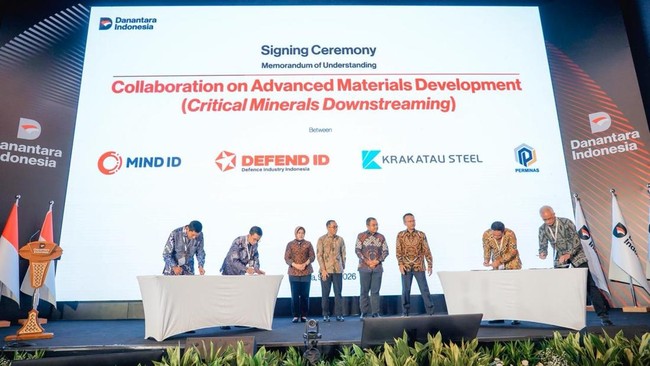
JAKARTA, CNBC Indonesia – State-owned mining holding company MIND ID, together with PT LEN Industri, PT Krakatau Steel, and PT Perminas, has formed a strategic partnership to develop Indonesia's national critical minerals supply chain. The collaboration aims to strengthen the availability of raw materials for strategic industries while increasing the value added of Indonesia's mineral resources.

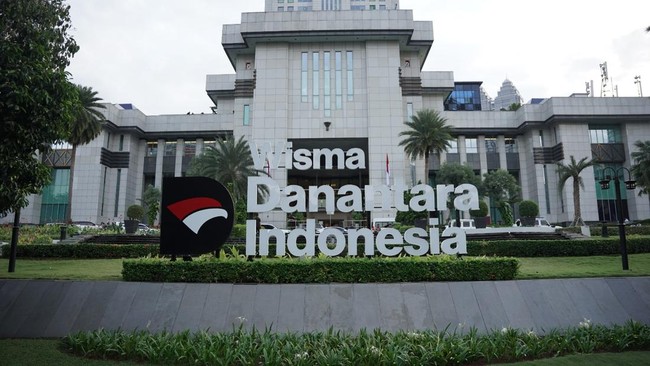
The partnership agreement was signed during the Danantara's Advanced Materials Industry Dialogue: From Minerals to Manufacturing, held at Wisma Danantara Indonesia on July 9–10, 2026.

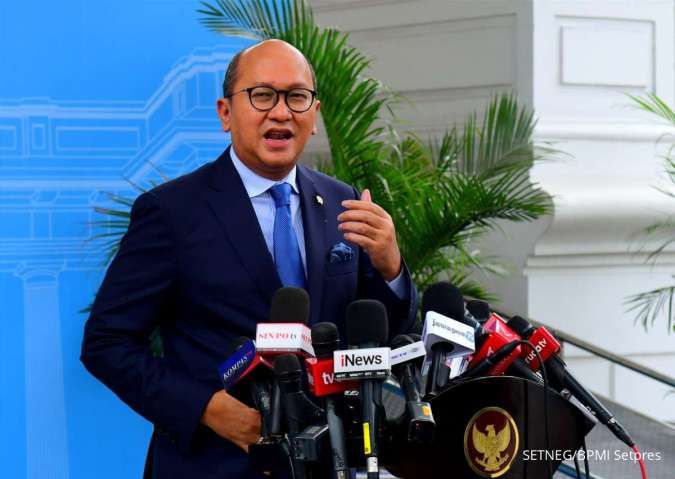
Danantara Indonesia CEO Rosan Roeslani said Indonesia must strengthen its position in the global industrial value chain by maximizing the potential of its abundant mineral resources. He encouraged all stakeholders to move beyond resource extraction toward higher-value industrial activities.

According to Rosan, Indonesia possesses substantial reserves of strategic minerals, including nickel, bauxite, copper, tin, and rare earth elements. These resources serve as the foundation for future technologies such as electric vehicle batteries, semiconductors, defense systems, and clean energy technologies.

"For decades, however, we have too often stopped at the extraction stage—exporting raw materials and then importing finished products at many times their original value," Rosan said.
The collaboration is intended to optimize the supply and offtake chain for critical minerals and advanced materials to meet the needs of Indonesia's strategic industries.

It is also expected to accelerate the development of a large-scale domestic advanced materials industry through joint technology development while supporting higher value-added economic growth across strategic industrial sectors.

The initiative extends beyond the development of Indonesia's electric vehicle industry and also targets the aerospace, maritime, basic industrial components, defense, and power sectors.

Danantara Indonesia Chief Technology Officer Sigit P. Santosa said the development of the advanced materials midstream industry should be viewed as a key component of Indonesia's broader industrial transformation.

According to Sigit, Indonesia's objective is to transition toward a technology-driven, high-value manufacturing economy while securing greater control over future strategic supply chains.

He emphasized that Indonesia must capitalize on growing regional demand, strengthen domestic technological capabilities, and compete globally to achieve sustainable economies of scale. As a result, the development of the advanced materials industry should be pursued through a more integrated strategy to enhance the competitiveness of Indonesia's manufacturing sector.

Sigit noted that Indonesia's competitive advantage lies not only in its mineral resources but also in its ability to transform those resources into an integrated advanced materials ecosystem supporting battery manufacturing, clean energy, defense, transportation, and other strategic technologies of the future.

"Nickel remains one of Indonesia's key advantages. However, our broader objective is to build a more diversified, higher value-added, and globally competitive industrial base," Sigit said.


PTDI Plans to Relocate Aircraft Manufacturing Operations to Kertajati​

Ilyas Fadilah - detikFinance
Rabu, 15 Jul 2026

To view this content we will need your consent to set third party cookies.
For more detailed information, see our cookies page.

Kertajati, West Java


JAKARTA
– The Indonesian government has begun preparations to develop Kertajati International Airport in Majalengka, West Java, into the country's national aerospace industrial hub. As part of the initiative, PT Dirgantara Indonesia (PTDI) and PT Bandar Udara Internasional Jawa Barat (BIJB) signed a Memorandum of Understanding (MoU) to support the development.

Coordinating Minister for Infrastructure and Regional Development Agus Harimurti Yudhoyono (AHY) said the partnership forms part of the government's strategy to transform Kertajati into both an international airport and an Aerospace Industrial Zone.

"Today we witnessed the signing of an MoU between PTDI and BIJB as part of our shared commitment to develop the Kertajati area into one of Indonesia's aerospace industry hubs," AHY said during a press conference in Jakarta on Wednesday (July 15, 2026).
According to AHY, Kertajati offers an ideal location for PTDI's future expansion. Compared with Bandung, where urban development has become increasingly dense, Kertajati provides significantly larger land availability while offering strategic connectivity to industrial centers in Bekasi, Karawang, Purwakarta, Patimban Port, Cirebon, and Central Java.

Under the plan, PTDI's existing facilities in Bandung will gradually be transformed into the company's research and innovation center, while manufacturing and operational activities will eventually be relocated to Kertajati.

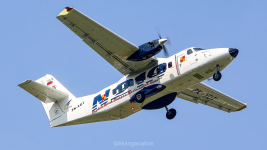
PTDI President Director Gita Amperiawan explained that the company has already been utilizing Kertajati Airport for flight testing of its Medium Altitude Long Endurance (MALE) unmanned aerial vehicle (UAV) and the N219 aircraft. He noted that Husein Sastranegara Airport in Bandung is no longer suitable for the company's long-term manufacturing requirements.

Besides being surrounded by increasingly dense urban development, Husein Sastranegara's 2,400-meter runway is considered insufficient for the maiden flights of newly developed aircraft, which typically require a runway of approximately 3 kilometers to meet safety standards.

"When an aircraft flies for the first time, a runway of around three kilometers is recommended for safety during takeoff. Bandung's runway, at approximately 2,400 meters, is no longer suitable for aircraft manufacturing activities," Gita said.
He also noted that PTDI supplies aircraft components to global aerospace manufacturers including Airbus and Boeing. Currently, those components must first be transported by land to Jakarta before being exported overseas. With operations at Kertajati, shipments will be able to depart directly from the airport.

"After production, we currently have to transport our components to Jakarta before they can be flown to Airbus and Boeing. These are large containers. Once we operate from Kertajati, we will be able to ship them directly to our international customers," Gita explained.
PTDI plans to begin utilizing Kertajati in August 2026. The immediate priority will be accelerating aircraft flight testing to ensure the company achieves its October 2026 fleet readiness target for aircraft deliveries to the Indonesian Armed Forces (TNI).

1784193827195.png

Initially, PTDI will relocate flight testing activities for aircraft undergoing fleet readiness programs, followed by testing of the MALE UAV and the N219, including aircraft scheduled for delivery to the Indonesian Army later this year.

The next phase of development will include the construction of a Maintenance, Repair and Overhaul (MRO) facility at Kertajati. PTDI has allocated approximately 150–200 hectares for future expansion covering four business portfolios: aircraft manufacturing, MRO services, aerostructure production, and engineering services, including drone development.

In the longer term, PTDI plans to relocate its aircraft production lines to Kertajati. The N219 is expected to become the first aircraft manufactured at the new site to meet growing demand from both the Indonesian Armed Forces and the commercial aviation sector.

"The third phase will be relocating production to Kertajati. The first production line to move will most likely be the N219. Its production equipment is relatively new, and with support from the government, we expect demand to increase significantly, both from the military and commercial aviation," Gita said.


Downstream Industries Account for Nearly 30% of Indonesia's New Investment​


Arnoldus Kristianus
July 16, 2026 | 5:00 pm

1784273763845.png
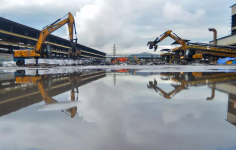
Workers operate excavators to move nickel blocks at Harita Nickel's smelting facility on Obi Island in South Halmahera Regency, North Maluku, on Tuesday, Sept. 16, 2025. (Antara Photo/Iggoy el Fitra)


Jakarta. The downstream industrialization program attracted Rp 300.1 trillion ($16.7 billion) in investment during the first half of 2026, accounting for 29.7% of total investment realization and underscoring the government's push to add more value to the country's natural resources before export.

Investment Minister Rosan Roeslani said the sector's contribution has increased significantly since 2023, when downstream industries accounted for only about 24% to 25% of total investment.

“We are seeing a sharp upward trend,” Rosan told reporters at the Presidential Palace on Thursday.

Indonesia launched its downstream industrialization strategy under former President Joko Widodo by banning exports of selected raw commodities -- including nickel ore and copper concentrate -- to encourage domestic processing and manufacturing. The policy has since expanded beyond mining to include agriculture and plantation commodities.

The mineral sector remained the largest recipient of downstream investment, attracting Rp 206.5 trillion, led by nickel, bauxite, copper, iron and steel, and silica processing.

Downstream investment in plantations and forestry reached Rp 54.4 trillion, driven primarily by palm oil, timber, and rubber processing, while the oil and gas sector attracted Rp 35.4 trillion.

Investment in downstream agriculture and fisheries totaled Rp 3.8 trillion, covering commodities such as sea salt, tuna, shrimp, seaweed, crab, and tilapia.

Foreign investors contributed Rp 212.8 trillion, or 70.9%, of total downstream investment, with Hong Kong, Singapore, China, Japan, and the United States ranking as the five largest sources of capital.


Overall Investment Nears Half-Year Target
Indonesia attracted Rp 1,010.6 trillion ($56.1 billion) in total investment during the first half of 2026, an increase of 7.2% from a year earlier despite continuing geopolitical and economic uncertainty.

The figure represents 49.5% of the government's full-year investment target of Rp 2,041.3 trillion.

“We have recorded Rp 1,010.6 trillion in investment realization during the first half, which keeps us on track to meet this year's target,” Rosan said.


Downstream Investment Reaches IDR 152.7 Trillion (9.4 Billion USD) in Q2 2026, Bauxite Surpasses Nickel​


To view this content we will need your consent to set third party cookies.
For more detailed information, see our cookies page.

Batang Industrial zone, Central Java

JAKARTA
– Investment in Indonesia's downstream processing sector remained a key driver of capital inflows in the second quarter of 2026. Realized downstream investment reached IDR 152.7 trillion, up 5.7% year-on-year, accounting for 29.8% of total national investment during the period.

Minister of Investment and Downstream Industries and Head of the Investment Coordinating Board (BKPM), Rosan Perkasa Roeslani, said downstream investment continued to be dominated by the mineral sector. For the first time, however, bauxite overtook nickel as the largest destination for downstream investment.

"Nickel has usually ranked first. This time, however, there has been a shift. Bauxite has become the largest investment destination because several bauxite projects are currently being developed by both domestic and foreign investors," Rosan said during a press conference at the Presidential Palace on Thursday (July 16, 2026).
Rosan said downstream investment in the mineral sector totaled IDR 108.2 trillion, representing 70.9% of total downstream investment. The figure comprised:

  • Bauxite: IDR 40.1 trillion
  • Nickel: IDR 29.4 trillion
  • Copper: IDR 16.7 trillion
  • Iron and steel: IDR 13.2 trillion
  • Silica sand: IDR 4.0 trillion
  • Other minerals—including tin, gold, silver, cobalt, manganese, coal, and Buton asphalt: IDR 4.7 trillion
The plantation and forestry sector recorded downstream investment of IDR 24.6 trillion, led by palm oil at IDR 11.2 trillion, followed by logs at IDR 9.3 trillion, rubber at IDR 2.6 trillion, and other commodities—including nutmeg, pine, coconut, cocoa, and biofuels—worth IDR 1.5 trillion.

Meanwhile, downstream investment in the oil and gas sector reached IDR 17.7 trillion, consisting of IDR 12.8 trillion in oil and IDR 4.9 trillion in natural gas. The fisheries and marine sector attracted IDR 2.2 trillion, covering commodities such as salt, tuna, skipjack, frigate tuna, shrimp, seaweed, crab, and tilapia.

Regionally, downstream investment remained concentrated outside Java, which received IDR 116 trillion, or 75.9% of the total. Investment on Java Island amounted to IDR 36.7 trillion, representing 24.1%.

The five largest destinations for downstream investment were:

  • North Maluku: IDR 35.3 trillion
  • Central Sulawesi: IDR 32.0 trillion
  • West Java: IDR 12.8 trillion
  • West Nusa Tenggara: IDR 10.7 trillion
  • East Java: IDR 10.4 trillion
By source of funding, foreign direct investment (FDI) remained dominant at IDR 114.4 trillion, accounting for approximately 75% of total downstream investment, while domestic investment contributed IDR 38.3 trillion, or 25%.

Hong Kong was the largest source of downstream investment, contributing IDR 52.4 trillion, followed by Singapore (IDR 29.8 trillion), China (IDR 10.7 trillion), Japan (IDR 4.0 trillion), and the United States (IDR 3.9 trillion).

Rosan said the government will continue promoting downstream industrialization beyond initial processing stages toward the production of higher value-added products.

He added that Indonesia's nickel downstream ecosystem could serve as a model for other strategic commodities. The country has already established a relatively complete nickel value chain, ranging from nickel ore, nickel matte, nickel sulfate, cathodes, anodes, battery cells, and battery packs to electric vehicle battery recycling facilities.

"Going forward, we want to build the same ecosystem for bauxite, as well as for palm oil, rubber, timber, silica sand, and other commodities. Our focus is on commodities where Indonesia has a competitive advantage and which are already included in the national downstream industrialization blueprint," Rosan said.


Pupuk Indonesia's Net Profit Surges 253% in First Half of 2026 as Transformation Delivers Results​


14 Juli 2026,


To view this content we will need your consent to set third party cookies.
For more detailed information, see our cookies page.


JAKARTA – State-owned fertilizer producer PT Pupuk Indonesia (Persero) reported a net profit of IDR 8.51 trillion in the first half of 2026, an increase of 253% year-on-year.

The strong earnings growth was supported by revenue of IDR 59.67 trillion, up 51% from the same period a year earlier.

The company also recorded a 140% increase in EBITDA to IDR 14.28 trillion during the period.

President Director Rahmad Pribadi said the financial performance was driven by higher production volumes and improved operational efficiency, reflecting the company's ongoing business transformation.

He added that consistent operational efficiency and cost discipline have enabled the company to achieve sustainable growth regardless of commodity price cycles.

"With the government's support through Danantara, our comprehensive business transformation has begun to deliver tangible results, as reflected in our strong financial performance. With an increasingly solid financial foundation, we are confident this growth will be sustainable—not only for the company but also through greater contributions to Indonesia's food security," Rahmad said in a written statement on Tuesday (July 14, 2026).
Rahmad said the transformation has also strengthened Pupuk Indonesia's business resilience by making the company more adaptive and sustainable amid global economic uncertainty.

The company has diversified its revenue base by expanding contributions from non-subsidized fertilizer products and non-fertilizer businesses, while broadening its raw material sourcing and contract arrangements to mitigate the impact of global commodity price volatility.

Over the past several years, Pupuk Indonesia has implemented a comprehensive transformation program encompassing operational and digital excellence, business streamlining across the holding company, improvements to the Public Service Obligation (PSO) fertilizer distribution system, and stronger commercial operations.

The transformation has also been supported by Presidential Regulation No. 113 of 2025, which the company described as a key milestone in improving operational efficiency.

As part of its long-term transformation agenda, Rahmad said Pupuk Indonesia plans to revitalize seven fertilizer plants over the next five years, in line with Danantara's strategy to optimize the productivity and value of state-owned enterprise assets.

The company is also preparing several growth initiatives, including expanding and diversifying its product portfolio through the development of methanol and downstream derivatives, clean ammonia, industrial support businesses, and other strategic ventures.

The transformation has also improved farmers' access to subsidized fertilizer. During 2025, Pupuk Indonesia distributed 8.11 million tonnes of subsidized fertilizer, an increase of 10.68% compared with the previous year.

The improvement was supported by the implementation of the i-Pubers digital distribution system, which has simplified and accelerated fertilizer redemption, as well as Presidential Regulation No. 6 of 2025, which streamlined the governance of subsidized fertilizer distribution to make deliveries faster, easier, and more targeted.

As of July 12, 2026, the company had distributed 5.13 million tonnes of subsidized fertilizer, equivalent to 52% of the government's annual allocation of 9.8 million tonnes.

"In line with the state-owned enterprise transformation agenda promoted by Danantara, all of these structural changes ultimately serve one objective: ensuring affordable fertilizer reaches farmers more quickly while maintaining healthier fiscal costs for the government and strengthening national food security," Rahmad said.
Operationally, Pupuk Indonesia continues to emphasize efficiency and asset optimization as long-term business practices to maintain its competitiveness. With a national production capacity of approximately 14.8 million tonnes per year, the company said it has sufficient capacity to meet domestic fertilizer demand while responding to global market opportunities without disrupting supplies to Indonesian farmers.

"For us, sustainable profitability is not about achieving the highest earnings every year, but about building a strong enough foundation to continue growing despite changing global conditions. Our resilience is measured not only by our ability to withstand industry volatility, but also by ensuring that this growth delivers tangible benefits to small businesses and farmers," Rahmad said.


Harita Nickel Accelerates Three Strategic Projects on Obi Island​


1 July 2026

1784429192782.png
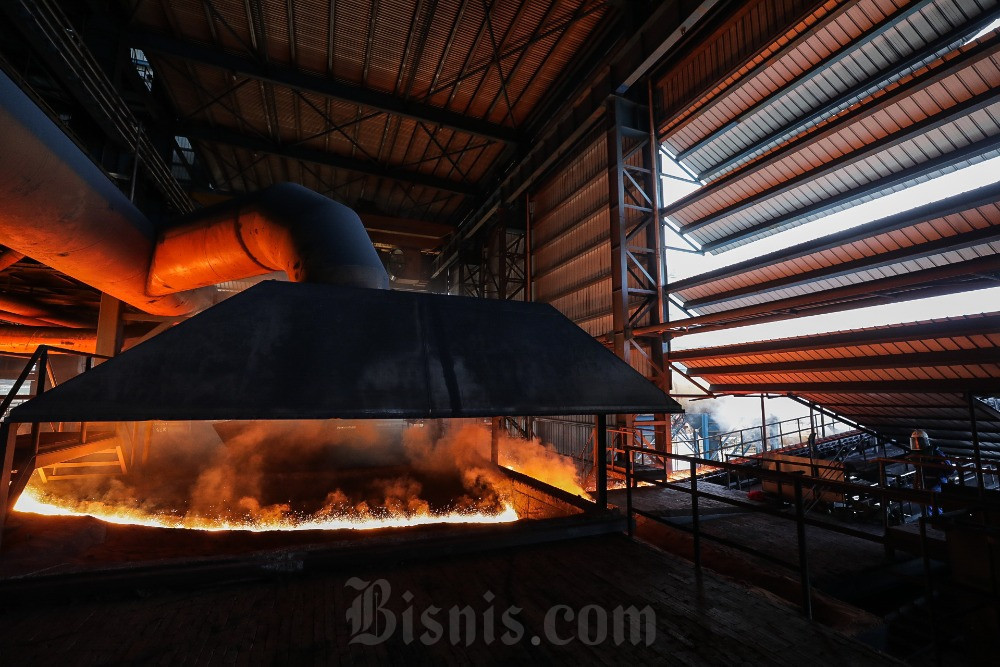
Workers cast ferronickel at one of Harita Nickel's mining and processing facilities on Obi Island, North Maluku. Photo: Bisnis/Fanny Kusumawardhani.


JAKARTA – Indonesian integrated nickel mining and downstream producer PT Trimegah Bangun Persada Tbk. (NCKL), or Harita Nickel, is accelerating the completion of three strategic projects at its industrial complex on Obi Island, North Maluku.

The projects include the company's third Rotary Kiln Electric Furnace (RKEF) nickel smelter, a limestone-to-quicklime processing plant, and a tailings recycling facility.

President Director Roy Arman Arfandy said the third RKEF smelter, being developed by subsidiary PT Karunia Permai Sentosa (KPS), will comprise 12 production lines with an installed capacity of 185,000 tonnes of nickel metal in ferronickel (FeNi) per year.

"KPS is our third RKEF plant and is currently in the final stages of completion," Roy said during an online public presentation on Tuesday (June 30, 2026).
The company completed construction of 10 production lines during 2025, while the remaining two lines were finished in the first quarter of 2026, marking the completion of the plant's main construction phase.

Management has begun gradually ramping up operations on several production lines toward full commercial capacity.

Harita Nickel aims to have all 12 production lines at KPS operating at full capacity by the end of 2026.

Once fully operational, KPS is expected to increase Harita Nickel's total installed ferronickel production capacity on Obi Island to 305,000 tonnes of nickel per year by the end of 2026, complementing the company's two existing smelters.

The first smelter, operated by PT Megah Surya Pertiwi (MSP), has an annual production capacity of 25,000 tonnes of nickel, while PT Halmahera Jaya Feronikel (HJF) operates eight production lines with an installed capacity of 95,000 tonnes per year.

In addition to expanding ferronickel production, Harita Nickel is accelerating the development of supporting integrated facilities to reduce reliance on external suppliers.

One of the projects is a quicklime plant being developed through joint venture PT Cipta Kemakmuran Mitra (CKM).

The facility will produce quicklime, a key chemical used in processing low-grade limonite nickel ore at the company's High-Pressure Acid Leach (HPAL) operations.

"CKM will produce quicklime for use in the HPAL process at both PT Halmahera Persada Lygend and PT Obi Nickel Cobalt, our two HPAL plants currently operating on Obi Island," Roy said.
Output from CKM's initial production line will be dedicated to supplying the company's two existing HPAL facilities operated by subsidiaries PT Halmahera Persada Lygend (HPL) and PT Obi Nickel Cobalt (ONC).


Danantara Advances 26 Downstream Projects Worth IDR 225 Trillion (US$13.9 Billion)​


Romys Binekasri, CNBC Indonesia
13 July 2026 19:50


To view this content we will need your consent to set third party cookies.
For more detailed information, see our cookies page.


JAKARTA – Indonesia's sovereign investment agency, Daya Anagata Nusantara Investment Management Agency (Danantara), is accelerating the implementation of strategic downstream industrialization projects aimed at increasing the value of the country's natural resources, strengthening domestic industries, and creating jobs.

Danantara Chief Operating Officer Dony Oskaria said the agency is currently developing 26 downstream projects with a combined investment value of IDR 225 trillion (approximately US$13.9 billion). The projects are expected to create 37,833 jobs.

The projects are being implemented in two phases.

The first phase, launched with a groundbreaking ceremony on February 6, 2026, comprises six priority projects across 13 locations, with investment totaling IDR 109 trillion (US$6.7 billion) and the potential to create 11,456 jobs.

The second phase, launched on April 29, 2026, includes 10 priority projects at 13 locations, with investment of IDR 116 trillion (US$7.2 billion) and an estimated 26,377 jobs.

According to Dony, downstream industrialization should deliver tangible benefits to Indonesia's economy beyond attracting investment.

"Downstream industrialization not only generates investment, but also creates jobs, stimulates regional economies, and ensures that more value added is retained within the country," Dony said in a statement on Monday (July 13, 2026).
The projects span a range of strategic industries, including aluminum, stainless steel, and copper smelters in the mining sector, as well as sustainable aviation fuel (biojet fuel), bioethanol, palm oil processing, the coconut industry, and integrated poultry farming.

The investments are expected to generate greater domestic value added, create new employment opportunities, and deliver long-term economic benefits for Indonesia and its communities.


AMNT Targets Production of 162,000 Tonnes of Copper Cathodes and 16 Tonnes of Gold in 2026​

Sabrina Mulia Rhamadanty

14 July 2026 18:20​


To view this content we will need your consent to set third party cookies.
For more detailed information, see our cookies page.


JAKARTAPT Amman Mineral Nusa Tenggara (AMNT), a subsidiary of PT Amman Mineral Internasional Tbk (AMMN), is targeting production of 162,000 tonnes of copper cathodes and 16 tonnes of gold in 2026 as its copper smelter in Sumbawa continues to ramp up operations.

"We are targeting production of around 162,000 tonnes of copper cathodes and approximately 16 tonnes of gold by the end of 2026," AMNT President Director Rachmat Makkasau told a parliamentary hearing with Commission XII on Tuesday (July 14, 2026).

Rachmat said the production targets reflect the recovery of operations at the company's copper smelter in Sumbawa, West Nusa Tenggara, which has begun operating more efficiently following its commissioning phase.

In addition to its main products, the smelter is expected to produce substantial volumes of by-products, including:

  • Silver: 45 tonnes
  • Selenium: 91 tonnes
  • Tellurium: 1.96 tonnes
  • Sulfuric acid: approximately 572,000 tonnes
During the first half of 2026, the company produced 46,000 tonnes of copper cathodes and 3.7 tonnes of gold.

The company also reported production of 14.6 tonnes of silver, while output of selenium and sulfuric acid continued to increase.

To view this content we will need your consent to set third party cookies.
For more detailed information, see our cookies page.


AMNT's smelter on Sumbawa Island employs Double Flash Technology (DFT) and is designed to process 900,000 tonnes of copper concentrate annually, with all feedstock supplied from the company's Batu Hijau mine.

At full annual capacity, the facility is designed to produce:

  • 220,000 tonnes of copper cathodes
  • 18 tonnes of gold
  • 55 tonnes of silver
  • 77 tonnes of selenium
  • 830,000 tonnes of sulfuric acid
The 2026 production target marks an important milestone for the company following operational challenges encountered during the smelter's commissioning and ramp-up process, which began in June 2024.

According to Rachmat, the company experienced major technical issues between February and August 2025, including leaks in the acid cooling system and a minor fire caused by a leak in the flash smelting furnace, resulting in extended repair work and lower production.

After implementing comprehensive repairs and mitigation measures in late 2025, AMNT carried out recommissioning in February 2026. Smelter operations gradually recovered and have remained stable since the second quarter of this year.

"Operations resumed around April 2026 and the ramp-up has progressed well. By around June 2026, we were able to process all of the concentrate currently produced by the Batu Hijau mine," Rachmat said.
In 2025, AMMN produced 446,563 dry metric tonnes of copper concentrate, exceeding its original production guidance by approximately 4%, although output declined 41% year-on-year.

The concentrate contained 209 million pounds of copper, about 8% below the company's annual target.

Gold production reached 102,758 ounces in 2025, exceeding the company's initial guidance by 14%.

The company said 2025 was a transition year as mining entered Phase 8 at the Batu Hijau mine, where ore grades were initially lower. Annual production was also affected by the temporary shutdown of its new copper smelter during July and August 2025 to carry out complex repairs to the Flash Converting Furnace (FCF) and Sulfuric Acid Plant (SAP) to ensure the facility's long-term operational reliability.


Users who are viewing this thread

Pakistan Defence Latest

Latest Posts

Back
Top