Indonesia's Manufacturing Sector

The world's largest and richest gold mine worth £30bn and has its own airport​


By Kris Boratyn
20:54, Fri, Feb 28, 2025 | UPDATED: 10:45, Sat, Mar 1, 2025

To view this content we will need your consent to set third party cookies.
For more detailed information, see our cookies page.


The world's largest and richest gold mine worth £30bn and has its own airport

The mine is also one of the biggest copper mines globally, with the ore extracted from it containing high grades of both metals.


By Kris Boratyn
20:54, Fri, Feb 28, 2025 | UPDATED: 10:45, Sat, Mar 1, 2025


Gold mining has been a big industry for centuries, with some of the world’s richest deposits found deep underground.

Countries with huge gold reserves rely on mining to drive their economies, and demand for the precious metal remains high across the world.
Some mines produce only a small amount of gold each year, but others extract thousands of tonnes over their lifetimes.

No gold mine, however, is as productive or valuable as the one in a remote mountain region of Indonesia.

The Grasberg mine, located in Papua, Indonesia, is the largest and richest gold mine in the world, producing around 48 tonnes of gold every year.

It is also one of the biggest copper mines globally, with the ore extracted from Grasberg containing high grades of both metals.

To keep up with demand, the mine operates on a scale unlike any other, with a workforce of around 20,000 people and its own airport, seaport, roads, housing, schools, and a hospital.

Grasberg is owned by PT Freeport Indonesia, a joint venture between the Indonesian government and American mining giant Freeport-McMoRan.

The facility is located near Puncak Jaya, the highest mountain in Papua, in an area rich in mineral deposits formed by shifting tectonic plates.

For decades, the mine’s most distinctive feature was its mile-wide open pit, but surface deposits have now been largely depleted, shifting production underground.

Grasberg now operates three major underground mines, known as Grasberg Block Cave, Deep Mill Level Zone, and Big Gossan.

In 2023, Grasberg produced 52.9 tonnes of gold (1.7 million ounces), 680,000 tonnes of copper, and 190 tonnes of silver, making it one of the world’s most profitable mining operations.

The mine still holds gold reserves worth an estimated $40 billion (£31 billion), ensuring that it will remain a major producer for years to come.

Grasberg’s huge scale means it requires major infrastructure to function. The mine has a dedicated airport to transport workers and equipment in and out of the remote site, as well as a 103-mile pipeline that carries ore to the Amamapare port for processing and export.

To support the workforce, Grasberg also has its own schools, employee housing, and medical facilities.

The mine’s history dates back to 1936, when Dutch geologist Jean Jacques Dozy discovered mineral-rich rocks in the region.

However, large-scale mining didn’t begin until the 1960s, when Freeport-McMoRan secured the rights to develop the site.

Since then, Grasberg has seen continuous expansion, with billions invested in new tunnels, roads, and transport systems.

Despite its economic importance, Grasberg has also faced controversy. Environmental concerns have been raised over high levels of sediment and heavy metals entering local rivers, while political tensions in the region have led to security issues and attacks on the mine by separatist groups.

There have also been worker strikes and disputes over pay and conditions.

Despite these challenges, the mine remains one of Indonesia’s most valuable assets, and the government has extended Freeport-McMoRan’s mining lease until 2041


Jakarta Stocks Rebound 3.97 Pct as Manufacturing Data Lifts Sentiment​

Indah Handayani

March 3, 2025 | 5:36 pm

To view this content we will need your consent to set third party cookies.
For more detailed information, see our cookies page.

Industrial complex in Bekasi, West Java


Jakarta. The Jakarta Composite Index (JCI) rebounded on Monday, climbing 3.97 percent or 249 points to close at 6,519.6. The surge followed a steep decline on Friday, with renewed investor confidence driven by strong domestic manufacturing data.


Market activities were overwhelmingly positive, with 454 stocks rising, 162 declining, and 180 remaining unchanged. Trading volume reached 21.2 billion shares, with a total transaction value of Rp 15.41 trillion across 1.31 million trades.


Almost all sectors posted gains, led by basic materials, which jumped 4.2 percent. The financial sector followed with a 3.8 percent increase, while infrastructure stocks climbed 3.2 percent. Consumer staples and energy stocks also advanced, gaining 2.9 percent and 2.5 percent, respectively. Healthcare was the only sector in negative territory, dipping 0.03 percent.


Several stocks hit their auto-rejection upper limit (ARA), surging up to 25 percent in intraday trading. Shares of Pradiksi Gunatama (PGUN) soared 25 percent to Rp 625, while Toba Pulp Lestari (INRU) also gained 25 percent to Rp 450. Geoprima Solusi (GPSU) climbed 24.5 percent to Rp 422, with Aesler Group Internasional (RONY) and Fortune Mate Indonesia (FMII) rising 24.7 percent to Rp 1,510 and Rp 464, respectively.

The rally was fueled by stronger-than-expected manufacturing data. The S&P Global Indonesia Manufacturing PMI rose to 53.6 in February, up from 51.9 in January, signaling continued expansion. Pilarmas Investindo Sekuritas said new orders had reached their highest level in nearly a year, driven by increasing domestic demand and growing producer confidence.


Indonesia posted a 0.48 percent month-to-month deflation in February which the Central Statistics Agency or BPS attributed to the electricity bill discounts. The government had halved the electricity bills for households with a power capacity of between 450 and 2,200 volt-amperes. This represents about 97 percent of the customers in Indonesia.


Global markets also advanced on Monday, supported by upbeat Chinese factory data and a strong finish on Wall Street last week. Germany’s DAX climbed 0.5 percent to 22,658.00, while France’s CAC 40 edged up 0.1 percent to 8,115.97. Britain’s FTSE 100 gained 0.3 percent to 8,835.96.


In Asia, Hong Kong’s Hang Seng Index rose 0.3 percent, and Japan’s Nikkei 225 surged 1.7 percent. Chinese bubble tea chain Mixue Bingcheng soared 43 percent in its $444 million Hong Kong IPO, setting a record for local subscriptions.


Despite positive economic indicators, investors remained cautious over potential US-China trade tensions, as new tariffs on Chinese exports were set to take effect on Tuesday.


Oil prices edged lower, with US crude falling 39 cents to $69.37 per barrel, while Brent crude declined 33 cents to $72.48 per barrel. Bitcoin surged to $91,700 early Monday after dipping to $84,000 last week.


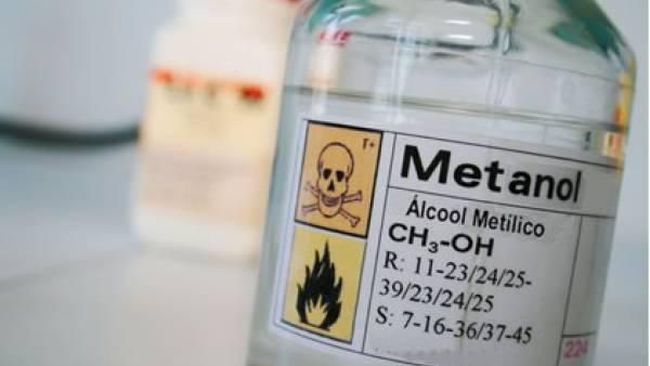
Indonesia Will Have a Metanol Industry in 2027 in Bojonegoro​

Verda Nano Setiawan, CNBC Indonesia

14 March 2025 21:20

Jakarta, CNBC Indonesia - The Ministry of Energy and Mineral Resources (ESDM) plans to build a methanol plant in Bojonegoro, East Java. This development was carried out to support the implementation of the B50 biodiesel program in 2026.

Deputy Minister of ESDM, Yuliot Tanjung said in addition to supporting the implementation of the B50 program, the construction of this plant is also to reduce dependence on the import of methanol which has been high.

"So, the availability of domestic methanol is also relatively limited. So, from the need for about 2.3 million, yes we have only produced domestically about 300 thousand. Meaning 2 million we are still importing," said Yuliot at the ESDM Ministry Building, Friday (14/3/2025).

Therefore, the government is currently pushing for national strategic projects (PSN) related to the construction of a methanol plant in Bojonegoro. With the existence of this factory, it is expected that domestic methanol production can increase.

"So, we're pushing this PSN bioethanol in Bojonegoro. That's what we're after too. So, so that later there will be import substitution. But, we can already reduce for imports," he said.

However, he acknowledged that the development of the methane industry took a short time. However, the government is targeting that the project could begin operations by the end of 2027.

“But, this industry development process will take time. We hope it's over with acceleration. We expect the end of 2027 that could be completed the methanol industry in Bojonegoro," he said.

Previously, the Minister of Energy and Mineral Resources, Bahlil Lahadalia revealed the value of investment for the construction of biodiesel raw material plants is estimated at US $ 1.2 billion.

According to Bahlil, the plan for the construction of methanol plants in Bojonegoro was carried out as an effort to meet the needs of biodiesel raw materials that have been obtained from imports.

"Because 80% of methanol as a mixture of biodiesel we import. So we will build the other one in Bojonegoro with an industry of approximately US $ 1.2 billion in investment," Bahlil said in Jakarta, quoted Thursday (11/28/2024).

In addition to methanol, Bahlil mentioned that President Prabowo Subianto also ordered to accelerate the development of the ethanol industry in the country. Because, the need for ethanol so far is also still derived from imports.

Not only that, the government is also preparing for the implementation of the mandatory biodiesel 40% (B40) in 2025. Even reaching B50 in the next few years.


Amman Mineral’s New Smelter Begins Operations, Seeks Export Permit to Ease Supply Glut​


Rangga Prakoso

April 9, 2025 | 1:35 pm

1744315359251.webp
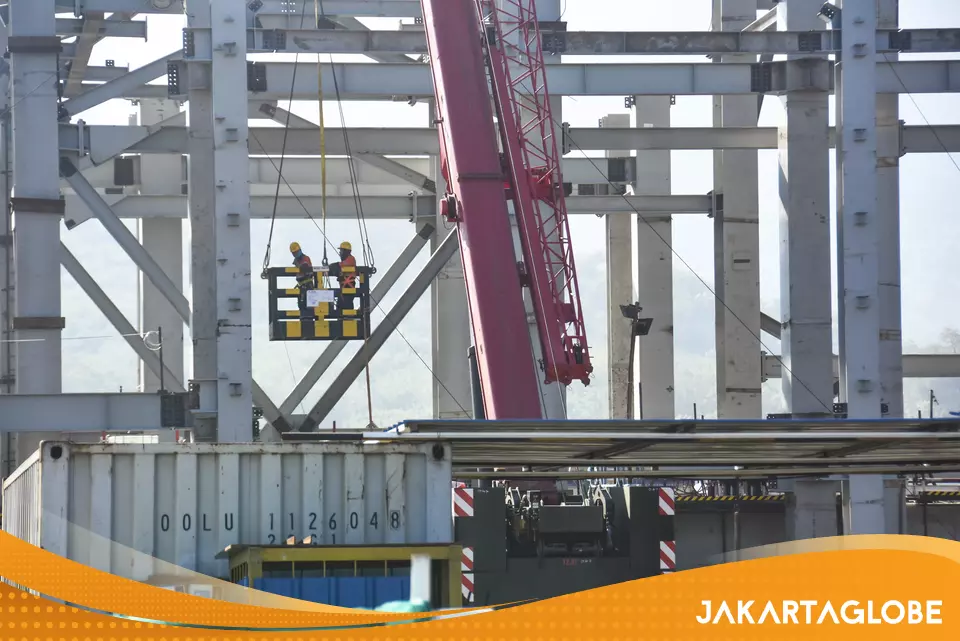
FILE - A construction hoist lifts workers at the smelter construction site operated by Amman Mineral Nusa Tenggara in West Sumbawa, West Nusa Tenggara, Tuesday, June 20, 2023. (Antara Photo/Ahmad Subaidi)

Jakarta. Copper mining giant Amman Mineral Internasional has officially commenced operations at its newly built smelter in West Sumbawa, West Nusa Tenggara, marking a major milestone in the company’s downstream expansion. The facility, which began operations several weeks ago, is designed to process up to 900,000 tons of copper concentrate annually.


By the end of March, the smelter had successfully produced its first batch of high-purity copper cathodes, with a target annual output of 220,000 tons. However, Amman is taking a cautious approach before ramping up to full production capacity.


“We successfully produced our first copper cathodes last month. However, full-scale production has not yet begun as we are prioritizing safety and a sustainable ramp-up,” said Amman spokesperson Kartika Octaviana on Tuesday.


The company is currently seeking a government permit to temporarily export copper concentrates -- the intermediate product of copper mining -- as a measure to avoid potential oversupply ahead of full operational capacity.

Indonesia’s mining downstream policy prohibits the export of copper concentrate as of January 1. However, Kartika argued that regulatory flexibility is needed to maintain revenue flow and prevent excess stockpiles until the smelter is fully operational.


“We have submitted a request for an export permit to the government,” she said. “This flexibility can offer a win-win solution -- ensuring business continuity while supporting national industrialization goals.”


Amman’s request follows a similar case involving Freeport Indonesia, which recently secured temporary export approval after a fire disrupted operations at its new smelter in Gresik. Freeport is currently permitted to export copper concentrate until September.


Kartika warned that oversupply risks could arise from either limited smelting capacity or concentrate output exceeding current processing limits.


“This measure is essential not only for the stability of our business, but also to protect the livelihoods of thousands of our workers,” she added.


Vale Works 3 Mega Project Downstream Nickel in RI, It's worth Rp130 Trillion (9 billions USD)​


Firda Dwi Muliawati, CNBC Indonesia

08 April 2025 19:35


Jakarta, CNBC Indonesia - PT Vale Indonesia Tbk (INCO) is currently building at least 3 nickel refining and processing (smelter) projects in the country with total investment reaching US $ 9 billion or equivalent to Rp 130 trillion.


President Director of Vale Febriany Eddy revealed that currently her party is building a nickel factory in three regions in Sulawesi, namely in Central Sulawesi, South Sulawesi, and Southeast Sulawesi.


"These three investments are total along with the partner's investment value reaching US $ 9 billion or the equivalent of maybe around Rp 130 trillion," she told CNBC Indonesia in the Mining Zone program on Tuesday (8/4/2025).

She said the three jumbo investment nickel mill projects were based on downstreaming green and low-carbon economies.


“We are also currently implementing three strategic investment projects, based on downstream green economies and low-carbon energy. Well these three projects are spread across three provinces, in Central Sulawesi, South and Southeast Sulawesi, " she added.


She said the three projects were targeted to be completed and could operate in 2026 and 2027.


"If all is smooth, two of these three projects will be completed next year, 2026. And the last one will be finished in 2027," she added.


The launch of the nickel mill project in all three locations is considered as a company's business to encourage domestic downstreaming programs.


"So actually if the downstream has become part of our identity. Yes 56 years but we never exported raw seeds. So when the government launched liberalization, we certainly are the one in the future supporting the government," she said.


Please note, the three projects include the high pressure pressure acid leaching (HPAL) project in Pomalaa, Kolaka Regency, Southeast Sulawesi, in collaboration with Zhejiang Huayou Cobalt Co. and Ford Motor Co. This smelter will produce 120 thousand tons per year Mixed Hydroxide Precipitate (MHP).

Second, the nickel smelter project in Morowali, Central Sulawesi, in collaboration with Shandong Xinhai Technology Co., Ltd (Xinhai).

Later, the HPAL smelter project in Sorowako, South Sulawesi, also cooperated with Zhejiang Huayou Cobalt Co.

 
550 Billion USD Investment for Downstreaming Industry


To view this content we will need your consent to set third party cookies.
For more detailed information, see our cookies page.


Jakarta, CNBC Indonesia - Minister of Energy and Mineral Resources (ESDM) Bahlil Lahadalia revealed that the downstream program carried out by the government has provided added value that is multiplied.


Bahlil mentioned that the value of nickel exports in 2018-2019 was only US $ 3.3 billion equivalent to Rp 55.42 trillion (assuming exchange rate of Rp 16,800 per US). Meanwhile, the value of nickel exports after domestic downstreaming as of 2023-2024 reached US $ 35 billion equivalent to Rp 587.84 trillion.

"Our export nickel in 2018-2019 was not more than US$3.3 billion. And this I must say, when we stop exporting nickel ore, and we build downstream, in 2023-2024 our exports in the downstream nickel sector have reached US $ 34 billion, up to US $ 35 billion, "he explained when met on the sidelines of the Opening of the Global Hydrogen Ecosystem Summit & Exhibition (GHES) 2025, at JCC, quoted Wednesday (16/4/2025).

As for, Bahlil said the downstream itself could add to the country's income and increase the income per capita. He assessed that a country must do downstream and industrialization to become a developed country.

"If asked what is the instrument of economic growth in the framework of quality job creators to increase GDP and increase our per capita income, namely downstream," he said.

To that end, Bahlil said the downstream program that is currently intensified in the country even reached 28 commodities with total investment needed to reach US $ 550 billion equivalent to Rp 9,249 trillion.

"At the direction of Mr. President, we have mapped downstream in the mining sector of oil and gas, fisheries, forestry, agriculture, which is total approximately 28 commodities. There are 28 commodities that we prepared with total investment up to 2040 which are approximately US $ 500 to US $ 550 billion.

Meanwhile, the total investment that has been approved for the first phase of the downstream program in 2025 reached US $ 40 billion equivalent to Rp 672.82 trillion. "And this downstream is as a form of creation of a new economic growth area," he said.

To that end, Bahlil said the downstream program that is currently intensified in the country even reached 28 commodities with total investment needed to reach US $ 550 billion equivalent to Rp 9,249 trillion.

"At the direction of Mr. President, we have mapped downstream in the mining sector of oil and gas, fisheries, forestry, agriculture, which is total approximately 28 commodities. There are 28 commodities that we prepared with total investment up to 2040 which are approximately US $ 500 to US $ 550 billion.

Meanwhile, the total investment that has been approved for the first phase of the downstream program in 2025 reached US $ 40 billion equivalent to Rp 672.82 trillion. "And this downstream is as a form of creation of a new economic growth area," he said.

28 Commodities for Downstreaming

Based on the records of the Ministry of Investment / BKPM, the following is the composition of the reserves of 28 commodities in Indonesia is included in the global scope:

1. Nickel (42%) no. 1 in the world

2 Tin (16.3%) no. 2 in the world

3. Copper (3% (3) no. 11 in the world

4. Bauxite (4%) no. 6 in the world

5. Steel iron (0.04%) no. 16 in the world

6 Gold silver (gold 5%, silver 2%)

7. Coal no. 7 in the world

8 Asphalt buton (3.91%) no. 3 in the world

9. Petroleum (0.1%) no. 5 in Asia Pacific

10. Natural gas (0.7%) no. 4 in Asia Pacific

11. Palm oil (58.7%) no. 1 in the world

12. Coconut (27%) no. 1 in the world

13. Rubber (27%) no. 2 in the world

14. Biofuels (59%) no. 1 in the world only from palm oil

15. Wooden beams (4%) no. 6 in the world

16. Pine sap (13%) no. 3 in the world

17. Shrimp (16%) no. 3 in the world

18. TCT fish (21%) no. 1 in the world

19. Retribution (3% (3) No. 2 in the world

20. Seaweed (28%) no. 2 in the world

21. Potential salt land potential 47,734 hectares

22. Silika sand (0.9%) no. 18 in the world

23. Manganese (3.2%) no. 7 in the world

24. Cobal (7.19%) no. 3 in the world

25. Metals infrequently reserve 227.976 tons

26. Cocoa (4%) no. 7 in the world

27. Nutmeg (31.2%) No. 1 in the world

28. Tilapia (22.1%) no. 1 in the world.

 
Krakatau Steel (KRAS) Accelerates Earthquake-Resistant Steel Production by 2025

To view this content we will need your consent to set third party cookies.
For more detailed information, see our cookies page.


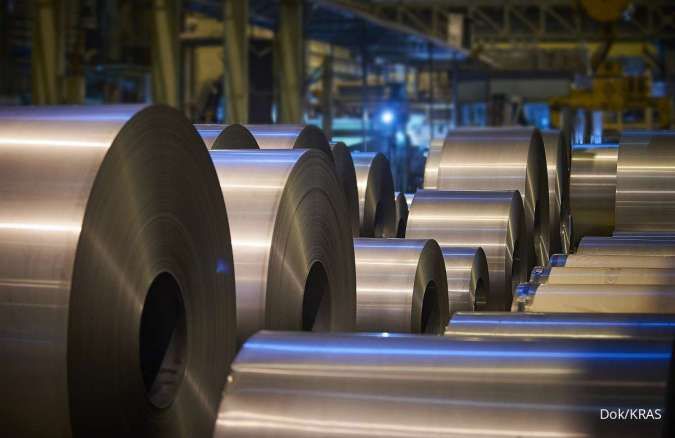
KONTAN.CO.ID - JAKARTA. PT Krakatau Steel Tbk (KRAS) together with its joint venture partner, PT Krakatau Posco, is accelerating the mass production of seismic grade steel as the company's main strategy in 2025.

This step is an important marker in encouraging the independence of the national steel industry, especially in supporting infrastructure development in earthquake-prone areas in Indonesia.

This earthquake-resistant steel product is designed to provide high resistance to deformation due to seismic vibrations, while being easy to modify and repair if damage occurs.

Products such as JIS G3136 SN490 and SNI 2052:2020 reinforcing steel have been used in various national strategic projects and have passed endurance tests from various institutions, including the University of Indonesia (UI) Construction Materials Laboratory. "This product meets the earthquake resistance standards for seismic areas such as Indonesia," said Bambang Suhendro, a civil engineering expert from UI, Monday (21/4).

Awareness of the importance of earthquake-resistant steel has increased after the 7.7 magnitude earthquake in Myanmar caused the collapse of skyscrapers in Thailand. Tests on the ruins indicated the use of substandard steel as one of the main causes of the failure of the structure.

Data from the Ministry of Industry noted that around 60% of the need for special construction steel, including earthquake-resistant materials, is still imported from Japan and South Korea. This dependence makes project costs high and vulnerable to disruptions in the global supply chain. However, the situation began to change with the operation of Krakatau Posco Phase 2 which increased production capacity to 3 million tons per year, including seismic grade steel.

To further strengthen capacity, Krakatau Steel is also preparing strategic steps such as the reactivation of the ISM BF plant which will increase capacity by 1.2 million tons per year, as well as research collaboration with BRIN to develop environmentally friendly construction materials (green steel).

The PUPR Ministry also supports the use of domestic steel through the regulation of Permen PUPR No. 13 of 2019 which requires SNI reinforcing steel to be used in infrastructure projects. The growth projection of the national steel industry also shows a positive trend. National steel production, which had plunged due to the pandemic in 2020, is now estimated to reach 9.8 million tons in 2024, almost doubling in the last four years.

Krakatau Steel's success in producing earthquake-resistant steel not only contributes to the resilience of national infrastructure, but also becomes a real manifestation of industrial independence and support for sustainable development. With continuously increasing capacity and innovation, Krakatau Steel confirms its position as the main pillar of Indonesia's resilient and globally competitive industrialization.


MIND ID Prepares US$ 14.3 Billion Investment for Downstream Project​


To view this content we will need your consent to set third party cookies.
For more detailed information, see our cookies page.


KONTAN.CO.ID - JAKARTA. The state-owned mining industry holding, MIND ID, is preparing a strategic investment project worth US$ 14.3 billion to support the national economic growth target of 7%-8% launched by the government.

The jumbo investment is directed at mineral and coal downstream projects that have the potential to collaborate with the Daya Anagata Nusantara Investment Management Agency (Danantara).


The projects in question include the construction of the Smelter Grade Alumina Refinery (SGAR) Phase II in Mempawah, the expansion of the aluminum smelter at the same location, the construction of a copper smelter in Gresik, and the development of an electric vehicle battery ecosystem (EV Battery Ecosystem) in Halmahera.

Director of Portfolio and Business Development of MIND ID, Dilo Seno Widagdo, said that the acceleration of strategic investment is the key to leveraging the national economy in the future.

According to him, Danantara's role as Indonesia's sovereign wealth fund can help bridge large-value projects to get investment partners faster.

"We believe, through Danantara, these strategic projects can find the right partners and encourage higher quality economic growth," Dilo said in an official statement, Tuesday (22/4).

Dilo said, MIND ID has mapped a number of potential projects complete with capital expenditure calculations and projected return on investment.

"We from the side of MIND ID have sufficient capital capabilities, but we still hope that there will be a partnership that may later be an evaluation for Danantara in the future," he said.

Currently, MIND ID manages a number of strategic national commodities, ranging from aluminum, copper, gold, to tin. In addition to strengthening downstreaming, MIND ID also focuses on increasing production capacity to respond to surging demand, both from domestic and global markets—especially for the needs of the energy transition and electric vehicles.

As for the 2025 Corporate Work Plan and Budget (RKAP), the MIND ID Group has allocated a consolidated investment of IDR 19.9 trillion. Some of the ongoing projects include SGAR Phase II, the construction of a copper smelter and Precious Metal Refinery (PMR) facility, the Rotary Kiln-Electric Furnace (RKEF) smelter project for nickel, and the High-Pressure Acid Leach (HPAL) facility for EV battery raw materials.

Dilo assessed that the growth room in the mineral and coal sectors is still wide open, especially with the increasingly integrated national industrial supply chain. This also opens up opportunities for the expansion of the MIND ID Group's production capacity in the future.


Performance is accelerating, Pertamina Refinery Achievement in Q1 2025 Beyond Target​


Firda Dwi Muliawati, CNBC Indonesia

24 April 2025 16:10


To view this content we will need your consent to set third party cookies.
For more detailed information, see our cookies page.

One of Pertamina refineries, East Kalimantan Province


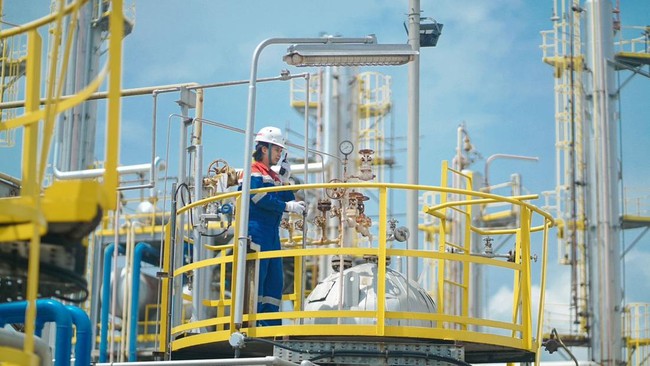
Jakarta, CNBC Indonesia - PT Pertamina Refinery, Subholding Refinery & Petrochemical Pertamina, recorded the operational performance of oil flows during the First Quarter of 2025 exceeding the target that has been set by the company.

Corporate Secretary KPI Hermansyah Y. Nasroen said the total amount of crude oil processed at the company's oil refinery or Total Intake Realization (RTI) reached 78 million barrels until March 2025. The figure is above the target of the Company’s Work Plan and Budget (RKAP), which is 73.2 million barrels.

"This shows the achievement of the performance of the amount of oil processed by KPIs is at 106% of the RKAP target until March 2025," he said in a written statement on Thursday (24/4/2025).

He mentioned, the same achievement is also seen in the Volume Valuable Product (VVP) produced by the KPI refinery. The volume of oil products produced by the refinery shows an increasing trend.

According to him, just like RTI, the realization of VVP until March 2025 also exceeded the target that has been set, which is 65.7 million barrels.

"The figure is above the original target, which is 60.1 million barrels, which means it managed to break the target of RKAP until March 2025, by 109%," he explained.

The achievement is considered as a positive signal for KPIs in starting 2025.

"In addition to the HSSE aspect, this achievement can certainly also be achieved with the ability of KPIs in maintaining the reliability of the refinery. The refinery operation must be ensured to run safely and smoothly and produce produce products that have been determined, "he added.

The assessment aspect, Hermansyah continued, it uses the Plant Availability Factor (PAF) indicator. He revealed that he continued to maintain the PAF value of more than 99% through the implementation of routine maintenance / non-routine (turn around), factory digitization, and implementation of Asset Integrity Management System (AIMS).

"The achievement of the first quarter of 2025, KPI was able to reach 99.83%. This figure is above the target that has been set, "he added.

Other indicators, it also assesses the performance of the refinery with the index of energy use intensity for production at the refinery or Energy Intensity Index (EII). Period January - March 2025, the EII KPI number reached 106.18.

That way, Hermansyah hopes that the achievements that have been inscribed by the KPI at the beginning of this year can be increased in the following months.

According to him, one of the main keys in improving future performance is the establishment of good cooperation between all parties in the KPI and the support of external parties.

"Synergy and collaboration between all parties, not only internal but also stakeholders will be the main capital to answer all challenges," he said.


How Business Transformation Drives Chandra Asri Group’s Growth​


The Jakarta Globe

September 17, 2024 | 6:06 am
1745642009857.webp
(Photo Courtesy of Chandra Asri Group)


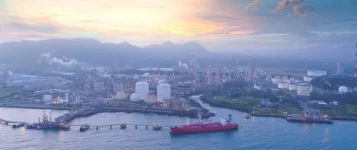
Jakarta. PT Chandra Asri Pacific Tbk, also known as Chandra Asri Group, has been aggressively expanding to various business sectors since late 2022.


The company has now transformed into a holding in the chemical and infrastructure sectors. Its infrastructure business encompasses energy, water as well as jetty & tank farm processing. This infrastructure business also complements the company’s petrochemical business which it has previously focused on.


Chandra Asri Group, also known by its ticker symbol TPIA, is now turning 32. TPIA has become not only the largest petrochemical company in the country, but it has also become a corporation with a vast business portfolio. This expansion is expected to pave the way for a stronger growth as it seeks to serve the country.


As part of its business transformation, the company has changed its name from PT Chandra Asri Petrochemical Tbk to PT Chandra Asri Pacific Tbk. The Law Ministry has approved the name change on January 3, 2024. They have also secured shareholder approval at an extraordinary general meeting on December 29, 2023. This name change becomes a strategic step for the company to accommodate a broader and more diversified business focus. It also strengthens the company’s image as a growth partner that plays a role as the backbone for strategic sectors in the country.


Chandra Asri Group’s business transformation journey began with the purchase of 70 percent of PT Krakatau Daya Listrik shares (which later changed its name to PT Krakatau Chandra Energi/KCE). As well as 49 percent shares of PT Krakatau Tirta Industri (KTI) worth a total of Rp 3.24 trillion from PT Krakatau Sarana Infrastruktur (KSI), a subsidiary of PT Krakatau Steel Tbk (KRAS). In February 2023, KSI officially closed the transaction for the conditional shares and purchase agreement (CSPA) with the Chandra Asri Group.


Chandra Asri Group’s president director Erwin Ciputra said that the company’s programmatic merger-and-acquisition (M&A) strategy could drive sustainable business growth. The acquisitions had also been supported by a stable and resilient cash flow.


"This strategy further enhances our business fundamentals and opens up many interesting synergies, including for income diversification in supporting utilities and in line with the expansion plan for the second petrochemical complex and world-scale downstream industries," Erwin said.


According to Erwin, the synergy is expected to have an economic impact for stakeholders and improve public services. For instance, it can help provide electricity and clean water for industries in the Cilegon area. As business grows, it can also open up job opportunities.


Basic Chemical Project
Last April, Chandra Asri Group and the country’s sovereign wealth fund Indonesia Investment Authority (INA) inked a memorandum of understanding (MoU) on the development of a world-class chlor-alkali and ethylene dichloride plant (CA-EDC) plant in Indonesia.


INA alongside other potential foreign investors will explore the possibilities of purchasing PT Chandra Asri Alkali (CAA) shares. CAA is Chandra Asri Group’s wholly owned subsidiary that is dedicated to being a special-purpose vehicle to invest in the plant’s construction. The plant will produce over 400,000 metric tons of caustic soda (sodium hydroxide) annually. It is also set to produce 500,000 metric tons of ethylene dichloride (EDC) per year. To speed up the plant’s construction, Chandra Asri Group has signed a basic engineering and licensing agreement with Asahi Kasei Corporation (AKC) from Japan, a Japanese licensee with advanced intellectual property for the construction of a world-scale chlor-alkali plant.


According to Erwin, the CA-EDC will help meet the increasing needs for caustic soda and EDC in Indonesia and Southeast Asia.


Caustic soda is an important raw material for the downstream industry that continues to grow in Indonesia. This includes alumina and nickel extraction, water treatment, as well as the production of textile, pulp, paper, soap, and detergent. EDC is a mainstay ingredient for intermediate chemicals for the production of polyvinyl chloride (PVC), a common material in various end product applications including construction and packaging.


In May 2023, the company through CAA inked a license, basic engineering, and technical services deal with an American vinyl tech licensor to establish an EDC plant.


Chandra Asri Group also wants to seize opportunities in the electric vehicle (EV) ecosystem. Through CAA, the company --alongside PT Indonesia Asahan Aluminium (Inalum)-- inked a letter of intent (LoI) last October. The deal is related to the domestic processing of Indonesian aluminum with an aim to support the country’s EV ecosystem. As part of the deal, CAA is expected to provide up to 120,000 metric tons of wet caustic soda to Inalum annually. There is also the possibility for an up to 10 percent equity participation by Inalum in CAA.


Inalum will use the wet caustic soda in its aluminum processing at the smelter facility, including as an EV battery pack component.


TPIA and BCI Minerals Limited also earlier this year inked an offtake agreement. Chandra Asri Group will use salt produced at the Mardie Project for the chlor-alkali plant that is being developed in Indonesia. The annual salt contract volume hits 300,000 tons in the first year, and will rise to 600,000 tons in the second and third years as the project progresses. This agreement will contribute to the fulfillment of the offtake requirements needed as a prerequisite for the disbursement of BCI debt facilities.


The CA-EDC plant is currently waiting for the environmental impact assessment as part of the company’s compliance with the existing laws in Indonesia.


Energy Infrastructure
In June 2023, Chandra Asri Group took corporate action by expanding its business in the energy infrastructure sector by investing up to $200 million in PT Krakatau Posco Energy. KCE undertook this corporate action in two phases.


In the first phase, KCE will raise its ownership in KPE, a joint venture (JV) with steelmaker Posco, to 45 percent. The second phase sees KCE making joint investments in accordance with its shareholding to support KPE's expansion plan to build a new power plant with a capacity of 200 megawatts (MW) after the final investment decision is taken.


Under a normal growth path, KCE's total power plant capacity will increase to 300 MW. This consists of the 120 MW generated by previously owned combined power plants. The remaining 180 MW comes from its shareholding in KPE after the planned investment expansion (45 percent of 400 MW).


Chandra Asri Group said at the time of the announcement that KPE owned a power plant and supporting infrastructure utilities with a capacity of 200 MW. Its operations use exhaust gas from Krakatau Posco and are supported by a long-term full offtake agreement contract that is valid until 2038.


"This step strengthens our commitment to deepen strategic partnerships and strengthen our position as a major investor in the energy sector. We are pleased to be able to open a clear synergy that is reflected in the successful acquisition of KCE by a subsidiary of PT Chandra Daya Investasi (CDI) in February 2023," said Erwin.


Last December, KCE set up a solar panel development business with four different mechanisms. The company has installed solar panels in many projects, including industry and retail, with a total renewable energy-powered electricity capacity of 958 kW. There are also targets to have a 3 MWp solar power plant project by 2023.


These solar panels have bore fruits for both the customers and businesses. It can save annual electricity consumption by up to 40 percent and cut up to 561 tons of CO2 or carbon emissions a year. This is part of the KCE’s strategies to help the government’s efforts in boosting the nationwide renewable energy use.


Innovation and Strategic Partnership for Added Value of Petrochemical Business


Last August, Chandra Asri Group and BRI inked a MoU related to the financing facilities for the former’s domestic polymer customers. This was also the first time BRI launched a financing scheme specifically designed for the petrochemical industry. The financing facilities aimed to increase the volume of wholesale transactions while supporting Indonesia's focus on domestically processing its natural resources.


This collaboration is also expected to support the competitiveness of the industrial value chain, encourage supply chain stability, and provide added value to national petrochemical products.


"The collaboration between Chandra Asri Group and BRI is an appreciation for our customers who have chosen domestic products to support their businesses," Chandra Asri Group's polymer sales director Raymond Budhin said.

In October 2023, Chandra Asri Group secured the International Sustainability and Carbon Certification (ISCC). This is a global sustainability certification system on the production of environmentally friendly products. The ISCC means that Chandra Asri Group's petrochemical plant facilities are now certified to meet the standards for processing bio-feedstock into bio-based products, such as bio-propylene, bio-ethylene, bio-crude C4, and bio-pygas.


In end-2023, Chandra Asri Group provided raw materials for the Cirata floating solar power plant to help the latter meet its local content requirement. The floats in this project are specially designed to withstand the load of solar panels, electrical components, and other related equipment to ensure safe and reliable operations. The floats use Chandra Asri Group's HD Blow UB5206H resin.


Floaters provide the buoyancy needed for the solar panels to float on the water's surface. They also prevent the solar panels from sinking, adapt to changes in water levels, and provide stability so that the solar panels do not roll over or flip over.


The floating solar plant is the largest of its kind in Southeast Asia as it boasts a capacity of 192 MWp. It is also the first floating solar plant in Indonesia. This project is also part of the country’s efforts to ramp up its renewable energy share.


During the same period, Chandra Asri Group secured an investment worth $194 million from Electric Generating Public Company Limited or EGCO Group, an independent energy producer in Thailand. After completing the transaction process, EGCO will own a 30 percent stake in CDI which is dedicated to infrastructure solutions.


Chandra Asri Group will continue to maintain a majority stake of 70 percent in CDI. The net proceeds will be used for the development of Chandra Asri Group and EGCO’s infrastructure businesses, which include energy, water, and port facilities. Chandra Asri Group chose to work with EGCO after undergoing a comprehensive strategic investor selection process.


This collaboration marks an important milestone for both companies, combining Chandra Asri Group’s expertise in the chemical and infrastructure sectors with EGCO’s expertise in power and energy solutions.


"We are very pleased to make EGCO as our new growth partner to create synergies that will not only improve operational efficiency but also contribute to a more sustainable future," Erwin Ciputra said.


Chandra Asri Group in 2024
The company started 2024 by officially changing its name to PT Chandra Asri Pacific Tbk.


According to the company’s human resources and corporate affairs director Suryandi, this name change emphasizes all business steps taken to provide a significant positive impact for stakeholders.


"This new name also supports the company's vision to become a leading chemical solutions and infrastructure company in Indonesia," said Suryandi.


In May 2024, Chandra Asri Group signed a sale and purchase agreement with Shell Singapore Pte Ltd (SSPL) to acquire its entire ownership in Shell Energy and Chemicals Park Singapore (SECP).


After going through a competitive auction process, CAPGC Pte. Ltd. (CAPGC), a joint venture company majority owned and operated by Chandra Asri Group and minority owned by Glencore through their respective subsidiaries, agreed to acquire SECP which consists of a crude oil refinery with a processing capacity of 237,000 barrels per day, a 1.1 million metric tons per year ethylene cracker in Pulau Bukom and downstream chemical assets in Pulau Jurong.


"This acquisition is a success of our programmed M&A strategy to become a leading chemical and infrastructure player in the region and will further strengthen our business resilience," Erwin said.


The transaction is still subject to regulatory approval and is expected to close by the end of 2024.


In the same month, TPIA shares entered the Morgan Stanley Capital International (MSCI) Global Standard Index for Emerging Markets, based on a quarterly publication published in London. The inclusion of TPIA shares will be implemented at the close of the market on May 31, 2024.


MSCI recognized Chandra Asri Group's impressive market capitalization and free float-adjusted market capitalization, which met the index threshold. This inclusion confirms Chandra Asri Group's position as a major player in the global chemical and infrastructure industry.


In June 2024, the company strengthened its petrochemical business by operating the Bag Film Roll (BFR) Factory which produces heavy duty Sacks. The BFR factory uses the company's polyethylene products, namely metallocene and HDPE which are commonly used as raw materials for plastic bags. BFR production is planned to utilize 30 percent recycled material which utilizes used consumer sacks or post-consumer recycling (PCR).


The BFR plant is expected to increase the effectiveness of the company's internal supply chain and serve customer needs better. In the past year, the BFR Plant has produced packaging for Chandra Asri Group's resin products, namely Asrene® and Trilene®. BFR products are suitable for packaging polymer products in the form of plastic pellets, and are safe for use in food products.


In July 2024, Chandra Asri Group completed the spin-off process to operate an integrated solution in the form of seaport services (loading and unloading services and mooring services) and liquid bulk storage (tank rental) for various industries in Cilegon and its surroundings through its subsidiary, PT Chandra Pelabuhan Nusantara (CPN).

CPN is currently in the process of submitting a concession application to serve external customers and is expected to be completed in 2025.


CPN operates three strategic docks in the Sunda Strait with a total capacity of 96,000 DWT for various products and tank facilities of 518,000 cubic meters for naphtha, ethylene, propylene, pyrolysis gasoline (PyGas) and others. CPN is expected to optimize the operational efficiency of various industries and provide added value to stakeholders.


UNTR Eyes Non-Coal Sector with $1B Investment Plan for 2025​


Muhammad Ghafur Fadillah

April 25, 2025 | 8:55 pm

1745643194205.webp
The headquarters of United Tractors in Jakarta. (Investor.id)


Jakarta. Heavy equipment, mining, and energy company United Tractors (UNTR), a subsidiary of conglomerate Astra International (ASII), is preparing a series of expansion strategies for 2025, with a strong focus on the mineral mining and renewable energy sectors. The company plans to allocate up to $1 billion (around Rp 16.8 trillion) for investments as it moves away from its reliance on coal.


Iwan Hadiantoro, Director of UNTR, said the company is committed to expanding its portfolio in the metals and minerals sector. “We are focusing on commodities such as nickel and gold, and we are considering bauxite if opportunities arise. We have set aside $500 million to $1 billion annually for acquisitions,” Iwan said during a public presentation in Jakarta on Friday.


Currently, UNTR is exploring potential acquisitions in the mineral sector. The company has already made moves into the field by acquiring Stargate Pacific Resources and Stargate Mineral Asia, both in nickel, as well as Supreme Energy Rantau Dedap through its subsidiary Energia Prima Nusantara, which focuses on geothermal energy.


Iwan reiterated that the company aims to balance revenue contributions from coal and non-coal sectors by 2030. Expansion funding will be sourced from internal cash reserves and bank loans.

"For acquisitions, we are flexible in terms of financing, using both internal cash and bank loans," he added.


Read More:​

United Tractors Records a Net Profit of Rp 19.5 Trillion in 2024

Ari Setiawan, Head of Investor Relations at UNTR, said future acquisitions will focus on strategic commodities such as gold, nickel, and other minerals. "We are continuously seeking potential assets that align with our growth strategy," Setiawan said.


In terms of heavy equipment sales, Director Widjaja Kartika shared that demand for machinery remains high, particularly from the mining sector. However, she acknowledged that falling coal prices have prompted some contractors to implement operational efficiencies. “We are taking a ‘wait and see’ approach to the effects of commodity price fluctuations. So far, Komatsu sales remain positive,” Kartika stated.


UNTR is also facing increased competition from Chinese heavy equipment brands, which have become more aggressive in the market. “We are confident that Komatsu will remain competitive due to its focus on quality improvement and digital marketing,” said Director Lody Irwanto Elias. In 2024, Komatsu's market share held steady at 26 percent.


UNTR reported Komatsu sales of 1,345 units in Q1 2025, reflecting a 23 percent year-on-year growth. The company is targeting total sales of 4,600 units in 2025.


Read More:​

United Tractors Expands Renewable Energy Portfolio with $80.58 Million Geothermal Acquisition

Impact of New Royalty Policies


Regarding the new royalty policy, CEO Frans Kesuma said the changes have had varying effects. For coal, the maximum royalty rate has been reduced from 28 percent to 13.5 percent, while for gold, the rate has increased from 10 percent to 16 percent due to rising global prices.


"We remain committed to being the lowest-cost producer. The royalty changes have already been factored into our 2025 projections," Frans said.


He assured that efficiency would continue to be the main strategy, despite the adjustments to royalty expenses. “Royalties are a requirement for resource management licenses. We will continue to manage our operational costs as efficiently as possible,” he concluded.


Bring Rp 10 Trillion, Chemical Giant from China Builds Factory in RI


Ilyas Fadilah - seconds Finance

Saturday, 26 Apr 2025 12:38 WIB


1745650011266.jpeg


Jakarta -

The integrated industrial estate of Java Integrated Industrial and Ports Estate (JIIPE) conducts an industrial land handover procession to Golden Elephant (GESC), a leading chemical company from China.

This ceremony marks the first step in the construction of GESC environmentally friendly chemical plants on an area of more than 20 hectares in the industrial area of JIIPE, Gresik, East Java. The investment value was recorded at 4.2 billion yuan or about US $ 600 million or around Rp 10.08 trillion (seat of Rp 16,800).

The location in JIIPE was GESC's first international expansion outside China, making Indonesia a new regional hub for their business development in Asia. GESC will build a high-tech-based chemical production facility environmentally friendly to support the needs of domestic and export markets.


“We have gone through a long journey, including almost building in Russia two years ago. However, after an in-depth search, we were grateful to be able to find the exact location in JIIPE. This area has an excellent culture and a strategic location, making it an ideal place for our first expansion abroad," said Lei Lin, Chairman of Golden Elephant in a written statement on Saturday (26/4/2025).

The project will be built in two stages, of which the first phase is worth 1.24 billion yuan includes the construction of a melamine production facility of 120,000 tons/year, nitric acid 150,000 tons/year, and ammonium nitrate 200,000 tons/year.

Then the second phase worth 3.06 billion yuan will utilize Indonesia's natural gas potential to build a large-capacity synthetic and urea ammonia plant, forming a closed value chain of natural gas to strategic chemical downstream products.

"We have had a long discussion with the Sichuan Provincial government and strategic partners such as ICBC Bank. Finally we chose JIIPE because the region offers integration between industry and deep sea ports, world-class infrastructure, as well as support from government and regional managers. It’s not just a business project—this is a dream come true,” Lei Lin added.

At the same time, Bambang Soetiono, President Director of PT Berkah Kawasan Manyar Sejahtera (BKMS), the manager of the JIIPE area, conveyed his full commitment in supporting the realization of Golden Elephant investment.

“We welcome Golden Elephant as a global tenant who has determined its choice of its first international investment location in the JIIPE. This is a strong validation over the position of JIIPE as the most ready and competitive industrial area in the region, especially in welcoming the era of energy transition and green industrialization, "said Bambang.

The presence of Golden Elephant complements the international tenant ecosystem in JIIPE which was previously filled by PT Freeport Indonesia (copper), Hailiang (copper foil), and Xinyi Glass (industry glass).

With the synergy built between tenants, JIIPE formed a new chain of metal, chemical, and energy-related downstream, making this area an epicenter of value-based industry growth in Indonesia.

With the support of the status of the Special Economic Area, the 6,200-meter-long deep sea port, as well as the large-scale industrial utilities that have been available, JIIPE again proved its role as a destinination


(ily/hns)

 
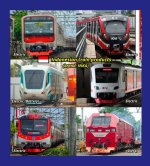
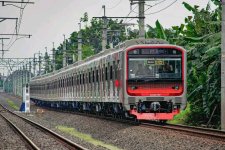
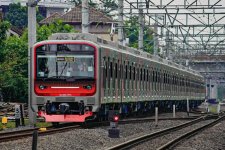
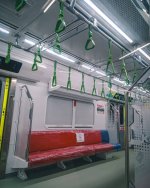
INKA developed and produced trains

1745736145478.jpeg

Latest product for Greater Jakarta Commuter Line (Jakarta KRL)

1745736201281.jpeg
1745736228932.jpeg
1746791373458.jpeg
To view this content we will need your consent to set third party cookies.
For more detailed information, see our cookies page.
 

Ranked: Global Share of Manufacturing Value, by Country​

Published May 2, 2025
By Bruno Venditti

1746243365652.png

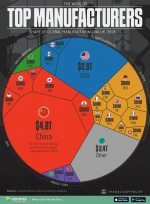
Charted: The World’s Top Manufacturers​

In 2010, China overtook the United States to become the world’s largest manufacturer. Over a decade later, the gap has only widened.

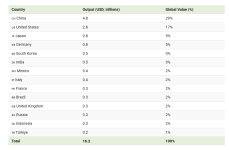
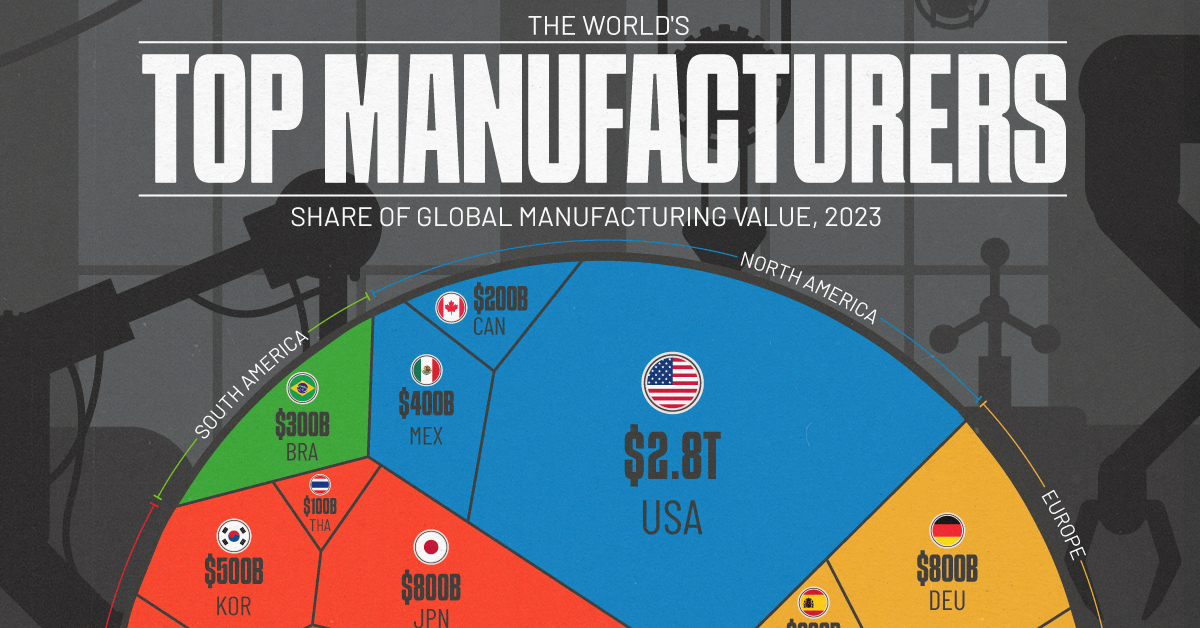
In 2023, China’s manufacturing sector added $4.8 trillion in value—making up 27% of the country’s total economic output.

This graphic explores the world’s top manufacturers by value, as of 2023. The data comes from the United Nations and Statista.


China’s metallurgical and machine-building industries alone account for nearly 40% of the country’s industrial output. Fertilizers, plastics, and synthetic fibers are also central, propelling China into a leading global position in nitrogenous fertilizer production.

Meanwhile, consumer goods—textiles, clothing, footwear, processed foods, and toys—continue to dominate China’s export profile. Synthetic textiles, in particular, have seen rapid growth.

By contrast, manufacturing accounts for just over 10% of the U.S. economy, making it the least reliant on manufacturing among the world’s top 10 industrial nations. Recently, President Donald Trump pushed tariffs on imported goods to encourage domestic investment—arguing it would create “better-paying American jobs making beautiful American-made cars, appliances, and other goods.”

1746243410959.png

In Europe, Germany remains the continent’s top manufacturing economy, generating approximately $800 billion in industrial value. Its strength lies in automotive engineering, machinery, chemicals, and electronics.

Italy follows with $400 billion in manufacturing output, driven by its mechanical engineering, food processing, fashion, and furniture sectors.

Brazil leads in South America with $300 billion in manufacturing value. Its industrial economy is anchored by automotive production, food processing, chemicals, and aerospace, particularly through companies like Embraer.

In the Middle East, Saudi Arabia and Türkiye top the region’s manufacturing rankings. Saudi Arabia’s industrial output is largely tied to petrochemicals, plastics, and oil refining, with efforts underway to diversify under Vision 2030. Türkiye balances traditional industries like textiles and automotive manufacturing with newer sectors like electronics and machinery, serving both European and Middle Eastern markets.

 
Indonesia can produce CT Scan locally, but it is still with cooperation with foreign company from USA. Indonesian Local company, Kalbe Farma, cooperate with GE Health Care (their business unit in Indonesia) to produce medical device.

Another example of Indonesian economy that is highly connected to foreign companies where FDI (Foreign Direct Investment) that naturally contribute around half of total investment in Indonesia since many decades ago

GE for example has been operating in Indonesia through local subsidiary since 1940's.

So in this case Indonesian local private own companies (Kalbe Farma)-already listed in Jakarta stock exchange- makes JV with Multinational Companies from I believe their business unit in Indonesia (GE Health Care) to produce CT Scan in Indonesia.

To view this content we will need your consent to set third party cookies.
For more detailed information, see our cookies page.
 

Users who are viewing this thread

Latest Posts

Back
Top