Internal Security Review

The report highlighted that the most alarming escalation occurred in Khyber Pakhtunkhwa, especially in the tribal districts, which saw 51 militant attacks — a 200pc increase. These attacks resulted in 74 deaths, marking a 124pc rise.

The rest of KP was also similarly hit, with 55 attacks causing 56 deaths, including 26 security personnel, 22 civilians, and eight militants. In total, KP witnessed 106 militant attacks, the highest monthly figure in over 10 years, according to PICSS.

Operations were launched in Bajaur and North Waziristan, “resulting in partial clearance of militant hideouts, although the situation remains tense,” the think tank added.
 
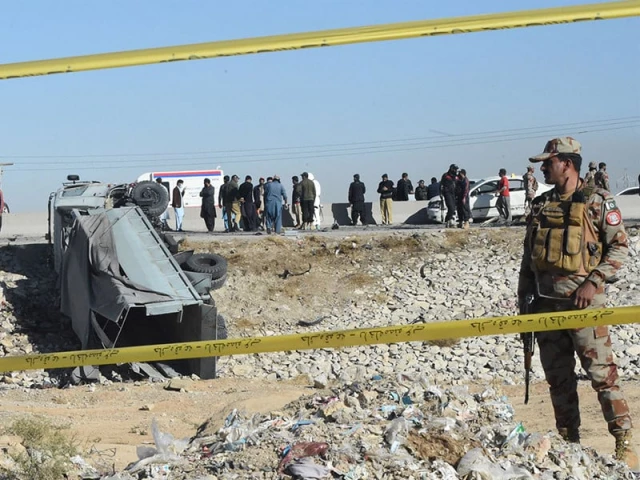
Balochistan followed with 28 attacks, resulting in 52 deaths — 23 security personnel, 21 civilians, and eight militants. Another 45 people were wounded, including 23 security personnel and 22 civilians.

“Security forces eliminated 50 militants in the province — the highest number of militant deaths in operations since June 2015, when 60 were killed,” according to PICSS.

Sindh reported six attacks, leaving eight people dead — six civilians and two security personnel. Security forces arrested 11 suspected militants, all in Karachi.
 
In Punjab, two attacks occurred: a banned Tehreek-i-Taliban Pakistan (TTP) assault in Dera Ghazi Khan, and an unsolved killing of a young cleric in Rawalpindi. resulting in the deaths of one civilian and one attacker.

In Gilgit-Baltistan, TTP-linked militants struck Chilas district, killing two security personnel and injuring one.

Pakistan has seen a surge in terrorism since the TTP ended its ceasefire deal with the government in November 2022, vowing to increase attacks.
 
The government labelled the TTP as Fitna-al-Khawarij and directed the use of the term khariji for attackers. It later designated Balochistan-based groups as Fitna-al-Hindustan to highlight India’s alleged role in terrorism and destabilisation across Pakistan.

On Sunday, President Asif Ali Zardari signed into law the Anti-Terrorism (Amendment) Bill, 2025, seeking to improve counterterrorism efforts while ensuring legal oversight and safeguards.

Last week, the Balochistan government extended the enforcement of Section 144 across the province for another 15 days due to the prevailing law and order situation, according to an official notification from the additional chief secretary of the Home Department.

In March, Pakistan ranked second in the Global Terrorism Index 2025, with the number of deaths in terrorist attacks rising by 45pc from 2024 to 1,081.
 

Security forces kill 31 terrorists in Lakki Marwat, Bannu operations: ISPR


Iftikhar Shirazi

September 15, 2025

Security forces killed 31 terrorists in two separate intelligence-based operations (IBOs) in Khyber Pakhtunkhwa’s Lakki Marwat and Bannu districts, the military’s media wing said on Monday.

“On 13-14 September, 31 khwarij belonging to Indian proxy Fitna al Khwarij were killed in two separate engagements in [the] Khyber Pakhtunkhwa province,” the Inter-Services Public Relations (ISPR) said in a press release.

The state uses the term Fitna al Khwarij to refer to terrorists belonging to the banned Tehreek-i-Taliban Pakistan (TTP). It has also designated Balochistan-based groups as Fitna-al-Hindustan to highlight India’s alleged role in terrorism and destabilisation across Pakistan.

The ISPR said an IBO was conducted in Lakki Marwat on the “reported presence of khwarij”.

“During the conduct of [the] operation, own troops effectively engaged the khwarij location, and after an intense fire exchange, 14 Indian-sponsored khwarij were sent to hell,” it added.

The ISPR added that another IBO was carried out in Bannu, where 17 more terrorists were killed in a gun battle.
 
IMG-20250916-WA0007.jpg

EDITORIAL: It is apparently a very simple proposition. The Afghan Taliban can either cooperate with Pakistan and eliminate safe havens for the banned TTP and other terrorist outfits on their soil. Or they can continue to nurture an array of violent outfits and sour Afghanistan’s chances of regional integration and greater diplomatic recognition, along with torpedoing any chances of better ties with Pakistan.

Prime Minister Shehbaz Sharif made the offer to Kabul’s rulers while visiting Bannu on Saturday, asking the Afghan Taliban to “choose between Pakistan and TTP”. The PM’s comments reflect the frustration of the administration towards the Taliban. The current dispensation has tried both carrots and sticks with Kabul to help stop terrorist attacks from Afghanistan-based militants, but neither approach has delivered results.

Read full editorial: https://www.dawn.com/news/1942333/
 

Afghan footprint deepens in Pakistan TTP attacks​


70% attackers are Afghans, alarming Islamabad

Kamran Yousaf
September 23, 2025


tribune


ISLAMABAD: Pakistani authorities have determined that a striking 70 per cent of terrorists involved in recent attacks carried out by the banned Tehreek-e-Taliban Pakistan (TTP) were Afghan nationals, a steep rise from the 510 percent recorded in earlier years, sources told The Express Tribune on Monday.

The startling revelation was made by Pakistan's special representative on Afghanistan Ambassador Muhammad Sadiq at a recent closed-door meeting of the Shanghai Cooperation Organisation (SCO) on Afghanistan held in Dushanbe, according to the sources familiar with the development.

The disclosure led the Iranian representative to share his perspective, revealing that his country, too, was facing the similar problem. The Iranian representative, according to the sources, cited an attack on Chabahar port where out of 18 attackers, 16 were Afghan nationals.

The increased involvement of Afghan nationals in terrorist attacks has set alarm bells ringing in Islamabad, where officials now see the growing Afghan footprint in the cross-border terrorism as a new and dangerous trend.

According to the sources, the increase percentage underscores the Taliban government's failure or unwillingness to curb the use of Afghan soil by the TTP against Pakistan. Officials fear that the development could further strain the already uneasy ties between Islamabad and Kabul.
 
Pakistan has long accused the Afghan Taliban of providing sanctuary to the TTP leaders and fighters, who regrouped across the border after Pakistan's military operations in the former tribal areas. While the Taliban have publicly denied giving the group a free hand, Islamabad insists that the TTP safe havens in Afghanistan remain intact.

Tensions worsened in recent weeks after a string of deadly attacks in Khyber-Pakhtunkhwa, which Pakistan directly linked to militants operating from Afghanistan.

Diplomatic outreach

In a sign of growing concern, Pakistan is now stepping up diplomatic engagement with regional stakeholders to mount pressure on the Taliban regime. Sources confirmed that Ambassador Muhammad Sadiq, Pakistan's Special Envoy on Afghanistan, will soon travel to Tehran and Moscow to discuss the matter.

The outreach reflects Islamabad's strategy of seeking broader regional consensus to push the Taliban into acting decisively against the TTP. Both Iran and Russia, like Pakistan, remain wary of extremist groups exploiting Afghanistan's fragile security landscape.

For Pakistan, the rising involvement of Afghan nationals in TTP attacks is a troubling escalation that not only complicates border security but also raises questions about Kabul's commitments. Officials believe that unless the Taliban take tangible steps, the trend could spiral into a major flashpoint in bilateral relations.
 
Important Notice - Kark District

During the ongoing operation against terrorists in the limits of Shah Salim, five to six terrorists been injured and may seek medical centers or basic medical facilities at any hospital, basic health center,.

The people and residents of Darsha Khel are informed that an operation against terrorists is ongoing in the area. Therefore, the public is requested not to leave their homes and not to allow anyone to enter their homes. In this situation, cooperate with the police and authorities.

Hence, everyone is informed to immediately report any such situation to the police at the following numbers.

The identity of the informant will be kept confidential, and a substantial reward will be given to those who provide accurate information.

Police Control Room: 0927291188
WhatsApp: 03350522859

To view this content we will need your consent to set third party cookies.
For more detailed information, see our cookies page.
 
Two reports, issued by Pakistan Institute for Conflict and Security Studies (PICSS) and the Centre for Research and Security Studies (CRSS), about militant violence in the country over the past month, stated that the first three quarters of 2025 saw nearly as much violence as witnessed in all of 2024.

According to PICSS, militant violence dropped significantly in Sept 2025, with both the number of attacks and militant capacity showing sharp declines compared to the record levels seen in Aug. The PICSS Militancy Database recorded 69 militant attacks in Sept — a 52 per cent reduction from August’s 143. These attacks resulted in 135 deaths and 173 injuries, whilst militants abducted at least 27 people.

The fatalities included 61 security personnel, 20 militants, and 54 civilians. Amongst the injured were 74 security personnel and 99 civilians. Compared with August, the number of martyred security personnel declined by 16pc, militant fatalities by 66pc, and civilian deaths by 17pc, reflecting a notable decrease in lethality.

KP remained the most affected province, but also witnessed intensified counterterrorism actions. The province reported 45 attacks that killed 54 people and injured 49.

According to CRSS’s report, Pakistan witnessed an over 46pc surge in overall violence in its security landscape for the third quarter of 2025, with at least 901 fatalities and 599 injuries — amongst civilians, security personnel, and outlaws — resulting from 329 incidents of violence.
 

September sees militants ‘on back foot’

Ikram Junaidi
October 2, 2025

ISLAMABAD: While security forces put militants on the back foot in September, the first three quarters of 2025 saw nearly as much violence as witnessed in all of 2024. If this trend continues, the current year may turn out to be one of the deadliest in decades.

This is the crux of two reports, issued by Pakistan Institute for Conflict and Security Studies (PICSS) and the Centre for Research and Security Studies (CRSS), about militant violence in the country over the past month.

According to PICSS, militant violence dropped significantly in Sept 2025, with both the number of attacks and militant capacity showing sharp declines compared to the record levels seen in Aug. The PICSS Militancy Database recorded 69 militant attacks in Sept — a 52 per cent reduction from August’s 143. These attacks resulted in 135 deaths and 173 injuries, whilst militants abducted at least 27 people.

The fatalities included 61 security personnel, 20 militants, and 54 civilians. Amongst the injured were 74 security personnel and 99 civilians. Compared with August, the number of martyred security personnel declined by 16pc, militant fatalities by 66pc, and civilian deaths by 17pc, reflecting a notable decrease in lethality.

If current trends continue, think tanks warn 2025 may be the ‘deadliest year’ in decade in terms of militant violence

KP remained the most affected province, but also witnessed intensified counterterrorism actions. The province reported 45 attacks that killed 54 people and injured 49. In mainland KP, 25 attacks caused 33 deaths — 20 security personnel, nine militants, and four civilians — whilst 42 people were injured. Militants kidnapped nine individuals, while security forces carried out 22 operations, killing 88 militants, though five personnel lost their lives and five militants were arrested.

In the tribal districts (erstwhile Fata), 20 militant attacks claimed 21 lives — six security personnel, three militants, and 12 civilians — and injured seven. Militants also abducted four people, while security forces conducted 18 operations in these districts, killing 83 militants. However, 24 civilians also lost their lives during these actions.

In Balochistan, 21 attacks claimed 79 lives — 33 security personnel, eight militants, and 38 civilians — and injured 122 others, including 37 security personnel and 85 civilians. Militants abducted 14 people. Security forces responded with seven major operations, killing 26 militants and arresting 10. Sindh experienced three attacks that killed two security personnel and injured two civilians.

According to CRSS’s report, Pakistan witnessed an over 46pc surge in overall violence in its security landscape for the third quarter of 2025, with at least 901 fatalities and 599 injuries — amongst civilians, security personnel, and outlaws — resulting from 329 incidents of violence.

“In just three quarters, 2025 has proven nearly as deadly as all of 2024, with 2,414 fatalities recorded compared to the entire tally of 2024 (2,546). With an entire quarter still remaining, this indicates that 2025 is on course to surpass last year’s toll. If the current trend continues, 2025 could mark one of the deadliest years in a decade,” the report stated.
 
A reward of one crore rupees has been announced for anyone providing verified information about the terrorist commander of the Fitna-e-Khawarij, Ilyas alias "Malang Bacha," and his three associates.

The person providing authentic information will be rewarded, and their identity will be kept completely confidential.


To view this content we will need your consent to set third party cookies.
For more detailed information, see our cookies page.
 
An informant providing information about the four terrorists of the Kharijite fitna will be awarded one crore rupees.

The name will be kept confidential.

To view this content we will need your consent to set third party cookies.
For more detailed information, see our cookies page.
 

Users who are viewing this thread

Latest Posts

Back
Top