International loans / Grants / Investments / Reports

Pakistan signs $200 million loan agreement with ADB for power distribution project​


Staff Reporter | Profit
Jan 1, 2025

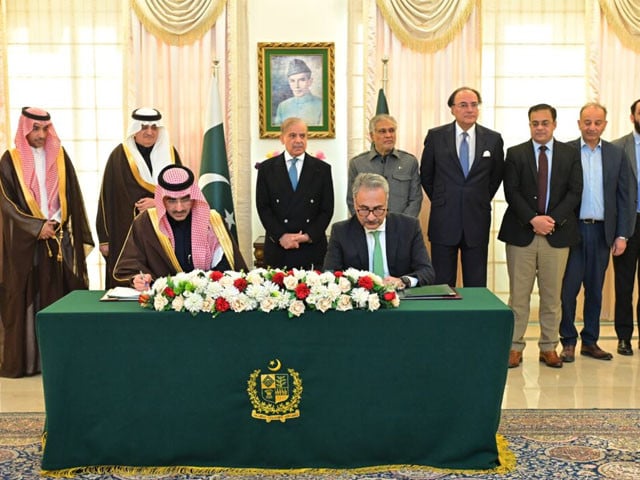
Pakistan and the Asian Development Bank (ADB) signed a $200 million loan agreement to strengthen the country’s power distribution infrastructure.

The agreement was signed by the Secretary Economic Affairs Division (EAD), Dr. Kazim Niaz, and ADB Deputy Country Director, Asad Aleem, according to a press release issued by the EAD.

The project will provide support to three distribution companies—Lahore Electric Supply Company (LESCO), Multan Electric Power Company (MEPCO), and Sukkur Electric Power Company (SEPCO)—through the installation of advanced metering infrastructure, data management systems, and an asset performance management system (APMS).

Dr. Kazim Niaz emphasized the importance of timely and efficient utilization of the loan and urged the involved stakeholders, especially the distribution companies, to complete the project within the stipulated timeframe.

He appreciated ADB’s role as a reliable development partner and its consistent support for Pakistan’s power sector, noting that the project aims to modernize the power distribution system and reduce significant energy losses during transmission.

On the occasion, ADB Deputy Country Director Asad Aleem expressed gratitude for the government’s proactive engagement and commitment to the project. He assured that ADB would continue to work closely with the Ministry of Economic Affairs and other stakeholders to align its efforts with Pakistan’s development priorities.
 

Asian Infrastructure Investment Bank to give $500m loan for N-5 construction


Amin Ahmed
January 5, 2025

ISLAMABAD: The Asian Infrastructure Investment Bank (AIIB) will provide $210.12 million in financing to Pakistan to reconstruct National Highway N-5 under the Resilient Recovery, Rehabilitation and Reconstruction Framework.

The N-5 project represents the AIIB’s first standalone project in the transport sector of Pakistan, the Beijing-based multilateral lender says. The project aims to enhance climate resilience, operational efficiency, and road safety by reconstructing and upgrading critical four-lane segments into a climate-resilient six-lane dual carriageway.

The AIIB is evaluating the project and is expected to approve the loan by May. The first phase will cost $247.75m, with the government providing $37.63m, whereas the total cost of the Multi-Phase Programme (MPP) is $587.98m, with an AIIB loan totalling $500m. The federal government will contribute a total of $87.98m.

The N-5 is the longest national highway, starting from Karachi and extending through Hyderabad, Moro and Sukkur in Sindh before crossing into Punjab, where it passes through Multan, Sahiwal, Lahore, Gujranwala, Gujrat, Lalamusa, Kharian, Jhelum and Rawalpindi.

Release of $210m is expected in May; multi-phase road project to cost $588m

At Rawalpindi, it turns westwards and passes through Attock Khurd before crossing the Indus River into Khyber Pakhtunkhwa to continue through Nowshera and Peshawar before entering the Khyber Pass and reaching the border town of Torkham.

AIIB financing encompasses the reconstruction of four sections of N-5, totalling 213kms across Islamabad Capital Territory, Punjab, Khyber-Pakhtunkhwa and Sindh, and the reconstruction of two one-kilometer-long bridges in Sindh.

The MPP aligns with the first phase of the National Highway Authority’s 20-year, four-phase plan to rebuild and expand this critical national infrastructure.

The first tier of the phase-1 project will focus on two key sections of N-5, covering a total of 75km: Rawalpindi to Burhan (44km) and Nowshera to Peshawar (31km), alongside the reconstruction of the Nai Baran Bridge located southwest of Hyderabad.

The second tier of the project will focus on two sections of N-5, covering a total of 138km: Lahore to Gujranwala (68km) and Ranipur to Rohri (70km), alongside the reconstruction of the Indus River Bridge at Hyderabad.

The first tier of phase-1 of the project consists of three components: civil works to reconstruct two sections of N-5 (Rawalpindi-Burhan and Nowshera-Peshawar) and the Nai Baran Bridge; design review and construction supervisor consultant; and baseline costs such as resettlement of informal users, environmental and social management and government fees and permits.

The AIIB has mobilised a $2m project preparation special fund grant to strengthen the preparation of the project.

Published in Dawn, January 5th, 2025
 

World Bank pledges $20bn to Pakistan under 10-year partnership framework

APP | Dawn.com
January 15, 2025

The 31 donors to the World Bank-administered Afghanistan Reconstruction Trust Fund must approve the transfer before the funds could flow to the World Food Programme and Unicef. — AFP/File


The 31 donors to the World Bank-administered Afghanistan Reconstruction Trust Fund must approve the transfer before the funds could flow to the World Food Programme and Unicef. — AFP/File
https://whatsapp.com/channel/0029VaMc238IiRov8okfYy3n
The World Bank has pledged to provide $20 billion to Pakistan under the 10-year country partnership framework (CPF) to support inclusive and sustainable development within the country, an official statement said.

According to the statement, the new framework for the country aimed to “support inclusive and sustainable development through a strong focus on building human capital”, in addition to fostering durable private sector growth.

“Our new decade-long partnership framework for Pakistan represents a long-term anchor for our joint commitment with the government to address some of the most acute development challenges facing the country: child stunting, learning poverty, its exceptional exposure to the impacts of climate change, and the sustainability of its energy sector,” said World Bank Country Director Najy Benhassine.

Out of the total amount, $20bn would be provided through International Development Association (IDA) and International Bank for Reconstruction and Development (IBRD).

The framework, according to the statement, aimed to focus to on several critical areas such as reducing child stunting through increased access to clean water and sanitation services; decreasing learning poverty through quality education; increasing resilience to floods and other climate-related disasters; increasing fiscal space and better management and more progressive public expenditures for development; and increasing productive and inclusive private investment to improve external trade balances.

Specific goals of the framework also included increasing tax-to-GDP ratio to over 15 per cent and adding 10 Gigawatts of renewable energy capacity.

On the energy side, the World Bank document on the framework stated one of its aims to develop a financially sustainable energy sector, adding that this would be achieved through reforms and investments, including in the transmission and distribution (T&D) sector “to reduce losses and geographical imbalances between consumption and generation”.

Additionally, the framework laid a special focus on sustainable development goals (SDGs), such as providing quality education to 12 million Pakistani students and delivering healthcare services to 50m citizens.

The CPF also seeks to provide safe drinking water and sanitation facilities to 60m people, strengthen food security for 30m individuals, and increase access to family planning services for 30m women.

Additionally, the CPF includes objectives to address flood and disaster risks, which would benefit 75m people across the country.

Per the statement, the 10-year framework is “well aligned with key objectives of the recently launched National Economic Transformation Plan, Uraan Pakistan, and those of the Prime Minister’s Economic Transformation Agenda and Implementation Plan”.

Furthermore, the framework priorities were formed through extensive consultations across the country with key stakeholders.

Pakistan has been a member of the World Bank since 1950. So far, the Bank has provided $48.3bn in assistance to the country.

The Bank’s programme in Pakistan is governed by a Country Partnership Strategy with four priority areas of engagement: energy, private sector development, inclusion, and service delivery.

The current portfolio for IBRD, IFC and MIGA in Pakistan include 106 projects and a total commitment of $17bn.
 

Pakistan, SFD sign $1.61b agreements to boost economic cooperation​


The agreements include a deferred payment facility for oil imports from Saudi Arabia worth $1.20 billion.

News Desk
February 03, 2025

tribune


Prime Minister Shehbaz Sharif and the Chief Executive Officer of Saudi Fund for Development (SFD), Sultan Abdulrahman Al-Marshad, witnessed the signing of two significant agreements between Pakistan and SFD, valued at $1.61 billion.

The agreements were signed on Monday, further strengthening bilateral economic cooperation between the two nations. They include a deferred payment facility for oil imports from Saudi Arabia worth $1.20 billion, to be paid over one year, and a concessional loan agreement for the construction of a gravity-flow water scheme at Mansehra in Khyber Pakhtunkhwa, amounting to $41 million.

The agreements were signed by Dr Kazim Niaz, Secretary of the Economic Affairs Division, and Sultan Abdulrahman Al-Marshad, CEO of SFD, on behalf of their respective governments.

The ceremony was attended by Deputy Prime Minister and Foreign Minister Ishaq Dar, along with federal ministers and the Saudi Ambassador to Pakistan, Nawaf bin Said Al-Malki.

PM Shehbaz expressed his approval of the Oil Import Financing Facility, which will allow Pakistan to receive oil on deferred payments for one year. He emphasised that this agreement will strengthen Pakistan’s economic resilience by securing a stable petroleum supply while easing fiscal pressures.

The SFD will also provide $41 million for the Gravity Flow Water Supply Scheme at Mansehra, which will improve access to clean drinking water for 150,000 residents. This project is expected to meet the demand for water in the region until 2040, benefiting over 200,000 people and enhancing public health and quality of life.

The signing of these agreements marks a major step forward in Pakistan’s economic cooperation with Saudi Arabia, with both projects aimed at providing essential services and strengthening the country’s economic stability.
 

Saudi Arabia approves $40m for King Salman Hospital in K-P​


News Desk
February 04, 2025


PM Shehbaz Sharif announced on Tuesday that the Saudi Fund for Development (SFD) has approved a $40 million grant to build the King Salman Hospital in Pakistan's northwestern Khyber Pakhtunkhwa province.

The project is part of a broader series of collaborative efforts between Pakistan and Saudi Arabia aimed at bolstering infrastructure and health services in the country.

The announcement follows a significant agreement signed a day earlier, in which Pakistan secured a one-year deferment on a $1.2 billion payment for oil imports under an SFD-backed facility.

This arrangement will allow Pakistan to enhance its foreign reserves ahead of the first review of a $7 billion International Monetary Fund (IMF) bailout, which is scheduled for March.

PM Shehbaz highlighted that the King Salman Hospital is among several projects supported by the SFD, which has funded over 40 projects in Pakistan since its inception in 1975.

These initiatives, totaling approximately $1.4 billion, have focused on sectors such as energy, water, transportation, and infrastructure.

“Other SFD projects, like the King Salman Hospital with a $40 million investment, will be fully funded and built in Hazara,” Sharif said during a federal cabinet meeting, expressing gratitude to the Saudi authorities for their ongoing support.
 

AIIB okays $240m for water, sewerage infrastructure


Amin Ahmed
May 26, 2025

ISLAMABAD: The Asian Infrastructure Investment Bank (AIIB) has approved $240 million in funding for the second phase of the Karachi Water and Sewerage Services Improvement Project (KWSSIP).

The new phase will increase water availability, improve the safety of water and sewerage services in Karachi, and improve the financial and operational performance of the Karachi Water and Sewerage Corporation (KWSC).

The project will deepen the reforms undertaken under the project’s first phase and significantly scale up the infrastructure investments to improve water supply and sewerage services in Karachi. Under the first phase, the AIIB provided $40m for the project.

The investments in rehabilitating existing infrastructure and constructing new infrastructure will enhance the development impacts by reaching more beneficiaries and building support for the continued mainstreaming of operational reforms and new investments.

The project, approved last week, aims to provide 16m people with safely managed water and 10.4m with safely managed sanitation by 2030.

Co-financed by the World Bank, which acts as the lead financier, the project’s environmental and social impacts have been assessed under the AIIB’s Environmental and Social Framework (ESF).

The ESF ensures that project implementation complies with international environmental and social safeguards.

The project aims to address three structural challenges in Karachi’s water and sanitation system: the overall shortfall in water supply, low water quality and the lack of sewage treatment capacity.

Published in Dawn, May 26th, 2025
 

ADB board meets on June 3 to approve $800m Pakistan package​


The Indian move came after it failed to block the approval of the $1 billion worth second loan tranche by the IMF

Shahbaz Rana
May 29, 2025

tribune


ISLAMABAD: The Asian Development Bank (ADB) has postponed the approval of a $800 million financing package for Pakistan for five days on the request of India that sought time to evaluate the loan documents, exposing flaws in the lender's rule book that allows such extensions.

The government officials told The Express Tribune that the ADB board meeting had been convened for May 28th to approve the $300 million budget support loan and another $500 million in guarantees to obtain foreign commercial loans.

The meeting did not take place on Wednesday and Pakistan had been informed in advance. The meeting has been rescheduled to June 3, the government officials added.

When contacted, Economic Affairs Secretary Dr Kazim Niaz confirmed that the ADB board meeting was scheduled for May 28 but has been postponed for five days on the request of the Indian executive director.

The secretary said that under the ADB rules any director can seek a one-time extension on the date and India took the benefit of this rule. The ADB country office did not respond to a request for comment on the development.

The Indian move came after it failed to block the approval of the $1 billion worth second loan tranche by the International Monetary Fund. The postponement by the ADB underscores that the Pakistani representatives in the World Bank, the IMF, the Asian Infrastructure Investment Bank and the ADB will have to adopt a proactive approach to protect the country's economic interests.
 
So Karachi steel mills new agreement signed with russia. Will it be executed or just remain in the desks?
 

ADB approves $800m to boost Pakistan’s public finance


Tahir Sherani | Dawn.com
June 3, 2025

The Asian Development Bank (ADB) approved $800 million programme to strengthen fiscal sustainability and improve public financial management in Pakistan, according to a statement issued by the Philippines-based lender.

The statement read that subprogramme 2 of the “Improved Resource Mobilisation and Utilisation Reform Programme” includes a policy-based loan of $300m, and ADB’s “first ever policy-based guarantee” of up to $500m, which is expected to mobilise financing of up to $1 billion from commercial banks.

“Pakistan has made significant progress in improving macroeconomic conditions,” said ADB country director for Pakistan, Emma Fan.

“This programme backs the government’s commitment to further policy and institutional reforms that will strengthen public finances and promote sustainable growth.”

The programme supports far-reaching reforms to improve tax policy, administration, and compliance, while enhancing public expenditure and cash management.

“It also promotes digitalisation, investment facilitation, and private sector development. These measures aim to reduce Pakistan’s fiscal deficit and public debt, while creating space for social and development spending,” the Manila-headquartered institution said.

The programme is underpinned by a comprehensive support package —including technical assistance and close coordination with development partners — designed to help Pakistan build long-term fiscal resilience and stability, it added.

Khurram Schehzad, adviser to the finance minister, confirmed that the financial institution has approved the programme. “Diplomacy led by Economic Affairs & Ministry of Finance secures majority support at ADB Board,” he said in a post on X.¶ 
 

Pakistan seeks fourth restructuring of $393.73mn WB-funded higher education project


Tahir Amin
June 24, 2025

Pakistan government has requested the World Bank (WB) for restructuring of the Higher Education Development in Pakistan (HEDP) project worth $393.73 million for the fourth time to allow for completion of critical information technology (IT) and IT-related activities at the universities whose impact will be seen beyond the project period.

The project is in its sixth year of implementation, and its project development objective (PDO) is to support research excellence in strategic sectors of the economy, improve teaching and learning, and strengthen governance in the higher education sector.

The Economic Affairs Division has requested a four-month extension through a letter as the project requires restructuring to complete five remaining packages under IT and IT-related services, which are at an advanced stage of contract implementation.

The additional time is sought following several disruptions and procedural delays, which delayed the delivery of IT hardware to ports and, subsequently, of deployment of related software and services packages.

An extension of the closing date is needed to enable the project to complete the establishment of critical IT activities at the universities whose impact will be seen beyond the project period.

The overall project implementation progress is rated moderately satisfactory.

Key results achieved by the project:

(i) Thirty one research grants awarded in Year 2 achieved 80% of their outcome and 28 research grants awarded in Year 3 achieved 60% of their outcome target, and nine RTTG awarded in Year 5 have achieved 50% of their outcome targets.

(ii) The National Academy of Higher Education (NAHE) conducted training for 1,113 faculty and 903 higher education managers.

(iii) 50 Quality Enhancement Cell in Affiliated Colleges (QECACs) completed SARs.

(iv) Twenty affiliating universities or ACs implement the career and internship framework.

(v) 300 higher education institutions connected to the Pakistan Education and Research Network (PERN).

(vi) HEC developed, approved and rolled critical policies including the Undergraduate Education Policy and the Open Distance Learning Policy. Nine out of 11 intermediate results indicators have been met and two others will be met by June 30, 2025.

(vii) The disbursement as of June 10, 2025, from International Development Association (IDA) Credit is $375.70 million, including $319 million against PBCs and $56.70 million for the IPF component. The final disbursement of $12.3 million against the PBCs has been approved and is being processed. The balance of the IPF component will be disbursed in fiscal year 2026.

This restructuring will only involve the extension of the project closing date by four months to October 31, 2025. The work plan will be adjusted with the proposed closing date.

There will be no changes in PDO, PDO indicators, any activities or any components of the project as a result of this restructuring. No revision of implementation arrangement and M&E mechanism will take place. There will be no modification or scale-up of any activity of the project.

The extension of the project’s closing date does not involve any modifications to the current Financial Management (FM), procurement, and environmental and social safeguards arrangements, which have been deemed adequate and will continue to effectively support the project’s operations.

The existing FM systems, including budgeting, disbursement, accounting, and financial reporting, including the reporting frequency, will remain unchanged and will operate according to the established procedures.
 
The project has been restructured thrice.

The first restructuring was approved on June 14, 2021, to respond to the COVID-19 pandemic impacts and involved: (a) introduction of Component 6 to support continued learning for all in case of unpredicted crises and university lockdowns and provision of special funds to universities to increase their financial autonomy, (b) reallocation of funds between Components to better address ongoing needs, and (c) revision of the Results Framework to reflect the changes in activities.

The second restructuring was approved on June 15, 2023, to repurpose the unutilised funds from lapsed targets under Performance Based Condition (PBC) 1 and PBC 2 toward: (a) a new round of Rapid Technology Transfer Grants (RTTGs) focused on emergency response, climate change, extreme weather event preparedness and import replacement research (PBC 1, Component 1); (b) a new target to track RTTG outcomes (PBC 2, Component 1); and (c) an increased target for universities participating in the framework for improvement in financial autonomy (PBC 10, Component 6).

The third restructuring was completed on April 1, 2024 to: (a) extend the project closing date by 12-months to June 30, 2025; (b) adjust four PBC targets to align with implementation of activities; (c) drop two PBCs associated with activities no longer relevant and reallocate the associated US$ 4 million to support funding required for Information Technology (IT) and IT related activities and conduct a tracer study to inform labor market outcomes of higher education graduates; and (d) refine the Results Framework to reflect the activity changes, set more ambitious targets given the 12-month extension, and add a corporate scorecard indicator.
 

World Bank approves $194mn to support education & access to water in Balochistan

Tahir Amin

The World Bank Board of Executive Directors on Tuesday approved $194 million for two projects to enhance educational opportunities for children and boost water security in Balochistan.

“The GRADES-Balochistan project aims to reduce learning poverty in the province, while the Balochistan Water Security and Productivity Improvement Project will help address the province’s water security challenges and enhance climate resilience,” said Najy Benhassine, World Bank Country Director for Pakistan.

“The World Bank remains committed to supporting Balochistan through strategic investments in infrastructure and human development to build the foundations for more job creation, poverty reduction, and stronger resilience,” he added.

The Getting Results: Access and Delivery of Quality Education Services in Balochistan (GRADES-Balochistan) project, i.e. $100 million, will benefit 250,000 students with a focus on increasing enrollment and improving literacy and numeracy skills in early childhood and primary education.

The project will also provide support for 5,000 teachers through continuous professional development programs. Additionally, scholarships will be provided to 400 female students to pursue teacher pre-service education, fostering a new generation of educators who will serve as mentors and role models.

“The GRADES-Balochistan project is a strategically important initiative that addresses critical gaps in access to and quality of pre-primary and primary education in the province,” said Inga Afanasieva, Team Leader for the project.

“The project not only aims to enhance educational infrastructure but also to increase resilience to disasters and environmental sustainability. These efforts underscore the World Bank’s commitment to creating a safer and more sustainable future for the children of Balochistan.”

Meanwhile, the World Bank also approved the Balochistan Water Security and Productivity Improvement Project (BWSPIP) i.e. $94 million, which aims to improve the lives of smallholder and tenant farmers in the Nari, Talli, and Lehri river basins of the Kachi Plain and improve water supply services in Quetta.

The project is expected to benefit 500,000 people with improved access to basic water supply services and benefit more than 80,000 people by providing climate-resilient infrastructure.

Key elements include enhancing flood protection, increasing access to water for productive use, and improving water supply service delivery.

“The project supports the implementation of Pakistan’s Resilient Recovery Framework and aims to provide significant benefits for the farming communities in the province as well as for the residents of Quetta. It will also empower women in community-level water management,” said Carolina Dominguez Torres, Task Team Leader for the Project.

“Through strategic investments, improved water management, and community engagement, the project aims to deliver lasting benefits for the sustainable development of Balochistan.”

The GRADES project, designed to reduce learning poverty, and the BWSPIP project, designed to reduce child stunting through increased access to safe water and sanitation services, are key outcome targets under the 10-year Country Partnership Framework for Pakistan, the World Bank said.
 

$350m loan agreement signed with ADB to boost women’s financial inclusion


Tahir Amin
June 25, 2025


The government of Pakistan and the Asian Development Bank (ADB) on Tuesday signed a $350 million loan agreement for the “Women Inclusive Finance Sector Development Program (Subprogram-II)”.

Sabina Qureshi, additional secretary of the Economic Affairs Division and Dinesh Raj Shiwakoti, Head Project Administration Unit, signed the loan agreement. Project Agreement for Financial Intermediary Loan (FIL) was signed by the State Bank of Pakistan.

The ceremony was attended by senior officials from the government of Pakistan and the ADB. The signing of the agreement ensures government of Pakistan’s commitment in fostering women’s economic empowerment. Through improved access to finance, expanded entrepreneurship opportunities, and increased job creation, the programme paves the way for a more inclusive and prosperous future for women.

Subprogram II of WIF is built on the foundational policy reforms introduced under Subprogram I. It focuses on four key reform areas i.e. creating an enabling policy and regulatory environment for women’s financial inclusion, increasing the supply of finance for women, strengthening women’s entrepreneurship capabilities and promoting inclusive and equitable workplaces within the financial sector.

The total financing package of $350 million (300 million Policy Based Loan and 50 million FIL) will significantly contribute to Pakistan’s ongoing efforts for inclusive, resilient and sustainable development.
 

World Bank reaffirms commitment to $40bn CPF with Pakistan


BR Web Desk
June 27, 2025

Pakistan and the World Bank reaffirmed their development partnership during high-level consultations in Washington, D.C., with both sides committing to the effective implementation of the newly launched $40 billion Country Partnership Framework (CPF) 2026–2035.

The development came during a meeting between Federal Minister for Economic Affairs Ahad Khan Cheema, during his official visit to the United States, with senior World Bank leadership, read a statement released by the Economic Affairs Division (EAD) on Friday.

“In a productive meeting with Anna Bjerde, Managing Director for operations, and Martin Raiser, South Asia Regional Vice President, Cheema applauded the strengthened collaboration between Pakistan and the World Bank Group over the past year.

“This enhanced engagement has culminated in the development of the new Country Partnership Framework (CPF) 2026-2035, a transformative ten-year strategy backed by an unprecedented $40 billion commitment from the World Bank,” read the statement.

Cheema, during the meeting, expressed deep appreciation for the World Bank’s support, particularly during critical challenges, including the COVID 19 pandemic and devastating 2022 floods.

“As our largest development partner, the World Bank has played an indispensable role in Pakistan’s socio-economic progress and improving the lives of our citizens,” stated Cheema.

With the CPF now successfully launched, Cheema emphasized the government’s complete focus on finalizing a comprehensive implementation framework in collaboration with the World Bank to ensure the strategy delivers its full potential.

He welcomed Pakistan’s transition to the World Bank’s Middle East and North Africa (MENA) Region under Vice President Ousmane Dione, noting this move will create valuable opportunities for knowledge exchange and regional synergy.

Meanwhile, in a separate meeting with Abdelhak Bedjaoui, World Bank Executive Director, Cheema acknowledged his effective representation of Pakistan’s economic interests.

The minister proposed regular visits by executive directors to constituency countries to better understand development needs and opportunities for World Bank engagement.

“The discussions also highlighted recent World Bank approvals, including the $700 million Reko Diq mining project and $400 million Risk Participation Facility, which moved forward despite objections,” read the EAD’s statement.

Cheema reaffirmed Pakistan’s commitment to working closely with the World Bank country team to achieve the CPF’s ambitious development objectives and transformational impacts.
 

Users who are viewing this thread

Pakistan Defence Latest

Latest Posts

Back
Top