International loans / Grants / Investments / Reports

Pakistan signs €20mn grant deal with EU to boost governance, business environment


Tahir Amin
July 10, 2025

Pakistan and the European Union (EU) on Thursday signed a €20 million grant agreement to launch the “Better Governance and Business Environment” initiative, aimed at strengthening governance and improving competitiveness of the private sector, particularly small and medium enterprises (SMEs).

The agreement was signed by EU Ambassador Dr Riina Kionka and Secretary Economic Affairs Division Dr Kazim Niaz. The programme is part of the EU’s Multiannual Indicative Programme 2021-2027.

According to officials, the initiative will support SME-related legislation, promote the green transition of export-oriented businesses, and encourage targeted investments aligned with the EU’s Global Gateway strategy, the GSP+ framework, and the EU Green Deal.

Dr Niaz thanked the EU for its continued support, terming the programme a timely intervention aligned with the government’s “Uraan Pakistan” strategy for institutional reforms and responsible private sector growth.

Ambassador Kionka said the EU is committed to helping Pakistan build a more inclusive and sustainable economy by investing in green innovation, women-led enterprises, and public-private partnerships.

The EU’s development cooperation with Pakistan continues to focus on climate resilience, human rights, governance, and sustainable economic growth.
 

Govt secured $26.7b in loans in FY25​


50% of borrowing comprises rollovers as govt relies on external creditors

Shahbaz Rana
July 23, 2025

tribune


ISLAMABAD: Pakistan secured a record $26.7 billion in foreign loans during the last fiscal year, nearly half of it in the form of rollovers of previously obtained loans, indicating the country's deepening dependence on multilateral and bilateral creditors.

The $26.7 billion disbursed during the fiscal year 2024-25 was slightly higher than the preceding fiscal year, according to data compiled by the Ministry of Economic Affairs, the State Bank of Pakistan (SBP), and the Ministry of Finance.

Of the $26.7 billion in foreign loans, only $3.4 billion or nearly 13% was received for project financing, official details released by the Ministry of Economic Affairs on Tuesday revealed.

Such low receipts for project financing underscore the difficulties in repaying the loans, as most foreign borrowings are used for budgetary support and to build foreign exchange reserves, neither of which generate revenues for repayment.

The central bank's gross foreign exchange reserves of $14.5 billion as of end-June are largely the result of rollovers, refinancing of existing loans, and some fresh borrowing. This highlights Pakistan's growing reliance on foreign creditors, making economic stability increasingly vulnerable.

According to the details, the Ministry of Economic Affairs booked $11.9 billion on the federal government's accounts, about $1.2 billion higher than the previous fiscal year. The International Monetary Fund (IMF) disbursed $2.1 billion, while another $12.7 billion came as rollovers of cash deposits from Saudi Arabia, China, the United Arab Emirates, and Kuwait.

Saudi Arabia has placed $5 billion in cash deposits with Pakistan's central bank, charging a 4% interest on the loans. The amount is rolled over annually as Islamabad remains unable to repay. Interestingly, the IMF's three-year programme is predicated on the continued rollover of these $12.7 billion loans, casting doubt on the depth of external sector stability.

China has placed $4 billion in cash deposits, charging over 6% in interest. The UAE has deposited $3 billion with the central bank.

China also disbursed $484 million in guaranteed loans in the last fiscal year, used primarily for asset purchases.

Pakistan failed to tap international capital markets last fiscal year and its planned $1 billion borrowing through Eurobonds and Panda bonds did not materialise. Instead, the government and central bank secured an expensive foreign commercial loan, backed by multilateral guarantees, to bridge the gap.

With Pakistan's credit rating in junk status, the country remains locked out of global capital markets and must pay high interest rates on commercial loans and cash deposits.

The finance ministry managed to secure $4.3 billion in commercial loans, mostly refinanced Chinese loans and others backed by guarantees from the Asian Development Bank (ADB).

The ADB disbursed $2.1 billion in new loans, $500 million more than budgeted. Multilateral institutions contributed $6.9 billion overall, including $2.1 billion from the IMF.

The World Bank released $1.7 billion, $300 million short of the budgeted amount, and has not announced any new budget support loan for the current fiscal year.

The Islamic Development Bank disbursed $716 million, and Saudi Arabia gave $200 million under an oil financing facility secured at 6% interest, making it an expensive loan.
 
Pakistan's debt-to-GDP ratio and gross financing needs-to-GDP ratio currently exceed sustainable levels, according to the Ministry of Finance. A gross financing need exceeding 15% of GDP is considered unsustainable. The Ministry of Finance's previous projections suggest Pakistan will remain above that threshold for at least the next three years.

In its first review of the $7 billion programme, the IMF flagged several risks to consistent policy implementation including the resistance to reforms, underperformance of tax revenue, high gross financing needs, low gross reserves, and a sizeable net foreign exchange derivative position of the SBP. It also warned that socio-political tensions could erode repayment capacity and debt sustainability.

For three fiscal years, FY2025-26 to FY2027-28, the IMF has projected Pakistan's gross external financing requirements at $70.5 billion. These figures may vary depending on changes in the current account deficit, remittance flows, and exports.

The IMF further stated that the overall risk of sovereign stress remains high, reflecting a high level of vulnerability to elevated debt levels, large gross financing needs, and low reserve buffers. However, the government has assured the IMF that it is closely monitoring debt vulnerabilities arising from elevated gross financing requirements and a significant sovereign-bank nexus.
 

Donors offer $5b for Reko Diq​


ADB, US Exim Bank among lenders offering funds for copper, gold project

ZAFAR BHUTTA
August 02, 2025


reko diq


Reko Diq

ISLAMABAD: Pakistan has received an overwhelming response from multinational donors and agencies, which have offered $5 billion in financing to execute the multibillion-dollar Reko Diq copper and gold mining project in Balochistan.

Sources told The Express Tribune that the commitments received from foreign donors were more than the funding requirement for the Reko Diq project, which is estimated at $3 billion.

They said that the donors included the Asian Development Bank (ADB), Islamic Development Bank (IDB), International Finance Corporation (IFC) and US Exim Bank. Development agencies from Germany and Denmark have also offered financing.
 

ADB to back Pakistan rail upgrade as China financing stalls, sources say


Asian Development Bank in advanced talks to lead financing of $2bn upgrade of 500-km stretch of railway line from Karachi to Rohri

Reuters
August 22, 2025

The Asian Development Bank (ADB) will fund upgrades to part of Pakistan’s creaking railway system, replacing China, after prolonged delays in securing financing from Beijing threatened to put a strain on a strategic mining project, two sources said on Friday.

An extensive revamp of 1,800 km (1,118 miles) of railways has been the centrepiece of a $60 billion Chinese investment programme in Pakistan announced in 2015 as part of Beijing’s Belt and Road Initiative global infrastructure push.

A decade of negotiations, however, have yet to produce a finance package for the rail upgrades - the single biggest project under the programme with China. And Pakistan is, meanwhile, struggling to repay Chinese debt owed for other projects.

The ADB is in advanced talks to lead the financing of a $2 billion upgrade of a 500-km stretch of the railway line from Karachi to Rohri in the country’s south that had previously been part of the Chinese project, two sources with direct knowledge of the discussions told Reuters.

The upgrade has become urgent, they said, as it is needed to transport copper ore from the Reko Diq mine currently being developed by Canada’s Barrick Mining Corp.

“We will have a crisis. How will you evacuate output from Reko Diq? The exhausted line will come under even more pressure,” one of the sources, a senior government official, said.
 

ADB approves $800m for fiscal sustainability


The Newspaper's Staff Reporter
August 23, 2025

ISLAMABAD: The Asian Development Bank (ADB) announced on Friday that it has approved a substantial $800 million loan and guarantee programme for Pakistan, aimed at strengthening the country’s fiscal sustainability and improving public financial management.

The Improved Resource Mobilisation and Utilisation Reform Programme, Subprogramme 2, includes a policy-based loan of $300m and ADB’s first-ever policy-based guarantee of up to $500m. The guarantee is expected to help mobilise up to $1 billion from commercial banks, the Manila-based lender said in a statement.

The ADB noted that Pakistan had made significant progress in improving macroeconomic conditions, and the new programme supports the government’s commitment to further reforms. These reforms are aimed at strengthening public finances and promoting sustainable growth. The programme is designed to support wide-ranging reforms to improve tax policy, administration, and compliance, while enhancing public expenditure and cash management. It also focuses on promoting digitalisation, facilitating investment, and fostering private sector development.

The primary goal of these measures is to reduce Pakistan’s fiscal deficit and public debt, while creating fiscal space for social and development spending, the ADB explained. The programme is backed by a comprehensive support package, including technical assistance and close coordination with development partners, to help Pakistan build long-term fiscal resilience and stability.

The programme follows a policy-based lending (PBL) modality, which includes two subprogrammes. Subprogramme 1, approved and disbursed in December 2023, totalled $300m and focused on establishing the foundation for policies, laws, and institutional capacities to enhance resource mobilisation and allocation.

Subprogramme 2 builds on these foundational reforms and aims to drive substantial improvements in tax policy and administration, taxpayer compliance, public expenditure, and cash management, as well as the mobilisation and effective utilisation of national resources, including domestic private investment and savings.

For Subprogramme 2, the ADB has proposed the inclusion of policy-based guarantees (PBGs) to support the government’s financing needs within the current fiscal year. These guarantees will take the form of partial credit guarantees (PCGs) to mitigate credit risk for commercial banks lending to Pakistan, thereby facilitating the mobilisation of private capital.

Despite the significant progress in restoring economic stability through consistent policy reforms, the ADB warned that long-standing structural challenges remain. “A narrow tax base limits fiscal fairness, sustainability, and the ability to meet Pakistan’s considerable social and development spending needs,” the bank stated.

Published in Dawn, August 23rd, 2025
 

Reko Diq wins $6b funding pledges​

ADB, World Bank approve $1b; US, Japan, and others extend strong support

Shahbaz Rana
August 23, 2025


reko diq wins 6b funding pledges photo express


Reko Diq wins $6b funding pledges. Photo: Express

ISLAMABAD: Reko Diq Mining Company is set to achieve financial close on the back of about $6 billion in indicative commitments, almost double the requirement. The package includes at least half a billion dollars in assurances by the United States.

Of the $6 billion in commitments, two multilateral lenders, the Asian Development Bank (ADB) and the World Bank Group, have already approved a little over $1 billion. The ADB approved $300 million for the Reko Diq Mining Company, which owns 100% of the world's fifth largest copper-gold mines in Balochistan, according to an announcement released by the Manila-based lender on Friday.

The ADB said the project will help meet rising global demand for critical minerals while unlocking economic development and poverty reduction in Pakistan.

The $300 million ADB financing indicates that Reko Diq will achieve financial close within months. It also signals to international private creditors to lend, according to people familiar with the matter.

Agreements with other lenders are expected soon to reach the $3.5 billion required for phase one of the $6.7 billion project, they added.

"Reko Diq will help the critical minerals supply chain, advance the clean energy transition and drive digital innovation across the region and beyond," said ADB President Masato Kanda after the board approved a $410 million package.

The ADB's contribution includes up to $300 million in loans to Reko Diq Mining Company Private Limited (RDMC) and a $110 million partial credit guarantee to cover the equity component of the Balochistan government, stated the ADB.

The project will mark the largest foreign direct investment in Pakistan's history, it added. Barrick Gold CEO Mark Bristow recently said the company was preparing a "G7 financing package" for the project. The mine is expected to begin production in 2028.

Earlier, Pakistan approved raising the first phase cost to nearly $6.7 billion, a 58% increase — by enhancing the scope of the strategically important scheme and accounting for inflationary impact and higher production needs.

As a result, the federal government's obligation for its 25% shareholding through three state-owned firms rose to $1.9 billion. The Balochistan government's obligation also increased to $1.1 billion.

Barrick Gold is responsible for arranging the remaining 50%.

Sources said the $6 billion in indicative commitments included $1.05 billion already approved by the World Bank Group and ADB. The US Export-Import (EXIM) Bank indicated a $500 million to $1 billion loan.

The US International Development Finance Corporation, Export Development Canada, and Germany's KfW have also promised loans. Guarantees have been offered by Euler Hermes, Finnvera Group, Swedish Export Credit Agency EKN, and Korean Exim Bank for $400 million.

Japan's Exim Bank has pledged $500 million while Australian Export Finance may extend up to $250 million, sources added.

However, final amounts will depend on the company's requirements. The mining firm now has the option to secure loans at highly competitive rates, they said.

"The ADB's support is also a game-changer for Pakistan, creating quality jobs and supporting the shift to a more resilient and diversified economy," said the ADB president.
 

World bank approves $47.9m grant to improve Punjab primary education, enrolment


Reuters | Tahir Sherani
August 25, 2025

1756129828554.png

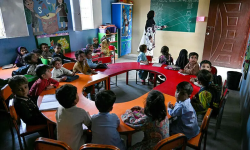
This photo taken on November 13, 2024 shows students attending a class at the non-profit Roshan Pakistan Foundation school, in Abdullah Goth village on the outskirts of Karachi. — AFP/

The World Bank on Monday approved a $47.9 million grant to improve primary education in Punjab, saying the project will expand early childhood schooling, re-enrol out-of-school children and strengthen teacher support.

The move came over a month after the Higher Education Commission (HEC) and the World Bank teams conducted the 12th and final mission to review and evaluate progress against the targets set under the Higher Education Development in Pakistan (HEDP) project.

“The World Bank has approved a US$47.9 million grant, funded by the Global Partnership for Education Fund, to help improve girls’ and boys’ participation at pre-primary and primary levels in Pakistan’s Punjab province,” the organisation said in a press release dated August 23, shared on social media today.

According to the press release, the GRADES-Balochistan project will also improve the responsiveness of the education sector to climate change and emergencies.

Among the four million children that the project aims to benefit are 80,000 out-of-school children, over 3m in School Education Department (SED) schools, 850,000 in the non-formal sector, and 140,000 differently-abled children in Special Education Department (SpED) schools, it said.

The World Bank added that over 100,000 teachers and school leaders, as well as parents and community members, would benefit through professional development and awareness campaigns.

“The project is aligned with the Government of Punjab’s broader education reform agenda, which seeks to create a more effective, accountable, and inclusive education system,” said Izza Farrakh, World Bank Task Team Leader for the project, according to the release. “It will do so by supporting the government’s efforts to improve governance, management, and capacity in the education sector.“

Bolormaa Amgaabazar, World Bank Country Director for Pakistan, called the project a “crucial step towards addressing learning poverty and ensuring equitable access to quality education across Punjab”.
 
In June, the World Bank had approved $100m for the “Getting Results: Access and Delivery of Quality Education Services in Balochistan” (GRADES-Balochistan) project, which aimed to benefit around 250,000 students by increasing enrolment and improving literacy.
 
According to the press release, the GRADES-Balochistan project will also improve the responsiveness of the education sector to climate change and emergencies.


Among the four million children that the project aims to benefit are 80,000 out-of-school children, over 3m in School Education Department (SED) schools, 850,000 in the non-formal sector, and 140,000 differently-abled children in Special Education Department (SpED) schools, it said.

The World Bank added that over 100,000 teachers and school leaders, as well as parents and community members, would benefit through professional development and awareness campaigns.

“The project is aligned with the Government of Punjab’s broader education reform agenda, which seeks to create a more effective, accountable, and inclusive education system,” said Izza Farrakh, World Bank Task Team Leader for the project, according to the release. “It will do so by supporting the government’s efforts to improve governance, management, and capacity in the education sector.“

Bolormaa Amgaabazar, World Bank Country Director for Pakistan, called the project a “crucial step towards addressing learning poverty and ensuring equitable access to quality education across Punjab”.

The statement added that the project targeted those populations that were most vulnerable, in line with the group’s goals of eliminating extreme poverty and the promotion of “shared prosperity” and its Country Partnership Framework (CPF) with Pakistan.

It highlighted that Pakistan had been a member of the World Bank since 1950 and that since this time, the World Bank had provided over $48.3bn to the country in assistance.

The International Finance Corporation (IFC), a member of the World Bank Group, had invested approximately $13bn in Pakistan since 1956, it added. The projects it funded supported renewable energy, financial inclusion, infrastructure, healthcare and agribusiness, among others.
 

Water, sanitation and hygiene services: World Bank may approve USD400m programme for Punjab in Nov


Tahir Amin
September 28, 2025


ISLAMABAD: The World Bank is likely to approve “Punjab Inclusive Cities Program” worth USD400 million in November, official documents revealed.

The program’s objective is to provide safely managed water, sanitation and basic hygiene services and to improve the institutional and financial performance of selected urban local governments in Punjab.

The project is expected to be approved in the second week of November while the closing date would be end December 2030.

The proposed Program-for-Results Financing (PforR) will support a subset of the government of Punjab’s program in selected cities focusing on two result areas: (i) Safely managed water, sanitation and drainage and basic hygiene services; (ii) Institutional strengthening and financial sustainability.

Infrastructure investments through Program funds will include: (i) integrated water supply networks; (ii) sewerage networks and wastewater treatment facilities; (iii) stormwater drainage networks and storage facilities; and (iv) SWM reforms and a pilot for material recovery and sanitary disposal.

The investment project financing (IPF) Component will assist government of Punjab to further develop its sector policy, strategy, and programs; strengthen its institutions and systems; and provide technical support to key provincial departments and urban agencies to deliver on Program targets and Program-related technical, fiduciary, social and environment management aspects.

Copyright Business Recorder, 2025
 

IDB approves $475m for M-6 Sukkur-Hyderabad motorway


Amin Ahmed
October 1, 2025

ISLAMABAD: The Islamic Development Bank (IsDB) has approved $475 million in financing for the M-6 Sukkur-Hyderabad motorway project, aiming to enhance Pakistan’s transport infrastructure by improving connectivity along a key corridor.

The Board of Executive Directors at the IsDB headquarters in Jeddah granted approval on Monday. The 306km M-6 motorway is the only missing segment in the north-south route linking Karachi to Peshawar.

The project is estimated to cost $1.7bn and will feature six lanes designed for speeds up to 120km/h. It will include 89 bridges, 15 interchanges, and 243 underpasses. The M-6 is part of the broader Eastern Alignment of the China-Pakistan Economic Corridor (CPEC).

Physical construction is expected to begin in April next year, with the Sindh government already initiating land acquisition processes. Sindh Chief Minister Murad Ali Shah has directed officials to complete the transfer of both state and private land required for the construction of the motorway. Previous delays were attributed to litigation issues.

In parallel, the M-10 motorway (Karachi Northern Bypass) is being upgraded and extended to link Karachi directly with the M-6 at Jamshoro. This project aims to establish a high-capacity route for both commercial and passenger traffic from Karachi Port.

The M-6 motorway project has faced several delays and financing challenges. The Senate Standing Committee on Planning and Development was recently informed that the estimated cost has increased from $617m in 2018 to $1.1bn in 2022, and now stands at $1.7bn in 2025.

The government has prioritised the M-6 for the fiscal year 2025-26. It is in talks with multiple financial institutions, including the Islamic Development Bank, the Saudi Fund for Development, and the Asian Development Bank, to secure additional funding.
 

IMF seeks briefing on $7.7bn Reko Diq project as Pakistan nears financial close: report​


Move marks an expansion of the Fund’s oversight from balance-of-payments support to major national projects; briefing, initially scheduled for this week, has been shifted to next week

Monitoring Desk

reko-dik-gold-project1.jpg


The International Monetary Fund (IMF) has brought Pakistan’s multibillion-dollar Reko Diq mining project under its review, requesting a detailed briefing on its status. The move marks an expansion of the Fund’s oversight from balance-of-payments support to major national projects, The Express Tribune reported.

Sources said the briefing, initially scheduled for this week, has been shifted to next week.

The Reko Diq project is operated by the Reko Diq Mining Company (RDMC), with Canada’s Barrick Gold holding a 50% stake, while the federal and Balochistan governments share the remaining half equally.

According to Tribune’s report, officials confirmed the IMF sought the briefing as the project approaches financial close, supported by around $3.5 billion in loans from international lenders, including a $700 million–$1.2 billion commitment from the US Exim Bank.

Finance Ministry spokesman Qumar Abbasi said talks with the IMF cover all areas affecting Pakistan’s economy, and sharing details on projects of this scale is important for development partners’ assessments.

“The Reko Diq project is expected to make significant contributions not only to the mineral sector but also to the economy at large,” Abbasi added.

The project represents the largest foreign direct investment (FDI) in a single initiative in Pakistan, attracting global investor confidence. It is also expected to positively impact socio-economic development in Balochistan and strengthen the country’s foreign exchange reserves.

The RDMC is finalising financial close, with a major announcement anticipated soon.

Last month, the federal cabinet approved raising the total cost of Phase-I to $7.72 billion, including $5.8 billion in capital expenditure—up from an initial $4.3 billion estimate two-and-a-half years ago.
 
Phase-II, planned for 2034, will add $3.3 billion to raise production capacity to 90 million tonnes per annum (Mtpa), bringing the total project cost close to $10 billion.

The project, of global interest to both the US and China, is projected to generate $70 billion in net cash flow over 37 years—almost ten times Pakistan’s current foreign exchange reserves. Phase-I is expected to produce 200,000 tonnes of copper annually at a cost of $5.7 billion, with production set to begin by the end of 2028 and Phase-I completion expected in 2029.
 
Foreign Direct Investment (FDI) in Pakistan rose by 27.2% in the financial year 2025, increasing from $3.17 billion to $4.02 billion, Federal Minister for Finance and Revenue Muhammad Aurangzeb informed the National Assembly in a written reply.


As per media reports, the minister said FDI had already recorded a 23.3% increase in FY2024, rising from $2.57 billion to $3.17 billion, marking two consecutive years of growth. He added that refunds worth Rs30.22 billion remain pending for 293,232 exporters, which are being processed by the State Bank of Pakistan (SBP).

During the first two months (July–August) of FY2025–26, Rs10.88 billion in refunds are pending for 94,379 exporters.


Minister for Parliamentary Affairs Dr Tariq Fazal Chaudhry, responding to supplementary questions, reaffirmed the 27.2% increase in FDI and noted a record surge in remittances in recent months.

Chaudhry said a regulatory framework for cryptocurrency operations has been established, including the creation of the Pakistan Virtual Asset Regulatory Authority and the Pakistan Crypto Council to oversee the sector.

Minister of State for Planning Chaudhry Armaghan Subhani said several projects have been launched to reduce poverty and improve living standards in underdeveloped regions, including a Rs40 billion programme targeting the 20 poorest districts of the country.


Parliamentary Secretary for Privatization Aasia Ishaque said the pre-bidding process for Pakistan International Airlines (PIA) has been completed, with bidding expected by the end of November.

She added that bids for the First Woman Bank have been received, with the sale agreement due on October 17, while the House Building Finance Corporation’s deal is expected by December.
 

Users who are viewing this thread

Pakistan Defence Latest

Latest Posts

Back
Top