Iran - Israel/US War: Israel-US declare war on Iran, Iran responds

status of buildings destroyed by Israel's attacks

To view this content we will need your consent to set third party cookies.
For more detailed information, see our cookies page.


To view this content we will need your consent to set third party cookies.
For more detailed information, see our cookies page.


5/8 buildings repaired and OTH radars in Ilam and Khuzestan are being repaired but will take a few more months

an unknown number (1-5) of s-300 FCRs were also damaged, as well as a possible Hawk site south of Tehran, and TIECO factory building in Shamsabad

c. 13-17 buildings hit in total
 
Last edited:
Every time the SL holds rifle during speech it has meant that something good is on its way! Could it be a new penetration of the zionist entity? TP3? 😆😆😆

To view this content we will need your consent to set third party cookies.
For more detailed information, see our cookies page.
 
Operation True Promise 2

Nevatim Air Base:

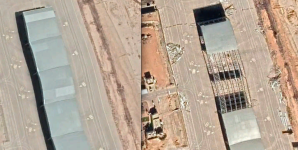
Screenshot 2025-03-31 at 23.10.06.png

Screenshot 2025-04-01 at 21.58.10.png

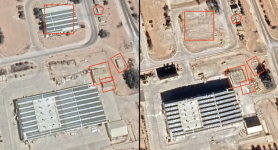
5 buildings destroyed, including large 40m x 40m building at top. other 4 structures likely destroyed from shock wave

Screenshot 2025-03-31 at 23.08.12.png

Screenshot 2025-03-31 at 23.18.01.png

Tel Nof:

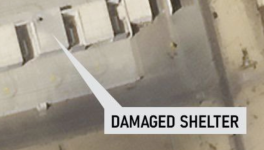
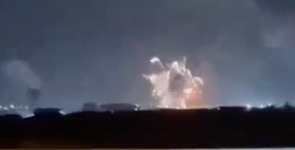
8-10+ impacts recorded on video, including with secondary explosions, but still no high quality satellite images released ...!

Screenshot 2025-03-31 at 23.21.46.png

Screenshot 2025-03-31 at 23.19.54.png

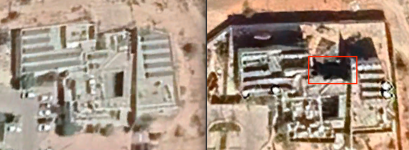
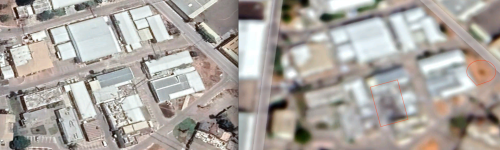
potential impact here but hard to tell with very low resolution satellite imagery from October 2024

Netzarim axis, Gaza:

To view this content we will need your consent to set third party cookies.
For more detailed information, see our cookies page.


overall, at least 55 impacts can be documented (out of estimated 180 missiles fired) = 31% penetration rate
 
Last edited:
To view this content we will need your consent to set third party cookies.
For more detailed information, see our cookies page.
 
Operation True Promise 2

overall, at least 55 impacts can be documented (out of estimated 180 missiles fired) = 31% penetration rate
This is a very low penetration rate for a first strike of this scope. If Iran is truly going to wage a short, high-intensity war, they should target radars and SAMs in the first few attempts, even if that means consuming almost all of the missiles and drones in the first wave of strikes.
 
This is a very low penetration rate for a first strike of this scope. If Iran is truly going to wage a short, high-intensity war, they should target radars and SAMs in the first few attempts, even if that means consuming almost all of the missiles and drones in the first wave of strikes.

Zero intercept footage from TP1,TP2. That is not to say Israel did not intercept them, however we would have expected footage had the rate been as high as 70%. This is a reasonable and logical assessment / ask.

We did however see several failed intercepts - clearly missing targets. This compounds the above assessment.

70 % unaccounted for Possibilities:

- May or may not have been intercepted. Improbable that 70% were intercepted by SAM.
- May or may not have failed. Failure is more likely than SAM intercept.
-May or may not have struck unknown / unpublished targets. We will never know...

Fact:

- SAM redundant in saturation style attack.
 
This is a very low penetration rate for a first strike of this scope. If Iran is truly going to wage a short, high-intensity war, they should target radars and SAMs in the first few attempts, even if that means consuming almost all of the missiles and drones in the first wave of strikes.
30%+ is pretty good for first small waves, in my opinion.

we have to consider massive asymmetry in inventories: Israel is estimated to have c. 300-400 Arrow interceptors + c. 90 THAAD interceptors = 400-500 total ABM interceptors (50% operational at any one time, the rest in reserve for reloads)

from 180 missiles fired in TP2, if 1/3 failed, 1/3 impacted, and 1/3 intercepted = c. 60 interceptors depleted

120 missiles fired in TP1: 30% failed, 10% impacted, 60% intercepted = 72 interceptors depleted

so already c. 25-30% of their entire inventory is gone (on a very conservative basis assuming 1 interceptor per target missile, which is not true in practice). they have to preserve interceptors for cities and will increasingly not attempt to defend other targets (as we saw in Nevatim in TP2). so naturally with time the penetration rate will increase (as we see in Russia).

IRI officials talk about increasing capacity for much larger attacks than TP2, meaning launch of 1000+ missiles at once.

in that scenario the penetration rate will be insignificant, only the accuracy and lethality of the warheads will matter.
 
This is a very low penetration rate for a first strike of this scope. If Iran is truly going to wage a short, high-intensity war, they should target radars and SAMs in the first few attempts, even if that means consuming almost all of the missiles and drones in the first wave of strikes.

It's none sense , it's way higher then 31% , Persian gulf is trying to save Israel's face and is making up stuff , not all missiles were aimed at those two bases and we not have the informations an all hits.
 
🤩 🚀

To view this content we will need your consent to set third party cookies.
For more detailed information, see our cookies page.
 
30%+ is pretty good for first small waves, in my opinion.

we have to consider massive asymmetry in inventories: Israel is estimated to have c. 300-400 Arrow interceptors + c. 90 THAAD interceptors = 400-500 total ABM interceptors (50% operational at any one time, the rest in reserve for reloads)

from 180 missiles fired in TP2, if 1/3 failed, 1/3 impacted, and 1/3 intercepted = c. 60 interceptors depleted

120 missiles fired in TP1: 30% failed, 10% impacted, 60% intercepted = 72 interceptors depleted

so already c. 25-30% of their entire inventory is gone (on a very conservative basis assuming 1 interceptor per target missile, which is not true in practice). they have to preserve interceptors for cities and will increasingly not attempt to defend other targets (as we saw in Nevatim in TP2). so naturally with time the penetration rate will increase (as we see in Russia).

IRI officials talk about increasing capacity for much larger attacks than TP2, meaning launch of 1000+ missiles at once.

in that scenario the penetration rate will be insignificant, only the accuracy and lethality of the warheads will matter.
In my opinion, it is not yet. The strikes demonstrated that Israel has ABMs to counter the first strike, although we do not know about the subsequent waves. With the October strike, Israel must clearly have realized that it may have no choice but to accumulate a large stockpile of Arrow ABMs to counter subsequent strikes. Of course, the same conclusion may have reached the Iranian high command, which clearly must have further increased missile production and accumulated even larger stockpiles in case of a possible mass attack against its enemies. But the point remains that in a high-intensity war, the rate of missile burn-up is almost always underestimated, especially in the initial phase.

The case of Nevatim that you mention is interesting, an open, unprotected but quite large area. Israel can save ABMs here by simply dispersing its aircraft, relying on luck and the inaccuracy of Iranian MRBMs to maintain the operational base. Other cases deserve some more detailed analysis. Iran could change its approach, focusing on a single target at a time, and attacking one target at a time in a massive manner, which would increase the penetration rate. Accumulating the initial strike by targeting Israeli and American ABM targets and radars, would increase the penetration rate of subsequent strike waves, but could exhaust the ABM missiles and destroy the ABM/SAM sites.
 
Zero intercept footage from TP1,TP2. That is not to say Israel did not intercept them, however we would have expected footage had the rate been as high as 70%. This is a reasonable and logical assessment / ask.

We did however see several failed intercepts - clearly missing targets. This compounds the above assessment.

70 % unaccounted for Possibilities:

- May or may not have been intercepted. Improbable that 70% were intercepted by SAM.
- May or may not have failed. Failure is more likely than SAM intercept.
-May or may not have struck unknown / unpublished targets. We will never know...

Fact:

- SAM redundant in saturation style attack.
I don't think such a high rate of 70% can be achieved in the first wave of attack, but a conservative estimate would be a penetration rate of at least 50%.
 
It's none sense , it's way higher then 31% , Persian gulf is trying to save Israel's face and is making up stuff , not all missiles were aimed at those two bases and we not have the informations an all hits.
That's what I would expect.
 

Users who are viewing this thread

Pakistan Defence Latest

Back
Top