Navigation
Install the app
How to install the app on iOS
Follow along with the video below to see how to install our site as a web app on your home screen.
Note: This feature may not be available in some browsers.
More options
Style variation
You are using an out of date browser. It may not display this or other websites correctly.
You should upgrade or use an alternative browser.
You should upgrade or use an alternative browser.
Iran - Israel/US War: Israel-US declare war on Iran, Iran responds
- Thread starter Khorasan Black Flags
- Start date
More options
Who Replied?


AZADPAKISTAN2009
Elite Member


Well to people looking for job this looks like a toy factory , to untrained eyes , how would a low wage worker know if this is sophisticated item or toy ?
If it was up to Israeli they would also put a bomb in children toys
They already put explosives in cell phones used by civilians
Israel's approach is more or less a Terrorist Tactical book, instead of traditional military warfare
Anyone can open such a Toy Assembly plant
Raw is busy running operations in Pakistan on Motor Cycles , saw a video on this forum motor cycle attack on Military official in Pakistan
If it was up to Israeli they would also put a bomb in children toys
They already put explosives in cell phones used by civilians
Israel's approach is more or less a Terrorist Tactical book, instead of traditional military warfare
Anyone can open such a Toy Assembly plant
Raw is busy running operations in Pakistan on Motor Cycles , saw a video on this forum motor cycle attack on Military official in Pakistan

kastor ville
Registered Member

Corruption is everywhere

ShapurII
SpeedLimited

The irony is that asymmetric warfare was supposed to be the strong suit of the IRGC, and yet it is Mossad that is implementing it to the perfection. The IRGC has shown zero asymmetric warfare tactics so far and you know what makes it worse? 20-25% of residents in Israel are Palestinians and they hate Israel to the core.Well to people looking for job this looks like a toy factory , to untrained eyes , how would a low wage worker know if this is sophisticated item or toy ?
If it was up to Israeli they would also put a bomb in children toys
They already put explosives in cell phones used by civilians
Israel's approach is more or less a Terrorist Tactical book, instead of traditional military warfare
Anyone can open such a Toy Assembly plant
Raw is busy running operations in Pakistan on Motor Cycles , saw a video on this forum motor cycle attack on Military official in Pakistan
Israel lives on a potential terror cell but we haven't been able to pull off a single successful attack on Israel from inside their territory.
The low wage worker would realize that it's supposed to detonate when they see the payload is an explosive like PETN.

Fatman17
THINK TANK: CONSULTANT
Crushing Iran’s nukes
- Aviation Features
- Crushing Iran’s nukes
19th July 2025
Feature
Ops Rising Lion and Midnight Hammer
Just as it had threatened to, the US bombed Iran’s military nuclear sites on June 21 after a week of relentless and systematic Israeli strikes. Babak Taghvaee looks in depth at the bombing campaign

Operation Midnight Hammer marked the largest combat deployment of B-2A Spirit stealth bombers in USAF history. On June 22, 2025, 15 B-2s launched from Whiteman AFB – eight acting in a deceptive move and seven for strikes on Iran’s underground nuclear facilities at Natanz and Fordow
SrMSgt Vincent De Groot/USAF
THE AIR forces of Israel and the United States executed a co-ordinated military campaign that has seriously damaged the Islamic Republic of Iran’s military nuclear program. The twin operations – Israel’s Operation Rising Lion and the United States’ Operation Midnight Hammer – were launched in June, approximately one month after US President Donald Trump’s ultimatum demanding the immediate cessation of uranium enrichment by the Iranian regime expired (see Targeting Iran, June, p32-39). The operations were aimed at terminating the militarised nuclear ambitions of the Islamic Republic and delivered a severe blow to the offensive and defensive capabilities of Iran’s armed forces.
Mobilisation of Israeli forces
Operation Rising Lion began on June 13 and involved the deployment of over 1,000 agents from Israel’s foreign intelligence agency, Mossad, operating covertly inside Iranian territory. This extensive intelligence operation was paired with the near-total mobilisation of the Israeli Air and Space Force (IASF), including its entire inventory of combat aircraft and aerial refuelling assets. In its initial phase, the IASF executed a series of offensive counter-air (OCA) and suppression/destruction of enemy air defences (SEAD/DEAD) missions, striking key installations belonging to the Islamic Revolutionary Guard Corps (IRGC).
Precision airstrikes resulted in the elimination of several senior IRGC commanders and nine Iranian nuclear scientists, while degrading infrastructure at Iran’s key nuclear sites in Isfahan, Natanz, Fordow, and Arak.
Israel’s offensive effectively set the stage for the subsequent American operation. Operation Midnight Hammer, conducted on June 22, centred on a single strategic bombing mission by seven B-2A Spirit stealth bombers, supported by F-22A Raptor and F-35A Lightning II fighters. This strike package was reinforced by precision-guided cruise missile launches from USS Georgia (SSGN-729), a nuclear-powered guided-missile submarine. The American objective was to neutralise Iran’s most heavily fortified and deeply buried uranium enrichment facilities, installations previously assessed as impervious to conventional air attack.
Elimination of generals and scientists
Operation Rising Lion focussed on the elimination of senior IRGC commanders and nuclear scientists to disrupt Iran’s military and scientific leadership. On June 13, the IASF, guided by precise intelligence provided from Mossad JTAC (Joint Terminal Attack Controller) teams, eliminated Chief of Staff Mohammad Hossein Bagheri, IRGC Commander Hossein Salami, and Khatam al-Anbiya and Constructions Headquarters
Commander Gholam-Ali Rashid in airstrikes on their residences. Strikes at an underground command post of the IRGC Aerospace Force (IRGCASF) killed its Commander Amir Ali Hajizadeh, Commander of its drone command Taher-Pour, and commander of its air-defence command, Davoud Shaykhian.
The IRGC personnel eliminated in the first wave of the operation were mostly asleep in their luxury homes in North Tehran. Those who lived in top floors were by air-launched ballistic missiles such as Golden Horizon (employed by the F-15A/B/C/D Baaz and F-15I Ra’am), while those in lower floors of the residential buildings were targeted by Delilah 2 cruise missiles employed by F-16I Sufa to minimise collateral damage. Over 20 civilians living in these buildings were also killed. On June 17, Major-General Ali Shadmani, appointed as wartime Chief of Staff after Rashid’s death, was killed, alongside over 20 IRGC commanders, including intelligence officials Mohammad Kazemi, Mohammad Hassan Mohaqiq, Mohsen Bakri, and Abu al-Fadl Nikouei. The operation also targeted Iran’s nuclear expertise, eliminating nine senior scientists on June 13 and 14 across Tehran, including Fereydoun Abbasi, Mohammad Mahdi Tehranshi, and Saeed Barji, who were pivotal in advancing Iran’s nuclear weapons program. On June 21, a tenth scientist, Isar Tabatabai-Qamsheh, was assassinated, reportedly by an Israeli drone in Tehran. These eliminations targeted hideouts and residential complexes, such as the Shahrak-eMahallati compound of the Iranian Ministry of Defence and Logistics of the Armed Forces (MODAFL). Mossad’s reported use of precision weapons and a covert drone base near Tehran underscores Israel’s sophisticated intelligence and operational capabilities.
The aim has been to disrupt Iran’s command-and-control structure and nuclear knowledge base. The loss of senior IRGC figures, responsible for missile attacks and proxy co-ordination, may weaken Iran’s ability to orchestrate retaliatory strikes or support groups like Hamas and Hezbollah. However, Iran’s appointment of replacements, such as Shadmani, (albeit killed four days after being appointed) indicates resilience in its military hierarchy. The elimination of scientists may represent a long-term setback, but Iran’s potential to recruit new expertise and the risk of retaliatory escalation, fuelled by public outrage, complicate Israel’s objectives. The operation’s focus on leadership decapitation thus balances immediate tactical gains with the challenge of managing Iran’s response and regional dynamics.
SEAD/DEAD
On April 19 and October 26, last year, the IASF conducted two operations. The first involved two F-15I Ra’am, one launching a pair of Golden Horizons (Blue Sparrow-based missiles) to destroy a 64N6E 3D phased-array long-range surveillance and target acquisition radar of an Iranian Air Defence Force (IRIADF) S-300PMU-2long-range air-defence system in the IRIAF 8th Tactical Fighter Base (TFB) Babaiee in Isfahan. Two more 64N6E radars, as well as other components of two other IRIADF S-300PMU-2 batteries and air-defence systems were destroyed during the IASF’s Operation Days of Repentance in and around Tehran, on October 26 last year.
On June 13, the absence of the IRIADF’s long-range surface-to-air missile (SAM) systems, particularly the S-300PMU-2s, provided a safe passage for both the F-35I Adir fighter jets and the non-stealth fighter jets such as F-16C/Ds, F-16Is, F-15A/B/C/Ds and F-15Is. Among these, the F-35Is focused on eliminating the short- and medium-range IRIADF air-defence systems and the IRGCASF key military and nuclear sites. The IRGCASF Tabas and 3rd Khordad medium-range SAM systems and Tor M1 short-range SAM systems were the most common examples to be targeted and destroyed, firstly by the F-35Is and then armed MALE (mediumaltitude long-endurance) drones such as Eitan and Hermes-900. This came at the cost of at least six to IRGC Qaem-118 and Model-358 anti-drone missiles between June 14 and 22. Suppression and Destruction of Enemy Air Defence (SEAD/DEAD) operations were critical to Operation Rising Lion, enabling the IASF to achieve air superiority over Iran. On June 13, the IASF conducted a large-scale strike on Iran’s air defence network in western Iran, destroying dozens of radar installations and SAM systems. By June 17, over 70 Iranian air defence missile batteries were neutralised, with additional strikes targeting detection systems and SAM sites across Tehran, Isfahan, and southwestern Iran. Mossad’s sabotage of air defence systems, including the use of covert drones, complemented IASF efforts, ensuring minimal resistance to Israeli aircraft operating over 1,000 miles from Israel.
The tactical execution of SEAD/DEAD operations involved multiple waves of strikes, with IASF fighter jets and remotely piloted aircraft identifying and neutralising launchers and radars embedded in civilian infrastructure. These operations enabled sustained strikes on nuclear and military targets.
The destruction of air defence infrastructure limited Iran’s ability to protect its airspace, exposing its vulnerability to further attacks. However, Iran’s dispersed and concealed defence systems, combined with potential support from allies like Russia, could be rejuvenated. The integration of Mossad covert operations with IASF kinetic strikes exemplifies a hybrid warfare approach, but the ongoing need to target regenerating defences underscores the campaign’s prolonged nature. Israel’s ability to maintain air superiority has been critical to achieving its broader objectives.

In response to Operation Rising Lion, the IRGC launched hundreds of intermediate-range ballistic missiles at Israel, including Emad missiles equipped with precision-guided re-entry vehicles, as shown here
Mehran Samavati

At Hatzerim AB on the first day of Operation Rising Lion, June 13, F-16I Sufa strike fighters from the Israeli Air Force’s 107th ‘Knights of the Orange Tail’ Squadron, armed with GBU-39/B Small Diameter Bombs prepare for their mission over Iran
Israeli Air Force

F-35I Adir stealth fighters played a critical role in neutralising short-and medium-range air defence systems of the IRGC Aerospace Force during the opening hours of Operation Rising Lion. This image, taken at Nevatim AB, shows an F-35I returning from its mission over Iran on June 13, 2025
Israeli Air Force
Airstrikes on IRIAF’s Tactical Fighter Bases
Operation Rising Lion included OCA operations targeting the IRIAF’s 1st, 2nd, 3rd, and 4th TFBs in Tehran, Tabriz, Hamadan, and Dezful. On June 13, the IASF struck the 2nd TFB Fakkouri in Tabriz International Airport, disabling its runways and destroying at least three MiG-29B fighter interceptors, a MiG29UB combat trainer and five F-5E/F Tiger IIs. Strikes on June 16 and 21 neutralised two full-scale F-14A decoys in 1st TFB Lashgari in Tehran and three airworthy and grounded F-14As in 8th TFB Babaiee, respectively, while June 22 saw the destruction of two F-5Es on quick reaction alert (QRA) duty at 4th TFB Vahdati in Dezful.
The IRIAF’s 3rd TFB Nojeh near Hamedan and the Habibi Forward Operating Base (FOB) in Mashhad were targeted on June 14 and 15 respectively. In the 3rd TFB, multiple hardened aircraft shelters, a QRA facility and an aircraft hangar were bombed and ten airworthy F-4E Phantom IIs and a single RF-4E Photo Phantom were destroyed. A Boeing 707-3J9C (KC-707) tanker was destroyed by a Golden Horizon air-launched ballistic missiles. These operations, involving over 200 fighter jets and 330 munitions in the initial wave, aimed to cripple Iran’s air combat capabilities.
The tactical success of these strikes lies in their precision and scale, with the IASF leveraging intelligence to target IRIAF assets, including aircraft and runways, to prevent interception of Israeli aircraft and then B-2A bombers which took part in Operation Midnight Hammer on June 22. The destruction of ageing IRIAF platforms, such as F-14As and F-5Es, significantly weakens Iran’s ability to challenge Israel’s air superiority. The strike on the IRIAF’s FOB at Mashhad’s Shahid Hashemi Nejad International Airport on June 15, targeting the KC-707, marked one of the IASF’s longest-range operations, highlighting its operational reach and co-ordination.
On June 18, the IASF targeted and destroyed eight Iranian Army Aviation (IRIAA) Bell AH-1J Cobra attack helicopters and a Bell 214A Isfahan utility helicopter at the 1st Combat Base of Kermanshah in the west of Iran. The Israeli Defence Force (IDF) later claimed these helicopters were involved in an interception and shoot-down of an Israeli armed drone, without providing any proof.
The IRIAF’s limited role in Iran’s broader defence strategy, which prioritises ballistic missiles and one-way attack drones (IRGCASF Shahed-136s and Iranian Army Ground Force Arash-2s), suggests these strikes were secondary to targeting IRGC assets.
The psychological impact of striking deep within Iran, including civilian airports, amplifies Israel’s message of deterrence but risks fuelling anti-Israel sentiment. The ongoing nature of Operation Rising Lion indicates plans to target additional IRIAF assets, ensuring that Iran’s air capabilities remain suppressed, though the focus on missile and nuclear threats remains paramount.

Despite being nearly 50 years old, this F-15A Block 17 from the Israeli Air Force’s 133rd ‘Knights of the Twin Tail’ Squadron (aircraft 663, callsign ‘Ha’Madlik’ meaning ‘The Lighter’) participated in the mission to intercept Shahed-136 one-way attack drones over Jordan on June 13
Israeli Air Force
Destroying ballistic missile bases
Operation Rising Lion prioritised the destruction of the IRGC’s ballistic missile bases, targeting Iran’s primary means of long-range power projection and retaliation against Israel. On June 13, the IASF, guided by intelligence from the IDF Intelligence Directorate, initiated strikes on dozens of missile launchers and storage facilities in western Iran, including a unique launch mechanism embedded in shipping containers. By June 16, the IDF reported destroying 120 surface-to-surface missile (SSM) launchers, one-third of Iran’s total, with further strikes on June 17, 18, and 20, targeting sites in Tabriz, Kermanshah, Isfahan, and Ahvaz. By June 19, the IDF claimed to have neutralised two-thirds of Iran’s missile launchers. These operations involved over 200 fighter jets, including F-16C Block 40 Barak multi-role fighter jets deploying 330 munitions including BLU-109/B bunker buster bombs in the initial wave, with subsequent strikes using Eitan and Hermes-900 armed MALE drones and precision munitions like Mikholit missiles, as evidenced by strikes on 35 missile storage and launch sites in Tabriz and Kermanshah on June 20.
On June 14, the IAF struck an underground facility in Kermanshah containing storage tunnels and launch shafts for ballistic and cruise missiles, previously showcased in Iranian propaganda. Real-time intelligence enabled the destruction of ready-to-launch missiles, such as an Emad intermediate range ballistic missile (IRBM) on a missile launcher on June 18, and the neutralisation of launch cells, including a group of the IRGC personnel and an IRGC base commander on June 20, responsible for 15 launchers.
Mossad’s activities are said to have forced the IRGC to relocate operations from the west to central Iran. This shift, corroborated by IRGC-affiliated sources, reflects the significant degradation of launch platforms in the west of Iran, including ground-based, underground, and silo-based systems, compelling the IRGCASF to rely on less secure and less optimal ballistic missiles in central regions of Iran.
These strikes are likely to disrupt the IRGC’s military doctrine, which heavily emphasises ballistic missiles as a deterrent and offensive tool. Stockpiles of advanced missiles were destroyed, such as the Kheibar Shekan and Fattah-1, positioned on the northwestern and western flanks aimed at Israel, forcing reliance on older missiles like the Emad, Shahab-3, and Qadr, with poorer accuracy.

Fatman17
THINK TANK: CONSULTANT
At the start of the Iran-Israel war on June 13, only five airworthy F-14A Tomcat interceptors remained in service with the IRIAF’s 8th TFB Babaiee in Isfahan. On June 21, the Israeli Air Force used a Hermes 900 drone to destroy two decoys and one operational F-14A at the base
Babak Taghvaee

F-16C Block 40s of the Israeli Air Force’s 101st ‘First Fighter’ Squadron, based at Ramat David AB, participated in airstrikes targeting underground IRGC ballistic missile bases in western Iran, particularly near Kermanshah, from the beginning of Operation Rising Lion
Babak Taghvaee
Iran’s strategy of launching large salvos of 30–50 missiles, starting with older models then limited numbers of advanced systems, aims to overwhelm defences but highlights the scarcity of newer missiles. The IDF’s estimate that the IRGCASF possessed 2,500 missiles in June, with potential growth to 8,000 by 2027, underscores the urgency of these strikes, as does the elimination of key IRGC figures.
Despite these successes, Iran retains residual missile capabilities, seen by the launch of over 100 missiles and 470 UAVs towards Israel during the operation, indicating that its arsenal, though degraded, remains operational. The IRGC’s claims of resilience, such as the ability to shift operations to central regions, suggest a degree of adaptability, though at reduced efficiency. The potential for the IRGC to replenish its missile stockpile through domestic production or foreign support, from allies like Russia or China, poses a long-term challenge, necessitating sustained Israeli operations to maintain pressure.
By targeting IRGC missile bases, Israel may reduce the threat to its territory while weakening the IRGC’s ability to support proxies like Houthis in Yemen, as evidenced by the elimination of Saeed Izadi, a Quds Force commander co-ordinating with Hamas, on June 21. However, civilian casualties and damage to infrastructure, such as the strike on Kermanshah’s missile base on June 16, which also hit Farabi Hospital, risk fuelling anti-Israel sentiment and strengthening the Iranian regime’s domestic narrative.
Operation Rising Lion’s ongoing focus on missile infrastructure, as articulated by Chief of the Israeli General Staff, Lt Gen Eyal Zamir, reflects Israel’s commitment to reshaping Iran’s military posture.
Key role of tankers
On June 16, the USAF deployed 32 aerial refuelling tankers - eight KC-46As and 24 KC-135R/T Stratotankers – to strategic bases across Europe and the US, laying the logistical foundation for Operation Midnight Hammer and supporting Israel’s Operation Rising Lion. These tankers, operating under ‘Reach’ callsigns were positioned at Ramstein AB (Germany), Morón AB (Spain), Souda Bay (Greece), Aviano Air Base (Italy), Prestwick International Airport (UK), and Pease Air National Guard Base (US).
Specifically, 12 KC-135s landed at Morón, eight KC-46As at Ramstein (joining seven other KC-46As which were evacuated from Al-Udeid AB, Qatar that day), four KC-135s at Prestwick, four KC-135s at Souda Bay, two KC-135s at Aviano, and two KC-135s at Pease. This mass deployment, observed on flight tracking websites, was a critical enabler for long-range air operations, providing the fuel necessary to project US and Israeli air power across the Middle East and counter Iran’s nuclear and military threats.
The tankers’ initial role involved deployment of US fighter jets to forward bases in preparation for potential intervention in the Iran-Israel conflict. On June 17, a subset of these tankers refuelled 12 F-35A Lightning IIs from the 495th Fighter Squadron (FS) en route from RAF Lakenheath to Prince Sultan Air Base in Saudi Arabia.
On June 20 and 22, they supported the transit of 12 F-22A Raptors from the 94th FS from RAF Lakenheath to Muwaffaq Al-Salti Air Base (Jordan) and earlier on June 17, 12 F-16C Block 40s from the 555th FS from Aviano to Prince Sultan Air Base. This increased the number of the USAF’s combat aircraft on deployment at the Air Force Central (AFCENT) Areas of Responsibility (AOR) to 84 on June 22.
These fighter aircraft deployments, described by Hegseth as an “enhancement of the defensive posture in the region”, positioned advanced US combat aircraft to deter Iranian retaliation and support potential offensive operations. Unlike typical fighter “drag” missions, these tankers flew at higher altitudes and did not make standard stops in the US East Coast or Lajes Air Base, indicating a deliberate repositioning strategy to maintain operational flexibility and minimise detection.
On June 22, the tankers, in particular the eight KC-46As, played a pivotal role in enabling the 37-hour mission of seven B-2 Spirit stealth bombers that struck the three nuclear facilities. Operating outside ADS-Breceiver range over the Atlantic, the tankers conducted multiple inflight refuelling to sustain the B-2s’ transcontinental flight from Whiteman AFB, ensuring emissions control to preserve the mission’s secrecy. Over Iraq and Jordan, the tankers refuelled eight F-22As and eight F-35As, which provided escort, and if necessary, SEAD, for the B-2s, neutralising residual Iranian defences already weakened by Israel’s Operation Rising Lion. At least 16 more F-35As and eight F-35Bs (USMC) joined the package over Iran. The KC-46As’ advanced data link capabilities facilitated real-time co-ordination among the strike package, while the KC-135R/Ts ensured sustained operations. The tankers’ strategic positioning at bases like Ramstein and Morón optimised refuelling logistics, enabling the US to execute the longest B-2 mission since 2001, as noted by Caine.
The IASF’s Boeing KC-707 tankers contributed significantly to Israel’s Operation Rising Lion, refuelling Israeli combat aircraft conducting long-range strikes over 1,500km into Iranian territory. On June 18, the IDF reported over 600 refuellings during the campaign, a portion of which involved these US tankers, particularly for IASF missions targeting nuclear sites, missile bases, and military infrastructure.
This dual support underscores the deepening US-Israel military co-ordination. The ability of the tankers to sustain both US and Israeli aircraft amplified the operational tempo of both campaigns, enabling continuous strikes on Iran’s nuclear and military assets. The deployment of 32 tankers reflects the USA’s commitment to providing “flexible options” for Trump, as stated by US officials to Reuters, amid escalating tensions following Iran’s ballistic missile attacks on Israel.
The tankers’ role, while critical to the success of both operations, thus carried diplomatic and operational challenges, necessitating careful management to maintain the US-Israel strategic alliance, while minimising the risk of Iranian retaliation.
Destruction of Weapon and Ammunition Factories
Operation Rising Lion targeted Iran’s military-industrial complex, striking weapon and ammunition factories critical to its missile and drone production. On June 15, the IASF hit numerous production sites in Tehran, including facilities for navigation systems, missile engines, and air defence components. Strikes on June 18 targeted centrifuge production sites and factories in Tehran and Khojir, producing raw materials and components for ballistic missiles. By June 20, over 60 fighters struck industrial sites, including those manufacturing missile engines and anti-tank missiles for Hezbollah, significantly disrupting Iran’s arms production capacity.
Over 120 munitions targeted key industrial centres on June 20, under the Iranian Ministry of Defense, including the Organization of Defensive Innovation and Research (SPND) headquarters, which supports nuclear and missile development. The IDF’s issue of evacuation warnings, such as in Shiraz, reflects efforts to minimise civilian casualties, though strikes on facilities near Tehran’s Gisha district, caused collateral damage. The destruction of these factories disrupts the IRGCASF’s ability to replenish its missile arsenal and support proxies, a critical objective given the Islamic Regime’s role in arming Hamas and Hezbollah.

During the first five days of Operation Rising Lion, Israeli Boeing KC-707 tankers flew more than 600 sorties to refuel hundreds of fighter jets conducting airstrikes across Iran
Babak Taghvaee

In a symbolic demonstration of its long-range strike capability, the Israeli Air Force used a Golden Horizon air-launched ballistic missile to destroy one of two remaining IRIAF KC-707 tankers at Mashhad Airport. The target was initially misidentified by regime media as a KC-747
Babak Taghvaee
Regime Change?
Operation Rising Lion included targeted strikes on Iran’s security apparatus to weaken the regime’s internal control and potentially facilitate regime change. On June 14, the IASF eliminated Gholam-Reza Marhabi, head of the Iranian Armed Forces Intelligence Directorate, and Mohammad Bagheri, commander of the IRGC’s missile command, alongside more than 20 other security officials. Strikes on June 16 killed four senior IRGC intelligence officials, including Mohammad Kazemi, responsible for counterintelligence and suppressing dissent. The destruction of the Internal Security Headquarters and special security units in Tehran on June 20 further degraded the regime’s ability to maintain order.
Mossad’s operations, including five car bomb attacks on June 15 near government and nuclear sites, targeted key figures and infrastructure, though Israel denied involvement. IDF strikes on the Iranian Cyber Police (FATA) headquarters and the state broadcaster – Islamic Republic of Iran Broadcasting (IRIB) – combined with reported cyberattacks and hacked broadcasts encouraging protests, reflect a psychological warfare component aimed at inciting domestic unrest. The elimination of Saeed Izadi, a Quds Force commander linked to Hamas, on June 21 underscores the operation’s focus on disrupting Iran’s terror network.
The killing of key figures like Kazemi and Marhabi risks galvanising hardline factions, as seen in the rapid appointment of replacements like Ali Shadmani. Israel’s multi-pronged approach, combining kinetic strikes, covert operations, and psychological warfare, seeks to destabilise the regime, but success depends on sustained pressure and unpredictable internal Iranian dynamics.
As Lt Gen Zamir emphasised, the campaign’s success hinges on Israel’s resilience and unity, with ongoing operations likely to shape the Middle East’s security landscape for decades.

The 3rd Khordad SAM systems were among the most numerous mobile, medium-range air defence systems fielded by the IRGC Aerospace Force. Most were destroyed by Israeli F-35Is and Hermes 900 armed MALE drones during the early days of Operation Rising Lion
Ali Naderi

The USAF’s 493rd Fighter Squadron (48th Fighter Wing, RAF Lakenheath) deployed 12 F-35As to Prince Sultan AB, Saudi Arabia, on June 17, 2025. Eight participated in Operation Midnight Hammer on June 22
Babak Taghvaee
Enter the US
Israel’s Operation Rising Lion paved the way for the US Operation Midnight Hammer on the night of June 21/22, a meticulously orchestrated 37-hour mission targeting nuclear facilities at Fordow, Natanz, and Isfahan, aimed at crippling Iran’s nuclear weapons program. The operation, described by Chairman of the Joint Chiefs of Staff General Dan Caine as the largest B-2A Spirit stealth bomber deployment in US history, involved seven flying from the 509th Bomb Wing (BW) at Whiteman Air Force Base (AFB), Missouri, supported by over 200 aircraft, including F-22A Raptors, F-35A Lightning IIs, and Intelligence, Surveillance, and Reconnaissance (ISR) platforms, such as MQ-9A Reapers and potentially MQ-4C Tritons. The operation, which saw 75 precision-guided munitions including 14 GBU-57/B Massive Ordnance Penetrators (MOPs) used and 30 BGM-109E Tomahawk Block IV Land Attack Missiles (TLAMs) launched by the USS Georgia, an Ohio-class submarine, leveraged deception tactics to achieve surprise. Decoy flights under callsigns MYTEE11 (three B-2s, plus one diverted) and MYTEE21 (three B-2s, one spare returned) headed west to Andersen Air Force Base, Guam, while the strike package, BATT11 (four B-2s) and BATT21 (three B-2s), flew eastbound via the Atlantic, striking Iran in co-ordination with Israel’s Operation Rising Lion.

Babak Taghvaee
F-16C Block 40s of the Israeli Air Force’s 101st ‘First Fighter’ Squadron, based at Ramat David AB, participated in airstrikes targeting underground IRGC ballistic missile bases in western Iran, particularly near Kermanshah, from the beginning of Operation Rising Lion
Babak Taghvaee
Iran’s strategy of launching large salvos of 30–50 missiles, starting with older models then limited numbers of advanced systems, aims to overwhelm defences but highlights the scarcity of newer missiles. The IDF’s estimate that the IRGCASF possessed 2,500 missiles in June, with potential growth to 8,000 by 2027, underscores the urgency of these strikes, as does the elimination of key IRGC figures.
Despite these successes, Iran retains residual missile capabilities, seen by the launch of over 100 missiles and 470 UAVs towards Israel during the operation, indicating that its arsenal, though degraded, remains operational. The IRGC’s claims of resilience, such as the ability to shift operations to central regions, suggest a degree of adaptability, though at reduced efficiency. The potential for the IRGC to replenish its missile stockpile through domestic production or foreign support, from allies like Russia or China, poses a long-term challenge, necessitating sustained Israeli operations to maintain pressure.
By targeting IRGC missile bases, Israel may reduce the threat to its territory while weakening the IRGC’s ability to support proxies like Houthis in Yemen, as evidenced by the elimination of Saeed Izadi, a Quds Force commander co-ordinating with Hamas, on June 21. However, civilian casualties and damage to infrastructure, such as the strike on Kermanshah’s missile base on June 16, which also hit Farabi Hospital, risk fuelling anti-Israel sentiment and strengthening the Iranian regime’s domestic narrative.
Operation Rising Lion’s ongoing focus on missile infrastructure, as articulated by Chief of the Israeli General Staff, Lt Gen Eyal Zamir, reflects Israel’s commitment to reshaping Iran’s military posture.
Key role of tankers
On June 16, the USAF deployed 32 aerial refuelling tankers - eight KC-46As and 24 KC-135R/T Stratotankers – to strategic bases across Europe and the US, laying the logistical foundation for Operation Midnight Hammer and supporting Israel’s Operation Rising Lion. These tankers, operating under ‘Reach’ callsigns were positioned at Ramstein AB (Germany), Morón AB (Spain), Souda Bay (Greece), Aviano Air Base (Italy), Prestwick International Airport (UK), and Pease Air National Guard Base (US).
Specifically, 12 KC-135s landed at Morón, eight KC-46As at Ramstein (joining seven other KC-46As which were evacuated from Al-Udeid AB, Qatar that day), four KC-135s at Prestwick, four KC-135s at Souda Bay, two KC-135s at Aviano, and two KC-135s at Pease. This mass deployment, observed on flight tracking websites, was a critical enabler for long-range air operations, providing the fuel necessary to project US and Israeli air power across the Middle East and counter Iran’s nuclear and military threats.
The tankers’ initial role involved deployment of US fighter jets to forward bases in preparation for potential intervention in the Iran-Israel conflict. On June 17, a subset of these tankers refuelled 12 F-35A Lightning IIs from the 495th Fighter Squadron (FS) en route from RAF Lakenheath to Prince Sultan Air Base in Saudi Arabia.
On June 20 and 22, they supported the transit of 12 F-22A Raptors from the 94th FS from RAF Lakenheath to Muwaffaq Al-Salti Air Base (Jordan) and earlier on June 17, 12 F-16C Block 40s from the 555th FS from Aviano to Prince Sultan Air Base. This increased the number of the USAF’s combat aircraft on deployment at the Air Force Central (AFCENT) Areas of Responsibility (AOR) to 84 on June 22.
These fighter aircraft deployments, described by Hegseth as an “enhancement of the defensive posture in the region”, positioned advanced US combat aircraft to deter Iranian retaliation and support potential offensive operations. Unlike typical fighter “drag” missions, these tankers flew at higher altitudes and did not make standard stops in the US East Coast or Lajes Air Base, indicating a deliberate repositioning strategy to maintain operational flexibility and minimise detection.
On June 22, the tankers, in particular the eight KC-46As, played a pivotal role in enabling the 37-hour mission of seven B-2 Spirit stealth bombers that struck the three nuclear facilities. Operating outside ADS-Breceiver range over the Atlantic, the tankers conducted multiple inflight refuelling to sustain the B-2s’ transcontinental flight from Whiteman AFB, ensuring emissions control to preserve the mission’s secrecy. Over Iraq and Jordan, the tankers refuelled eight F-22As and eight F-35As, which provided escort, and if necessary, SEAD, for the B-2s, neutralising residual Iranian defences already weakened by Israel’s Operation Rising Lion. At least 16 more F-35As and eight F-35Bs (USMC) joined the package over Iran. The KC-46As’ advanced data link capabilities facilitated real-time co-ordination among the strike package, while the KC-135R/Ts ensured sustained operations. The tankers’ strategic positioning at bases like Ramstein and Morón optimised refuelling logistics, enabling the US to execute the longest B-2 mission since 2001, as noted by Caine.
The IASF’s Boeing KC-707 tankers contributed significantly to Israel’s Operation Rising Lion, refuelling Israeli combat aircraft conducting long-range strikes over 1,500km into Iranian territory. On June 18, the IDF reported over 600 refuellings during the campaign, a portion of which involved these US tankers, particularly for IASF missions targeting nuclear sites, missile bases, and military infrastructure.
This dual support underscores the deepening US-Israel military co-ordination. The ability of the tankers to sustain both US and Israeli aircraft amplified the operational tempo of both campaigns, enabling continuous strikes on Iran’s nuclear and military assets. The deployment of 32 tankers reflects the USA’s commitment to providing “flexible options” for Trump, as stated by US officials to Reuters, amid escalating tensions following Iran’s ballistic missile attacks on Israel.
The tankers’ role, while critical to the success of both operations, thus carried diplomatic and operational challenges, necessitating careful management to maintain the US-Israel strategic alliance, while minimising the risk of Iranian retaliation.
Destruction of Weapon and Ammunition Factories
Operation Rising Lion targeted Iran’s military-industrial complex, striking weapon and ammunition factories critical to its missile and drone production. On June 15, the IASF hit numerous production sites in Tehran, including facilities for navigation systems, missile engines, and air defence components. Strikes on June 18 targeted centrifuge production sites and factories in Tehran and Khojir, producing raw materials and components for ballistic missiles. By June 20, over 60 fighters struck industrial sites, including those manufacturing missile engines and anti-tank missiles for Hezbollah, significantly disrupting Iran’s arms production capacity.
Over 120 munitions targeted key industrial centres on June 20, under the Iranian Ministry of Defense, including the Organization of Defensive Innovation and Research (SPND) headquarters, which supports nuclear and missile development. The IDF’s issue of evacuation warnings, such as in Shiraz, reflects efforts to minimise civilian casualties, though strikes on facilities near Tehran’s Gisha district, caused collateral damage. The destruction of these factories disrupts the IRGCASF’s ability to replenish its missile arsenal and support proxies, a critical objective given the Islamic Regime’s role in arming Hamas and Hezbollah.
During the first five days of Operation Rising Lion, Israeli Boeing KC-707 tankers flew more than 600 sorties to refuel hundreds of fighter jets conducting airstrikes across Iran
Babak Taghvaee
In a symbolic demonstration of its long-range strike capability, the Israeli Air Force used a Golden Horizon air-launched ballistic missile to destroy one of two remaining IRIAF KC-707 tankers at Mashhad Airport. The target was initially misidentified by regime media as a KC-747
Babak Taghvaee
Regime Change?
Operation Rising Lion included targeted strikes on Iran’s security apparatus to weaken the regime’s internal control and potentially facilitate regime change. On June 14, the IASF eliminated Gholam-Reza Marhabi, head of the Iranian Armed Forces Intelligence Directorate, and Mohammad Bagheri, commander of the IRGC’s missile command, alongside more than 20 other security officials. Strikes on June 16 killed four senior IRGC intelligence officials, including Mohammad Kazemi, responsible for counterintelligence and suppressing dissent. The destruction of the Internal Security Headquarters and special security units in Tehran on June 20 further degraded the regime’s ability to maintain order.
Mossad’s operations, including five car bomb attacks on June 15 near government and nuclear sites, targeted key figures and infrastructure, though Israel denied involvement. IDF strikes on the Iranian Cyber Police (FATA) headquarters and the state broadcaster – Islamic Republic of Iran Broadcasting (IRIB) – combined with reported cyberattacks and hacked broadcasts encouraging protests, reflect a psychological warfare component aimed at inciting domestic unrest. The elimination of Saeed Izadi, a Quds Force commander linked to Hamas, on June 21 underscores the operation’s focus on disrupting Iran’s terror network.
The killing of key figures like Kazemi and Marhabi risks galvanising hardline factions, as seen in the rapid appointment of replacements like Ali Shadmani. Israel’s multi-pronged approach, combining kinetic strikes, covert operations, and psychological warfare, seeks to destabilise the regime, but success depends on sustained pressure and unpredictable internal Iranian dynamics.
As Lt Gen Zamir emphasised, the campaign’s success hinges on Israel’s resilience and unity, with ongoing operations likely to shape the Middle East’s security landscape for decades.
The 3rd Khordad SAM systems were among the most numerous mobile, medium-range air defence systems fielded by the IRGC Aerospace Force. Most were destroyed by Israeli F-35Is and Hermes 900 armed MALE drones during the early days of Operation Rising Lion
Ali Naderi
The USAF’s 493rd Fighter Squadron (48th Fighter Wing, RAF Lakenheath) deployed 12 F-35As to Prince Sultan AB, Saudi Arabia, on June 17, 2025. Eight participated in Operation Midnight Hammer on June 22
Babak Taghvaee
Enter the US
Israel’s Operation Rising Lion paved the way for the US Operation Midnight Hammer on the night of June 21/22, a meticulously orchestrated 37-hour mission targeting nuclear facilities at Fordow, Natanz, and Isfahan, aimed at crippling Iran’s nuclear weapons program. The operation, described by Chairman of the Joint Chiefs of Staff General Dan Caine as the largest B-2A Spirit stealth bomber deployment in US history, involved seven flying from the 509th Bomb Wing (BW) at Whiteman Air Force Base (AFB), Missouri, supported by over 200 aircraft, including F-22A Raptors, F-35A Lightning IIs, and Intelligence, Surveillance, and Reconnaissance (ISR) platforms, such as MQ-9A Reapers and potentially MQ-4C Tritons. The operation, which saw 75 precision-guided munitions including 14 GBU-57/B Massive Ordnance Penetrators (MOPs) used and 30 BGM-109E Tomahawk Block IV Land Attack Missiles (TLAMs) launched by the USS Georgia, an Ohio-class submarine, leveraged deception tactics to achieve surprise. Decoy flights under callsigns MYTEE11 (three B-2s, plus one diverted) and MYTEE21 (three B-2s, one spare returned) headed west to Andersen Air Force Base, Guam, while the strike package, BATT11 (four B-2s) and BATT21 (three B-2s), flew eastbound via the Atlantic, striking Iran in co-ordination with Israel’s Operation Rising Lion.
Fatman17
THINK TANK: CONSULTANT
Fifteen USAF KC-46A Pegasus tankers deployed to Ramstein AB on June 16. Ten supported Operation Midnight Hammer on June 22. This example has been scrubbed of all marks in a bid to ensure its anonymity
Babak Taghvaee
Preparation and execution demonstrated exceptional operational secrecy and strategic deception. Beginning June 16, the US deployed 32 air tankers to Ramstein, Morón, NAS Rota, and Lajes Air Bases, facilitating multiple inflight refuellings over the Atlantic outside ADS-B receiver range to maintain emissions control. On June 21, at 0953hrs US EDT, ‘Aircraft Spots’ reported B-2 movements from Whiteman, with MYTEE11 and MYTEE21 flights confirmed heading to Guam by 1111hrs, though MYTEE14 (B-2 serial 88-0332) diverted to Honolulu due to an emergency, and another returned as a spare. Concurrently, BATT11 and BATT21, comprising seven B-2s, transited east, undetected due to minimal communications and prior Israeli degradation of Iranian air defences.
At 0130hrs Iran time, June 22, the USS Georgia launched 30 BGM-109s against Isfahan’s surface infrastructure. By 0210hrs, the lead B-2 dropped two GBU-57 MOPs on Fordow, followed by ten MOPs on Fordow and two on Natanz by the other B-2s, completing in-and-out strikes in 20 minutes.
On June 22, Trump claimed the strikes “completely and totally obliterated” Iran’s nuclear enrichment facilities, a statement echoed by Defense Secretary Pete Hegseth, who cited months of preparation involving deception and high-level secrecy.
Initial battle damage assessments, supported by Maxar satellite imagery, revealed severe structural damage at all three sites, with Fordow showing two clusters of bomb entry points, grey-blue ash, and possible subsidence indicating underground collapse. Natanz and Isfahan exhibited significant craters and destruction, though Iran’s claim of evacuating nuclear material from Fordow and Natanz suggests potential mitigation efforts.
The operation’s success, driven by US-Israel co-ordination, evidenced by Israeli Prime Minister Benjamin Netanyahu’s week-long advocacy to include Natanz and Isfahan, underscored a strategic alliance, with Lt Gen Eyal Zamir meeting regularly with Gen Caine and CENTCOM’s Gen Michael Kurilla. However, Iran’s increased oil exports and Houthi mobilisation signal potential retaliatory risks, while the movement of heavy machinery at Fordow before the strike raises questions about Iran’s preparedness, complicating the assessment of the operation’s long-term impact on Iran’s nuclear capabilities.

One of the 12 F-22A Raptors from the USAF’s 94th Fighter Squadron deployed to the CENTCOM AOR on June 20 and 22. Eight participated in Operation Midnight Hammer. This Raptor was photographed arriving at RAF Lakenheath on June 18
Dino Carrara

After the Israeli Air Force disabled most of Iran’s early warning radar network in the first days of Operation Rising Lion, the IRIADF attempted to rely on outdated S-200VE SAM system surveillance radars. These were also eventually located and destroyed
Babak Taghvaee

Prior to Operation Midnight Hammer, the Iranian Atomic Energy Organization (IAEO) successfully evacuated Iran’s stockpile of already-enriched nuclear material (60% enriched uranium) from Fordow and stored it in an underground site in Isfahan. After the operation, Netanyahu claimed that he was aware of the whereabouts of the stockpile which was said to be enough for the Iranians to build multiple tactical nuclear warheads for the Iranian ballistic missiles.
Despite the USAF eliminating the underground uranium enrichment facilities at Fordow and Natanz, the IASF continued its Operation Rising Lion aimed at destroying all the infrastructures on Iran’s domestic ballistic missile production sites. They included underground Shahid Hemmat and Bakeri industrial Groups at Khojir, Parchin and Lavizan. On June 22, the IASF also conducted airstrikes at a ballistic missile base of the IRGCASF at Yazd and continued its airstrikes at other ballistic missile bases of the IRGCASF in Tabriz.
afm
Babak Taghvaee
Preparation and execution demonstrated exceptional operational secrecy and strategic deception. Beginning June 16, the US deployed 32 air tankers to Ramstein, Morón, NAS Rota, and Lajes Air Bases, facilitating multiple inflight refuellings over the Atlantic outside ADS-B receiver range to maintain emissions control. On June 21, at 0953hrs US EDT, ‘Aircraft Spots’ reported B-2 movements from Whiteman, with MYTEE11 and MYTEE21 flights confirmed heading to Guam by 1111hrs, though MYTEE14 (B-2 serial 88-0332) diverted to Honolulu due to an emergency, and another returned as a spare. Concurrently, BATT11 and BATT21, comprising seven B-2s, transited east, undetected due to minimal communications and prior Israeli degradation of Iranian air defences.
At 0130hrs Iran time, June 22, the USS Georgia launched 30 BGM-109s against Isfahan’s surface infrastructure. By 0210hrs, the lead B-2 dropped two GBU-57 MOPs on Fordow, followed by ten MOPs on Fordow and two on Natanz by the other B-2s, completing in-and-out strikes in 20 minutes.
On June 22, Trump claimed the strikes “completely and totally obliterated” Iran’s nuclear enrichment facilities, a statement echoed by Defense Secretary Pete Hegseth, who cited months of preparation involving deception and high-level secrecy.
Initial battle damage assessments, supported by Maxar satellite imagery, revealed severe structural damage at all three sites, with Fordow showing two clusters of bomb entry points, grey-blue ash, and possible subsidence indicating underground collapse. Natanz and Isfahan exhibited significant craters and destruction, though Iran’s claim of evacuating nuclear material from Fordow and Natanz suggests potential mitigation efforts.
The operation’s success, driven by US-Israel co-ordination, evidenced by Israeli Prime Minister Benjamin Netanyahu’s week-long advocacy to include Natanz and Isfahan, underscored a strategic alliance, with Lt Gen Eyal Zamir meeting regularly with Gen Caine and CENTCOM’s Gen Michael Kurilla. However, Iran’s increased oil exports and Houthi mobilisation signal potential retaliatory risks, while the movement of heavy machinery at Fordow before the strike raises questions about Iran’s preparedness, complicating the assessment of the operation’s long-term impact on Iran’s nuclear capabilities.
One of the 12 F-22A Raptors from the USAF’s 94th Fighter Squadron deployed to the CENTCOM AOR on June 20 and 22. Eight participated in Operation Midnight Hammer. This Raptor was photographed arriving at RAF Lakenheath on June 18
Dino Carrara
After the Israeli Air Force disabled most of Iran’s early warning radar network in the first days of Operation Rising Lion, the IRIADF attempted to rely on outdated S-200VE SAM system surveillance radars. These were also eventually located and destroyed
Babak Taghvaee
Prior to Operation Midnight Hammer, the Iranian Atomic Energy Organization (IAEO) successfully evacuated Iran’s stockpile of already-enriched nuclear material (60% enriched uranium) from Fordow and stored it in an underground site in Isfahan. After the operation, Netanyahu claimed that he was aware of the whereabouts of the stockpile which was said to be enough for the Iranians to build multiple tactical nuclear warheads for the Iranian ballistic missiles.
Despite the USAF eliminating the underground uranium enrichment facilities at Fordow and Natanz, the IASF continued its Operation Rising Lion aimed at destroying all the infrastructures on Iran’s domestic ballistic missile production sites. They included underground Shahid Hemmat and Bakeri industrial Groups at Khojir, Parchin and Lavizan. On June 22, the IASF also conducted airstrikes at a ballistic missile base of the IRGCASF at Yazd and continued its airstrikes at other ballistic missile bases of the IRGCASF in Tabriz.
afm

Michael
VIP Member
An advertisement from a small private factory in China. Are Iranian friends familiar with this type of drone?
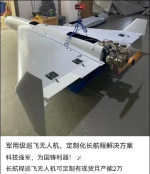
Keywords:
military-grade drones, long range, support customization, in stock, production capacity of 20,000 units/month......
This is just a small private factory.
I wonder what Iran's current production is?
Keywords:
military-grade drones, long range, support customization, in stock, production capacity of 20,000 units/month......
This is just a small private factory.
I wonder what Iran's current production is?
OldTwilight
Registered Member
می گن یکی از کارگاه های تولید پهپاد انتحاری با گرفتن ۳۵۰ میلیارد تومان وام از بانک مهر ساخته شده ....
یعنی حتی برای ساخت پهپاد و زدن ما هم پول خرج نکردن
یعنی حتی برای ساخت پهپاد و زدن ما هم پول خرج نکردن
OldTwilight
Registered Member
less than 1000 in year .... IR is more proficient in unveiling and corruption than anything elseAn advertisement from a small private factory in China. Are Iranian friends familiar with this type of drone?
View attachment 135980
Keywords:
military-grade drones, long range, support customization, in stock, production capacity of 20,000 units/month......
This is just a small private factory.
I wonder what Iran's current production is?

muhammed45
SpeedLimited
Chinese factories are known for copying other countries' achievements. Simple opportunism.An advertisement from a small private factory in China. Are Iranian friends familiar with this type of drone?
View attachment 135980
Keywords:
military-grade drones, long range, support customization, in stock, production capacity of 20,000 units/month......
This is just a small private factory.
I wonder what Iran's current production is?
It doesn't really matter, actually, we have done similar thing with American assets.
ShapurII
SpeedLimited
می گن یکی از کارگاه های تولید پهپاد انتحاری با گرفتن ۳۵۰ میلیارد تومان وام از بانک مهر ساخته شده ....
یعنی حتی برای ساخت پهپاد و زدن ما هم پول خرج نکردن
نشون میده چقدر سیستم بانکی ایران پاک و سالم هست که مردم یه وام ۱۰۰ میلیونی با ۲ تا ضامن نمیتونن
بگیرن اما به کسی که اصلاً معلوم نیست کیه ۳۵۰ میلیارد وام میدن
بگیرن اما به کسی که اصلاً معلوم نیست کیه ۳۵۰ میلیارد وام میدن
Better them than us. At least somebody knows how to mass produce our products.Chinese factories are known for copying other countries' achievements. Simple opportunism.
It doesn't really matter, actually, we have done similar thing with American assets.
Maybe we should buy our products from them.
Type59
Registered Member

Maybe change the hijab policy,. You sometimes have to appeal to popular opinion, regardless of your viewpoint.
"Give with one hand and take with the other".
Last edited:
muhammed45
SpeedLimited
We know what we are doing.Better them than us. At least somebody knows how to mass produce our products.
Maybe we should buy our products from them.
Most of the blows that we received were from inside the country.
On the contrary to nagging of some users here, both IRGC and army functioned well in the recent conflict.
China and USA both trying to copy and produce Iranian product is a hint for quality, cost-effectiveness and superiority of Iranian products in their own class.
That is why i am hopeful of our future plans.
Iran has started after fall of Shah, Russia and USA have been actively producing high tech weapons for almost 2 centuries.
I don't expect Iran to become #1 military power of the globe. But we are reaching out to the most powerful countries at fast paces.
Almost 2-3 decades ago, Iranian leader said that we have almost 200 years distance from USA in technology. Today, its less than a couple of decades.
Mass production and technological advances are different subjects to discuss.
Iran will be a technological powerhouse in short term.

Persian Gulf
INT'L MOD
Tehran agrees to resume nuclear talks with UK, France, and Germany: Tasnim News


