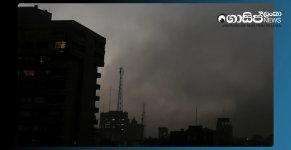
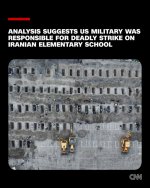
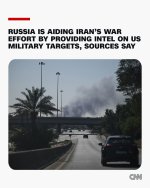
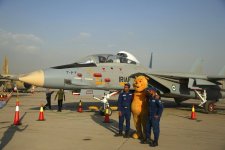
Seeing the apocalyptic black smoke burning scenes of oil depots near Tehran, this war shows that having decent AD to shoot down enemy planes is important. If Iran had enough money to invest in AD, it could have prevented a more tougher challenge to the USAF. I'll repost this conversation I had with ChatGPT trying to analyze what level of Air Defenses at what scale Iran needs to be able to shoot down US planes reliably :
My Question : To defend a large country like Iran from major bombings by a major Air Force power like the US, how many S-300-equivalent batteries should be enough? 2 dozen? 3 dozen?
Should be complemented by AWACS daily patrol too?
ChatGPT Answer :
Short answer:
Two or three dozen S-300–equivalent batteries would not be enough to defend a very large country like Iran from a
major U.S.-level air campaign. Realistically, you would need
many dozens to over a hundred long-range SAM batteries, plus a
layered network (radars, fighters, medium/short-range SAMs, EW, decoys, and mobility). Otherwise a modern air force will suppress them.
Let’s break it down.
1. Size of the country vs SAM coverage
Iran is huge:
- ~1.65 million km² land area
- Mountains and deserts create radar blind spots
- Many high-value targets: nuclear sites, oil terminals, airbases, ports, cities
Even with long-range SAMs like the
S-300PMU2, the
effective defended zone is far smaller than the missile’s maximum range.
Typical effective coverage of a battery is roughly:
- ~120–150 km defensive radius (practical coverage)
- But terrain and radar horizon shrink this significantly.
Also, SAMs usually protect
specific sites, not continuous airspace.
Example: Iran only received
four S-300 batteries, which were used to guard
key nuclear facilities instead of the whole country.
2. Realistic number needed for nationwide defense
Military analysts usually think in
“air defense zones” rather than country coverage.
A rough estimate:
| Purpose | Batteries |
|---|
| Capital region | 6–8 |
| Nuclear facilities | 8–12 |
| Major airbases | 12–20 |
| Oil infrastructure | 10–20 |
| Strategic ports | 6–10 |
| Mobile reserve | 10–20 |
Total realistic range:
➡
60–100+ long-range SAM batteries
And that’s
still not a guarantee of air denial.
3. Why even 100 batteries may not stop the US
A modern US campaign would include:
- Stealth aircraft
- F-35 Lightning II
- B-2 Spirit
- Suppression of Air Defenses (SEAD)
- Anti-radiation missiles like
AGM-88 HARM
- Stand-off cruise missiles
- Electronic warfare aircraft
- Cyber attacks on radar networks
Air defenses are usually
destroyed early in a war.
Recent conflicts show this:
- Ukraine loses S-300 systems regularly
- Israeli strikes reportedly disabled major parts of Iran’s air defense network during attacks.
4. Why layered air defense matters more
Modern doctrine uses
multiple layers, not just S-300-type systems.
Example structure:
Long range
- S-300
- S-400 Triumf
- Iranian Bavar-373
Purpose:
Medium range
Example systems:
- Buk-M2
- Iranian Khordad-15
Purpose:
Short range / point defense
Purpose:
- drones
- glide bombs
- anti-radiation missiles
5. AWACS patrols are absolutely critical
Yes —
AWACS dramatically improves air defense effectiveness.
Example aircraft:
Benefits:
- Detect aircraft 400–600 km away
- Look over mountains
- Track low-flying cruise missiles
- Coordinate SAM batteries
- Prevent radar ambush
Without AWACS, ground radars can be blinded.
6. Realistic “minimum credible” defense network
For a country the size of Iran, a strong defensive network might look like:
Long-range SAM
Medium-range SAM
Short-range / point defense
Airborne early warning
Fighter interceptors
Even this would
only make bombing difficult, not impossible.
 Bottom line
Your guess of
2–3 dozen S-300 batteries is far too small.
For a country like Iran:
- 60–100+ long-range SAM batteries
- hundreds of other air defenses
- AWACS + fighters
…would be needed to create a
serious air-denial network against a major power.
Simple summary
| Component | Amount |
|---|
| Missiles per launcher | 4 |
| Launchers per battery | 6–12 |
| Ready missiles per battery | 24–48 |
If you want, I can also show you something interesting:
Why even Russia (the world’s largest SAM user) still struggles to stop Western airpower — the numbers are very surprising.