Iran - Israel/US War: Israel-US declare war on Iran, Iran responds

Iran's won this war literally half ass trying and exposed the US military as junk!

Trump's got no stomach for escalating this, or else Iran's going to punish him.

He's just bluffing.

Like many online pundits are saying now, Irans got all the time on its side. The world doesn't. If the straits remain closed, many countries face social/ economic collapse.
The Jews stole everything from the US . They sold of her manufacturing to a point that nothing is made here anymore . Four decades ago everything was made here. When I would interview blue color workers and ask them what they did , they were all machine operators working at some manufacturing plant . The same with the US military, it is a big slush fund to steal hundreds of billions of dollars every year .
 

No photo op: Iran wants action, not handshakes​

  1. Politics
June 21, 2026 - 20:55

Iran rejects a symbolic handshake with US officials, insisting that progress on implementing the MoU matters more than diplomatic optics​


TEHRAN - Iran and the United States held talks in Switzerland on Sunday to advance the implementation of a memorandum of understanding (MoU) signed a few days ago.

Parliament Speaker and chief negotiator Mohammad Baqer Qalibaf and Foreign Minister Abbas Araghchi lead Iran’s delegation in Geneva.

The US delegation is led by Vice President JD Vance and includes President Donald Trump’s special envoy Steve Witkoff and his son-in-law Jared Kushner.

Pakistani Prime Minister Shehbaz Sharif, accompanied by Chief of Defense Forces (CDF) Field Marshal Asim Munir, is leading the mediation effort alongside Qatari Prime Minister Sheikh Mohammed bin Abdulrahman Al Thani.

Upon arriving at the venue earlier on Sunday, Qalibaf held separate meetings with the Qatari and Pakistani mediators before leading his delegation into the four-party talks later in the day with US representatives.

Araghchi also met separately with his Swiss counterpart on Sunday morning.

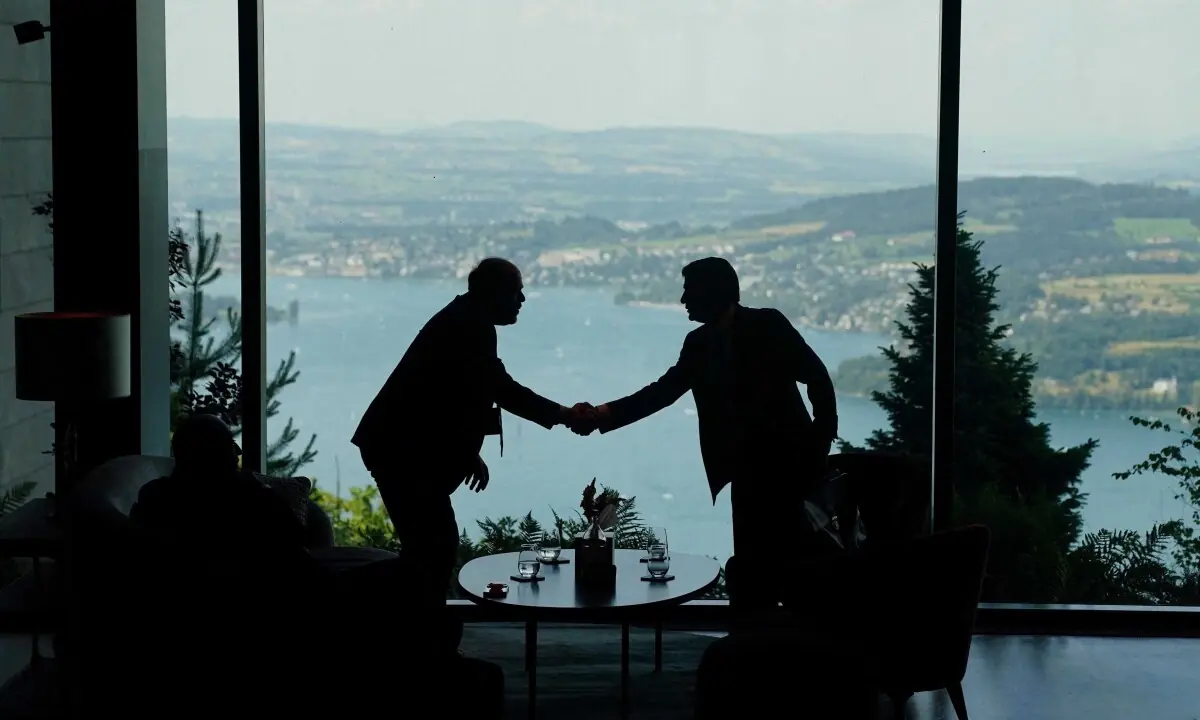
Organizers and the US side had planned a joint photo opportunity, including a handshake between members of the Iranian and American delegations, before the start of the meeting. However, the Iranian delegation rejected the proposal and informed organizers that it would not participate in any joint media appearance with US officials. The move underscored Tehran’s preference for substantive negotiations over symbolic gestures, avoiding imagery that could be used to suggest diplomatic progress regardless of the talks’ actual outcome.

Esmaeil Baghaei, spokesperson for the Iranian delegation, said the ongoing fighting between Israel and Hezbollah in Lebanon is at the top of the agenda in the talks with the United States, alongside issues such as frozen Iranian assets and Iranian oil exports.

“The Zionist regime continues to violate its commitments in Lebanon. This issue will be the main topic of discussion in today’s talks,” Baghaei said in a video shared by IRNA.

Speaking alongside Vance, the Qatari and Pakistani prime ministers thanked both the US and Iranian delegations for their efforts to promote peace in the Middle East.

“I think that every one of you has highlighted how important and historic this is, not only for the security of the region but also for the security of the world and for the global economy,” the Qatari prime minister said.

“I would like to thank all of you for your leadership and determination that put us in this room. This is not really the main celebration; this is just the beginning, and I wish everyone all the best. Qatar will stay dedicated to this partnership to support this mediation until the end—until we reach a solution.”

Vance said he hopes Washington and Tehran can reset their relationship, describing the Geneva meeting as “historic.” He nevertheless repeated accusations that Iran is a source of regional instability.

Trump also renewed threats against Iran.

“Iran must immediately stop their highly paid PROXIES in Lebanon from causing trouble,” Trump wrote on Truth Social on Sunday morning. “If they don’t, we’ll hit Iran very hard again, just like we did last week, only harder!!!”

Trump’s threats came despite the 14-point MoU signed by him and President Masoud Pezeshkian on Wednesday. The interim agreement includes a commitment by both sides to pursue a final settlement within 60 days. It also calls for a permanent end to hostilities across multiple fronts, including Israeli strikes on Lebanon, the phased lifting of US sanctions, the removal of the naval blockade on Iran within 30 days, and the restoration of commercial traffic through the Strait of Hormuz.

On Saturday, Iran’s central military command officially declared the Strait of Hormuz closed to all maritime traffic over US and Israeli violations of the Tehran-Washington MoU.

Iran has stressed that Lebanon is a red line and that Israeli strikes constitute a violation of the MoU, which calls for an end to the regime’s war. Since the MoU was signed, Israel has killed dozens of people in Lebanon.

The United States and Israel launched a war against Iran on February 28. They believed that Iran would capitulate quickly. Despite Trump’s claims that the war severely degraded Iran’s military capabilities, Iranian missile and drone strikes against Israel and US bases in the Persian Gulf pushed Washington to accept a ceasefire on April 8.

Iran and the United States are now continuing post-MoU negotiations aimed at turning the agreement into a lasting settlement.

The war has come at a high cost for the United States. In late April, Democratic lawmakers and several economists estimated that the total cost of the conflict to the US economy could reach between $630 billion and $1 trillion. The war contributed to higher fuel prices and inflationary pressures, while a prolonged conflict risked creating additional political challenges for Trump ahead of the congressional midterm elections.

During the 39-day war, Trump was forced to confront the limits of military pressure against Iran. In late April, German Chancellor Friedrich Merz said the United States was being “humiliated” by Iran’s leadership.

For now, Trump’s latest threats, issued while negotiations are ongoing, appear aimed at deflecting attention from the setbacks suffered by the United States and Israel during the conflict. He is seeking to project an image of victory over Iran despite continuing debate within the United States over the war’s outcome. According to assessments cited by several American media outlets, the campaign failed to achieve its stated strategic objectives. Israel Hayom also said earlier this month that Iran emerged stronger after the war, and Israel has become weaker.
 

No photo op: Iran wants action, not handshakes​

  1. Politics
June 21, 2026 - 20:55

Iran rejects a symbolic handshake with US officials, insisting that progress on implementing the MoU matters more than diplomatic optics​


TEHRAN - Iran and the United States held talks in Switzerland on Sunday to advance the implementation of a memorandum of understanding (MoU) signed a few days ago.

Parliament Speaker and chief negotiator Mohammad Baqer Qalibaf and Foreign Minister Abbas Araghchi lead Iran’s delegation in Geneva.

The US delegation is led by Vice President JD Vance and includes President Donald Trump’s special envoy Steve Witkoff and his son-in-law Jared Kushner.

Pakistani Prime Minister Shehbaz Sharif, accompanied by Chief of Defense Forces (CDF) Field Marshal Asim Munir, is leading the mediation effort alongside Qatari Prime Minister Sheikh Mohammed bin Abdulrahman Al Thani.

Upon arriving at the venue earlier on Sunday, Qalibaf held separate meetings with the Qatari and Pakistani mediators before leading his delegation into the four-party talks later in the day with US representatives.

Araghchi also met separately with his Swiss counterpart on Sunday morning.

Organizers and the US side had planned a joint photo opportunity, including a handshake between members of the Iranian and American delegations, before the start of the meeting. However, the Iranian delegation rejected the proposal and informed organizers that it would not participate in any joint media appearance with US officials. The move underscored Tehran’s preference for substantive negotiations over symbolic gestures, avoiding imagery that could be used to suggest diplomatic progress regardless of the talks’ actual outcome.

Esmaeil Baghaei, spokesperson for the Iranian delegation, said the ongoing fighting between Israel and Hezbollah in Lebanon is at the top of the agenda in the talks with the United States, alongside issues such as frozen Iranian assets and Iranian oil exports.

“The Zionist regime continues to violate its commitments in Lebanon. This issue will be the main topic of discussion in today’s talks,” Baghaei said in a video shared by IRNA.

Speaking alongside Vance, the Qatari and Pakistani prime ministers thanked both the US and Iranian delegations for their efforts to promote peace in the Middle East.

“I think that every one of you has highlighted how important and historic this is, not only for the security of the region but also for the security of the world and for the global economy,” the Qatari prime minister said.

“I would like to thank all of you for your leadership and determination that put us in this room. This is not really the main celebration; this is just the beginning, and I wish everyone all the best. Qatar will stay dedicated to this partnership to support this mediation until the end—until we reach a solution.”

Vance said he hopes Washington and Tehran can reset their relationship, describing the Geneva meeting as “historic.” He nevertheless repeated accusations that Iran is a source of regional instability.

Trump also renewed threats against Iran.

“Iran must immediately stop their highly paid PROXIES in Lebanon from causing trouble,” Trump wrote on Truth Social on Sunday morning. “If they don’t, we’ll hit Iran very hard again, just like we did last week, only harder!!!”

Trump’s threats came despite the 14-point MoU signed by him and President Masoud Pezeshkian on Wednesday. The interim agreement includes a commitment by both sides to pursue a final settlement within 60 days. It also calls for a permanent end to hostilities across multiple fronts, including Israeli strikes on Lebanon, the phased lifting of US sanctions, the removal of the naval blockade on Iran within 30 days, and the restoration of commercial traffic through the Strait of Hormuz.

On Saturday, Iran’s central military command officially declared the Strait of Hormuz closed to all maritime traffic over US and Israeli violations of the Tehran-Washington MoU.

Iran has stressed that Lebanon is a red line and that Israeli strikes constitute a violation of the MoU, which calls for an end to the regime’s war. Since the MoU was signed, Israel has killed dozens of people in Lebanon.

The United States and Israel launched a war against Iran on February 28. They believed that Iran would capitulate quickly. Despite Trump’s claims that the war severely degraded Iran’s military capabilities, Iranian missile and drone strikes against Israel and US bases in the Persian Gulf pushed Washington to accept a ceasefire on April 8.

Iran and the United States are now continuing post-MoU negotiations aimed at turning the agreement into a lasting settlement.

The war has come at a high cost for the United States. In late April, Democratic lawmakers and several economists estimated that the total cost of the conflict to the US economy could reach between $630 billion and $1 trillion. The war contributed to higher fuel prices and inflationary pressures, while a prolonged conflict risked creating additional political challenges for Trump ahead of the congressional midterm elections.

During the 39-day war, Trump was forced to confront the limits of military pressure against Iran. In late April, German Chancellor Friedrich Merz said the United States was being “humiliated” by Iran’s leadership.

For now, Trump’s latest threats, issued while negotiations are ongoing, appear aimed at deflecting attention from the setbacks suffered by the United States and Israel during the conflict. He is seeking to project an image of victory over Iran despite continuing debate within the United States over the war’s outcome. According to assessments cited by several American media outlets, the campaign failed to achieve its stated strategic objectives. Israel Hayom also said earlier this month that Iran emerged stronger after the war, and Israel has become weaker.

Ofcourse,

They'd not want photos with americans who killed their supreme leader, many other leaders, children at Minab and many other Iranians.

Iranians back home would disgust at those photos too.

Totally make sense.
 
this isn't something that can be resolved or fixed in a small time.
It may take years.

and during all of that time, the zionists can freely play to derail things because they have the americans doing their bidding at will. This is exactly why many wonder, whats even the point?
how many times will the iranians be willing to go somewhere and be threatened again and again ??
I also understand the desperation of the gulfies to ensure the war doesnt resume so they dont get hit, throwing money at the problem and willing to fund the construction (giving money to the americans and iranians lol).
Qatar just there to make payments and say plzz leave us alone.

i dont have much hopes on any outcome. The iranians win obviously but nothing else for anyone else......
 
The Jews stole everything from the US . They sold of her manufacturing to a point that nothing is made here anymore . Four decades ago everything was made here. When I would interview blue color workers and ask them what they did , they were all machine operators working at some manufacturing plant . The same with the US military, it is a big slush fund to steal hundreds of billions of dollars every year .
They own the US bro.......without jew maany, US will collapse.

I believe we can all safely come to that conclusion.
 

Poll finds Israelis believe Iran won Middle East war​


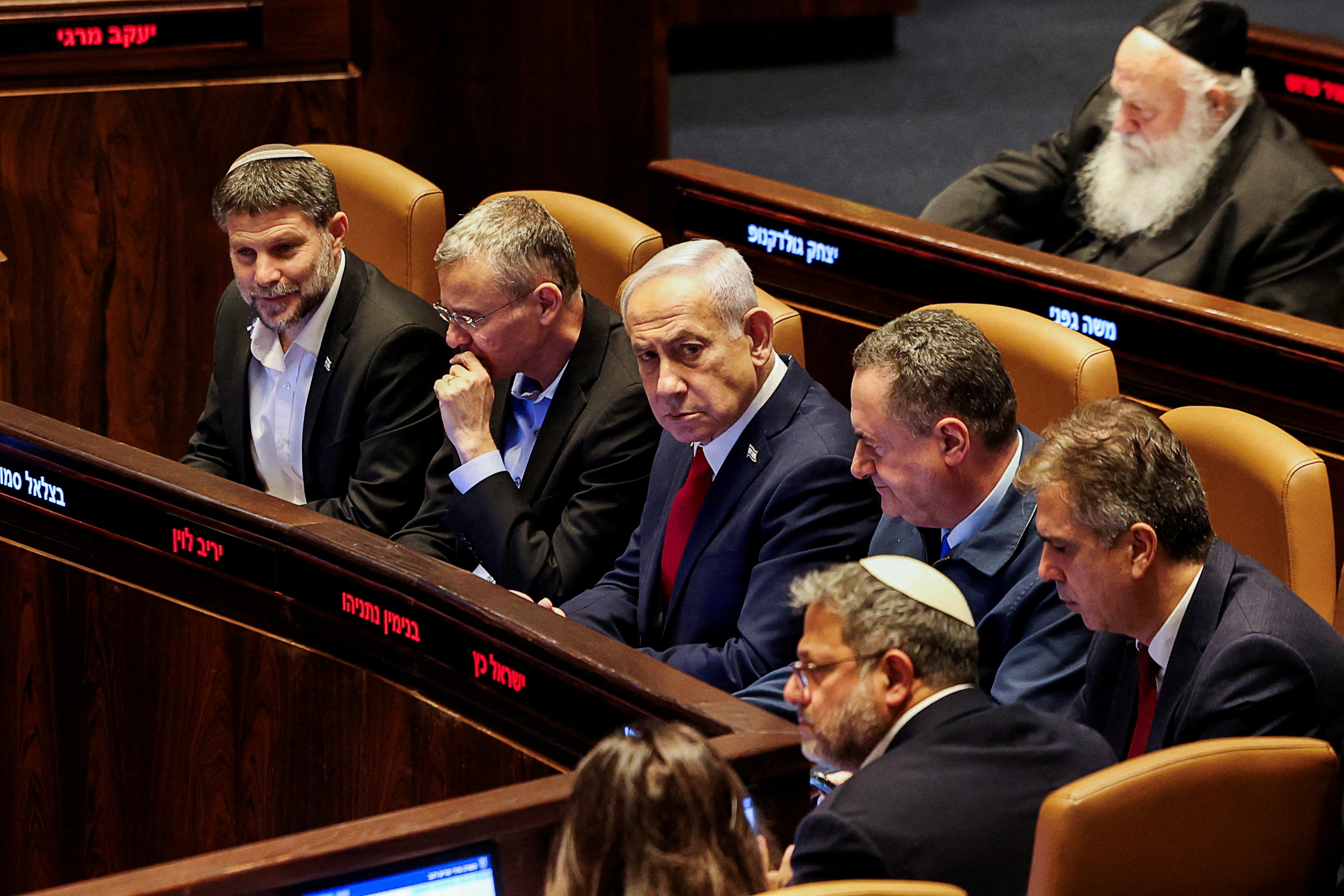
The survey found that even among voters who support the right-wing bloc, the electoral base of Prime Minister Benjamin Netanyahu (C), 93.1 percent believed Iran had won. (Reuters/File Photo)

The survey found that even among voters who support the right-wing bloc, the electoral base of Prime Minister Benjamin Netanyahu (C), 93.1 percent believed Iran had won. (Reuters/File Photo)
Short Url
Updated 21 June 2026 16:53
AFP
June 21, 202616:49


Follow
  • The findings pointed to a broader crisis of confidence in Israel’s leadership
JERUSALEM: Israelis overwhelmingly believe that Iran emerged stronger from the Middle East war and its subsequent deal with the United States, a poll released on Sunday found.

The poll of 3,644 respondents, conducted between June 17 and 20 by the Hebrew University of Jerusalem in collaboration with the Agam Institute, paints a stark picture of public sentiment following the US-Iran deal.

Of those surveyed, 92.1 percent said Iran had won or gained more from the conflict, while 82.9 percent felt that Israel’s long-term security had been weakened.

The survey found that even among voters who support the right-wing bloc, the electoral base of Prime Minister Benjamin Netanyahu, 93.1 percent believed Iran had won.

Opposition to the US-Iran agreement was widespread, with 63.2 percent of respondents opposing it compared with just 12.1 percent expressing support.

The findings pointed to a broader crisis of confidence in Israel’s leadership.

Nearly three-quarters of those surveyed, 72.5 percent, said they did not believe Netanyahu’s claims about the military campaign’s achievements, while 56.4 percent rated his management of the campaign as “failed” or “poor.”

The poll also pointed to the political price paid by Netanyahu, with support for his premiership plummeting from 40.5 percent in early March to 29.4 percent in June.

Despite this, the survey found ongoing support for military action against Hezbollah in Lebanon.

Nearly half of respondents, 48.2 percent, backed renewed major military action against Hezbollah in Lebanon, even if it risked confrontation with Washington, while only 21 percent opposed such a move.

Negotiations to turn the temporary Iran-US agreement into a more permanent deal were to take place in Switzerland on Sunday, despite the conflict in Lebanon threatening negotiations.

Washington announced a renewed ceasefire there on Friday after Israeli troops clashed with Hezbollah fighters in southern Lebanon, with each side accusing the other of breaking the truce.

Just shows the sort of humans these blood sucking mosquitoes are. To say Iran won means they wanted Iran to be destroyed completely! They just did not want them not to have nuclear weapons, they wanted to turn Iran into another gaza. Sickening bunch of people.

Winning war depends on how you define it. There r arguments for both sides but I feel Iran will come out on top if they get money released rebuilding and sanctions relief. Now only gaza and lebanon are left. If Israel returns lebanon lands(which I doubt) and gaza lands then yes, that would be the cherry on top and you can essentially make a strong argument for Iran's win. But at this point to be so negative shows the zionist mindset. Barbaric ppl
 
Big fights outside the stadium.

They try to snatch each others flags:

To view this content we will need your consent to set third party cookies.
For more detailed information, see our cookies page.
 
This Tweet has more weight than a lot the negative posts about the Switzerland talks. Iranians officials won't BS about the negotiations.
Agree. There is lots of background noise to cut through. Trump's tweets are meant to play up for an audience of handlers. Let him play up! The more extreme his tweets, the more angry and under pressure his handlers must be. Aragchi's tweet cuts through all the noise.
 
To view this content we will need your consent to set third party cookies.
For more detailed information, see our cookies page.


Never seen Chota Sharif look so worried, usually all smiles, maybe that chat was the Iranians voicing concerns about either being in the same room as the yanks or their personal safety, unsure, did look very uncomfortable
 
If what was taking place was truly against Isreali wishes, the "epstien" files would be all over the media implicating trump and others within the american establishment. This would be their blackmail tactic to make trump move in line.

Either its a trap, or the anglo-american zionist axis realise that it makes more sense to pause hostilities' now and then to come again later when the conditions are better.

Worth keeping in mind this has been a zionist trick to whittle down all her enemies. The Palestinians had a million ceasefires and those ceasefires were nearly always to the benefit of the isreali/american axis. The ceasefires were always used by Isreal to reorganise, resupply and then to attack again. Rinse and repeat.

From an iranian perspective, all moments of respite, all time gained should be to build as many missiles as possible.

But 100% no matter what Iran signs with the USA, the world, the Isrealis will break it and the americans will not penalise them for it. The money, the weapons, the material aid, the protection legally and politically at the UN will continue via the USA and various european vassals.
 
To view this content we will need your consent to set third party cookies.
For more detailed information, see our cookies page.
 

Users who are viewing this thread

Back
Top