Hassan Al-Somal
Elite Member


Israel Is Threatening To Use Nukes Against The World
Last edited:
Follow along with the video below to see how to install our site as a web app on your home screen.
Note: This feature may not be available in some browsers.

The memorandum of understanding with Iran which Mr Trump signed on Wednesday – in Versailles; perhaps not the best augury of lasting diplomatic achievement
I keep going back to the F-15 shootdown in early April. Trump went completely insane and began issuing genocidal threats to Iran. The ceasefire that was arranged a few days later is still holding. This event was the true turning point in the war.
So what happened ? Well we are still trying to get the information, but the big picture is that Mr Trump had been sold this war as an easy victory by Netanyahu and despite all the setbacks, was still listening to him in early April. The final blunder by Trump was to green light an operation to directly attack the main Iranian nuke facility that was holding their enriched uranium, by using ground forces to collapse the entrance tunnels themselves and sealing off the whole facility for years, rather than just attacking the tunnel entrances using aircraft. This was an operation the Israelis had been encouraging the US to carry out since the Obama era, and had been described by Obama officials as "crazy".
The two below Substack articles have, IMO, the best information and analysis on why the F-15 pilot rescue was more likely a cover story for a failed Special Forces raid on Pickaxe Mountain
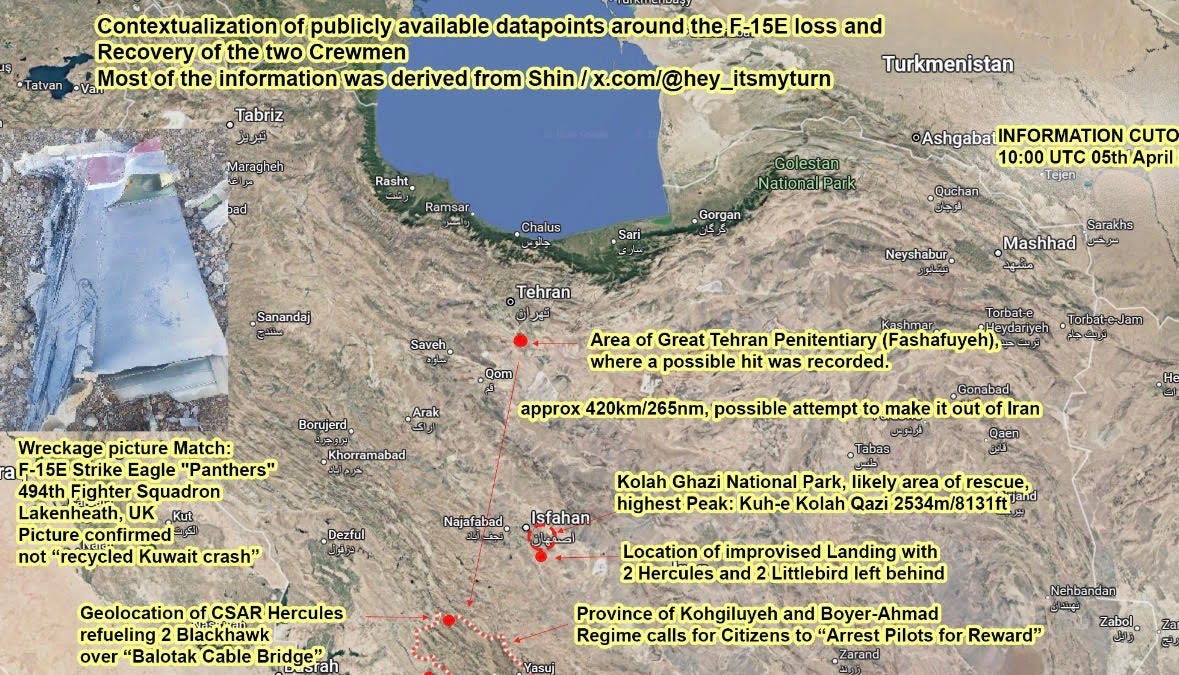
The Raid That Never Happened
The airstrip was picked, the CIA was running info campaigns, the aircrafts went down, the plan went down in flames like a Chinookpawglvr69.substack.com
It was after the failure of this Op that Trump seemed to finally realize how badly he had been misled by Netanyahu and the neocons into this war. They have been sidelined ever since.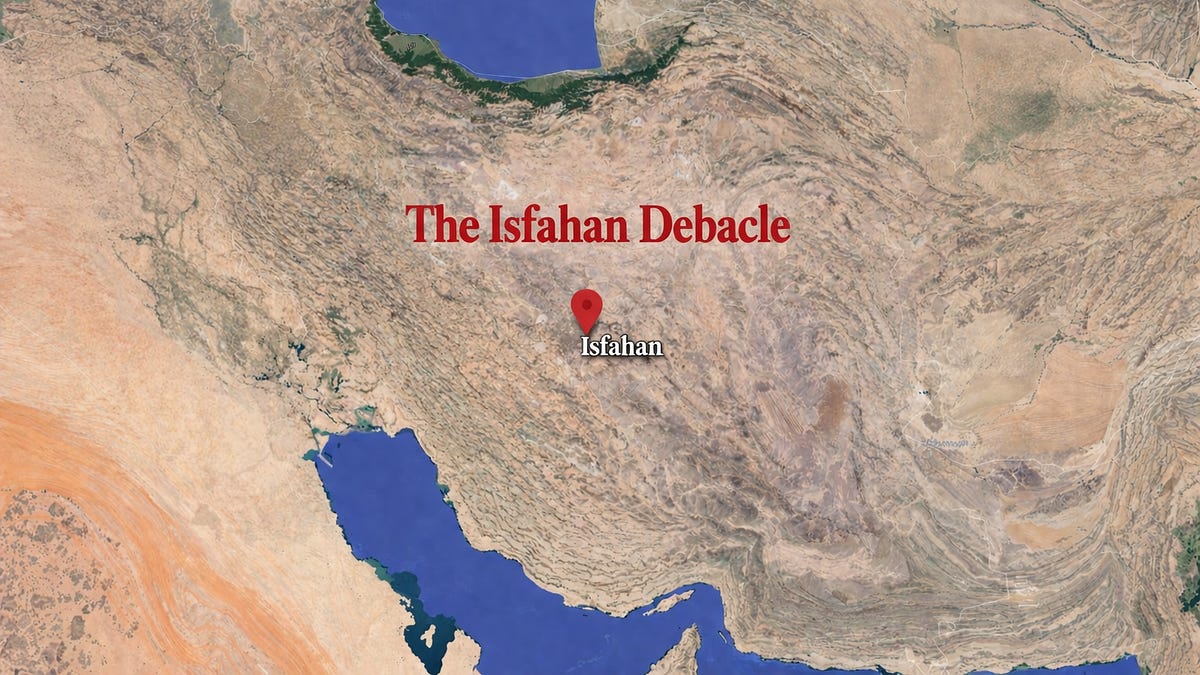
The Isfahan Debacle: Inside the Failed Raid That Shook Washington
The sequence of events that unfolded between April 2nd and April 5th, 2026, over central Iran represents one of the most complex and controversial military episodes in recent memory.nitishastra.substack.com


It’s exactly a Muslim issue but also ties in non religious interests as well ie water wars etc.
It’s easier when your foreign policy is defined by Islam and the Quran (that a lot of non-Shias claim that it’s just good old Persian nationalism and expansionism wrapped in religion). They stood their ground with principles.
The Kashmir issue makes me very angry. Pakistan should never have stepped the intensity of Indians getting BBQ in IOK. Pakistan pulled back and the intensity of attacks in Baluchistan and KPK went up exponentially.
The J33ts escalated knowing they were safe and sound in IOk. Bold enough to block Pakistans water and become more aggressively.
Make the MoFos burn!
I respectfully disagree. Closing the Strait of Hormuz in itself is a quite useless and stupid practice if it doesn't affect oil prices. In fact, if anything, it is a bad political move in itself, unless it achieves Iran's strategic goal of coercion and deterrence through the risk of economic collapse. If it has lost its potency to achieve that goal, Iran has lost it as a card. I think that's pretty obvious.
Even this time, oil prices didn't pass $120 per barrel. We had Iranian members who predicted $200 per barrel or even higher than that, but it never materialized.
Adjusted for inflation, this wasn't even comparable to the aftermath of the US invasion of Iraq, as oil prices hit $188 per barrel in 2003, again adjusted for inflation of course.
And I don't know what you mean there is no alternative route. There are at least two such routes in operation by the Saudis and the Emiratis and after this, more will be built and enter operation in the next 5 years. Saudi Arabia pumped 7 million barrels of oil through their own pipeline even during this war.
If Iran cannot keep oil prices above $100 per barrel next time, the potency of this tool has been lost, and Iran will have one fewer card to use in future negotiations.
No, it actually refutes your point that because Iran didn't control the Strait of Hormuz before the war, it is of no value in the negotiations. That was your argument, and it clearly refutes that.
They didn't activate at all, not just "fully activate". They were bystanders in the war. Iran was being suffocated economically, which is why Iran is negotiating with the Americans for temporary relief as we speak.
Wrong. I never disputed that Israel and the US had burned through a huge number of interceptors. You're hallucinating like an LLM now lol
How long it takes is actually my point: not much because the US has access to formidable industrial capacity on its own and through trade with its allies or even its adversaries like China. We heard similar arguments after the 12-day war, but the US and Israel attacked Iran again at will barely 9 months after that.
How much it costs is of little relevance because Iran is already on the verge of complete economic collapse. The US military budget alone is nearly 10x of Iran's GDP while Iran's damages in the last 2 wars has been 10x more than both Israel and the US. I don't think bringing economics into this really paints a picture of triumph for Iran.
Iran didn't really fight a great asymmetric war and it proved it is incapable of doing so, contrary to what assumed for decades. If anything, Israel pulled asymmetric warfare tactics when it destroyed Iran's IADS in the early hours of the 12-day war by using cheap FPVs built inside Iran. That's real asymmetric warfare. Firing MRBMs by your armed forces from known locations is not asymmetric warfare.
Dude, you are now writing irrelevant stuff just for the sake of having written something. First of all, if you write the Gulf states instead of the Persian Gulf states, you are no longer the person I want to talk to. Either respect Iran's history, or kindly stop replying to me.
Secondly, Iran has lost north of $350 billion due to extensive damage to its civilian infrastructure. How much has the UAE lost, comparing its GDP to Iran? Not much. Therefore, it is not enough to remind them of anything. They know that a situation like this will eventually be in their favor because Iran is losing a lot more with a much smaller economy. It is not sustainable for Iran, not them.
Iran does not retain regional escalation options. Absolutely wrong. Iran reacts to US provocations and stops when the US decides. Iran is not in a position of action, but it is reactionary. Iran has proved beyond reasonable doubt that it does not control anything in the war. The Americans start it at will, and the Americans end it at will.
America has solved broader Iranian challenges already, and not by Trump. It was achieved in 2015 through the JCPOA after years of international sanctions. And now the US wants to have it all. If anybody thinks the Americans are looking for some sort of normalization with Iran, I can say nothing but feel sorry for them. And our negotiators are still there, negotiating with the Americans even though he threatens them and humiliates them publicly every now and then. This is not the posture of the side that has won the war.

According to Raptor's latest post, THAAD production slated to quadruple. That's nice. There's also that little matter of potential supply chain interruptions that could impact delivery.@ShapurII
You are completely wrong on the replenishment point. The question is not whether the US has a larger economy than Iran. The question is whether the US/Israel can replenish expensive missile interceptors faster and more sustainably than Iran can replenish drones and ballistic missiles.
Missile interceptors take a long time and huge amounts of money to bring into operation. Only a relatively limited number can be produced and fielded each year. Iran’s drones, by contrast, are cheap and quick to produce, and Iran’s ballistic missile program has been active since at least the 1990s. That means Iran has far greater depth in ballistic missile inventory than Israel has in interceptors, and the turnaround time for replenishing offensive systems is much faster than replenishing high-end defensive systems.
This is why the interceptor depletion point matters so much. OSINT assessments indicated that US and Israeli interceptor stocks had reached critically low levels around the time of the ceasefire, while Iran still retained the majority of its ballistic missile reserves. So it is not enough to say “the US can ramp up production.” That completely misses the cost, time, and attrition asymmetry at the heart of this conflict.

How is a foreign policy defined by the Quran? What are its exact tenets? How has Iran implemented them?
I’ wasn’t going to go there and honestly I’m not the most religious person but it seems like you have opened a can of worms because you have an extremely negative view of Iran right or wrong that your opinion to be had but with such an extreme negative view that means you have an extreme negative view of Islam I mean trump and his cronies love to pretend they are Christian followers they’re not by the way that would be an insult to Christianity Bibi pretends to be a follower of the Jewish faith he’s not but should people have an extreme negative view of any of these 3 religions because you believe Islam says kill all and conquer(that’s what your thinking) better off staying away from religion altogetherTo say anything to the contrary invites banishment, most likely. Therefore, I must accept that the foreign policy of Iran is defined by Islam and the Quran.
To say anything to the contrary invites banishment, most likely. Therefore, I must accept that the foreign policy of Iran is defined by Islam and the Quran.


