Iran - Israel/US War: Israel-US declare war on Iran, Iran responds

the stockpile is buried not accessible

and no centrifuges are active. at the best case some are in storage and survived and can be moved to a new site, but that doesn't solve the uranium stockpile problem

and you need more than just centrifuges, other critical facilities were destroyed
That is detailed information you have, considering the foreign minister, Araghchi, is on record numerous times saying he does not know where the stockpile is. Tell us the source of your information.
 
I find it hard to believe they just decided to leave it there, even throughout the 12 day war, and knowing a U.S. attack was imminent.

Surely they moved at least some of it?
There are some in this forum who worship that tiny little country. You can make a logical inference that a country that has invested billions in its nuclear energy program, with a local centrifuge production base, would have several undisclosed enrichment sites.
After all, what was the purpose of 60% enrichment? There are hardly any uses outside of weapons. Iran is an undeclared nuclear state. I put my money on the MIT Prof who brings the receipts rather than sensationalized MK operatives on X collecting their shekkels yammering ( Israel is great, Israel has pinpoint accuracy).

Theodore A. Postol (born 1946) is a professor emeritus of Science, Technology, and International Security at the Massachusetts Institute of Technology. Prior to his work at MIT, he worked at Argonne National Laboratory, the Pentagon, and Stanford University. He was on the editorial board of the journal Science & Global Security until 2019.

IRAN HAS A RIGHT TO DEFEND ITSELF.
 

Iran Update, September 2, 2025​

Sep 2, 2025 - ISW Press
Iran%20Update%20Thumbnail%20%28corrected%29_846.png

Ben Rezaei, Nidal Morrison, Carolyn Moorman, Ben Schmida, Katherine Wells, Adham Fattah, Ria Reddy and Brian Carter

Information Cutoff: 2:00 PM ET

Iran continues to cooperate with US adversaries to advance its nuclear and missile program. An unspecified senior security source told UK-based website Oil Price on September 1 that Iran is working closely with Russia, China, and North Korea to advance its weaponization knowledge and missile development.[1] The source stated that Russia has sent dozens of nuclear scientists to Iran since June 2024.[2] The source added that North Korea also sent three missile experts to Iran after June 2024.[3] CTP-ISW cannot verify these reports. Iran has previously sought Russian support to develop Iran‘s nuclear program.[4] The Financial Times reported on August 5 that five Iranian nuclear scientists traveled to Moscow in August 2024 to visit Russian institutes that produce dual-use technology relevant to nuclear weapons research.[5] Western media reported in January 2025 that Supreme National Security Council Secretary Ali Larijani had made secret trips to Russia to gain Russian assistance on Iran’s nuclear program.[6]

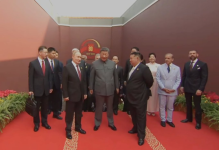
Iran is continuing to deepen its strategic partnership with revisionist powers as part of a broader Iranian effort to counter Western efforts to isolate the regime internationally. Iranian President Masoud Pezeshkian held separate meetings with Shanghai Cooperation Organization (SCO) members, including Russian President Vladimir Putin and Chinese President Xi Jinping, on September 2, on the sidelines of the SCO summit in China.[7] Putin and Pezeshkian discussed bilateral trade, the Iran-Eurasian Economic Union (EAEU) Free Trade Agreement, and coordination on international issues, including the nuclear issue.[8] Xi and Pezeshkian discussed the 25-year Iran-China strategic cooperation agreement.[9] Xi reaffirmed China’s support for Iran’s nuclear rights and emphasized China’s commitment to expanding bilateral economic and energy cooperation. These meetings come after the E3 (the United Kingdom, France, and Germany) triggered the Joint Comprehensive Plan of Action (JCPOA) snapback mechanism on August 28 to reimpose UN Security Council (UNSC) sanctions on Iran.[10]

Iran is coordinating with revisionist powers to block the implementation of snapback sanctions. Pezeshkian told Chinese media on September 2 that Iran supports China’s efforts to combat unilateralism and emphasized that rejecting unilateralism requires the serious implementation of SCO agreements, which call for circumventing international sanctions.[11] Pezeshkian‘s interview comes amid Chinese and Russian efforts to propose resolutions for the UNSC that may ease pressure on Iran and undercut the E3’s position. A Wall Street Journal journalist reported on September 2 that Russia circulated a new draft resolution which urges all JCPOA participants to resume talks, removes a clause outlawing snapback under UNSCR 2231, and leaves the issue of snapback ”ambiguous.“[12] Russia previously introduced a UNSC draft resolution, co-sponsored by China, to extend the snapback deadline by six months without requiring any concessions from Iran.[13] Iran previously rejected an E3 proposal to extend the snapback deadline by six months that would require Iran to restore full cooperation with the International Atomic Energy Agency, resume negotiations with the United States, and account for its 60 percent enriched uranium stockpile.[14] The Russia-China resolution does not appear to impose any conditions on Iran.

The United States sanctioned Iraqi-Kittian businessman Waleed al Samarrai and his network of companies and vessels on September 2 for smuggling Iranian oil.[15] The US Treasury Department sanctioned Samarrai as well as nine vessels and seven entities, tied to Samarrai as part of a broader US effort to drive Iranian oil exports to zero.[16] Samarrai’s network blended Iranian oil with Iraqi oil before marketing it to international buyers and generated millions of dollars in revenue for Samarrai and the Iranian regime.[17] Samarrai used a fleet of oil tankers operated by one of his UAE-based companies to conduct ship-to-ship transfers with US-sanctioned Iranian vessels.[18] The Iraqi Navy seized one of Samarrai’s tankers in the Persian Gulf, off the coast of Basra Province, Iraq, on August 6, for lacking proper documentation.[19] Smugglers who transport sanctioned Iranian oil frequently use forged documentation to misrepresent Iranian crude oil as Iraqi oil to evade sanctions.[20]

These sanctions come amid a broader US effort to curb Iraq’s role in Iranian oil smuggling. Iran oversees an oil smuggling network in Iraq that generates about one billion dollars annually for Iran and its Axis of Resistance.[21] The United States sanctioned six entities and four vessels on July 3 that are involved in smuggling Iranian oil, including a network of companies run by Iraqi businessman Salim Ahmed Said.[22] The United States threatened in July 2025 to sanction the Iraqi State Oil Marketing Organization and block access to 350 million USD of Iraqi oil revenue if the Iraqi federal government failed to prevent Iranian oil smuggling.[23]

Some Iranian-backed Iraqi militias have criticized the ongoing US withdrawal from federal Iraq to the Iraqi Kurdistan region, likely in an effort to justify the militias’ continued existence amid US efforts to weaken Iranian influence in Iraq. Iranian-backed Iraqi militia Kataib Sarkhat al Quds, formerly known as Ashab al Kahf, stated on August 29 that the US withdrawal to the Iraqi Kurdistan region is a “redeployment [within Iraq]” and reaffirmed the group’s commitment to the removal of US forces from Iraq.[24] The Iraqi Resistance Coordination Committee similarly reiterated its demand for US forces to withdraw from Iraq in a statement on August 21.[25] The Iraqi Resistance Coordination Committee is a coordinating body comprised of several Iranian-backed Iraqi militias.[26] The United States is expected to complete the first phase of the withdrawal of US-led international coalition forces to Iraqi Kurdistan by the end of September 2025.[27] The United States and Iraq agreed in September 2024 that the coalition forces remaining in federal Iraq after September 2025 would withdraw by the end of 2026.[28] The removal of US forces from Iraq is a long-standing objective shared by Iran and Iranian-backed Iraqi militias.[29] The effort by Iranian-backed militias to justify their continued existence comes amid US pressure for the Iraqi federal government to weaken Iranian influence in Iraq, especially via the dissolution of the Iranian-backed Popular Mobilization Forces (PMF).[30]

The Institute for Science and International Security (The Institute) reported on September 2 that Iran has moved almost all the chillers from the two HVAC buildings at the Fuel Enrichment Plant (FEP) at the Natanz Enrichment Complex to more secured areas based on satellite imagery.[31] The Institute assessed that Iran has likely moved the chillers to make the chillers less vulnerable to future airstrikes. Satellite imagery from August 30 shows that Iran has dispersed 19 of the 24 total chillers from the two HVAC buildings at the FEP.[32] Chillers help an HVAC system maintain certain temperatures within a facility to protect critical equipment and personnel at the facility and enable optimal functioning. The Institute reported that the chillers are currently not in use because the centrifuges at FEP are still inoperable, and there is no electric power.[33] Israeli airstrikes damaged electrical substations and support buildings critical to the power supply at Natanz.[34] US and Israeli airstrikes rendered the underground centrifuges at Natanz inoperable due to the “sudden loss of external power,” according to International Atomic Energy Agency Director Rafael Grossi.[35]
 
  • Like
Reactions: FUB

Iran Update, September 2, 2025​

Sep 2, 2025 - ISW Press
Iran%20Update%20Thumbnail%20%28corrected%29_846.png

Ben Rezaei, Nidal Morrison, Carolyn Moorman, Ben Schmida, Katherine Wells, Adham Fattah, Ria Reddy and Brian Carter

Information Cutoff: 2:00 PM ET

Iran continues to cooperate with US adversaries to advance its nuclear and missile program. An unspecified senior security source told UK-based website Oil Price on September 1 that Iran is working closely with Russia, China, and North Korea to advance its weaponization knowledge and missile development.[1] The source stated that Russia has sent dozens of nuclear scientists to Iran since June 2024.[2] The source added that North Korea also sent three missile experts to Iran after June 2024.[3] CTP-ISW cannot verify these reports. Iran has previously sought Russian support to develop Iran‘s nuclear program.[4] The Financial Times reported on August 5 that five Iranian nuclear scientists traveled to Moscow in August 2024 to visit Russian institutes that produce dual-use technology relevant to nuclear weapons research.[5] Western media reported in January 2025 that Supreme National Security Council Secretary Ali Larijani had made secret trips to Russia to gain Russian assistance on Iran’s nuclear program.[6]

Iran is continuing to deepen its strategic partnership with revisionist powers as part of a broader Iranian effort to counter Western efforts to isolate the regime internationally. Iranian President Masoud Pezeshkian held separate meetings with Shanghai Cooperation Organization (SCO) members, including Russian President Vladimir Putin and Chinese President Xi Jinping, on September 2, on the sidelines of the SCO summit in China.[7] Putin and Pezeshkian discussed bilateral trade, the Iran-Eurasian Economic Union (EAEU) Free Trade Agreement, and coordination on international issues, including the nuclear issue.[8] Xi and Pezeshkian discussed the 25-year Iran-China strategic cooperation agreement.[9] Xi reaffirmed China’s support for Iran’s nuclear rights and emphasized China’s commitment to expanding bilateral economic and energy cooperation. These meetings come after the E3 (the United Kingdom, France, and Germany) triggered the Joint Comprehensive Plan of Action (JCPOA) snapback mechanism on August 28 to reimpose UN Security Council (UNSC) sanctions on Iran.[10]

Iran is coordinating with revisionist powers to block the implementation of snapback sanctions. Pezeshkian told Chinese media on September 2 that Iran supports China’s efforts to combat unilateralism and emphasized that rejecting unilateralism requires the serious implementation of SCO agreements, which call for circumventing international sanctions.[11] Pezeshkian‘s interview comes amid Chinese and Russian efforts to propose resolutions for the UNSC that may ease pressure on Iran and undercut the E3’s position. A Wall Street Journal journalist reported on September 2 that Russia circulated a new draft resolution which urges all JCPOA participants to resume talks, removes a clause outlawing snapback under UNSCR 2231, and leaves the issue of snapback ”ambiguous.“[12] Russia previously introduced a UNSC draft resolution, co-sponsored by China, to extend the snapback deadline by six months without requiring any concessions from Iran.[13] Iran previously rejected an E3 proposal to extend the snapback deadline by six months that would require Iran to restore full cooperation with the International Atomic Energy Agency, resume negotiations with the United States, and account for its 60 percent enriched uranium stockpile.[14] The Russia-China resolution does not appear to impose any conditions on Iran.

The United States sanctioned Iraqi-Kittian businessman Waleed al Samarrai and his network of companies and vessels on September 2 for smuggling Iranian oil.[15] The US Treasury Department sanctioned Samarrai as well as nine vessels and seven entities, tied to Samarrai as part of a broader US effort to drive Iranian oil exports to zero.[16] Samarrai’s network blended Iranian oil with Iraqi oil before marketing it to international buyers and generated millions of dollars in revenue for Samarrai and the Iranian regime.[17] Samarrai used a fleet of oil tankers operated by one of his UAE-based companies to conduct ship-to-ship transfers with US-sanctioned Iranian vessels.[18] The Iraqi Navy seized one of Samarrai’s tankers in the Persian Gulf, off the coast of Basra Province, Iraq, on August 6, for lacking proper documentation.[19] Smugglers who transport sanctioned Iranian oil frequently use forged documentation to misrepresent Iranian crude oil as Iraqi oil to evade sanctions.[20]

These sanctions come amid a broader US effort to curb Iraq’s role in Iranian oil smuggling. Iran oversees an oil smuggling network in Iraq that generates about one billion dollars annually for Iran and its Axis of Resistance.[21] The United States sanctioned six entities and four vessels on July 3 that are involved in smuggling Iranian oil, including a network of companies run by Iraqi businessman Salim Ahmed Said.[22] The United States threatened in July 2025 to sanction the Iraqi State Oil Marketing Organization and block access to 350 million USD of Iraqi oil revenue if the Iraqi federal government failed to prevent Iranian oil smuggling.[23]

Some Iranian-backed Iraqi militias have criticized the ongoing US withdrawal from federal Iraq to the Iraqi Kurdistan region, likely in an effort to justify the militias’ continued existence amid US efforts to weaken Iranian influence in Iraq. Iranian-backed Iraqi militia Kataib Sarkhat al Quds, formerly known as Ashab al Kahf, stated on August 29 that the US withdrawal to the Iraqi Kurdistan region is a “redeployment [within Iraq]” and reaffirmed the group’s commitment to the removal of US forces from Iraq.[24] The Iraqi Resistance Coordination Committee similarly reiterated its demand for US forces to withdraw from Iraq in a statement on August 21.[25] The Iraqi Resistance Coordination Committee is a coordinating body comprised of several Iranian-backed Iraqi militias.[26] The United States is expected to complete the first phase of the withdrawal of US-led international coalition forces to Iraqi Kurdistan by the end of September 2025.[27] The United States and Iraq agreed in September 2024 that the coalition forces remaining in federal Iraq after September 2025 would withdraw by the end of 2026.[28] The removal of US forces from Iraq is a long-standing objective shared by Iran and Iranian-backed Iraqi militias.[29] The effort by Iranian-backed militias to justify their continued existence comes amid US pressure for the Iraqi federal government to weaken Iranian influence in Iraq, especially via the dissolution of the Iranian-backed Popular Mobilization Forces (PMF).[30]

The Institute for Science and International Security (The Institute) reported on September 2 that Iran has moved almost all the chillers from the two HVAC buildings at the Fuel Enrichment Plant (FEP) at the Natanz Enrichment Complex to more secured areas based on satellite imagery.[31] The Institute assessed that Iran has likely moved the chillers to make the chillers less vulnerable to future airstrikes. Satellite imagery from August 30 shows that Iran has dispersed 19 of the 24 total chillers from the two HVAC buildings at the FEP.[32] Chillers help an HVAC system maintain certain temperatures within a facility to protect critical equipment and personnel at the facility and enable optimal functioning. The Institute reported that the chillers are currently not in use because the centrifuges at FEP are still inoperable, and there is no electric power.[33] Israeli airstrikes damaged electrical substations and support buildings critical to the power supply at Natanz.[34] US and Israeli airstrikes rendered the underground centrifuges at Natanz inoperable due to the “sudden loss of external power,” according to International Atomic Energy Agency Director Rafael Grossi.[35]
Only in a fantasy would they act like obedient vassals. Anyone thinking critically assumes they ran a covert operation and had contingencies ready.
 
So if any of Iran's centrifuges survived, the stockpile is accessible, how quickly can Iran turn it into weapons grade and then build a warhead?
How many centrifuges would be required?
It is impossible to answer your question because first of all, your question is not well-defined.
How many centrifuges are required? The more, the faster. But let's study it in more detail.

Scenario I: Iran has access to nearly 440 kg of 60% HEU
This is the most optimistic scenario. So far evidence suggests that our HEU has been buried under debris and is inaccessible, but this is the only scenario where Iran can still build an atomic bomb. So, let's study this first.

A) How much uranium will we get? We have 440 kilogram of 60% HEU. If we assume that we are enriching it to 90% with a tail assay of 0.23%, we will get nearly 290 kg of 90% HEU.
B) How many centrifuges do we need? To get from 440 kilogram of 60% HEU to 290 kilogram of 90% HEU in a year, we will need 2,200 SWU UF6/year. That is about 370 IR-6 centrifuges. If we want to do this in just one month, it depends on your configuration and cascading, but you can more or less claim that your output is added linearly in the ideal theoretical situation. So, you will need 26,400 SWU UF6/year. That is about 4,500 IR-6 centrifuges.
C) How many advanced centrifuges can Iran have? Prior to the attack, the ICAC at Natanz boasted that it could assemble 60 IR-6 centrifuges per day. We do not know of the extent of damage to ICAC. Parts of ICAC had been moved underground due to an Israeli sabotage operation years ago. Again, we're in the dark but Iran would need about 11 weeks to produce enough IR-6 centrifuges to reach the required capacity for uranium enrichment.

So, the short answer is in the most optimistic scenario, if we assume Iran is still in possession of the 60% HEU it stockpiled and it can still produce IR-6 centrifuges, it would take from one month to three months to convert ~440kg 60% HEU to ~290kg 90% HEU.

D) Can Iran build a bomb in 3 months? Short answer: Probably not. Even if Iran somehow enriched its stockpile to 90%, the enriched uranium will be in the UF6 gaseous form. It has to be converted into uranium metal before it could be weaponized. And Iran's only uranium conversion facility has been destroyed. Besides that, if you want to build a boosted fission weapon, you will need deuterium and tritium for that. Iran's heavy water production has been destroyed as well. So, if Iran doesn't have other undeclared facilities for those things, we will still be unable to produce a nuclear weapon.

Scenario II: Iran has to start from scratch
This seems to be the most realistic scenario now. The short answer is that Iran will never become a threshold nuclear state again. Why?

First, you have to mine uranium. Fortunately, our uranium ores like Saghand haven't been targeted, it seems. After you have mined uranium, you need milling to convert it into yellow cake (U3O8). I knew of two yellow-cake production facilities at Ardakan and Bandar Abbas and both have been hit from what I remember. So, that's your first obstacle.

Second, imagine you have enough yellowcake. After all, Iran imported tons of yellow cake from Russia after the JCPOA and maybe we still have some yellow cake left. You will still need to refine it into UO2 and UO3, and then convert it into green salt (UF4) and eventually UF6 gas to feed it into your centrifuges. We have lost critical components of this chain as well.

So, in this case, the short answer seems to be never, because as Pezeshkian said, even if we attempt to rebuild our nuclear infrastructure, there is no guarantee that they will not bomb them again.

There are other ways to produce HEU, such as laser isotope separation. We have experimented with this. Fortunately, the Shah that these fools here like to badmouth had imported LIS technology in 1975 from the US and Iran has experimented with it in Lashkar Abad in 2003. It can help us circumvent many of these obstacles, but it is something that Iran has to do clandestinely and if we're caught, it may have severe consequences for Iran.
 
1756955271956.png

The future of Iran was supposed to be Russia and China in a strategic alliance with Iran to rival the west.

Instead mistakes on Iran’s side and on China and on Russia have left Iran out in the cold.

Blaming Pezheskian for this is beyond retarded. He is an idiot for a lot of things, but not for failing to create a strategic alliance with these countries.

Who can remember when Russian fighters landed in Iran for fueling and this backwards Majil’s started screaming about sovereignty and Russia having “military bases” on Iranian soil. I vividly remember members from this very forum defending this backwards government saying the constitution and foreign powers shouldn’t have any foothold in iran.

Now people cry we need to “turn to China”, “china is the future”. As if China even WANTS iran. What does Iran have to offer besides headaches and oil?

Turn to China was 20 years ago when this country was still chanting “neither east nor west”. Well you got what you wanted neither the east support you neither the west.
 
To view this content we will need your consent to set third party cookies.
For more detailed information, see our cookies page.
 
We will wait and see
To view this content we will need your consent to set third party cookies.
For more detailed information, see our cookies page.
 
We will wait and see
To view this content we will need your consent to set third party cookies.
For more detailed information, see our cookies page.

This was a week ago and there is zero further news regarding this. Tells you all you need to know about its "urgency"
 
This was a week ago and there is zero further news regarding this. Tells you all you need to know about its "urgency"

The golden most opportunity to get out of NPT stupidity was when General Soleimani was assassinated. US broke the international law by targeting a serving or uniformed high ranking officer of a sovereign nation on a diplomatic mission to another sovereign nation. Any normal country would have tested 10-12 devices and ripped off the NPT apart right away because Iran was not the aggressor, it was attacked. Instead Khamenei made sure that Iran does not go "strategic" under his watch so IRGCAF just gave concussion to 150 or so random US soldiers in return. Iran lost its national symbol of defence in Soleimani, it could have returned the favor saying that it was attacked so its getting out of NPT, but Khamenei's fatwa came in between. Most of them have their families settled abroad so how can they even think of going against the aggressor west that just took out the biggest military figure in Iran ? As long as these old mullahs are in power following cant happen or they wont let it happen:

ICBMs
IRIAF
Nukes
SSBNs
LEO constellation
Investment in HC sector
Countering Anti Iranian nations regionally

IRI makes sure Iran the potential great power (oil, national wealth, human capital) never ever achieves anything strategic which is why Israel, US wont ever take them out. They will kill Soleimanis and Hajizadeh and Fakhrozadehs but never these Mullah leaders at top.
 
The future of Iran was supposed to be Russia and China in a strategic alliance with Iran to rival the west.

Instead mistakes on Iran’s side and on China and on Russia have left Iran out in the cold.

Blaming Pezheskian for this is beyond retarded. He is an idiot for a lot of things, but not for failing to create a strategic alliance with these countries.

Who can remember when Russian fighters landed in Iran for fueling and this backwards Majil’s started screaming about sovereignty and Russia having “military bases” on Iranian soil. I vividly remember members from this very forum defending this backwards government saying the constitution and foreign powers shouldn’t have any foothold in iran.

Now people cry we need to “turn to China”, “china is the future”. As if China even WANTS iran. What does Iran have to offer besides headaches and oil?

Turn to China was 20 years ago when this country was still chanting “neither east nor west”. Well you got what you wanted neither the east support you neither the west.
You're 100% right in these statements, however the next best time to switch the self-immolating policy of "neither east nor west" is now. Reproachment with the west is another self-immoalting policy; there is not future in which Iran develops a meaningful and peaceful relationship with the west, all they seek is to dissolve and destroy Iranian civilization permanently. Saying it's too late to switch Eastward now is yet another self-immolating policy. Changing now is the best possible way forward, but policy change isn't possible when both major political factions have the goal of destroying Iran.
 
Last edited:
I find it hard to believe they just decided to leave it there, even throughout the 12 day war, and knowing a U.S. attack was imminent.

Surely they moved at least some of it?
they moved the uranium stockpile from Natanz and Fordow to Esfahan tunnels but that is also buried under rubble

and hardly surprising if they didn't move the HEU elsewhere when they didn't even move the scientists and commanders elsewhere
 
To view this content we will need your consent to set third party cookies.
For more detailed information, see our cookies page.


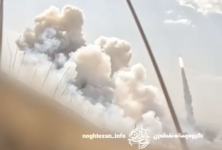
state TV releases footage of Iranian MRBMs prepared for launch exploding after being targeted by Israel moments before launch

unfortunately Israel's ability to monitor track and attack mobile assets throughout Iran was very strong

Screenshot 2025-09-04 at 19.30.47.png
 
Last edited:
To view this content we will need your consent to set third party cookies.
For more detailed information, see our cookies page.


Israel had already leaked his name weeks ago unfortunately
 
The reason they were able to hit the launchers was due to the planned exercise. That weekend, Araghchi was to meet with Witkoff. The reason for the decapitation strike was that they were meeting for the planned exercise.
They cannot fly from that tiny country to Iran once they detect a possible launch by US satellites and take out the launchers.
There is not a single photo of an IDF plane in Iran. Not one. They launched cruise missiles from Iraqi airspace and the Caspian.

Why were they able to kill eleven of the nuclear scientists? The IAEA acted as the conduit and passed the information along to the US. They were assassinated along with their families by the use of spike anti-tank missiles and drones from inside Iran.

They do not have the element of surprise. A good portion of the assets on the ground have been eliminated. The Iraqi Erbil and Azerbademjon corridors have been exposed.
How will the next round look? I have my money on IRGC.
Some will keep worshipping the child killers even though the facts are in front of their faces.

IRAN HAS A RIGHT TO DEFEND ITSELF.
F..K CHILD KILLING COWARDS.
 

Users who are viewing this thread

Pakistan Defence Latest

Country Watch Latest

Back
Top