Iranian Air Force (IRIAF/IRGC-ASF) | News and Discussions

To be sure Kowsar in its 'current' iteration is superior to F-5M.

Nonetheless, I am waiting for those Kowsar's stuck on the assembly line to emerge before I form a firmer opinion.

Depending on what the IRIAF intends to use Kowsar for, it would have to be more capable than an F-5AT. Refer also to your post in the old PDF. Some additional info at https://www.tacticalairsupport.com/airplanes/northrop-f-5/ .

Well if these high-tech Kowsar's turn out to be anything like the recent Kowsar info you posted, then I for one would be pleasantly surprised.

Piet

offcourse but because of cost and IRIAF's budget cuts the program seems to be stuck. Even if they somehow get 70-80 jets then they are not going to solve the "post F-14" equation Iran is facing right now.

Iraqis despite having F-16 will not be able to tackle attack jets of IAF who will be easily launching ALBMs at southern Iran from Southwestern Iraq, That is the max range they can reach anyway. Our only solution is to extend IADS into Iraq. Secure Iraqi airspace to save Iranian airspace if it makes sense.

Iraq currently has no IADS, they have few airbases with tiny radars and virtually no integrated SAM batteries.
 
Can we limit South Asians from this thread? they have zero understanding of our terrain and geography and are just posting clueless BS like "Shooting war" between Iran and Israeli jets from 2000 KM away.

@Persian Gulf
This is the south asian forum - Specifically a Pakistani one - If you cannot tolerate their opinion without tolerance and education on why they are invalid - and agree to disagree in a civil manner.

PLEASE find ANOTHER forum or I will force you to find one.

Maintain civility.
 
This is the south asian forum - Specifically a Pakistani one - If you cannot tolerate their opinion without tolerance and education on why they are invalid - and agree to disagree in a civil manner.

PLEASE find ANOTHER forum or I will force you to find one.

Maintain civility.

Noted and all good.
 
At this height in a war zone watched and tracked by air defense systems and AWACS like fighter jets such as F-14s, you will get shot down by a simple MANPAD or infrared A2A missile.

Non of them will survive if they try refuleing in the air like that and at that height. Tankers are limited by flight altitude
It depends upon establishing control and dominance but it is very doable if they don’t enter hostile airspace.

Technically it all comes down to the route taken and within that if the Gulf states assurance on not allowing airspace use will come true.

Although that does not prevent the Israelis from violating Iraqi airspace without much resistance (MANPADS have no impact at this altitude in operational use)

But there has even been talk of IDFAF going all around the Gulf by pre positioning jets at a US base outside the gulf and using tankers to get through the distance but in all scenarios the language from Israel suggests that without GCC cooperation it will be EXTREMELY difficult for them to not trigger intel reports to Iran.

If they go north - through Syria the Russians will alert Iran -

If they go south all the way to either refuel at the Horn or other spots they will be picked up and any “critical” targets are a very long flight time.

Sure, you could cite the PLO raid in the 80s as proof they could do it but in practice the terrain and distance both favor and also pose a hazard for them.

So at this point the best approach for Iranian AD and by extension IRIAF is to use a mix of AMBUSH CAP and repositioned assets.

There is another angle - what if they are able to work with the extensive US moles in the GCC to essentially “compromise” that network and still fly through?
 
But there has even been talk of IDFAF going all around the Gulf by pre positioning jets at a US base outside the gulf and using tankers to get through the distance but in all scenarios the language from Israel suggests that without GCC cooperation it will be EXTREMELY difficult for them to not trigger intel reports to Iran.

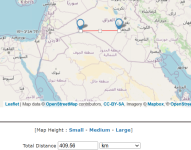
It's not difficult at all for IAF to launch ALBM at southern Iran without involving (P)GCC or Using US airbases at all. All they need is to take the route of using Jordanian airspace to enter the southern Iraqi desert. Without even refueling they can max reach west or southwest of Najaf on external fuel from where they can launch ALBM at lofted apogee to gain range for a target in Khuzestan. OTH and long-ranged PESA or HF/VHF/UHF can pick up refueling "event" because RCS suddenly is comprised of a giant tanker with jets all gathered up in the same spot creating one large body.

The dilemma here for Iran is that even if IADS sees it what are they going to do about it? Fighter jets on QRA duty can not be scrambled to reach this zone quickly and even if they do, they will need wet thrusts in excess of 60K lbs and something like Meteor BVR to tackle this ALBM launching attack group this renders even fighters like R-37 armed SU-35S almost useless. The best bet will be if IADS layered assets can be positioned in the vulnerable zones. Iranian HIMADS/SHORADS batteries with AESA track radars positioned around Najaf or Baghdad can track F-15 (huge RCS when carrying ALBM) from 400-450 KM away as soon as they enter from Jordan. Terrain masking in the desert is difficult and reduces range. To launch ALBM they will have to break the terrain mask anyway.

1728598181012.png


Iran needs to arm Iraq in longer terms for its own sake. A mistake they made in Syria.
 
Can this operate over Syria without getting shot down? Possibly not, right? Maybe over Iraq since it still has no defensive capability but it has to get past Syria first. Even with Syrias degraded capabilites, a large air refueller like that would be a target and Syria will take shots at it for sure.

It is quite possible that the last mission that Israel did against Iran, was from buddy-refuelling from other stealth jets, thereby allowing to reach the required range while maintaining a stealth cloke to allow some level of operational military capability. If so, then that approach will limit the amount of military capability it can bring to the table due to the need to maintain the logistics of the operation and the small number of stealth jets that Israel has at 39 F35s to date. if 1 jet is used as a fuel muel to get to the target and 1 to get back safetly, then if all F-35s are operational, Israel can at most put 13 F-35s on target. If Israel can operate F15s over Syria and Iraq in a contested environment as fuel-muels, then Israel can put more F35s over the targets.

Given the risks involved, it does seem to suggest a route via the red sea. It means that while aircraft can reach Iran via that route, the combat missions will be long and they will be limited by Israels aerial refuelling capability interms of how many planes it can have on target ( assuming of course that the Americans do not provide "logistical support" ) and the payload it can carry there. Are bunker-busters possible to deploy over those distances given the fuel requirements for ordinance of that size and weight ?

The key barrier to this operation is the logistics to operate an air campaign over Syria/Iraq or the Red Sea. Can Iran hunt down and destroy aerial refuellers??? Does it have the fighters with the range that allow it do that, and that with the required level of intelligence capabilities to locate such assets. If Iran does go for the refuellers, with the Americans shoot down Iranian Aircraft as part of "defending Israel". Focussing on the weak point of Israels operation ie air-to-air refuelling capabilities is what will allow Iran to undermine the attack. That is why having planes like Su-35s/30s are so useful to Iran if it has managed to take delivery of some of them. Even better, Su-57s which would be significant risks to any operating air refuellers though that is one for the future.

We have to for now assume the Sultan of Istanbul will not "allow" Israel to transit its airspace on a mission to attack Iran and will "actively" contest any presence of the IDF over its airspace.

The Yemen route, while poseing some operational logistical issues, is a safer route as Yemen has only been able to shoot down drones so far and not jets ( though they could successfully take a pot shot at an aerial refueller if it came in range).

Israel has serious logistical issues in mounting its operation because when it said "we expect our local allies to help, most of the local allies have so far given the middle finger back in reply to Israel". Getting the middle east countries on side with Iran has been key to limiting Israels choices of attack. It also serves those middle-east countries interests by reducing the possiblity of an all out war, where their infrastructure is at risk from an angry Iran.

Syria and Iraq are key to Israels ability to contest with Iran, so you can see why Israel has been so determined to undermine both countries militarily and economically to date.

Lets see. Israel will reply, but i suspect the scope and size of the reply will be limited by logistical issues and targets will be selected to create the biggest theatrical bang for the buck visual experience rather than a real sustained campaign.

It will be interesting to see what Israel can pull of "alone", and what the USAF will do as part of supporting "Israels right to defend itself" interms of logistical and intelligence support. I do expect a naval/submarine dimension to this due to the logistical issues involved.

All of the above only holds true if the Arab countries do not team up with Israel and USA to attack Iran of course.
It can very well operate over Jordan
 
It is quite possible that the last mission that Israel did against Iran, was from buddy-refuelling from other stealth jets, thereby allowing to reach the required range while maintaining a stealth cloke to allow some level of operational military capability. If so, then that approach will limit the amount of military capability it can bring to the table due to the need to maintain the logistics of the operation and the small number of stealth jets that Israel has at 39 F35s to date. if 1 jet is used as a fuel muel to get to the target and 1 to get back safetly, then if all F-35s are operational, Israel can at most put 13 F-35s on target. If Israel can operate F15s over Syria and Iraq in a contested environment as fuel-muels, then Israel can put more F35s over the targets.

F-35I does not carry ALBMs and if it does carry them then its stealth factor is gone because of wearing them on pylons. ALBMs are huge RCS enhancers and also to launch them fighters have to break terrain masking, and reach a certain speed and altitude with "Elevated Angular Pitch" of nose which again enhances RCS. What you are suggesting, is that a group of ~10 F-35Is some of which are wearing ALBM and external drop tanks gather up for Buddy refueling, this will create huge blip on Search radars even from within Iran. Israelis know this so refueling does not seem like a good choice here. Without Stealth F-35 is below F-15 in MTOW and other physical characteristics.

Best choice remains Rampage or Sparrow from F-16/F-15, specially F-15 which can cover back and forth distance of ~1800 KM from Israeli FABs to South west of Najaf for ALBM launch. It will be seen yes and probably even tracked for some time but at such distance it can easily outrun any missile fired towards it from hundreds of KM away.

Iran practically has no defense against this route even with hypothetical SU-35S or current F-14AM on QRA from Kermanshah FABS or if we position S-300PMU2 or Bavar-373 HIMADS at the edge of Iran with Iraq, hence the dilemma.

In the future, IADS can be extended into Iraq or Iraqi AF can be cued in time if Iranian OTH's or long ranged PESAs pick activity over southern Iraqi desert.
 
Terrain masking in the desert is difficult and reduces range. To launch ALBM they will have to break the terrain mask anyway.

They just have to fly lower than the azimuth of Iranian radars, which isn’t that difficult. Only OTH could “catch” them since it’s refracts off the upper atmosphere back down.

That’s how Israel fired at Iran last time in april. You can also see videos of Ukrainian fighter jets (also flat terrain) flying low below radar and then popping up to fire and then flying away safely from Russian radars near the frontlines.

But I agree it’s not a great tactic for sustained bombing. It’s mostly used to drop payloads towards a fixed target and flee.
 
They just have to fly lower than the azimuth of Iranian radars, which isn’t that difficult. Only OTH could “catch” them since it’s refracts off the upper atmosphere back down.

That’s how Israel fired at Iran last time in april. You can also see videos of Ukrainian fighter jets (also flat terrain) flying low below radar and then popping up to fire and then flying away safely from Russian radars near the frontlines.

But I agree it’s not a great tactic for sustained bombing. It’s mostly used to drop payloads towards a fixed target and flee.

OTH Search can get a blip easily if an RCS increasing event happens like Refuellings. Long-ranged PESA or V/UHF can also do the job because planes have to break terrain masking at some point to get the "launch" altitude/speed/coordinates.

The problem again is the same, even if Iranian IADS sees all of this happening 450 KM away from their borders around South west of Najaf what are they going to do about it? No F-14AM, MIG-29 or hypothetical SU-35S can reach that zone from Kermanshah QRA FAB to engage the enemy party, even if they go full afterburner. They will need to be around Najaf to get a track lock and fire thwarting Salvos of BVR at 150+ KM away to make a difference. Implausible scenario. Similarly even if place a Mehran, Bavar-373, or SU-300PMU2 at the edge of the border and somehow NAJM-804 AESA gets a lucky tracking lock on an ALBM carrying huge RCS F-15 some 350 KM away and the battery fires a few missiles, the Israeli pilots will comfortably lob the ALBMs and safely run back to Jordanian airspace.

Iran is pinned in this scenario completely. IRGC made this mistake in Syria as well where they just did not gradually increase a robust network of Radars, grids, and SHORADS/HIMADS starting from eastern Syria to West. The gradual establishment of IADS would have made sure that blind spots are gone with time, and layer after layer starts building up. Instead, they relied upon the legacy localized defense network of SyAAF where singular batteries are all doing their own thing. They need to do this in Iraq, put AESA tracking radars and HIMAD/SHORAD networks in southern corridors around Najaf, connect them with search OTH/PESA/HFs in Iran. Batteries get cues, track the enemy to engage them and provide same information to Iraqi Air Force.
 
Guys, a fun thought, hear me out.

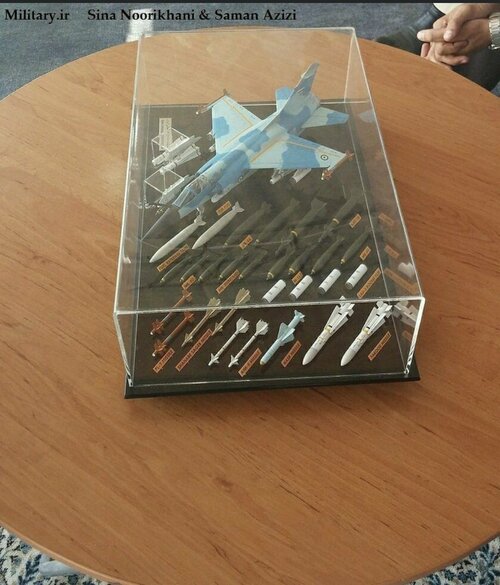
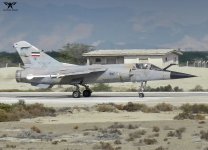
We have 22 Mirage-F1 (EQ/BQ) airframes in Iran and they do not even have many flying hours on them. Can IAIO upgrade them extensively like putting Bayenaat-I/II PESA on them for track ranges between 100-150 KM, arm them with 2 x Fakour-90 (ARH, 150 KM) and 4 x Azarakhsh All Aspect HOBS, put Kowsar's e-warfare suite, D-Links with IADS . That's a tough A2A fighter jet to deal with, with 50K ft/min climb rate. Such plan does exist btw except that the Iranian Air Force does not like this plane at all, they barely use these airframes for fighter jet training.

257835-8aa5bbec156c77aa844fd316426adb0a.jpg


.... And give them back to Iraqi AF (for a price) on the condition that they will be used as QRA against IAF. Iraqis get their mirage back only 10-fold more capable. A very good supplement to their 32 x F-16C/D which are limited by the nonavailability of AIM-120.

EQ6-01.jpg
 
It depends upon establishing control and dominance but it is very doable if they don’t enter hostile airspace.

Technically it all comes down to the route taken and within that if the Gulf states assurance on not allowing airspace use will come true.

Although that does not prevent the Israelis from violating Iraqi airspace without much resistance (MANPADS have no impact at this altitude in operational use)

But there has even been talk of IDFAF going all around the Gulf by pre positioning jets at a US base outside the gulf and using tankers to get through the distance but in all scenarios the language from Israel suggests that without GCC cooperation it will be EXTREMELY difficult for them to not trigger intel reports to Iran.

If they go north - through Syria the Russians will alert Iran -

If they go south all the way to either refuel at the Horn or other spots they will be picked up and any “critical” targets are a very long flight time.

Sure, you could cite the PLO raid in the 80s as proof they could do it but in practice the terrain and distance both favor and also pose a hazard for them.

So at this point the best approach for Iranian AD and by extension IRIAF is to use a mix of AMBUSH CAP and repositioned assets.

There is another angle - what if they are able to work with the extensive US moles in the GCC to essentially “compromise” that network and still fly through?
Valid points. Israelis will not risk entering Syrian airspace for certain reasons. Low possibility for them to expose themselves to Russian radars in Syria.

The most possible route to use is the one shown by @Emirzad Jordan-Iraq route all the way towards Iran.

Iranian allies in Iraq are already armed by IRGC. I do not have any idea about their AD capabilities but i am sure that IRGC is not so irresponsible to leave them undefended.

Fyi, i am not worried about Israel at all. Our major concern is American bases in the region esp in Iraq and Syria. Morover Iranian long range radars have Israel in their range. We can see their jets flying on our radars.

If Israel uses Iraqi airspace, let us suppose the worst case scenario in which Iraqi resistance forces lack proper AD systems, Iran will have to defend itself by its multi Layered air defense inside the country. Because of presence of American jets in Iraq, we will not risk losing our fighter jets over Iraqi airspace.

Iraqi government is too weak and also, they will not accept Iranian made air defense systems, again because of American factor and Chinese will not give them HQ series for possible American pressure.

We have to make Iraqi Hezbollah the shield against Israel or else we will have to receive the first punch and then bomb the shit out of Israel. The best case is, Iraqi Hezbollah is armed with 15th Khordad AD.
 
At this height in a war zone watched and tracked by air defense systems and AWACS like fighter jets such as F-14s, you will get shot down by a simple MANPAD or infrared A2A missile.

Non of them will survive if they try refuleing in the air like that and at that height. Tankers are limited by flight altitude

They won't refuel in Iranian controlled airspace. They will refuel right outside of it, both ways, with cover from F-35s. That is the entire point of these refuelers. They will also not try to target the farthest reaches of Iran from the get go. They will try to work their way to them. Or use their stealth assets for "surgical strikes" against high value targets.

Iran, IMO, will instead bank on offensive reciprocity using its missiles.

ps: Aircraft flying above 20,000 ft are beyond the reach of manpads. Refueling generally happens at 25,000 ft. Misgah 3's operational range is 5km (16404 ft).
 
Last edited:
We have 22 Mirage-F1 (EQ/BQ) airframes in Iran and they do not even have many flying hours on them. Can IAIO upgrade them extensively like putting Bayenaat-I/II PESA on them for track ranges between 100-150 KM, arm them with 2 x Fakour-90 (ARH, 150 KM) and 4 x Azarakhsh All Aspect HOBS, put Kowsar's e-warfare suite, D-Links with IADS . That's a tough A2A fighter jet to deal with, with 50K ft/min climb rate. Such plan does exist btw except that the Iranian Air Force does not like this plane at all, they barely use these airframes for fighter jet training.
I can understand why.
Those aircraft are completely different to whatever IRIAF had. It is radically different to US F4/5/14 and also Su24/25/Mig29. Keep in mind that the nose cone it is so damn small than any possible good radar antenna would make it short range.

If Pakistan really can´t export some JF17, they could export some ToT in any secret treaty, and Iran could pay them slowly even in cryptocurrencies. Via Pakistan arrived ECM equipments to IRIN, for example. Pakistan could export ToT for RD93 for example, data link equipment and ECM systems. Another could be PL15, but I don´t know if Pakistan assemblies this kind of long range missile. Those technologies can be easily integrated in iranian aerospace industries and very well applied in any bigger airframe.
 
It's not difficult at all for IAF to launch ALBM at southern Iran without involving (P)GCC or Using US airbases at all. All they need is to take the route of using Jordanian airspace to enter the southern Iraqi desert. Without even refueling they can max reach west or southwest of Najaf on external fuel from where they can launch ALBM at lofted apogee to gain range for a target in Khuzestan. OTH and long-ranged PESA or HF/VHF/UHF can pick up refueling "event" because RCS suddenly is comprised of a giant tanker with jets all gathered up in the same spot creating one large body.

The dilemma here for Iran is that even if IADS sees it what are they going to do about it? Fighter jets on QRA duty can not be scrambled to reach this zone quickly and even if they do, they will need wet thrusts in excess of 60K lbs and something like Meteor BVR to tackle this ALBM launching attack group this renders even fighters like R-37 armed SU-35S almost useless. The best bet will be if IADS layered assets can be positioned in the vulnerable zones. Iranian HIMADS/SHORADS batteries with AESA track radars positioned around Najaf or Baghdad can track F-15 (huge RCS when carrying ALBM) from 400-450 KM away as soon as they enter from Jordan. Terrain masking in the desert is difficult and reduces range. To launch ALBM they will have to break the terrain mask anyway.

View attachment 71362


Iran needs to arm Iraq in longer terms for its own sake. A mistake they made in Syria.
The question is would they want to use the Rampage or the LORA equivalent?

Based on the statements it seems they want to make it very visual for Iran - call it “shock and awe” retaliation for what their population experienced.

But the key is the targets because that factors in both distance, terrain and type of assets needed.

ALBMs may not suffice to hit mountain bunkers facing a certain direction and you need to either have a more maneuvering cruise system that can come around to hit a target or use PGMs.

Petrochemical facilities are a different question and for that ALBMs are enough.

I don’t think QRAs will have an impact or anything IRIAF has will in such a scenario.

But I would not discard the constant news stream on decisions and measures and so on - these are now hollow and whatever their content have a purpose through their manipulation of media.
 

Users who are viewing this thread

Pakistan Defence Latest

Country Watch Latest

Back
Top