Are the demonstrations in Iran a legitimate call for democracy and freedom or is it rather an attempt to install a puppet Western aligned regime?
This is 100% externally driven to remove the regime and replace it with the son of the former Shah of Iran who is sitting in New York, the aim is clear:
Potential options on the table/discussed by foreign think tanks:
"Home-Made" Rupture: Economic/social pressures lead to internal system failure, with post-rupture consolidation, not necessarily a pre-planned handover, Source: The Strategist | ASPI's analysis and commentary site.
Maximum Pressure (UK/US): Policy Exchange suggests applying maximum pressure to force a regime shift or encourage a successor, Source: Policy Exchange.
External Intervention (Risky): Military action by Israel/US, potentially escalating conflict and risking US involvement, source: Atlantic Council.
De Facto Power Shift: After the Supreme Leader, power moves to senior IRGC/politicians without changing structure, creating a non-elected ruling group, Source:
www.inss.org.il.
----
Phase 1: Non Military options:
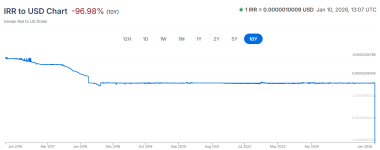
1. Severe Economic Isolation: Already in place
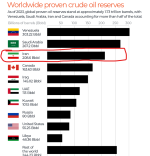
2. Energy Market Shifts: [See Venezuela] - Aim: Iran’s revenue collapses, weakening state capacity.
3. Information warfare:
- Foreign media and cyber campaigns amplify ethnic grievances
- Diaspora groups receive platforms and funding
[Refer to Article 19 NGO activities inside Iran or social media posts originating from outside Iran].
4. Regional realignments:
- Iran’s influence in Iraq, Syria, and Lebanon decline
Overall aim: weaken the central state.
---
Phase 2: Intensifying internal stressors
- As Iran is a multi-ethnically diverse nation, this would be the first point to exploit by external actors. Under extreme stress, local identities become more politically salient.
Potential internal triggers
- Economic collapse leads to unpaid public workers, fuel shortages, and declining services
- Elite fragmentation within the IRGC, clerical establishment, and political factions
- Ethnic regions—Kurdish, Baluchi, Arab, Azeri—push for greater autonomy
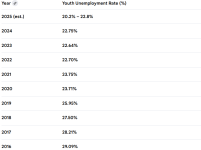
- Youth‑driven protests escalate as unemployment spikes
Youth Unemployment statistics:
 Source
Aim:
Source
Aim: The state becomes
overextended, struggling to maintain authority everywhere at once.
Phase 3: External Actors Exploit the Vacuum
Foreign powers—regional and global
Support for autonomy movements
- Support for autonomy movements
- Diplomatic recognition of “cultural rights”
- Funding for civil society groups
- Covert support for local political organizations
Border states intervene politically
- Border states intervene politically
- Iraq’s Kurdish region encourages Kurdish Iranian autonomy
- Gulf states amplify Arab minority grievances in Khuzestan
Great powers pursue their own agendas
- Great powers pursue their own agendas
- One power pushes for decentralization to weaken Iran
- Another backs the central government to maintain stability
- Competition creates a fragmented geopolitical environment
Risk assessment and immediate and mid-term scenarios based on open source information and publicly available data:
Immediate Term (Next 2–6 Weeks)
Likelihood of collapse: Low to
Moderate.
Open-source security analysis indicates that outright collapse in the
immediate term is unlikely, although protests pose a serious destabilizing threat.
The regime’s security apparatus still largely controls major population centers and has institutional cohesion.
Medium Term (3–12 Months)
Risk increases to Moderate.
Reasons for change in assessment: Sustained unrest, economic deterioration, widening strikes, factional splits within security forces, or loss of control in key regions could intensify instability.
Without credible reforms or economic stabilization, legitimacy will continue eroding.
Key Uncertainties:
- Security force cohesion: If IRGC/Basij fracture or defect, collapse risk rises sharply.
- Opposition unity: Lack of unified political leadership or strategy reduces chances of successful systemic transition.
- External shocks: Regional conflict escalation or severe sanctions may accelerate internal collapse dynamics.
Immediate and Medium-Term Outcomes
A. Containment (Most Likely)
- The regime suppresses protests through force, limits communication, and imposes incremental economic concessions to reduce pressure.
Risks: High civilian casualties, increased cycles of unrest.
B. Negotiated Concessions / Limited Reforms
Government might offer economic relief measures or token political reforms to break momentum.
Risks: May not satisfy core demands; could embolden protest movements.
C. Escalation to Wider Unrest
If protests intensify further or strike waves spread to critical sectors (oil, transport), the regime could face deeper legitimacy crisis.
Risks: Economic paralysis, shutdown of key infrastructure.
D. Sudden Fragmentation or Collapse (Less Likely)
Triggered by loss of security cohesion, elite defection, or a political tipping point.
Impact: Civil conflict, power vacuum, regional instability.
Summary Risk Judgement
Time Frame Collapse Risk Rationale
Next 1-6 weeks Low–
Moderate Strong coercive control, regime retains core power.
Next 3-12 months Moderate Continued unrest, systemic economic crisis, legitimacy erosion could converge.
Overall: Threat of collapse is real but not imminent. Escalation and systemic pressure could move Iran toward crisis or transition—
but collapse is not yet a near-term certainty. 


