Navigation
Install the app
How to install the app on iOS
Follow along with the video below to see how to install our site as a web app on your home screen.
Note: This feature may not be available in some browsers.
More options
Style variation
You are using an out of date browser. It may not display this or other websites correctly.
You should upgrade or use an alternative browser.
You should upgrade or use an alternative browser.
Israel’s Genocide in Gaza | 2023- till present
- Thread starter Ali_Baba
- Start date
- Status
- Not open for further replies.
More options
Who Replied?


K2RULEZ
Elite Member

A serious question, if the daily genocide killings triple or quadruple, will the world still do anything? will Muslim countries do anything?
During the Rwanda genocide the world again did nothing because black africans were dying.
Is this what has become of humanity?
The world won't lift a finger. Already the world is complicit for the suffering caused.
Unknowntruth
Trusted Member


Everything they put out is an admission of their guilt. Throwing a baby in on oven while the father watched is what they did in the Nakba to Palestinians.I have even heard babies in ovens.....
In the aftermath there was some talk of Hama's worse than the Nazis... The Nazis.
Just actually stop and ponder how suddenly from one event you have something that overturns the entire ww2 narrative and modern foundation of Western countries today.
This decided for me the utility in engaging in long discussions when the other side can turn reality just like that.


sad it seems you guys don't have problem to show it to select people
the only clip posted here was of a dog being shot .and a clip from some person behind a wan and some people sitting on her
also there is a clip on wikipedia from a cc camera showing some one shot from behind and one person being fired from close range.
meanwhile there is clip about some AH-64 open fire on participant in a certain music festival and also Israel soldiers open fire on Israeli civilians who caught between them and a single militant and many other instances of Israeli forces open fire on the settlers . wonder if they were also part of that mythical 47min video?
The empty clip was posted to make a point how redicoulous it to deny what all have seen with their own eyes , same as denying the sun exists.
Maybe the movie presented in the UN was empty too ?
There were clips here of -
Thai worker having his head chopped with a shovel , Family sitting hostage while the daughter lays dead from a grenade thrown in , images of civilian murdered in cold blood , people gunned down , either running or sitting in cars , pictures of mutilated bodies , dead babies. What more imagery do you need to proove a case ?
Not going to watch those clips again or post them here , but do feel free to indulge yourself.
And if that is not enough , there is plenty more on google.
After all it is :
The most well-documented massacre in history
i24NEWS
 www.i24news.tv
~
Aziqbal
Elite Member
The empty clip was posted to make a point how redicoulous it to deny what all have seen with their own eyes , same as denying the sun exists.
Maybe the movie presented in the UN was empty too ?
There were clips here of -
Thai worker having his head chopped with a shovel , Family sitting hostage while the daughter lays dead from a grenade thrown in , images of civilian murdered in cold blood , people gunned down , either running or sitting in cars , pictures of mutilated bodies , dead babies. What more imagery do you need to proove a case ?
Not going to watch those clips again or post them here , but do feel free to indulge yourself.
And if that is not enough , there is plenty more on google.
After all it is :
The most well-documented massacre in history
i24NEWS
~
yes so well document that you forgot to mention the Apache helicopter which gunned down 95% of the civilian Israeli casualties
Unknowntruth
Trusted Member
Didn’t Hamas have body cams? Surely those body cams shows the things you speak of? Where are they? You are making accusations with no proof. If what you are saying is true, you should have tons of footage Hamas committing these crimes.The empty clip was posted to make a point how redicoulous it to deny what all have seen with their own eyes , same as denying the sun exists.
Maybe the movie presented in the UN was empty too ?
There were clips here of -
Thai worker having his head chopped with a shovel , Family sitting hostage while the daughter lays dead from a grenade thrown in , images of civilian murdered in cold blood , people gunned down , either running or sitting in cars , pictures of mutilated bodies , dead babies. What more imagery do you need to proove a case ?
Not going to watch those clips again or post them here , but do feel free to indulge yourself.
And if that is not enough , there is plenty more on google.
After all it is :
The most well-documented massacre in history
i24NEWS
~
But the best we get is BELIEVE ME, why do you question what I tell you? Maybe because they are witnessing the genocide taking place in Gaza and all the lies Israel spreads like the beheading of babies.

Meengla
Elite Member
Ahh, even the Chinese could be Israel's enemies! How insecure, unsafe, and paranoid 'The most powerful military in the Middle East' feels!
The longer this conflict drags as limited militias vs Israel, the more Israel is going to unravel. It is already unraveling!
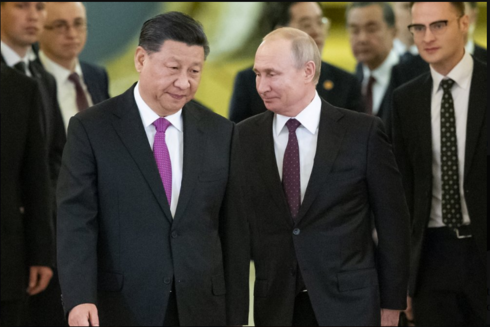
 www.ynetnews.com
A former member of the Shin Bet's cyber division sent an urgent call to the Knesset Foreign Affairs and Defense Committee chair, Yuli Edelstein to address the danger to Israel's cyber security, emanating from China.
In the letter that was seen by Ynet's sister publication, Calcalist, Dr. Harel Menashri, co-founder of the cyber system at the Shin Bet and currently serving as the head of the cyber field and a senior lecturer at HIIT said that China's extensive investments in strategic assets in Israel, should raise an alarm because at any given day, China could have the capability to disrupt critical infrastructure operations in Israel.
The focus of concern primarily revolves around the management and operation of the Haifa Port, which is currently under the control of a Chinese company. However, the risk does not end there. In his view, these concerns are not receiving adequate attention, despite China's increasingly radicalized stance toward Israel.
"The disaster we witnessed on October 7 serves as a reminder to heed the warnings from the defense establishment, and I would like to raise awareness about a similar situation," Menashri wrote. He said that components manufactured in China, which are integrated into the police's "Hawkeye" system, have been blacklisted in the US.
In his letter to the parliamentary committee Menashri emphasizes the need for Israel to mitigate risks and make well-considered decisions regarding its engagement with China. While acknowledging China's significance as an important country, he emphasizes the importance of restricting certain imports and preventing information leakage.
Menashri strengthened his argument by referencing past American opposition to China's involvement in the Israeli port, which included a warning that the Sixth Fleet would no longer dock there.
Apart from China's notable presence in strategic infrastructures, such as the predominantly Chinese-built light rail, Israel maintains highly developed trade relations with China. In 2022, the trade volume between the two countries reached $17.6 billion, approaching the trade volume with the United States, which stood at $22 billion.
The longer this conflict drags as limited militias vs Israel, the more Israel is going to unravel. It is already unraveling!
China could one day shut down Israeli infrastructure, cyber expert warns
Dr. Harel Menashri, a former member of Shin Bet warns Israel fails to address risks although China appears to shift interests amid growing ties with Iran; warns even Chinese made cars, used by security agencies could pose danger to security
www.ynetnews.com
China could one day shut down Israeli infrastructure, cyber expert warns
Dr. Harel Menashri, a former member of Shin Bet warns Israel fails to address risks although China appears to shift interests amid growing ties with Iran; warns even Chinese made cars, used by security agencies could pose danger to security
A former member of the Shin Bet's cyber division sent an urgent call to the Knesset Foreign Affairs and Defense Committee chair, Yuli Edelstein to address the danger to Israel's cyber security, emanating from China.
In the letter that was seen by Ynet's sister publication, Calcalist, Dr. Harel Menashri, co-founder of the cyber system at the Shin Bet and currently serving as the head of the cyber field and a senior lecturer at HIIT said that China's extensive investments in strategic assets in Israel, should raise an alarm because at any given day, China could have the capability to disrupt critical infrastructure operations in Israel.
The focus of concern primarily revolves around the management and operation of the Haifa Port, which is currently under the control of a Chinese company. However, the risk does not end there. In his view, these concerns are not receiving adequate attention, despite China's increasingly radicalized stance toward Israel.
"The disaster we witnessed on October 7 serves as a reminder to heed the warnings from the defense establishment, and I would like to raise awareness about a similar situation," Menashri wrote. He said that components manufactured in China, which are integrated into the police's "Hawkeye" system, have been blacklisted in the US.
In his letter to the parliamentary committee Menashri emphasizes the need for Israel to mitigate risks and make well-considered decisions regarding its engagement with China. While acknowledging China's significance as an important country, he emphasizes the importance of restricting certain imports and preventing information leakage.
Menashri strengthened his argument by referencing past American opposition to China's involvement in the Israeli port, which included a warning that the Sixth Fleet would no longer dock there.
Apart from China's notable presence in strategic infrastructures, such as the predominantly Chinese-built light rail, Israel maintains highly developed trade relations with China. In 2022, the trade volume between the two countries reached $17.6 billion, approaching the trade volume with the United States, which stood at $22 billion.
UKBengali
Elite Member

yes so well document that you forgot to mention the Apache helicopter which gunned down 95% of the civilian Israeli casualties
Not just that but the Zionist "army" were shelling houses in the Kibbutz with children in them.
No skill or bravery but just employ massive firepower to take out Hamas fighters equipped with light weapons only.
r3alist
Elite Member
The most well-documented massacre in history
No one cares for empty taglines when Gaza no journalists are allowed and are targeted for killing, so much for documentation claims from those who prevent it.
Unknowntruth
Trusted Member
The only burnt babies is the thousands of Palestinian babies who have been carpet bombed. The only beheaded babies are Palestinian babies who had their heads blown off by the bombs they drop.Show us burnt babies in ovens!
r3alist
Elite Member
No one cares for empty taglines when Gaza no journalists are allowed and are targeted for killing, so much for documentation claims from those who prevent it.

mangekyo
Trusted Member

Stop the anti semitism. You have to believe Gods chosen people regardless of what the evidence says.Didn’t Hamas have body cams? Surely those body cams shows the things you speak of? Where are they? You are making accusations with no proof. If what you are saying is true, you should have tons of footage Hamas committing these crimes.
But the best we get is BELIEVE ME, why do you question what I tell you? Maybe because they are witnessing the genocide taking place in Gaza and all the lies Israel spreads like the beheading of babies.

Hack-Hook
INT'L MOD
The empty clip was posted to make a point how redicoulous it to deny what all have seen with their own eyes , same as denying the sun exists.
Maybe the movie presented in the UN was empty too ?
There were clips here of -
Thai worker having his head chopped with a shovel , Family sitting hostage while the daughter lays dead from a grenade thrown in , images of civilian murdered in cold blood , people gunned down , either running or sitting in cars , pictures of mutilated bodies , dead babies. What more imagery do you need to proove a case ?
Not going to watch those clips again or post them here , but do feel free to indulge yourself.
And if that is not enough , there is plenty more on google.
After all it is :
The most well-documented massacre in history
i24NEWS
~

maybe its also only accessible to certain people
again you are wrong this is the most well-documented massacre in history
Meengla
Elite Member
Who wants to cry for these crybabies??!! The hubris of trying to distance from America and getting cozy with China and Russia! Wanting to play some Great Game! Wasn't Netanyahu a great strategist?!! A small country of a small population got too uppity beating up an imprisoned population, beating back ill-trained, ill-equipped militaries, and usurping the American political system. But a rude awakening has arrived--delivered by an imprisoned militia's rifles and RPGs!
www.ynetnews.com
However, the results of this strategy took an unexpected turn. Russia, once seen as a potential ally, revealed its true face after the Hamas attack. President Vladimir Putin not only refrained from condemning Hamas but also went as far as hosting a delegation from the terrorist organization in Moscow. The revelation was a blow to Netanyahu's hopes of securing Russian support. Meanwhile, China, though more discreet and nuanced in its approach, has shown a growing pro-Palestinian stance.
This can be seen through statements made by members of the Communist Party, who have expressed support for the right of return, as well as their joint efforts with Russia at the United Nations to block condemnation of the Hamas attack in the Security Council. These developments have brought to light the challenges and limitations of Netanyahu's diplomatic strategy, highlighting the complexities of forging new alliances and reducing Israel's dependence on the United States.
China could one day shut down Israeli infrastructure, cyber expert warns
Dr. Harel Menashri, a former member of Shin Bet warns Israel fails to address risks although China appears to shift interests amid growing ties with Iran; warns even Chinese made cars, used by security agencies could pose danger to security
www.ynetnews.com
Shifting alliances
Prime Minister Benjamin Netanyahu had a vision - to lessen Israel's reliance on the United States and forge new alliances with Russia and China. He believed that by cultivating these relationships, he could reduce Israel's vulnerability and increase its diplomatic options. One of his tactics was to bolster Hamas, thinking that weakening the Palestinian Authority would give Israel an advantage.However, the results of this strategy took an unexpected turn. Russia, once seen as a potential ally, revealed its true face after the Hamas attack. President Vladimir Putin not only refrained from condemning Hamas but also went as far as hosting a delegation from the terrorist organization in Moscow. The revelation was a blow to Netanyahu's hopes of securing Russian support. Meanwhile, China, though more discreet and nuanced in its approach, has shown a growing pro-Palestinian stance.
This can be seen through statements made by members of the Communist Party, who have expressed support for the right of return, as well as their joint efforts with Russia at the United Nations to block condemnation of the Hamas attack in the Security Council. These developments have brought to light the challenges and limitations of Netanyahu's diplomatic strategy, highlighting the complexities of forging new alliances and reducing Israel's dependence on the United States.
Hack-Hook
INT'L MOD
By the Israeli government
See also: Israeli war crimes
Numerous charges of war crimes have been levied against Israel for its actions against civilians. These charges have come from Human Rights Watch, Amnesty International, B'tselem, and human rights groups and experts, including UN rapporteurs.[95] Critics argue the Biden administration has given tacit approval to Israeli war crimes.[96] Antony Blinken indicated the Biden administration has a "high tolerance" for whatever happens in Gaza.[97] On 27 October, the White House stated it had no red lines for Israeli actions.[98][99]
Indiscriminate attacks
See also: Airstrikes on Palestinian refugee camps during the 2023 Israel–Hamas war, Airstrikes on schools during the 2023 Israel–Hamas war, Attacks on health facilities during the 2023 Israel–Hamas war, Targeting municipal services in Gaza, and Church of Saint Porphyrius airstrike
 A mosque destroyed by an Israeli airstrike, Khan Younis, 8 October
In the first week of the war, the IDF carried out 6,000 airstrikes across Gaza, killing over 3,300 civilians and injuring over 12,000.[100][101] The strikes hit specifically protected locations, including hospitals, markets, refugee camps, mosques, educational facilities, and entire neighborhoods.[102] A group of UN special rapporteurs asserted Israel's indiscriminate airstrikes are "absolutely prohibited under international law and amounts to a war crime."[103] Israeli army spokesperson Daniel Hagari said that "the emphasis is on damage and not on accuracy."[104] A +972 Magazine investigation found the IDF expanded authorization for bombing non-military targets.[105][a]
On 9 October, the IDF carried out a mass-casualty airstrike on the Jabalia refugee camp market.[107] The attack resulted in the deaths of over sixty civilians and extensive damage to the market.[108] As a result of Israeli airstrikes in other areas, displaced individuals sought refuge in the camp, causing the market to be densely populated at the time of the strike.[109]
On the same day, the IDF carried out an airstrike on the densely populated Al-Shati refugee camp.[110] Palestinian media reported that this strike resulted in numerous civilian casualties and the destruction of four mosques, including the al-Gharbi mosque, Yassin mosque, and al-Sousi mosque, all of which were confirmed destroyed by satellite footage.[111] Under the Rome Statute, it is a war crime to intentionally attack places of worship in non-international conflict, as long as they are not "used by a party to a conflict for acts harmful to the enemy".[112] The airstrikes in the Al-Shati refugee camp were described as a "massacre against an entire neighborhood" by the Palestinian Ministry of Health.[113][114] During two airstrikes on 10 October and 22 October, the IDF used Joint Direct Attack Munitions in attacks described by Amnesty International as "either direct attacks on civilians" or "indiscriminate attacks."[115][116]
On 17 October, the IDF carried out an airstrike on a UNRWA school sheltering 4,000 refugees in the Al-Maghazi refugee camp, killing six and injuring dozens. Philippe Lazzarini, the UNRWA Commissioner-General, called the attack "outrageous" and showing "a flagrant disregard for the lives of civilians."[117][118] On 19 October, the Israeli Air Force bombed the Church of Saint Porphyrius, where hundreds of Christians and Muslims were sheltering, killing 16 people.[119] The Greek Orthodox Patriarchate of Jerusalem condemned it as a "a war crime that cannot be ignored."[120] Following an investigation, Amnesty International stated the church strike was indiscriminate and should be investigated as a war crime.[121] On 24 October, UN Secretary-General Antonio Guterres called for an immediate ceasefire, after stating Israel had committed "clear violations" of international humanitarian law.[122]
On 1 November, following two airstrikes on the Jabalia refugee camp, the United Nations Human Rights Office stated, "We have serious concerns that these are disproportionate attacks that could amount to war crimes."[123] On 3 November, Israel bombed a medical convoy outside Al-Shifa Hospital, claiming it was targeting Hamas.[124] In response, Yanis Varoufakis noted, "Even if the ambulance was carrying a Hamas overlord, bombing it violates the Geneva Convention."[125] UN chief Antonio Guterres stated he was "horrified" by the attack.[126] On November 5, an Israeli airstrike hit a car near Ainata, Lebanon, killing three children and their grandmother, and injuring their mother. The Israeli military admitted to striking the vehicle.[127] Human Rights Watch stated that their killings should be investigated as an apparent war crime.[128] Najib Mikati, Lebanon’s caretaker prime minister, called the attack a “heinous crime” and said that Lebanon would file a complaint to the U.N. Security Council.[127] On 13 November, Israel shelled the Gaza Reconstruction Committee, leading three Arab states to condemn the attack, with Jordan calling it "a heinous war crime to add to Israel’s criminal record."[129]
On 16 December, the Latin Patriarchate of Jerusalem stated the Israeli army had killed two women sheltering at the Holy Family Parish, stating, "They were shot in cold blood inside the premises of the Parish, where there are no belligerents."[130] Pope Francis described the Israeli attack on the church as terrorism.[131]
On 24 December, 68 people were killed in an airstrike in the Al-Maghazi refugee camp. According to Al Jazeera reporter Tareq Abu Azzoum, the vast majority of victims were civilians. Azzoum also noted that the camp was one of the areas the IDF had previously told Gazans to evacuate to. Hamas called the attack a "massacre" and a "war crime."[132] Israel later determined that incorrect munitions were used in the attack and expressed regret that non-combatants were harmed.[133]
Analyses by CNN, The New York Times, and Sky News all found that Israel had bombed areas it had previously told civilians to evacuate to. The Sky News investigation also concluded that Israel's evacuation orders had been "chaotic and contradictory",[134] NYT found that Israel had dropped 2,000-pound bombs in those areas,[135] while CNN stated it had verified at least three locations Israel bombed after telling civilians it was safe to go there.[136]
Destruction of religious sites
At least six cemeteries were damaged or destroyed, some of them due to military positions established there. As of 14 December 2023, the IDF did not respond to questions regarding this issue. The intentional destruction of religious sites without military necessity is a possible war crime.[137][138] On 21 December, bulldozers destroyed a cemetery in the Al-Saha neighborhood in eastern Gaza.[139][140] The Jaffa Mosque in Deir el-Balah was destroyed on 27 December.[141] On 6 January 2024, Palestinians in Tuffah had to rebury bodies after the Israeli army exhumed them and smashed their graves.[142]
Collective punishment
Main article: 2023 Israeli blockade of the Gaza Strip
It is an entire nation out there that is responsible. It is not true this rhetoric about civilians not being aware, not involved. It’s absolutely not true. They could have risen up. They could have fought against that evil regime which took over Gaza in a coup d’etat.
— Isaac Herzog[143]
Several actions taken by the Israeli army, including its blockade on electricity, food, fuel and water, were characterized as collective punishment, a war crime prohibited by treaty in both international and non-international armed conflicts, more specifically Common Article 3 of the Geneva Conventions and Additional Protocol II.[144][145] Israel's president Isaac Herzog accused the residents of Gaza of collective responsibility for the war.[146]https://en.wikipedia.org/wiki/War_crimes_in_the_2023_Israel–Hamas_war#cite_note-149[148] Doctors Without Borders international president Christos Christou said millions of civilians in Gaza faced "collective punishment" due to Israel's blockade on fuel and medicine.[149][150] Tufts University law professor Tom Dannenbaum wrote that the siege order "commands the starvation of civilians as a method of warfare, which is a violation of international humanitarian law and a war crime."[151] On 25 October, Oxfam stated Israel's use of "starvation as a method of war" was a violation of international law, and that Gaza was being "collectively punished in full view of the world."[152]
EuroMed Monitor described the situation as a war of starvation against civilians in the Gaza Strip. EuroMed noted living conditions had reached catastrophic levels by Israel cutting off all food supplies to the Northern half, and bombing and destroying factories, bakeries, food stores, water stations, and tanks throughout the entire enclave. EuroMed additionally noted Israel deliberately focused its attacks on targeting electrical generators and solar energy units, on which commercial facilities and restaurants depend, to maintain the minimum possible level of their work. Israel also targeted the agricultural areas east of Gaza, flour stores, and fishermen's boats, as well as relief organizations' centers, including those belonging to the UNRWA. As a result, over 90% of the children in Gaza suffered from varying health issues, including malnutrition, anemia, and weakened immunity.[153] Human Rights Watch stated Israel was committing a war crime by using starvation as a method of warfare.[154]
As part of Israel's blockade on Gaza, all access to water was shut off.[155][156] Article 51 of the Berlin Rules on Water Resources bars combatants from removing water or water infrastructure to cause death or force its movement.[157] The EU's chief diplomat Josep Borrell called Israel's cutting off water, electricity and food as "not in accordance with international law."[158] On 14 October, the UNRWA announced Gaza no longer had clean drinking water, and two million people were at risk of death from dehydration.[159] On 15 October, Israel announced it had resumed supplying water to a single location in southern Gaza to "encourage" movement.[160][161] Aid workers in Gaza refuted water was available.[162] By 16 October, civilians drank seawater and water contaminated with sewage to survive.[163]
In an interview with The New Yorker, human rights expert Sari Bashi noted the historical uniqueness of Israeli officials openly admitting they are engaging in collective punishment.[164] On 18 October, UN Secretary-General Antonio Guterres stated Hamas' attacks "cannot justify the collective punishment of the Palestinian people."[165] On 24 October, Human Rights Watch criticized Israel's refusal to allow fuel or water into a Gaza, terming it a war crime.[166] On 29 October, Karim Ahmad Khan stated Israel's impeding aid to Gaza may constitute a crime under the International Criminal Court.[167] On 7 December, Khan again stated "wilfully impeding relief supplies" may constitute a war crime under the Rome Statute.[168]
Violations of medical neutrality
Main articles: Attacks on health facilities during the 2023 Israel–Hamas war and Killing of Health Workers during the 2023 Israel-Hamas War
 Palestine Red Crescent ambulance destroyed by an Israeli airstrike.
Israel is alleged to have broken medical neutrality, a war crime under the Geneva Conventions as hospitals are given special protection under international humanitarian law.[169][170] According to Gaza officials, the IDF deliberately targeted ambulances and health facilities with airstrikes.[171][172] In a statement, the Palestine Red Crescent demanded "accountability for this war crime."[173] The International Federation of Red Cross and Red Crescent Societies, UNRWA, and Medecins Sans Frontieres reported the deaths of their medical personnel.[174][175] On 14 October, the World Health Organization said the killing of health care workers and the destruction of health facilities "denies civilians the basic human right of life-saving health" and is prohibited by International Humanitarian Law.[176][177] On 17 October, WHO stated 51 health facilities had been attacked by Israel.[178][179] On 4 November, the Gaza Health Ministry stated 105 medical facilities had been deliberately targeted.[180]
On 21 October, the Ministry of Health noted Israel had attacked 69 health facilities, 24 ambulances, put 7 hospitals out of commission, and killed 37 medical staff.[181] Health workers and aid groups said several hospitals in Gaza were hit by airstrikes and shelling. The Palestine Red Crescent Society accused Israel of "deliberately" carrying out airstrikes "directly around" Gaza's second-largest hospital, al-Quds Hospital, in north Gaza, to force them to evacuate the facility. The World Health Organization (WHO) found it impossible to evacuate the hospital. According to CNN, even those who evacuated south have not been safe.[182] On 30 October 2023, a Turkish-Palestinian Friendship Hospital, located in the south of Gaza, was struck by a "direct hit", causing damage and injuries.[183][184]
On 3 November, an Israeli airstrike hit an ambulance convoy departing from al-Shifa Hospital carrying 15-20 critically injured patients.[185] The Israeli military confirmed the strike, claiming one of the ambulances was being used by a "Hamas terrorist cell", and was close to their position.[124] In prior weeks, Israel had released an animated video claiming Al-Shifa hospital contained a hidden, top-secret underground military center.[186] This has been flatly denied, with Hamas stating Israel was using "prefabricated" evidence to pre-empt a military strike on a hospital.[187] Laws of war provide limited protections to medical facilities used in such capacities.[188] Human Rights Watch stated the strikes were apparently unlawful and should be investigated as a possible war crime.[189]
During the Siege of Gaza City, Israeli snipers reportedly fired on the intensive care unit in Al-Quds Hospital, killing one person and wounding 28.[190] Doctors in Al-Shifa Hospital reported snipers at the outskirts of the complex were firing at ”any moving person”.[191] Fabrizio Carbone, the Middle East regional head of the International Committee of the Red Cross, stated Israel's attacks on al-Shifa Hospital could not continue, stressing patients and hospital staff were "protected in line with the laws of war."[192] In response to the Al-Shifa Hospital siege, Human Rights Watch stated Israel's actions against hospitals need to be investigated as war crimes.[193] Jennifer Cassidy, a legal expert at University of Oxford, stated Israel's siege on al-Shifa was a war crime "plain and simple."[194] Following an Israeli attack on Indonesia Hospital, the Indonesian Foreign Minister called it a clear violation of international humanitarian law.[195]
On 18 November 2023, two people were killed while traveling in a clearly identified Doctors Without Borders evacuation convoy in Gaza City.[196] Doctors Without Borders termed it a "deliberate attack."[197] On 16 December, the Euro-Mediterranean Human Rights Monitor called for an international investigation into Israeli war crimes at the Kamal Adwan Hospital.[198]
Protected status
Israel alleges medical facilities are used to store weapons and have been used as a base of fire, and that hospitals' special protection is lost if that is the case.[71] However, the IDF has not presented hard evidence to support their claims.[199] Israel also does not have the power to unilaterally decide if a hospital has lost protected status.[199] According to International Criminal Court prosecutor Karim Khan, the bar for evidence that a hospital, school, or place of worship is being used for military purposes is very high.[200] The burden of proof also lays with the Israelis.[201] Jessica Wolfendale, an expert in military ethics at Case Western Reserve University, stated that even if Israel was able to prove Shifa conceals a military operation, international law remains in place, as, "Steps need to be taken to protect the innocent."[201] A hospital attack would also still be illegal under international law if it harms civilians disproportionately to the military objective.[201]
Ardi Imseis, an international law expert at Queen's University at Kingston, stated, "Until such time that the Israelis provide proof that it has been converted into a military object, the civilian nature of the object does not change."[202] Human Rights Watch stated, "The Israeli government has put forward no evidence that would justify stripping hospitals of their special protections."[203][204][205]
Forced evacuation
Main article: 2023 Gaza Strip evacuations
On 13 October, the Israeli army ordered the evacuation of 1.1 million people from north Gaza, saying that they needed to separate the civilian population from the militants embedded among them, and that the population would be allowed to return after the war.[206] Gazan officials initially asked residents to ignore the order, with the Interior Ministry claiming Israel sought to "displace us once again from our land."[207] The evacuation was characterized as a forcible transfer by Jan Egeland, a Norwegian diplomat involved with the Oslo Accord.[208] Egeland stated, "There are hundreds of thousands of people fleeing for their life — [that is] not something that should be called an evacuation. It is a forcible transfer of people from all of northern Gaza, which according to the Geneva Convention is a war crime."[208] UN Special rapporteur Francesca Albanese warned of a mass ethnic cleansing in Gaza.[209] Israeli historian Raz Segal termed it a "textbook case of genocide."[210] The action was condemned by the UN, Doctors Without Borders, UNICEF, and the IRC.[211]
On 14 October, the World Health Organization issued a statement condemning Israel's order to evacuate 22 hospitals in northern Gaza, calling it a "death sentence."[212][213] Doctors noted both the southern Gaza Strip's lack of hospital beds and the impossibility of transporting patients, such as newborns in incubators and patients on ventilators.[214] Nevertheless, on 22 October, the IDF dropped leaflets in northern Gaza stating anyone who did not comply with the evacuation would be considered a "terrorist."[215] On 20 December, Human Rights Watch stated the risk of forced displacement was growing.[216]
Use of white phosphorus on civilians
Human Rights Watch and Amnesty International's Crisis Evidence Lab shared evidence that Israeli military units striking in Gaza and Lebanon have employed white phosphorus artillery rounds; Israel denied the report, calling the accusation "unequivocally false".[217] White phosphorus munitions are allowed on battlefields for specific purposes such as creating smokescreens, generating illumination, and marking targets. They are not banned as chemical weapons under international conventions due to these legitimate uses.[217][218]
White phosphorus is used in smoke, illumination, and incendiary munitions, and ignites when exposed to atmospheric oxygen. Upon contact, it can cause deep and severe injuries, potentially leading to multiple organ failure, and even minor burns can be fatal. White phosphorus is considered an incendiary weapon, and Protocol III of the Convention on Certain Conventional Weapons prohibits their use against military targets located among civilians, although Israel is not a signatory.[219] According to Human Rights Watch, the use of white phosphorus is "unlawfully indiscriminate when airburst in populated urban areas, where it can burn down houses and cause egregious harm to civilians", and "violates the requirement under international humanitarian law to take all feasible precautions to avoid civilian injury and loss of life."[220]
According to Amnesty International weapons investigator Brian Castner, whether this particular case constitutes a war crime depends on "the intended target of this attack, and the intended use," but that, "generally, any attacks that fail to discriminate between civilians and military forces can potentially be a violation of the laws of war."[221] On 31 October, after an investigation, Amnesty International stated that an October 16 Israeli white phosphorus attack was indiscriminate, unlawful, and "must be investigated as a war crime", due to its use on the populated Lebanese town of Dhayra, which injured at least nine civilians.[222][223] On 2 November, Amnesty International stated its investigations into four incidents on October 10, 11, 16 and 17 showed Israel had used white phosphorus munitions.[224] In Lebanon, Israel's white phosphorus bombs have destroyed over 4.5 million sq m of forest in southern Lebanon with the economic loses being valued at nearly 20 million dollars.[225] An investigation by the Washington Post uncovered that white phosphorus used in an October attack that injured 9 people in Lebanon were supplied by the US.[226]
Killing of surrendered people
Surrendered Palestinians
On 10 October, the Israeli Defence Force published a video that appeared to show IDF soldiers shooting four surrendering Palestinians.[227][228] Footage analysis indicated the men appeared to be surrendering, with three men getting on the ground with their arms raised, one waving a piece of white clothing. None of them appeared to be armed at the time of the shooting, while a subsequent video showed the bodies had been moved, with weapons placed near them on the ground. The analysis concluded the four men were unarmed Palestinians who left Gaza through a breach in the separation wall.[227] An IDF spokesman said he had no comment.[227] Killing surrendered civilians or combatants is a war crime.[229][230]
In video footage dated 8 December 2023, the Israeli military is seen killing two Palestinians from the West Bank's Far'a refugee camp in what B'Tselem described as "illegal executions". One man holding a cannister was shot, and was then gunned down while he laid bleeding on the ground. A second man, who was completely unarmed and hiding under a car, was shot and killed instantly. The Israeli military later said they would investigate the attacks.[231]
Human rights groups documented multiple instances of civilians in Gaza being shot by Israeli soldiers while waving white flags.[232] The Human Rights Watch Israel-Palestine director stated Israel had a "track record of unlawfully firing at unarmed people who pose no threat without impunity – even those waving white flags".[233] OHCHR stated on 20 December it had received reports of Israeli soldiers summarily killing eleven unarmed men in Rimal.[234]
Surrendered Israeli hostages
Further information: Killing of Alon Shamriz, Yotam Haim, and Samer Talalka
On 15 December, the IDF released a statement announcing that they had killed three of their own hostages by friendly fire. According to the Israeli military, they "mistakenly identified three Israeli hostages as a threat" during operations in Shuja'iyya and subsequently fired at them, killing them.[235][236][237] According to an Israeli military official on 16 December, the three hostages were shirtless and waving a white flag. The official claimed that one soldier responded to this by "open[ing] fire" and "declar[ing] that they're terrorists"; more Israeli forces fired, killing two hostages "immediately" and wounding the third hostage, who appealed for help in Hebrew.[238] The wounded hostage was pursued into a nearby building by IDF soldiers, where he was killed despite continued pleas for help.[239] Though he claimed that the soldiers were "under pressure" when this happened, Lieutenant General Herzi Halevi also stated that "It is forbidden to shoot at someone who raises a white flag and seeks to surrender", a sentiment echoed by former head of Mossad Danny Yatom.[240] Nahum Barnea wrote that the killing of the hostages, unarmed and waving a white flag, was a "war crime" and that "international law is very clear on the issue".[241][242] A preliminary IDF investigation found soldiers were told to kill all fighting-age men who approached them.[243]
Abuse and humiliation of detainees
Further information: Mass detentions in the 2023 Israel–Hamas war
Video evidence surfaced of what was described as a “flagrant violation of international laws related to the protection of civilians” by Euro-Mediterranean Human Rights Monitor. Israeli soldiers were shown surrounding detainees in Yatta, Hebron who were being dragged and assaulted by the Israeli soldiers. Many of the detainees had been stripped naked, having both their arms and feet bound, and beaten with the butts of rifles and trampled.[244] Video evidence depicting degradation towards detainees shows Israeli soldiers transporting Palestinians from Ofer prison, all of whom are blindfolded and stripped completely naked.[245] In another video uploaded by an Israeli soldier, a blindfolded and bound Palestinian is shown kneeling on the ground. The soldier taunts him in Arabic, telling him “صباح الخير يا قحبة” (Good morning, whore) before repeatedly kicking and spitting on him.[246] On 11 December, Human Rights Watch director, Omar Shakir, stated the blindfolding and stripping of Palestinian detainees represented a war crime.[247] On 20 December, Amnesty International called for an investigation into mass detentions, disappearances, inhumane treatment, and detainee deaths.[248]
- Status
- Not open for further replies.
Users who are viewing this thread
Total: 25 (members: 0, guests: 25)
Pakistan Defence Latest
-
 “Beyond Defensive Postures: The Case for an Integrated Offensive Doctrine in Pakistan’s Military Strategy” (11 Viewers)
- Latest: Signalian
-

-
PA Options against Indian Armour - ATGMs on MANPADS & Attack Gunship Helicopter - News & Discussions (6 Viewers)
- Latest: Signalian
-
 Federal cabinet gives nod to imposition of emergency in KP; summary sent to president (11 Viewers)
- Latest: Forsvaret
Country Watch Latest

Latest Posts
-
-
-

-
-
Makkah Defence Alliance: Turkey, Saudi Arabia, and Pakistan, news & updates (40 Viewers)
- Latest: Oscar