Japan Defence and General News Discussions

Let's suppose the CCP had long given up on the process of peaceful reunification (becoz most of those in power in Taiwan are NOT Chinese but half Japanese descendants or even pure blooded Japanese descendants disguised as Chinese, and this kind would rather fight China to the death than willingly surrender). Year after year the CCP makes the excuse of wanting peaceful reunification in order to bide time and build up strength.

How then does the CCP eventually initiate the military operation on Taiwan? They have to be very clever about it. First, make Japan seem like the instigator/aggressor. Then have some other G7 join in the fun in a mini skirmish in SCS. Only then would retaking Taiwan by force seem like just move to defend sovereignty.

In this aspect, I think Japan just fell for China's trap as a first requisite for armed reunification.

In other words, all along China had been counting on Japan to issue statements like "a Taiwanese problem is a Japanese problem!"
 
Japan has always been like this. Nothing new.
 
China is taking advantage of the situation, we respect the Japanese people's choice, and we ask Japan to do it.
 
Let's suppose the CCP had long given up on the process of peaceful reunification (becoz most of those in power in Taiwan are NOT Chinese but half Japanese descendants or even pure blooded Japanese descendants disguised as Chinese, and this kind would rather fight China to the death than willingly surrender). Year after year the CCP makes the excuse of wanting peaceful reunification in order to bide time and build up strength.

How then does the CCP eventually initiate the military operation on Taiwan? They have to be very clever about it. First, make Japan seem like the instigator/aggressor. Then have some other G7 join in the fun in a mini skirmish in SCS. Only then would retaking Taiwan by force seem like just move to defend sovereignty.

In this aspect, I think Japan just fell for China's trap as a first requisite for armed reunification.

In other words, all along China had been counting on Japan to issue statements like "a Taiwanese problem is a Japanese problem!"
The news in the past few days, from the Ministry of Foreign Affairs to the military, and the voices of various departments. From the media to actual military exercises, bombers, warships surrounding Japan. I think China has been actively pushing forward step by step, pushing Japan into the corner and letting him take the first shot. Maybe we were ready to do it, but we just didn't find an excuse. Now the opportunity has given us

Japan's excuse for invading China was that they had lost a soldier and needed to land for inspection. Now, we need an excuse.
War mobilization always needs to calm the people's emotions and tell them why we are fighting. What I see now is excitement. It seems that we are also destined to have a battle to avenge our ancestors.
 
Last edited:

South Korea's parliamentary speaker raises concerns about Japan's perception of history​

09:15, 18-Nov-2025
CGTN

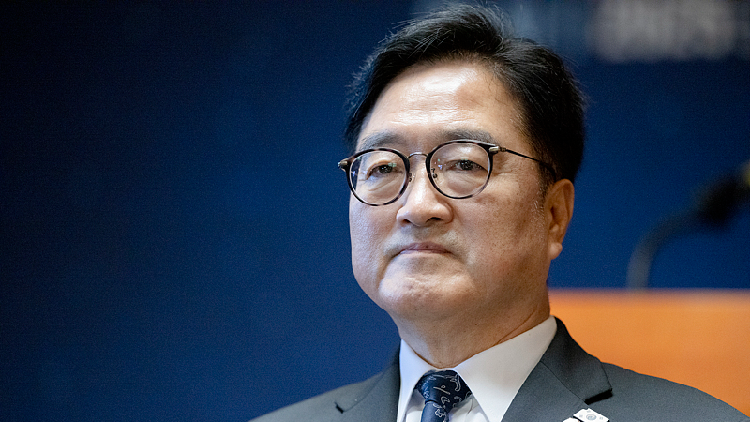
A file photo of South Korea's National Assembly Speaker Woo Won-shik in Seoul, South Korea, October 15, 2025. /VCG


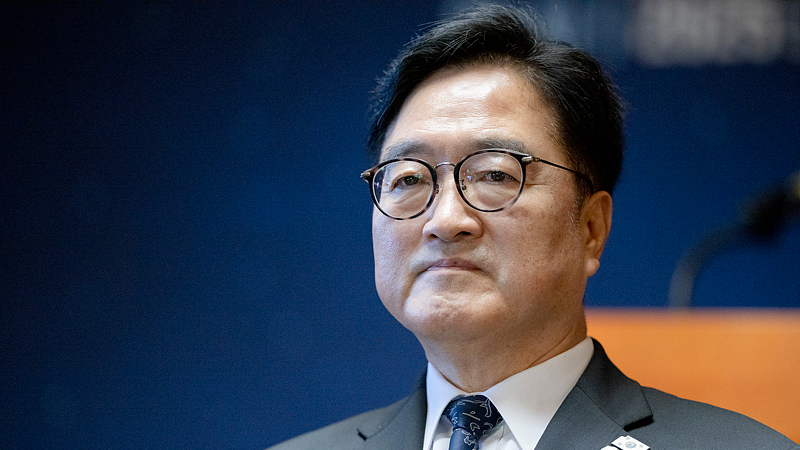
A file photo of South Korea's National Assembly Speaker Woo Won-shik in Seoul, South Korea, October 15, 2025. /VCG

South Korea's National Assembly Speaker Woo Won-shik has raised concerns about Japan's perception of history.

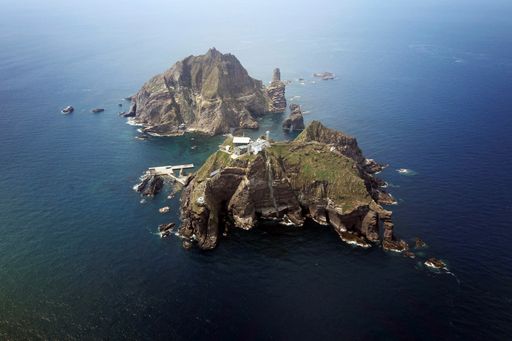
In response to Japanese Prime Minister Sanae Takaichi's recent claim that Dokdo is Japanese territory historically and under international law, Woo said on social media that the Japanese government has expanded the so-called "territorial sovereignty exhibition hall," which asserts sovereignty over the Dokdo islets.

Since the opening of the hall in 2018, South Korea has continued to demand its closure, but Japan added an educational space to the hall recently in an apparent attempt to instill incorrect perceptions in future generations, he said.

"For a future-oriented and stable relationship between (South) Korea and Japan, three pillars must stand firm: facing the painful history squarely, deepening economic cooperation and cooperating as partners for peace on the Korean Peninsula and in Northeast Asia," Woo said.

He said that South Korea would host its own memorial ceremony for Korean victims of forced labor at the Sado Island Gold Mines this year, as Japan made no mention of "forced labor" in its memorial address.

South Korean historians say thousands of Koreans were forced by Imperial Japan into heavy labor at the gold mines, which were repurposed into facilities for manufacturing war-related materials during World War II, when the Korean Peninsula was under Japan's colonization.

Woo also voiced concerns about recent moves by Japan to revise its so-called peace constitution, unacceptable to not only South Korea but also all neighboring countries, as it shakes the foundation of peace order in East Asia by transforming Japan into a war-capable country.

South Korea has long protested against Japan's renewed territorial claims to the disputed islets lying halfway between the two countries, called Dokdo by South Korea and Takeshima by Japan.

South Korea restored its sovereignty over Dokdo after the Korean Peninsula's liberation from the 1910-1945 Japanese colonization. Seoul has since been in effective control of the islets, with a small police detachment deployed.

South Koreans see Japan's territorial claims to the islets as a denial of colonial history as Dokdo was the first territory that was forcibly occupied by Japan.


South Korea indefinitely suspends joint training with Japan over islets dispute
 
Some of them have been caught Sh***** on beaches in Canada, people are outraged. Old habits die hard. And then they protested on the streets telling whites to go back to Europe, saying Canada belong to them.
These disgusting Indians recently were not only caught bathing their dirty bodies in the pristine waterfall lake in one of China's most sacred mountains Lushan eventhough the sign there clearly says such activities are strictly prohibited, some of them adults were also caught shitting publicly in the streets of Chinese cities Guangzhou and Shenzhen. These uncivilized people should be banned from entering China. They thought they were in their filthy Ganges.


To view this content we will need your consent to set third party cookies.
For more detailed information, see our cookies page.


To view this content we will need your consent to set third party cookies.
For more detailed information, see our cookies page.
 
Last edited:

Surface combatants figure highly among Australian naval priorities​

  • Published on 13/11/2025
  • By Gordon Arthur
  • In Interviews
Surface combatants figure highly among Australian naval prioritiesThe Royal Australian Navy will buy the first three Upgraded Mogami frigates from Japan, with eight more to be built in Australia. (Credit: Xavier Vavasseur)
Share

Rear Admiral Stephen Hughes, Head of Navy Capability for the Royal Australian Navy (RAN), spoke to Naval News at the Indo-Pacific 2025 naval exhibition held in Sydney from 4-6 November. He highlighted his four priorities for Australian naval capability.

Not in any particular order, the quartet of priorities is surface combatants; submarines, as nuclear-powered submarines arrive and the incumbent Collins class remains in service; command, control, communications, computing and intelligence; systems and autonomy. At present, the RAN is focusing its attention on three unmanned systems: the Bluebottle unmanned surface vessel, and Speartooth and Ghost Shark unmanned underwater vehicles.


Turning attention to the first priority listed, the RAN’s future surface combatant fleet will comprise six Hunter-class anti-submarine warfare frigates, eleven general-purpose Upgraded Mogami frigates and three Hobart-class destroyers. The main effort at the moment is transitioning from the retiring Anzac-class fleet to the Mogami from Mitsubishi Heavy Industries (MHI), Hughes highlighted.


“We’ve literally got three to four years before we catch the first of those ships, which will be delivered in 2029” no matter what. “So for navy capabilities, how do we transition out of the Anzacs? How do we create the crews we need for the Mogami? What does the support system look like?”


The RAN’s surface combatant fleet is projected to fall to nine hulls, its lowest total since World War II, but Hughes rejected the notion that the navy’s capability is declining. “I think what you’re managing is a transition from a current force which has a certain amount of capability, to a different force with greater capability, different opportunities. And I don’t believe you count the number of ships. It’s about the capability.”


He pointed out that the Upgraded Mogami is larger and more capable than the preceding Anzac class. He predicted each vessel will also offer greater availability than the ageing Anzac, around 300 days per year. “I don’t think we’re declining in size. We’re growing, but you’ve got to have a transition plan,” Hughes argued, “and naturally one will go before the other comes in.”


Hughes also addressed the no-change requirement for the Mogami. “Instead of driving customer-injected requirements into that, which would delay the delivery of the ship, we’ve actually picked the best ship with the most compatible capability for the Australian navy’s use. So in fact, it’s not even a one for one exchange. It’s like a one for 1.5. We’re getting more capability out of the plan in terms of what the next-generation Mogami will bring the RAN.”


He concluded, “I’ll be honest. It’s going to be a game-changer from a capability perspective. The reality is that Mogami is going to allow us to jump a generation in technology in a ship, not just in the combat system, but I mean the ways we operate and crew the ship. There are so many levels of high automation,” with examples being CCTV monitoring, Bluetooth to safely track sailors, and the ability to detect any defects via the integrated platform management system.


Hughes pointed out there will be challenges, of course. For instance, a major task will be translating Japanese language signs and manuals into English.


This is one of the original batch of twelve Mogami-class frigates in the JMSDF. (Gordon Arthur)

However, “What we’re going to do is ingest the Japanese system into the Australian system. We’re not going to fight it. So how they train, how they maintain, how they support it. It’s highly data driven, so they can monitor hours on gas turbines and diesels and usage. MHI then do that analysis, and every quarter, six months, will give us that data back.” Sustainment should therefore benefit from data coming from such a large Japanese and Australian fleet.


“But the other thing is, where the Japanese are, they also want to learn from us,” the Head of Naval Capability shared. For example, the Japanese might pick up new ways of training from the RAN. “Yes, we’re going to adopt a Japanese-style system, but culturally and in our understanding, because we have a close connection with the US in some ways, it’s not going to be difficult.”


Hughes confirmed to Naval News that the Upgraded Mogami class in the RAN will not have Japanese weapons. Instead, they will be armed with the ESSM Block 2 air defence missile in its 32-cell Mk 41 VLS, plus deck-mounted Naval Strike Missiles (NSM). Also present will be MK 54 lightweight torpedoes and a SeaRAM.

Hughes pointed out that these Australian frigates – which will comprise a class of 35 vessels when Australian and Japanese hulls are counted together – could “still be able to fire Japanese missiles and weapons if we want to,” although there is no current desire to do so.


The RAN’s Upgraded Mogami frigates will otherwise boast Japanese systems and sensors, such as the combat management system, sonar and UNICORN mast. A Japanese spokesperson said the Upgraded Mogami features a modernised UNICORN that is 1m shorter at 8m. This is because the identification friend or foe antenna has been moved to the base of the antenna.


Picture of Gordon Arthur

Gordon Arthur​

Scottish-born Gordon Arthur is a freelance defence photojournalist who specialises in coverage of the Asia-Pacific region. After 20 years living in the territory of Hong Kong, he is now based in New Zealand. His work has appeared in more than 60 international defence journals and magazines to dat
 
Japan is set to bring back the Imperial Japanese flag as deranged fanatical right wing mafia takes hold of the country.
 

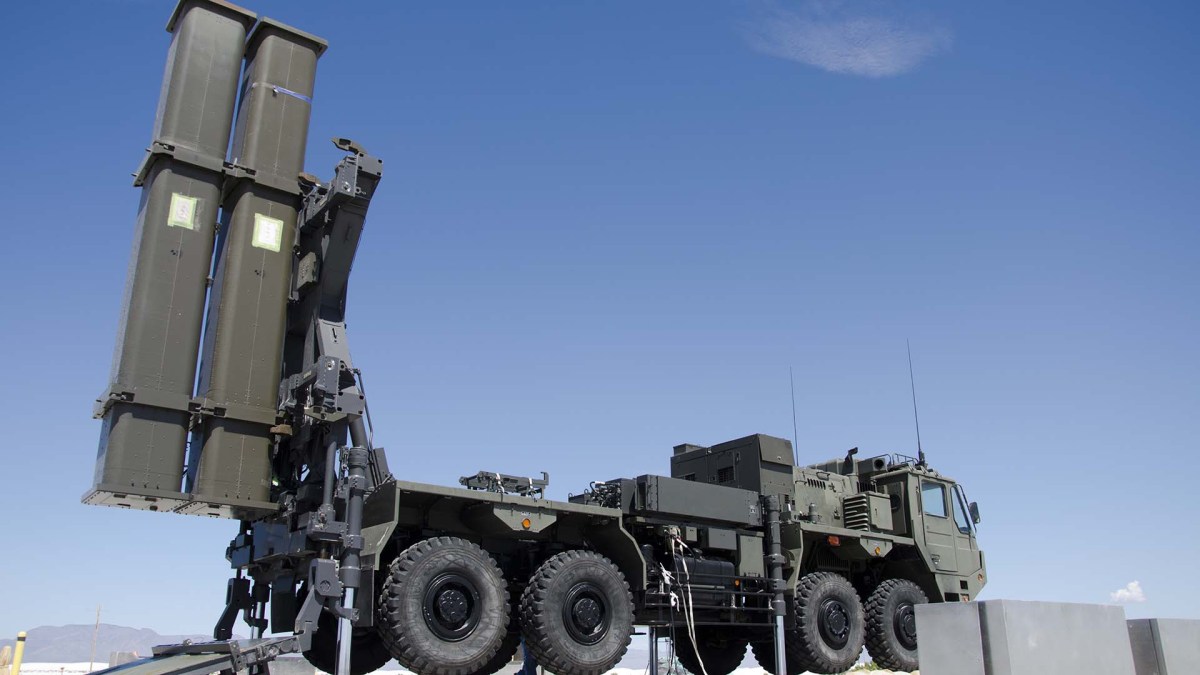
Japan’s Plan To Put SAMs On Strategic Island 70 Miles From Taiwan Could Be Just The Beginning​


>> Looks like the new leadership in Japan is quite hawkish, and the relationship will evolve in a non-positive way from the historical norm we have seen since WWII.
 
Last edited:

Japan’s Plan To Put SAMs On Strategic Island 70 Miles From Taiwan Could Be Just The Beginning​


>> Looks like the new leadership in Japan is quite hawkish, and the relationship will evolve in a non-positive way from the historical norm we have seen since WWII.
It seems it's too late to start this thread now; it's almost over.
 
It seems it's too late to start this thread now; it's almost over.

The event, yes - the trajectory of the relationship, no, that is not over. That is what the thread is for.
 
The event, yes - the trajectory of the relationship, no, that is not over. That is what the thread is for.
If you are referring to the longer-term "Sino-Japanese diplomatic relations," this is clearly not sufficient to warrant a separate thread in this forum.


If you are referring to the diplomatic incident between China and Japan initiated by Sanae Takaichi, then it is indeed almost over.

From the very beginning of the controversy surrounding Sanae Takaichi's remarks, Chinese netizens on the Chinese internet have overwhelmingly "supported" her. We hope she stands firm and doesn't retract her statements; we hope all Japanese people support her and prevent her from being forced out of office.

But, unfortunately, Trump completely withdrew his support for her, and various protests erupted throughout Japan. The latest news is that some Japanese media outlets have reported that Sanae Takaichi is suspected of corruption.
Therefore, we can foresee the outcome of this matter:
1. Sanae Takaichi publicly retracts her previous statements and apologizes.
2. Sanae Takaichi refuses to retract her previous statements, but is forced to resign due to various pressures. A new prime minister takes office in Japan, slowly repairing Sino-Japanese relations.
I guess the second possibility is highly likely.
 
If you are referring to the longer-term "Sino-Japanese diplomatic relations," this is clearly not sufficient to warrant a separate thread in this forum.


If you are referring to the diplomatic incident between China and Japan initiated by Sanae Takaichi, then it is indeed almost over.

From the very beginning of the controversy surrounding Sanae Takaichi's remarks, Chinese netizens on the Chinese internet have overwhelmingly "supported" her. We hope she stands firm and doesn't retract her statements; we hope all Japanese people support her and prevent her from being forced out of office.

But, unfortunately, Trump completely withdrew his support for her, and various protests erupted throughout Japan. The latest news is that some Japanese media outlets have reported that Sanae Takaichi is suspected of corruption.
Therefore, we can foresee the outcome of this matter:
1. Sanae Takaichi publicly retracts her previous statements and apologizes.
2. Sanae Takaichi refuses to retract her previous statements, but is forced to resign due to various pressures. A new prime minister takes office in Japan, slowly repairing Sino-Japanese relations.
I guess the second possibility is highly likely.
Recent developments don't make it out to be that Takaichi is trying warm up to China. In fact she made remarks recently that upset the Chinese foreign office.

Really goes to show these type of leaders don't stand for anything, just there to earn a name and paycheck. Shes gonna be blackmailed or threatened by whoever really controls Japan and the American relationship and the options are: stand your ground, resign, or work for the agenda. The ones with some self respect will resign, the others will continue to work for the agenda. She seems to have chosen the latter.

Edit: I believe we are talking about the same development but from different angles, my apologies. Is it true that Chinese social media is supporting her stance? Why is that?
 
The event, yes - the trajectory of the relationship, no, that is not over. That is what the thread is for.
What trajectory? Their relationship is bad, now damaged beyond repair.
But Ccp should keep the nerve, the Chinese should keep their hands. Militarywise Japan is no match for the PLA. The black card is how the US will respond if it comes to a blow. Sanae Takaichi just said what she said in the past, the difference is now as gov chief. As she said, nothing has changed.
There are enough wars. We don’t need more wars.
 

Users who are viewing this thread

Back
Top