Japan Defence and General News Discussions

What's wrong with my thread, lol, they should take up what they did. Really hurt the butt of Japan licker eh.
The thread is about defence news,not YOUR "hurt butt" about WWII. You've been derailing it for pages I see.And it's not your thread,unless you have an alt account here and you're the OP.
 
The thread is about defence news,not YOUR "hurt butt" about WWII. You've been derailing it for pages I see.And it's not your thread,unless you have an alt account here and you're the OP.
That's related to defence. Now mind your own business and stop always complain about others postings.
 
That's related to defence. Now mind your own business and stop always complain about others postings.
What do you mean "mind your own buiseness",it's a forum. You posted it for discussion.
 
Japan does have the capability to develop nukes, but it's deeply unpopular and there's no hurry to do so because of the US nuclear umbrella.

However, with the Ukraine war, with the US's credibility waning, I believe the trajectory is set for Japan and South Korea to eventually develop nuclear weapons.

Article from 2022:


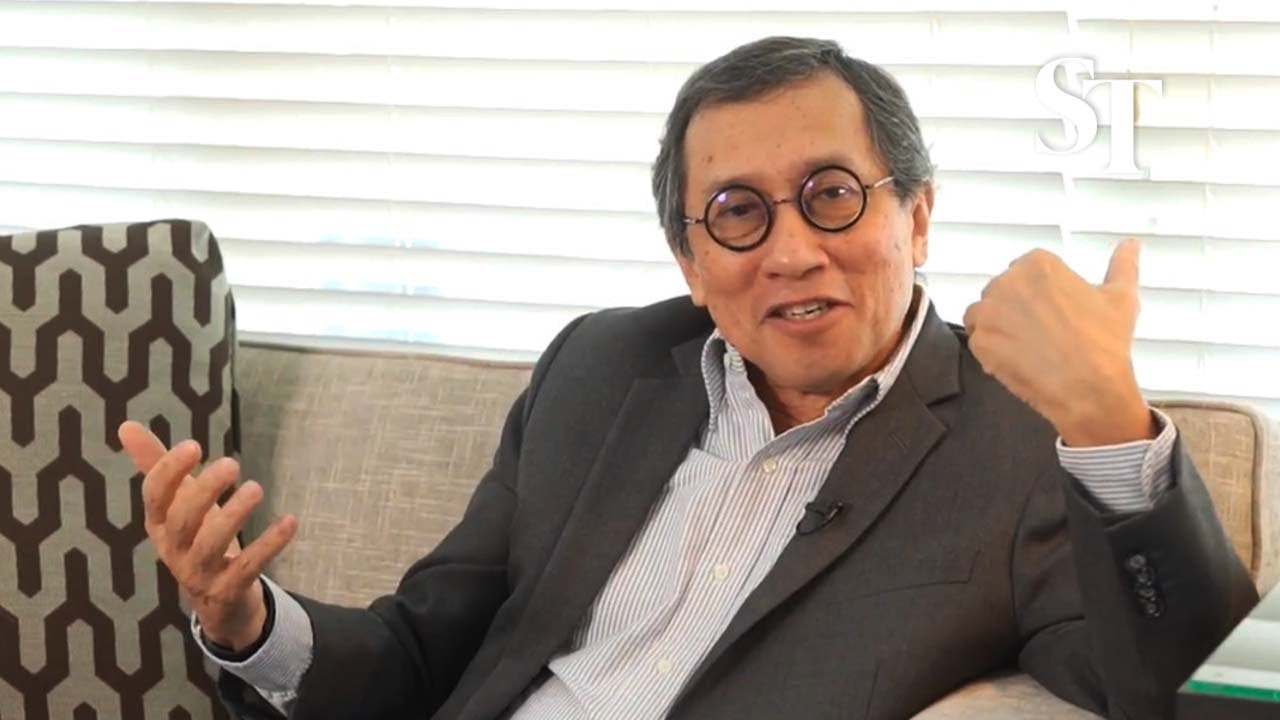
SINGAPORE - Russia's invasion of Ukraine is "sadly… perhaps the final nail in the coffin" for the nuclear non-proliferation regime, former top diplomat Bilahari Kausikan says in The Straits Times' latest Conversations on the Future.

"The lesson… many countries have taken away from the Ukraine crisis is that you have to be able to defend yourself.

"And if your likely threat is a nuclear power… I don't think you can deter nuclear power by conventional means; that's a stark fact," said the former permanent secretary of the Ministry of Foreign Affairs - currently chairman of the Middle East Institute at the National University of Singapore.

In North-east Asia, China is modernising its nuclear forces, and North Korea is developing ICBM (intercontinental ballistic missile) capability, he noted.

It is a matter of time before questions will be asked regarding the efficacy of the United States' extended deterrence - the so-called nuclear umbrella, he said.

French statesman Charles de Gaulle was famously posed the rhetorical question whether, in the event of a nuclear war, New York or London would risk being destroyed to protect Paris, he recalled.

"The answer is obviously, no," said Mr Kausikan. "Similarly, I think quietly, much more quietly, people in Tokyo and so on will be asking similar questions. And I think the answers will be similar, and their actions will be eventually similar to what London and Paris did - acquire nuclear deterrents."

This does not mean Japan and South Korea are eager to become nuclear weapon states, he emphasised.

"I think they know it'll be very politically difficult, politically divisive," he said. "But (the threat from nuclear armed states) is not something that they can avert their eyes from, and hope it will go away. Because China is there. North Korea is there."

He added: "And while they will do everything they can to preserve (the US) nuclear umbrella, they know this is a delaying battle rather than something that can be decisively fixed. I don't know when, but I think the trajectory is set."

Nuclear weapons do not prevent conventional clashes or wars, but keep a lid on them, he noted.

In this respect, while the world will always be a dangerous place, a multipolar nuclear balance in the Indo-Pacific is "in a way a more stable world, because it will put an end, once and for all, once the weapons are developed and deployed, to any dream of hierarchy, whether by China or anybody else", Mr Kausikan said.

"It freezes the existing configurations," he said. "If I look at the countries involved, once you have this kind of complex nuclear balance, I think the tendency will be to reduce the temptation to adventurism."

And small countries would find that kind of multi polarity provides manoeuvring space, he added.

"In principle, this is a better world for small countries, provided… the process of getting from where we are now to where I think we will land can be managed."
 
Can you two NOT ruin this thread?
Commemorating the anniversary of the Massacre that was consequential to Japanese military history and Chinese political history; weakening of the nationalist forces making way for the rise of the communist forces. It was the culmination of an attitude by the imperial Japanese forces that still resonates today in how China relates to Japan. In my judgement, I felt it gave a real and documented (by an outside observer) visualization to the stance China takes today.

Japan for its part has not atoned for what it has done, only at best expressed sorrow but not remorse, to the best of my knowledge.

The motivation for China to build up to deal with Japan comes from the Nanjing massacre and other events in the century of humiliation as they feel it.

Nations do things not for purely logical reasons but also emotional reasons and matters of pride and honor. Nation’s fear being in such a weakened state to be at such a risk again, perceived or real.

The Nanjing massacre is part of a founding story of the PRC, and especially the PLA.

As it relates to Japan, confronting China will be a matter of diplomatic moves as much as military moves.
 
The motivation for China to build up to deal with Japan comes from the Nanjing massacre and other events in the century of humiliation as they feel it.
It's not about Nanjing. China treats most other neighbors with contempt just like that. South Korea,Taiwan,Philippines,Australia,Vietnam.
 
It's not about Nanjing. China treats most other neighbors with contempt just like that. South Korea,Taiwan,Philippines,Australia,Vietnam.
Those are a different case, and I agree Chinese motivation in with regards for those nations are probably unjustified, if they are the same as with Japan.

That probably has to do with the sense of encirclement, which China seems to be confronting through mostly but not wholly economic means.

Japan has a heinous history in China.

These smaller nations, especially Vietnam and South Korea has justifiable historical reasons to build up to defend themselves against the possible threat of a rising China.

Taiwan is the continuation of a civil war. With neither side recognizing the other. Both sides have been waiting for the other to weaken, so they can make a move.
 
the Japanese pumps more money into the military buildup.
49 billion euros into the army for 2026 budget
financed by new gov debts of 148 billion euros
much a ponzi scheme

 
Japan needs additional 1.23 million immigrant workers by 2028. Or 410,000 a year. Who wants to come to Japan?

Only if they had the money...

Japan's nominal GDP in recent years (around $4.3-$4.4 trillion in the mid-2020s) has been significantly lower than its peak in 1995 (around $5.5 trillion). This decline reflects Japan's "Lost Decades" of stagnation.

In 1995, Japan’s economy was much larger than all of the Asian continent combined. Fast forward to today, and its GDP is now smaller than just four Chinese provinces.
069a8293744d41adad80e71e63348727-webp.167869

china-v-japan-1990-2025-768x366-webp.167877
 

Japan’s Takaichi resurrects frozen dispute over Russia-held islands

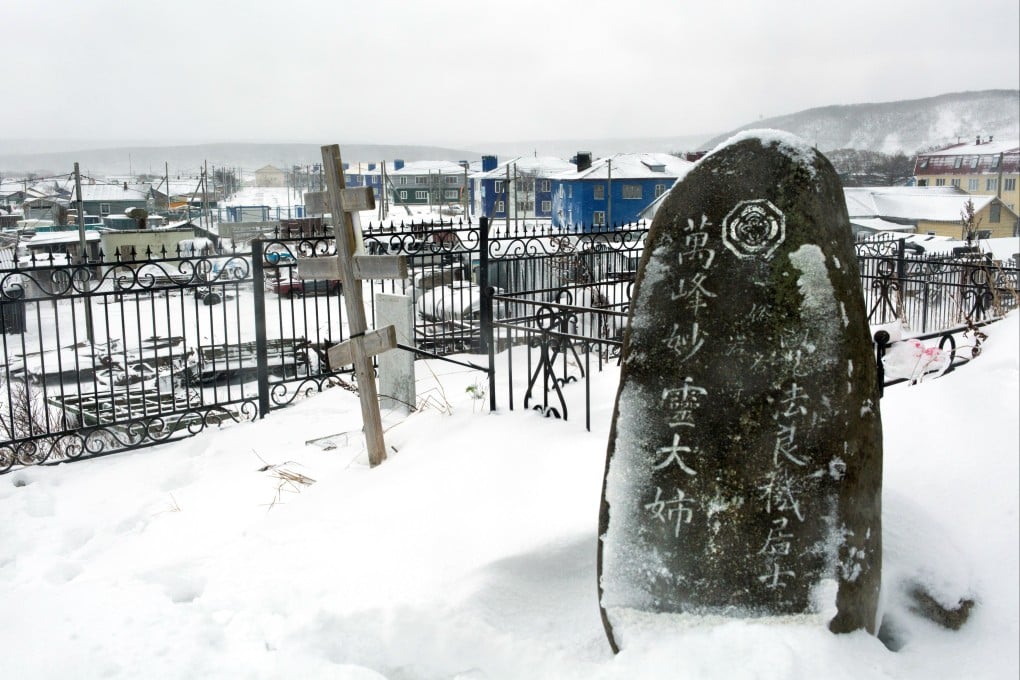
A Russian Orthodox cross next to a Japanese gravestone at a cemetery outside Kurilsk town on the island of Iturup, or Etorofu, one of four islands Japan calls the Northern Territories. Photo: AFP

Julian Ryall
Published: 9:00am, 7 Dec 2025Updated: 12:13pm, 7 Dec 2025

Japanese Prime Minister Sanae Takaichi’s pledge to revive visits by former residents to the Russia-controlled islands off Japan’s far north has reignited debate over whether humanitarian exchanges can survive the deep freeze in Tokyo–Moscow relations.

Analysts say the political climate has turned far more hostile since Russia’s invasion of Ukraine, leaving “no chance” of such visits resuming while Japan supports Kyiv and Moscow deepens its strategic alignment with Beijing.

Takaichi made the pledge during a recent meeting with Hokkaido Governor Naomichi Suzuki and representatives of displaced islander families – a reminder of how every new Japanese leader must confront the unresolved Northern Territories issue even as the geopolitical environment becomes increasingly unforgiving.

Suzuki, a long-time advocate for renewing access to the islands, has lobbied successive prime ministers to negotiate with Moscow on reopening the sea route linking Hokkaido to the islands during the summer months.

“We hope that concrete progress will be made in the effort to resolve the territorial issue,” he told reporters on Monday.

Takaichi agreed, describing the matter as a pressing humanitarian concern. “This is a humanitarian issue for which we cannot waste any more time as the former residents of the islands are very old,” she said following the meeting in Tokyo.
 
This is going to be very interesting.
 

Kuril Islands become a Sino-Russian fortress against Japan

Stefan Hedlund
December 4, 2025
gettyimages-1077357330-1536x1038.jpg
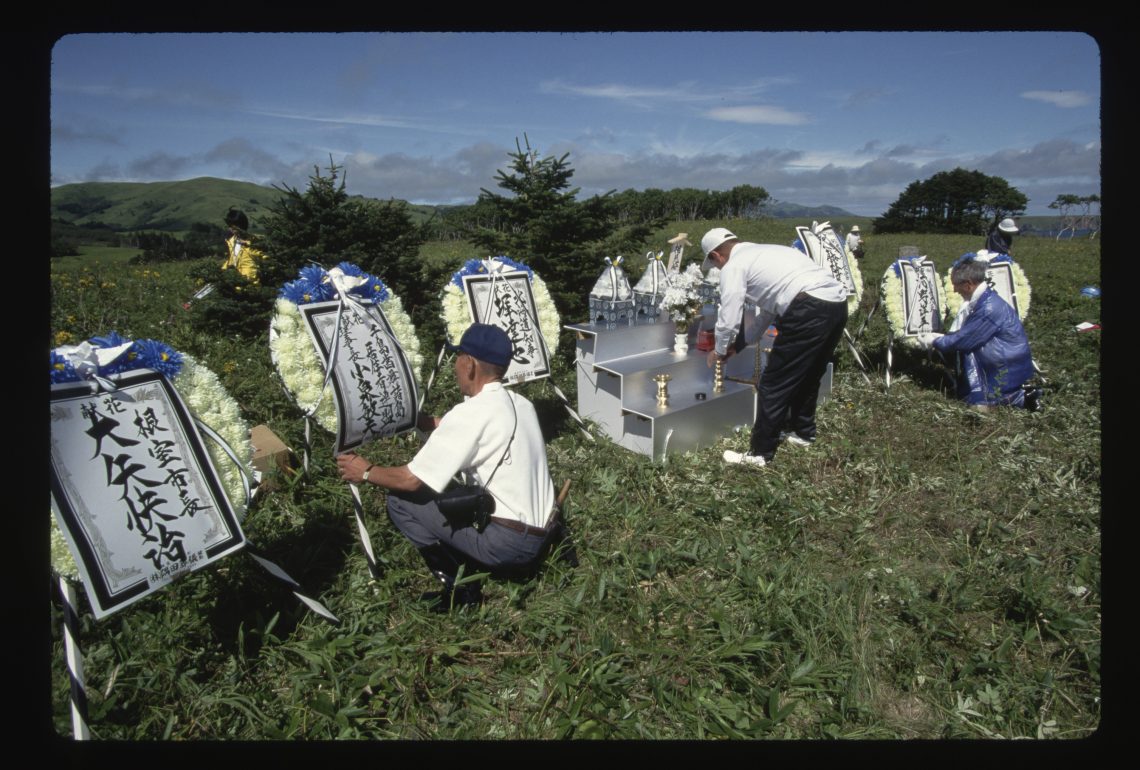
Jan. 1, 1997: Former Japanese residents of Shikotan Island prepare altars and wreaths at their ancestors’ gravesites in the Kuril Islands. Expelled in the late 1940s after Soviet occupation, they were permitted a brief return visit in 1997 under a visa-free exchange program. © Getty Images

The Kuril Islands dispute, long a bilateral issue between Russia and Japan, is increasingly shaped by Moscow’s dependence on Beijing.

In a nutshell​

  • The Kurils secure Russia’s Pacific Fleet and Sea of Okhotsk nuclear bastion
  • Dispute heightens Japan’s vulnerability in the event of a Taiwan contingency
  • China drops support for Japan’s claim, aligning firmly with Moscow
At the far eastern edge of the Russian Federation lie the Kuril Islands, a sparsely populated chain of islands that separates the Sea of Okhotsk from the Pacific Ocean. Spanning approximately 1,300 kilometers, from Japan’s northernmost island of Hokkaido to the southern tip of Russia’s Kamchatka Peninsula, these islands have long been a focal point of territorial dispute between Moscow and Tokyo. Recently, this conflict has gained prominence in the arena of great-power politics.

Strategic flashpoint: Kurils in great power rivalry​

The Kuril Islands are strategically positioned at the gateway to Russia’s Pacific Fleet basing areas. This is particularly true for the Kamchatka Peninsula, where the Russian Empire first established its naval presence in the Pacific. Even more crucial is the access to the fleet headquarters in Vladivostok, located on the western shore of the Sea of Japan. Ships that set out for patrols in the Pacific Ocean must navigate through the narrow La Perouse Strait, which lies between Hokkaido and the Russian Sakhalin Island, before passing through the Kuril Islands. Given the recent deterioration in relations between the Kremlin and Western nations, Hokkaido’s military vulnerability has become more apparent.

搜狗截图20251229161002.jpg
The Kuril Islands, which stretch from Japan’s Hokkaido to Russia’s Kamchatka Peninsula, have been under Russian control since 1945. However, Japan lays claim to the four southernmost islands – Iturup (Etorofu), Kunashir (Kunashiri), Shikotan and the Habomai group – referring to them as its “Northern Territories.” © GIS

The Kuril Islands have gained attention since Russia’s full-scale invasion of Ukraine in 2022. China is now backing Russia in its confrontation with Japan over the islands. This support from Beijing is tied to Moscow’s endorsement of China’s ambitions in Taiwan. As joint Sino-Russian naval operations become a key strategy for deterring Japan and South Korea from stepping up their support for Taiwan, Russia, with a vantage point near the northern shores of Hokkaido, gains a significant advantage. Control over the island chain not only offers Russia critical forward listening posts but also ensures safer routes for its aircraft.

Consequently, the issue of who holds legal rights to the islands has become increasingly crucial.

Historical roots of the dispute​

The foundation was laid in the 1855 Treaty of Shimoda, which granted Japan sovereignty over the four southernmost islands: Kunashir, Iturup, Shikotan and the Habomai group (known in Japanese as Kunashiri, Etorofu, Shikotan and Habomai, respectively, and collectively called the Northern Territories). In the decades that followed, fluctuations occurred regarding the tradeoff rights to Sakhalin, a large Russian island north of Japan.

Their current status was determined by a decision Joseph Stalin made at the end of World War II. Taking advantage of Japan’s defeat, he ordered the seizure of the four islands by force. Japanese locals were expelled, and Russian settlers moved in. The Kuril Islands have been under continuous Russian administration since 1945. As this occurred after Japan had already surrendered to the United States, Tokyo has never recognized the annexation as legitimate.

Due to domestic sensitivities, no Japanese government has been able to make any concessions. As a result, Japan and the Soviet Union have never concluded a formal peace treaty to end World War II. The 1956 Joint Declaration normalized diplomatic relations but left the territorial dispute unresolved.

The issue has been complicated by the ambiguity of international law regarding territorial claims to the islands. The San Francisco Peace Treaty, signed in 1951, stated only that Japan had relinquished the “Chishima Islands,” without explicitly mentioning the four disputed islands. Japan continues to claim that the four southernmost islands are not part of the Kurils but rather constitute the Northern Territories. It further maintains that because the Soviet Union was not a signatory to the San Francisco Treaty, the treaty cannot be used to justify Russian claims to the islands.

At a meeting in Moscow in November 1998, Russian President Boris Yeltsin and Japanese Prime Minister Keizo Obuchi committed to resolving the dispute over the islands within 14 months. In a joint Moscow Declaration, they aimed to finalize a peace treaty by the end of 2000. Yeltsin was forced to resign in 1999, and the effort was abandoned.

Under President Vladimir Putin, there was speculation of various deals, ranging from the return of the two southernmost islands to a compromise that would grant Japan sovereignty while allowing Russia to remain responsible for administration. Beyond the fundamental issue of national sovereignty, the Kurils are also crucial for accessing valuable fishing grounds and rare-earth mineral deposits. However, the question of sovereignty has consistently taken precedence over any potential economic deal.

The last time a compromise seemed possible was in 2018, when President Putin met with then Prime Minister of Japan Shinzo Abe. After returning to office in 2012, Abe sought to improve relations with Moscow by building a personal relationship with Mr. Putin. By 2017, they had met 20 times. Their bargaining positions had softened, with Japan indicating that it was willing to accept a step-by-step deal in which Shikotan and the Habomai group would be returned first, followed by the larger islands of Iturup and Kunashir, provided Russia recognized Japanese sovereignty over all four. Ultimately, negotiations collapsed.

The Kremlin’s militarization of the Kuril Islands​

Russia’s staunch opposition to any territorial concessions was increasingly tied to its ambition to regain its status as a great power by revitalizing its weakened military. After launching a heavily funded rearmament program in 2009, the Kremlin began militarizing the disputed islands. Although this occurred after Russia’s invasion and annexation of Crimea – and drew little international attention – the strategic consequences were profound.

The first steps were taken in late 2015, when Russian forces stationed on the islands were provided with a Soviet-era Tor-M2U surface-to-air missile system. In 2017, a Bastion anti-ship missile battalion was deployed to Iturup, and a Bal anti-ship missile battalion to Kunashir. These deployments were followed by significant construction activity on both islands, including the erection of barracks to house an estimated 3,500 troops of the 18th Machine-Gun Artillery Division. In December 2020, air defense capabilities were enhanced with the deployment of an S-300 missile battery to Iturup.

The Putin regime is determined to transform the islands into a barrier that can both threaten Hokkaido and defend approaches to the Sea of Okhotsk.
While Moscow claimed these actions were purely defensive efforts to protect Russian territory, Tokyo expressed concern that the P-800 Oniks supersonic missile fired by the Bastion system could threaten much of Hokkaido, enabling the interception of ships in large parts of its coastal waters.

Russia has also increased military activity on islands further north in the Kuril chain. In December 2021, additional Bastion launchers were set up on Matua, situated in the middle of the Kuril Islands. Furthermore, on Paramushir, which lies even further north, a new airstrip was constructed alongside extensive barracks complexes.

The Putin regime is determined to transform the islands into a barrier that can both threaten Hokkaido and defend approaches to the Sea of Okhotsk. The updated Russian maritime doctrine, presented during Navy Day celebrations in St. Petersburg on July 31, 2022, specifically mentioned that both the Sea of Okhotsk and the Kuril Islands would be protected “by all means.”

Moscow’s full-scale invasion of Ukraine has elevated the islands’ geopolitical importance. The war has produced three major ripple effects for the Kuril Islands dispute.

First, Ukraine has officially recognized Japan’s claim to the Northern Territories as legitimate. This was done in October 2022 through a decree that officially acknowledged the Kuril Islands as Japanese territory temporarily occupied by Russia. Considering that Ukraine has already carried out strikes on various targets in the Russian Far East, particularly against military bases linked to serious war crimes in Ukraine, it is quite plausible that Russian military installations on the Kuril Islands could also come under attack.

Many of the “Russians” who settled on these islands following Stalin’s land grab were Ukrainians. Some observers in Japan have suggested that a considerable number of current residents on the southern islands are descendants of Ukrainians who were forcibly relocated there by the Soviets after 1945. Estimates from pro-Ukrainian and Japanese sources even claim this figure could be as high as 60 percent. This connection could motivate some of them to support Ukrainian covert operations against Russian military sites.

The second point is that Japan was compelled to follow the lead of the major Western countries in condemning Russian aggression and enacting tough sanctions. This effectively ended Abe’s olive branch diplomacy, which had involved responding to the annexation of Crimea with only mild sanctions. Moscow’s response to the escalation was harsh, indicating that all discussions on economic cooperation and a potential peace treaty were suspended indefinitely. Moreover, President Putin chose not to attend Abe’s state funeral.

The deterioration of relations cast a shadow over the Russian Vostok-22 war games held in September. Staged every four years under the supervision of Russia’s Eastern Military District, these exercises took place in the waters and coastal areas around the Sea of Okhotsk and the Sea of Japan. With Russian military units, including Pacific Fleet marine infantry, heavily involved in the war in Ukraine, China’s participation held political significance.

Finally, and most critically, China’s stance regarding the rights to the islands has shifted. Historically, the official endorsement of Japanese sovereignty was established by Chairman Mao Zedong in 1964 and maintained by all Chinese leaders since then.

This change was notably highlighted during the February 2022 meeting, where President Putin and Chinese President Xi Jinping solidified their relationship under a “no limits” friendship agreement. After that meeting, President Xi stated that the two sides would support each other on issues of sovereignty and territorial integrity. At a press conference in January 2024, Russian Foreign Ministry spokesperson Maria Zakharova responded by emphasizing that, “The Russian side acknowledges that there is only one China, that the People’s Republic of China is the only legal government representing the entire country and that Taiwan is an inalienable part of China. The Russian side opposes any form of Taiwan’s independence.”

Scenarios​

Least likely: Japan secures legal sovereignty over the Kuril Islands​

The least likely scenario is that Japan finally gains legal recognition for its claim to sovereignty over the contested islands. The only way this might happen is if the Russian Federation splits, leaving its Far East isolated. Japan could then step in as a protector of the Northern Territories that would otherwise be in serious trouble. However, achieving international recognition of sovereignty would still be a long shot, given expected objections from other regional powers.

Somewhat likely: Russia collapses, China steps in as protector of its assets​

A somewhat more probable scenario is that a collapse of the Russian Federation presents China with a difficult choice about how best to protect its own interests. Beyond securing continued access to energy and other raw materials, China might choose to strengthen its military stance against Japan by acting as a protector for Russian military installations on the Kuril Islands, including but not limited to the Northern Territories.

Most likely: Russia declines economically and becomes China’s vassal​

The most probable scenario is that, as Russia faces increasing economic decline due to its war in Ukraine, it gradually becomes a vassal state under China’s control. Beijing may then adopt a firmer stance on Taiwan while tacitly encouraging more assertive Russian actions on the Kuril Islands and near Hokkaido. As a result, Japan will need to reassess the robustness of its security guarantees with the U.S.


Kuril Islands become a Sino-Russian fortress against Japan

Stefan Hedlund
December 4, 2025
View attachment 168177
Jan. 1, 1997: Former Japanese residents of Shikotan Island prepare altars and wreaths at their ancestors’ gravesites in the Kuril Islands. Expelled in the late 1940s after Soviet occupation, they were permitted a brief return visit in 1997 under a visa-free exchange program. © Getty Images

The Kuril Islands dispute, long a bilateral issue between Russia and Japan, is increasingly shaped by Moscow’s dependence on Beijing.

In a nutshell​

  • The Kurils secure Russia’s Pacific Fleet and Sea of Okhotsk nuclear bastion
  • Dispute heightens Japan’s vulnerability in the event of a Taiwan contingency
  • China drops support for Japan’s claim, aligning firmly with Moscow
At the far eastern edge of the Russian Federation lie the Kuril Islands, a sparsely populated chain of islands that separates the Sea of Okhotsk from the Pacific Ocean. Spanning approximately 1,300 kilometers, from Japan’s northernmost island of Hokkaido to the southern tip of Russia’s Kamchatka Peninsula, these islands have long been a focal point of territorial dispute between Moscow and Tokyo. Recently, this conflict has gained prominence in the arena of great-power politics.

Strategic flashpoint: Kurils in great power rivalry​

The Kuril Islands are strategically positioned at the gateway to Russia’s Pacific Fleet basing areas. This is particularly true for the Kamchatka Peninsula, where the Russian Empire first established its naval presence in the Pacific. Even more crucial is the access to the fleet headquarters in Vladivostok, located on the western shore of the Sea of Japan. Ships that set out for patrols in the Pacific Ocean must navigate through the narrow La Perouse Strait, which lies between Hokkaido and the Russian Sakhalin Island, before passing through the Kuril Islands. Given the recent deterioration in relations between the Kremlin and Western nations, Hokkaido’s military vulnerability has become more apparent.

View attachment 168178
The Kuril Islands, which stretch from Japan’s Hokkaido to Russia’s Kamchatka Peninsula, have been under Russian control since 1945. However, Japan lays claim to the four southernmost islands – Iturup (Etorofu), Kunashir (Kunashiri), Shikotan and the Habomai group – referring to them as its “Northern Territories.” © GIS

The Kuril Islands have gained attention since Russia’s full-scale invasion of Ukraine in 2022. China is now backing Russia in its confrontation with Japan over the islands. This support from Beijing is tied to Moscow’s endorsement of China’s ambitions in Taiwan. As joint Sino-Russian naval operations become a key strategy for deterring Japan and South Korea from stepping up their support for Taiwan, Russia, with a vantage point near the northern shores of Hokkaido, gains a significant advantage. Control over the island chain not only offers Russia critical forward listening posts but also ensures safer routes for its aircraft.

Consequently, the issue of who holds legal rights to the islands has become increasingly crucial.

Historical roots of the dispute​

The foundation was laid in the 1855 Treaty of Shimoda, which granted Japan sovereignty over the four southernmost islands: Kunashir, Iturup, Shikotan and the Habomai group (known in Japanese as Kunashiri, Etorofu, Shikotan and Habomai, respectively, and collectively called the Northern Territories). In the decades that followed, fluctuations occurred regarding the tradeoff rights to Sakhalin, a large Russian island north of Japan.

Their current status was determined by a decision Joseph Stalin made at the end of World War II. Taking advantage of Japan’s defeat, he ordered the seizure of the four islands by force. Japanese locals were expelled, and Russian settlers moved in. The Kuril Islands have been under continuous Russian administration since 1945. As this occurred after Japan had already surrendered to the United States, Tokyo has never recognized the annexation as legitimate.

Due to domestic sensitivities, no Japanese government has been able to make any concessions. As a result, Japan and the Soviet Union have never concluded a formal peace treaty to end World War II. The 1956 Joint Declaration normalized diplomatic relations but left the territorial dispute unresolved.

The issue has been complicated by the ambiguity of international law regarding territorial claims to the islands. The San Francisco Peace Treaty, signed in 1951, stated only that Japan had relinquished the “Chishima Islands,” without explicitly mentioning the four disputed islands. Japan continues to claim that the four southernmost islands are not part of the Kurils but rather constitute the Northern Territories. It further maintains that because the Soviet Union was not a signatory to the San Francisco Treaty, the treaty cannot be used to justify Russian claims to the islands.

At a meeting in Moscow in November 1998, Russian President Boris Yeltsin and Japanese Prime Minister Keizo Obuchi committed to resolving the dispute over the islands within 14 months. In a joint Moscow Declaration, they aimed to finalize a peace treaty by the end of 2000. Yeltsin was forced to resign in 1999, and the effort was abandoned.

Under President Vladimir Putin, there was speculation of various deals, ranging from the return of the two southernmost islands to a compromise that would grant Japan sovereignty while allowing Russia to remain responsible for administration. Beyond the fundamental issue of national sovereignty, the Kurils are also crucial for accessing valuable fishing grounds and rare-earth mineral deposits. However, the question of sovereignty has consistently taken precedence over any potential economic deal.

The last time a compromise seemed possible was in 2018, when President Putin met with then Prime Minister of Japan Shinzo Abe. After returning to office in 2012, Abe sought to improve relations with Moscow by building a personal relationship with Mr. Putin. By 2017, they had met 20 times. Their bargaining positions had softened, with Japan indicating that it was willing to accept a step-by-step deal in which Shikotan and the Habomai group would be returned first, followed by the larger islands of Iturup and Kunashir, provided Russia recognized Japanese sovereignty over all four. Ultimately, negotiations collapsed.

The Kremlin’s militarization of the Kuril Islands​

Russia’s staunch opposition to any territorial concessions was increasingly tied to its ambition to regain its status as a great power by revitalizing its weakened military. After launching a heavily funded rearmament program in 2009, the Kremlin began militarizing the disputed islands. Although this occurred after Russia’s invasion and annexation of Crimea – and drew little international attention – the strategic consequences were profound.

The first steps were taken in late 2015, when Russian forces stationed on the islands were provided with a Soviet-era Tor-M2U surface-to-air missile system. In 2017, a Bastion anti-ship missile battalion was deployed to Iturup, and a Bal anti-ship missile battalion to Kunashir. These deployments were followed by significant construction activity on both islands, including the erection of barracks to house an estimated 3,500 troops of the 18th Machine-Gun Artillery Division. In December 2020, air defense capabilities were enhanced with the deployment of an S-300 missile battery to Iturup.


While Moscow claimed these actions were purely defensive efforts to protect Russian territory, Tokyo expressed concern that the P-800 Oniks supersonic missile fired by the Bastion system could threaten much of Hokkaido, enabling the interception of ships in large parts of its coastal waters.

Russia has also increased military activity on islands further north in the Kuril chain. In December 2021, additional Bastion launchers were set up on Matua, situated in the middle of the Kuril Islands. Furthermore, on Paramushir, which lies even further north, a new airstrip was constructed alongside extensive barracks complexes.

The Putin regime is determined to transform the islands into a barrier that can both threaten Hokkaido and defend approaches to the Sea of Okhotsk. The updated Russian maritime doctrine, presented during Navy Day celebrations in St. Petersburg on July 31, 2022, specifically mentioned that both the Sea of Okhotsk and the Kuril Islands would be protected “by all means.”

Moscow’s full-scale invasion of Ukraine has elevated the islands’ geopolitical importance. The war has produced three major ripple effects for the Kuril Islands dispute.

First, Ukraine has officially recognized Japan’s claim to the Northern Territories as legitimate. This was done in October 2022 through a decree that officially acknowledged the Kuril Islands as Japanese territory temporarily occupied by Russia. Considering that Ukraine has already carried out strikes on various targets in the Russian Far East, particularly against military bases linked to serious war crimes in Ukraine, it is quite plausible that Russian military installations on the Kuril Islands could also come under attack.

Many of the “Russians” who settled on these islands following Stalin’s land grab were Ukrainians. Some observers in Japan have suggested that a considerable number of current residents on the southern islands are descendants of Ukrainians who were forcibly relocated there by the Soviets after 1945. Estimates from pro-Ukrainian and Japanese sources even claim this figure could be as high as 60 percent. This connection could motivate some of them to support Ukrainian covert operations against Russian military sites.

The second point is that Japan was compelled to follow the lead of the major Western countries in condemning Russian aggression and enacting tough sanctions. This effectively ended Abe’s olive branch diplomacy, which had involved responding to the annexation of Crimea with only mild sanctions. Moscow’s response to the escalation was harsh, indicating that all discussions on economic cooperation and a potential peace treaty were suspended indefinitely. Moreover, President Putin chose not to attend Abe’s state funeral.

The deterioration of relations cast a shadow over the Russian Vostok-22 war games held in September. Staged every four years under the supervision of Russia’s Eastern Military District, these exercises took place in the waters and coastal areas around the Sea of Okhotsk and the Sea of Japan. With Russian military units, including Pacific Fleet marine infantry, heavily involved in the war in Ukraine, China’s participation held political significance.

Finally, and most critically, China’s stance regarding the rights to the islands has shifted. Historically, the official endorsement of Japanese sovereignty was established by Chairman Mao Zedong in 1964 and maintained by all Chinese leaders since then.

This change was notably highlighted during the February 2022 meeting, where President Putin and Chinese President Xi Jinping solidified their relationship under a “no limits” friendship agreement. After that meeting, President Xi stated that the two sides would support each other on issues of sovereignty and territorial integrity. At a press conference in January 2024, Russian Foreign Ministry spokesperson Maria Zakharova responded by emphasizing that, “The Russian side acknowledges that there is only one China, that the People’s Republic of China is the only legal government representing the entire country and that Taiwan is an inalienable part of China. The Russian side opposes any form of Taiwan’s independence.”

Scenarios​

Least likely: Japan secures legal sovereignty over the Kuril Islands​

The least likely scenario is that Japan finally gains legal recognition for its claim to sovereignty over the contested islands. The only way this might happen is if the Russian Federation splits, leaving its Far East isolated. Japan could then step in as a protector of the Northern Territories that would otherwise be in serious trouble. However, achieving international recognition of sovereignty would still be a long shot, given expected objections from other regional powers.

Somewhat likely: Russia collapses, China steps in as protector of its assets​

A somewhat more probable scenario is that a collapse of the Russian Federation presents China with a difficult choice about how best to protect its own interests. Beyond securing continued access to energy and other raw materials, China might choose to strengthen its military stance against Japan by acting as a protector for Russian military installations on the Kuril Islands, including but not limited to the Northern Territories.

Most likely: Russia declines economically and becomes China’s vassal​

The most probable scenario is that, as Russia faces increasing economic decline due to its war in Ukraine, it gradually becomes a vassal state under China’s control. Beijing may then adopt a firmer stance on Taiwan while tacitly encouraging more assertive Russian actions on the Kuril Islands and near Hokkaido. As a result, Japan will need to reassess the robustness of its security guarantees with the U.S.


Tough times ahead for Japan.
 
Tough times ahead for Japan.
Japan is just an US vassal, it can't buy cheap and available oil and other cheap resources from nearby Russia to fuel its fast declining industries and its economy as a whole, it can't sell to neighoring huge market Russia and China, at least many of its key products in China's case. Being a vassal state of US is strangling Japan on all fronts.
 

Users who are viewing this thread

Country Watch Latest

Latest Posts

Back
Top