Japan PM Takaichi sends offering to war-linked Yasukuni shrine on World War II anniversary

Beijingwalker

VIP Member
Joined
Nov 4, 2011
Messages
92,940
Reaction score
113,453
Reputation
2,118.9
Country of Origin
Country of Residence

Japan PM Takaichi sends offering to war-linked Yasukuni shrine on World War II anniversary​


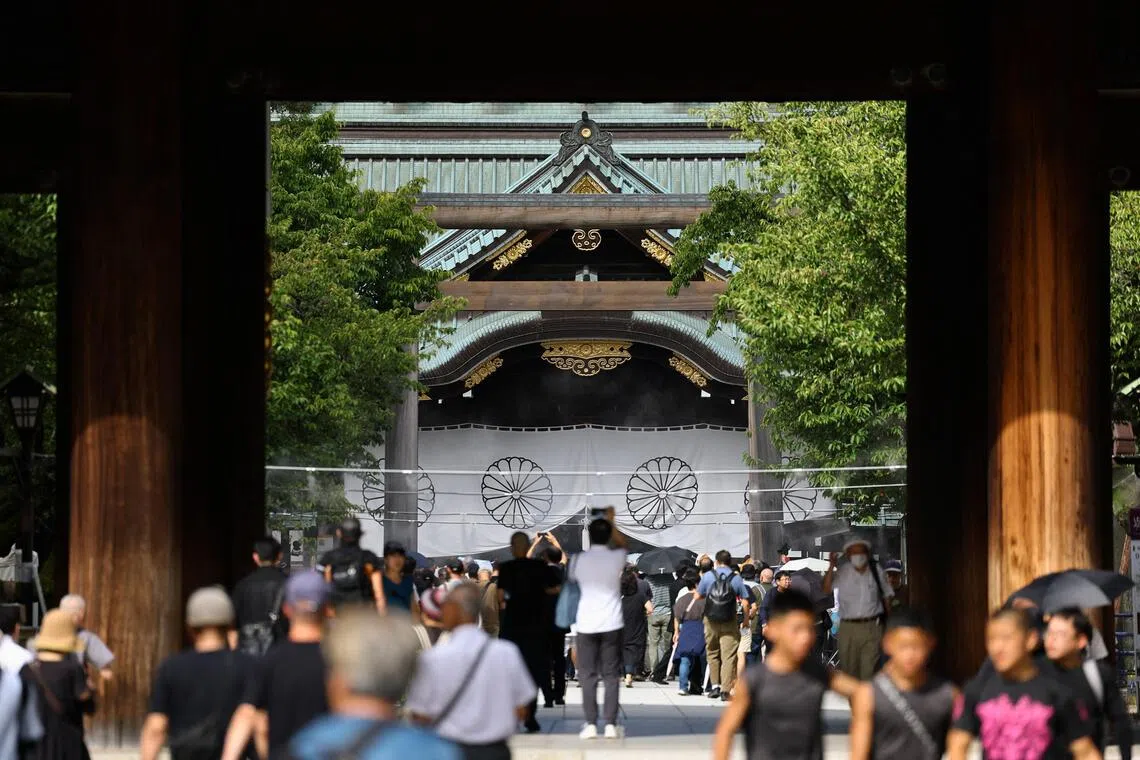
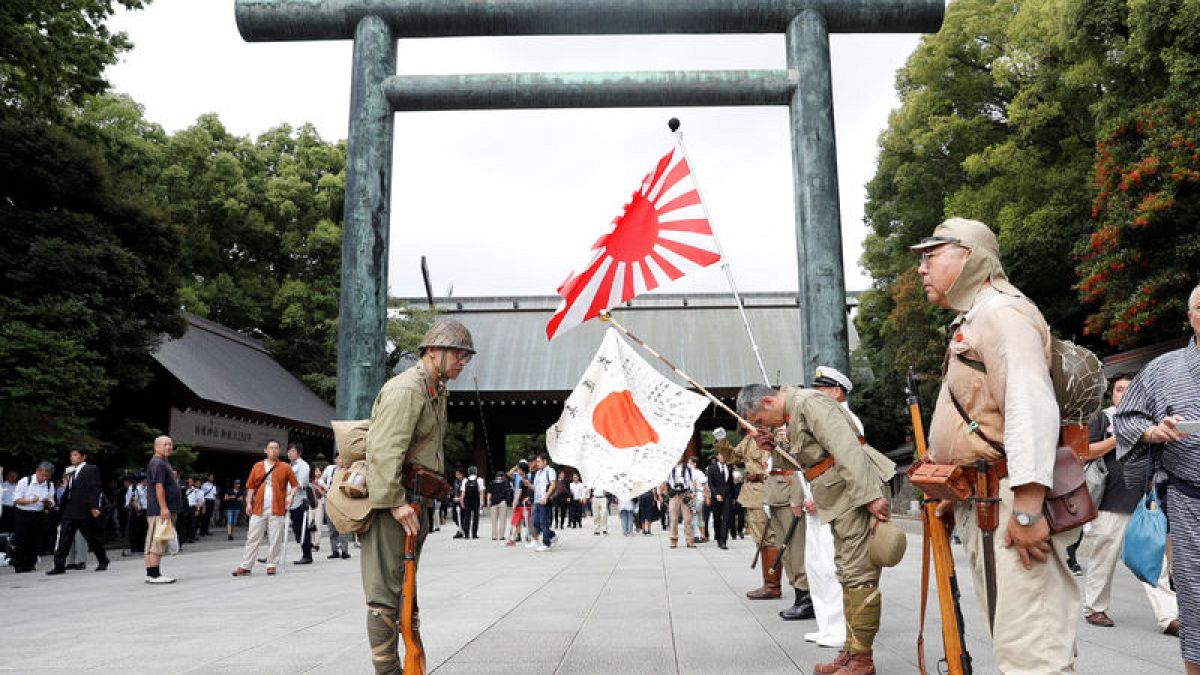
People visit to pay tribute to the war dead at Yasukuni Shrine on the 81st anniversary of Japan’s surrender in World War II on Aug 15.

People paying tribute to the war dead at Yasukuni Shrine on the 81st anniversary of Japan's surrender in World War II on Aug 15.
PHOTO: REUTERS

Published Aug 15, 2026, 08:34 AM

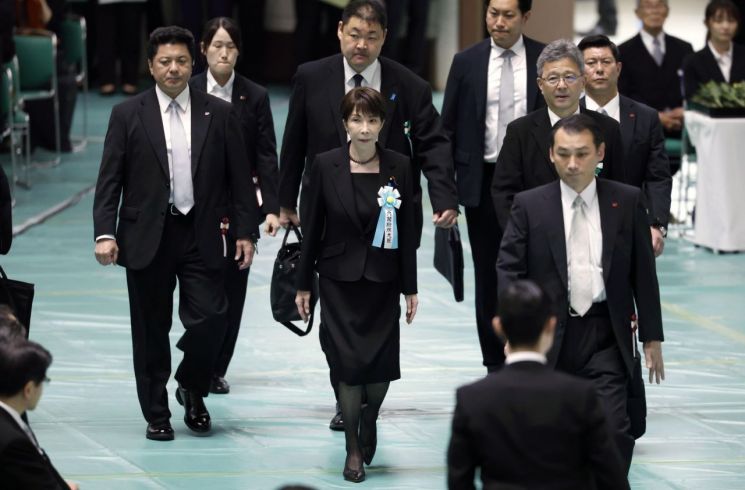
TOKYO - Japanese Prime Minister Sanae Takaichi on Aug 15 sent a ritual offering to the controversial Yasukuni shrine in Tokyo, while the country’s defence chief Shinjiro Koizumi and three other Cabinet members visited the site as Japan marks the 81st anniversary of the end of World War II.

China responded quickly, saying it “deplores” the developments related to Yasukuni and had lodged “serious” protests with Japan.

Sources have said Takaichi, a conservative, is likely to refrain from visiting the war-linked shrine on the Aug 15 anniversary, the first since she became prime minister in 2025.

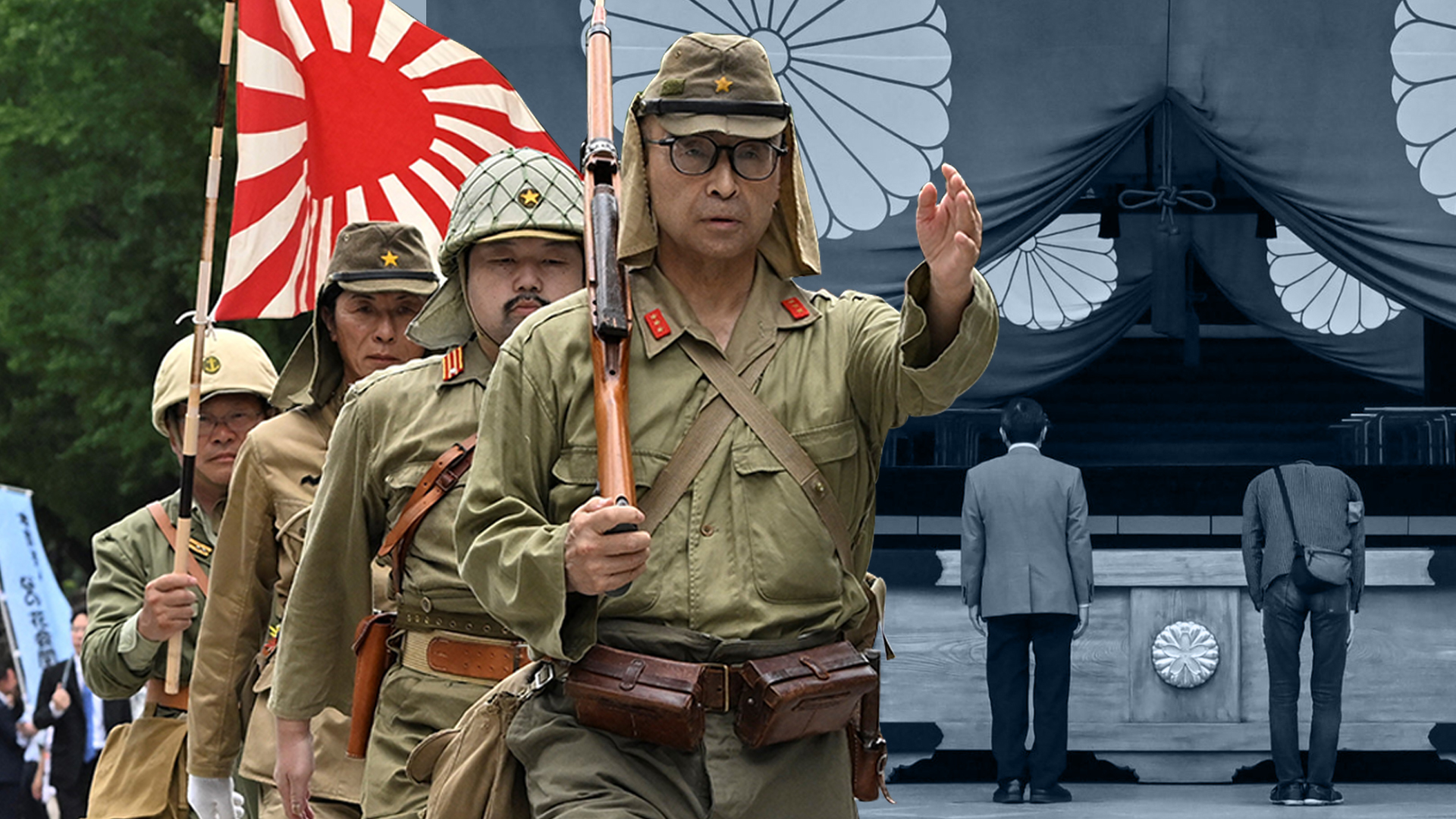
The shrine honours Japanese leaders convicted as war criminals and past visits by prime ministers and lawmakers have drawn sharp rebukes from China and South Korea, which both suffered under Japan’s wartime aggression.

Takaichi, as president of the ruling Liberal Democratic Party (LDP), paid for the offering out of her own pocket, according to a senior party executive.

“I fully understand how President Takaichi feels about the spirits of the war dead, so I visited the shrine with her feelings in mind,” LDP Secretary-General Shunichi Suzuki told reporter.

Koizumi became the first sitting defence minister confirmed to have visited the Shinto shrine on the anniversary since Minoru Kihara, who went on Aug 15, 2024. Kihara is now chief Cabinet secretary in Takaichi’s government.

“I renewed my pledge to renounce war and continue fulfilling the responsibility of Japan, which has consistently made strides as a peace-loving nation since the end of the war,” Koizumi said in a post on X.

The other three Cabinet members who went to the shrine are Minoru Kiuchi, economic and fiscal policy minister, Kimi Onoda, economic security minister, and Hitoshi Kikawada, in charge of issues related to Okinawa and the Northern Territories.

The Northern Territories, comprising four islands off Japan’s Hokkaido, are at the centre of a territorial row with Russia. Tokyo maintains that the former Soviet Union illegally seized the islands after the war.

Yasukuni enshrined 14 wartime leaders as deities in 1978, most of whom were convicted as Class-A war criminals. They include General Hideki Tojo, a wartime prime minister who was executed in 1948 for crimes against peace.

Japan has spent the decades since the end of the war committing itself to peace under its war-renouncing Constitution. In what it has described as an increasingly severe security environment, the country has been boosting its defence capabilities and spending.

Before taking office in October 2025, Takaichi visited the shrine during its seasonal festivals and on the Aug 15 war anniversary. But she has refrained from going to the shrine since becoming prime minister.

Takaichi has had to strike a balance as some conservative supporters want her to visit, while Japan’s ties with China remain frayed and those with South Korea are on the mend.

Japan has faced political and economic pressure from China since Takaichi suggested in Parliament in November 2025 that an attack on Taiwan could present a “survival-threatening situation” leading to an intervention by Japan’s Self-Defense Forces in support of the United States.

On winning the LDP leadership race in October 2025, Takaichi told a press conference she would decide “appropriately” on future visits to Yasukuni as prime minister, adding the matter “should never be made a diplomatic issue”.

She said during a TV programme in February 2026 that she would first seek “understanding” from the US and neighbouring countries before making such a visit. “I’ve been trying to prepare the conditions,” she said at the time.

Senior executives of the conservative LDP – Secretary-General Shunichi Suzuki, Haruko Arimura, head of its General Council, and Yasutoshi Nishimura, head of its Election Strategy Committee – went to the shrine on Aug 15.

Japan occupied a wide area of China by the end of the war and colonised the Korean Peninsula from 1910 to 1945. KYODO NEWS
 
South Korean Ruling, opposition parties express regret over Japanese officials' Yasukuni Shrine visits
By Yonhap
Published Aug 15, 2026 11:48 am KST

 Japan's Defence Minister Shinjiro Koizumi, center, visits at Yasukuni Shrine to pay tribute to the war dead on the 81st anniversary of Japan's surrender in World War II, in Tokyo, Japan, Aug. 15, in this photo taken by Kyodo. Reuters-Yonhap

Japan's Defence Minister Shinjiro Koizumi, center, visits at Yasukuni Shrine to pay tribute to the war dead on the 81st anniversary of Japan's surrender in World War II, in Tokyo, Japan, Aug. 15, in this photo taken by Kyodo. Reuters-Yonhap

Korean lawmakers from both the ruling and opposition parties expressed regret Saturday over visits by Japanese officials and politicians to a war shrine seen as a symbol of Japan's imperialistic past.

The response came after Japanese Defense Minister Shinjiro Koizumi and a group of lawmakers from the ruling Liberal Democratic Party (LDP) paid tribute at the Yasukuni Shrine to mark the anniversary of Japan's 1945 surrender in World War II. Japanese Prime Minister Sanae Takaichi sent a ritual offering but did not visit the shrine in person.

Jeon Su-mi, a spokesperson for the ruling Democratic Party of Korea (DPK), criticized the visits by Japanese officials and LDP lawmakers as an "anachronistic provocation," calling them "reckless acts" based on "twisted patriotism."

Kim Dae-sik of the main opposition People Power Party, who is known for his close ties with Japan, voiced "deep regret," saying Koizumi's shrine visit is an act that undermines mutual trust between the two countries.

"Japan's responsible leaders should face the history of its aggression and show true remorse through actions, not words," Kim wrote on Facebook.


Yasukuni Shrine

Honoring around 2.5 million Japanese war dead, among those are 1,066 convicted war criminals from the Pacific War, including 14 Class-A war criminals convicted by the International Military Tribunal for the Far East.

微信图片_2025-12-28_020314_007.png

sou-gou-jie-tu20251228020543-png.167751
 

Korea deplores Japanese officials' visits to Yasukuni Shrine

Ministry of Foreign Affairs building in Seoul / Korea Times file

Ministry of Foreign Affairs building in Seoul / Korea Times file
By Yonhap
  • Published Aug 15, 2026 4:35 PM KST
Korea denounced visits to the Yasukuni Shrine by Japanese officials and politicians Saturday, urging Japan's leaders to squarely face history and show remorse in order to develop bilateral relations based on mutual trust.

The foreign ministry issued a statement after Japanese ministers and lawmakers visited or sent ritual offerings to the controversial shrine, a symbol of Japan's militaristic past, on the anniversary of Japan's 1945 surrender in World War II.

"The government cannot but deplore the anachronistic and historically oblivious acts of responsible Japanese leaders who have once again made ritual offerings or paid visits to the Yasukuni Shrine, which glorifies Japan's past wars of aggression and honors convicted war criminals," the ministry said.

It urged Japan's leaders to face history squarely and show remorse for the past through their actions, calling it an important foundation for building future-oriented Korea-Japan relations based on mutual trust.

Kim Hak-jo, director general for international policy at Korea's defense ministry, summoned Takeshi Nagayoshi, Japan's defense attache in Seoul, to the ministry headquarters and lodged a strong protest over Japanese Defense Minister Shinjiro Koizumi's visit to the shrine, the ministry said.

 
China blasts Japanese politicians paying respects to Yasukuni war shrine on 81st anniversary of its unconditional surrender
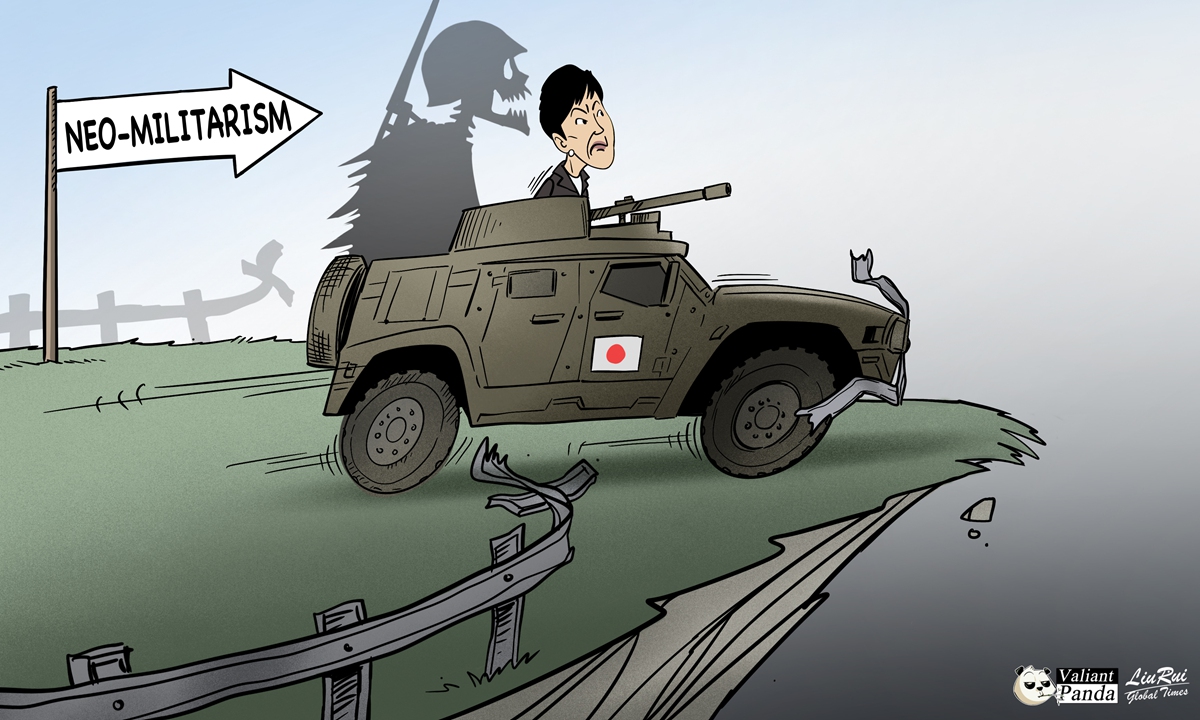
Japan's increasingly brazen moves signal a dangerous shift toward neo-militarism: expert
Published: Aug 15, 2026 12:14 PM

Illustration: Liu Rui/GT

Illustration: Liu Rui/GT

China strongly deplores Japan's negative moves related to the Yasukuni war shrine, and has lodged serious protests against Japan, a Chinese Foreign Ministry (FM) spokesperson said in a statement on Saturday, in response to Japanese politicians paying respects to the Yasukuni war shrine, which honors Class-A war criminals, on the 81st anniversary of Japan's unconditional surrender in World War II.

On such a sensitive day, Japanese Prime Minister Sanae Takaichi sent a ritual offering to the notorious Yasukuni shrine, while Defense Minister Shinjiro Koizumi and several senior executives of the ruling Liberal Democratic Party (LDP) visited in person, prompting Chinese experts to warn that Japan's increasingly brazen moves signal a dangerous shift toward neo-militarism.

Takaichi made a "tamagushi" ritual offering to the notorious shrine using her private funds in her capacity as LDP president, Japan's Kyodo News reported Saturday, citing LDP Secretary-General Shunichi Suzuki. Takaichi did not visit the shrine in person. Koizumi, however, visited the notorious shrine Saturday morning. Hitoshi Kikawada, a member of Takaichi's Cabinet, also visited the shrine.

Meanwhile, Suzuki, LDP General Council Chairperson Haruko Arimura and Election Strategy Committee Chairperson Yasutoshi Nishimura visited the shrine together on Saturday, according to Kyodo News and the Xinhua News Agency.

Japan's Mainichi Shimbun on Saturday described the collective August 15 visit by senior LDP executives as "unusual."

Chinese media including state broadcaster CCTV reported that it marked the first collective visit to the shrine by senior LDP executives.

Yasukuni Shrine, located in central Tokyo's Chiyoda Ward, honors 14 convicted Japanese Class-A war criminals from World War II. It has long been a source of diplomatic friction between Japan and its neighbors. For a long time, visits and ritual offerings made by Japanese officials to the controversial shrine have consistently sparked criticism and opposition both at home and abroad, hurting the feelings of the people of China, South Korea, and other countries and regions victimized by Japan's wartime aggression, according to Xinhua.

An affront to historical justice

"No pretext whatsoever can hide the Japanese politicians' true intention which is to change the verdict on the war criminals, cover up Japan's war crimes, distort the historical facts, and pave the way for accelerating remilitarization. This is an affront to historical justice, a challenge to the foundational norms of civilization, and a provocation against the postwar international order. Such behaviors have been firmly rejected by the overwhelming majority of the international community," the Chinese FM spokesperson's statement said on Saturday.

This year marks the 80th anniversary of the opening of the Tokyo Trials. To view and treat history correctly is an important prerequisite for Japan's postwar return to the international community, the political foundation for Japan's ties with neighboring countries, and more importantly, a key measure for Japan's commitment to peaceful development, the statement noted.

"We urge the Japanese side to do serious soul-searching on its history of aggression, make a clean break with militarism, and earn trust from its Asian neighbors and the rest of the world with concrete actions," the spokesperson said.

Lü Chao, an expert on East Asian studies and a professor at the Liaoning Academy of Social Sciences, told the Global Times on Saturday that attitudes toward the notorious Yasukuni shrine on this very day have long served as an important "touchstone" for the international community to judge whether Japanese political forces genuinely recognize the country's wartime aggression and responsibility.

"What is particularly alarming this year is how openly these political signals are being sent," Lü said. "The combination of an offering by the prime minister, a visit by the sitting defense minister and a coordinated appearance by senior ruling-party executives means the issue can hardly be dismissed merely as individual acts of mourning."

Although Takaichi stayed away in person, Lü said the offering still clearly demonstrated her political attitude. "Not visiting personally does not fundamentally change the political nature of the gesture," Lü said, noting that diplomatic and domestic pressure may have affected the form Takaichi chose, but not necessarily her underlying position.

Particular attention required

"The collective actions of senior figures in the ruling party deserve particular attention," he said. "They raise the question of whether Japan's political establishment has truly developed a correct understanding of its aggression and wartime crimes."

Chinese military affairs expert Song Zhongping told the Global Times on Saturday that visits by Japanese conservative lawmakers and government officials to the notorious shrine are not new and should not be treated as an isolated development unique to the Takaichi administration.

Former prime minister Junichiro Koizumi repeatedly visited the shrine and went there as prime minister on August 15, 2006. Shinzo Abe visited as sitting prime minister in December 2013. Shinjiro Koizumi himself visited on August 15, 2025, when he was agriculture minister.

"The important point is that this tendency has persisted within Japanese right-wing politics for decades," Song said. "What we are seeing now is not its sudden emergence, but its increasingly overt expression."

Song further noted that the political significance of Koizumi's visit is amplified by his current position as defense minister. "A defense minister's understanding of wartime history cannot simply be regarded as a private attitude," he said. "It inevitably leads people to ask what kind of direction Japan's defense policy and Self-Defense Forces may take."

Such concern comes as the Takaichi government pushes to strengthen Japan's military capabilities and pursue constitutional revision.

Song stressed that Japan has already expanded defense spending, developed so-called counterstrike capabilities and eased restrictions on defense equipment transfers under the existing Constitution, meaning constitutional revision should not inaccurately be portrayed as a legal prerequisite for all such measures.

What deserves greater scrutiny, he said, is whether historical revisionism, constitutional revision and military expansion are increasingly reinforcing one another.

"The issue surrounding the notorious Yasukuni Shrine is not simply one of mourning," Song said. "When political forces refuse to squarely confront the history of aggression while simultaneously seeking greater military capabilities and fewer postwar restraints, neighboring countries have every reason to remain vigilant."


Government Condemns Japanese Politicians' Yasukuni Offerings and Visits as "Anachronistic Acts"

byKwon Jaehee
Published 15 Aug.2026 15:36(KST)

On August 15, the South Korean government strongly criticized Japanese politicians for offering tributes and visiting the Yasukuni Shrine.

Yonhap News
Yonhap News

The Ministry of Foreign Affairs issued a spokesperson's statement that day, saying, "We cannot help but express regret over the anachronistic acts by responsible senior Japanese officials, who once again offered tributes or made visits to the Yasukuni Shrine, a site that glorifies Japan’s past war of aggression and enshrines war criminals, displaying a clear disregard for history."

The ministry continued, urging Japanese leaders to "face history head-on and demonstrate humble self-reflection and genuine remorse for past actions through concrete deeds," adding, "This is an essential basis for building a future-oriented South Korea-Japan relationship rooted in trust."

On this day, which marks Korea's Liberation Day and the anniversary of Japan's defeat in World War II, Japanese Prime Minister Sanae Takaichi personally paid for a ritual offering to the Yasukuni Shrine, doing so in her capacity as president of Japan's Liberal Democratic Party, not as prime minister.

Additionally, four current cabinet members—Defense Minister Shinjiro Koizumi, Minister for Okinawa and Northern Territories Policy Hitoshi Kikawada, Minister for Economic Security Kimi Onoda, and Minister for Economic and Fiscal Policy Minoru Kiuchi—visited the Yasukuni Shrine in person.

Members of a cross-party parliamentary league called "Parliamentarians for Visiting Yasukuni Shrine Together," as well as lawmakers from the ruling party’s "Conservative Solidarity Group," also made visits. In addition, Sohei Kamiya, leader of the right-wing Sanseito party, and Naoki Hyakuta, leader of the Japan Conservative Party, visited the Yasukuni Shrine that day as well.

 
These people are just as ugly as their looks.
 
China's Military Issues Its Highest-Level Nuclear Warning to Japan

On August 10, the PLA's official media account, Junzhengping Studio, issued a stern warning: "If the Japanese government insists on playing with fire on the nuclear issue, the hammer of history will fall again. What happened yesterday in Hiroshima and Nagasaki may well be Japan's tomorrow." Junzhengping Studio is the official account of the PLA's News Communication Center and represents the PLA's formal position. This is the highest level of warning in military terms, a nuclear warning.

 
China's Military Issues Its Highest-Level Nuclear Warning to Japan

On August 10, the PLA's official media account, Junzhengping Studio, issued a stern warning: "If the Japanese government insists on playing with fire on the nuclear issue, the hammer of history will fall again. What happened yesterday in Hiroshima and Nagasaki may well be Japan's tomorrow." Junzhengping Studio is the official account of the PLA's News Communication Center and represents the PLA's formal position. This is the highest level of warning in military terms, a nuclear warning.

Actually it is North Korea which is so itchy to do it to Japan.
 
  • Like
Reactions: ety

Users who are viewing this thread

Pakistan Defence Latest

Country Watch Latest

Back
Top