Japan protests Putin’s first visit to disputed islands - ARAB NEWS

Some Americans think Chinese should have lots of love left for the Japanese after what they did in China and killed over 25 million Chinese for the last two centuries, lol. Hypocritical while they are cheering the Japs to fully rearm to every tooth to be a trouble maker in Asia.
More Chinese were tortured, experimented and far worse in number than the combined genocide of Jews, Armenian, Palestinians added together x 3. If someone murdered and raped and killed 25million americans mostly civilians and children I bet they would be singing different tune.
 
They want to create some co prosperity East asian super state with Japan at the top. They started mass massacres when china would never allow that to happen. I think like how we tried to overthrow qing and boxer rebellions etc caused massive deaths too. Chinese people just never gave it or gave up against Japan which frustrated them and they took it out on civilians. Either way that will never happen again.
Japanese obsession on China since 400 years ago they were unified was to wipe out Chinese race and civilization on the Asia mainland, populate China with Japs to create a great Japanese (East) civilization in place of Chinese civilization. So, Chinese could either willingly become total slaves of the Japs or all killed. Co-prosperity of East Asia Japs put up was just to fool the people in Asia. They want either total slaves or dead bodies.
 
More Chinese were tortured, experimented and far worse in number than the combined genocide of Jews, Armenian, Palestinians added together x 3. If someone murdered and raped and killed 25million americans mostly civilians and children I bet they would be singing different tune.
They are just being hypocritical with their own selfish purpose.
 
Japanese obsession on China since 400 years ago they were unified was to wipe out Chinese race and civilization on the Asia mainland, populate China with Japs to create a great Japanese (East) civilization in place of Chinese civilization. So, Chinese could either willingly become total slaves of the Japs or all killed. Co-prosperity of East Asia Japs put up was just to fool the people in Asia. They want either total slaves or dead bodies.
Correct me if I'm wrong but I heard the first couple of years the Japanese fought reasonably honourably and wanted to just be a colonial power more or less. They failed their objective and turned to the strategic plan of kill all, burn all, loot all. They said they wanted to break the spirit and back of chinese people which ultimately failed.

Korea was occupied by Japan for a decent chunk of time and they managed to keep their culture in tact and was not flooded with millions of japs. Now I'm not a historian this is what I hear from the elderly grandparents.
 
Correct me if I'm wrong but I heard the first couple of years the Japanese fought reasonably honourably and wanted to just be a colonial power more or less. They failed their objective and turned to the strategic plan of kill all, burn all, loot all. They said they wanted to break the spirit and back of chinese people which ultimately failed.

Korea was occupied by Japan for a decent chunk of time and they managed to keep their culture in tact and was not flooded with millions of japs. Now I'm not a historian this is what I hear from the elderly grandparents.
Long before WW II, the Japs already behaved like total salvages towards Chinese as shown in their Russo-Japan war happened in Manchuria. After winning the battle in 旅顺 , the Jap army massacred all Chinese in town of Lushun 旅顺 of tens of thousands and just left few alive to spread the massacre news to Chinese. The Japs took over Manchuria in 1931 and there was no resistance there and people just submitted. When the full scale war broke out in 1937, the Japs bombed Shanghai like hell and carried out the Nanjing massacre. Later, the Japs often used chemical weapons and germ warfare on many cities including Wuhan and bombed Chongqing civilians like hell. And who can forget the 731 unit on salvage live human biological experiments. Japs are evil in soul.
 
Long before WW II, the Japs already behaved like total salvages towards Chinese as shown in their Russo-Japan war happened in Manchuria. After winning the battle in 旅顺 , the Jap army massacred all Chinese in town of Lushun 旅顺 of tens of thousands and just left few alive to spread the massacre news to Chinese. The Japs took over Manchuria in 1931 and there was no resistance there and people just submitted. When the full scale war broke out in 1937, the Japs bombed Shanghai like hell and carried out the Nanjing massacre. Later, the Japs often used chemical weapons and germ warfare on many cities including Wuhan and bombed Chongqing civilians like hell. And who can forget the 731 unit on salvage live human biological experiments. Japs are evil in soul.
Yes ur right there were massacres before ww2 kicked off but the real horror began once the chinese refused to kneel and started giving Japanese heavy casualties.

Yes they are animals with no souls, even my grandpa who was roc major said Japanese force people to commit incest for their own pleasure to watch. Their time will come and tbh everytime they want to climb back to the top the americans slap em with a plaza accord and force them to buy more treasury bonds.

I refuse to let japan think they hold any psychological hold on us. We have endured worse than japs before and with russia, nk and Chinese nukes aimed at Japan. They can never do anything without being nuked to another dimension.
 
Yes ur right there were massacres before ww2 kicked off but the real horror began once the chinese refused to kneel and started giving Japanese heavy casualties.

Yes they are animals with no souls, even my grandpa who was roc major said Japanese force people to commit incest for their own pleasure to watch. Their time will come and tbh everytime they want to climb back to the top the americans slap em with a plaza accord and force them to buy more treasury bonds.

I refuse to let japan think they hold any psychological hold on us. We have endured worse than japs before and with russia, nk and Chinese nukes aimed at Japan. They can never do anything without being nuked to another dimension.
My grandpa was a ROC major general. He fought in the battles such as Taierzhuang 台儿庄 and Wuhan. He said the Japs used poisonous gas in large scale on civilians in Wuhan. I just hope either China, Russia or NK someday drops nukes on the Japs since they don't have any remorse on their salvage war crimes. Americans did already and had their revenge done.
 
My grandpa was a ROC major general. He fought in the battles such as Taierzhuang 台儿庄 and Wuhan. He said the Japs used poisonous gas in large scale on civilians in Wuhan. I just hope either China, Russia or NK someday drops nukes on the Japs since they don't have any remorse on their salvage war crimes. Americans did already and had their revenge done.
Japan should have been co occupied between China soviet and america after the war. That would have solved a lot of issues and smoothed over a lot of shit but america made them a remorseless vassal. America even stolen all the unit 731 research for their own benefit and left many japs off the hook for the unit 731 data.
 
  • Like
Reactions: ety
Japan should have been co occupied between China soviet and america after the war. That would have solved a lot of issues and smoothed over a lot of shit but america made them a remorseless vassal. America even stolen all the unit 731 research for their own benefit and left many japs off the hook for the unit 731 data.
Yeah, US hands are dirty and partly responsible for today Japanese arrogance and repentless about their crimes. I guess that serves US purpose. Jiang Kai-shek was partly to blame for refusing to sent troops to occupy Japan and take back Ryukyu. Otherwise, China's situation in the East front is much better today.
 
Correct me if I'm wrong but I heard the first couple of years the Japanese fought reasonably honourably and wanted to just be a colonial power more or less. They failed their objective and turned to the strategic plan of kill all, burn all, loot all. They said they wanted to break the spirit and back of chinese people which ultimately failed.

Korea was occupied by Japan for a decent chunk of time and they managed to keep their culture in tact and was not flooded with millions of japs. Now I'm not a historian this is what I hear from the elderly grandparents.
According to incomplete statistics from "Major Atrocities Across the Country During the War of Resistance Against Japan," published by the CCP Party History Publishing House, there were at least 173 major atrocities committed by the Japanese army during the Japanese invasion of China from early 1930s on, in addition to the Nanjing Massacre… Not just Nanjing massacre many people know, there were many more massacres carried out by the Japs people in the world are not familiar, that's how the Japs killed 25 million Chinese in WW II.

Koreans were like total slaves to the Japs when they colonize it. "Korean culture, language, and traditions were systematically suppressed and largely prohibited by the Empire of Japan, particularly during the intense assimilation policies implemented from the late 1930s until 1945." That's why Koreans now hate Japs so much. So were people in Manchuria and Taiwan of China treated the same way when Japs colonize them. Japs killed about 500 K Taiwanese during the early years of Japanese colonization because many Taiwanese resisted.


1786833227781.png
 
Last edited:
Japanese obsession on China since 400 years ago they were unified was to wipe out Chinese race and civilization on the Asia mainland, populate China with Japs to create a great Japanese (East) civilization in place of Chinese civilization. So, Chinese could either willingly become total slaves of the Japs or all killed. Co-prosperity of East Asia Japs put up was just to fool the people in Asia. They want either total slaves or dead bodies.
Similarities between the wild dreams of Hindutva with respect to Pakistan. The whole "we are all brown Asians so should have been unified saar!" trick is used routinely by Indians to soften up Pakistanis. People should avoid falling for such illusions where only one party derives true benefit and true sovereignty.
 
According to incomplete statistics from "Major Atrocities Across the Country During the War of Resistance Against Japan," published by the CCP Party History Publishing House, there were at least 173 major atrocities committed by the Japanese army during the Japanese invasion of China from early 1930s on, in addition to the Nanjing Massacre… Not just Nanjing massacre many people know, there were many more massacres carried out by the Japs people in the world are not familiar, that's how the Japs killed 25 million Chinese in WW II.

Koreans were like total slaves to the Japs when they colonize it. "Korean culture, language, and traditions were systematically suppressed and largely prohibited by the Empire of Japan, particularly during the intense assimilation policies implemented from the late 1930s until 1945." That's why Koreans now hate Japs so much. So were people in Manchuria and Taiwan of China treated the same way when Japs colonize them. Japs killed about 500 K Taiwanese during the early years of Japanese colonization because many Taiwanese resisted.


View attachment 210859
Its kinda funny that no one calls what Japs did a genocide. Perhaps they think Japan only wanted to have control not wipe out another civilisation?

Many have tried like xiongnu, manchu, jurchen, british, turks etc but none succeeded and all of them are in the dustbins of history. Japan maybe see itself quickly becoming a new dustbin of history. Time to flood Japan with millions of Indians and Africans and let them go to work on the little japs.
 
  • Like
Reactions: ety

China and Russia Are Pressuring Japan on Two Fronts. Is a Pacific Pincer Taking Shape?​

Putin's Kuril landing followed the exact waters a joint China-Russia flotilla patrolled three weeks earlier — and Beijing endorsed it within a day.

AUGUST 17, 2026

Putin-Kuril-islands-1.jpg
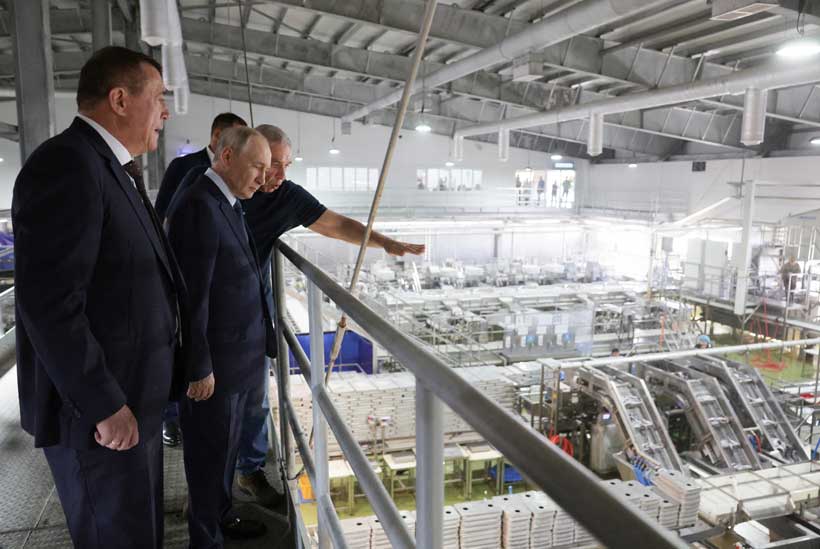
Russian President Vladimir Putin visits the Yasny fish processing complex on the Southern Kuril Island of Iturup, in far eastern Sakhalin Region, Russia, August 13, 2026. Sputnik/Gavriil Grigorov/Pool via REUTERS

Putin’s Kuril landing is not a bilateral Russia-Japan sovereignty dispute. It is the northern half of a coordinated Sino-Russian pressure campaign on Tokyo — timed to the same waters a joint Chinese-Russian flotilla patrolled weeks earlier, and confirmed within twenty-four hours by Beijing’s own explicit endorsement of Moscow’s claim.

On July 26th, a joint Chinese-Russian naval flotilla — two Chinese warships, a fleet oiler, and a Russian corvette — sailed to a position 300 kilometres southeast of Cape Nosappu, the closest point on Japan’s home islands to the Kurils. Eighteen days later, Vladimir Putin stood on Iturup Island itself, the same waters the flotilla had just transited, declaring the chain’s status permanently “enshrined” by the Second World War. Within twenty-four hours, China’s Foreign Ministry weighed in unprompted, calling on Japan to “respect the results of the victory in the anti-fascist war.” Two capitals, one disputed chain of islands, and a rhetorical and naval sequence too tightly timed to be read as separate stories about separate disputes.

The Kuril dispute is old: the Soviet Union seized the four southernmost islands in 1945, and no peace treaty has ever resolved it. What has changed is who else has a stake in the outcome. Since February 2022, when Xi Jinping and Putin signed their “no limits” partnership days before the Ukraine invasion, Beijing quietly abandoned the position it had held since the Mao era — tacit support for Japan’s claim — and began backing Moscow’s instead. That shift now sits inside a much larger rupture: since November 7th, 2025, when Prime Minister Sanae Takaichi told parliament that a Chinese attack on Taiwan could constitute an “existential crisis” justifying Japanese military action, Beijing has run a sustained pressure campaign against Tokyo — a tourism boycott that cut Chinese arrivals by 45% and cost Japan an estimated $367–500 million a month, a near-total cutoff of rare-earth exports, a carrier transit through the Miyako Strait with a fire-control radar lock-on incident, and December’s “Justice Mission 2025” exercises around Taiwan. Russian and Chinese bombers flew a joint patrol through the same Miyako Strait on December 9th, at the peak of that crisis.

That December patrol is the hinge of this argument, because it shows the pattern predates the Kuril visit by eight months. Joint Russia-China strategic bomber patrols near Japan have run since 2019, but their tempo has quadrupled since 2024, from roughly two a year to four or more; June 27th brought the eleventh one, looping Tu-95s and H-6Ks past Miyazaki and back. A joint naval patrol followed in July, ending within sight of the Kurils. Then Putin landed on Iturup. Each of these events has an individually plausible, routine explanation — an annual exercise here, a presidential visit to sovereign territory there. Stacked together and read against the ongoing Taiwan dispute, they describe two militaries that have spent 2026 rehearsing how to appear, jointly, in the waters north, east, and south of Japan within the same news cycle as political pressure on Tokyo.

The strategic logic underneath the choreography is straightforward. The Kurils are not incidental to Russia’s Pacific posture — they enclose the Sea of Okhotsk, the operating ground for Russia’s ballistic-missile submarines, and control the straits a Pacific Fleet vessel must use to reach open water. Roughly 3,500 Russian troops and Bastion and Bal anti-ship missile batteries are already stationed there. For China, a Japan that has to watch a militarised northern chain at the same time it is absorbing economic punishment and military signalling over Taiwan is a Japan with divided attention, divided procurement priorities, and a harder argument to make to its own public for further defence spending increases aimed south. Beijing does not need a formal alliance with Moscow to benefit from that. It needs Moscow occupied with its own dispute with Tokyo, on schedule, and it has one.

There is an irony in the pressure campaign worth pulling out, because it undercuts the idea that Beijing and Moscow are pursuing identical goals rather than complementary ones. China’s rare-earth cutoff — zero recorded exports of terbium and dysprosium oxide to Japan between November 2025 and June 2026 — hits precisely the inputs Japan’s own defence-industrial base needs to expand production in response to exactly the kind of two-front pressure Russia is now adding. Beijing is simultaneously trying to slow Japan’s rearmament through economic coercion and, by tolerating or encouraging Moscow’s provocation in the north, giving Tokyo’s hawks a second argument for accelerating it. That is not a contradiction so much as a division of labour: Beijing supplies the economic squeeze, Moscow supplies a live territorial flashpoint, and neither has to coordinate the specific move for the combined effect to serve both governments’ interest in an overstretched, reactive Japan.

The obvious objection is that this reads coordination into what may simply be routine scheduling — the joint patrols are an annual programme that predates the current crisis, and Putin visiting Russian sovereign territory requires no Chinese input at all. That’s fair as far as the hardware goes. It does not explain Beijing’s words. China’s Foreign Ministry did not have to comment on a bilateral Russia-Japan island dispute at all, let alone within a day, let alone in language — “victory in the anti-fascist war,” a phrase China deploys constantly against Japan over its own wartime conduct — that explicitly fuses the Kuril question to Beijing’s own historical grievance framework against Tokyo. The patrol schedule may be routine. The decision to publicly annex Russia’s territorial claim into China’s own case against Japan, in real time, was not.

THE SCENARIOS

Base case (~55%):
the alignment stays informal and rhetorical rather than a written pact — joint statements of sympathy, continued patrols at an increasing but not dramatically accelerated cadence, no explicit Russia-China defence agreement naming Japan — while still functioning exactly as intended. Japanese defence planners quietly start treating their northern and southern flanks as one contingency problem rather than two, budget requests cite both fronts in the same paragraph for the first time, and Tokyo gets one more reason to keep expanding a defence budget already rising toward 2% of GDP, with rare-earth substitution investment folded into the same package.

Downside case: a future joint Russia-China patrol transits Kuril-adjacent waters at the same moment a new Taiwan flashpoint spikes — a Chinese exercise cycle, a Taiwanese election, a Japanese port call, or a further rare-earth escalation — producing the first real two-front test of Japan’s Self-Defense Forces and, by extension, the US-Japan alliance’s ability to respond in two directions simultaneously. That is the scenario Tokyo’s planners are least prepared for, because Japan’s post-war defence posture, and much of the US force-posture planning built around it, was designed around a single contingency at a time, not two live ones sharing a calendar.

Upside case: Beijing calculates that fusing itself too closely to Moscow’s territorial claim costs more than it gains — it forfeits any residual claim to neutrality on the Kuril dispute that it might otherwise use in future Japan diplomacy, and it hands Tokyo a cleaner narrative for accelerating exactly the defence build-up and rare-earth diversification China would rather slow down. In that case the rhetorical backing recedes to occasional statements rather than a sustained line, the patrols continue at their existing tempo without further acceleration, and the “pincer” stays a messaging tool rather than hardening into a coordinated operational posture.

THE AFTERMATH

Putin’s flag on Iturup was never a story about Russia and Japan alone; the Foreign Ministry statement twenty-four hours later confirmed it.

Watch for: not the next Putin visit or the next Taiwan statement in isolation, but whether a future joint Russia-China patrol is timed to coincide with a Taiwan-related flashpoint rather than following the existing rotation. That convergence — hardware and rhetoric moving together on purpose, rather than in sequence — is the signal that this stops being two capitals taking turns pressuring Tokyo and becomes one campaign with two fronts.


Users who are viewing this thread

Country Watch Latest

Back
Top