Japanese companies exit China in record numbers

It's really interesting. According to the official Japanese data that ChatGPT queried and listed, Japan's investment in China in the first half of 2026 actually showed inflows significantly exceeding outflows. Japanese capital is still flowing into the Chinese market on a large scale.


According to Japan’s Ministry of Finance (MOF) monthly official statistics on overseas direct investment, Japanese direct investment in China during January–June 2026 remained a net inflow, rather than a net outflow.

The figures for mainland China were:

H1 2026
Investment execution (gross investment)
Withdrawal / recovery
Net direct investment
[th]
Amount​
[/th]​
[td]
¥378.1 billion​
[/td]​
[td]
¥156.4 billion​
[/td]​
[td]
+¥221.8 billion​
[/td]​
The monthly figures were:

  • January: ¥87.5 billion invested, ¥19.1 billion withdrawn → +¥68.4 billion
  • February: ¥35.4 billion invested, ¥16.4 billion withdrawn → +¥19.0 billion
  • March: ¥61.2 billion invested, ¥30.6 billion withdrawn → +¥30.7 billion
  • April: ¥51.4 billion invested, ¥43.1 billion withdrawn → +¥8.3 billion
  • May: ¥59.5 billion invested, ¥25.9 billion withdrawn → +¥33.6 billion
  • June: ¥83.1 billion invested, ¥21.3 billion withdrawn → +¥61.8 billion
Thus, for the first half of 2026, Japanese investment executions substantially exceeded withdrawals:

¥378.1 billion − ¥156.4 billion ≈ ¥221.8 billion net investment.

Therefore, it would be inaccurate to describe Japan's overall direct investment position in China during H1 2026 as a net capital withdrawal. Under Japan's balance-of-payments direct-investment statistics, the flow remained positive.

There is an important statistical qualification, however. Japan's “direct investment” statistics are not identical to China's Ministry of Commerce statistics on actual utilized foreign investment (FDI). The two countries use different statistical frameworks and definitions. Japan's balance-of-payments data include components such as equity capital, reinvested earnings, and debt-related investment.


You didn't answer what % world ReM supply China controls after it was 99% a few years back and your export controls began. I like to know the numbers now. 😂 Chinese failed to learn the lesson they themselves preach, that sanctions don't work. But then they think they are all high and mighty but market always find different ways. Just like you blocking Tunnel boring machines to India forcing the German company to establish the manufacturing plant in India. You can try dangle any carrots you're not unique, most of your inventions are on Western fundamentals we can go through those first principles and build on them our own way. The more you act cocky the more market you lose.
The fact is your BBF Jap and your master US are still crying loud than ever about China's restrictions of REM to their companies. Develop your own manufacturing and industries and then export to other countries first before you lbad mouth talk nonsense about Chinese tech and products.
 
The fact is your BBF Jap and your master US are still crying loud than ever about China's restrictions of REM to their companies. Develop your own manufacturing and industries and then export to other countries first before you lbad mouth talk nonsense about Chinese tech and products.
Gotta thank China for that 😂 We're finally moving pretty fast on rare earths and Li-ion cell plants including cathode and anode material plants are starting to come online one after another in phases.
 
It's really interesting. According to the official Japanese data that ChatGPT queried and listed, Japan's investment in China in the first half of 2026 actually showed inflows significantly exceeding outflows. Japanese capital is still flowing into the Chinese market on a large scale.


According to Japan’s Ministry of Finance (MOF) monthly official statistics on overseas direct investment, Japanese direct investment in China during January–June 2026 remained a net inflow, rather than a net outflow.

The figures for mainland China were:

H1 2026
Investment execution (gross investment)
Withdrawal / recovery
Net direct investment

[th]
Amount

[/th]
[td]
¥378.1 billion

[/td]
[td]
¥156.4 billion

[/td]
[td]
+¥221.8 billion

[/td]​

The monthly figures were:

  • January: ¥87.5 billion invested, ¥19.1 billion withdrawn → +¥68.4 billion
  • February: ¥35.4 billion invested, ¥16.4 billion withdrawn → +¥19.0 billion
  • March: ¥61.2 billion invested, ¥30.6 billion withdrawn → +¥30.7 billion
  • April: ¥51.4 billion invested, ¥43.1 billion withdrawn → +¥8.3 billion
  • May: ¥59.5 billion invested, ¥25.9 billion withdrawn → +¥33.6 billion
  • June: ¥83.1 billion invested, ¥21.3 billion withdrawn → +¥61.8 billion
Thus, for the first half of 2026, Japanese investment executions substantially exceeded withdrawals:

¥378.1 billion − ¥156.4 billion ≈ ¥221.8 billion net investment.

Therefore, it would be inaccurate to describe Japan's overall direct investment position in China during H1 2026 as a net capital withdrawal. Under Japan's balance-of-payments direct-investment statistics, the flow remained positive.

There is an important statistical qualification, however. Japan's “direct investment” statistics are not identical to China's Ministry of Commerce statistics on actual utilized foreign investment (FDI). The two countries use different statistical frameworks and definitions. Japan's balance-of-payments data include components such as equity capital, reinvested earnings, and debt-related investment.
Net Japanese investment flows into China fell from $12.5 billion in 2021 to an estimated $1.7 billion in 2025.
 
Net Japanese investment flows into China fell from $12.5 billion in 2021 to an estimated $1.7 billion in 2025.
When the net amount is positive, this means that the inflow of foreign capital exceeds the outflow.
 
meanwhile in motherland

India's net foreign direct investment (FDI) dropped to near zero in the 2024–25 financial year because money leaving the country matched the money coming in. [1, 2]

📊 The Numbers
    • Gross Inflows: Reached nearly $80 billion to $95 billion. [1, 2]
    • Net FDI FY25: Fell to a tiny $960 million. [1]
    • Repatriation: Foreign firms pulled out roughly $52 billion. [1]
    • Outward FDI: Local firms sent $24 billion abroad. [1]

⚠️ Why It Happened
    • Profit Takings: Foreign companies sold assets and took profits home. [1, 2]
    • Global Diversification: Local Indian firms invested heavily in foreign markets. [1]
    • Retained Earnings: High share of inflows were just reinvested local profits. [1]

💡 What It Means
    • High Gross Data: The headline gross numbers hide actual capital drain. [1]
    • Maturing Economy: Local firms now expand operations beyond domestic borders. [1]
    • Policy Pressure: Experts urge trade and investment treaty reforms. [1]
 
View attachment 218164
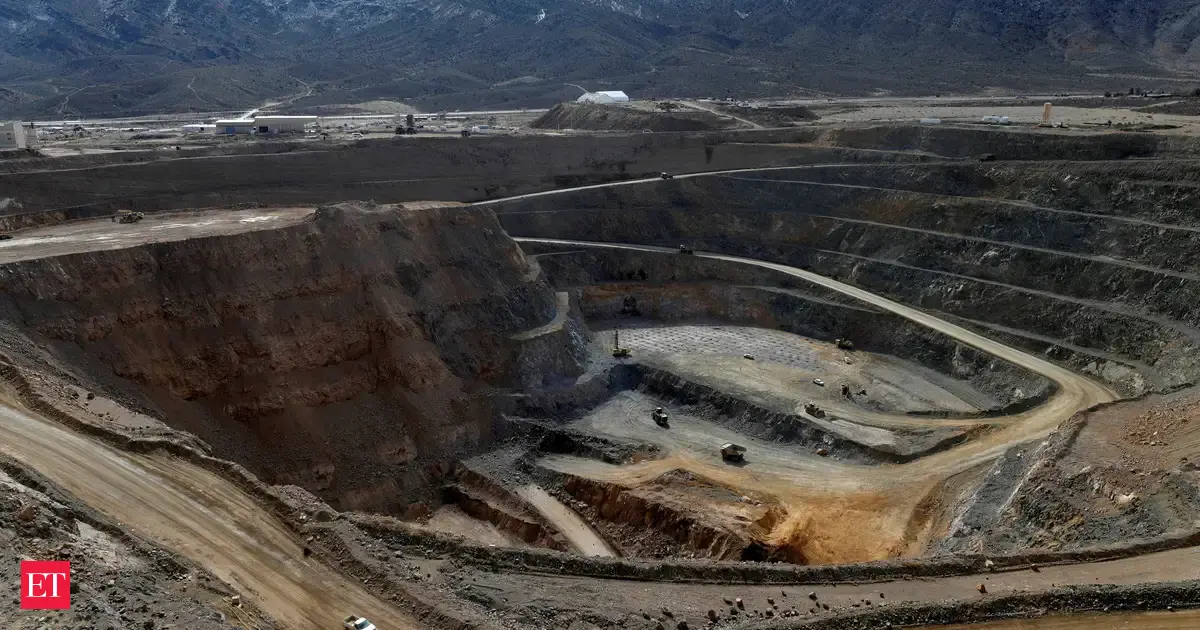
A record number of Japanese companies have closed their China businesses under the triple pressure of slowing momentum in the Chinese economy, US tariffs and a diplomatic freeze between Tokyo and Beijing.

As of June 2026, a total of 10,118 Japanese companies had an established presence in mainland China, according to Teikoku Databank, Japan’s largest corporate credit research firm.

That figure, published on Wednesday, was the lowest number since the group began compiling the statistic in 2010. It represented a 22 per cent fall from 2024 and a 30 per cent drop from a 2012 peak for Japanese corporate presence in China.

Teikoku Databank researchers said the drop “clearly indicates a shift in Japanese companies’ business in China from an expansion phase to a restructuring phase”.

They added that the “China withdrawal” was likely to continue as Japanese companies of all sizes reassess decades-long understandings about the risks of investing in Chinese manufacturing capacity and the strength of domestic competition for its consumer markets.

A major part of those restructuring efforts, companies told researchers, was aimed at diversifying supply chains to lower Japanese companies’ reliance on China while not completely decoupling from the country, according to the report.

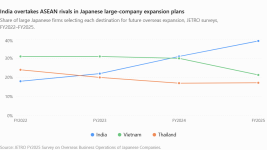
Japanese businesses were looking to pivot to India, as well as destinations such as Vietnam, Thailand and other parts of south-east Asia, after years of intensive investment in China.

“We fed the dragon and it breathed fire,” he said of the increasingly competitive environment in China.

Corporate Japan has also been caught in the middle of a now year-long diplomatic spat that was triggered by Prime Minister Sanae Takaichi’s remarks in parliament regarding Japan’s hypothetical military involvement in a conflict over Taiwan.

Those comments sparked a furious response from China, which has restricted exports of critical minerals to Japanese companies.

Travel has also dried up, with the exception of a few small-scale business delegations. The most recent figures from the Japan National Tourist Organisation showed a 59 per cent year-on-year drop in mainland Chinese tourists visiting Japan in August.

In Guangzhou, a huge annual travel expo held ahead of China’s October 1 National Day featured no exhibits from Japanese companies.

Rising labour costs and worsening economic conditions in China, following the collapse of real estate prices and huge industrial overcapacity, were also driving the trend, Teikoku researchers said.

New Japanese investment into China has dwindled. Between 2024 and 2026, 1,221 Japanese companies entered China, either through local subsidiaries, factories or representative offices, according to the Teikoku report, the lowest number on record apart from during the Covid-19 pandemic.

They were offset by a record 4,137 Japanese companies that completely withdrew from China during that period.

US President Donald Trump’s on-again, off-again tariff war with China has also cast a heavy shadow, companies told the researchers. Teikoku found that around 60 per cent of Japanese manufacturers with production bases in China reported an impact on revenues from the US tariffs.

@Nimble @Vikramaditya1
@Sam6536
Manufacturing is hard work. Are you sure India is up to the task?

To attract manufacturing you need to build infrastructure, power stations, transmission lines, dams, reservoirs, roads, railway, efficient ports etc You need cheap energy, electricity, water and 5G infrastructure.
You also need to train skill workers, engineers, technicians.

It is a lot of hard work. Manufacturing is not as easy as you think.

India should just stick to sending people abroad to work and then remit their income back to India. This is much easier.
For Indian politicians, sending people abroad to work does not need a lot of hard. These politicians just need to sign labor deal with rich countries. Very easy. No sweat at all.
 

Users who are viewing this thread

Country Watch Latest

Back
Top