PFX Alpha: The JF‑17’s Next Evolution and Pakistan’s Push for Greater Sovereignty
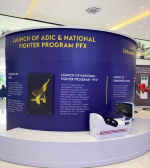
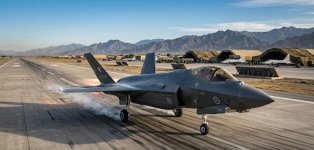
For nearly twenty years, the JF‑17 Thunder has been the Pakistan Air Force’s most important indigenous fighter program, a platform designed not only to fill capability aps, but to give Pakistan a foundation for long‑term aerospace self‑reliance. Today, the aircraft stands at the threshold of its most consequential transformation yet. The PAF’s emerging modernization effort, known as
PFX Alpha, signals a shift from incremental upgrades toward a more ambitious, sovereign vision for the Thunder’s future.
Although the PAF has not formally labeled this effort as “Block 4,” many analysts including
Quwa, and other online defense observers argue that PFX Alpha is effectively shaping up to be the
JF‑17 Block 4. Their view is grounded in the program’s direction: a decisive move toward
locally produced avionics, sensors, and potentially even a domestic AESA radar, marking the most significant leap in indigenous capability since the aircraft’s inception.
At the heart of PFX Alpha is a push to expand Pakistan’s own avionics ecosystem. Over the past decade, the PAF has gradually increased the number of homegrown subsystems on the Thunder, but the next phase appears far more ambitious. The modernization effort is expected to prioritize
new mission computers, electronic warfare suites, and sensor packages developed within Pakistan’s growing defense‑industrial base. This shift is not merely about cost savings; it reflects a strategic desire for
sovereignty, the freedom to integrate weapons, software, and upgrades without external constraints or export‑control hurdles.
The radar domain is where this ambition becomes most visible. The Block III’s KLJ‑7A AESA radar was a major milestone, but it also underscored Pakistan’s dependence on foreign technology. Analysts believe PFX Alpha aims to change that. While there is no official confirmation that a fully indigenous airborne AESA radar is complete, the intent is unmistakable: Pakistan wants a radar it can modify, upgrade, and integrate with domestic weapons on its own terms. Quwa and other platforms argue that this radar, whether fully indigenous or co‑developed will likely be the defining feature of what they describe as the
“Block 4‑class” JF‑17.
Another intriguing possibility emerging from defense circles is the integration of a
Turkish infrared search and track (IRST) system. Turkey’s defense industry has made rapid progress in electro‑optical and IRST technologies, and Ankara’s growing defense partnership with Islamabad makes such collaboration plausible. An IRST would give the JF‑17 a
passive, long‑range detection capability, a major advantage in environments where radar emissions could compromise survivability. If adopted, a Turkish IRST would significantly enhance the Thunder’s situational awareness and bring it closer to the sensor suite of modern 4.5‑generation fighters.
Engine speculation continues to swirl around the program, particularly regarding China’s
WS‑21, a modernized derivative of the WS‑13. Some reports claim the engine has completed evaluations, but no authoritative source has confirmed its selection for the JF‑17 or its inclusion in PFX Alpha. What is clear, however, is that the PAF is seeking improved thrust, better hot‑and‑high performance, and greater reliability whether through the WS‑21, an upgraded RD‑93 variant, or a future powerplant yet to be announced.
As the Thunder evolves, the fleet naturally divides into three tiers.
Block I aircraft, built quickly to accelerate induction, have limited upgrade potential and are widely expected to retire rather than undergo deep modernization.
Block II airframes, with stronger architecture and better systems integration, are prime candidates for a mid‑life update, one that could align them with the PFX Alpha standard.
Block III, already equipped with AESA radar and advanced avionics, will serve as the bridge to whatever configuration emerges from the PFX Alpha effort.
Ultimately, PFX Alpha represents more than a technical upgrade. It marks the moment when the JF‑17 begins to mature into a platform shaped primarily by
Pakistan’s own engineering ecosystem, rather than by foreign suppliers. Whether or not the PAF officially calls it “Block 4,” the direction is clear, the Thunder’s next evolution will be defined by greater autonomy, deeper domestic integration, and a long‑term vision for self‑reliant aerospace capability.