

It's more likely to be WS-13 then the 93MA.Question: why are we assuming that PFX will have a ws-21 engine? It could simply be the upgraded RD-93MA engine? Who knows?
Also, I don't think it'll just be a block 3. It's clearly going to have some major upgrades, otherwise there's no real point.
Navigation
Install the app
How to install the app on iOS
Follow along with the video below to see how to install our site as a web app on your home screen.
Note: This feature may not be available in some browsers.
More options
Style variation
You are using an out of date browser. It may not display this or other websites correctly.
You should upgrade or use an alternative browser.
You should upgrade or use an alternative browser.
JF-17 PFX program
- Thread starter Zarvan
- Start date
More options
Who Replied?

Hi,
You asking those who have no insight into the project---.
Deino has no clue about the technicalities---. Just show him a picture and tail # and he will give you the count---other than that a rcok is smarter than him.
.....
Says the one who has proven no clue at all and mis-identifies a regular J-10C for a "special F/A-18-like J-35A for Pakistan"!?


That_Guy
THINK TANK: CONSULTANT

Its still an unknown at this point.It's more likely to be WS-13 then the 93MA.

Musings
Administrator

Calm down bro - i understand your anger but dont lower yourself. You better than thatTired of dealing with idiots that would rather attack me, while being confidently incorrect.
That_Guy
THINK TANK: CONSULTANT
You're right. I've just been irritated recently.Calm down bro - i understand your anger but dont lower yourself. You better than that
I apologize.
RealNapster
Elite Member
Question: why are we assuming that PFX will have a ws-21 engine? It could simply be the upgraded RD-93MA engine? Who knows?
Also, I don't think it'll just be a block 3. It's clearly going to have some major upgrades, otherwise there's no real point.
Even if it's the upgraded RD-93MA, it's not worth it.
That_Guy
THINK TANK: CONSULTANT
Depends on what you mean by that. Pakistan has experience and infrastructure related to the RD-93. An upgrade to the MA would allow PAF to save money, while having a safe and reliable upgrade.Even if it's the upgraded RD-93MA, it's not worth it.

Oscar
Moderator

Not exactly - it was a capability developed by the Chinese based on PAF spec. So I don’t see the excessive celebration in this regard since the CM-400 existed and so did the anti radiation seeker idea for it.Hi,
For a poor 3rd world country---from a position of BARE BONES NOTHIG in the "anti radiation missiles spectrum" to leap forward to 290 km range hypersonic missile is something that is out of works of fiction.
It just simply does not happen in the real world---. It is truly a momentuous occasion---.
If I recall back---I realize now that the CM400AKG had suddenly disappeared from the public information domain---. Posters here even doubted if it was integrated with the JF17's---even though there were picture of the JF17 years ago---.
Lets not be the neighboring country in excessive celebration and making mountains out of molehills or encouraging drawn out AI content.
If you want to encourage something, better analysis and objectivity may be the focus.
Not
لڑکی نے کیا مسکرا کے دیکھ لیا
دیوانے نے برات نکل دی

Quwa
Research Partner
On this note, I can see the PAF exploring an ALBM variant of the P282. Basically, the P282 is likely the base platform for hypersonic BMs for land, naval, and air deployment. So, an ALBM variant of P282 could be of interest as a follow-on to the CM-400 AKG.Not exactly - it was a capability developed by the Chinese based on PAF spec. So I don’t see the excessive celebration in this regard since the CM-400 existed and so did the anti radiation seeker idea for it.
Lets not be the neighboring country in excessive celebration and making mountains out of molehills or encouraging drawn out AI content.
If you want to encourage something, better analysis and objectivity may be the focus.
Not
لڑکی نے کیا مسکرا کے دیکھ لیا
دیوانے نے برات نکل دی
Oscar
Moderator
Depends on the flight profile of the system.On this note, I can see the PAF exploring an ALBM variant of the P282. Basically, the P282 is likely the base platform for hypersonic BMs for land, naval, and air deployment. So, an ALBM variant of P282 could be of interest as a follow-on to the CM-400 AKG.
So long as you can set up some sort of fast production line(no need for automation with Pakistani labor cost other than ensuring quality) for them you can roll their variants out fairly quick.
Quwa
Research Partner
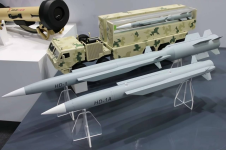
Just my opinion, but I think we'll also build a supersonic-cruising missile capability (emulating BrahMos) as well via large-scale purchases from China, e.g, CM-302 and HD-1/A.Depends on the flight profile of the system.
So long as you can set up some sort of fast production line(no need for automation with Pakistani labor cost other than ensuring quality) for them you can roll their variants out fairly quick.
It's not solely about copying India, but rather, leveraging high-speed and inherently tough-to-intercept munitions to rapidly strike enemy air defence systems, neutralize system assets (e.g, AEW&C when on the ground, etc). You have ballistics like the CM-400AKG and Fatah-series on one end, and supersonic-cruising vectors on the other to complicate the intercept element and increase the probabilities of successful hits.
Quwa
Research Partner
They're not the same missile.From What I understand P282 and SMASH are the same missile so How exactly is P282 different from your vanilla Ballistic Missile, other than a better seeker.
As such I fail to see it's utility compared to CM 400 nevermind CM 400 is the heaviest missile at 1.2 ton that JF 17 can carry so how exactly is JF 17 going to carry P282 @Oscar
SMASH = Supersonic Missile Anti-Ship
P282 = (as per PN CNS in 2020) is a hypersonic ASBM.

Tariq Habib Afridi
Registered Member

@Michael @RajaBaja
Gentlemen, your discussion on fighter aircraft radar technology raises interesting points, but there are several inaccuracies that need clarification for a more accurate understanding of the topic. First of all, Michael, you're correct that T/R (transmit/receive) modules are only part of radar performance, and algorithms, data processing, and threat databases are critical. Also, Gallium Oxide (GaO) is an emerging ultra-wide bandgap material, but it’s not yet widely adopted for AESA radars due to its early-stage development and challenges in high-power applications. RajaBaja, your assertion that SiC (Silicon Carbide) chips can process "3 times the information" and provide "3 times the range" compared to GaN is incorrect. SiC is primarily used as a substrate for GaN in RF applications, not as a standalone chip material for T/R modules in fighter radars. SiC enhances GaN’s thermal management but doesn’t directly replace GaN in AESA systems. The claim that SiC inherently triples radar range lacks evidence, as radar range depends on multiple factors like power output, antenna design, number of T/R modules and signal processing, not just the material.
Furthermore, GaAs (Gallium Arsenide) AESA radars are inherently backward compared to GaN as GaN offers significant advantages, including higher power output, efficiency, and thermal resilience, enabling longer detection ranges and better performance in contested environments.
In summary, GaN is the dominant material for modern AESA radars, including those in the J-20 and J-35, not SiC. GaN offers superior performance over GaAs, but radar effectiveness also depends on algorithms and databases, where the West retains an edge.
Gentlemen, your discussion on fighter aircraft radar technology raises interesting points, but there are several inaccuracies that need clarification for a more accurate understanding of the topic. First of all, Michael, you're correct that T/R (transmit/receive) modules are only part of radar performance, and algorithms, data processing, and threat databases are critical. Also, Gallium Oxide (GaO) is an emerging ultra-wide bandgap material, but it’s not yet widely adopted for AESA radars due to its early-stage development and challenges in high-power applications. RajaBaja, your assertion that SiC (Silicon Carbide) chips can process "3 times the information" and provide "3 times the range" compared to GaN is incorrect. SiC is primarily used as a substrate for GaN in RF applications, not as a standalone chip material for T/R modules in fighter radars. SiC enhances GaN’s thermal management but doesn’t directly replace GaN in AESA systems. The claim that SiC inherently triples radar range lacks evidence, as radar range depends on multiple factors like power output, antenna design, number of T/R modules and signal processing, not just the material.
Furthermore, GaAs (Gallium Arsenide) AESA radars are inherently backward compared to GaN as GaN offers significant advantages, including higher power output, efficiency, and thermal resilience, enabling longer detection ranges and better performance in contested environments.
In summary, GaN is the dominant material for modern AESA radars, including those in the J-20 and J-35, not SiC. GaN offers superior performance over GaAs, but radar effectiveness also depends on algorithms and databases, where the West retains an edge.

Michael
VIP Member

I'm glad. There are still people here who are willing to seriously confront technical issues.@Michael @RajaBaja
Gentlemen, your discussion on fighter aircraft radar technology raises interesting points, but there are several inaccuracies that need clarification for a more accurate understanding of the topic. First of all, Michael, you're correct that T/R (transmit/receive) modules are only part of radar performance, and algorithms, data processing, and threat databases are critical. Also, Gallium Oxide (GaO) is an emerging ultra-wide bandgap material, but it’s not yet widely adopted for AESA radars due to its early-stage development and challenges in high-power applications. RajaBaja, your assertion that SiC (Silicon Carbide) chips can process "3 times the information" and provide "3 times the range" compared to GaN is incorrect. SiC is primarily used as a substrate for GaN in RF applications, not as a standalone chip material for T/R modules in fighter radars. SiC enhances GaN’s thermal management but doesn’t directly replace GaN in AESA systems. The claim that SiC inherently triples radar range lacks evidence, as radar range depends on multiple factors like power output, antenna design, number of T/R modules and signal processing, not just the material.
Furthermore, GaAs (Gallium Arsenide) AESA radars are inherently backward compared to GaN as GaN offers significant advantages, including higher power output, efficiency, and thermal resilience, enabling longer detection ranges and better performance in contested environments.
In summary, GaN is the dominant material for modern AESA radars, including those in the J-20 and J-35, not SiC. GaN offers superior performance over GaAs, but radar effectiveness also depends on algorithms and databases, where the West retains an edge.
Regarding the GaO AESA technology, China is also in a trial state at the moment. At the moment In this field, Chinese research organizations have already achieved a lot. Root For GaO chips, SiC is not the best substrate material. According to public information, Chinese scientists have started to use diamond as the substrate material for GaO chips to make chips. (Yes, it is indeed diamond. But, it's artificially cultivated diamonds.)
If you are more interested in China's cutting-edge aerospace technology development, I can recommend a website for you. Chinese Journal of Aeronautics
This is a purely academic site. It has a very large number of academic papers. However, you need to know some Chinese, and translation software doesn't translate these completely accurately.
As these academic papers involve a large number of state secrets, they are made public with varying degrees of “technical treatment”. Therefore, you can read them with peace of mind.
PakShaheen_79
Trusted Member
It is exactly that and there are reasons to believe that it is going to meet same fate unless China helps us build it. Let me tell everyone an open secret, the day Pakistan Air Force begin pursuing an indigenous fighter program, you will not see these stupid models and CGI generated videos. Instead you will see emergence of new technology universities, design centres of aero engineering excellence, mil aviation labs, etc. In the absence of all these an originally MRO organization then assembler of kits like PAC can't build something Original even based on an existing platform. Azm 1 was pipedream so is PFX! Resources must first need to divert to build requisite institutional capacity and infrastructure.My God, this PFX sounds like: Project AZ 2.0
Last edited:
Users who are viewing this thread
Total: 1 (members: 0, guests: 1)
Pakistan Defence Latest
-

-

-
 Federal cabinet gives nod to imposition of emergency in KP; summary sent to president (10 Viewers)
- Latest: Forsvaret
-
-
Country Watch Latest
-
 Iran - Israel/US War: Israel-US declare war on Iran, Iran responds (129 Viewers)
- Latest: shapurzolaktaf
-
-

-
-

