JF-17 - Updates, News & Discussion

New aesa based ew suite being considered. Local aesa will be mated with FAAZ 2 and pl15 concurrently.
Are there any inputs from ASELSAN? GaN powered AESA based different versions of MEHPOD (National EW POD) are being integrated into OZGUR-upgraded F-16s, Akinjis etc....
 

Beyond Detection: AESA Radars as Cyber and Electronic Warfare Tools

Active Electronically Scanned Array (AESA) radars have revolutionized battlefield awareness with their superior range, resolution, and agility. But their capabilities extend far beyond simply painting a picture of the environment. AESA technology holds immense potential for cyber and electronic warfare (EW) applications, making them multi-functional tools for modern combat.

Traditional Strengths Amplified for EW:
AESA radars consist of numerous small transmit/receive modules, allowing for the creation and steering of multiple radio beams. This beamforming capability translates directly to EW. By rapidly switching beam direction and frequency, AESA radars can be used for:
  • Electronic Attack (EA): Jamming enemy radars and communication systems by directing focused bursts of radio frequency (RF) energy.
  • Electronic Deception (ED): Mimicking friendly or enemy radar signatures to confuse and mislead adversaries.
Cyberwarfare Potential:
The software-defined nature of AESA radars opens doors for cyberwarfare applications. By manipulating the radar's control systems, attackers could potentially:
  • Disrupt radar operation: Render the radar inoperable or cause it to generate false data.
  • Extract sensitive information: Exploit vulnerabilities to gain access to radar data or internal networks.
The Future of Multi-Functional Warfare:
The convergence of cyber, electronic, and traditional warfare is shaping the future of the battlefield. AESA radars, with their inherent flexibility and software-defined nature, are at the forefront of this evolution. By integrating cyber and EW capabilities, AESA radars can become powerful tools for:
  • Disrupting enemy C4ISR (Command, Control, Communications, Computers, Intelligence, Surveillance, and Reconnaissance) networks.
  • Protecting friendly forces from enemy jamming and deception.
  • Providing situational awareness in complex electromagnetic environments.
Challenges and Considerations:
Developing AESA radars for cyber and EW applications requires careful consideration. Security measures must be robust to prevent cyberattacks. Additionally, the potential for unintended interference with friendly systems needs to be mitigated.

Conclusion:
AESA radars are no longer just for detection. Their unique capabilities make them prime candidates for cyber and electronic warfare. By harnessing this potential, militaries can gain a significant advantage in the ever-evolving battlespace of the future. However, careful development and implementation are crucial to ensure these new functionalities don't come at the cost of security or unintended consequences.
 
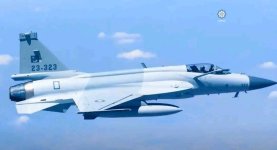
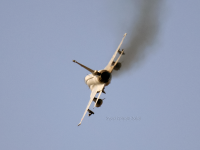
Does this indicate that those are built in 2023 are at least #20 and 23 (cant make out tail of 3rd) block 3s?
 

Beyond Detection: AESA Radars as Cyber and Electronic Warfare Tools

Active Electronically Scanned Array (AESA) radars have revolutionized battlefield awareness with their superior range, resolution, and agility. But their capabilities extend far beyond simply painting a picture of the environment. AESA technology holds immense potential for cyber and electronic warfare (EW) applications, making them multi-functional tools for modern combat.

Traditional Strengths Amplified for EW:
AESA radars consist of numerous small transmit/receive modules, allowing for the creation and steering of multiple radio beams. This beamforming capability translates directly to EW. By rapidly switching beam direction and frequency, AESA radars can be used for:
  • Electronic Attack (EA): Jamming enemy radars and communication systems by directing focused bursts of radio frequency (RF) energy.
  • Electronic Deception (ED): Mimicking friendly or enemy radar signatures to confuse and mislead adversaries.
Cyberwarfare Potential:
The software-defined nature of AESA radars opens doors for cyberwarfare applications. By manipulating the radar's control systems, attackers could potentially:
  • Disrupt radar operation: Render the radar inoperable or cause it to generate false data.
  • Extract sensitive information: Exploit vulnerabilities to gain access to radar data or internal networks.
The Future of Multi-Functional Warfare:
The convergence of cyber, electronic, and traditional warfare is shaping the future of the battlefield. AESA radars, with their inherent flexibility and software-defined nature, are at the forefront of this evolution. By integrating cyber and EW capabilities, AESA radars can become powerful tools for:
  • Disrupting enemy C4ISR (Command, Control, Communications, Computers, Intelligence, Surveillance, and Reconnaissance) networks.
  • Protecting friendly forces from enemy jamming and deception.
  • Providing situational awareness in complex electromagnetic environments.
Challenges and Considerations:
Developing AESA radars for cyber and EW applications requires careful consideration. Security measures must be robust to prevent cyberattacks. Additionally, the potential for unintended interference with friendly systems needs to be mitigated.

Conclusion:
AESA radars are no longer just for detection. Their unique capabilities make them prime candidates for cyber and electronic warfare. By harnessing this potential, militaries can gain a significant advantage in the ever-evolving battlespace of the future. However, careful development and implementation are crucial to ensure these new functionalities don't come at the cost of security or unintended consequences.
To optimize leveraging the AESA systems you need to have the following indigenous capabilities:
  • GaN type wide bandgap devices for high frequency and high power applications. Designing and fabricating these devices is an art form for their bandgap engineering is up to your imagination. Elhamdulillah the Turkish boys and girls have become the Bell Labs class maestro in this field.
  • EM computations and subsequent algorithms development.
  • AI, deep learning, neural node etc.
  • Digital wireless comm unique techniques, protocols, hardware etc.
  • Cryptology.
  • Signal processing capabilities using custom built processors
  • Etc.
 

Users who are viewing this thread

Latest Posts

Back
Top