Joint Defense Agreement: Turkey, Saudi Arabia, and Pakistan, news & updates

If the agreement remains limited to Saudi Arabia, Turkey, and Pakistan, it will remain important, but it will not necessarily turn into a complete regional system. Therefore, the next step must be to expand the circle of joining countries, not as a matter of numerical expansion, but rather as a matter of building a strategic bloc that is truly capable of changing the balance of power.

Egypt and Syria stand out here as two additions of different natures, but they are strategically complementary. Egypt represents the largest Arab weight in terms of population, army, location and political ability, and Cairo’s accession will give the agreement an Arab weight that is difficult to overcome, in addition to its location that connects the Gulf to the Levant and North Africa and its supervision of the Suez Canal, one of the most important strategic passages in the world.

As for Syria, its importance stems from its location in the heart of the Levant and from its being a geographical node at which the accounts of Türkiye, Iran, Israel, and the Arab world intersect. Including Damascus into this framework, if the necessary political conditions are met, will not be merely a new expansion in membership, but rather a step towards returning Syria to the state’s regional security system, and gradually extracting it from the logic of open arenas and the struggle for influence. With the joining of Egypt and Syria together, the agreement gains what it lacks: Arab weight from the south and Levantine depth from the north, and it transforms from a tripartite understanding into a project capable of redrawing the region’s balances on broader and more independent foundations.

The participation of Qatar, Bahrain and Kuwait also seems to be a logical step in this path, especially with their official welcome of the agreement. Their accession could open the door to the rest of the Gulf states, and gradually transform the agreement from a limited formula to a more expansive Gulf, Arab and Islamic framework.

The real equation is: Can the countries of the region move from a position of reaction to a position of creating balance? The region does not lack more power, but rather it lacks the distribution of power in a way that prevents one party from deciding the fate of others. The value of the third axis will not lie in the number of its armies or the size of its economy alone, but rather in its ability to say to the other two axes: This region is not a strategic vacuum, and its future will not be shaped without its people.

If the “Mecca Agreement” turns into an institutional structure for consultation, coordination, and joint defense, it may fill one of the largest strategic voids in the region: the absence of a deterrence system based on large regional powers that possess both legitimacy and capacity.
 
One important potential outcome that I think is worth considering is nuclear cooperation. Let me lay out some of the connections I see here:

1. Pakistan: Pakistan has a potential long-term requirement for small modular reactors (SMRs), both for civilian nuclear power and, potentially, for future nuclear-propelled submarine ambitions. Pakistan is also acquiring the Yuan-class/Hangor-class submarines from China, with the longer-term objective of progressively indigenizing submarine construction and absorbing the associated design, manufacturing and maintenance ecosystem. Even with substantial domestic assimilation of that infrastructure, however, a nuclear-powered attack submarine would be a fundamentally different undertaking. It would likely require a substantially larger platform than the current Hangor-class design, along with an entirely new industrial and technological base.

2. Türkiye: This is where Türkiye could become particularly relevant. Ankara already has an indigenous submarine-development programme and is steadily expanding its naval nuclear-technology ambitions. If Türkiye succeeds in developing expertise in compact nuclear-reactor technologies, that could eventually create an additional technological base for cooperation. Pakistan, meanwhile, has decades of experience in nuclear science and engineering and an established civilian nuclear infrastructure. The problem for both countries is less the absence of technical talent than the enormous financial, industrial and regulatory burden associated with developing an entirely new reactor technology and the supporting ecosystem.

3. Saudi Arabia: This is where Saudi Arabia potentially completes the triangle. Riyadh has the financial resources to fund projects of a scale that would be difficult for either Pakistan or Türkiye to undertake independently, while it also has a strong strategic incentive to develop an indigenous nuclear-industrial capability and greater strategic autonomy.

The hypothetical model, therefore, could look something like this: Saudi capital + Pakistani nuclear expertise + Turkish industrial capacity and access to international supply chains. Rather than any one country attempting to build an advanced compact-reactor ecosystem from scratch, the three could theoretically divide the financial, technical and industrial burden.

Of course, this is highly speculative and there are enormous legal, regulatory and geopolitical barriers—particularly around nuclear propulsion, technology transfer and international non-proliferation obligations. But strategically, I think this is one of the more interesting long-term possibilities emerging from a deeper Pakistan–Türkiye–Saudi relationship. The real significance would not necessarily be a single reactor project; it would be the creation of a shared nuclear-industrial ecosystem spanning civilian nuclear power, advanced manufacturing, reactor research and potentially naval applications.

That, in turn, could be far more consequential than any individual defence procurement deal.
 
One important potential outcome that I think is worth considering is nuclear cooperation. Let me lay out some of the connections I see here:

1. Pakistan: Pakistan has a potential long-term requirement for small modular reactors (SMRs), both for civilian nuclear power and, potentially, for future nuclear-propelled submarine ambitions. Pakistan is also acquiring the Yuan-class/Hangor-class submarines from China, with the longer-term objective of progressively indigenizing submarine construction and absorbing the associated design, manufacturing and maintenance ecosystem. Even with substantial domestic assimilation of that infrastructure, however, a nuclear-powered attack submarine would be a fundamentally different undertaking. It would likely require a substantially larger platform than the current Hangor-class design, along with an entirely new industrial and technological base.

2. Türkiye: This is where Türkiye could become particularly relevant. Ankara already has an indigenous submarine-development programme and is steadily expanding its naval nuclear-technology ambitions. If Türkiye succeeds in developing expertise in compact nuclear-reactor technologies, that could eventually create an additional technological base for cooperation. Pakistan, meanwhile, has decades of experience in nuclear science and engineering and an established civilian nuclear infrastructure. The problem for both countries is less the absence of technical talent than the enormous financial, industrial and regulatory burden associated with developing an entirely new reactor technology and the supporting ecosystem.

3. Saudi Arabia: This is where Saudi Arabia potentially completes the triangle. Riyadh has the financial resources to fund projects of a scale that would be difficult for either Pakistan or Türkiye to undertake independently, while it also has a strong strategic incentive to develop an indigenous nuclear-industrial capability and greater strategic autonomy.

The hypothetical model, therefore, could look something like this: Saudi capital + Pakistani nuclear expertise + Turkish industrial capacity and access to international supply chains. Rather than any one country attempting to build an advanced compact-reactor ecosystem from scratch, the three could theoretically divide the financial, technical and industrial burden.

Of course, this is highly speculative and there are enormous legal, regulatory and geopolitical barriers—particularly around nuclear propulsion, technology transfer and international non-proliferation obligations. But strategically, I think this is one of the more interesting long-term possibilities emerging from a deeper Pakistan–Türkiye–Saudi relationship. The real significance would not necessarily be a single reactor project; it would be the creation of a shared nuclear-industrial ecosystem spanning civilian nuclear power, advanced manufacturing, reactor research and potentially naval applications.

That, in turn, could be far more consequential than any individual defence procurement deal.

KSA is one of the most educated societies on the planet with an almost 100% literacy rate with one of the highest scientific outputs per capita as well.

This was an article from 2016 from NATURE:

The rise of Saudi Arabia as a science powerhouse​


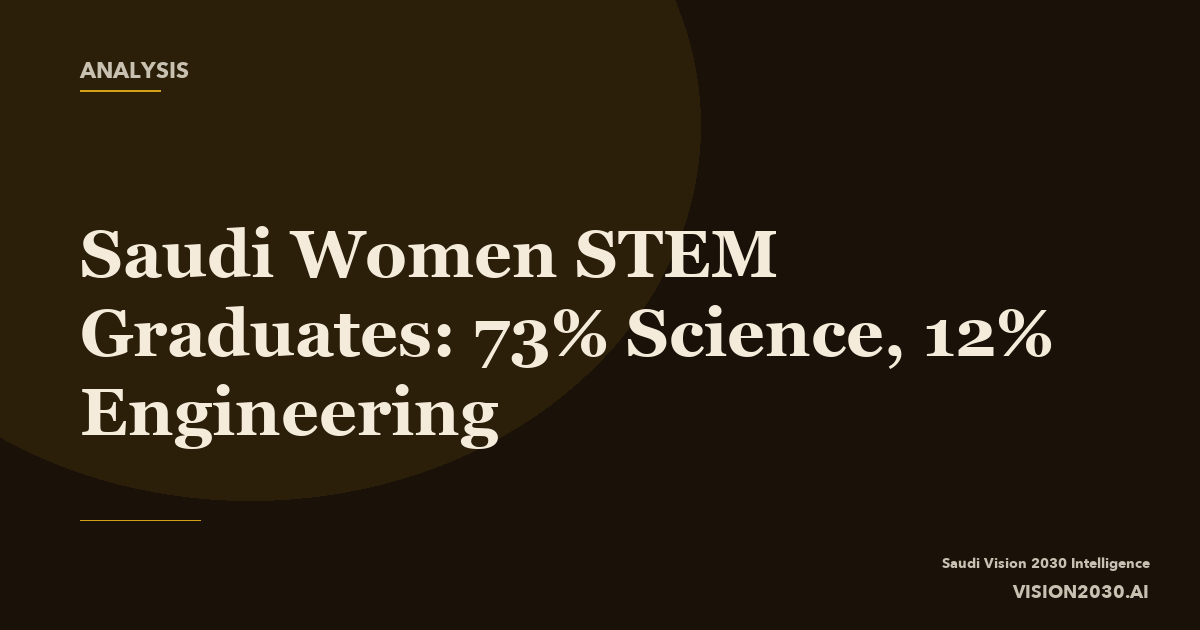
Saudi Arabian women are one of the most educated in the world and have one of the highest percentages of STEM graduates in the world as well.


Recently a half Saudi Arabian half Jordanian (Saudi Arabian citizen as well) received a Noble Prize in chemistry.


We have 1 Saudi Arabian aerospace engineer (woman) in the US (formerly employed by NASA) that runs her own aerospace company that is designing missiles etc.


Saudi Arabian universties are the best-ranked in the entire Muslim world and one of the highest ranked overall.


To view this content we will need your consent to set third party cookies.
For more detailed information, see our cookies page.


The economy is booming as well.

To view this content we will need your consent to set third party cookies.
For more detailed information, see our cookies page.


To view this content we will need your consent to set third party cookies.
For more detailed information, see our cookies page.


One of the highest industrial growths in the world. Recently KSA achieved 26 % self-sufficiency in terms of localization of military spending and production. Many key military sectors are gaining high degrees of self-sufficiency.

Speaking of nuclear energy cooperation, around 5-10% of all the world's uranium reserves are found in KSA.

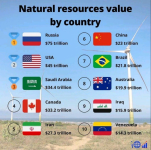
No need to mention that KSA is the richest country in the world in terms of resources compared to per capita wealth.

1787351198767.png


Saudi Arabia ranks first at International Nuclear Science Olympiad as students claim gold medals​


Saudi Arabia ranks first at International Nuclear Science Olympiad as students claim gold medals

August 9, 2026 | 02:28 PM
Saudi Gazette
Last Updated: August 9, 2026 | 02:51 PM

EDDAH — Saudi student Jana Al-Sabil’s gold medal and “Best Female Student” award at the third International Nuclear Science Olympiad 2026, along with Amjad Al-Darwish’s gold medal and “Nuclear Science Ambassador” title, helped Saudi Arabia rank first overall in the competition.

Jana Saleh Al-Sabil won the gold medal and “Best Female Student” award in recognition of her scientific excellence and performance in the competition.

Presented by the International Atomic Energy Agency (IAEA), the award was among the special prizes approved by the Olympiad’s International Council to honor female students for scientific excellence, highlight their contributions to nuclear science, and encourage their participation in specialized scientific fields.

Al-Sabil was selected following her outstanding performance in the Olympiad, which included two examinations — one theoretical and one practical — each lasting five hours.

The exams assessed participants’ knowledge and skills in nuclear science, as well as their abilities to conduct scientific analysis and experiments, interpret results, and solve advanced problems.

Saudi Arabia ranks first at International Nuclear Science Olympiad as students claim gold medals


Saudi Arabia ranked first in the third edition of the Olympiad after Amjad Mahmoud Al-Darwish won a gold medal and the title of “Nuclear Science Ambassador” for achieving the highest combined score in the theoretical and practical examinations among all competitors.

In addition, Abdulaziz Abdulmohsen Al-Sharait won a silver medal, while Saleh Mubarak Dhaifallah Al-Harbi received a bronze medal.

The Olympiad, hosted by Saudi Arabia in Jeddah from August 2 to 9, brought together 120 students and scientific specialists representing 19 countries.

It was jointly organized by the Ministry of Education, the King Abdulaziz and His Companions Foundation for Giftedness and Creativity (Mawhiba), and King Abdullah City for Atomic and Renewable Energy, while King Abdulaziz University hosted the competitions and activities.

The International Nuclear Science Olympiad, approved by the IAEA in 2024, is an international scientific competition for secondary school students that aims to develop their knowledge and skills in nuclear science and its peaceful applications and encourage innovation and scientific research in the field.


KSA just signed a nuclear energy deal with the US with very few strings attached and if implemented it will turn KSA into one of the world's largest nuclear energy powers.


So KSA offers far more than just financial power (which is arguably the most important element in the world).
 
Last edited:

'We will tear you to pieces': Indian general warns Erdogan about pact with Saudi Arabia, Pakistan​

Retired Maj.-Gen. Gagan Deep Bakshi says India needs Iran as a counterweight to Pakistan and will not sacrifice its interests to accommodate Israel.


AUGUST 20, 2026 11:47

Retired Indian Maj.-Gen. Gagan Deep Bakshi warned that the growing alignment among Turkey, Saudi Arabia, and Pakistan could pose a strategic threat to India, while stressing that New Delhi would not sacrifice its ties with Iran to accommodate Israel’s security concerns.

Speaking to the New Delhi-based network, Republic World, Bakshi argued that the emergence of what he calls a "Sunni NATO" in the Middle East is a source of strategic concern for India.

At the same time, he sent a clear message to Israel: The alliance between the two countries is important, but New Delhi will not give up its interests with Iran simply because of the war between Jerusalem and Tehran.

According to Bakshi, the agreement that took shape in Mecca among Turkey, Saudi Arabia, and Pakistan has created a new regional reality from India's perspective. "A Sunni NATO comprising Turkey, Saudi Arabia, and Pakistan has been established in the Middle East, in Mecca, and that is a serious cause for concern," he said.

Bakshi stressed that, from India's perspective, Shi'ite Iran serves as an important counterweight to Pakistan.

To view this content we will need your consent to set third party cookies.
For more detailed information, see our cookies page.


Iran as a counterweight to Pakistan

"We very much need Shi'ite Iran to be on our side because Pakistan is our primary security headache. China may be the main threat, but together with it, Pakistan is our biggest security headache," he said.

Bakshi compared the threat Iran represents in Israel's eyes with that posed by Pakistan from India's perspective.

"Iran does not have even a single nuclear bomb, and yet it is perceived as an existential threat to Israel. And what about Pakistan? A fundamentalist, jihadist Islamic state that possesses 180 nuclear warheads," he claimed.

He added that India had not seen Israel display similar concern over Pakistan's nuclear arsenal.

"We have not seen Israel losing sleep over the bombs in Pakistan's hands because they are considered a threat only to India," he said.

According to Bakshi, the rapprochement between Ankara and Islamabad is not merely theoretical. He cited Turkish assistance to Pakistan during Operation Sindoor, claiming that Turkey supplied it with nearly 1,000 unmanned aerial vehicles and helped operate them.

"This was already a 'Sunni NATO,' with or without an agreement. Turkey and Pakistan are already in an undeclared practical alliance," he said.

Bakshi also noted that during the confrontation, Turkey sent a warship to the port of Karachi, arguing that this was another expression of the close security ties between the two countries.

"Turkey has the largest army in NATO," he said, while questioning its ability to intervene directly in a war between India and Pakistan because of the geographical distance.

According to Bakshi, any Turkish force attempting to come to Pakistan's aid would have to travel through the Mediterranean Sea and the Arabian Sea.

"The Indian Navy can tear apart any Turkish armada that tries to come to Pakistan's aid," he said.

India will not sacrifice its interests with Iran

A central part of Bakshi's remarks was directed squarely at Israel. He stressed that India views Israel as a friend, but would not agree to subordinate its own interests to Israeli needs, particularly when it comes to Iran.

"I am afraid that at some point Israel will also have to be sensitive to Indian concerns," he said. "We are not the 51st state of the United States, and for that matter we are also not an appendage or client state of Israel. We are friends, certainly. But vassals? No, sir."

"You cannot simply whistle and make our senior leaders go here and there, and ask us to sacrifice our interests," he said.

Bakshi specifically addressed possible pressure on India to distance itself from Iran because of the war.

"You cannot tell us: Throw Iran away because you are at war with it. When it comes to Iran, you cannot ask us to sacrifice our interests."

According to Bakshi, relations with Iran are vital to India economically and geostrategically as well. He pointed to the possibility of purchasing Iranian oil at low prices, refining it at Indian refineries, and subsequently exporting the products to other markets.

Beyond that, he stressed Iran's importance as an overland route for India.

"Iran provides India with the land bridge to Central Asia and the land bridge to Afghanistan, and these are of vital importance to us."

India cannot afford to give up those routes because of the war between Israel and Iran, he said.

"We cannot close these land routes because Israel is at war with Iran."

Bakshi concluded that the friendship between India and Israel remains important, but that from New Delhi's perspective, it has clear limits when major security and economic interests are at stake. Against the backdrop of growing ties between Turkey and Pakistan, and Indian concerns over a broader Sunni alliance, he believes that India's relationship with Iran is becoming more important, not less.


Che pidri, che pidri ka shorba
 
Why should it be evaporated? It is a country to country mutual defense pact. We have multiple government changes in Europe, and NATO still exists.
They are more incline to West and less interested in Arab politics or security. Its all started when Islamist came in power.
 

“Saudi officials say they are tired of doling out endless aid to poorer states like Egypt, Pakistan and Lebanon only to watch it evaporate.” 4/2 NY Times Article in Comments​

Economy اقتصاد

For much of the past decade, Saudi Arabia sent billions of dollars in aid to Egypt, bolstering a poorer regional ally seen as too strategically important to neglect. But recently, there has been a noticeable shift. Even as Egypt slides deeper and deeper into economic crisis, Saudi officials have sent a stern message: No more blank checks. Flush with an influx of oil revenue, the Gulf kingdom’s 37-year-old leader, Crown Prince Mohammed bin Salman, is increasingly attaching conditions to such aid — insisting on economic overhauls like cutting subsidies and privatizing state-owned companies. “It used to be ‘Egypt is too big to fail,’” said Karen Young, a senior research scholar at Columbia University’s Center on Global Energy Policy. “Now the attitude is ‘Egypt is responsible for its own mistakes.’” The world’s largest crude oil exporter, Saudi Arabia ended 2022 with a $28 billion budget surplus after Russia’s invasion of Ukraine pushed up oil prices, sending profits flooding to producers. Despite that windfall, Saudi officials say they are tired of doling out endless aid to poorer states like Egypt, Pakistan and Lebanon only to watch it evaporate. The kingdom is still sending money abroad — possibly more than ever. But much of it is now geared toward international investments for profit and influence and at kick-starting new industries at home, like electric vehicles. The Saudi government has also taken on a role similar to the International Monetary Fund, which gives it even greater sway than before over regional politics, with larger nations like Pakistan effectively beholden to it. “We used to give direct grants and deposits without strings attached,” the Saudi finance minister, Mohammed al-Jadaan, said in January in Davos, Switzerland, at an annual gathering of the world’s political and economic elite. “And we are changing that. We are working with multilateral institutions to actually say, ‘We need to see reforms.’”

Saudi and Egyptian officials have worked to smooth things over, but the new power dynamic is not going away: Since his father became king in 2015, Prince Mohammed has transformed the way that Saudi Arabia uses its financial muscle, chasing higher investment returns and deploying oil revenue for leverage in the Middle East and beyond. Underpinning this more broadly is the crown prince’s effort to remake the kingdom’s own economy after oil prices plummeted in 2014, saddling the country with eight years of budget deficits. The focus is on spending that helps the conservative Islamic country to develop sectors beyond oil and to become a hub for a wider array of businesses as well as culture. He is building on a model that smaller Gulf countries like the United Arab Emirates and Qatar followed years ago, partly to increase their international influence. “What the Gulf has that almost no one else in the world has is quite a lot of excess capital,” said Timothy E. Kaldas, an expert in Egypt’s political economy at the Washington-based Tahrir Institute for Middle East Policy. “That comes with power.” In March, Saudi officials agreed to offer $5 billion for use by Turkey’s central bank, shoring up the Turkish economy two months before national elections. That brought Turkey closer to Saudi Arabia’s sphere of influence after years of tensions, which boiled over after the 2018 murder of the Saudi dissident and Washington Post columnist Jamal Khashoggi by Saudi agents in Istanbul. For other countries in the Middle East, Saudi aid has shriveled as the kingdom’s priorities shifted. In 2016, Saudi officials suspended billions of dollars of army and security-related aid to Lebanon as they grew frustrated with the mounting influence of Iran, their regional rival, in the country. A few years later, Lebanon, long dependent on Gulf assistance, spiraled into a financial crisis so desperate that people have turned to robbing banks to access their own savings. The Saudi government did not step in to halt it, and analysts said this was an early sign of the kingdom’s shifting approach to regional funding. Prince Mohammed’s emphasis is on “Saudi first” as he stokes nationalism. Last year, the Saudi sovereign fund announced that it would invest $24 billion in Egypt, Iraq, Jordan, Bahrain, Oman and Sudan. But channeling that financial support through investments lets Saudi officials prioritize their own profits. As Egypt devalued its currency three times over the past year, Saudi entities sought to buy assets at a discount. “The state is effectively selling its assets under duress,” Mr. Kaldas said. “They might like to say they’re bailing out Egypt, but from the perspective of Egyptians, some of them see it as them taking advantage of a bad situation.” Image

These shifts reflect longer-term changes in the relationships between Arab states over the past half-century, with the center of gravity shifting from places like Egypt — once the region’s cultural and political heavyweight — to the oil- and gas-rich Gulf. That does not sit well with many Egyptians. And the tensions over aid this year reignited those frustrations. In February, after a Saudi novelist wrote on Twitter that Egypt had its “neck tied to aid from here or there,” the Egyptian newspaper editor Abdelrazek Tawfik referred to the Gulf countries as “barefoot and naked” nouveau riche who have no right to dictate to Egypt. But the opinion article soon disappeared from the internet, and President Abdel Fattah el-Sisi of Egypt played down the conflict, speaking warmly of “the support our brothers have given us.” For Mr. el-Sisi, an authoritarian leader who seized power in a military coup in 2013, Gulf support has been critical. Mr. el-Sisi overturned a democratically elected Islamist president, Mohamed Morsi, who was viewed as a security threat by the monarchies of Saudi Arabia and the United Arab Emirates. Even though Saudi Arabia’s ruling elites built their nation on a narrative entwined with religion, many of them feared political Islam as a potential source of opposition at home, where political parties are effectively banned and Mr. Morsi’s Muslim Brotherhood movement is branded a terrorist group. From 2013 to 2020, Saudi Arabia sent $46 billion to Egypt in the form of central bank deposits, direct investments and oil and gas, according to data aggregated by Ms. Young. And that support, while it has lessened, has not evaporated entirely. When Egypt’s economic crisis became acute last year, a group of Gulf countries stepped in. They deposited billions of dollars in Egypt’s central bank, shoring up its depleted foreign-currency reserves and helping it pay for imports. Saudi Arabia is also essential to the International Monetary Fund’s latest bailout agreement with Egypt, which requires it to raise some of the funds for its own rescue by selling off $2 billion of government assets to wealthier Gulf countries. These assets could potentially include marquee banks and state-owned industrial enterprises — raising anxieties in Egypt about its sovereignty and standing. That the Egyptian government “placed the state in this extraordinarily vulnerable position” is worrying for its “geopolitical independence” in the long term, Mr. Kaldas said. Saudi and Egyptian officials are still talking about potential investments — and the policy changes that Saudi and I.M.F. officials want in return, including subsidy cuts and a reduction in the military’s sprawling role in the economy — according to two people familiar with the discussions, who spoke on the condition of anonymity because they are not public. But as months have gone by without substantial progress, Saudis and Egyptians alike have questioned Egypt’s ability to streamline its economy. “Sometimes you need to know where the money’s going,” said Hesham Alghannam, a Saudi political scientist. “Is it going to the benefit of the people?” Asked during a conference in Riyadh, the Saudi capital, this past month if Saudi Arabia was concerned about Egypt, Mr. al-Jadaan, the kingdom’s finance minister, struck a warmer tone than in Davos. “They may face some difficulty,” he said. “But I think they have what it takes to be a great nation.” In a statement soon after, Egypt’s finance minister said his country was “keen to support everything that is required to increase Saudi investments.”

Edit, td:lr Saudi Arabia has stopped offering "blank checks" to Egypt and other allies, insisting on economic reforms such as cuts in subsidies and the privatisation of state-owned firms in exchange for aid. The change in approach is attributed to Crown Prince Mohammed bin Salman's efforts to transform the Saudi economy and create a hub for a range of businesses, as well as to increase its international influence. Analysts suggest this shift has been noticed by the countries that previously benefited from Saudi largesse, with aid falling and being increasingly linked to profit-making.
 
Last edited:

“Saudi officials say they are tired of doling out endless aid to poorer states like Egypt, Pakistan and Lebanon only to watch it evaporate.” 4/2 NY Times Article in Comments​

Economy اقتصاد

For much of the past decade, Saudi Arabia sent billions of dollars in aid to Egypt, bolstering a poorer regional ally seen as too strategically important to neglect. But recently, there has been a noticeable shift. Even as Egypt slides deeper and deeper into economic crisis, Saudi officials have sent a stern message: No more blank checks. Flush with an influx of oil revenue, the Gulf kingdom’s 37-year-old leader, Crown Prince Mohammed bin Salman, is increasingly attaching conditions to such aid — insisting on economic overhauls like cutting subsidies and privatizing state-owned companies. “It used to be ‘Egypt is too big to fail,’” said Karen Young, a senior research scholar at Columbia University’s Center on Global Energy Policy. “Now the attitude is ‘Egypt is responsible for its own mistakes.’” The world’s largest crude oil exporter, Saudi Arabia ended 2022 with a $28 billion budget surplus after Russia’s invasion of Ukraine pushed up oil prices, sending profits flooding to producers. Despite that windfall, Saudi officials say they are tired of doling out endless aid to poorer states like Egypt, Pakistan and Lebanon only to watch it evaporate. The kingdom is still sending money abroad — possibly more than ever. But much of it is now geared toward international investments for profit and influence and at kick-starting new industries at home, like electric vehicles. The Saudi government has also taken on a role similar to the International Monetary Fund, which gives it even greater sway than before over regional politics, with larger nations like Pakistan effectively beholden to it. “We used to give direct grants and deposits without strings attached,” the Saudi finance minister, Mohammed al-Jadaan, said in January in Davos, Switzerland, at an annual gathering of the world’s political and economic elite. “And we are changing that. We are working with multilateral institutions to actually say, ‘We need to see reforms.’”

Saudi and Egyptian officials have worked to smooth things over, but the new power dynamic is not going away: Since his father became king in 2015, Prince Mohammed has transformed the way that Saudi Arabia uses its financial muscle, chasing higher investment returns and deploying oil revenue for leverage in the Middle East and beyond. Underpinning this more broadly is the crown prince’s effort to remake the kingdom’s own economy after oil prices plummeted in 2014, saddling the country with eight years of budget deficits. The focus is on spending that helps the conservative Islamic country to develop sectors beyond oil and to become a hub for a wider array of businesses as well as culture. He is building on a model that smaller Gulf countries like the United Arab Emirates and Qatar followed years ago, partly to increase their international influence. “What the Gulf has that almost no one else in the world has is quite a lot of excess capital,” said Timothy E. Kaldas, an expert in Egypt’s political economy at the Washington-based Tahrir Institute for Middle East Policy. “That comes with power.” In March, Saudi officials agreed to offer $5 billion for use by Turkey’s central bank, shoring up the Turkish economy two months before national elections. That brought Turkey closer to Saudi Arabia’s sphere of influence after years of tensions, which boiled over after the 2018 murder of the Saudi dissident and Washington Post columnist Jamal Khashoggi by Saudi agents in Istanbul. For other countries in the Middle East, Saudi aid has shriveled as the kingdom’s priorities shifted. In 2016, Saudi officials suspended billions of dollars of army and security-related aid to Lebanon as they grew frustrated with the mounting influence of Iran, their regional rival, in the country. A few years later, Lebanon, long dependent on Gulf assistance, spiraled into a financial crisis so desperate that people have turned to robbing banks to access their own savings. The Saudi government did not step in to halt it, and analysts said this was an early sign of the kingdom’s shifting approach to regional funding. Prince Mohammed’s emphasis is on “Saudi first” as he stokes nationalism. Last year, the Saudi sovereign fund announced that it would invest $24 billion in Egypt, Iraq, Jordan, Bahrain, Oman and Sudan. But channeling that financial support through investments lets Saudi officials prioritize their own profits. As Egypt devalued its currency three times over the past year, Saudi entities sought to buy assets at a discount. “The state is effectively selling its assets under duress,” Mr. Kaldas said. “They might like to say they’re bailing out Egypt, but from the perspective of Egyptians, some of them see it as them taking advantage of a bad situation.” Image

These shifts reflect longer-term changes in the relationships between Arab states over the past half-century, with the center of gravity shifting from places like Egypt — once the region’s cultural and political heavyweight — to the oil- and gas-rich Gulf. That does not sit well with many Egyptians. And the tensions over aid this year reignited those frustrations. In February, after a Saudi novelist wrote on Twitter that Egypt had its “neck tied to aid from here or there,” the Egyptian newspaper editor Abdelrazek Tawfik referred to the Gulf countries as “barefoot and naked” nouveau riche who have no right to dictate to Egypt. But the opinion article soon disappeared from the internet, and President Abdel Fattah el-Sisi of Egypt played down the conflict, speaking warmly of “the support our brothers have given us.” For Mr. el-Sisi, an authoritarian leader who seized power in a military coup in 2013, Gulf support has been critical. Mr. el-Sisi overturned a democratically elected Islamist president, Mohamed Morsi, who was viewed as a security threat by the monarchies of Saudi Arabia and the United Arab Emirates. Even though Saudi Arabia’s ruling elites built their nation on a narrative entwined with religion, many of them feared political Islam as a potential source of opposition at home, where political parties are effectively banned and Mr. Morsi’s Muslim Brotherhood movement is branded a terrorist group. From 2013 to 2020, Saudi Arabia sent $46 billion to Egypt in the form of central bank deposits, direct investments and oil and gas, according to data aggregated by Ms. Young. And that support, while it has lessened, has not evaporated entirely. When Egypt’s economic crisis became acute last year, a group of Gulf countries stepped in. They deposited billions of dollars in Egypt’s central bank, shoring up its depleted foreign-currency reserves and helping it pay for imports. Saudi Arabia is also essential to the International Monetary Fund’s latest bailout agreement with Egypt, which requires it to raise some of the funds for its own rescue by selling off $2 billion of government assets to wealthier Gulf countries. These assets could potentially include marquee banks and state-owned industrial enterprises — raising anxieties in Egypt about its sovereignty and standing. That the Egyptian government “placed the state in this extraordinarily vulnerable position” is worrying for its “geopolitical independence” in the long term, Mr. Kaldas said. Saudi and Egyptian officials are still talking about potential investments — and the policy changes that Saudi and I.M.F. officials want in return, including subsidy cuts and a reduction in the military’s sprawling role in the economy — according to two people familiar with the discussions, who spoke on the condition of anonymity because they are not public. But as months have gone by without substantial progress, Saudis and Egyptians alike have questioned Egypt’s ability to streamline its economy. “Sometimes you need to know where the money’s going,” said Hesham Alghannam, a Saudi political scientist. “Is it going to the benefit of the people?” Asked during a conference in Riyadh, the Saudi capital, this past month if Saudi Arabia was concerned about Egypt, Mr. al-Jadaan, the kingdom’s finance minister, struck a warmer tone than in Davos. “They may face some difficulty,” he said. “But I think they have what it takes to be a great nation.” In a statement soon after, Egypt’s finance minister said his country was “keen to support everything that is required to increase Saudi investments.”

Edit, td:lr Saudi Arabia has stopped offering "blank checks" to Egypt and other allies, insisting on economic reforms such as cuts in subsidies and the privatisation of state-owned firms in exchange for aid. The change in approach is attributed to Crown Prince Mohammed bin Salman's efforts to transform the Saudi economy and create a hub for a range of businesses, as well as to increase its international influence. Analysts suggest this shift has been noticed by the countries that previously benefited from Saudi largesse, with aid falling and being increasingly linked to profit-making.
How is a 3 year old article relevant to todays dynamics?
 
Good but i think there is a missing part.

Hakan Fidan recently said that security comes first: secure and stabilize the region, make it investable, and then build economic connectivity and wealth generation.

So I see it more as:

Security → Stability → Investment → Connectivity → Economic integration

Once countries have major economic interests in each other, that economic interdependence itself becomes another incentive to maintain peace and stability.

In that sense, the Turkey–Saudi–Pakistan cooperation could become much more than a defense agreement. The military/security side could be the foundation for a much broader economic and strategic partnership.

That's probably the more realistic way to build a lasting regional bloc rather than creating another alliance that looks good on paper but achieves little in practice.
True , behind the curtains all three friends of Pakistan , ( china , Saudi Arabia and Turkey) are asking Pakistan to fix her system , investment will flow in naturally.
 
True , behind the curtains all three friends of Pakistan , ( china , Saudi Arabia and Turkey) are asking Pakistan to fix her system , investment will flow in naturally.

Investment will flow only when the "uncle" corruption network is torn down, when the army mafia are decoupled from "grazing" on investments/cash flows and the rule of tax law applies to all fairly and intellectual and property rights properly enforced in law, etc.. ( A topic in its own right ..) and I am not sure I am seeing all of the required things happeninng, ie no taxes on land, retail or estate which means unfair high taxes elsewhere which affects the calculus for investors facing those high taxes.
 
Investment will flow only when the "uncle" corruption network is torn down, when the army mafia are decoupled from "grazing" on investments/cash flows and the rule of tax law applies to all fairly and intellectual and property rights properly enforced in law, etc.. ( A topic in its own right ..) and I am not sure I am seeing all of the required things happeninng, ie no taxes on land, retail or estate which means unfair high taxes elsewhere which affects the calculus for investors facing those high taxes.
You won't miss any opportunity to malign the military.
 
You won't miss any opportunity to malign the military.

My list you are replying to, contained a very long list of issues, of which the Army was one(not the military, but the army).. Do not sully the rest of the security infrastructure in Pakistan with the actions of the Pakistan army....

It is the honest truth - the sooner you realize, then the better you will be placed to think about resolving it. I have no vested interest except for highlighting it, as i am thankfully not affected by it.

The Pakistan Army (not the Pakistan Airforce, or Navy as they don't seem to care much for getting involved in the theatrics that the army indulge in) is at the root of all the ills and problems in Pakistan, every single problem can be traced back to the actions of the Pakistan Army (not air force, not navy but the Army alone). Political, economic, infrastructure, social, lawlessness ... you name it, it will find its ancestry in the machinations of the Pakistan Army over Pakistan.

I am sorry you cannot see that, maybe it is because you have been "drinking the kool-Aid" too much to see that, maybe it is because you are trapped in the bubble, that you cannot see that ??
 
Truthfully neither of them would be happy about it. Muslims coming together challenges the worlds various players.

But their not stupid enough to come out against it. But many Muslims are stupid enough to believe what they have to say.

Just think if Muslims take control back of the entire region, in terms of power and global influence thats not really good for either for them. Its worse for America then it china though.
The United States maintains its control over the Middle East to preserve dollar hegemony, arguably acting as the last global empire. However, China has no intention of turning the renminbi into a global currency. While a global currency has its pros and cons, its downside is that an overvalued currency will inevitably lead to the decline of a nation's industrial base. Since China does not plan to elevate the renminbi to a global currency, it has no need to control the Middle East either. Instead, China hopes to see the emergence of more regional economic alliances worldwide, working in tacit coordination with these regional blocs to jointly oppose hegemonic powers. This is precisely the vision of a community with a shared future for mankind advocated by China's diplomacy.
 
Last edited:
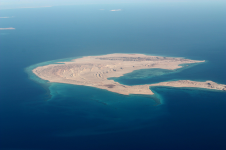
This is Tiran island. They should build an airbase here and a rocket force launchpad for full saturation attacks to clear the way for Ababeel and Shaheen.

1787432510827.png
 

Users who are viewing this thread

Pakistan Defence Latest

Back
Top