Lebanon-Israel War | 2023-present

To me, "tactically", taking out a tank that they cannot easily replace is more valuable militarily than some random piece of conscript meat that they can easily backfill.
Well, it easy to hit the tank, don t know if these are enough to damage these tanks or totally disable. But, it has big physiological impact..
 
Well, it easy to hit the tank, don t know if these are enough to damage these tanks or totally disable. But, it has big physiological impact..

In this particular case, the hatch was open, that was my point. The operator should have gone for the hatch.

As they get more experience, we may see better more focused tactics from them, as we saw in Ukraine.
 
To me, "tactically", taking out a tank that they cannot easily replace is more valuable militarily than some random piece of conscript meat that they can easily backfill.

If the FPV exploded inside the tank with all the tank ammunition, the IDF rat would probably have been cooked anyway

I think the drone operator just got excited
 
Israel is modifying trophy system to try intercepting such drones and utilizing Iron Dome batteries to try intercepting them. Even using something like an AI-enabled fire control systems on rifles. Will be interesting to see how the Hezbollah tech continues to evolve. It's allowing Hezbollah the ability to constrain IDF movement in southern Lebanon and maybe disrupt supply routes.

But the technology gap is growing larger every year and Hezbollah + Hamas need a major upgrade in capabilities in coming years to be able to be remotely effective against Israeli army which has massive budget for such a small country and access to US/European military tech.

That's going to be challenging because it's now very difficult to establish routes to Lebanon and Gaza. Iran may also be wary of delivering better tech to Hamas because Hamas pulled off a move like Toofan-Al Aqsa which may have been too risky for Iran's strategic calculus at the time. Though now things have changed as Iran's homeland has been subjected to US+Israeli aggression and if this current policy against Iran continues as is (the naval blockade, unilateral ceasefire with no explicit ceasefire agreement) then Iran may feel compelled to upgrade Hezbollah and Hamas's capabilities though it does seem like a logistical nightmare to be able to pull off right now.

@Persian Gulf

What do you think? Imo, Hezbollah but more so Hamas have hit close to their peak strength with resources/funds available to them and they're gonna fall behind if a nation state actor doesn't upgrade them. The only nation willing to arm them is Iran but due to landlocked reality it's very expensive to even smuggle cheap weapons to them. No doubt will be a challenge. It probably won't be needed if Iran races towards a bomb, Hezbollah and Hamas will likely go in a more defensive posture.
 
Well, it easy to hit the tank, don t know if these are enough to damage these tanks or totally disable. But, it has big physiological impact..
A tank is heavily armored, and most heavily armored at the front. That's where the drone hit in this case. So it was militarily a completely ineffective hit. The drone operator may have just panicked or been unaware of how tough a tank actually is. I don't think a drone has disabled a tank even in Ukraine.
 
The reasons for that :

1.) Israeli missile defense systems have massive funding and is very extensive largely reducing threat from rockets
2.) Israeli tech (whether local or from US) is better protecting Israeli armored divisions in enemy territory and they're using less infantry than ever except for full blown occupations. This means Hezbollah+Hamas cannot inflict as much damage on the ground because there are fewer Israeli forces on the ground

Hezbollah and Hamas can in evolve in some ways, some of which Hezbollah is doing but Hamas can't because it lacks network infrastructure in Gaza, imo.

Some ways they can evolve:

1.) They need very large number of industrial-grade rockets with as many precision kits as possible for larger caliber rockets
2.) Underground rail-style system that's economically feasible for what they're working with to move weapons around and mount rockets/launchers
3.) Better drone division (Hezbollah moving this way but Hamas not showing progress)
4.) Many more anti-material rifles which have proven effective
5.) Extensive evaluation for anti-armor forces and their effectiveness. Study the enemy, how are they clearing anti-tank mines and study weaknesses of trophy systems, how to adapt to counter this tech because it's hindering effectiveness of Hezb + Hamas ground forces
6.) Encrypted communications
7.) Some kind of AA capabilities is necessary by now even if risky. Gaza mostly lacks strategic depth for some of this but in Lebanon it's more doable. Hezbollah and Hamas need to have capability to shoot done armed drones and UAV's and ability to disrupt Israeli AF operations if possible


Utilization of rockets needs to change. Going forward (in future) rockets should be utilized in a way where 200-1,000 are used at a time with varying calibers + mix of guided/precision munitions (also drones) directed at strictly economic/military sites of value. Particularly airbases , military bases, power plants, fuel/oil depots/airports/etc....

^^

If this capability isn't yet there then they need to remain in strictly defensive posture using rockets/mortars against Israeli ground forces. Offensive capability wise they have to evolve in this manner deploying heavy firepower in short bursts such as targeting 2-3 sites of value early in the day with heavy firepower then ceasing fire for rest of day until you can deploy the same method against more sites of value during that day, or week.
 
Israel is modifying trophy system to try intercepting such drones and utilizing Iron Dome batteries to try intercepting them. Even using something like an AI-enabled fire control systems on rifles. Will be interesting to see how the Hezbollah tech continues to evolve. It's allowing Hezbollah the ability to constrain IDF movement in southern Lebanon and maybe disrupt supply routes.

But the technology gap is growing larger every year and Hezbollah + Hamas need a major upgrade in capabilities in coming years to be able to be remotely effective against Israeli army which has massive budget for such a small country and access to US/European military tech.

That's going to be challenging because it's now very difficult to establish routes to Lebanon and Gaza. Iran may also be wary of delivering better tech to Hamas because Hamas pulled off a move like Toofan-Al Aqsa which may have been too risky for Iran's strategic calculus at the time. Though now things have changed as Iran's homeland has been subjected to US+Israeli aggression and if this current policy against Iran continues as is (the naval blockade, unilateral ceasefire with no explicit ceasefire agreement) then Iran may feel compelled to upgrade Hezbollah and Hamas's capabilities though it does seem like a logistical nightmare to be able to pull off right now.

@Persian Gulf

What do you think? Imo, Hezbollah but more so Hamas have hit close to their peak strength with resources/funds available to them and they're gonna fall behind if a nation state actor doesn't upgrade them. The only nation willing to arm them is Iran but due to landlocked reality it's very expensive to even smuggle cheap weapons to them. No doubt will be a challenge. It probably won't be needed if Iran races towards a bomb, Hezbollah and Hamas will likely go in a more defensive posture.

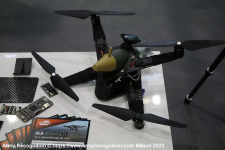
How difficult would it be to smuggle FPV drones into Lebanon????

My understanding is that appropriate ordinance can be literally clipped/zip tied to the drone

And their should be plenty of such ordinance already available in Lebanon and Syria

The drones themselves are not massive and can even be bought into Lebanon as parts from multiple sources, they don't necessarily need to be Iranian military drones


I understand ATGMs may be more of a problem without a compliant Syria

However even with just FPV drones, any occupation of Lebanese territory can be made very costly for Israel
 
A tank is heavily armored, and most heavily armored at the front. That's where the drone hit in this case. So it was militarily a completely ineffective hit. The drone operator may have just panicked or been unaware of how tough a tank actually is. I don't think a drone has disabled a tank even in Ukraine.
60 mm is kinda standard ..and easily manage by some homemade drone with range from 5 to 15 km.
Yes, specialized FPV drones, including those utilizing 60mm mortar rounds or similarly sized shaped-charge warheads (like PG-7V RPG rounds), have demonstrated the capability to damage and even destroy Merkava tanks by targeting vulnerabilities, particularly the turret roof.
1778381966935.png
 
Israeli Channel 15 quoted reserve general Itzhak Brik as saying, "We have not achieved any objective, and our situation is worse than it was at the start of the war."

On the northern front, data from the Israeli Health Ministry indicated that a total of at least 720 injuries were recorded in hospitals from this front following the ceasefire with Iran.

Israeli forces continue to face ambushes and attacks in villages across southern Lebanon and in settlements in northern occupied Palestine, carried out by fighters of the Lebanese Resistance as part of ongoing operations to defend Lebanon and its people and in response to continued Israeli violations of the ceasefire agreement.

Senior Israeli officers deployed in southern Lebanon say the Resistance has rebuilt its military capabilities and continues engaging in combat despite the ceasefire, according to a recent report by Haaretz.


To view this content we will need your consent to set third party cookies.
For more detailed information, see our cookies page.
 
Screenshot 2026-05-10 at 16.08.23.png
Screenshot 2026-05-10 at 16.10.36.png
Screenshot 2026-05-10 at 16.09.23.png

To view this content we will need your consent to set third party cookies.
For more detailed information, see our cookies page.


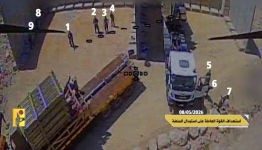
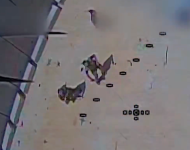
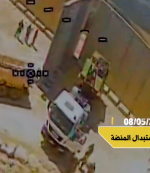
Hezbollah releases video of 2 FPV strikes on the same target in north Occupied Palestine. the first strike severely damages an active Iron Dome launcher while the second targets a group of IDF terrorist, who start to flee in panic as the FPV drone dives onto their heads
 
Israel is modifying trophy system to try intercepting such drones and utilizing Iron Dome batteries to try intercepting them. Even using something like an AI-enabled fire control systems on rifles. Will be interesting to see how the Hezbollah tech continues to evolve. It's allowing Hezbollah the ability to constrain IDF movement in southern Lebanon and maybe disrupt supply routes.

But the technology gap is growing larger every year and Hezbollah + Hamas need a major upgrade in capabilities in coming years to be able to be remotely effective against Israeli army which has massive budget for such a small country and access to US/European military tech.

That's going to be challenging because it's now very difficult to establish routes to Lebanon and Gaza. Iran may also be wary of delivering better tech to Hamas because Hamas pulled off a move like Toofan-Al Aqsa which may have been too risky for Iran's strategic calculus at the time. Though now things have changed as Iran's homeland has been subjected to US+Israeli aggression and if this current policy against Iran continues as is (the naval blockade, unilateral ceasefire with no explicit ceasefire agreement) then Iran may feel compelled to upgrade Hezbollah and Hamas's capabilities though it does seem like a logistical nightmare to be able to pull off right now.

@Persian Gulf

What do you think? Imo, Hezbollah but more so Hamas have hit close to their peak strength with resources/funds available to them and they're gonna fall behind if a nation state actor doesn't upgrade them. The only nation willing to arm them is Iran but due to landlocked reality it's very expensive to even smuggle cheap weapons to them. No doubt will be a challenge. It probably won't be needed if Iran races towards a bomb, Hezbollah and Hamas will likely go in a more defensive posture.
Neither Russia nor Ukraine have found a robust solution for FPV drones after many years, so Israel will not find one in a few months.

it is a game of cat and mouse. As defensive guerrilla organisations, there are always advantages to leverage to offset a technological deficit.

Hamas is in a much worse position than Hezbollah since it has lost its only border (with Egypt) and is now constrained to a tiny territory with a population entirely done with war. We see that in Hamas being conservative in their responses and acceptance of Israeli ceasefire violations. Lebanon is a large country and several smuggling routes still exist, even through Syria.

It is difficult to predict too far ahead into the future, but for now the goal is survival and the situation in Lebanon resembles the 1982-2000 period, with low intensity Hezbollah resistance in south Lebanon eventually forcing Israel to withdraw.

In the end, Hezbollah's most effective tool was not its 100,000 rockets, or its well trained Radwan Unit, but small FPV drones largely built during the 2024-25 'ceasefire'.
 

Users who are viewing this thread

Back
Top