Lebanon-Israel War | 2023-present

Lebanon’s Return to Its People

Yusuf-Aldayni.png

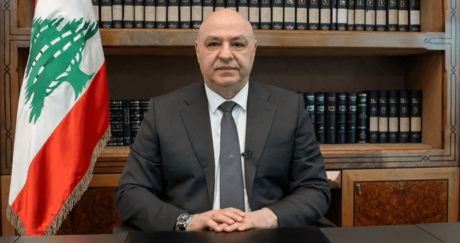
Yousef Al-Dayni Tuesday - 30 June 2026

The situation in Lebanon cannot be reduced to the existence of a state within the state, Hezbollah's weapons, and its discourse hostile to the logic of the state. It extends to legitimizing Lebanon’s oscillation between being subordinate to Iran and being transformed into an inherent element of the Iranian body politic, and silence over Israel's violation of its southern borders, as though Lebanese territories were a field for deterrence under the pretext of Israel's security.

Despite the catastrophic condition in Lebanon, the deeper threat goes beyond security and the economy: living with the damage that has afflicted it for decades by treating Hezbollah as a subordinate of Iran or a representative of Lebanon that may be targeted, and by turning this damage into a "fait accompli" that must be managed. Here, the most basic idea is meant to die: Lebanon is a sovereign state, not an experimental arena for the projects of others.

The story of the settlement with Iran - into which Lebanon is being forced by reducing it to Hezbollah - must not be lost amid the crush of deadlines. Any new American-Iranian understanding should not be read only through the window of the nuclear program, or sanctions and the security of navigation in the Strait of Hormuz. More dangerously, the agreement could constitute implicit recognition of Iran's right to operate proxies in sovereign Arab countries under the pretext of the unity of arenas. Meanwhile, the Iranian crisis has revealed that the Middle East is one arena whose struggles are inseparable from the chaos of interference in sovereign states, and from Israeli arrogance as well.

Including Lebanon in any agreement through Hezbollah is dangerous for the region. It cannot be legitimized no matter how powerful the urge to escape it may be. This means turning Beirut, and perhaps other capitals later, into Iranian bargaining ships. Sovereign states will thereby lose the ability to make decisions of war and their monopoly on violence, two of the most important pillars of the modern concept of the state. This negotiating shortcut is troubling, not merely as conduct, but even as political language, because it is asking to Iran to provide guarantees regarding Hezbollah's behavior instead of ending its subordination.

Lebanon’s fragility allowed Iran and Israel to turn it into a proxy battlefield. This fragility did not begin on October 7, 2023; it goes back to the Cairo Agreement of 1969, which legitimized the Palestine Liberation Organization's violation of Lebanon’s sovereignty and opened the gates to the chaos of arms outside state control. When Israel invaded Lebanon in 1982 to expel the PLO, a more complex and more deeply embedded Iranian proxy in Lebanon was born.

Since the 1982 invasion, then the 2006 war, and up to the escalation after October 7, belligerence and attempts to erase these entities have proved unrealistic. It is true that Israel can limit Hezbollah's arsenal, eliminate its leaders, and strike its military structures. It cannot, however, reclaim Lebanon or build the state. Indeed, excessive and futile strikes are a kiss of life to the party's narrative.

The paradox is that speaking of the arms as part of the Iranian body is an illogical shift after the functional failure of these entities. Tehran long bet that Hezbollah, the Iraqi militias, the Houthis, and Hamas were its forward lines of defense. But the recent wars proved that those arms are no longer capable of producing deterrence as Tehran had imagined it. Hamas emerged exhausted, Hezbollah received painful blows that reached its most important leaders, and the remaining arms hovered at the margins and limits of the desire to survive.

What remained was the real damage that states continue to endure to this day: these entities replaced the function of deterrence with the aggravation of domestic crises and the obstruction of the state. This explains Hezbollah's ability to stand as a stumbling block all these years in the project of restoring the Lebanese state.

The realist political discourse effectively calls for mortgaging Lebanon, in all its diversity and capacities, to remain captive between Iranian subjugation and Israeli arrogance. Any negotiation that consolidates this state of affairs would have consequences for the region. It is very true that disarming Hezbollah will be extremely arduous. However, the difficulty of the task does not justify surrender, nor becoming preoccupied with the symptoms of an incurable disease on the pretext that there is no cure.

It is not enough to demand that Iran and Israel leave Lebanon alone or respect its sovereignty. More importantly, Lebanon must stop being part of Tehran's sphere of influence in the Iranian agenda, and it must stop being an explosive buffer zone in the Israeli agenda.

With the fragile agreement, war and its tragedies are no longer the most dangerous challenges of the day after; it would be even more dangerous for the world to normalize these political deformities that violate the sovereignty of states and gamble with the destinies of people and countries.
Is it or most people here don’t read your articles you could easily post a link with a short statement regarding your propaganda pieces
 
I have obtained the Security Annex that Lebanon and Israel signed alongside the Framework Agreement after four days of negotiations.

SECURITY ANNEX The below constitutes the confidential Security Annex to the Trilateral Framework.

1. Pilot Zones Designation: The parties will immediately designate and launch the initial pilot zone in the South Litani Sector in an agreed upon military planning process using a four-step model: 1) Clearance, taking legal measures against all non-state armed personnel engaging in unauthorized activity, and destroy or render inoperable associated infrastructure, including but not limited to weapons, weapons caches, tunnels, and command centers, by those non-state armed groups. 2) Verification of clearance of all non-state armed groups and their military infrastructure by a mutually agreed-upon third-party entity. 3) Presence of highly-qualified Lebanese Armed Forces (LAF) that assume and maintain sole operational control, to prevent any resurgence of non-state armed activity. 4) The Lebanese state leads reconstruction efforts, supported by international assistance and coordinated through the political track.

2. Implementation and Verification: The LAF will lead the implementation of this model with success measured by verifiable implementation of the disarmament and dismantlement process to be agreed upon within this negotiation framework. Israel and Lebanon will establish the Military Coordination Group for Lebanon (MCG4L), tasked with the mission to operate 24/7, managing deconfliction, verification, and overall implementation. This cell will report to the respective political authorities of Israel and Lebanon via indirect military-to-military channels between Israel and Lebanon. Ongoing verification will occur simultaneously with clearing operations.

3. Security Commitments: The LAF commits to take necessary operational measures to ensure the disarmament of Hizballah and all other non-state armed groups, and that they have no military role or capability within Lebanon.

4. Sequenced Redeployment: Pending successful completion of an agreed upon and verifiable disarmament and dismantlement process, Israel commits to a phased, conditions-based, progressive reduction and eventual redeployment of its forces from Lebanese territory, planned and sequenced through the MCG4L, to coincide with LAF deployment.

5. Desired Outcome: As part of the broader effort relating to the disarmament and dismantlement of all non-state armed groups as mutually agreed upon within this negotiation framework, restore full Lebanese state authority throughout Lebanon and ensure the long-term security of Israel.

6. Oversight and Dispute Resolution: The parties, with U.S. facilitation, will conduct periodic reviews of the implementation and may amend this Annex by mutual agreement. Any disputes regarding its interpretation or execution will be resolved through trilateral discussions.
 
I have obtained the Security Annex that Lebanon and Israel signed alongside the Framework Agreement after four days of negotiations.

SECURITY ANNEX The below constitutes the confidential Security Annex to the Trilateral Framework.

1. Pilot Zones Designation: The parties will immediately designate and launch the initial pilot zone in the South Litani Sector in an agreed upon military planning process using a four-step model: 1) Clearance, taking legal measures against all non-state armed personnel engaging in unauthorized activity, and destroy or render inoperable associated infrastructure, including but not limited to weapons, weapons caches, tunnels, and command centers, by those non-state armed groups. 2) Verification of clearance of all non-state armed groups and their military infrastructure by a mutually agreed-upon third-party entity. 3) Presence of highly-qualified Lebanese Armed Forces (LAF) that assume and maintain sole operational control, to prevent any resurgence of non-state armed activity. 4) The Lebanese state leads reconstruction efforts, supported by international assistance and coordinated through the political track.

2. Implementation and Verification: The LAF will lead the implementation of this model with success measured by verifiable implementation of the disarmament and dismantlement process to be agreed upon within this negotiation framework. Israel and Lebanon will establish the Military Coordination Group for Lebanon (MCG4L), tasked with the mission to operate 24/7, managing deconfliction, verification, and overall implementation. This cell will report to the respective political authorities of Israel and Lebanon via indirect military-to-military channels between Israel and Lebanon. Ongoing verification will occur simultaneously with clearing operations.

3. Security Commitments: The LAF commits to take necessary operational measures to ensure the disarmament of Hizballah and all other non-state armed groups, and that they have no military role or capability within Lebanon.

4. Sequenced Redeployment: Pending successful completion of an agreed upon and verifiable disarmament and dismantlement process, Israel commits to a phased, conditions-based, progressive reduction and eventual redeployment of its forces from Lebanese territory, planned and sequenced through the MCG4L, to coincide with LAF deployment.

5. Desired Outcome: As part of the broader effort relating to the disarmament and dismantlement of all non-state armed groups as mutually agreed upon within this negotiation framework, restore full Lebanese state authority throughout Lebanon and ensure the long-term security of Israel.

6. Oversight and Dispute Resolution: The parties, with U.S. facilitation, will conduct periodic reviews of the implementation and may amend this Annex by mutual agreement. Any disputes regarding its interpretation or execution will be resolved through trilateral discussions.
To view this content we will need your consent to set third party cookies.
For more detailed information, see our cookies page.


meanwhile, Israel says it will never leave Lebanon even if Hezbollah is disarmed
 
To view this content we will need your consent to set third party cookies.
For more detailed information, see our cookies page.


Israel unveils latest technology to defeat drones..
 
ET32bJx2Z6IK3F1MDIozPGuwNRBc2wmyt0hAo0Hc.svg

Hezbollah's Lebanese Allies Are Ready to Dump It

By Hussain Abdul-Hussain

Mon 6 Jul 2026 · 9:57Last updated on Mon 6 Jul 2026 · 10:07 Washington, USA

Speaker Nabih Berri and Druze chief Walid Jumblatt have so far sided with Hezbollah by denouncing the June 26 Trilateral Framework between Lebanon, Israel, and the U.S.

Speaker Nabih Berri and Druze chief Walid Jumblatt have so far sided with Hezbollah by denouncing the June 26 Trilateral Framework between Lebanon, Israel, and the U.S. Yet despite their rhetoric, neither has moved to unseat Lebanon's government, citing concerns over sectarian tensions. The gap between their words and actions suggests both are hedging their bets, uncertain whether Hezbollah will survive its confrontation with Israel.

Berri and Jumblatt are among Lebanon's most enduring political survivors, with nearly a century of public life between them. Their political choices have always tracked the prevailing balances of power in Lebanon. They backed Yasser Arafat’s Palestine Liberation Organization (PLO) when it dominated parts of Lebanon, only to abandon him after Israel’s 1982 invasion. Afterward, the two aligned with Hafez al-Assad and Bashar al-Assad's regime in Damascus until the 2005 Cedar Revolution forced Syria out of Lebanon. They then seamlessly shifted their allegiance to Hezbollah.

Berri and Jumblatt’s political antennas must now be tuned to the existential crisis faced by Hezbollah. The militia is exhausted and outmatched by a determined Israel. Under Naim Qassem’s lackluster leadership, it no longer projects the strength that once defined its dominance in Lebanon. Jumblatt himself has noted that Iran dispatched senior Islamic Revolutionary Guard Corps (IRGC) operatives to prop up Hezbollah.

The balance of power has shifted decisively against the group, opening a rare opportunity for the Lebanese state. President Joseph Aoun and Prime Minister Nawaf Salam have recognized these vulnerabilities and are moving assertively to reassert state authority over security and decision-making. Berri and Jumblatt recognize the same shift but remain cautious. They prefer to let events unfold rather than risk a premature rupture that could backfire.

Hezbollah has never been in a weaker position. Israeli operations have devastated southern Lebanon, flattening more than sixty villages. Roughly nine percent of Lebanese territory—concentrated in Shia areas—remains under Israeli control. Hezbollah’s arsenal was designed to prevent such an outcome or impose unacceptable costs on any occupier. Instead, Iran’s decision to extend the ceasefire to Lebanon without demanding a full Israeli withdrawal has drained those weapons of strategic value and exposed their limits.

In this war, Lebanon’s Shia have endured the longest period of mass displacement in their modern history. Families now live in tents with no clear timeline for return. The only realistic path home runs through Hezbollah surrendering its arsenal.

For years, Hezbollah’s weapons gave the Shia a sense of empowerment and political leverage against other Lebanese communities. Once politically unpopular, disarmament has gained traction as prolonged conflict exposed the failure of these weapons. The political costs of maintaining Hezbollah’s weapons have become unsustainable. Even Berri and Jumblatt now appear to be waiting for the party’s collapse, albeit quietly.
Hezbollah offers no fresh strategy, instead recycling old tactics. In the aftermath of the 2006 war, late Hezbollah leader Hassan Nasrallah admitted the group had nearly exhausted its ammunition in the final days, yet still bluffed Israel into believing it could continue fighting. Today, the militia relies on similar deception, reinforced by relentless propaganda and disinformation campaigns. It also places its hopes in Iran outmaneuvering the U.S.

Iran has turned the threat to close the Strait of Hormuz into leverage, securing relief from U.S. naval pressure in the Gulf and a ceasefire that extended to Lebanon. The maneuver bought time but produced no decisive shift in Lebanon’s balance of power, as Tehran prioritized its own direct interests. Hezbollah now awaits a broader U.S.-Iran settlement that could include concessions restoring its position in Lebanon. Berri and Jumblatt’s reluctance to fully embrace the Lebanese-Israeli agreement reflects fears that Washington could still prioritize a deal with Tehran over Lebanese sovereignty.

With Hezbollah in terminal decline, the last thing Washington should do is extend the militia a lifeline in a bargain with Tehran. Prioritizing Gulf security concerns over Lebanon’s prosperity would be a major strategic miscalculation. Any such move would prolong Lebanon’s political paralysis and risk renewed cycles of conflict across the region.
 

Aoun urges Trump to keep backing Lebanon to 'turn the page on wars'

by Naharnet Newsdesk 2 days ago

W460


On the occasion of America's 250th Independence Day, President Joseph Aoun sent a congratulatory telegram to U.S. President Donald Trump, wishing him and the American people "continued success, prosperity, and further progress."

In his telegram, Aoun stated: "There is no doubt that the relationship between Lebanon and the United States of America is ancient and deeply rooted, as old as the human and social principles and values that have united their visions."

"Today, this relationship is being revitalized thanks to your determination and tireless efforts to restore stability and security to the Middle East in general, and to Lebanon in particular," the president said.

"While we appreciate your efforts in this regard, we call upon you to continue your unwavering support for Lebanon's just and righteous causes, and for its institutions, army, and people, so that we may turn the page on wars, tragedies, and suffering, and open a new chapter of hope, peace and stability," Aoun went on to say.
 
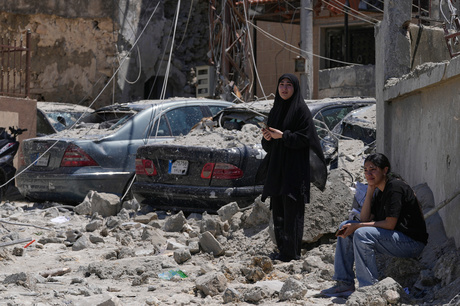
The Israeli military continues to carry out deadly drone strikes and demolish entire neighborhoods in southern Lebanon despite the so-called ceasefire.
On Monday, an Israeli drone targeted a car in Nabatieh al-Fawqa, killing four people: kindergarten school principal Esperanza Fakhri Ghandour, her mother, a Syrian worker and another foreign domestic worker.

Meanwhile, the Israeli military continues to demolish entire neighborhoods in southern Lebanon including Al-Doura neighborhood of Bint Jbeil and Beit Yahoun.

Israeli drones continue to fly over Beirut and its southern suburbs, as well as Tyre, the Bekaa Valley and southern Lebanon. The drone flights are accompanied by patrols, sonic booms over civilian areas and shelling targeting Deir Siryan and Mansouri.

Since the supposed “ceasefire” on June 21, the Israeli military has killed at least 4,300 Lebanese. More than 640,000 displaced people have returned home in Lebanon since the “ceasefire,” after the Israeli military displaced more than one million people, according to the UN. But as the Israeli military continues to kill people in Lebanon, those returning home have no confirmation that it is safe to return.

Instead of being held to account for its countless war crimes, the US government continues to provide weapons and funds to the Israeli government despite the fact that Americans don’t want endless military support to Israeli ethnic cleansing and genocide. Call on Congress to fund people, not bombs: jvp.org/fundpeoplenotbombs

JVP Action, our 501c4 organization, is now doing business as JVP; JVP Lab, our 501c3 organization, continues separately and remains focused on our nonpartisan educational and cultural work.


To view this content we will need your consent to set third party cookies.
For more detailed information, see our cookies page.
 
You think hezbollah cares? They fought israel for 15 years between 1985-2000
That is an interesting question. My opinion is that when Hezbollah was led by Nasrallah it really did care about the welfare of its own people - that is, the Lebanese Shia families who were members of or allied with Hezbollah. After attacking Israelis. a way was usually left open to persuade Israel to stop or limit retaliatory operations. However, Nasrallah's wisdom failed, the Israelis killed him, and his successors lack his local support, credibility, and wisdom. Hezbollah has become an exclusively Iranian-controlled operation and now the Lebanese Shia not under its command are considered obstacles, if not expendable.

Without local support, Hezbollah as a guerilla-oriented "resistance" is doomed - they can't melt back into the population. However, as Iran's paid mercenaries Hezbollah can continue to survive and operate as long as they retain their redoubts for supplies and personnel.
 
Is it or most people here don’t read your articles you could easily post a link with a short statement regarding your propaganda pieces
I think your idea has merit and I'm giving it a try but I'm not sure if it jibes with PDF's current policies: at least one such thread I posted today has been entirely wiped out and no traces remain.
 

How a push to disarm Hezbollah is deepening divisions in Lebanon

by Naharnet Newsdesk 22 hours ago

W460


A deal between Lebanon and Israel was billed as paving the way for peace. But in Lebanon, it is deepening longtime divisions and raising fears of political paralysis or even a return to civil war.

The U.S.-brokered deal envisions an Israeli troop withdrawal from Lebanon and an eventual peace agreement between the two countries — which technically remain in a state of war nearly 80 years after Israel's establishment. But the agreement says a full Israeli withdrawal will happen only after Hezbollah is disarmed, infuriating the Iran-backed militant group.

Lebanon's Western-backed government and Hezbollah have exchanged angry words, and the militant group's supporters have blocked major roads in protest. One Hezbollah lawmaker said the country would plunge into civil war if the government tries to force the group's disarmament.

The tensions have stirred up memories of Lebanon's devastating 1975-1990 civil war and reminded many of more recent clashes between Hezbollah gunmen and pro-government fighters in 2008. They also have raised deep questions over whether the U.S.-brokered deal will be able to get off the ground.

A resumption of the war between the U.S. and Iran would further complicate the deal's prospects and raise the risk of renewed conflict between Israel and Hezbollah.

The deal is expected to top the agenda when Lebanese President Joseph Aoun heads to the White House on July 21.

The deal is rooted in the US war against Iran

Lebanon's political landscape has been divided for over two decades between one coalition that is Western-backed and another that is supported by Iran and led by Hezbollah. Both camps see the outcome of the new agreement as existential.

The latest war between Israel and Hezbollah erupted in March, triggered by the joint U.S.-Israel war launched against Iran days earlier.

Hezbollah, which entered the conflict without seeking approval from the government, has sought to link the end of its war against Israel to the outcome of broader U.S.-Iran talks. The Lebanese government, trying to minimize Iran's influence, aimed to keep the two tracks separate and negotiate a ceasefire directly with Israel.

The Lebanon-Israel deal turned the tables

The pro-Hezbollah camp was jubilant when the ceasefire deal between Iran and the U.S. explicitly called for an end to the war in Lebanon.

That led to a truce that has substantially reduced the intensity of the fighting between Israel and Hezbollah. But Israeli troops continue to occupy large swaths of southern Lebanon, and hundreds of thousands of people remain displaced from villages and city neighborhoods that have been almost entirely demolished.

The linkage to the U.S.-Iran ceasefire was widely seen as boosting Hezbollah's standing and cementing Iran's influence over Lebanon.

But days later, the tables turned as Israel and Lebanon announced their June 26 "framework agreement" in Washington. That deal conditioned withdrawal of Israeli forces on disarmament of Hezbollah throughout the country.

Lebanese rivals are now at odds over the deal

Lebanese government officials have hailed the deal as a step toward liberating occupied areas of the south and allowing the displaced to go home.

But with Israel giving no timeline for its withdrawal, Hezbollah and its supporters have accused the government of agreeing to an open-ended Israeli occupation.

Hezbollah supporters protested and blocked roads in Beirut. Some burned banners bearing the slogan "Lebanon First" — seen as a dig at the Iran-backed group. The group's leader, Sheikh Naim Qassem, called the deal a "humiliation" and said Hezbollah would not honor it.

Hassan Fadlallah, an influential Hezbollah legislator, went even further, saying the government "will not be able to enforce the agreement signed in Washington unless they go, with American support, to civil war."

Such rhetoric brought back memories of May 2008, when the government decided to dismantle Hezbollah's telecommunications network. The group sent gunmen to the streets and engaged in intense clashes with pro-government fighters in Beirut and elsewhere. The government was forced to annul its decision.

Hezbollah is now demanding that the government abolish its March 2 decision that considered Hezbollah's military and security activities illegal.

Prime minister, Nawaf Salam, says the agreement with Israel will restore the state's sovereignty over the entire country and has pushed back against Hezbollah's rhetoric.

"I am not looking for a confrontation with Hezbollah but neither myself nor anyone in the government will accept to be blackmailed by Hezbollah," Salam recently told the local LBC TV station.

In the meantime, the deal remains frozen

For now, there are no signs of the verbal threats spilling over into violence — in large part because the deal is deadlocked.

Israel and Lebanon have agreed to establish two "pilot zones" where the Israeli military is to turn over control to the Lebanese army after clearing the areas of any Hezbollah presence.

Salam has said the implementation could begin soon. But on the ground, there has been little movement.

"There is no schedule for the withdrawal or anything else," said a Lebanese military official, who spoke on condition of anonymity because he was not authorized to comment publicly. He said the army has received no information about when or how the Israeli withdrawal will proceed.

The initial pilot zones announced by Lebanese and Israeli officials include the towns of Froun, Ghandouriyeh and Zawtar. Israeli troops were not present in most of that area to begin with, raising questions about how a withdrawal could take place. The official said the Lebanese army had pushed for pilot zones that were larger and included more area occupied by Israeli forces.

An Israeli military official, speaking on condition of anonymity under briefing guidelines, said the army is still waiting for instructions from the political leadership on when the withdrawal will take place.

A possible political stalemate looms

Lebanon has a history of political violence, but its sectarian power-sharing system, divided among Shiite and Sunni Muslims, Christians and Druze, has also been prone to deadlock.

Powerful Parliament Speaker Nabih Berri, a Hezbollah ally, has warned the deal "will not pass, and it will not be implemented in its current form."

Wissam Lahham, a constitutional law professor at St. Joseph University in Beirut, said that under Lebanon's constitution, a treaty is not legally binding until it is ratified by a two-thirds majority of the country's Cabinet. A Cabinet vote has not been scheduled. Lahham said it's not clear if the treaty would require parliamentary approval, another potential obstacle.

Qassem, in a speech Wednesday, aimed a message at the government.

"Ultimately, not a single clause of the framework agreement will be approved, and there will be nothing you can do about it," he said.

Michael Young, senior editor at the Malcolm H. Kerr Carnegie Middle East Center in Beirut, said the Lebanese government's desire to keep Lebanon separate from the Iranian negotiations on national sovereignty grounds was correct "in principle" but unrealistic in practice.

"You cannot reach any kind of solution with regard to Hezbollah unless Iran is on board," he said. "The Iranians will not give up on Hezbollah, and at the same time the Lebanese are not willing to enter into an armed conflict with Hezbollah."

Source Associated Press
 

How a push to disarm Hezbollah is deepening divisions in Lebanon

by Naharnet Newsdesk 22 hours ago

W460


A deal between Lebanon and Israel was billed as paving the way for peace. But in Lebanon, it is deepening longtime divisions and raising fears of political paralysis or even a return to civil war.

The U.S.-brokered deal envisions an Israeli troop withdrawal from Lebanon and an eventual peace agreement between the two countries — which technically remain in a state of war nearly 80 years after Israel's establishment. But the agreement says a full Israeli withdrawal will happen only after Hezbollah is disarmed, infuriating the Iran-backed militant group.

Lebanon's Western-backed government and Hezbollah have exchanged angry words, and the militant group's supporters have blocked major roads in protest. One Hezbollah lawmaker said the country would plunge into civil war if the government tries to force the group's disarmament.

The tensions have stirred up memories of Lebanon's devastating 1975-1990 civil war and reminded many of more recent clashes between Hezbollah gunmen and pro-government fighters in 2008. They also have raised deep questions over whether the U.S.-brokered deal will be able to get off the ground.

A resumption of the war between the U.S. and Iran would further complicate the deal's prospects and raise the risk of renewed conflict between Israel and Hezbollah.

The deal is expected to top the agenda when Lebanese President Joseph Aoun heads to the White House on July 21.

The deal is rooted in the US war against Iran

Lebanon's political landscape has been divided for over two decades between one coalition that is Western-backed and another that is supported by Iran and led by Hezbollah. Both camps see the outcome of the new agreement as existential.

The latest war between Israel and Hezbollah erupted in March, triggered by the joint U.S.-Israel war launched against Iran days earlier.

Hezbollah, which entered the conflict without seeking approval from the government, has sought to link the end of its war against Israel to the outcome of broader U.S.-Iran talks. The Lebanese government, trying to minimize Iran's influence, aimed to keep the two tracks separate and negotiate a ceasefire directly with Israel.

The Lebanon-Israel deal turned the tables

The pro-Hezbollah camp was jubilant when the ceasefire deal between Iran and the U.S. explicitly called for an end to the war in Lebanon.

That led to a truce that has substantially reduced the intensity of the fighting between Israel and Hezbollah. But Israeli troops continue to occupy large swaths of southern Lebanon, and hundreds of thousands of people remain displaced from villages and city neighborhoods that have been almost entirely demolished.

The linkage to the U.S.-Iran ceasefire was widely seen as boosting Hezbollah's standing and cementing Iran's influence over Lebanon.

But days later, the tables turned as Israel and Lebanon announced their June 26 "framework agreement" in Washington. That deal conditioned withdrawal of Israeli forces on disarmament of Hezbollah throughout the country.

Lebanese rivals are now at odds over the deal

Lebanese government officials have hailed the deal as a step toward liberating occupied areas of the south and allowing the displaced to go home.

But with Israel giving no timeline for its withdrawal, Hezbollah and its supporters have accused the government of agreeing to an open-ended Israeli occupation.

Hezbollah supporters protested and blocked roads in Beirut. Some burned banners bearing the slogan "Lebanon First" — seen as a dig at the Iran-backed group. The group's leader, Sheikh Naim Qassem, called the deal a "humiliation" and said Hezbollah would not honor it.

Hassan Fadlallah, an influential Hezbollah legislator, went even further, saying the government "will not be able to enforce the agreement signed in Washington unless they go, with American support, to civil war."

Such rhetoric brought back memories of May 2008, when the government decided to dismantle Hezbollah's telecommunications network. The group sent gunmen to the streets and engaged in intense clashes with pro-government fighters in Beirut and elsewhere. The government was forced to annul its decision.

Hezbollah is now demanding that the government abolish its March 2 decision that considered Hezbollah's military and security activities illegal.

Prime minister, Nawaf Salam, says the agreement with Israel will restore the state's sovereignty over the entire country and has pushed back against Hezbollah's rhetoric.

"I am not looking for a confrontation with Hezbollah but neither myself nor anyone in the government will accept to be blackmailed by Hezbollah," Salam recently told the local LBC TV station.

In the meantime, the deal remains frozen

For now, there are no signs of the verbal threats spilling over into violence — in large part because the deal is deadlocked.

Israel and Lebanon have agreed to establish two "pilot zones" where the Israeli military is to turn over control to the Lebanese army after clearing the areas of any Hezbollah presence.

Salam has said the implementation could begin soon. But on the ground, there has been little movement.

"There is no schedule for the withdrawal or anything else," said a Lebanese military official, who spoke on condition of anonymity because he was not authorized to comment publicly. He said the army has received no information about when or how the Israeli withdrawal will proceed.

The initial pilot zones announced by Lebanese and Israeli officials include the towns of Froun, Ghandouriyeh and Zawtar. Israeli troops were not present in most of that area to begin with, raising questions about how a withdrawal could take place. The official said the Lebanese army had pushed for pilot zones that were larger and included more area occupied by Israeli forces.

An Israeli military official, speaking on condition of anonymity under briefing guidelines, said the army is still waiting for instructions from the political leadership on when the withdrawal will take place.

A possible political stalemate looms

Lebanon has a history of political violence, but its sectarian power-sharing system, divided among Shiite and Sunni Muslims, Christians and Druze, has also been prone to deadlock.

Powerful Parliament Speaker Nabih Berri, a Hezbollah ally, has warned the deal "will not pass, and it will not be implemented in its current form."

Wissam Lahham, a constitutional law professor at St. Joseph University in Beirut, said that under Lebanon's constitution, a treaty is not legally binding until it is ratified by a two-thirds majority of the country's Cabinet. A Cabinet vote has not been scheduled. Lahham said it's not clear if the treaty would require parliamentary approval, another potential obstacle.

Qassem, in a speech Wednesday, aimed a message at the government.

"Ultimately, not a single clause of the framework agreement will be approved, and there will be nothing you can do about it," he said.

Michael Young, senior editor at the Malcolm H. Kerr Carnegie Middle East Center in Beirut, said the Lebanese government's desire to keep Lebanon separate from the Iranian negotiations on national sovereignty grounds was correct "in principle" but unrealistic in practice.

"You cannot reach any kind of solution with regard to Hezbollah unless Iran is on board," he said. "The Iranians will not give up on Hezbollah, and at the same time the Lebanese are not willing to enter into an armed conflict with Hezbollah."

Source Associated Press
If your bastard army would stop killing civilians and occupying land illegally - that would reduce division overnight.
 

Users who are viewing this thread

Back
Top