Lebanon-Israel War | 2023-present

To view this content we will need your consent to set third party cookies.
For more detailed information, see our cookies page.


To view this content we will need your consent to set third party cookies.
For more detailed information, see our cookies page.
 
dpo_logo.png

Peacekeepers help make routes safer by neutralizing explosive hazards

  • 28 July 2026
Peacekeepers help make routes safer by neutralizing explosive hazards


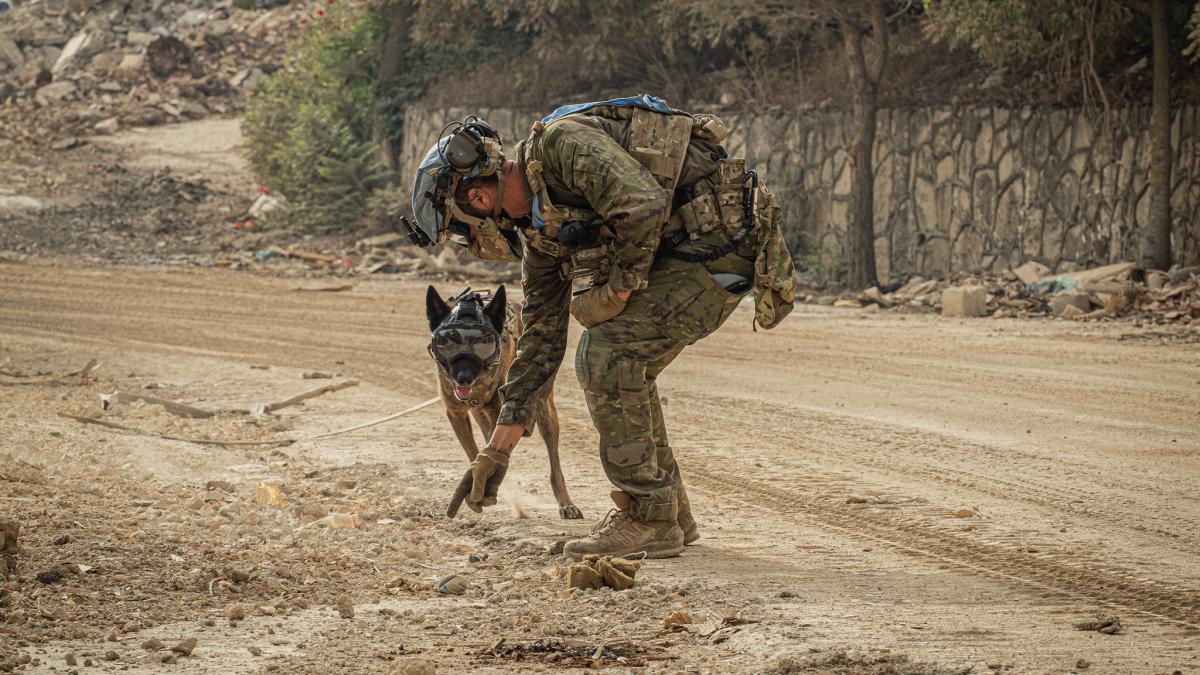
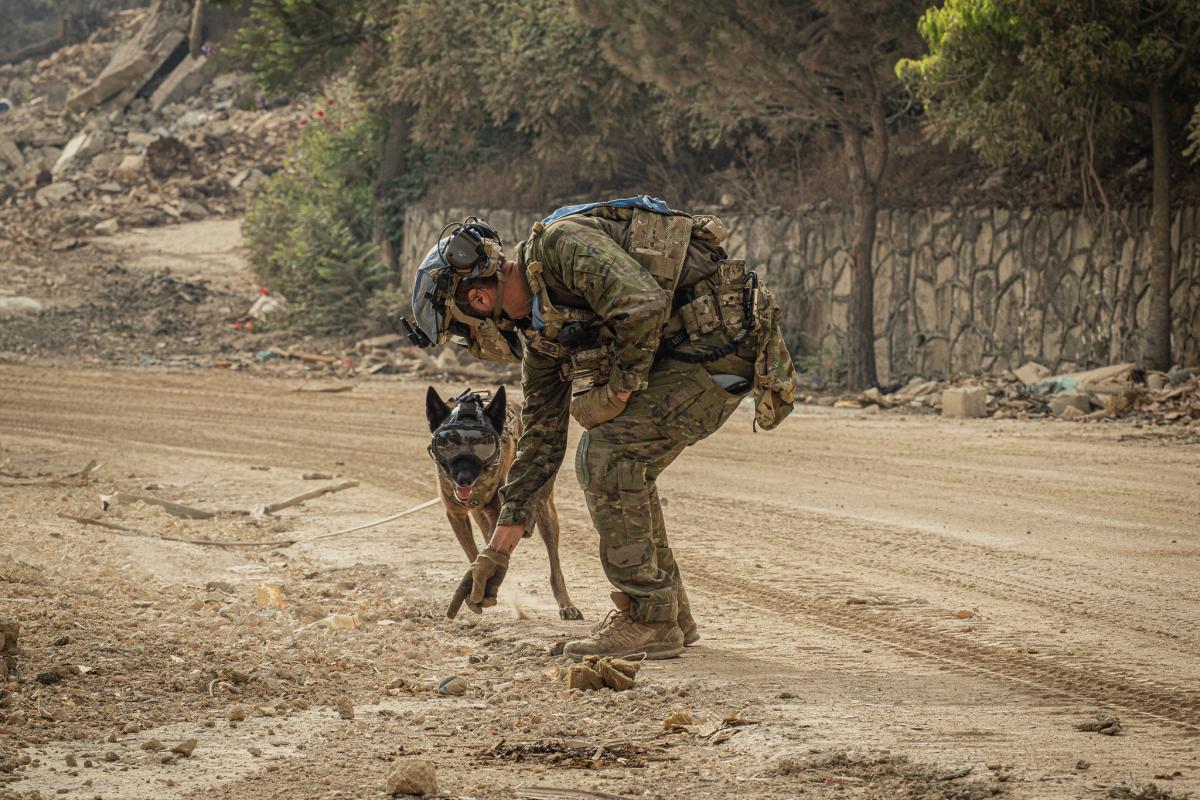
As UNIFIL expands its operational activities following the reduction in violence in southern Lebanon, peacekeepers continue to encounter explosive hazards left behind by the conflict. Supporting patrols and checks of routes used by peacekeepers, UNIFIL’s Explosive Ordnance Disposal (EOD) specialists help make key routes safer, allowing peacekeepers to carry out their tasks more safely while reducing risks that could also affect local communities as they gradually return.

With increased operational activities on the ground, clearing explosive hazards has become an increasingly important part of UNIFIL’s work. EOD specialists support patrols and route checks by identifying, assessing and safely neutralizing explosive threats before they can endanger peacekeepers or disrupt the Mission's work.

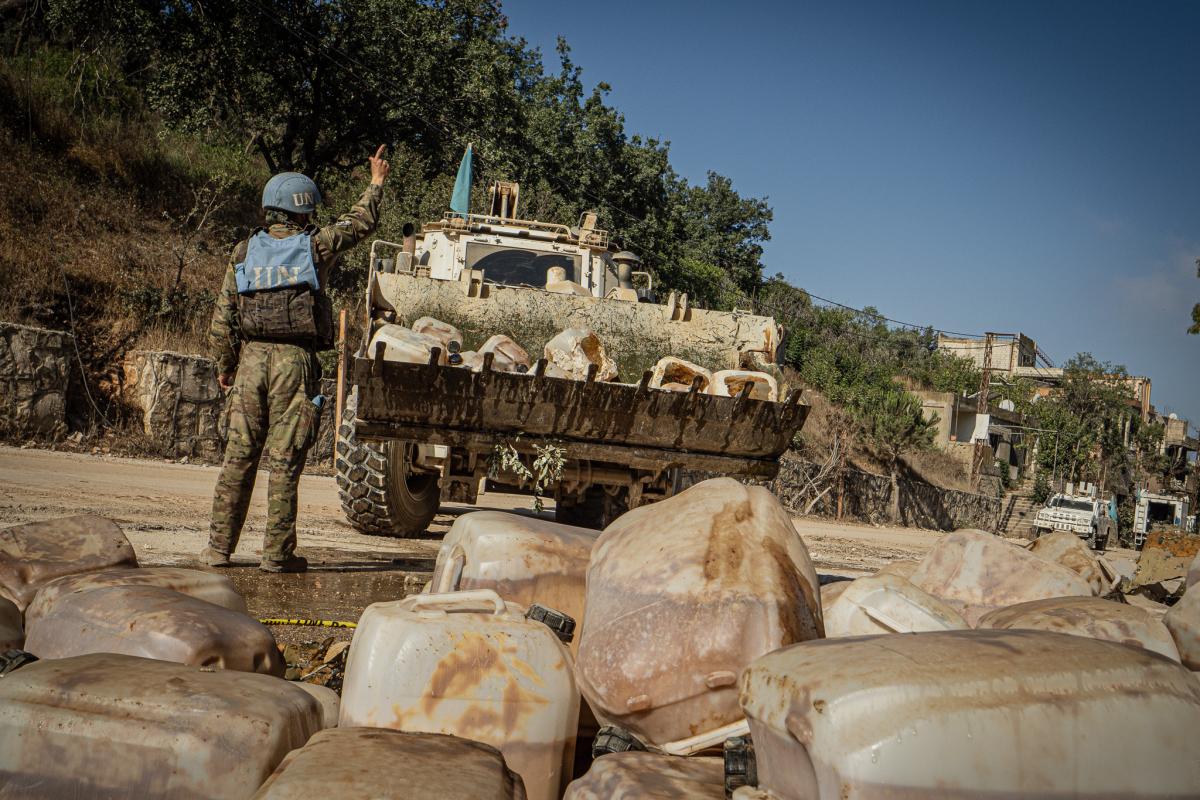
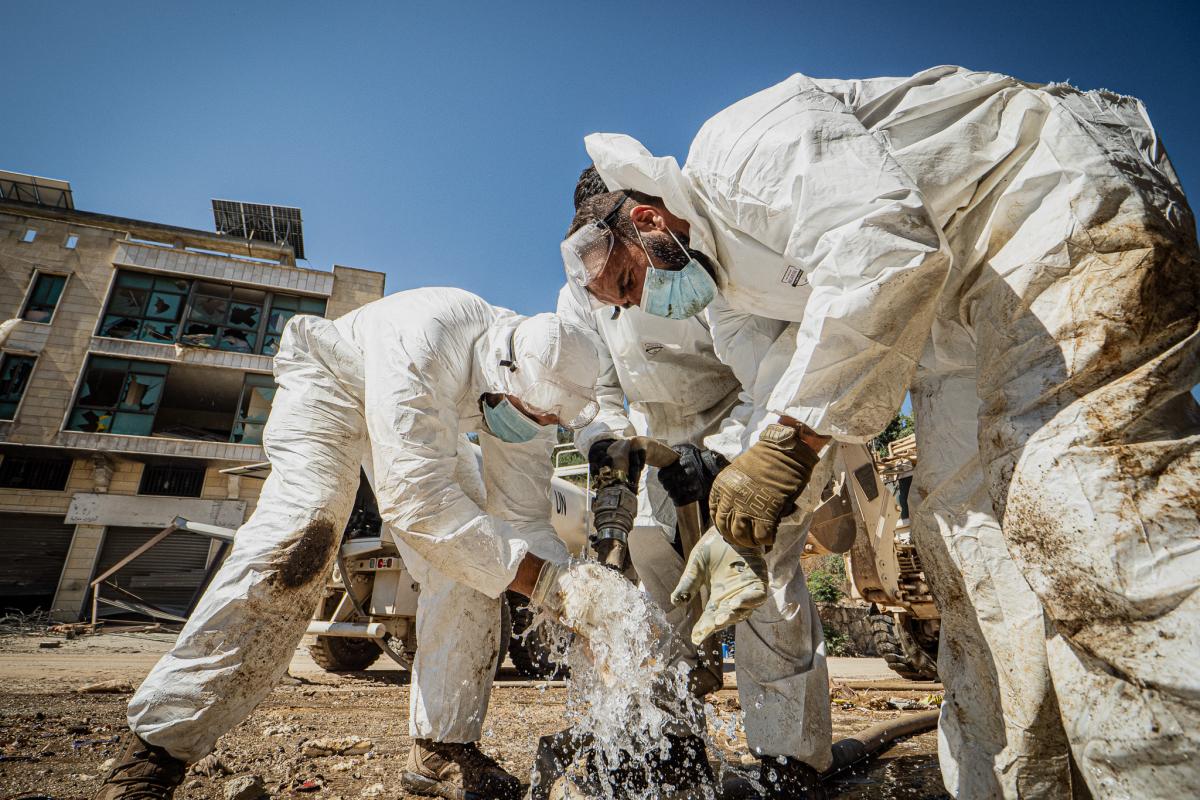
One such discovery was made on 2 July during a routine route check near Houla. Peacekeepers found 385 containers abandoned inside a building, containing approximately 4,000 kilograms of explosive material, consisting mainly of ammonium nitrate compounds.

After carefully assessing the hazard, UNIFIL’s EOD specialists later carried out on-site procedures to render the material inert, making it safe and removing the risk it posed.

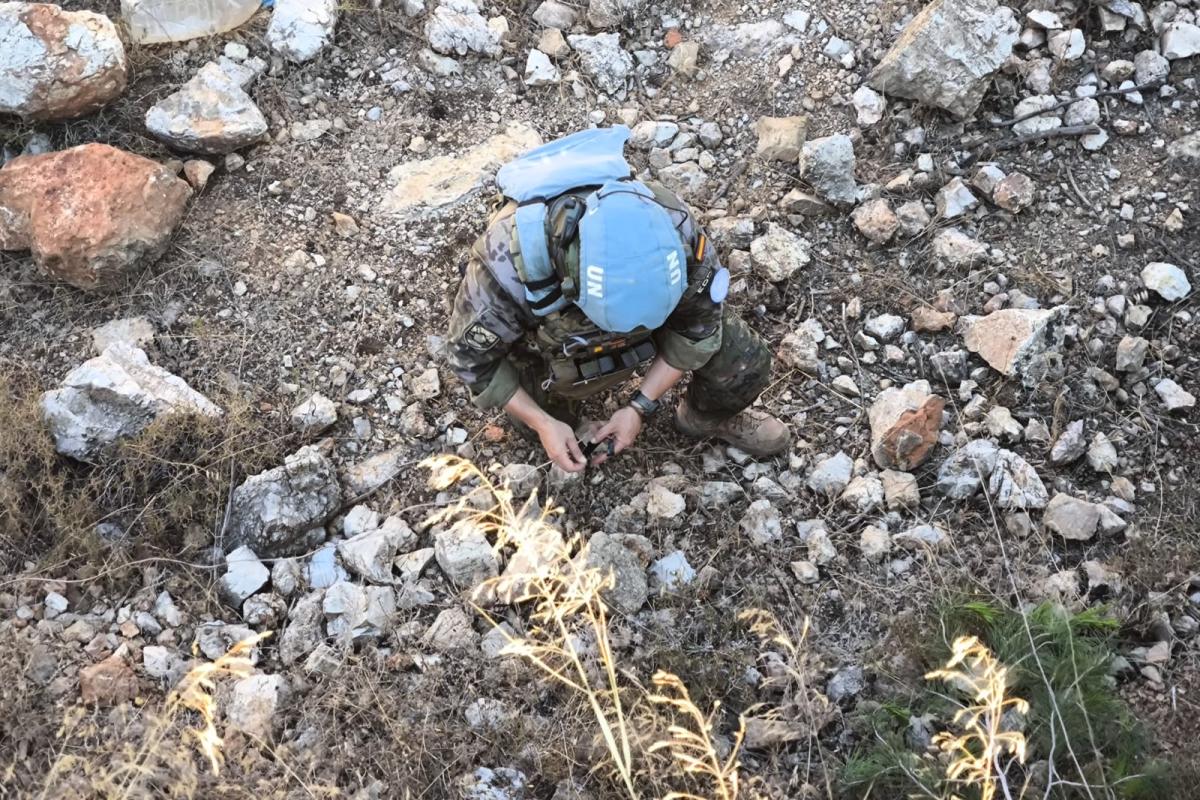
On 10 July, another patrol discovered the remains of an unmanned aerial vehicle (UAV) near a UN position in southern Lebanon. The area was immediately secured while EOD specialists examined the UAV. After confirming that explosive components remained inside, the team safely neutralized the hazard on site without incident.

“As UNIFIL expands its operational activities, reducing the risks posed by explosive hazards is essential to ensuring our peacekeepers can carry out their mandate,” said the Head of Mission and Force Commander Major General Diodato Abagnara. “Every explosive hazard safely neutralized helps create safer conditions for our operations and contributes to longer-term stability in southern Lebanon.”

Although the security situation has improved in recent weeks, explosive remnants and other hazardous materials continue to pose risks across parts of southern Lebanon. By identifying and safely neutralizing these hazards, UNIFIL's EOD specialists help make key routes safer for peacekeepers carrying out their mandated tasks today, while contributing to safer conditions for communities as they gradually return to their villages, farms and daily activities.

Peacekeepers help make routes safer by neutralizing explosive hazards

Peacekeepers help make routes safer by neutralizing explosive hazards

Peacekeepers help make routes safer by neutralizing explosive hazards

Peacekeepers help make routes safer by neutralizing explosive hazards
 
Last edited:

ET32bJx2Z6IK3F1MDIozPGuwNRBc2wmyt0hAo0Hc.svg

Lebanese FM Says Hezbollah Is Iranian in Nature, Rejects Distinction Between Political and Military Wings


Mon 27 Jul 2026 · 16:39Last updated on Tue 28 Jul 2026 · 5:39Beirut, Lebanon

ZPvy9Pi00lEMxO4XdHHOenBsw0eNnXLdMyRQbumF.jpg

Lebanese Foreign Minister Youssef Rajji said on Sunday that Hezbollah is fundamentally Iranian in nature and does not define itself as a Lebanese resistance movement, arguing that its ideology extends beyond Lebanon's national framework.

Rajji also said it is impossible to distinguish between Hezbollah's political and military wings before the group is disarmed, rejecting the separation recognized by some countries.

He added that the Lebanese Army now has the necessary capabilities and said the government's priority is to extend the army's control across all of southern Lebanon, as Beirut continues efforts to consolidate the state's authority over the area.
 
original.png

Lebanese Army reportedly finds Hezbollah arms in pilot zone

by Naharnet Newsdesk 6 hours ago

W460


The joint coordination mechanism between the United States, Lebanon and Israel has been informed that the Lebanese Army, during its operations in one of the pilot phase areas, had discovered a Hezbollah weapons cache, Israeli media reports said.

Israel’s public broadcaster said that this is the first time since the start of the pilot phase that the Lebanese Army has successfully uncovered Hezbollah arms.

The broadcaster quoted diplomatic sources as saying that "this step indicates the effectiveness of the current coordination mechanism and may contribute to strengthening the Lebanese Army's role in efforts to dismantle Hezbollah's infrastructure."

Israeli sources also confirmed the discovery of the weapons cache.
 
To view this content we will need your consent to set third party cookies.
For more detailed information, see our cookies page.
 

Arsenal and Surveillance Equipment Seized in Raid on Suspected Hezbollah Affiliate in Beirut

47PTOIoIMKMYDue5Pg83h7gXtZq1x557nxoDwMOS.jpeg

By This is Beirut

Wed 29 Jul 2026 · 17:50 Last updated on Wed 29 Jul 2026 · 17:51 Beirut, Lebanon


A family dispute in Beirut’s Ras al-Nabaa neighborhood led to the discovery of a weapons cache and surveillance equipment during a raid carried out at dawn on Tuesday by the Information Branch of the Lebanese Internal Security Forces, according to a security source who spoke to This Is Beirut on condition of anonymity.

The source said the incident began as a violent altercation between H.Jawad and members of his wife’s family before escalating into gunfire. A stray bullet struck and wounded his sister-in-law, prompting security forces to intervene.

According to the security source, officers raided Jawad’s apartment and uncovered an arsenal that included AK-47 assault rifles, 9mm guns, a pump-action shotgun, two Russian-made PK machine guns, several RPG rocket-propelled grenades, a quantity of detonators, and detailed maps of the Ras al-Nabaa area.

The source further told This Is Beirut that, during preliminary questioning, Jawad admitted to being affiliated with Hezbollah.

While securing the premises, ISF members reportedly noticed an electrical cable extending from Jawad’s apartment to a nearby commercial shop.

Acting on that discovery, the Information Branch expanded the operation and raided the shop, where, according to the same source, officers seized a large number of mobile phones and DVR surveillance recording devices, raising questions about the nature of the activities allegedly being conducted from the location.
 

Users who are viewing this thread

Pakistan Defence Latest

Country Watch Latest

Latest Posts

Back
Top