Made in KSA

Turkish shipbuilder to launch ARES Naval in Saudi Arabia with two shipyards: CEO​


Gulf Cooperation Council countries are "one of the top export markets for ARES in the future,” ARES Shipyard CEO Oğuzhan Pehlivanli told Breaking Defense.

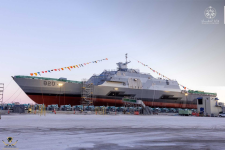
Turkish shipbuilder ARES Shipyard plans to establish a new company in the Kingdom of Saudi Arabia dubbed ARES Naval with Saudi local partner Sat-el Arab, ARES CEO Oğuzhan Pehlivanli told Breaking Defense.

“Our goal is to establish two shipyards for ARES Naval in Saudi Arabia: one in Dammam and the other in Jeddah. The final goal is having two shipyards over there related to manufacturing naval platforms and focusing on supporting the end users with maintenance, repair and overhaul,” Pehlivanli told Breaking Defense in a January interview.

He added that ARES will hold most of the shares in the new firm. He said ARES Shipyard will focus especially on “the [new] Saudi Arabia company, and working with the government side, especially [Saudi naval firm] Sofon. Sofon is the main [contractor] responsible for the naval projects and the main requirement from the Saudi Navy and Coast Guard.”

The CEO said that his company’s major concern is “export projects,” saying that beyond the new Saudi partnership they are discussions “to establish a stronger presence in GCC [Gulf Cooperation Council] region.”

“GCC is one of the top export markets for ARES in the future,” he stressed.

To view this content we will need your consent to set third party cookies.
For more detailed information, see our cookies page.
 
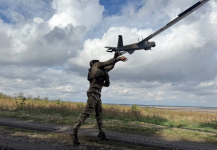
Serb Advanced Industries Company (SERB) obtains a contract to produce "suicide drones" for the Saudi army


View attachment 176875

Saudi Arabia's Serb Advanced Industries confirmed that it is mass-producing small unmanned aerial vehicles (UAVs) for the Saudi military

View attachment 176878

A company official told Janes that both the Jaser and larger Samil are in production, although he declined to name which branch of the Saudi military has ordered them.

View attachment 176877

Serb also makes the larger Samil, which the company official said was developed from 2022 in line with Saudi military requirements for an aerial target, with deliveries beginning at the end of 2023

It has an MTOW of 105 kg, a length of 3 m, and a wingspan of 4.67 m. It is launched using a rocket booster and powered by a piston engine, giving it a top speed of 250 km/h, a service ceiling of 4,500 m, and a datalink range of 60 km. The official said it can carry an 18 kg payload although it is a disposable target.

To view this content we will need your consent to set third party cookies.
For more detailed information, see our cookies page.

They are going to presenting their stuff at WDS 2026 next week
Stand Number: H3-E3.1
 
I have heard about them but I really don't know their inner workings that well or what they are up to. They are one of many private Saudi Arabian defense companies that are gaining traction. SAMI/GAMI, if I am not wrong, also encourages the private sector to get involved.


They have around 500-1000 employees according to their Linkedin profile.

This seems to be their key guy/founder.


Not sure where you are based in KSA, if Riyadh or not, but their headquarters appear to be near the Kingdom Hospital. Open on Sunday from 07:00-16:00.

I am sure that you could visit them and ask around a bit. Not sure how secretive they are though.

Looks like they took over this building somewhere after 2017 (where that photo below was taken).


Probably calling them beforehand would be good too and hear if they offer any tours. You could also pretend to be some official within the Pakistani army and gain access this way, if not open for civilians.:ROFLMAO:
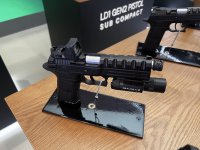
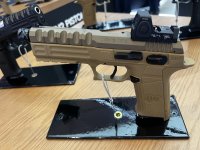
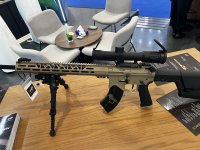
Very nice guy, got to meet him for a few minutes, quite interesting stuff they have got so far, they even have 300Blackout and 6.8ARC which was surprising.
This is all proof of concept units- GAMI has been very happy with them and they will start local manufacturing with the support of GAMI very soon.
The rifles/carbines are all american with a Transfer of Technology already done, and pistols are Italian- the IP also secured. Dont quote me on any of this- this what I remember after a very long day.
 

Attachments

  • IMG_5088.jpeg
    IMG_5088.jpeg
    3.1 MB · Views: 1
  • IMG_5087.jpeg
    IMG_5087.jpeg
    2.8 MB · Views: 1
  • IMG_5086.jpeg
    IMG_5086.jpeg
    2.9 MB · Views: 1
  • IMG_5085.jpeg
    IMG_5085.jpeg
    3.7 MB · Views: 1
Serb Advanced Industries Company (SERB) obtains a contract to produce "suicide drones" for the Saudi army


View attachment 176875

Saudi Arabia's Serb Advanced Industries confirmed that it is mass-producing small unmanned aerial vehicles (UAVs) for the Saudi military

View attachment 176878

A company official told Janes that both the Jaser and larger Samil are in production, although he declined to name which branch of the Saudi military has ordered them.

View attachment 176877

Serb also makes the larger Samil, which the company official said was developed from 2022 in line with Saudi military requirements for an aerial target, with deliveries beginning at the end of 2023

It has an MTOW of 105 kg, a length of 3 m, and a wingspan of 4.67 m. It is launched using a rocket booster and powered by a piston engine, giving it a top speed of 250 km/h, a service ceiling of 4,500 m, and a datalink range of 60 km. The official said it can carry an 18 kg payload although it is a disposable target.

To view this content we will need your consent to set third party cookies.
For more detailed information, see our cookies page.

1770574406745.jpeg
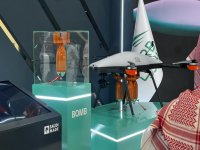
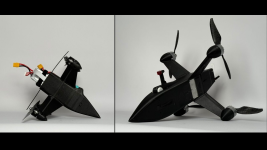
They even had this which is more of loitering munitions kind with a very simple payload and deployment system. Nothing like their other fast attack drones.
 
1770619315957.jpeg
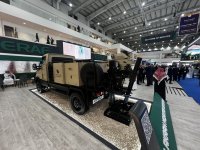
Eraf develops an indigenous cost effective "shoot and scoot" portable artillery system based on the IVECO chassis. Can carry upto 30 mortars on each side
 

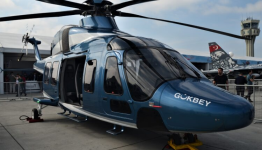
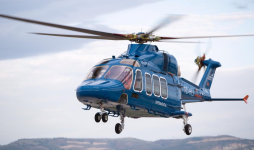
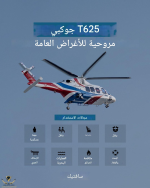
Türkiye, Saudi Arabia Agree on Joint Procution of Gökbey Multirole Helicopter​


1771195525292.png

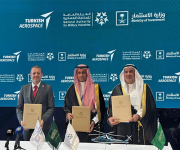
Türkiye and Saudi Arabia signed a Memorandum of Understanding (MoU) covering a joint production of the Turkish indigenous Gökbey multirole helicopter, marking the platform’s first overseas manufacturing agreement.

The deal was signed during the World Defense Show (WDS) 2026 in Riyadh between Turkish Aerospace Industries (TAI), Saudi Arabia’s Ministry of Investment and the General Authority for Military Industries (GAMI).

The agreement envisages long-term joint production with technology transfer. Under the framework, Saudi authorities will consolidate demand for helicopters for both military and civilian uses, after which TAI will cooperate with a local manufacturer to produce the required helicopters in Saudi Arabia.

The scope and technical details of the joint production will be shaped by the volume and nature of the demand.

Saudi Arabia’s localization targets under its Vision 2030 strategy place strong emphasis on developing domestic helicopter capabilities.

Officials say Gökbey’s multirole design, suitable for a wide range of missions, played a key role in Saudi Arabia’s selection.

Helicopters produced under the partnership are also expected to be marketed to neighboring countries.

Gökbey is Türkiye’s first indigenously designed and produced multirole utility helicopter. It's a twin-engine, 6-ton class chopper designed to operate in high altitudes and extreme temperatures.

The agreement on Gökbey comes just days after President Recep Tayyip Erdoğan said Ankara and Riyadh could opt for joint investment in Türkiye’s homegrown fifth-generation stealth fighter jet program at “any time.”

TAI General Manager Mehmet Demiroğlu said negotiations on potential cooperation on the Kaan warplane have recently gained momentum.

“Our work has been continuing for quite a while, and the talks have now been elevated to the final and highest level,” Demiroğlu said. “In the coming period, perhaps within this year or even sooner, we hope to share good news.”

Kaan is a fifth-generation jet that Türkiye has worked on for almost a decade. The jet was first publicly unveiled in 2023 before it performed its maiden test flight in early 2024. Its serial production is expected to begin in 2028.

Kaan is intended to replace the Turkish Air Force Command’s aging F-16 fleet, which is expected to begin phasing out in the 2030s.

The aircraft is designed to perform air-to-air combat with next-generation weapons and conduct precision strikes from internal weapon bays at supersonic speeds, supported by artificial intelligence and neural-network systems.

https://www.defaiya.com/news/Aviati...oint-procution-of-g-kbey-multirole-helicopter

1771195742891.png

1771195771352.png

1771195832103.png
 
Saudi IndustryRockets and projectiles for unmanned aerial vehicles produced by the National Mechanical Systems Company .

To view this content we will need your consent to set third party cookies.
For more detailed information, see our cookies page.
 
Manufacturing Satellites with Saudi Hands in King Abdulaziz City for Science and Technology

To view this content we will need your consent to set third party cookies.
For more detailed information, see our cookies page.
 
Thales Vice President: Our joint project with SAMI goes beyond local assembly to the depths of the military industry

1776542351077.png

The French company Thales is a fundamental pillar in the global defense and security landscape, and in the Kingdom of Saudi Arabia in particular, as the roots of this relationship extend back more than five decades of fruitful cooperation. As the Kingdom moves steadily towards achieving the goals of "Vision 2030" to localize military industries and enhance technological sovereignty, "Thales" emerges as a strategic partner whose role goes beyond simply supplying systems to building local capabilities and developing national cadres.

In this special interview, we host Mr. Christophe Salomon, Executive Vice President of Thales Secure Communications and Information Systems, to talk to us about the company's role in supporting the Kingdom's defense transformation, and how artificial intelligence technologies, cybersecurity, and modern command and control systems contribute to shaping the features of future military operations, highlighting the successful partnership with the Saudi Military Industries Company (SAMI) through the "Sami Thales" (STES) project.

1. Thales has worked with Saudi Arabia for over 50 years. How has this long partnership shaped Thales' role in supporting Saudi Arabia's defense and security ambitions today?

For more than five decades, our relationship with our clients in Saudi Arabia has evolved into a strategic partnership built on trust, performance and common goals. As Saudi Arabia accelerates its defense transformation under Vision 2030, we look forward to supporting capacity development, localization, and technological sovereignty in critical areas - command and control, secure communications, and cybersecurity. These systems enable armed forces to generate, share and interpret data in the land, sea and air spheres.We support the entire decision-making chain with advanced, AI-powered, and cyber-secure digital solutions – from threat detection and task planning to execution and analysis. This long-term commitment ensures that our solutions remain compatible with the Kingdom's evolving security needs.

2. Saudi Vision 2030 focuses on localization and technological sovereignty. How is Thales turning this vision into real capabilities on the ground, particularly through partnerships like Sami Thales Electronic Systems (STES)?

Through Sami Thales Electronic Systems (STES), our joint venture with the Saudi Military Industries Company (SAMI), we work to build sustainable industrial and technological capabilities within the Kingdom.

We are in a position to move beyond local aggregation towards deeper value chain engagement, focusing on local production, systems integration, and skills development. We look forward to launching an organized knowledge transfer process that consolidates expertise within the Kingdom.

In collaboration with national partners, suppliers and academic institutions, we support our clients in creating a supportive environment for long-term self-reliance and operational flexibility in line with Vision 2030.

3. Modern military operations are increasingly complex and multidisciplinary. How is Thales developing command and control systems to help leaders make faster and better decisions?
Today's leaders face massive amounts of data, rapidly changing threats, and tight decision-making timelines. Our command and control systems are designed to simplify these complex operations.

We integrate data from various sensors, platforms and domains into an integrated operational picture. Advanced data integration and AI-powered analytics help leaders prioritize information, detect patterns, and highlight risks in real time.

This allows them to quickly move from data to decision making, while maintaining complete human control. Our focus is on providing clarity and speed at crucial moments.

4. Cyber threats are currently a major challenge facing the armed forces. How does Thales protect critical military networks and ensure their cyber resilience during operations?

Cyber resilience is essential to modern defense operations. At Thales, our approach is to secure systems from the design stage.

Thales has more than 6,000 cybersecurity experts around the world, providing comprehensive protection for applications, data and identities. This includes threat detection, real-time monitoring, encryption, and compliance management.

We also focus on continuity of operations. Our solutions are designed to remain effective even in contested environments, ensuring forces can maintain command, control and coordination under pressure.

5. Secure and resilient communications are essential in contested environments. How does Thales ensure reliable communications even in the face of electronic warfare or cyber attacks?

Our communications systems are designed to operate with interference, interception attempts and cyber intrusion. This includes advanced encryption, bandwidth agility, network redundancy, and secure interoperability between platforms and services.

Importantly, these capabilities are not static, systems are constantly being updated to meet emerging threats and adapt to new electronic warfare tactics.

The priority is to ensure forces remain connected, coordinated, and operationally effective, even when adversaries actively attempt to cut off communications.

6. Situational awareness is essential to operational success. How do advanced radar and navigation technologies improve visibility and decision-making on the battlefield?

Advanced radar and navigation technologies provide the foundation for reliable situational awareness, enabling forces to accurately detect, track and identify threats, even in complex environments.

Our solutions combine high-performance sensors with digital processing and data fusion capabilities to improve detection range and response speed. Flexible navigation and positioning systems ensure continuity of operations even when satellite signals are weak or interrupted.

Combined, these capabilities provide commanders with a clear, immediate picture of the battlefield, which is essential for making informed decisions under pressure.

7. Looking ahead, what technologies will shape the future of defense operations in areas such as communications, cybersecurity and command systems?

Artificial intelligence will continue to enhance data analysis, support decision-making, and automate processes. Cloud and secure edge computing will improve the flexibility and scalability of systems.

Cybersecurity will remain a strategic priority, with greater emphasis on zero trust architectures and sovereign data protection. In communications, we will see an increasing integration of multi-domain, software-defined, and elastic networking technologies. Across all areas, our focus is on developing reliable, interoperable and future-proof systems that enable armed forces to continually adapt to evolving threats.
 
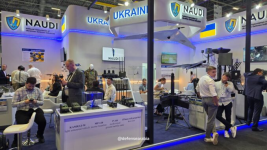
Ukraine and Saudi Arabia sign a historic air defense agreement: the complete map of the integrated systems that will fortify the Kingdom's skies
1776543996522.png

Ukraine and Saudi Arabia signed an agreement described as "extremely important" in the field of air security, allowing Riyadh to benefit from Ukrainian field experience accumulated over four years in confronting air threats and repelling attacks by Iranian-made drones. The signing took place on Thursday, immediately after Ukrainian President Volodymyr Zelensky arrived in the Kingdom on an unannounced visit, amid escalating tensions in the region as a result of the US-Israeli war on Iran and the accompanying retaliatory Iranian attacks with drones and missiles on the Gulf states.

An official familiar with the file explained that the agreement aims to "contribute Ukraine to developing an integrated system of air defense components" capable of confronting Iranian-made "Shahid" drones and other drones, according to what was reported by Agence France-Presse. He revealed that the agreement goes beyond the scope of interceptor aircraft, to include "building an integrated defense system that combines various air defense components, and employing Ukrainian operational expertise, artificial intelligence technologies, and data analysis tools, with the aim of effectively confronting Shahid drones and others".


Zelensky announced on social media platforms that the two countries had reached a "very important agreement" in the field of defense cooperation, noting that he had discussed it directly with Crown Prince Mohammed bin Salman. "We are ready to share our expertise and systems with Saudi Arabia," he said, adding that Riyadh "in turn possesses capabilities that are valuable to Ukraine, making this cooperation fruitful for both parties." Zelensky declined to disclose details of the agreement.What exactly does Ukraine have to offer Saudi Arabia?

What integrated systems could change the rules of the game in Saudi air defense?

The Integrated System: A Defense Philosophy, Not Just a Weapon.

Understanding what Ukraine has to offer, we must first abandon the traditional notion that "air defense = missile intercepts missile." What Kiev has developed over four years of daily confrontation with tens of thousands of Russian-launched "Shahid" drones - the same Iranian-made drones currently used to target US energy facilities and military bases across the Gulf region - is not a single weapon, but rather a comprehensive defense philosophy based on integration between Four layers work in complete coordination with each other. To understand the dimensions of this philosophy, it is necessary to review each layer separately, and then understand how they all intertwine in one system.

The first layer: interceptor drones

The Ukrainian interceptor drones represent the jewel that the Gulf states are currently rushing for, and the reason is simple: these drones turn the economic equation of air defense upside down. While one Patriot interceptor missile costs between three and four million dollars, the cost of a Ukrainian interceptor vehicle ranges between only one thousand and 2,500 dollars. Most importantly, Ukraine has not only designed these drones, but has also built a massive production capacity of approximately 1,500 FPV interceptor drones per day by 2026, after President Zelenskyy set this goal in July 2025. About 20 Ukrainian companies operate in this sector, each with a different approach to the same challenge.

To view this content we will need your consent to set third party cookies.
For more detailed information, see our cookies page.


The most prominent of these drones is the "Sting" (bite) drone from Wild Hornets, which is currently the most in demand in the Gulf region according to multiple reports. This drone relies on thermal imaging cameras to monitor targets day and night, and carries a dome head that includes a camera system and an explosive payload weighing 500 grams. What really sets it apart is its ability to automatically return to its base if it can't identify a target, which means it can be reused - a huge economic advantage when the enemy is launching dozens of drones every night. It is operated by a pilot who tracks it via a screen or first-person vision goggles (FPV), and its cost ranges between $1,000 and $2,500 per unit, while the manufacturer says it is capable of shipping more than 10,000 units per month.


The Ukrainian UAVs “Shahed killers” wrote the death certificate for the drone, Shahed 136‼️

🅾️Ukrainian technology has recently entered the defense line in the Gulf region to confront the challenge of Iranian “Shahed” drones.
🅾️ “Bullet” is not just a metaphor, but rather the name of a system of interceptor drones developed by the Ukrainian company “General Cherry”, which proved highly efficient in the skies of Ukraine before interest in it began in the Gulf.
1⃣ Economic efficiency: Shooting down a “Shahed” with a Patriot missile is very expensive, while a “bullet” costs only 1,000-5,000 dollars.
2⃣ Field performance: Its speed is 300 km/h, which exceeds the speed of “Shahid” (185 km/h).
2⃣ Regional spread: Ukrainian experts arrived in Jordan, with great Gulf interest.
3⃣ Strengths: Artificial intelligence for tracking, quick response against swarms.
4⃣ Shortcomings: short range (25-30 km) and limited flight time (15 minutes).
🅾️"Witness killers"
An economical solution compared to Patriot and THAAD missiles, and is intended to efficiently confront cheap drones.

1776544543779.png
@z4alajmi

General Cherry's Bullet (bullet) drone, which started as a volunteer initiative and has become one of Ukraine's leading technical defense companies, represents a different paradigm shift. Developed in late 2025, it combines a jet engine and four rotors in a hybrid design that gives it speeds ranging between 130 and 309 km/h with a ceiling height of up to 5,500 metres. It uses AI-powered guidance to set goals, and most importantly, it is 3D printable - which opens broad horizons for localizing its production in any country that has the necessary infrastructure.


1776544659013.png

Then there's WIY Drones' "Strila" (Arrow), which is described as a "missile-type" interceptor system because its performance is closer to missiles than to conventional drones. It has an operational speed of over 350 km/h (reached 400 km/h in tests), a range of 14 km in tactical mode and a maximum of 28 km, with an altitude ceiling of 4 km and a cost of approximately $2,300 per unit. But the most important feature of its latest version is its complete abandonment of reliance on GPS, with an electronic jamming-resistant communications system that allows the operator to switch channels during flight - a vital feature in an environment where Iran seeks to jam communications. The company currently produces 100 units per day under a government contract.


1776544740324.png

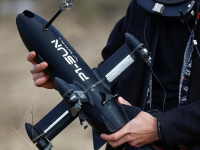
Added to this arsenal is Skyfall's P1-Sun drone, which is fully 3D printed and has a speed of up to 300 km/h. The importance of this model lies not only in its performance, but also in the potential for localization it represents: any country that possesses industrial 3D printers could theoretically produce these drones locally.


1776544794473.png

The Octopus 100 drone, which is Ukrainian in design but mass-produced in the UK, also stands out as a unique model for cross-border defence cooperation. This model sets a historic precedent as the first Western government license for a Ukrainian-designed interceptor for domestic production, with a planned production capacity of 1,000 units per month starting in February 2026. To demonstrate the effectiveness of these drones, Octopus, Sting, and Bullet have each achieved more than 1,000 successful drop operations despite their relatively recent deployment in the field.


1776544881930.png

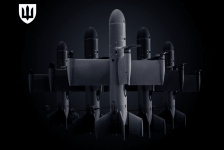
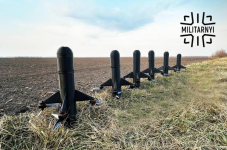
The scene is not complete without mentioning the "ODIN Win_Hit" drone, which is a bullet-shaped drone designed for short, high-intensity missions, in addition to the "Merops" system of American origin. The latter developed a company backed by former Google CEO Eric Schmidt, but with direct input from Ukrainian fighters and technical experts on the battlefield. Published in Ukraine in mid-2024 with remarkable results, it is a short-range mobile system that can be loaded into the trunk of a medium-sized pickup truck and is distinguished by its ability to operate completely autonomously via artificial intelligence even in conditions of complete interference with communications and GPS systems - a fundamental challenge in any confrontation with Iran.
 
Continued..

Layer 2: Electronic Warfare

To understand the importance of this layer, you must understand a basic fact: the cheapest way to shoot down a drone is not necessarily to launch another drone at it, but rather it may simply be to "confuse" it electronically until it loses its way and falls on its own. This is exactly what electronic warfare systems do, and they constitute the first and least expensive line of defense in the Ukrainian system.Ukraine did not build this capability in a vacuum. For four years, Ukrainian engineers have faced a daily electronic armament race with their Russian counterparts, with technologies obsolescing approximately every six weeks and being replaced by others. This race has created a unique ecosystem: the state-owned Brave1 platform alone registers more than 100 cyberwarfare projects, and more than 50 Ukrainian companies operate in this sector – an exceptional number for a single country.
1776545015496.png

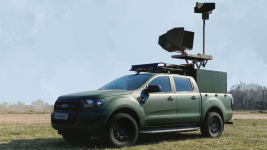
One of the most prominent products of this system is the "Bukovel-AD" system, which is the cornerstone of Ukrainian air defense against drones. This mobile system is capable of monitoring drones at a distance of up to 100 km, and jamming navigation signals for all major space systems - including GPS, GLONASS, Galileo and BeiDou, at a distance of between 15 and 20 km. Its importance to Saudi Arabia is clear and direct: Shahid's drones rely mainly on satellite navigation signals, and jamming these signals means misleading them about their path before they reach their target, without the need to launch anything at them.

1776545062482.png

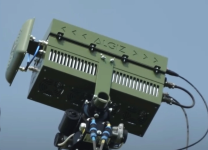
There's also Algiz AM, a next-generation system developed on the Brave1 platform that specifically aims to suppress drone communication channels. It is characterized by its ability to change the direction of radiation at a 360-degree angle to quickly respond to threats from all directions, with the ability to control it remotely from a safe location.But what really draws attention is the extent to which Ukrainian innovation in this field has reached. In addition to larger systems such as Enclave, Note, SHATRO, Eter, and Hecate, and newer trench systems such as Dandelion and PARASOL designed to protect troops and critical infrastructure, Ukraine has developed portable personal electronic warfare devices. Among them is the "anti-drone pistol" (Anti-Drone Pistol), a device that weighs only one kilogram and jams drones at a distance of up to 100 meters - meaning that an individual soldier now carries in his hand a defensive capability that until recently was the preserve of specialized units. There is also the "Chuika 3.0" system, which represents a completely different concept :Instead of jamming the drone, it intercepts its video signals and displays what the enemy operator sees in real time - that is, turns the enemy weapon into a reconnaissance tool for the defender.

Layer 3: Artificial Intelligence and Data Analysis

This is where the most in-depth part of the agreement begins, which explains why officials described it as going beyond simply "selling interceptors". Imagine a typical Iranian attack scenario: dozens of drones of different models approaching from several directions, some relatively slow Shahid drones, some faster and more advanced, perhaps accompanied by ballistic missiles. The crucial question is not "Do we have enough interceptor weapons?" Rather, "how do we allocate each weapon to the right threat at the right time?". Launching a $4 million Patriot missile at a $30,000 Shahid drone is a catastrophic waste, but launching a $2,000 interceptor drone at a ballistic missile is suicide. What is required is a "mind" that distinguishes between the two and directs each of them to the appropriate weapon.

This is exactly what Ukrainian AI does. The agreement, officials revealed, includes building an integrated smart system that integrates and manages various air defense components via artificial intelligence and advanced data analysis tools. In practice, this layer includes several vital capabilities: early warning systems that learn Iranian attack patterns and predict drone trajectories based on data from thousands of previous operations; automatic classification systems that distinguish between different drone types and determine interception priorities; and intelligent allocation algorithms that direct each interceptor weapon toward the threat most appropriate to its capabilities.
1776545557095.png

Ukraine has enhanced these capabilities by launching the Brave1 Dataroom platform in cooperation with the American company Palantir in January 2026, a secure digital environment that allows the use of real field data from the battlefield to develop and train military artificial intelligence models. As Marco Kouchner, a spokesman for General Cherry, described: "The feedback loop between the front and the manufacturer is very short – we can get feedback in the morning, and in the evening we have a solution that handles new tasks on the battlefield." This episode is what makes Ukrainian AI different from any theoretical or laboratory model: it's AI sharpened with fire, literally.

Fourth layer: operational experience

Many countries sell weapons, but few can say to the buyer: “We have used this weapon every night for four years against the same threat you are facing now.” This is exactly what Ukraine offers.

Field results confirm the effectiveness of this experience with astonishing numbers: Ukraine's air defenses achieved a 97% interception rate against Russian drones in the most recent attacks, while 70% of the attacking Shahid drones over Kiev last month were shot down using interceptor drones alone — without the need for expensive missile systems. But transferring this experience is not a simple matter, as Yuri Cherevashchenko, Deputy Commander of the Ukrainian Air Defense Forces, pointed out that the drones face unique challenges in the Middle East environment - such as sand storms, for example - that differ from what they faced in the skies of Ukraine. However, he emphasized that the success of the interception ultimately depends on the pilot's skills and adaptability — and that's what live training provides.

The economic equation: Why does Saudi Arabia need this system specifically?

To put things into practical context, it is enough to look at the numbers of the first week of the war on Iran to realize the extent of the economic crisis in the traditional air defense model. Iran launched more than 500 ballistic missiles and nearly 2,000 drones during that week, necessitating the use of about 800 Patriot interceptor missiles — more than Ukraine had acquired in four full years of war. At a cost of between three and four million dollars per missile, the bill that week alone exceeded two billion dollars for interceptor missiles alone.

The glaring irony is that a large portion of these expensive missiles were launched on Shahed drones whose cost does not exceed $20,000 to $50,000 each. That is, the defender was spending $4 million to destroy a target with $30,000. In this equation, the attacker wins even if he loses all his drones, because depleting the stock of interceptor missiles is in itself a strategic goal. What is more dangerous is that the global stock of Patriot missiles is limited and cannot be replaced quickly, while Iran has thousands of drones and the ability to produce more at a much faster pace.

The Ukrainian model upends this equation. A $2,000 interceptor drone shoots down a tens of thousands of witness drones - defense becomes cheaper than attack, and valuable strategic stockpiles of Patriot missiles are saved for ballistic threats that cannot be dealt with by any other means. In this context, Ukraine has offered a smart swap formula: supplying the Gulf states with its cheap interceptor drones in exchange for advanced air defense missiles that Kiev needs to repel Russian ballistic missile attacks - an arrangement that serves the interests of both parties and reflects the essence of what Zelensky described as "fruitful cooperation between the two parties together".

The next challenge: a non-stop arms race

The picture is not without fundamental challenges that must be clearly understood. The threat facing these systems is not constant, but rather evolving at an accelerated pace.

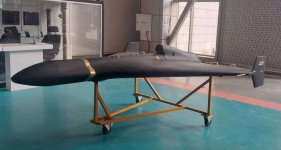
Recent reports revealed that Shahid drones, in their advanced versions, are now controlled via mobile phone networks and the Telegram application instead of GPS, and use artificial intelligence to self-adjust their paths, and operate at higher altitudes ranging between 2,000 and 3,000 meters. This development actually led to a decline in the objection rate against some advanced models from more than 90% to about 30% in early 2025 - before the Ukrainian systems adapted again.
1776546201739.png

The biggest challenge is the Russian Geran-5 drone, which reaches a speed of 600 km/h, and is theoretically faster than all current Ukrainian interceptor drones. The Russian-Iranian technical exchange also exacerbates the problem: Moscow and Tehran share satellite data and improved Shahid technologies, meaning the threat Saudi Arabia faces today is not the same as it will face six months later.

However, this same challenge, and here lies the paradox, is what makes Ukrainian experience more valuable, not less. Ukraine is not selling a complete, rigid product, but a living system that develops weekly in response to real threats. Ukrainian manufacturers themselves are aware of this and are already working on the next generation of interceptors, in which a speed of 500 km/h is treated as a design minimum, not as a ceiling.

Conclusion

Ukraine does not offer Saudi Arabia a single weapon or a ready-made solution, but rather an integrated defense philosophy born from four years of daily war against the same Iranian drones targeting the Kingdom today. This philosophy is based on a simple and profound principle at the same time: meeting cheap threats with cheaper solutions, while employing artificial intelligence and accumulated operational experience to achieve maximum effectiveness at the lowest cost. At a time when Patriot missile stocks are being depleted at an unprecedented rate and the Iranian threat is evolving at an alarming speed, the Ukrainian model — with its four integrated layers of interceptors, electronic warfare, artificial intelligence, and human expertise — may be the most realistic and sustainable answer to the Gulf air defense dilemma.


*** On the offensive side:

To view this content we will need your consent to set third party cookies.
For more detailed information, see our cookies page.


“Sichen” is classified as an advanced deep strike system, as it has the ability to reach strategic targets at a range of up to 1,400 kilometers, with exceptional accuracy in which the margin of error does not exceed 20 meters.

This drone was specifically designed to penetrate environments saturated with jamming and active electronic warfare systems, giving it an operational advantage in carrying out “tactical depth” missions during both the day and night.

In terms of technical specifications, the march carries a warhead weighing 40 kilograms, which is enough to destroy vital infrastructure, concentrations of hostile forces, and high-value targets.

The maximum speed of the “Sechin” reaches 200 km/h, with a flight ceiling of 1,500 metres, while preparing it for take-off does not take more than 15 minutes, making it an ideal weapon for rapid response and rapid operational deployment.
 
To view this content we will need your consent to set third party cookies.
For more detailed information, see our cookies page.
 
1. SAMI-AEC, in cooperation with the Spanish company Indra, is undertaking the localization and integration of ESM systems on MMSC vessels.

2. SAMI MBDA is concerned with localizing the manufacturing of compact CAMM missiles on MMSC ships.

3. The program mentioned the establishment of marine maintenance and support facilities in Jubail, and SAMI is part of the support and attribution chain for these ships.

1776561076883.png
 

Users who are viewing this thread

Pakistan Defence Latest

Back
Top