Continued..
Layer 2: Electronic Warfare
To understand the importance of this layer, you must understand a basic fact: the cheapest way to shoot down a drone is not necessarily to launch another drone at it, but rather it may simply be to "confuse" it electronically until it loses its way and falls on its own. This is exactly what electronic warfare systems do, and they constitute the first and least expensive line of defense in the Ukrainian system.Ukraine did not build this capability in a vacuum. For four years, Ukrainian engineers have faced a daily electronic armament race with their Russian counterparts, with technologies obsolescing approximately every six weeks and being replaced by others. This race has created a unique ecosystem: the state-owned Brave1 platform alone registers more than 100 cyberwarfare projects, and more than 50 Ukrainian companies operate in this sector – an exceptional number for a single country.

One of the most prominent products of this system is the "Bukovel-AD" system, which is the cornerstone of Ukrainian air defense against drones. This mobile system is capable of monitoring drones at a distance of up to 100 km, and jamming navigation signals for all major space systems - including GPS, GLONASS, Galileo and BeiDou, at a distance of between 15 and 20 km. Its importance to Saudi Arabia is clear and direct: Shahid's drones rely mainly on satellite navigation signals, and jamming these signals means misleading them about their path before they reach their target, without the need to launch anything at them.
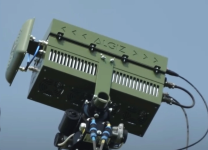
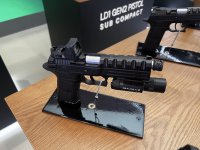
There's also Algiz AM, a next-generation system developed on the Brave1 platform that specifically aims to suppress drone communication channels. It is characterized by its ability to change the direction of radiation at a 360-degree angle to quickly respond to threats from all directions, with the ability to control it remotely from a safe location.But what really draws attention is the extent to which Ukrainian innovation in this field has reached. In addition to larger systems such as Enclave, Note, SHATRO, Eter, and Hecate, and newer trench systems such as Dandelion and PARASOL designed to protect troops and critical infrastructure, Ukraine has developed portable personal electronic warfare devices. Among them is the "anti-drone pistol" (Anti-Drone Pistol), a device that weighs only one kilogram and jams drones at a distance of up to 100 meters - meaning that an individual soldier now carries in his hand a defensive capability that until recently was the preserve of specialized units. There is also the "Chuika 3.0" system, which represents a completely different concept :Instead of jamming the drone, it intercepts its video signals and displays what the enemy operator sees in real time - that is, turns the enemy weapon into a reconnaissance tool for the defender.
Layer 3: Artificial Intelligence and Data Analysis
This is where the most in-depth part of the agreement begins, which explains why officials described it as going beyond simply "selling interceptors". Imagine a typical Iranian attack scenario: dozens of drones of different models approaching from several directions, some relatively slow Shahid drones, some faster and more advanced, perhaps accompanied by ballistic missiles. The crucial question is not "Do we have enough interceptor weapons?" Rather, "how do we allocate each weapon to the right threat at the right time?". Launching a $4 million Patriot missile at a $30,000 Shahid drone is a catastrophic waste, but launching a $2,000 interceptor drone at a ballistic missile is suicide. What is required is a "mind" that distinguishes between the two and directs each of them to the appropriate weapon.
This is exactly what Ukrainian AI does. The agreement, officials revealed, includes building an integrated smart system that integrates and manages various air defense components via artificial intelligence and advanced data analysis tools. In practice, this layer includes several vital capabilities: early warning systems that learn Iranian attack patterns and predict drone trajectories based on data from thousands of previous operations; automatic classification systems that distinguish between different drone types and determine interception priorities; and intelligent allocation algorithms that direct each interceptor weapon toward the threat most appropriate to its capabilities.

Ukraine has enhanced these capabilities by launching the Brave1 Dataroom platform in cooperation with the American company Palantir in January 2026, a secure digital environment that allows the use of real field data from the battlefield to develop and train military artificial intelligence models. As Marco Kouchner, a spokesman for General Cherry, described: "The feedback loop between the front and the manufacturer is very short – we can get feedback in the morning, and in the evening we have a solution that handles new tasks on the battlefield." This episode is what makes Ukrainian AI different from any theoretical or laboratory model: it's AI sharpened with fire, literally.
Fourth layer: operational experience
Many countries sell weapons, but few can say to the buyer: “We have used this weapon every night for four years against the same threat you are facing now.” This is exactly what Ukraine offers.
Field results confirm the effectiveness of this experience with astonishing numbers: Ukraine's air defenses achieved a 97% interception rate against Russian drones in the most recent attacks, while 70% of the attacking Shahid drones over Kiev last month were shot down using interceptor drones alone — without the need for expensive missile systems. But transferring this experience is not a simple matter, as Yuri Cherevashchenko, Deputy Commander of the Ukrainian Air Defense Forces, pointed out that the drones face unique challenges in the Middle East environment - such as sand storms, for example - that differ from what they faced in the skies of Ukraine. However, he emphasized that the success of the interception ultimately depends on the pilot's skills and adaptability — and that's what live training provides.
The economic equation: Why does Saudi Arabia need this system specifically?
To put things into practical context, it is enough to look at the numbers of the first week of the war on Iran to realize the extent of the economic crisis in the traditional air defense model. Iran launched more than 500 ballistic missiles and nearly 2,000 drones during that week, necessitating the use of about 800 Patriot interceptor missiles — more than Ukraine had acquired in four full years of war. At a cost of between three and four million dollars per missile, the bill that week alone exceeded two billion dollars for interceptor missiles alone.
The glaring irony is that a large portion of these expensive missiles were launched on Shahed drones whose cost does not exceed $20,000 to $50,000 each. That is, the defender was spending $4 million to destroy a target with $30,000. In this equation, the attacker wins even if he loses all his drones, because depleting the stock of interceptor missiles is in itself a strategic goal. What is more dangerous is that the global stock of Patriot missiles is limited and cannot be replaced quickly, while Iran has thousands of drones and the ability to produce more at a much faster pace.
The Ukrainian model upends this equation. A $2,000 interceptor drone shoots down a tens of thousands of witness drones - defense becomes cheaper than attack, and valuable strategic stockpiles of Patriot missiles are saved for ballistic threats that cannot be dealt with by any other means. In this context, Ukraine has offered a smart swap formula: supplying the Gulf states with its cheap interceptor drones in exchange for advanced air defense missiles that Kiev needs to repel Russian ballistic missile attacks - an arrangement that serves the interests of both parties and reflects the essence of what Zelensky described as "fruitful cooperation between the two parties together".
The next challenge: a non-stop arms race
The picture is not without fundamental challenges that must be clearly understood. The threat facing these systems is not constant, but rather evolving at an accelerated pace.
Recent reports revealed that Shahid drones, in their advanced versions, are now controlled via mobile phone networks and the Telegram application instead of GPS, and use artificial intelligence to self-adjust their paths, and operate at higher altitudes ranging between 2,000 and 3,000 meters. This development actually led to a decline in the objection rate against some advanced models from more than 90% to about 30% in early 2025 - before the Ukrainian systems adapted again.
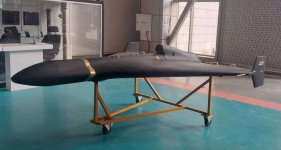
The biggest challenge is the Russian Geran-5 drone, which reaches a speed of 600 km/h, and is theoretically faster than all current Ukrainian interceptor drones. The Russian-Iranian technical exchange also exacerbates the problem: Moscow and Tehran share satellite data and improved Shahid technologies, meaning the threat Saudi Arabia faces today is not the same as it will face six months later.
However, this same challenge, and here lies the paradox, is what makes Ukrainian experience more valuable, not less. Ukraine is not selling a complete, rigid product, but a living system that develops weekly in response to real threats. Ukrainian manufacturers themselves are aware of this and are already working on the next generation of interceptors, in which a speed of 500 km/h is treated as a design minimum, not as a ceiling.
Conclusion
Ukraine does not offer Saudi Arabia a single weapon or a ready-made solution, but rather an integrated defense philosophy born from four years of daily war against the same Iranian drones targeting the Kingdom today. This philosophy is based on a simple and profound principle at the same time: meeting cheap threats with cheaper solutions, while employing artificial intelligence and accumulated operational experience to achieve maximum effectiveness at the lowest cost. At a time when Patriot missile stocks are being depleted at an unprecedented rate and the Iranian threat is evolving at an alarming speed, the Ukrainian model — with its four integrated layers of interceptors, electronic warfare, artificial intelligence, and human expertise — may be the most realistic and sustainable answer to the Gulf air defense dilemma.
*** On the offensive side:
“Sichen” is classified as an advanced deep strike system, as it has the ability to reach strategic targets at a range of up to 1,400 kilometers, with exceptional accuracy in which the margin of error does not exceed 20 meters.
This drone was specifically designed to penetrate environments saturated with jamming and active electronic warfare systems, giving it an operational advantage in carrying out “tactical depth” missions during both the day and night.
In terms of technical specifications, the march carries a warhead weighing 40 kilograms, which is enough to destroy vital infrastructure, concentrations of hostile forces, and high-value targets.
The maximum speed of the “Sechin” reaches 200 km/h, with a flight ceiling of 1,500 metres, while preparing it for take-off does not take more than 15 minutes, making it an ideal weapon for rapid response and rapid operational deployment.






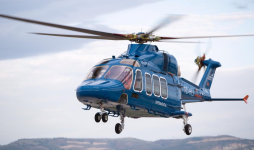

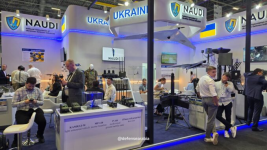

 Ukrainian technology has recently entered the defense line in the Gulf region to confront the challenge of Iranian “Shahed” drones.