Made in KSA

The Saudi Chemical Company Holding announced the commencement of commercial production at its military industries complex and TNT production line through its subsidiary, Saudi Chemical Company Limited, effective August 31, 2026, following verification of system and equipment readiness and raw material availability.

Financial Impact:

The financial impact of the commencement of commercial operations is expected to be reflected in the financial statements starting from the fourth quarter of 2026.

Costs:

The company confirmed that there has been no material change to the previously allocated costs, noting that all phases were completed within the approved budget.

Project Timeline:

March 2020:

Initial announcement of the launch of the construction phases of the explosives and military materials manufacturing complex.

June 2022:

Completion of construction and buildings, and commissioning of production lines, warehouses, and safety systems.

May 2023:

Issuance of final approvals from the relevant authorities and commencement of the trial operation phase for quality control. April 2026:

Successful production of the first experimental batch of TNT that meets international military specifications.

August 2026:

Completion of operational readiness and official transition to commercial production.

Strategic Support for Vision 2030:

This project represents a pivotal step towards localizing the military industries sector in the Kingdom of Saudi Arabia, a key objective of Vision 2030 to increase domestic military spending to over 50%.

Importance of TNT:

Trinitrotoluene (TNT) is a key component in the munitions and defense systems industry. Its local production enhances the security of military supply chains for the Kingdom's defense and security sectors.

1788553198941.png


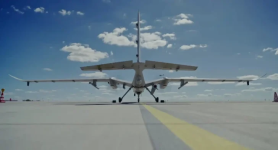
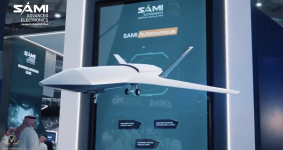
Akıncı continues to transform from a mere armed drone to a multi-role, multi-layered attack platform, combining smart short- and medium-range munitions, cruise missiles, ultrasonic missiles, and air-launched ballistic missiles such as the İHA-300. Baikar says that Akinci is designed to operate in the land and sea fields, with the ability to carry out air-to-ground and air-to-air missions, which enhances its flexibility in carrying out reconnaissance missions, precision strikes, and long-range operations.

1790376772717.png

As for Saudi Arabia, it concluded one of the largest Akinci deals in July 2023, after the Saudi Ministry of Defense and Baykar signed an agreement to bring the aircraft into the service of the Royal Saudi Air Force and Navy, in a deal that Baykar described as the largest in the history of Turkish defense and air industry exports. Although the full number and value of the contract have not been officially revealed, French defense sources estimated its value at approximately $3.1 billion, including a technology transfer. The agreement was not limited to the supply of aircraft, as it was followed by an agreement to localize Akinci production within the Kingdom in cooperation with SAMI and NCMS, in addition to partnerships with Aselsan and Roketsan to localize sensor systems, electro-optical systems, guided munitions and other components. According to the announced plans, the local manufacturing rate of some Saudi aircraft could reach 70%, making the deal a model for Turkish-Saudi industrial and defense cooperation, and not just a purchase of drones.
 
As part of #OurSectorTerminology, learn about Command, Control, Communications, Computers, and Intelligence (C4I), an advanced technology used in military operations to connect operational elements and enable fast, efficient decision-making across various military missions

 
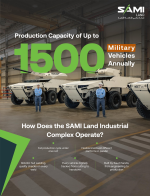
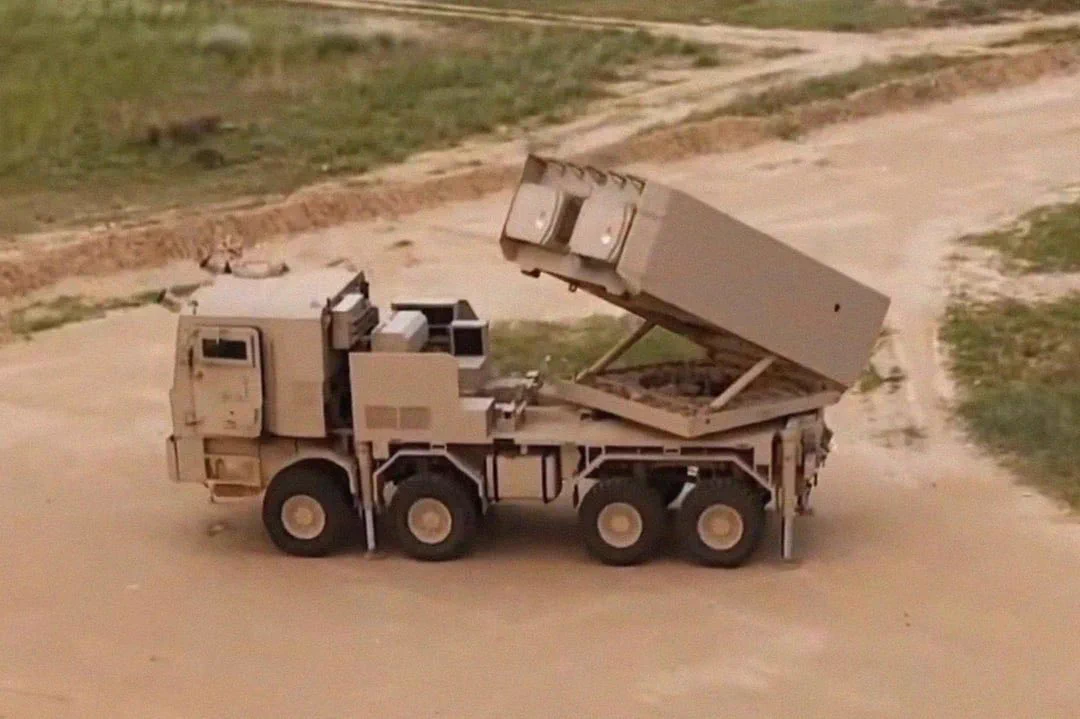
Increasing production capacity in the Sami Ground Systems Complex ..From 900 vehicles annually to 1,500 military vehicles.

1790459042119.png
 
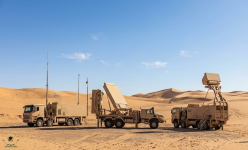
Saudi-made air defense system
SAMI VLU
​

1792114097846.png

Development and Design
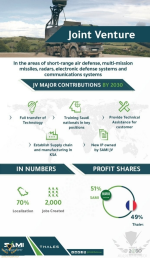
Five batteries of the VL-MICA system, ordered in 2013, containing 2,600 missiles, were purchased for the Saudi National Guard's air defense. During combat operations in Yemen against Iranian allies, it was able to shoot down drones and cruise missiles supplied by Iran to the Houthis, which are a copy of Chinese drones and missiles. Therefore, the Saudi company SAMI improved the system to meet the needs of the Saudi forces. After that, in 2020, to transfer the technology of the French VLUMICA system to SAMI, VLUMICA was developed in response to lessons learned from modern conflicts in which "wars of attrition" emerged using cheap drones. The design was based on the principles of "high flexibility" and "economics of war," offering a low-cost solution compared to expensive traditional systems. The first Saudi battery entered service in 2024, and the system was unveiled at the World Defence Exhibition (WDS 2026).

The agreement included:

- Complete Technology Transfer (ToT): Transfer of radar technology, missiles, communication systems, and fire management software.

- Right to sell and export.

-Joint manufacturing: Establishing production lines within Saudi Arabia to manage the supply chain locally.

-Training Saudi personnel: Transferring engineering and technical expertise to Saudi engineers, resulting in SAMI engineers overseeing the development and manufacturing phases of the Saudi version.

- Right to develop and export: The agreement grants the Kingdom the right to develop the system and modify its characteristics to suit the local environment, as well as the right to sell and export it to other countries, transforming the Kingdom into a regional hub for exporting advanced air defense technologies.

- Integration of Saudi radars into the system.

- Saudi Network Scope

Platform and Mobility
The system is characterized by high mobility, integrating monitoring and launch units on various platforms, including:

  • Mercedes and Tatra tactical trucks produced by the National Automotive Manufacturing Company.
  • Locally manufactured armored platforms.
  • Rapid transport and deployment capability to protect vital installations or accompany ground forces.

Technical Characteristics

The VLU MICA system is based on the principle of integrated layered defense and incorporates artificial intelligence technologies into fire control.

Detection and Sensing

- AESA Radar: Equipped with an advanced active electronically scanned array (AESA) radar capable of detecting very small targets made of non-metallic materials (carbon or plastic).

- Electro-optical Detection: An optical and thermal tracking system that serves as a backup to the radar in environments of heavy electronic jamming.

Interception Mechanism (Dual-Kill)
The system uniquely integrates two threat-handling methods into a single platform:

  • Soft-kill: Integrated electronic warfare systems to disrupt drone control and navigation signals.
  • Hard-kill: Lightweight, fast-response interceptor missiles designed for low- and medium-altitude targets.

1792114796785.png​
 
JUST IN: According to reports, Saudi Arabia has acquired China’s YJ-21E hypersonic missile, with an estimated 1,000–1,500 km range and speeds of up to Mach 10.The YJ-21E could be launched from the TB-001, a drone #Saudi Arabia also operates, potentially giving the Kingdom a powerful unmanned hypersonic strike capability.

 
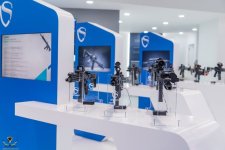
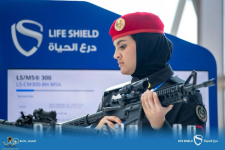
Saudi Arabia's "Life Shield" Military Industries Company​


1793036001530.png

Life Shield, a Saudi company founded in 1968, boasts extensive experience in the military and security sectors, as well as a variety of other fields.

Headquartered in Riyadh, the company provides products and solutions for military and security systems, communications and information technology systems, and military training services.

In an interview with Defense Here, Mr. Mohammed Al-Qarni, Head of Weapons and Ammunition at Life Shield, spoke about the company, saying:

"Welcome to Life Shield. We are a Saudi company based in Riyadh, operating in the military sector for over 40 years."

He added, "We have made significant strides in recent years thanks to the tremendous efforts of the General Authority for Military Industries and the generous support of the wise government of the Kingdom of Saudi Arabia. Our focus on manufacturing has led us to make great strides in this area, particularly in local manufacturing and localization."

The "Daraa Al-Hayat" company offers a variety of products, including guided missiles and bombs, drones such as the M134 system, and Colt rifles. Colt has partnered with the company and is working with them to establish a local production line. The rifle will soon be manufactured entirely in Saudi Arabia and exported to Gulf and Arab countries, as well as other countries worldwide.

Al-Qarni emphasized that the company aims to first meet the needs of the local market in Saudi Arabia and then expand into the global market by exporting its products to Gulf and Arab countries, and indeed to countries around the world.

He also confirmed their readiness to participate in the World Defense Show, scheduled to be held in Riyadh next year. He stated, "We expect an impressive edition, just as we were impressed by the previous one. This year's edition will be even better, with the participation of larger and more companies offering a wider range of products. Products from last year that didn't have localization plans will be showcased this year with localization and local manufacturing plans. Our presence will be truly impressive."


1793036637305.png

1793036518370.png

1793036537986.png
 
Jassas: A drone by Saudi hands.

It relies on artificial intelligence in reconnaissance and defense missions and reaches speeds of up to 150 km/h, during its participation in the Military Industries Forum


Ability to manufacture in large quantities in the Saudi company
 
More wonderful news:


"By 2029, the completion of the operational capabilities of the first specialized center for maintaining the Patriot PAC-3 system in Saudi Arabia, making the Kingdom the first country outside NATO to host a center of this type🇸🇦🇺🇸.

And U.S. company Lockheed Martin intends to establish the center in partnership with Al-Ruwad for Technical Systems Company, to carry out testing, repair, and technical certification work for advanced missile components, alongside qualifying and training national cadres.

The project aims to enhance Saudi sovereign capabilities in long-term maintenance, reduce repair periods, and increase the operational readiness of air and missile defense systems."

A reminder: Even parts of the THAAD are manufactured within KSA nowadays.

THAAD missile containers are 100% made in KSA nowadays for instance.


Other parts as well:


"Saudi Arabia Enters the Heart of the Global Military Industry🇸🇦..The American company Lockheed Martin, one of the world's most powerful and largest military industries companies, no longer views Saudi Arabia merely as a market for selling its defense systems, but as an industrial partner integrated into its global production network.

Military components manufactured in only two locations worldwide, America and Saudi Arabia, and Saudi factories participating in global production chains, alongside localizing maintenance operations within the Kingdom."

The regional headquarter of Lockheed Martin is also based in KSA.

More significant news:


Last edited:
Great catch. First public showing of the CTM-290 pod on the K239 for Saudi Arabia


Saudi Arabia's SAMI is exploring the localization of 95 defense systems and components with Turkish companies.​

1794510235544.png

More than 100 companies are participating in Istanbul to strengthen supply chains, transfer technology, and develop industrial capabilities in the Kingdom.

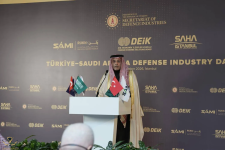
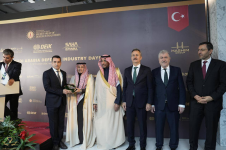
The Saudi Arabian Military Industries Company (SAMI) explored collaboration opportunities with over 100 Turkish companies to localize 95 defense systems and components, enhance supply chains, transfer technology, and develop Saudi industrial capabilities. This took place during the inaugural "Suppliers Corner Day," hosted by Istanbul over two days, as part of the Kingdom's efforts to boost local content in the military industries.

The event, held on November 11 and 12, brought together SAMI Group companies and several other Saudi firms with leading Turkish industrial and defense companies, including ASELSAN, Havelsan, Roketsan, and FNSS, to discuss opportunities for local manufacturing, supplier development, and the transfer of advanced knowledge and technologies.

The meeting was organized according to information released by SAMI's "Suppliers Corner" Local Content Program, with support from the Turkish Foreign Economic Relations Board, the Saudi-Turkish Business Council, and the SAHA Istanbul Defense, Aerospace, and Industry Fair.

The event was attended by the Saudi Minister of State and Cabinet Member, Acting Governor of the General Authority for Military Industries, Bandar Al-Khorayef, Vice Chairman of the Board of Directors of SAMI, and the Group’s CEO, Engineer Thamer Al-Muhaid, along with the Governor of Istanbul, Davut Gul, the President of the Turkish Defense Industries Authority, Professor Haluk Gurgun, and a number of officials and representatives of the defense industries sector in both countries.

Manufacturing and Localization Opportunities

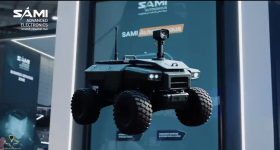
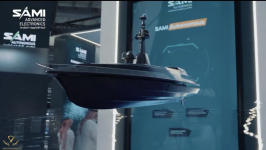
Over two days, representatives from SAMI Advanced Electronics, SAMI Munitions, SAMI Al Salam Aerospace Industries, SAMI Ground Systems, and SAMI Unmanned Systems held a series of workshops, bilateral meetings, and discussion sessions with Turkish suppliers to review their industrial capabilities and their compatibility with the requirements of the group and the participating Saudi companies.

Discussions covered areas such as supporting and maintaining aviation systems, ground systems, autonomous and unmanned systems, munitions, defense electronics, and advanced manufacturing, in addition to opportunities for developing supply chains.

The Saudi companies also showcased their manufacturing capabilities and technical expertise, and explored with their Turkish counterparts opportunities for cooperation in local production and supplier development, which would contribute to expanding the national industrial base and enhancing the participation of Saudi companies in the defense industries system.

According to the company, the discussions resulted in identifying opportunities to strengthen local supply chains and expand manufacturing activities within the Kingdom, along with future potential for developing technical capabilities and artificial intelligence applications, transferring industrial knowledge and expertise, and providing new job opportunities.

1794510326451.png

Long-Term Partnerships

Engineer Thamer Al-Muhaid, CEO of the SAMI Group, stated that Saudi-Turkish relations have laid the foundations for industrial cooperation between the two countries. He noted that the group seeks to build upon these foundations through partnerships that combine Turkish industrial expertise with the growth and investment opportunities available to Saudi companies.

He explained that the meeting facilitated direct communication between the group's companies and qualified suppliers and industrial partners. He emphasized that SAMI's ambition extends beyond simply concluding commercial contracts to building sustainable partnerships that support local manufacturing, develop Saudi suppliers, and transfer technology and knowledge, in line with the objectives of Saudi Vision 2030.

The inaugural "Suppliers' Corner Day" marks the program's transition from the launch phase to one of direct engagement with international manufacturers and suppliers. This is achieved by aligning the needs of Saudi companies with available industrial capabilities and opening new avenues for technical and commercial cooperation.

Reducing Reliance on Foreign Suppliers

Prince Khalid bin Salman bin Abdulaziz, Minister of Defense and Chairman of the Board of Directors of SAMI Group, launched the “Rukn” program during the World Defense Show 2026. The program aims to develop local content in military industries and enhance the integration of national value and supply chains.

The program is based on two strategic tracks. The first focuses on increasing local production and boosting the share of procurement of national products and services. The second aims to reduce reliance on foreign suppliers by building a more integrated and flexible national production network capable of responding to industrial and defense needs.

The program relies on a system that combines governance, digital tools, and investment incentives, along with developing industrial infrastructure, investing in modern technologies, and training Saudi talent. This supports the sustainability of supply chains and enhances defense readiness.

Rukn also works to connect Saudi companies and suppliers with international industrial partners, government agencies, and relevant national institutions to expand private sector participation in defense industries and strengthen its production and technological capabilities.

These efforts come as part of Saudi Arabia’s endeavors to localize more than 50 percent of total military spending by 2030, through the development of a national industrial base capable of meeting defense needs, enhancing technology transfer, providing job opportunities, and supporting economic diversification.
 
Last edited:

Users who are viewing this thread

Back
Top