Made in KSA

The Saudi Chemical Company Holding announced the commencement of commercial production at its military industries complex and TNT production line through its subsidiary, Saudi Chemical Company Limited, effective August 31, 2026, following verification of system and equipment readiness and raw material availability.

Financial Impact:

The financial impact of the commencement of commercial operations is expected to be reflected in the financial statements starting from the fourth quarter of 2026.

Costs:

The company confirmed that there has been no material change to the previously allocated costs, noting that all phases were completed within the approved budget.

Project Timeline:

March 2020:

Initial announcement of the launch of the construction phases of the explosives and military materials manufacturing complex.

June 2022:

Completion of construction and buildings, and commissioning of production lines, warehouses, and safety systems.

May 2023:

Issuance of final approvals from the relevant authorities and commencement of the trial operation phase for quality control. April 2026:

Successful production of the first experimental batch of TNT that meets international military specifications.

August 2026:

Completion of operational readiness and official transition to commercial production.

Strategic Support for Vision 2030:

This project represents a pivotal step towards localizing the military industries sector in the Kingdom of Saudi Arabia, a key objective of Vision 2030 to increase domestic military spending to over 50%.

Importance of TNT:

Trinitrotoluene (TNT) is a key component in the munitions and defense systems industry. Its local production enhances the security of military supply chains for the Kingdom's defense and security sectors.

1788553198941.png


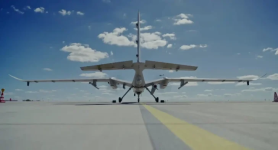
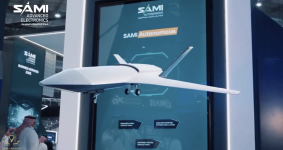
Akıncı continues to transform from a mere armed drone to a multi-role, multi-layered attack platform, combining smart short- and medium-range munitions, cruise missiles, ultrasonic missiles, and air-launched ballistic missiles such as the İHA-300. Baikar says that Akinci is designed to operate in the land and sea fields, with the ability to carry out air-to-ground and air-to-air missions, which enhances its flexibility in carrying out reconnaissance missions, precision strikes, and long-range operations.

1790376772717.png

As for Saudi Arabia, it concluded one of the largest Akinci deals in July 2023, after the Saudi Ministry of Defense and Baykar signed an agreement to bring the aircraft into the service of the Royal Saudi Air Force and Navy, in a deal that Baykar described as the largest in the history of Turkish defense and air industry exports. Although the full number and value of the contract have not been officially revealed, French defense sources estimated its value at approximately $3.1 billion, including a technology transfer. The agreement was not limited to the supply of aircraft, as it was followed by an agreement to localize Akinci production within the Kingdom in cooperation with SAMI and NCMS, in addition to partnerships with Aselsan and Roketsan to localize sensor systems, electro-optical systems, guided munitions and other components. According to the announced plans, the local manufacturing rate of some Saudi aircraft could reach 70%, making the deal a model for Turkish-Saudi industrial and defense cooperation, and not just a purchase of drones.
 
As part of #OurSectorTerminology, learn about Command, Control, Communications, Computers, and Intelligence (C4I), an advanced technology used in military operations to connect operational elements and enable fast, efficient decision-making across various military missions

 
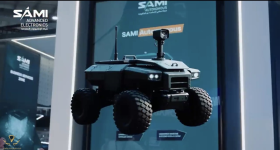
Increasing production capacity in the Sami Ground Systems Complex ..From 900 vehicles annually to 1,500 military vehicles.

1790459042119.png
 
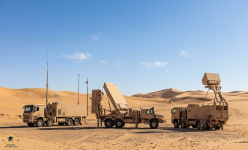
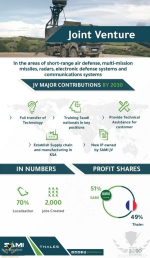
Saudi-made air defense system
SAMI VLU
​

1792114097846.png

Development and Design
Five batteries of the VL-MICA system, ordered in 2013, containing 2,600 missiles, were purchased for the Saudi National Guard's air defense. During combat operations in Yemen against Iranian allies, it was able to shoot down drones and cruise missiles supplied by Iran to the Houthis, which are a copy of Chinese drones and missiles. Therefore, the Saudi company SAMI improved the system to meet the needs of the Saudi forces. After that, in 2020, to transfer the technology of the French VLUMICA system to SAMI, VLUMICA was developed in response to lessons learned from modern conflicts in which "wars of attrition" emerged using cheap drones. The design was based on the principles of "high flexibility" and "economics of war," offering a low-cost solution compared to expensive traditional systems. The first Saudi battery entered service in 2024, and the system was unveiled at the World Defence Exhibition (WDS 2026).

The agreement included:

- Complete Technology Transfer (ToT): Transfer of radar technology, missiles, communication systems, and fire management software.

- Right to sell and export.

-Joint manufacturing: Establishing production lines within Saudi Arabia to manage the supply chain locally.

-Training Saudi personnel: Transferring engineering and technical expertise to Saudi engineers, resulting in SAMI engineers overseeing the development and manufacturing phases of the Saudi version.

- Right to develop and export: The agreement grants the Kingdom the right to develop the system and modify its characteristics to suit the local environment, as well as the right to sell and export it to other countries, transforming the Kingdom into a regional hub for exporting advanced air defense technologies.

- Integration of Saudi radars into the system.

- Saudi Network Scope

Platform and Mobility
The system is characterized by high mobility, integrating monitoring and launch units on various platforms, including:

  • Mercedes and Tatra tactical trucks produced by the National Automotive Manufacturing Company.
  • Locally manufactured armored platforms.
  • Rapid transport and deployment capability to protect vital installations or accompany ground forces.

Technical Characteristics

The VLU MICA system is based on the principle of integrated layered defense and incorporates artificial intelligence technologies into fire control.

Detection and Sensing

- AESA Radar: Equipped with an advanced active electronically scanned array (AESA) radar capable of detecting very small targets made of non-metallic materials (carbon or plastic).

- Electro-optical Detection: An optical and thermal tracking system that serves as a backup to the radar in environments of heavy electronic jamming.

Interception Mechanism (Dual-Kill)
The system uniquely integrates two threat-handling methods into a single platform:

  • Soft-kill: Integrated electronic warfare systems to disrupt drone control and navigation signals.
  • Hard-kill: Lightweight, fast-response interceptor missiles designed for low- and medium-altitude targets.

1792114796785.png​
 

Users who are viewing this thread

Country Watch Latest

Latest Posts

Back
Top